
Business
Five Millionaires emerge in Polaris Bank’s ongoing ‘Save & Win’ Promo

Five Millionaires emerge in Polaris Bank’s ongoing ‘Save & Win’ Promo
Lagos, Nigeria: November 15, 2023 – Five lucky Nigerians at the weekend hit a fortune when they emerged Millionaires in the ongoing Polaris Bank Save & Win Promo.
The live quarterly draw of the ongoing Polaris ‘Save & Win’ promo which took place at the Bank’s headquarters Annex, Alausa Ikeja at the weekend in Lagos, further underscored Polaris Bank’s dedication to fairness in all its promotions and activities.
The development is in line with the Bank’s commitment to rewarding its loyal customers across the nation.
The winners emerged through a draw exercise which was witnessed by its representatives and relevant Agencies of government; Federal Competition & Consumer Protection Commission (FCCPC), National Lottery Commission (NLRC) and Advertising Regulatory Council of Nigeria (ARCON) who confirmed that the 5 lucky winners were selected across Nigeria’s various regions spanning the geo-zones
Each winner received a cash prize of N1,000,000. During the draw, the lucky winners were called at random using a hybrid media technology which enabled in-premises event; as well as participation of over 1221 customers through the Bank’s virtual network and social media handles.
One of the lucky millionaires commended the Bank in putting in place the promo at this time which he said was relevant saying “Thank you to Polaris Bank for making me a millionaire. I never expected this surprise. This money definitely came in at the right time, I will tell my friends to open accounts with Polaris Bank and participate in the promo so we can all become millionaires.”
Speaking at the live draw event, the representative from FCCPC; Susie Onwuka said, “We’ve been monitoring Polaris Bank since the promo started and it has been fair, they comply to rules and guidelines. Customers should feel free and confident to participate in the promo”.
During the unveiling of the lucky millionaires, Polaris Bank’s Chief Digital Officer (CDO), ‘Dele Adeyinka also expressed the Bank’s commitment to encouraging a culture of savings among its customers. “The Polaris Bank Save & Win promo is not just about rewarding customers; it’s also about encouraging our customers to save for the rainy day”.
The CDO emphasized that customers can still participate in, or increase their chances of winning by depositing a minimum of N10,000 in their Savings account. He also noted that non-customers of the Bank can participate for a chance to win in the draws by opening a Polaris Savings account with N2,000 and growing same to N10,000 before the next draw date.
The representatives of the regulatory bodies commended the Bank for making good its promise to winners of the draws.
For those wishing to be part of the Campaign and stand a chance to also become millionaires, below are four (4) ways to participate in the ongoing Polaris Save & Win promo:
1. Download VULTe on iOS and the App store to open a Polaris Savings Account or dial USSD *833*0# on your phone or log into Polaris Bank savings portal.
2. Grow your account by N10,000 or more and maintain for 30 days or by N10,000 for 3 consecutive months to qualify for monthly & quarterly draws respectively.
3. If your account is dormant, you can reactivate your account without visiting the Bank by simply dialing *833*30#.
4. Follow the Bank’s handles @polarisbankltd across all social media platforms or visit the website to stay updated.
Polaris Bank was adjudged Nigeria’s Digital Bank of the Year in 2023, 2022 and 2021 in BusinessDay’s Banks and Other Financial Institutions (BAFI) Awards. As a digital-forward Bank, the Bank is dedicated to forging a customer-focused future through innovative partnerships that reshape both businesses and communities.
-END-




*Please be careful, there’s a WhatsApp scam going around
Scammers are currently impersonating Aigboje Aig-Imoukhuede, the Chairman of Access Holdings Plc, to trick people into fake investment schemes.
They’ve created a WhatsApp group called *“Value Focus Club 60”* using this number: *+234 915 708 8290*, and even used his picture to make it look real.
*Important things to know*:
• The Chairman is NOT on WhatsApp running any investment group
• Access Holdings does NOT offer investment advice via WhatsApp
• Any message claiming otherwise is 100% fake
A whistleblower actually spotted this and raised the alarm, so please don’t ignore this.
*What you should do*:
• Don’t join the group or engage them
• Don’t share your personal or banking details
• Block and report the number on WhatsApp
• Let others know so they don’t fall victim
The company is already working to shut it down, but awareness is key.
Please share this with your contacts, someone you know could be targeted.

HOUSE OF BIMPE FIT GAINS ATTENTION WITH TRENDY UNISEX FASHION LINE
LAGOS — A fast-rising fashion brand, House of Bimpe Fit, is making waves in the style scene with its collection of modern, elegant outfits designed for both men and women.
The brand, which showcases a blend of contemporary and classic designs, is quickly attracting attention for its attention to detail and quality finishing. From sharply tailored men’s native wears and suits to chic, figure-flattering outfits for women, House of Bimpe Fit is positioning itself as a go-to destination for fashion lovers seeking both style and comfort.

Speaking on the brand’s vision, the management emphasized its commitment to delivering “quality outfits for both men and women,” ensuring customers step out with confidence and class regardless of the occasion.
Fashion enthusiasts have particularly praised the brand’s versatility, as it caters to a wide range of tastes—from corporate elegance to casual sophistication.

With an active presence on social media, especially on TikTok via @house_of_bimpefit, the brand is leveraging digital platforms to reach a broader audience and showcase its latest collections.
Industry watchers say House of Bimpe Fit is one to watch, as it continues to carve a niche for itself in Nigeria’s competitive fashion industry.
For inquiries, customers can contact the brand via phone at 0802 686 6277.

Business
Jafad College of Nursing Science Showcases Excellence at Matriculation, Capping Ceremony for 158 Nursing Students
Jafad College of Nursing Science Showcases Excellence at Matriculation, Capping Ceremony for 158 Nursing Students
By Agholor M.O
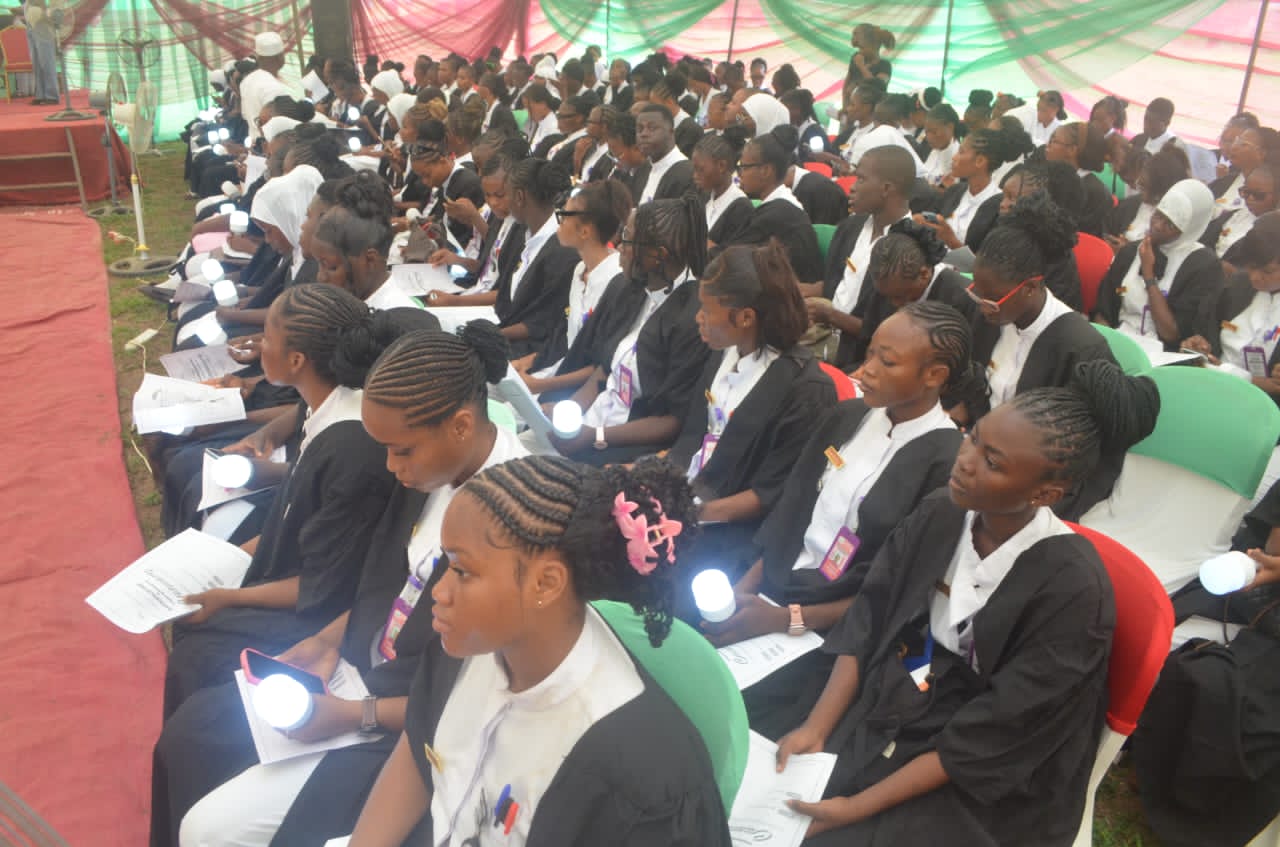
Jafad College of Nursing Science, Oru Ijebu Ogun State, has once again demonstrated its commitment to excellence in healthcare education as it matriculated and inducted into Nursing Training, 158 students of the N.D 2025/2026 academic session in a well attended and inspiring ceremony which took place on Wednesday, 8th of April 2026 at the College premises, Oru Ijebu, Ogun State

The event began with a colourful academic procession of the matriculating students led by their Class Coordinator Mrs B.O. Okuboyejo, alongside principal officers of the college, including the Student Affairs Officer, Mrs Fijabi; College Accountant, Mrs Funmilayo Victoria Alao; Librarian, Mr Jonathan Olusola Fatokun; Registrar, Mr Mojeed Adewale Lawal; and the Acting Provost, Ms Olufunmilola Akintayo.

In her welcome address, the Acting Provost charged the new students to embrace discipline, dedication, and professionalism, noting that Jafad College provides a strong academic and moral foundation needed to thrive in the ever demanding healthcare sector.

The ceremony attracted dignitaries, including Mr Abdulhameed, JAMB Zonal Coordinator, Abeokuta, Ogun State, further underscoring the institution’s growing reputation.

Delivering the matriculation lecture, Mrs Oyelayo Toyin Adeola, a registered nurse educator from Olabisi Onabanjo University Teaching Hospital, spoke on the theme: *“The Journey of Admission to Graduation: Strategies for a Successful Outcome – Learner and Teacher Perspective.”* She emphasized the importance of goal-setting, effective study habits, time management, and active student teacher collaboration. She also highlighted the need for resilience, ethical conduct, and continuous self-improvement, describing nursing as both a calling and a profession that demands compassion, competence, and lifelong learning.

The ceremony reached a symbolic peak with the capping and stripping of the students by experienced registered nurses from Ogun State Hospital, Ijebu Ode, officially ushering them into the noble nursing professional Training.
Parents and guardians expressed satisfaction with the quality of organization and training standards, while the students beamed with excitement as they began their professional journey.


With its experienced faculty, structured training, and commitment to producing competent and compassionate nurses, Jafad College of Nursing Science continues to stand out as a top choice for aspiring healthcare professionals in Ogun State and beyond.


- Complete Professional Fighters League (PFL) Africa: Pretoria Results and Photos - Nkosi Ndebele defeats Michele Clemente in a bantamweight classic shootout in the main event April 12, 2026
- Seychelles Backs United Arab Emirates (UAE) Statement, Calls for De-escalation and Respect for International Law April 11, 2026
- TotalEnergies’ Africa Senior Vice President (SVP) Mike Sangster to Spotlight Expanding Project Pipeline at Paris Forum April 11, 2026
- Ascott expands in Nairobi with new Citadines signing, reinforcing the city’s position as a regional hub April 11, 2026
- Century Group Joins African Energy Week (AEW) 2026 as Floating Production Storage and Offloading (FPSO) Partner, Showcasing Regional Offshore Expansion April 10, 2026
- Climate Litigation Surge Reshapes Energy Policy as Africa Seeks Stronger Legal Voice April 10, 2026
- ES-KO Secures Five-Year Catering & Facilities Management Contract Renewal with TotalEnergies EP Congo April 10, 2026
- Beyond the Court: The Kalahari Conference Solidifies its Status as Africa’s Premier Sports & Lifestyle Destination April 10, 2026
- Africa Sports Unified Launches Pan-African Sports Deals Tracker to Improve Market Visibility and Decision-Making April 10, 2026
- Nigeria and Senegal Must Follow Ghana and Mozambique Against Exclusionary Practices April 10, 2026
- Complete Professional Fighters League (PFL) Africa: Pretoria Results and Photos - Nkosi Ndebele defeats Michele Clemente in a bantamweight classic shootout in the main event April 12, 2026
- Seychelles Backs United Arab Emirates (UAE) Statement, Calls for De-escalation and Respect for International Law April 11, 2026
- TotalEnergies’ Africa Senior Vice President (SVP) Mike Sangster to Spotlight Expanding Project Pipeline at Paris Forum April 11, 2026
- Ascott expands in Nairobi with new Citadines signing, reinforcing the city’s position as a regional hub April 11, 2026
- Century Group Joins African Energy Week (AEW) 2026 as Floating Production Storage and Offloading (FPSO) Partner, Showcasing Regional Offshore Expansion April 10, 2026
- Climate Litigation Surge Reshapes Energy Policy as Africa Seeks Stronger Legal Voice April 10, 2026
- ES-KO Secures Five-Year Catering & Facilities Management Contract Renewal with TotalEnergies EP Congo April 10, 2026
-

 news4 months ago
WHO REALLY OWNS MONIEPOINT? The $290 Million Deal That Sold Nigeria’s Top Fintech to Foreign Interests
-

 celebrity radar - gossips3 months ago
Dr. Chris Okafor Returns with Power and Fire of the Spirit -Mounts Grace Nation Altar with Fresh Anointing and Restoration Grace on February 1, 2026
-

 celebrity radar - gossips4 months ago
Prophet Kingsley Aitafo Releases 2026 Prophecy: ‘Nigeria Will Rise, but the World Must Prepare for Turbulence’
-

 celebrity radar - gossips6 months ago
End of an Era: Nigeria Mourns Evangelist Dr. Uma Ukpai, 80