
celebrity radar - gossips
Fresh charges against Igboho — Malami

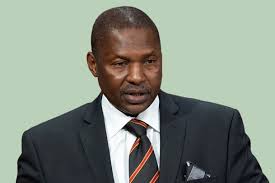
Fresh charges against Igboho — Malami
Fesh Federal Government, yesterday, had said that it will file a fresh charge against Sunday Adeyemo, popularly known as Sunday Igboho, after the judgment of Oyo state high court, for which he was awarded N20 billion.
[tps_header][/tps_header]
The Attorney-General of the Federation, AGF, and Minister of Justice, Abubakar Malami, told the News Agency of Nigeria, NAN, in New York that the Federal Government had the right to appeal the judgment or file a fresh charge.
Malami said the position of the government on the judgment was about “law and jurisdiction.”
He said: “As far as this matter is concerned, which court is it that has the jurisdiction to determine it? And as you rightly know, obedience to court orders and court judgments.
“But then you have to understand, within the context of such obedience, that there are associated rights and interests that are vested in the Federal Government.
“Inclusive of rights of appealing against a judgment, inclusive of the right to file an application for setting aside the purported judgment and order.
“And indeed, inclusive of the possibility of filling a fresh action if, indeed, the jurisdiction of the court that was alleged to have, indeed, handed that judgment is an issue.
“We are doing the needful in terms of looking at the law as it exists and then working within the context of the law in ensuring that justice is done as far as the contending issues between the parties are concerned,” the minister explained.
Igboho’s counsel, Yomi Alliyu, SAN, had filed a N500 billion fundamental human rights enforcement suit against the AGF, SSS, and the Director of the SSS in Oyo State over the invasion of his home in Ibadan on July 1.
Alliyu claimed that his client’s house and cars were damaged, while two occupants of the house were killed by SSS operatives during the incident.
However, counsel to AGF, Abdullah Abubakar, had argued that there was no evidence before the court that the blood seen in the video clip tendered by Alliyu belonged to a human being.
Abubakar also said there was nothing in the video clip that showed that the house that was invaded belonged to Igboho or linked the AGF with the invasion.
Adeyemo is still being held in the Republic of Benin where he was arrested some weeks ago while trying to flee to Germany.
He’s making a political statement—Igboho’s lawyer
Reacting to Malami’s comments, Mr. Alliyu said the Justice Minister was making a political statement.
Alliyu said: “Has he (Malami) ever filed any charge against him (Igboho) that is fresh? He has never filed any fresh charges against him. The statement he is making is political. The Attorney-General is free to make any charge against anyone and the court is there to uphold such person’s rights.
The only thing we know is that self-determination has been ruled out of being a criminal charge. Finding ammunitions in Sunday’s house has been thwarted by the court and so, I don’t know the charges they want to bring against him. My people will say he is shooting political canons.
“He knows people are demonstrating in New York and he (Malami) has to say something to remove grounds from those demonstrating in New York.”
Rule of law prevails, says Ilana Omo Oodua
Also reacting, the Ilana Omo Oodua, IOO, expressed optimism that the rule of law will prevail if the Federal Government files a fresh charge against Igboho.
IOO’s Communications Manager, Mr. Maxwell Adeyemi said: “The rule of law will prevail always. We have no doubt that we shall defeat them in court. The Nigerian Government has been humbled. They should appeal; we shall meet them at the Court of Appeal. Filing charges is a free thing, winning is another issue.
“They should go ahead. Those arrested and humiliated on July 3rd during the Yoruba Nation rally are considering suing the Nigerian Government for abuse of their fundamental human rights.
“That the Federal Government wants to file charges doesn’t mean the accused is guilty. If government files charges, we shall counter-sue the government.”
On its part, the pan-Yoruba socio-political organization, Afenifere, said that the move further attests to the low level on which the administration of President Muhammadu Buhari placed fundamental human rights of Nigerian citizens.
Afenifere’s National Publicity Secretary, Mr. Jare Ajayi said: “As upheld by the court, it was successfully argued that Adeyemo’s rights were violated and his properties destroyed. Rather than being remorseful and obey the court order, Mr. Malami is still threatening the filing of fresh charges.
It is a pity. It is regrettable. It is uncalled for. We strongly enjoin the Federal Government to respect the court judgment and use it as a wake-up call for it to start respecting the rights of Nigerians and those living in Nigeria. There is no doubt that the present administration scores very low on the human rights scale going by the way it has been handling various court orders, especially those that were not in its favor, The way it is handling this one concerning Sunday Adeyemo Igboho is adding to its bad record in this respect.
“Since Abubakar Malami is the head of the government’s legal team, it means that the low points scored by the administration could be laid at as his doorstep Minister of Justice.
“It means that when history returns a negative verdict on President Buhari’s administration, the part played in the scenario by Malami would be very conspicuous. That would not be an exemplary record. As for the planned fresh charges, we implore the Federal Government to drop the idea and instead comply with the orders that were already given. If it insists on going ahead, we are hopeful that it will lose the case as it lost in the previous ones.”



Beauty Meets Glamour as Olaide Ogunyemi Opens New Studio in Mushin
Popular Nollywood actress and professional makeup artiste, Olaide Ogunyemi Oluwayemisi aka Damilola, has expanded her footprint in the beauty industry with the grand opening of her new makeup studio in Lagos.
The talented thespian, who is also the Chief Executive Officer of @Dobc_makeovers_andmore, officially unveiled the ultra-modern beauty space last Thursday, April 2, 2026, in a colourful ceremony filled with glamour, fashion, and pageantry.
Strategically located at 101 Palm Avenue, right beside FitPlus and Sparklight Hospital in Mushin area of Lagos, the new studio is designed to offer top-notch beauty services, reflecting Ogunyemi’s commitment to excellence and professionalism in the ever-growing makeup industry.
The opening ceremony attracted friends, colleagues from the Nollywood industry, beauty enthusiasts, and well-wishers who came out in large numbers to celebrate the entrepreneur’s latest milestone. Guests were treated to a vibrant atmosphere that showcased creativity, style, and the evolving standards of the beauty business in Lagos.
Speaking at the event, Ogunyemi expressed her excitement and gratitude, noting that the new studio represents years of hard work, dedication, and passion for her craft. She reaffirmed her commitment to delivering premium beauty services while empowering aspiring makeup artistes.
The launch of the studio further cements her reputation as a dynamic force, successfully blending her career in Nollywood with a thriving beauty brand.
With this latest development, Olaide Damilola Ogunyemi continues to inspire many young entrepreneurs, proving that talent, consistency, and vision remain key drivers of success in Nigeria’s creative and business landscape.


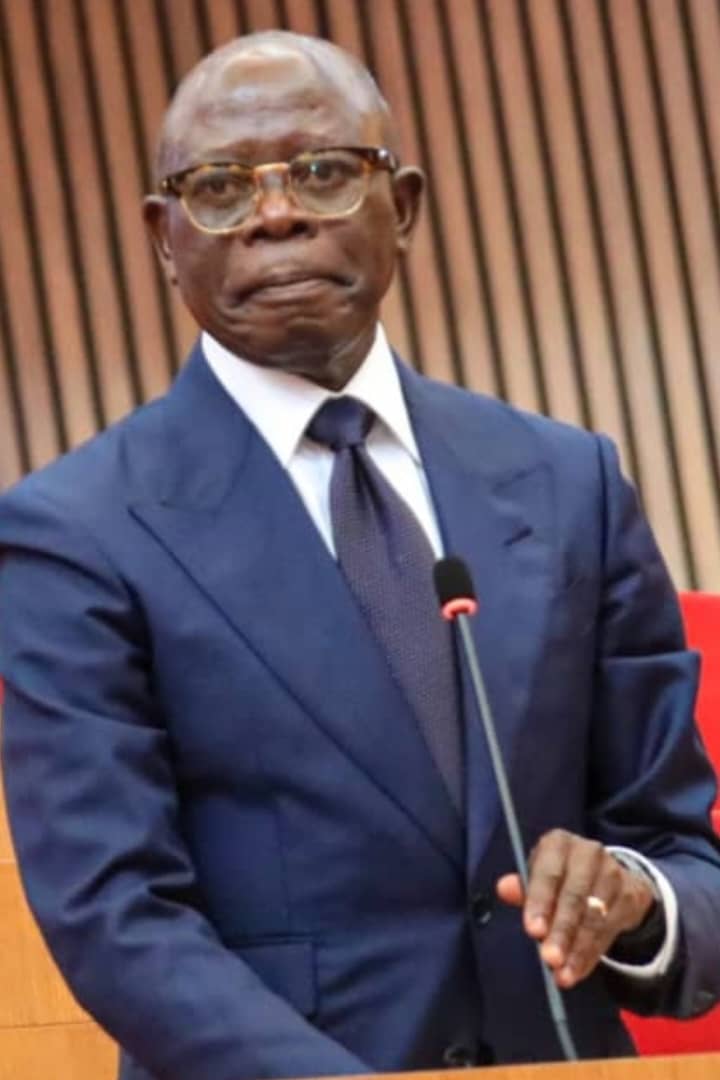
Daniel Eromosele Eulogize Adams Oshiomole as he turns 74 years
Today, I celebrate an exceptional leader, a fearless voice for the people, and a man whose life has remained a symbol of courage, sacrifice, and unwavering commitment to justice—Distinguished Comrade Senator Adams Aliu Oshiomhole.

Your journey has been nothing short of inspiring. From your days as a vibrant labour leader to your impactful tenure as the Executive Governor of Edo State, and now as a respected Senator of the Federal Republic, you have consistently demonstrated what it means to serve with integrity, strength, and purpose. Your contributions to the growth of our nation and the development of Edo State remain indelible and deeply appreciated.
You have not only built structures and institutions but have also built people. I am personally a beneficiary of your leadership, your guidance, and your belief in empowering others. Your influence in my life has been profound, and I remain grateful for the opportunities and inspiration you have given me.
On this special day, I celebrate not just your achievements, but the man you are—resilient, principled, and ever committed to the progress of Nigeria and her people.

May this new year bring you renewed strength, greater wisdom, good health, and more remarkable accomplishments. May your legacy continue to shine brighter with each passing year.
Happy Birthday, sir. Wishing you many more fruitful and impactful years ahead.
celebrity radar - gossips
Accolades to Empress Genevieve Wining as she Celebrate birthday in Grand style

Accolades to Empress Genevieve Wining as she Celebrate birthday in Grand style
Emmanuel Clement
Vilnius, Lithuania – The Grand Hotel Vilnius will host a grand birthday celebration in honor of Her Majesty The Empress Genevieve Wining of the United Kingdom of Atlantis (UKA) on April 4th, 2026.
The four-day event promises to be an extravagant affair, marking the special birthday of Empress Genevieve Wining. The celebration will take place at the prestigious Grand Hotel Vilnius, Lithuania, renowned for its luxurious ambiance and exceptional service.

According to the event flyer, the birthday celebration will be a spectacular occasion, fitting for an empress. Guests can expect an elegant setting adorned with golden accents, sparkling champagne, and festive decorations, creating a regal atmosphere befitting the occasion.
The Empress Genevieve Wining of UKA is expected to grace the event, which will include various festivities and celebrations in her honor. The occasion aims to bring together dignitaries, followers, and guests to commemorate the empress’s birthday with grandeur and joy.
For media inquiries, accreditation, or further information about the birthday celebration of The Empress Genevieve Wining of UKA, please contact the event organizers.
Courtesy of His Excellency Emperor Prof. Solomon Wining. UKA


-

 society7 months ago
Religion: Africa’s Oldest Weapon of Enslavement and the Forgotten Truth
-

 news4 months ago
WHO REALLY OWNS MONIEPOINT? The $290 Million Deal That Sold Nigeria’s Top Fintech to Foreign Interests
-

 society7 months ago
“You Are Never Without Help” – Pastor Gebhardt Berndt Inspires Hope Through Empower Church (Video)
-

 celebrity radar - gossips2 months ago
Dr. Chris Okafor Returns with Power and Fire of the Spirit -Mounts Grace Nation Altar with Fresh Anointing and Restoration Grace on February 1, 2026