
society
From Boom to Burden: Nigeria’s Public Debt Skyrockets to ₦152.39 Trillion; The Fiscal Timebomb No One Can Afford to Ignore

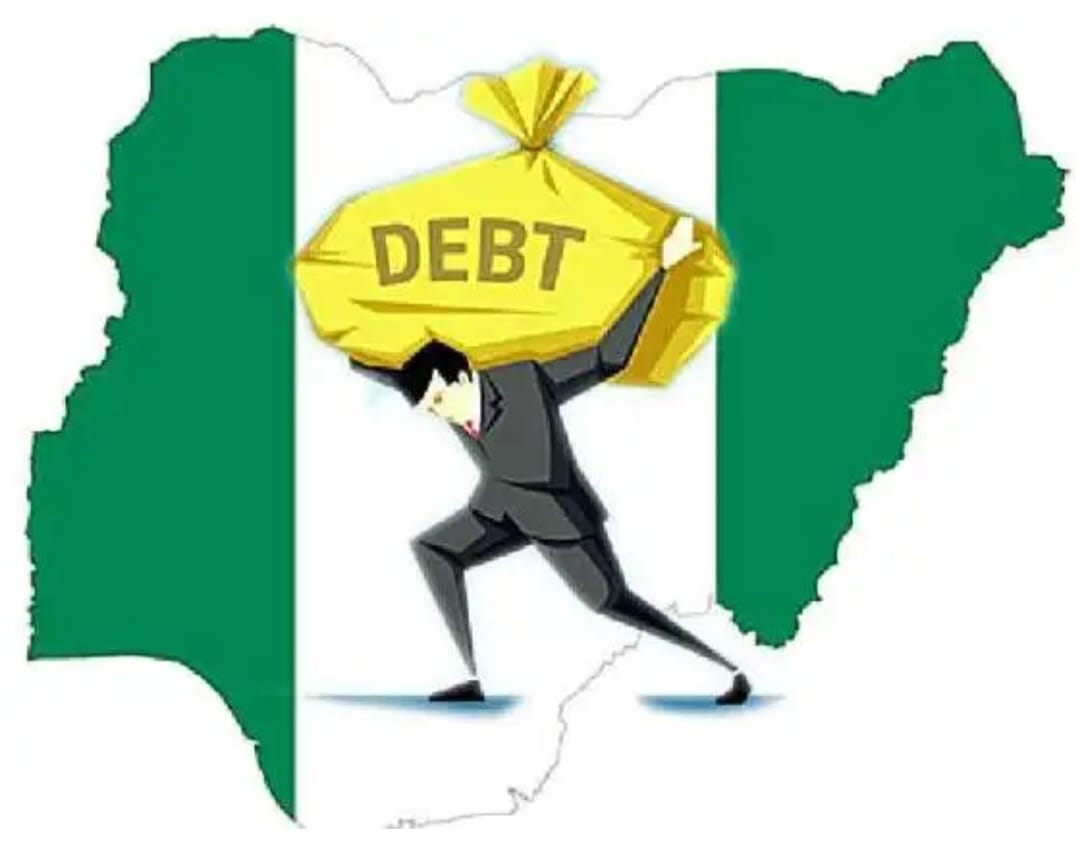
From Boom to Burden: Nigeria’s Public Debt Skyrockets to ₦152.39 Trillion; The Fiscal Timebomb No One Can Afford to Ignore.
By George Omagbemi Sylvester, published on saharaweeklyng.com
“A deep dive into the National Bureau of Statistics’ Q2 2025 debt report, the drivers of the surge, its human and macroeconomic costs and urgent remedies the country must adopt.”
Nigeria’s public debt stock climbed to ₦152.39 trillion in the second quarter of 2025, a number so large it should break the complacency of every policymaker, investor and citizen. The National Bureau of Statistics (NBS) disclosed the figure in its Nigerian Domestic and Foreign Debt Report for Q2 2025, noting that the total represents an increase from ₦149.38 trillion in Q1 2025 and an eye-watering year-on-year rise of about ₦18.09 trillion from Q2 2024.

This is not arithmetic on a spreadsheet. It is a health check on the nation’s financial body and the diagnosis is troubling. The report shows that external debt stood at ₦71.84 trillion (about US$46.98 billion) while domestic debt reached ₦80.55 trillion (about US$52.67 billion), meaning domestic borrowing now accounts for just over half of the stock and is driving much of the recent rise.
What the numbers mean and why they are dangerous. A 2.01% quarter-on-quarter rise to ₦152.39 trillion may look modest in percentage terms, but the absolute jump and its composition carry several threats:
Debt service crowding-out. Debt servicing already consumes a growing share of government revenues. In the first quarter of 2025, public debt servicing ran into the trillions of naira monthly, a drain on funds that would otherwise finance hospitals, schools, roads and social safety nets. When more revenue goes to pay creditors, less remains for capital expenditure that lifts living standards.

Exchange rate and currency risk. A large external component exposes Nigeria to exchange rate volatility. When the naira weakens, the naira-equivalent cost of external obligations rises, inflating the debt stock in naira terms even when dollar liabilities are unchanged. This mechanism has pushed Nigeria’s debt figures higher in recent quarters.
Shift toward domestic borrowing. The tilt to domestic markets can temporarily shield Nigeria from forex swings but it is not benign: domestic borrowing competes with the private sector for savings, can raise interest rates and risks “crowding out” private investment. The NBS data show domestic debt now represents roughly 52.9% of the total stock which is a structural shift with consequences for growth.
Fiscal sustainability and bond market appetite. Investors will demand higher yields if they sense fiscal slippage or that borrowing is financing consumption rather than productive investment. Higher yields increase future debt service costs and can precipitate a vicious cycle of borrowing and servicing. International lenders and rating agencies watch these trends closely.
Voices of alarm; experts weigh in. This is not just a numbers story. Economists and fiscal watchdogs have repeatedly warned that Nigeria’s rising debt service burden risks displacing essential public investment. Muda Yusuf, CEO of the Centre for the Promotion of Private Enterprise, has stressed that the country’s growing debt-service obligations are already outpacing capital expenditure and that if left unchecked the trend will “CROWD OUT ESSENTIAL GOVERNMENT FUNCTIONS.” His warning is a sober reminder that borrowing without a credible plan for revenue growth and efficiency is a recipe for stagnation.
From the policy side, Finance Minister Olawale (Wale) Edun has defended ongoing reforms while acknowledging the fiscal pressures they aim to correct; his public commentary has emphasized the need to balance reform momentum with debt sustainability. But words must be matched with concrete measures and revenue reform, expenditure prioritization and transparent use of loan proceeds.
BudgIT and other civil-society monitors have also cautioned that fresh borrowing plans risk breaching prudential thresholds unless accompanied by aggressive fiscal consolidation and transparency. The public deserves clear accounting of what loans are for and how they translate into jobs, services and growth.
Who owes what? – sub-national contributions and the Lagos effect. The NBS report flagged that several sub-national governments (states and local councils) account for a material portion of liabilities. Lagos State, Africa’s commercial powerhouse, tops the list of state debtors, reflecting a mix of infrastructure projects and financing strategies used by its government. This raises questions about the sustainability of state borrowing and coordination with federal debt strategy.
State borrowing is not inherently wrong: cities and states need capital for roads, water and urban services. But the danger comes when short-term revenue mismatches finance long-term projects, or when guarantees and contingent liabilities are not transparently recorded in public accounts, risks that compound national exposure.
The human cost; AUSTERITY by another name. Debt is not an abstract macro variable; it is translated into policy choices that affect ordinary Nigerians. When debt servicing eats into the budget, governments face stark options: cut capital projects, raise taxes, reduce subsidies or borrow more. Each option hits households. Higher taxes and reduced services fall hardest on the poor; heavier borrowing sows the seeds of future austerity. The recent rounds of subsidy reform and tariff adjustments illustrate how fiscal tightening quickly becomes a matter of daily survival for vulnerable families.
Practical policy prescriptions; what must happen now. Nigeria needs a coherent, aggressive and transparent strategy to arrest unsustainable debt dynamics. Key policy measures should include:
Fiscal consolidation anchored on revenue growth, not just austerity. Close tax gaps, widen the tax base, modernize collection and rationalize exemptions. Without credible revenue mobilization, debt reduction will be cosmetic.
Prioritize productive borrowing. New loans must be costed against expected economic returns. Borrow for infrastructure that catalyzes private investment and jobs; avoid borrowing to fund recurrent consumption.
Strengthen debt transparency and sub-national coordination. Publish timely, disaggregated debt data (federal, state, guaranteed, contingent liabilities) and enforce borrowing rules for states. Citizens must be able to see what is owed and for what purpose.
Protect capital expenditure. Ring-fence a minimum share of spending for capital projects; prioritize those with measurable social returns. Debt that finances growth pays for itself; debt that finances consumption destroys fiscal space.
Engage creditors for smarter terms. Where appropriate, renegotiate maturities, explore concessional windows, and pursue blended finance with private partners to reduce direct government exposure.
A closing warning and a call to action. Nigeria’s rise to ₦152.39 trillion in public debt is not destiny; it is a consequence of choices. The challenge for leaders is to choose policies that restore fiscal balance, revive growth and protect the poorest. As Muda Yusuf cautioned, the country cannot allow debt servicing to outpace capital spending or to become the tail that wags the dog.
If policymakers fail to act decisively, the result will be slow growth, higher costs of living and a future generation saddled with the obligation to repay a debt that did not translate into durable prosperity. The NBS report is a clarion call and EVERY RESPONSIBLE NIGERIAN, from the PRESIDENCY to the STREET, must treat it as such.





society
GEN CHRISTOPHER GWABIN MUSA SUPPORT INITIATIVE EXTENDS WARM BIRTHDAY FELICITATIONS TO PRESIDENT TINUBU ON 74TH BIRTHDAY
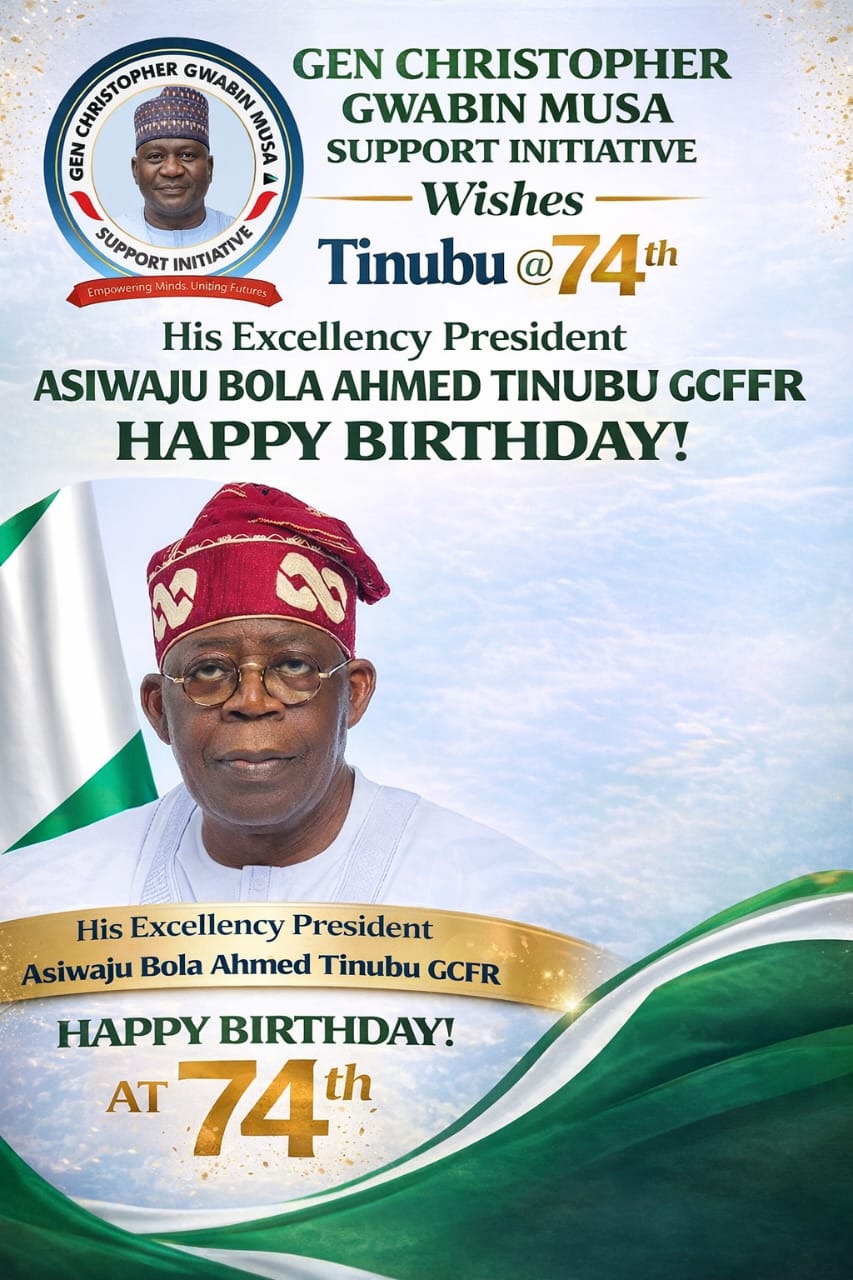
GEN CHRISTOPHER GWABIN MUSA SUPPORT INITIATIVE EXTENDS WARM BIRTHDAY FELICITATIONS TO PRESIDENT TINUBU ON 74TH BIRTHDAY
The Gen Christopher Gwabin Musa Support Initiative has extended heartfelt congratulations to His Excellency President Asiwaju Bola Ahmed Tinubu, GCFR, on the occasion of his 74th birthday.
In a statement released to the press, the Initiative conveyed warm wishes for the President’s personal well-being and for his continued leadership of the nation. The statement, signed by the Convener, Ibrahim Dahiru Danfulani, Sadaukin Garkuwan Keffi/Betara Biu, expressed hope that the coming year would bring the President “renewed strength and more wisdom in guiding the nation.”
The statement further noted that the Grand Patron of the Initiative, His Excellency Gen Christopher Gwabin Musa, OFR, Minister of Defence of the Federal Republic of Nigeria, joined in celebrating the milestone. It added, “Wishing Your Excellency continued good health, vitality, and determination as you lead the country towards greater unity and progress.”
The message underscores support for President Tinubu’s administration and its national objectives, marking the birthday as an occasion to reaffirm commitment to the nation’s unity and advancement under his stewardship.
society
Dominion City to Host Global Camp Meeting, “2 Nights of Glory” 2026 in Lagos, Enugu …Calls for Moral Renewal
*Dominion City to Host Global Camp Meeting, “2 Nights of Glory” 2026 in Lagos, Enugu
…Calls for Moral Renewal
Lagos – Dominion City has announced plans to host its annual Global Camp Meeting alongside a special “2 Nights of Glory” gathering in April 2026, with events scheduled to be held simultaneously in Lagos and Enugu.
The week-long programme is expected to draw tens of thousands of participants onsite and millions of virtual attendees from across the globe.
The Global Camp Meeting will run from Wednesday, April 1 to Monday, April 6, featuring daily sessions at 8:00 a.m. and 5:00 p.m. The “2 Nights of Glory” is slated for Friday, April 3 and Saturday, April 4 at the Golden Heart Place, Km 22 Lekki-Epe Expressway, beside Lagos Business School, Ajah, Lagos.
Organised by Dominion City, a global church focused on raising transformational leaders, the conference will centre on revival, spiritual renewal, and practical teachings. This year’s theme, “Redigging the Wells of Our Fathers,” underscores a call to return to foundational values and principles.
Speaking ahead of the event, Nobbert Onaga, President, Golden Heart Foundation and Senior Pastor, DC Lagos & Europe, emphasised the need for moral reawakening as a pathway to national transformation. He described the Church as “the pillar and foundation of truth,” noting that the conference aims to confront moral decline and restore core values within society.
“We are going back to foundational truths that established the Church. These truths will help repair societal damage and reposition the Church as a source of hope and light,” Onaga said.
Also speaking, Shola Olapade, Senior Pastor of Dominion City Headquarters, highlighted the Church’s role in addressing ethical and cultural challenges, particularly among young people. He added that the programme would go beyond spiritual teachings to include sessions on artificial intelligence, innovation, business, media, arts, and career development.
“We are equipping people not just spiritually, but with relevant 21st-century skills to thrive in today’s world,” Olapade noted.
The conference will feature teachings and ministrations from a lineup of international ministers, including Dr. David Ogbueli, Dr. Charles Ndifon, Andres Bisonni, Pastor Randy Mitchell, Apostle Ikechukwu Peter Nnajiofor, Dr. Ferdinand Nweke, Apostle Ben Hanyani Ndobe, Evangelist Dan Scott, and Dr. Chiefo Ejiofobiri.
Music ministrations will also be led by notable gospel artists such as Grace Idowu, Rhema Onuoha, Once More Six, David Nkennor, Anthony Kani, and GUC.
Organisers disclosed that over 30,000 participants are expected to attend in person, with free transportation provided from designated locations across Lagos to ease access. In addition, free medical services will be offered daily, building on previous outreaches that benefited over 1,700 people.
To ensure safety and order, more than 200 traffic marshals will be deployed in collaboration with relevant authorities.
Beyond its spiritual impact, organisers project that the event will stimulate local economic activity across hospitality, transportation, and retail sectors.
The Global Camp Meeting remains a key platform for spiritual impartation, leadership development, and societal transformation, aligning with Dominion City’s mission to equip believers to influence their communities positively.
Participation is open to the public, with registration available online for both physical and virtual attendance. //END.//
*PHOTO CAPTIONS:*
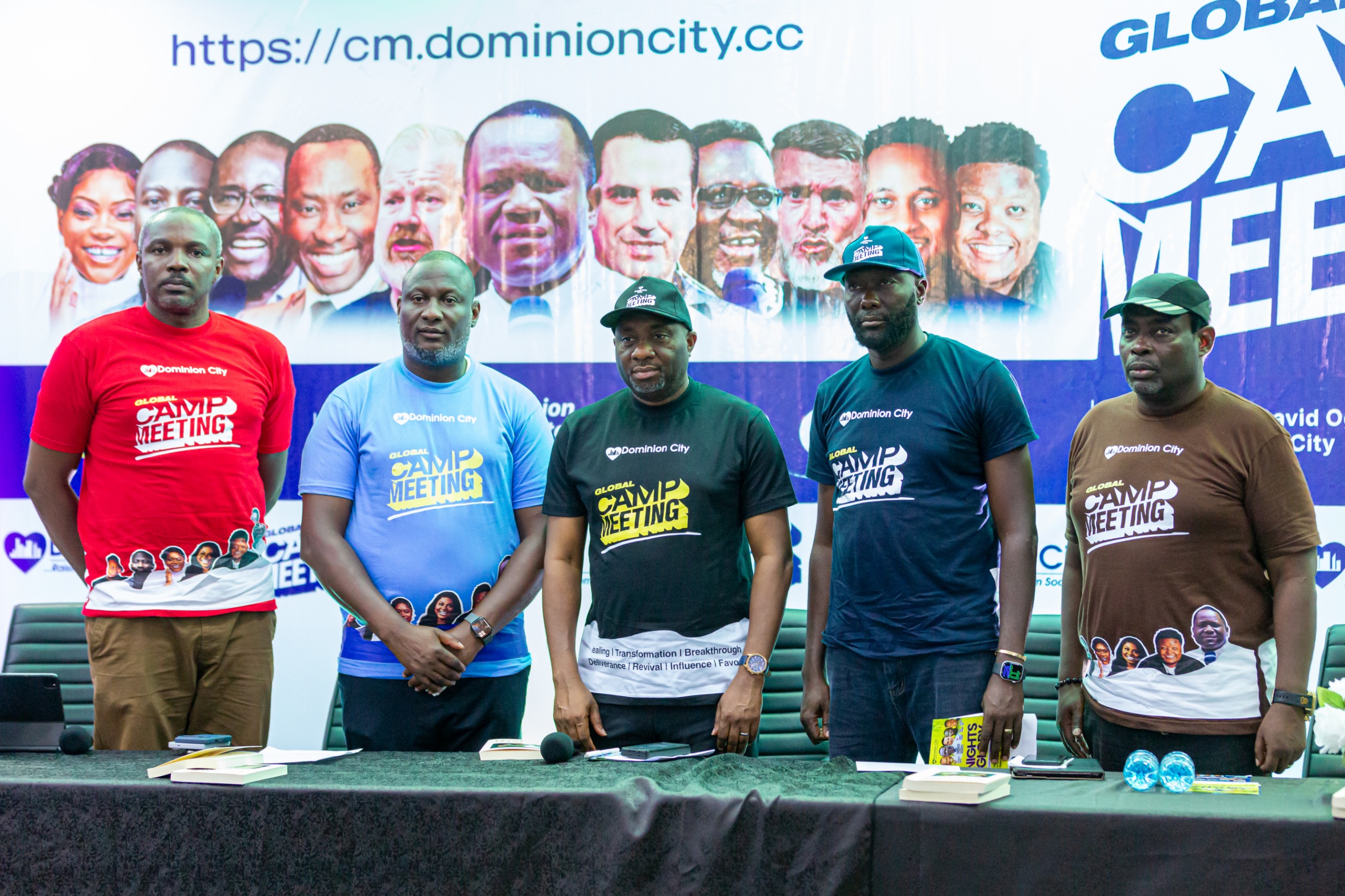
L-R: Dr. Godwin Efobi, Head, Medical Team, Dominion City Headquarters (DCHQ); Pastor Shola Olapade, Senior Pastor, DCHQ; Pastor Nobbert Onaga, President, Golden Heart Foundation and Senior Pastor, DC Lagos & Europe; Pastor Chuks Anochie, Head of Security and Traffic Control, Dominion City Headquarters (DCHQ), Camp Meeting 2026; Pastor Josh Tim Vaduchi, Head of Event & Programmes, DCHQ, during the press briefing of the forthcoming Global Camp Meeting, held the weekend of 2026 at the Dominion City Headquarters (DCHQ), Lagos.
L-R: Pastor Chuks Anochie, Head of Security and Traffic Control, Dominion City Headquarters (DCHQ), Camp Meeting 2026; Pastor Shola Olapade, Senior Pastor, DCHQ; Pastor Nobbert Onaga, President, Golden Heart Foundation and Senior Pastor, DC Lagos & Europe; Dr. Godwin Efobi, Head, Medical Team, DCHQ; and Pastor Josh Tim Vaduchi, Head of Event & Programmes, during the press briefing of the forthcoming Global Camp Meeting, held over the weekend in 2026 at the Dominion City Headquarters (DCHQ), Lagos.
society
Oloworo of Oworosoki Kingdom, Oba Babatunde Saliu, Felicitates President Bola Ahmed Tinubu at 74
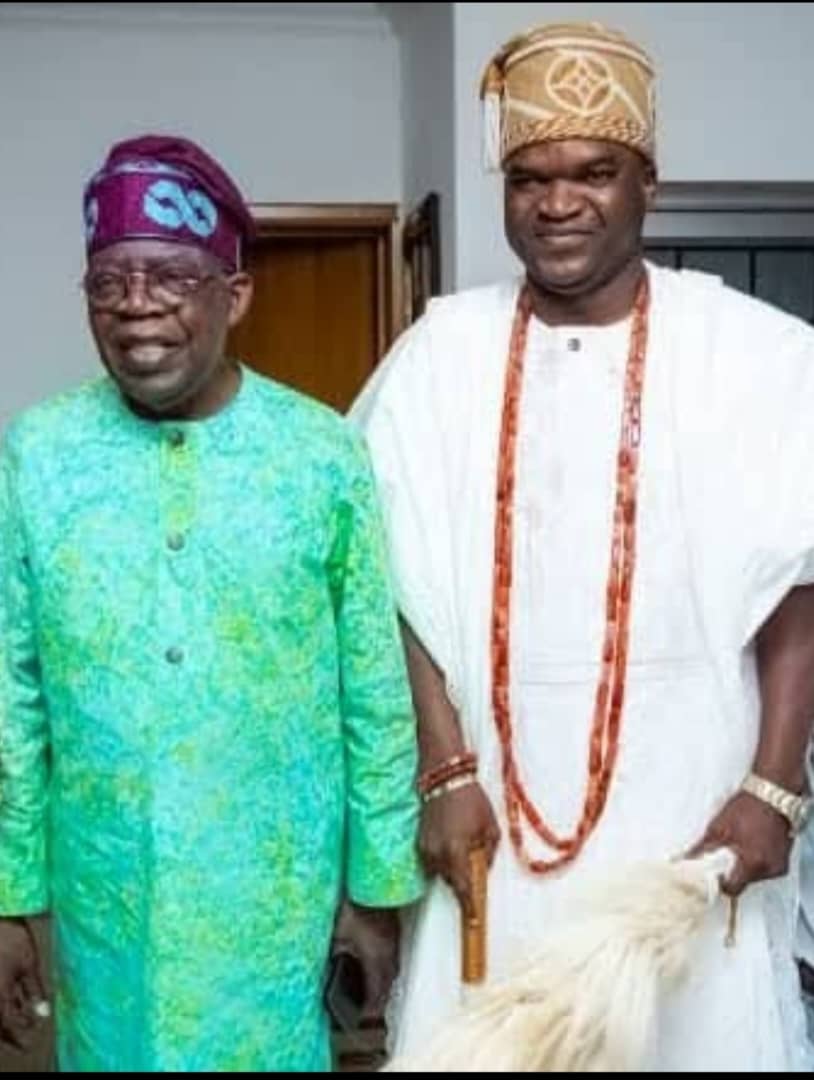
Oloworo of Oworosoki Kingdom, Oba Babatunde Saliu, Felicitates President Bola Ahmed Tinubu at 74
By Adeyemi Obadimu
The Oloworo of Oworosoki Kingdom, His Royal Majesty, Oba Babatunde Saliu, Elebo II, has extended warm felicitations to the President of the Federal Republic of Nigeria, Bola Ahmed Tinubu, GCFR, on the occasion of his 74th birthday.
In a goodwill message issued from his palace, the revered monarch described President Tinubu as a visionary statesman, a courageous reformer, and an indefatigable democrat whose lifelong commitment to nation-building continues to shape Nigeria’s progress.
Oba Babatunde Saliu praised the President’s unwavering dedication to public service, noting that his leadership has ushered in a new phase of economic reform, infrastructural renewal, and institutional strengthening across the country.
According to the monarch, the President’s Renewed Hope Agenda has begun yielding tangible relief and renewed confidence among citizens, reflecting his determination to reposition Nigeria for sustainable growth and prosperity.
“President Bola Ahmed Tinubu has demonstrated exceptional resilience, strategic foresight, and a deep love for Nigeria. His administration’s bold initiatives are laying the foundation for long-term national transformation. At 74, he remains steadfast in his resolve to build a stronger, more united, and economically vibrant nation,” the monarch stated.
Oba Babatunde further commended the President’s legacy of leadership, describing him as a bridge-builder, a mentor to many leaders, and a symbol of democratic stability. He acknowledged the President’s decades of sacrifice and contribution to the advancement of democracy in Nigeria.
On behalf of the Oworosoki Kingdom, the royal father prayed for divine wisdom, sound health, and renewed strength for the President to successfully complete the noble reforms and developmental strides he has embarked upon for the benefit of all Nigerians.
“As Your Excellency marks 74 remarkable years, we pray that Almighty God grants you long life, continued wisdom, and the fortitude to steer our great nation toward greater heights. May your days be filled with strength and grace as you continue to serve Nigeria with distinction,” Oba Babatunde Saliu added.
President Bola Ahmed Tinubu clocks 74 as a leader whose enduring influence, bold reforms, and steadfast patriotism remain central to Nigeria’s ongoing journey of national renewal.


-

 society6 months ago
Religion: Africa’s Oldest Weapon of Enslavement and the Forgotten Truth
-

 news4 months ago
WHO REALLY OWNS MONIEPOINT? The $290 Million Deal That Sold Nigeria’s Top Fintech to Foreign Interests
-

 society6 months ago
“You Are Never Without Help” – Pastor Gebhardt Berndt Inspires Hope Through Empower Church (Video)
-

 celebrity radar - gossips2 months ago
Dr. Chris Okafor Returns with Power and Fire of the Spirit -Mounts Grace Nation Altar with Fresh Anointing and Restoration Grace on February 1, 2026