
Entertainment
From Drill to Deen: Central Cee’s Conversion and the Power of Faith in Modern Hip-Hop

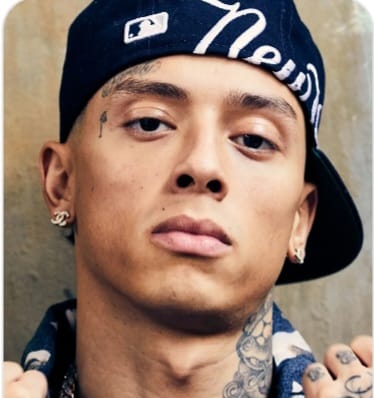
From Drill to Deen: Central Cee’s Conversion and the Power of Faith in Modern Hip-Hop
By George Omagbemi Sylvester
“The British rap star’s public declaration of Islam sparks global reactions and renews debate about spirituality, identity, and influence in contemporary music.”
British rap superstar Central Cee has publicly announced that he has converted to Islam, a revelation that has rapidly spread across global media and social platforms, drawing reactions from fans, cultural commentators and religious observers alike. The development marks a deeply personal shift for one of the most influential voices in modern UK drill, and it highlights the growing intersection between faith, identity and popular culture.
Central Cee, whose real name is Oakley Neil Caesar-Su, disclosed the decision during a recent livestream, where he stated that he had taken the Shahada, the Islamic declaration of faith that formally marks a person’s conversion to Islam.
According to multiple reports published on February 6, 2026, the rapper confirmed the conversion publicly, saying he had changed his name and embraced Islam, with friends present during the broadcast congratulating him.
The announcement quickly became a trending global topic, with thousands of fans flooding social media with messages of support and congratulation.
What happened, when, where and how
The confirmed facts are straightforward.
What happened: Central Cee announced his conversion to Islam.
Who: The British rapper, born Oakley Neil Caesar-Su.
When: The announcement surfaced publicly on or around February 6, 2026.
Where: The declaration was made during a livestream, widely circulated online.
How: He confirmed he had taken the Shahada and embraced Islam, with friends present during the session.
Before this announcement, Central Cee had never publicly declared adherence to any specific religion, though fans had long speculated about his spiritual leanings.
Background: the rise of a global rap force
Born on June 4, 1998, in London, Central Cee rose from the streets of Shepherd’s Bush to become one of the most commercially successful British rappers of his generation.
He achieved mainstream recognition with his 2020 single Day in the Life and later dominated charts with hits such as Doja and Sprinter, accumulating billions of streams worldwide.
By the mid-2020s, he had become a defining figure in UK drill, blending street narratives with a polished, globally accessible sound.
Reactions and significance
The news of his conversion triggered widespread reaction across continents. Many fans congratulated him, using phrases such as “Welcome to Islam, brother,” reflecting the celebratory tone among supporters.
Others expressed curiosity about whether the decision would influence his music, public image, or future lyrical direction.
Cultural analysts note that religion has long played a quiet but significant role in hip-hop. From Malcolm X’s influence on American rap consciousness to the presence of Muslim artists in both US and UK scenes, faith has often shaped artistic identity.
British sociologist Dr. Reza Pankhurst, writing on religion and youth culture, has argued that for many urban artists, faith offers “a language of discipline, moral structure and belonging in environments often defined by instability.”
Similarly, American scholar Dr. Sherman Jackson has noted that Islam’s appeal among musicians and athletes lies partly in its “emphasis on personal responsibility, spiritual dignity, and community.”
While these are broader observations about religious influence in culture, they help explain why high-profile conversions often resonate far beyond the personal sphere.
Why the announcement matters
Central Cee is not merely another celebrity; he is one of the most commercially powerful voices in British rap, with global reach across Europe, Africa, Asia and North America. His decisions, therefore, carry symbolic weight.
When artists of such stature publicly embrace a faith, it often triggers three parallel conversations:
First, identity: Fans begin to examine how the artist’s beliefs align with their lyrics and public persona.
Second, influence: Younger audiences may view the decision as aspirational or spiritually significant.
Third, authenticity: Critics and supporters alike debate whether faith will reshape the artist’s artistic content.
British cultural commentator Kehinde Andrews has previously observed that hip-hop is “not just music but a social language through which young people negotiate power, race, faith and identity.”
In that sense, Central Cee’s announcement becomes part of a larger cultural dialogue not merely a personal declaration.
The question of a new name
Some reports indicate that the rapper mentioned changing his name after taking the Shahada, though details remain inconsistent across sources.
While certain online reports suggested possible new names, there is no universally confirmed official new name from the artist at the time of reporting.
This remains an evolving aspect of the story, and responsible reporting requires caution until a formal statement is released through verified channels.
The broader context: faith and hip-hop
Central Cee joins a growing list of artists who have publicly embraced Islam. Over the decades, figures such as Yasiin Bey (Mos Def), Lupe Fiasco, Ice Cube, and Q-Tip have either converted to Islam or drawn heavily from Islamic teachings in their music.
In the UK, Muslim identity has long been intertwined with the grime and drill scenes, reflecting the multicultural realities of cities like London, Birmingham and Manchester.
Cultural historian Tricia Rose, one of the foremost scholars of hip-hop, once wrote that the genre “has always been a site of spiritual searching, moral struggle and social commentary.”
In that context, a public conversion is not an anomaly but part of a longstanding tradition of artists seeking meaning beyond fame and commercial success.
What remains unclear
Despite the viral spread of the story, certain details are still evolving:
The exact location of the livestream has not been formally confirmed.
The identity of the individuals present during the Shahada has not been publicly verified.
Any official legal name change has not been documented in confirmed public records.
Responsible journalism requires distinguishing between verified facts and social-media speculation.
Final assessment
Central Cee’s conversion to Islam is a deeply personal decision that has nonetheless sparked global conversation. Announced during a livestream in early February 2026, the declaration places one of Britain’s most influential rappers at the centre of a broader discussion about faith, culture and celebrity influence.
In an era where artists are often defined solely by streaming numbers and chart positions, his announcement underscores a different narrative: the search for meaning, identity, and spiritual grounding in the midst of global fame.
As the late scholar James Cone once wrote, “Spiritual transformation is the most radical form of social change, because it begins inside the human soul.”
Whether Central Cee’s journey will reshape his music or remain a private source of guidance is a question only time can answer. What is certain, however, is that his decision has already stirred conversations that extend far beyond the world of rap.





Entertainment
Fuji Wayne, Shanko Rasheed’s Canada Summer Tour Signals The Rise of A Fuji-Infused Afro-Fusion Sound
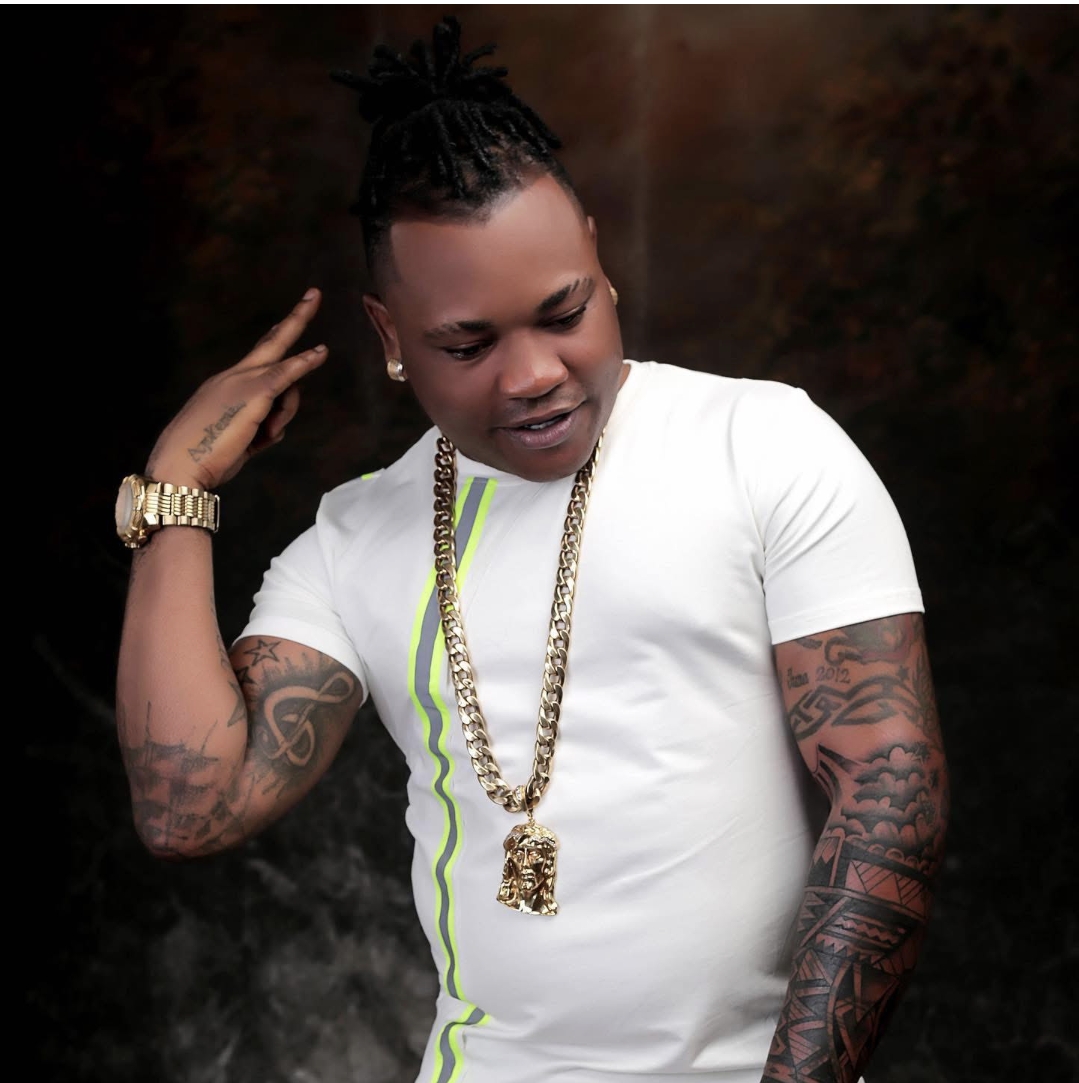
Fuji Wayne, Shanko Rasheed’s Canada Summer Tour Signals The Rise of A Fuji-Infused Afro-Fusion Sound
By : Alhaji Arems (Baba Fuji)
In an industry where virality often overshadows steady growth, Nigerian artist Shanko Rasheed is taking a different route — one defined by gradual expansion, cultural fusion, and strategic international movement. From early releases to touring activity across North America, his trajectory reflects a new class of Nigerian artists who are less visible in headlines but increasingly active on the global stage.
A Sound Rooted in Tradition, Shaped by Modern Influence :
At the core of Shanko Rasheed’s artistry is a blend that feels both familiar and forward-looking: Afro-fusion layered with Fuji influences.
Fuji, a genre deeply rooted in Yoruba musical tradition, is known for its percussive intensity, vocal cadence, and spiritual undertones. By merging this with Afro-fusion — a broader, globally digestible sound palette — Shanko positions himself in a lane that bridges:
• Street authenticity
• Cultural heritage
• Contemporary accessibility
This hybrid approach aligns with a wider movement in Nigerian music, where artists are increasingly revisiting indigenous sounds and recontextualizing them for modern audiences. However, unlike more mainstream acts who polish these elements for pop appeal, Shanko Rasheed appears to lean into the rawness of Fuji-inspired delivery, giving his music a distinct edge.
Building Beyond Borders : Touring The United States And Canada
One of the clearest indicators of Shanko Rasheed’s growth is his international touring footprint.
In the past year, he has:
• Performed across parts of the United States, expanding his reach beyond Nigeria
• Secured upcoming tour dates in Canada for the summer, signaling continued demand within diaspora communities
For an artist still in the early stages of mainstream recognition, this level of cross-border activity is significant. It suggests:
• An existing audience base outside Nigeria
• Strategic connections or grassroots promoters within diaspora circuits
• A willingness to invest in physical presence rather than relying solely on digital growth
The Nigerian diaspora has long served as a testing ground for emerging talent, and artists who successfully tap into that ecosystem often build loyal, high-engagement audiences before breaking into wider markets.
Lifestyle Signals And Artist Positioning :
Beyond music and touring, Shanko Rasheed’s recent acquisition of a Mercedes-Benz adds another layer to his public image. While such milestones are common in the music industry, they often serve a dual purpose:
• A personal achievement marker
• A branding signal reinforcing upward mobility and success
In the context of an emerging artist, it also reflects a narrative of progression — from early-stage hustle to visible rewards. When communicated effectively, these moments can strengthen audience perception and credibility, particularly within genres that value both authenticity and aspiration.
The Visibility Gap : Present, Yet Underdocumented
Despite these developments, Shanko Rasheed remains underrepresented in mainstream media and digital indexing. There is limited:
• Press coverage
• Editorial playlist visibility
• Structured artist profiling
This creates a noticeable gap between activity and awareness. In practical terms, he exists in a space where:
The work is happening, but the story hasn’t been fully told.
For many artists at this level, this gap can slow momentum. However, it also presents an opportunity to shape a narrative deliberately, rather than reacting to one formed by external media.
A Strategic Moment For Definition :
Shanko Rasheed’s current phase can best be described as pre-definition — a period where the foundation is in place, but the identity is still being formalized in the public eye.
He has:
• A developing catalog on streaming platforms
• An active social media presence
• International performance experience
• A culturally rooted sound with crossover potential
What remains is the alignment of these elements into a cohesive narrative that audiences — and industry stakeholders — can easily understand and engage with.
In a Nigerian music landscape often dominated by rapid breakout cycles, Shanko Rasheed’s path highlights an alternative model:
• Build steadily
• Expand geographically
• Refine sound identity
• Let audience growth follow organically
His fusion of Afro-fusion and Fuji also contributes to a broader cultural conversation about the preservation and evolution of indigenous sounds. As global listeners become more receptive to genre-blending and cultural specificity, artists operating in this space are well-positioned to benefit.
Shanko Rasheed may not yet be a household name, but his movements suggest an artist laying deliberate groundwork for long-term relevance. With international tours, a distinct sonic direction, and visible personal milestones, he is steadily transitioning from obscurity to recognition.
Beyond his professional strides, Shanko Rasheed has also faced personal tragedy. The Fuji singer reportedly lost his first son, Jamaldeen Atanda, on February 27, 2026. While details surrounding the loss remain private, the moment marks a deeply personal chapter in his life, unfolding alongside a period of growing international visibility.
The next phase of his career will likely depend not just on the music itself, but on how effectively his story is documented, distributed, and amplified. If aligned properly, his blend of Afro-fusion and Fuji — combined with his growing global footprint — could position him as one of the more compelling emerging voices in Nigeria’s evolving music scene.
Entertainment
I Used To Insult Single Mothers Until I Remembered That My Mum Is A Single Mother -Akeem
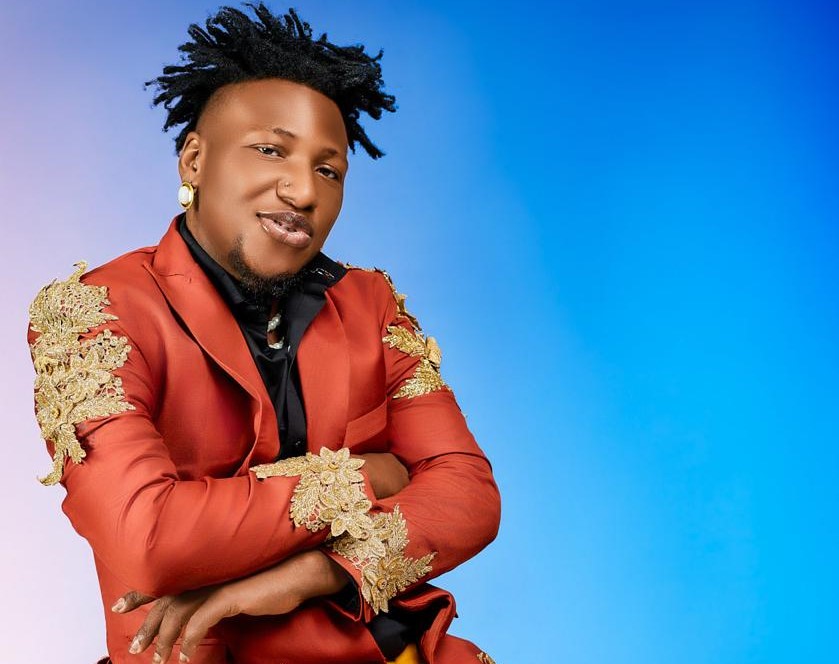
I Used To Insult Single Mothers Until I Remembered That My Mum Is A Single Mother
-Akeem Akintola a.k.a. ‘Oko Awon Single Mothers’
A young man doing well in life is often defined by a disciplined, and purpose-driven approach to his personal and professional growth. 34-year-old Lagos State born social media influencer, Olalekan Akeem Akintola, disclosed in this interview that he has cultivated the habits and mindsets of a young man determined for long-term success before he attained age 21. He said he continually updated his knowledge and skills to keep up with changing demands and trends even before he left Nigeria for Europe in search of greener pastures at age 29. Other than his talent alone, Akeem noted that his becoming successful abroad was not all by luck, but mostly by being kind and respectful. He also revealed the secret behind his popular social media nickname, ‘oko awon single mothers’. And more…
What do you love about yourself?
What I love about myself is that I am a very determined person. When I am determined to do something I don’t look back. I just go into it not minding what the result would be and I don’t care about what anybody would say.
Tell us about your marital life.
I was married. But I’m a single father now (general laughter).
What year did you travel abroad and how did you manage to succeed abroad?
I traveled out of Nigeria in 2021. I’m currently in Europe, Germany, South Cyprus to be precise. I worked in the kitchen. To be honest, my experience abroad wasn’t an easy one. Thank God, today I have my citizenship documents and I’m living fine. It wasn’t easy getting to this level. I give God the glory.
Who are the most special people in your life?
The most special person in my life is my mum. Then my kids and my mum’s families, especially Sister Iyabo and Sister Nofisat. My mum’s families are so special in my life because they have been very supportive of my life.
Tell us about your experience helping a sick lady, Keji, whose matter has gone viral on social media.
This lady, Keji, came into my Instagram inbox and told me that she was sick and needed help. Ordinarily, I do use my platform to help people, especially those who are sick. There was a time I ignored her and didn’t attend to her complaints. But when she showed me the evidence and pleaded that I should help her, I had to support her. I am the person that sent her to see Agbala Gabriel pastor. But I didn’t know that he was going to mess up.
What type of people do you love to be around you?
I love to be around people who are friendly, ready to help and very supportive. I do not like people with negative vibes.


You’re a young guy, why do people call you ‘oko awon single mothers’?
There was a time I used to abuse single mothers; what they were doing, why did they leave their marriages and so on. I saw it as an abnormality. But I came to realize that my mum is also a single mother and I said why should I be insulting single mothers when I was also raised by a single mother. So, I had to start making videos about single mothers, praising them and talking about their challenges and qualities. Since that time, single mothers started calling me ‘oko awa single mothers’ (husband of us single mothers).
Do you make so much money through social media posts or you have a job that gives you the biggest?
Yes, I make money on social media. I also work in the kitchen as a chef. I’m into kitchen stuff here abroad and it pays me well. Also, I run adverts for people on my platform and I make a lot of money from it.
You are very popular among society women; how did you make it happen?
All I can say is thank God. I don’t know how it happened. I just found myself with millions of fans and followers. People really love me, especially older society women who fondly call me ‘oko wa’ (our husband).
What is your success tip for young people like you?
My advice for young people like me is that whatever they’re doing they should keep doing it. They should be consistent. Keep doing it, don’t relent and don’t look back. When I started out on social media, I was bullied, cursed. I never envisaged where I am today. I never expected that people would be talking about me sometime in the future. But here I am. I never saw this coming. I really thank God for everything. So, let us just keep doing whatever we are doing. There’s light at the end of the tunnel.
Are you fully in the entertainment industry or on part time?
I work and I’m fully back in the entertainment industry.
You look so young despite your age, what’s the secret?
The secret is that I maintain physical fitness, I do regular workouts. I know that a strong body supports a strong mind.
Entertainment
Nollywood Actress and Philanthropist Amb. Princess Chelsea R.C. Nwodo Appointed as Chief of Staff to AGN National President*
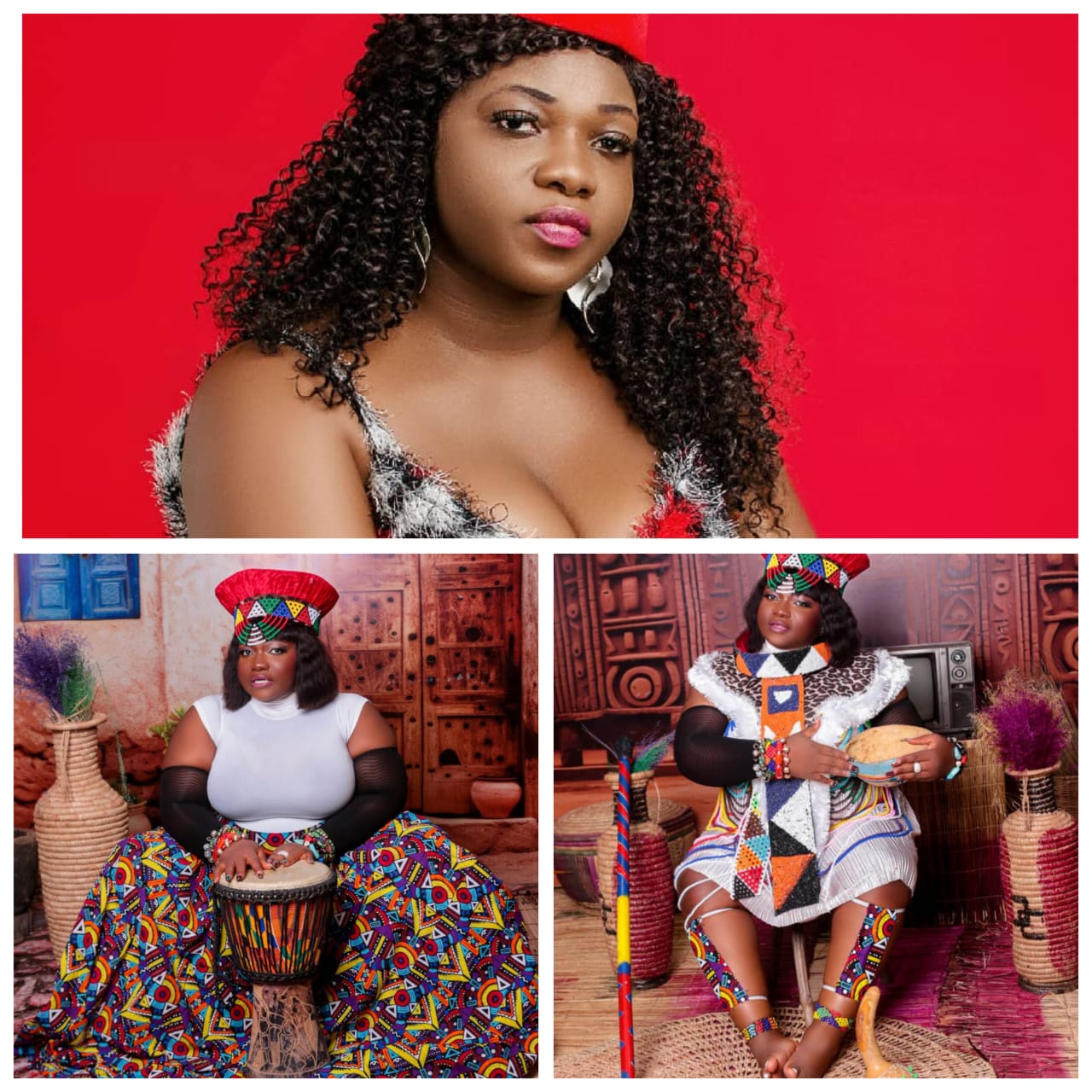
*Nollywood Actress and Philanthropist Amb. Princess Chelsea R.C. Nwodo Appointed as Chief of Staff to AGN National President*
Abuja, Nigeria – The Actors Guild of Nigeria (AGN) announces the appointment of Amb. Princess Chelsea R.C. Nwodo as the new Chief of Staff to National President, ALHAJI SANUSI ABUBAKAR YAKUBU. This strategic move underscores the Guild’s commitment to excellence and its dedication to fostering a more efficient and effective leadership structure.

Amb. Nwodo brings a wealth of experience and expertise to her new role, having served as a National Deputy Secretary (Emeritus) and demonstrating exceptional leadership skills and a deep understanding of the Guild’s vision and mission. A respected member of the Nigerian entertainment industry, she is also known for her dedication to promoting actor welfare and advancing the Guild’s interests.
*A Proven Track Record*
Amb. Nwodo’s appointment is a testament to her outstanding contributions to AGN and her commitment to serving the Nigerian film industry. Her philanthropic efforts and advocacy for social causes have made a positive impact on Nigerian communities, She’s also the CEO of CHELSEA NWODO’S FOUNDATION a foundation known for its unique cultural expression and alliance with many state government including Delta state government and so on.
*About the Actors Guild of Nigeria (AGN)*
The AGN is the governing body for professional actors in Nigeria’s Nollywood film industry, established in 1998 with over one million members across the six geopolitical zones of the federation. The Guild promotes actor’s welfare, protects their rights, and advances the Nigerian film industry.


-

 society6 months ago
Religion: Africa’s Oldest Weapon of Enslavement and the Forgotten Truth
-

 news3 months ago
WHO REALLY OWNS MONIEPOINT? The $290 Million Deal That Sold Nigeria’s Top Fintech to Foreign Interests
-

 society6 months ago
“You Are Never Without Help” – Pastor Gebhardt Berndt Inspires Hope Through Empower Church (Video)
-

 celebrity radar - gossips2 months ago
Dr. Chris Okafor Returns with Power and Fire of the Spirit -Mounts Grace Nation Altar with Fresh Anointing and Restoration Grace on February 1, 2026