
society
From Global Prestige to Local Shame: What Happened to Nigeria’s Dignity on the World Stage?

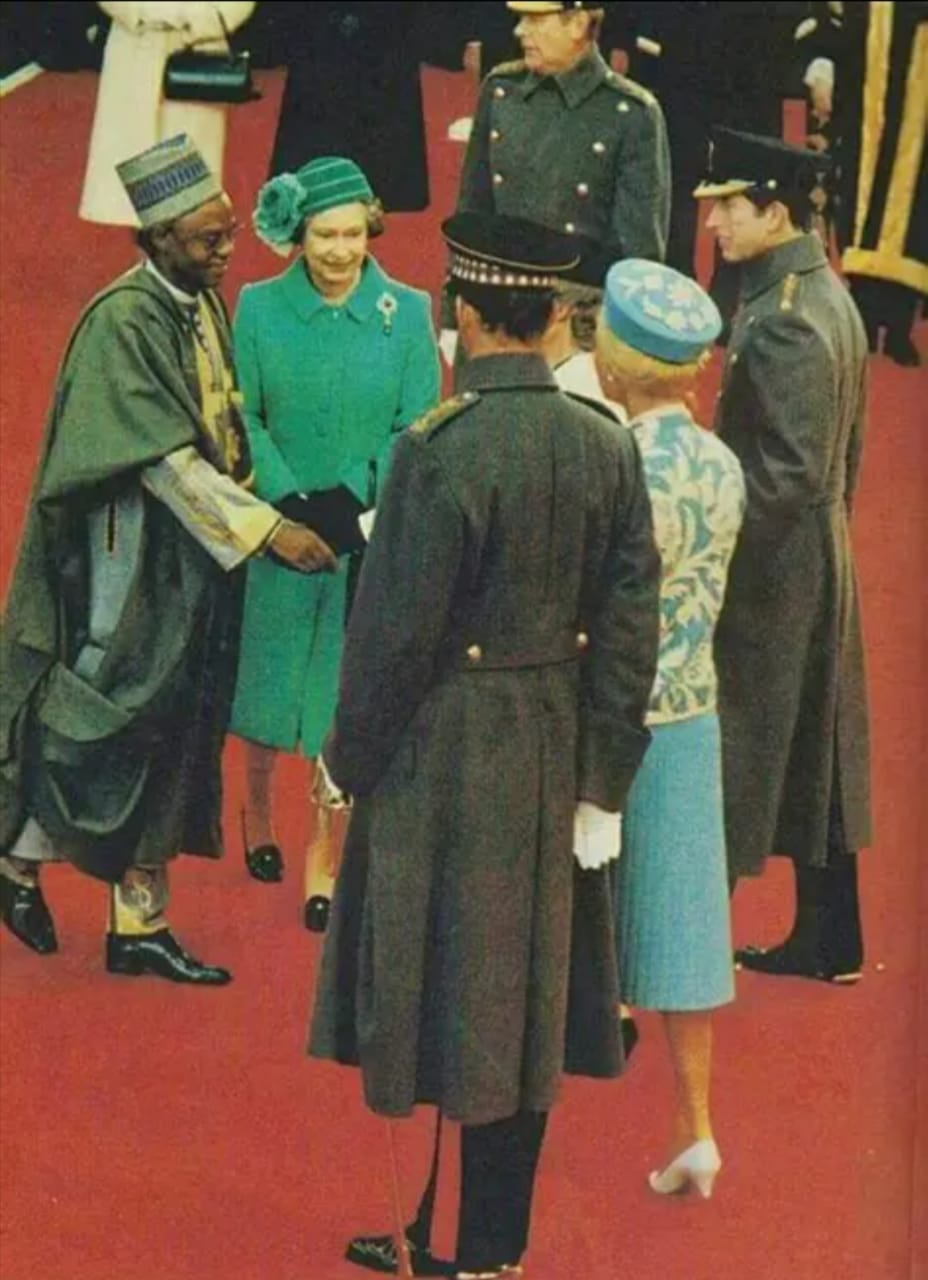
From Global Prestige to Local Shame: What Happened to Nigeria’s Dignity on the World Stage?
By George Omagbemi Sylvester | Published by SaharaWeeklyNG.com
In March 1981, President Shehu Shagari of Nigeria arrived at Victoria Train Station in London for a four-day state visit to the United Kingdom. The reception was nothing short of royal splendour; Her Majesty Queen Elizabeth II, Prince Philip, Prince Charles, his soon-to-be bride Lady Diana Spencer, Baroness Phillips and British Prime Minister Margaret Thatcher were all present to welcome him. That singular moment was not just ceremonial pomp; it was a reflection of Nigeria’s prestige, power and promise in the international community.


Fast forward to today and one is forced to ask: What happened to Nigeria? How did we fall from the ranks of globally respected nations to a country whose citizens are routinely profiled, rejected and sometimes outright banned from entering foreign territories? How did we move from RESPECT to RIDICULE, from GRACE to DISGRACE?

A Nation Once Revered. NIGERIA was once the pride of Africa, not just because of our population or natural resources, but because we had LEADERS, SYSTEMS and a GROWING ECONOMY that INSPIRED GLOBAL ADMIRATION. In the 1970s and early 1980s, Nigeria was one of the fastest-growing economies in the world. The NAIRA was STRONGER than the DOLLAR. Our UNIVERSITIES attracted INTERNATIONAL STUDENTS. Our PASSPORTS opened doors. Our LEADERS spoke and the WORLD LISTENED.

President Shehu Shagari’s state visit in 1981 was not an isolated event. It was preceded by international respect for leaders like General Yakubu Gowon, who negotiated Nigeria’s foreign debt with honour; Murtala Mohammed, whose revolutionary speech at the OAU in 1976 shook the Western world and changed Africa’s posture on colonialism; and Olusegun Obasanjo, whose handover to a civilian government in 1979 won international accolades. These were the days when Nigeria led PEACEKEEPING MISSIONS, MEDIATED AFRICAN CONFLICTS and SPOKE BOLDLY on the GLOBAL STAGE.

The Downward Spiral, but all that changed; FIRST SLOWLY, then ALL AT-ONCE. A toxic COCKTAIL of MILITARY COUPS, ENDEMIC CORRUPTION, TRIBALISM, POOR LEADERSHIP and INSTITUTIONAL DECAY dragged Nigeria into the abyss. By the mid-1990s, under the repressive dictatorship of General Sani Abacha, Nigeria had become a PARIAH STATE. Political assassinations, looted billions and human rights violations earned us international sanctions. From being a beacon of African potential, NIGERIA became the very cautionary tale foreign diplomats used in LECTURES on BAD GOVERNANCE.
Today, the average Nigerian passport ranks among the weakest in the world, the naira has lost over 95% of its value since 1981. Unemployment, insecurity, and inflation have skyrocketed. Our universities are underfunded, our hospitals understaffed and our roads resemble scenes from post-apocalyptic films.
What Exactly Changed?
Leadership Quality: The calibre of our leaders has significantly declined. While past leaders were not saints, they were often visionary and patriotic. Today, leadership is often reduced to ethnic calculations, vote-buying, godfatherism and sheer incompetence. As Prof. P.L.O. Lumumba puts it, “Africa is not poor, it is poorly led.” Nigeria is the poster child of that tragic truth.
Corruption as Culture: What used to be isolated cases of greed is now a systemised structure of plunder. From budget padding to contract inflation, stolen funds are hidden in foreign bank accounts while citizens die of preventable diseases. According to Transparency International, Nigeria ranks among the most corrupt countries in the world, hovering around 145 out of 180 countries.
Loss of Institutional Integrity: In the past, the Nigerian Civil Service, judiciary and military were strong institutions. Today, they have been politicised and compromised. Elections are rigged with impunity. Judges are bought. Legislators are puppets of their party leaders. As Chinua Achebe once noted, “The trouble with Nigeria is simply and squarely a failure of leadership.”
Ethnic and Religious Division: Unlike the unified front we presented in the 70s and 80s, today Nigeria is a fragmented nation. Every issue is filtered through a tribal or religious lens. Meritocracy has been sacrificed on the altar of federal character and political zoning. The result? Mediocrity in governance and national disunity.
Brain Drain: The best Nigerian doctors, engineers, academics and entrepreneurs now live and work abroad. In 2023 alone, over 1,200 Nigerian-trained doctors relocated to the UK. Why? Because Nigeria has become hostile to excellence. A nation that does not reward its brightest minds is digging its own grave.
Echoes from the Past
Consider this: during President Shagari’s 1981 visit, Nigeria had one of the largest foreign reserves in Africa. We were building the Ajaokuta Steel Complex, developing the Federal Capital Territory in Abuja and had the Nigerian Airways as one of Africa’s largest airlines. Today, we can barely generate stable electricity or process a national budget without drama.
What would past leaders like Tafawa Balewa, Obafemi Awolowo, Nnamdi Azikiwe, or even Aminu Kano say if they saw the Nigeria of today? A nation rich in oil, but poor in power supply. A country with over 200 million citizens, but led by a recycled elite class, many of whom have never stood in a queue or used a public hospital.
The Way Forward. The good news is this: Nigeria is not a hopeless country. It requires radical reforms, starting with:
RESTORING ELECTORAL INTEGRITY: Until votes truly count, leaders will never be accountable. Electoral reforms, including the full implementation of electronic voting and independent electoral tribunals, are non-negotiable.
MERIT-BASED LEADERSHIP: We must stop voting based on tribe or religion. Nigeria needs competent, visionary and honest leaders regardless of ethnicity.
PATRIOTIC RE ORIENTATION: Citizens must stop glorifying wealth without origin. Corrupt officials should be shamed not celebrated.
INVEST in EDUCATION and INNOVATION: No nation develops by ignoring its brains. We must fund our universities, support local research and stop brain drain.
INSTITUTIONAL STRENGTHENING: From the police to the judiciary, institutions must be empowered and depoliticised. Justice must be blind not biased.
REBUILD NATIONAL IMAGE: Nigeria needs a strategic global rebranding effort. Just like Rwanda rose from genocide to global admiration, Nigeria can reclaim her lost glory with deliberate diplomacy and economic reforms.
Powerful Voices Speak
Dr. Obiageli Ezekwesili, former World Bank VP, once stated: “The greatest tragedy in Nigeria is that we have normalised failure. We are not angry enough.” That anger, that righteous indignation, must now fuel a national rebirth. Renowned Nobel laureate Wole Soyinka puts it bluntly: “The man dies in all who keep silent in the face of tyranny.” Nigerians must stop keeping quiet. From the diaspora to the local village council, we must all rise to demand better.
Final Analysis: Can We Rise Again? Yes, we can, but only if we stop romanticising the past and start reinventing the future. Nostalgia alone won’t save us. We need structural change, leadership overhaul and a citizenry that refuses to be docile. The memory of Shehu Shagari’s glorious visit in 1981 should inspire us, not depress us. It is proof that Nigeria once commanded global respect. And that respect can return, but only if we change course today.
Until then, the world will continue to ask, “WHAT HAPPENED to NIGERIA?” And we, the people, must find the courage to answer truthfully and act decisively.

Written by George Omagbemi Sylvester
Published by SaharaWeeklyNG.com




FOPCHEN Seeks Wider Engagement As Court Defers Hearing
OTA, OGUN STATE — The High Court of Ogun State, Ota Division, on Thursday resumed hearing in the ongoing matter involving cultural and societal concerns, before adjourning proceedings till Thursday, July 2, 2026, for continuation of hearing.
At the resumed sitting on May 28, 2026, counsel representing the various parties revisited key issues in the case and made further submissions before the court.
The matter, which has continued to generate public interest across different sectors, again drew attention from legal observers and stakeholders who described the case as one with significant implications for societal values, cultural identity and constitutional interpretation.
Speaking after the proceedings, the Foundation for the Protection of Cultural Heritage in Nigeria, popularly known as FOPCHEN, renewed its appeal for dialogue and constructive engagement among Nigerians, stressing that sensitive cultural and moral issues should not be left entirely within the confines of the courtroom.
According to the group, broader conversations involving traditional institutions, civil society organisations, religious leaders and policy stakeholders remain necessary in addressing issues relating to national values and social responsibility.
Legal analysts at the court premises noted that arguments being canvassed by parties in the suit could shape future legal interpretations surrounding cultural and moral questions in the country.
Following submissions by counsel, the presiding judge adjourned the matter till Thursday, July 2, 2026, to enable parties further prepare and respond to issues raised during the hearing.
The development has continued to spark reactions among observers, with many Nigerians closely monitoring the proceedings ahead of the next hearing date.
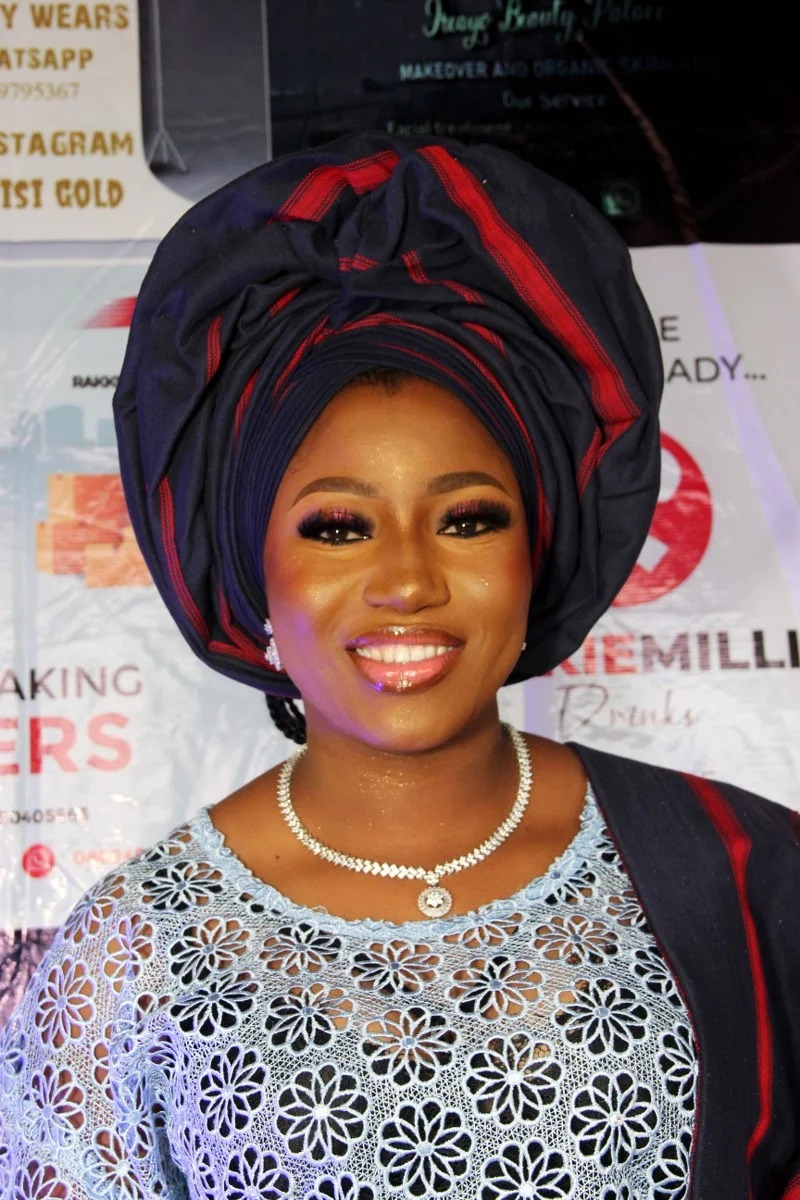
US-Based Society Lady, Fehintola-Brat Extends Eid-El-Kabir Greetings To Muslims
United States based fahionista of class, Chief (Mrs) Ayoola Fehintola-Brat has extended a warm greetings to Muslim faithful all over the world on the occasion of the 2026 Eid-El-Kabir celebration.
Fehintola-Brat who is the Balogun Egbe Obaneye Obinrin Akile Ijebu, and the Yeye Asofin of Idenaland in her message to Journalists urged Muslim to continually uphold the enduring values of sacrifice, obedience, faith, and compassion, which are central to the significance of Eid-El-Kabir festival.
A quiet philantropist whose humanitarian services has won her several laurels urged Muslims to use the spiritual occasion to pray for the peace co-existence of Nigerians regardless of religious, social and political leanings stressing that the oneness of the country should not be underplay.
In a related development, she expressed her felicitations to all sons and daughters of Ijebuland on the forthcoming Ojude Oba 2026 celebration, tasking age-groups otherwise known as Regbregbe to be more proactive in giving back to their immediate communities.
According to her, the beauty of the age-groups in Ijebuland is the need to contribute immensely to the development of the land in no small means. “This we will continue to achieve with God on our side”, she concluded.
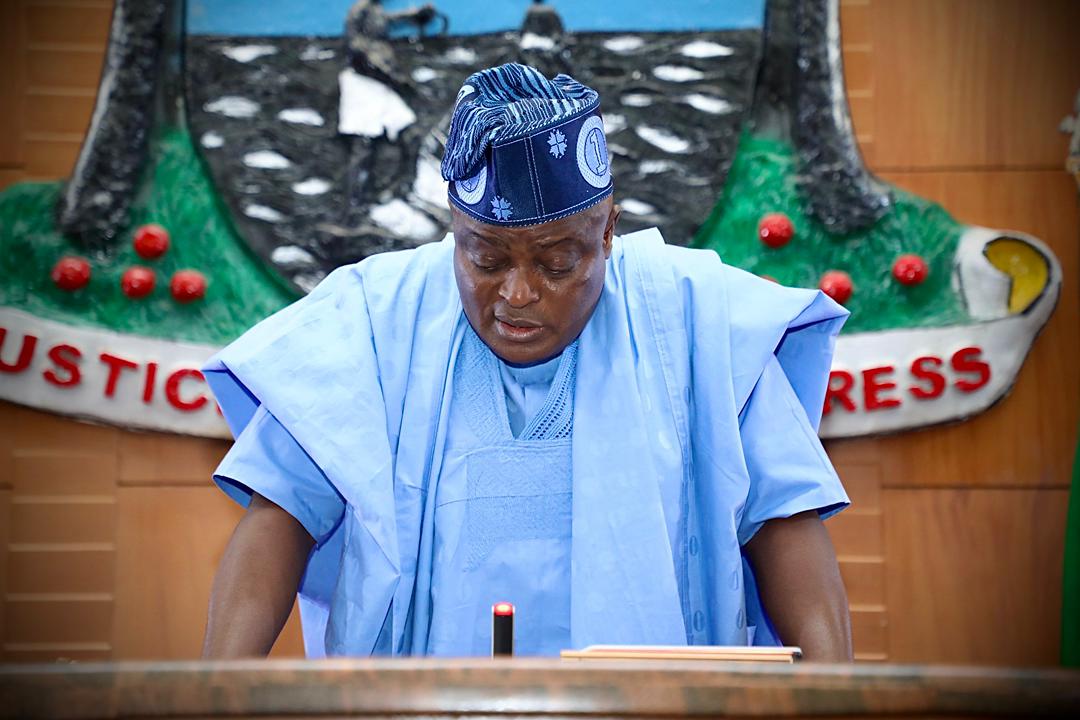
Sallah: Obasa Felicitates Muslim Ummah, Commends Nigerians for APC Primaries Turnout
The Speaker of the Lagos State House of Assembly, Rt. Hon. Mudashiru Obasa has extended warm felicitations to Muslims in Lagos State and across Nigeria on the occasion of Eid al-Adha.
In a statement released by his Chief Press Secretary, Mr. Dave Agboola, Obasa described the festival as a season of sacrifice, reflection, and gratitude, urging the faithful to continue to uphold the values of peace, unity, and love that strengthen the nation.
He noted that the celebration of Eid al-Adha is not only a spiritual milestone but also a reminder of the importance of togetherness and collective responsibility in building a stronger society.
He, likewise, emphasized that the festival provides an opportunity for Nigerians to renew their commitment to national progress and to support leadership that prioritizes development and prosperity.
Obasa, however, commended Nigerians, particularly members of the All Progressives Congress (APC), for their massive turnout during the recently concluded party primaries. He described the participation as a clear demonstration of the people’s confidence in the government of President Bola Ahmed Tinubu and their belief in the administration’s vision for a greater Nigeria.
“The APC primaries have shown the resilience of our democracy and the confidence Nigerians have in the leadership of President Bola Ahmed Tinubu and the Renewed Hope Agenda. This is a strong message that our people are ready to continue supporting policies that will drive growth and prosperity,” Obasa stated.
The Speaker further encouraged Muslims to celebrate responsibly, stressing that the joy of Eid should be accompanied by prayers for the continued peace and progress of Lagos State and Nigeria.
“As you celebrate with family and loved ones, may this season bring joy, peace, and prosperity to your homes. Let us remain united in our resolve to build a stronger nation,” he added.
On behalf of the Lagos State House of Assembly, Obasa wished all Muslims a happy and fulfilling Eid al-Adha celebration.


- Société Nationale des Pétroles du Congo (SNPC) Chief Ominga to Speak at African Energy Week (AEW) 2026 as Congo Accelerates Gas Expansion May 29, 2026
- South Africa: Deputy President Mashatile arrives in India for a Working Visit May 29, 2026
- Seychelles: President Visits Key Development Sites on Coetivy Island May 29, 2026
- Accelerating regional action to advance mental health care in Africa May 29, 2026
- President of the Republic of Seychelles Meets Young La Digue Talent Ahead of London Showcase May 29, 2026
- United Nations Economic Commission for Africa (ECA) launches regional initiative to accelerate women’s digital entrepreneurship across four African countries May 29, 2026
- Ethiopia: International community must act to safeguard press freedom ahead of national election May 29, 2026
- CORRECTION: Annual Meetings 2026 (AM2026): African Development Bank (AfDB) 2025 Trade Finance Report Highlights Resilience of African Financial Institutions After Covid-19 May 29, 2026
- Why Big Tech Could Become Nigeria’s New Gas Partner May 29, 2026
- African Energy Chamber (AEC)-Venezuela Alliance Accelerates Pathways into South-South Energy Expansion May 29, 2026
- Société Nationale des Pétroles du Congo (SNPC) Chief Ominga to Speak at African Energy Week (AEW) 2026 as Congo Accelerates Gas Expansion May 29, 2026
- South Africa: Deputy President Mashatile arrives in India for a Working Visit May 29, 2026
- Seychelles: President Visits Key Development Sites on Coetivy Island May 29, 2026
- Accelerating regional action to advance mental health care in Africa May 29, 2026
- President of the Republic of Seychelles Meets Young La Digue Talent Ahead of London Showcase May 29, 2026
- United Nations Economic Commission for Africa (ECA) launches regional initiative to accelerate women’s digital entrepreneurship across four African countries May 29, 2026
- Ethiopia: International community must act to safeguard press freedom ahead of national election May 29, 2026
-

 news6 months ago
WHO REALLY OWNS MONIEPOINT? The $290 Million Deal That Sold Nigeria’s Top Fintech to Foreign Interests
-

 society4 weeks ago
SOCIAL MEDIA IS NOT A BATTLEFIELD COMMAND – WHY THE NIGERIAN ARMY’S ACTION AGAINST JUSTICE CRACK IS A NATIONAL SECURITY IMPERATIVE
-

 celebrity radar - gossips4 months ago
Dr. Chris Okafor Returns with Power and Fire of the Spirit -Mounts Grace Nation Altar with Fresh Anointing and Restoration Grace on February 1, 2026
-

 celebrity radar - gossips6 months ago
Prophet Kingsley Aitafo Releases 2026 Prophecy: ‘Nigeria Will Rise, but the World Must Prepare for Turbulence’