
society
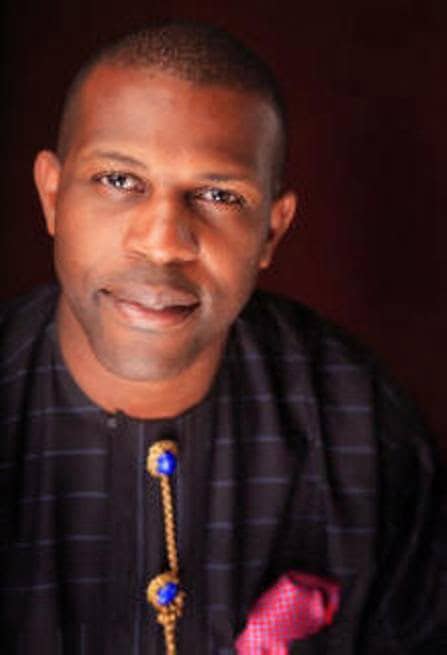
From National influence to community leadership; Prince Tonye Princewill’s quiet homecoming to serve

From National influence to community leadership; Prince Tonye Princewill’s quiet homecoming to serve
By; Al Humphrey Onyanabo
Prince Tonye T. J. T Princewill, son of the late Amanyanabo of the Kalabari Kingdom (Amachree 11th), has long lived the life of a true citizen of the world. Equally at ease in Port Harcourt, Lagos, Abuja, London, or New York, he moves effortlessly among power brokers, creatives, and investors, leaving a trail of success across every venture he touches.
Yet, in a move that has surprised many, Princewill has spent the last six months quietly relocating to the coastal town of Buguma in Rivers State. Away from the glare of paparazzi and the relentless pace of international travel, he has chosen a different path—one defined by service, presence, and a renewed commitment to his people as their Paramount Chief.
Buguma now sets the rhythm of his days.
I met him there, living simply, focused on community engagement and the painstaking work of restoring hope. On two occasions, I watched him walk from the Buguma Town Hall after meetings to his nearby residence. Each time, he was surrounded by clusters of young men, deeply engaged in conversation—listening, questioning, learning.

It was a telling image: a familiar international figure not insulated by status, but immersed in the everyday realities of his people. A man of the world deliberately returning to the grassroots, choosing proximity over pageantry, and leadership by presence over distance.
Storytelling on Screen: From ’76 to ’77 to the Kalabari Narrative
Beyond business, politics, and royalty, Prince Tonye has long understood the power of storytelling—particularly film—as a tool for memory, identity, and national reflection. That conviction found one of its strongest expressions in ’76, the critically acclaimed historical drama for which he served as Executive Producer.
’76 revisited one of Nigeria’s most delicate and painful chapters—the aftermath of the failed 1976 military coup and the execution of General Murtala Mohammed.
At a time when such subjects were often avoided or oversimplified, the film stood out for its emotional depth, historical sensitivity, and cinematic ambition. For Princewill, the project was never merely about filmmaking; it was about preserving the truth, provoking dialogue, and using art to confront history with honesty and empathy.
Building on that legacy, Princewill reveals plans to return with ’77, a follow-up project that is expected to explore another defining moment in Nigeria’s national journey. It is built around Festac ’77. Preparations are already underway for its release, with discussions with distributors ongoing and a festival tour being scheduled. Like its predecessor, ’77 is envisioned as a film that blends historical consciousness with human storytelling—continuing a cinematic tradition that challenges, educates, and heals.
Beyond these nationally themed works, Princewill is also turning his creative lens homeward. He speaks passionately about developing films that tell the Kalabari story—its origins, struggles, royalty, waterways, trade routes, and cultural resilience. He will focus on King Amachree 1.
These projects, he says, are aimed not only at entertainment but at cultural preservation: capturing the soul of a people whose history has too often been left to oral tradition and fading memory.
In this sense, filmmaking becomes an extension of his role as Paramount Chief—another platform through which to safeguard heritage, inspire pride among the youth, and project Kalabari identity onto the global stage. Just as ’76 helped Nigeria reckon with its past, Princewill believes the untold stories of Kalabari land deserve the same cinematic dignity.
Prince Tonye Princewill is a brilliant mind and he weaves his words so beautifully. We had a wonderful time taking about a whole bunch of stuff. Enjoy….
What do you miss most about your dad?

Oh! It’s the wisdom, the calm, the steady hand. When somebody is there, you take them for granted, because you think they will be there forever. There are so many questions that I will now love to ask him. Yes, when he was alive, I was interested in what goes on in Kalabari kingdom, but now I am a lot more interested than I was then.
It would have been nice to hear and capture some of these perspectives, deeper perspectives, now that I have gotten a better understanding. I miss that. People say it’s cliché, but I actually feel he is still with me. We communicate in different ways on a regular basis but off course, it’s not the same thing as being here. His presence is here. You see his posters in the centre of the community, we are doing an event for his memorial in a few weeks time. The King is dead. Long live the King.
Apart from him being your dad, how will you rate his tenure as Amanyanabo?
It was good. It was peaceful. There was not a lot of inter tribal conflicts. He was a man of peace. Described as His Serene Majesty. I think that is very apt. He was very gracious, very accommodating. He was all for unity and peace. I think some of his more enduring successes actually came after he had left. His burial, bringing 33 communities to bury one man ….
I think that right there was just an amazing demonstration of what he represented. I don’t think anybody will be able to pull that off now. It’s something that speaks to what he had built. Unity.
You have transited from Prince to Chief, can you tell us more about that?
People say transiting from Prince to Chief. I have been a chief for a long while. My dear father in his wisdom convinced me several years ago to become a chief. What happened this time is that instead of just being a chief, I am now the paramount ruler of a number of several prominent houses. That is quite noble of my people to choose me to do that.
Really, in looking at what I am doing now, and what I have been doing, there is not much difference, except that the responsibility is formal. I have always been interested in the forward progression of the family. I have always been interested in how we can improve things, but I was doing it from the outside, looking in. Then it was like a secondary responsibility. Now it’s a primary responsibility. I am quite excited about what is possible.
I wanted to be Governor of a whole state, so being a “Governor” of a small group of families in a kingdom, to me is a walk in the park.
It’s not something that I should lose a lot of sleep over and I am not. I am doing what I can in my stride.
After fifty days in office, I was already quite excited about what we have achieved. And now with hundred days in office coming up, I think we will have even more to talk about. There are a lot of activities, things going on. This woman that you just saw that brought fish for me, she is one of twenty that received N500,000 to boost her business. She invested the money in her business, made profit and she has come back to give me fish. We have other people that we have touched. People with health challenges, interventions that we have made. We want to see how we can get students into universities, helping them pay their fees, helping them through their clearance. Having run for Governor twice in 2007 and again in 2015, you build a network of people across Rivers state, so you get requests coming from here and there. As much as we do what we can concerning those requests, these days, I focus my energy on requests that are coming from this community or group of houses that are now under my responsibility. So, I have to be honest with you, life is a lot easier for me than before when you have to deal with requests from 23 local governments and 319 wards, you are dealing with so many people and so many problems. Life is much easier now.
You seem to spend a lot of time in Buguma?
I live here. I have been living here for the past six months. I have not left here for longer than a week. If I go, I do what I have to do and I come back.
How do you coordinate all your businesses and investments from here?
I do everything from here. When they started calling it Buguma city they were not wrong. I have everything I want here, maybe I even have more here. I have more help than I could ever need. If I need somebody to help me call someone over there, I will just lean over this balcony and give an instruction. Yes, you are confronted with more challenges, yes, you have to deal with more pressing emergencies but most of the problems we see here are small problems. Then there are also problems of orientation and training. People don’t understand the need to look inward. They always feel that their solution is outside. By the time you speak to them, they get to change their perspective.
And how is your immediate family coping with your relocation?
I have always had a very loving and supporting family. My wife, my kids, amazing. They’ve just been nothing but supportive. I was telling my staff earlier on today when we had a meeting that they should all just make sure they have a good wife. Because once you have a good wife, it makes life so much easier. My wife I guess is happy about this role that I am playing and so it’s also really about making sure that I am always happy, and once I am happy, as I am, she is also happy.
When I was burying my father, people were telling me the need to come and spend more time here and I told them they should not even think about it.
For me, I always felt that the solutions were out there and I needed to go and get those solutions. But life is not all about getting solutions, it’s also about living life. So for me, the solutions can be out there, but I can still access them from here. I have access to the internet, I have solar so I have light at every point in time. Sitting on the balcony here, you can enjoy the sweet breeze, you can hear the noise, kids playing in the background. This is boisterous, full of life. The only thing that is missing, which we are already address is employment. You can’t gather people and not employ them. Ultimately, we need to crack that nut and we are on our way. I just came back from an overseas trip where this was the topic and purpose of my trip. The feedback was very positive and I look forward to us setting up small to medium scale industries here, to employ our people and keep them engaged and make them employable not just here but elsewhere, so I am excited about that. We are working through this Christmas period.As early as the first quarter of next year things will start taking shape.
Sometimes do you wish your dad was alive to see you in this role?
Yeah….but I think he had to go for me to do this. One of the biggest triggers for me was when he passed and I saw the numbers of people that he was supporting and helping, I felt so bad because if we did not step into the vacuum, a lot of people will be in a very difficult place. It’s impossible to fill his shoes, but I am just in my own little way doing the best I can. But what would not have been an option would have been to just abandon them. He of course had travelled the world, he had ridden to dizzying heights in the academia and for him to come here , you have to say whatever the allure was for this, I can’t escape it either. But he was king, and as king, his responsibilities were completely different from mine.
But before he became king, he was head of this family like I am now and I am happy that we have a very good start and I hope we will have a good legacy when we look back many years from now. By His grace.
What has the support been from the people?
Absolutely overwhelming. Sometimes, I am amazed by it. Because what am I doing? I am looking at it as my responsibility, but they are looking at it like I am doing them a favour. I am not doing them a favour. There are some billboards we used to put up in Port Harcourt when I was running for Governor, that said, “You are blessed to Bless others”. In my brother Mujahid Asari Dokubo, you can see the same dynamic there. It’s not that you have been given something and you will just enter your house and close the door. No.
There is a purpose to your blessing, you really have to find a way of using it to impact the people that you can. I always warn my people that I don’t have money, so if I give you my money and you go and waste it, it will hurt. I have been doing scholarships since year 2000, that is for about 25 years, both here and in other parts of the state. We have been giving back, and it’s not easy especially at this time. I am not relying on any state or Federal Government contract for my resources. By God’s Grace, we shall overcome. I am busy developing and creating my own and it is very very difficult. But by God’s Grace we shall overcome and do even more, and make an impact even in the small space that we are, so people can feel the difference.
In the past 50 days that you have been paramount ruler, (Polo Dabo) what have been your challenges?
Hmmmm, mindset really. I came in, I read the riot act to everyone. I said I don’t want to hear shouting because I see people shout and quarrel over the most trivial of things. I am not having it. We can have disagreements but we can do it agreeably. We can have conversations between ourselves without our volume being at a high temperature.
People trouble themselves over things that they should not and sometimes they relax over things when they shouldn’t. It’s getting their mindset to be right and getting them to believe it’s possible. Most of them sometimes feel that the odds are stacked against them, that there is no way out. It’s important to constantly remind them that that is not the case. And that even if the odds are stacked against them, that in itself should be a motivation. So it’s getting them off to the right mindset but we have to live by example. That means being calm, confronting pressure, that means sitting in the middle of the fire and telling them that it is not as bad as it is and that there is a way out.
My brother, O.K. Isokariari is over there in that white storey building and he is telling me he wants to come over for a couple of drinks or I should come over. These are people who could otherwise be anywhere in the world, but not here. But he too is here.
So if we can encourage enough of us to come back to make an impact in our community, then the rest as they say, is history. I am excited about the future and I see us slowly making a difference.
Looking back since you became a paramount ruler, what do you think has changed in you?
I think it will only be captured by the phrase where they say that what you are looking for in Sokoto is in your Shokoto. I always used to say, that everywhere I travel around the world, anywhere I land, I am working. Then it became pretty obvious that it does not matter where you are, you can work from anywhere. And now with the advent of technology and mobile communication, I am working from here. I can do anything I want from here. I can have a meeting, do zoom on this balcony, I can even manage meetings from anywhere in the world with my people here. I can sit them downstairs in the conference hall and talk to them as a group. There are so many things technology has brought. Unfortunately, we had to go through COVID to really appreciate some of these things.
What I now appreciate from coming here is that this could have been my base all along. I did not need to be travelling all over, I could have just operated from here and connected with others around the world, with whatever I want to do.
What is happening to your other business and investments around the world?
I have different business and I am always developing them. I like to build a business, man it with the right people, and move on. Because I see myself as having to constantly develop ideas. I think that you look, see a problem and fix it. If you focus on fixing the problem, the resources and the revenue will come naturally. In a place like Buguma, I am asking myself, I am giving people 500,000 to do things, why don’t I bring them together. Instead of them going individually to go to the market to buy what they want to sell here, why don’t we put all of them in a vehicle once a week. It takes all of them, they do the buying and they all come back together. That way, the economics of scale is cheaper.
I am looking at what we have here to create advantages for the people to create growth not only financially but mentally.
You are a film maker, you seem to have been quiet on that front?
No, we have not been quiet at all. We finished ’76 and we did very well with that movie. We are now onto ’77, the Festac conspiracy, which is about the FESTAC 77 Nigeria hosted. For those that were not alive then, it was a very big festival of arts and culture from across Africa that took place here, in Lagos. It was the reason for which the FESTAC Town was built. 77 is not yet out, we have the luxury of being able to wait until we find that the time is right, before we release the movie. In the meantime Afrexim bank’s CCI Division has joined the team to support post production and marketing. We are also working on another movie about King Amachree the 1st. To me I think ’76 and ’77 were the perfect prerequisite for the King Amachree 1 movie. We understand ourselves even better as a group, and so Amachree 1, will be an even better collaboration than ’76 or ’77 were.
’76 won best movie in Africa, Best Director, Best Actress, Best script, Best Set Design, Best Costume Design, etc. 15 nominations, 9 wins. We had a lot of good stories to tell. We did well with ’76 and we hope to do well with 77. But my hope is that with the King Amachree movie, we will be able to do even better.




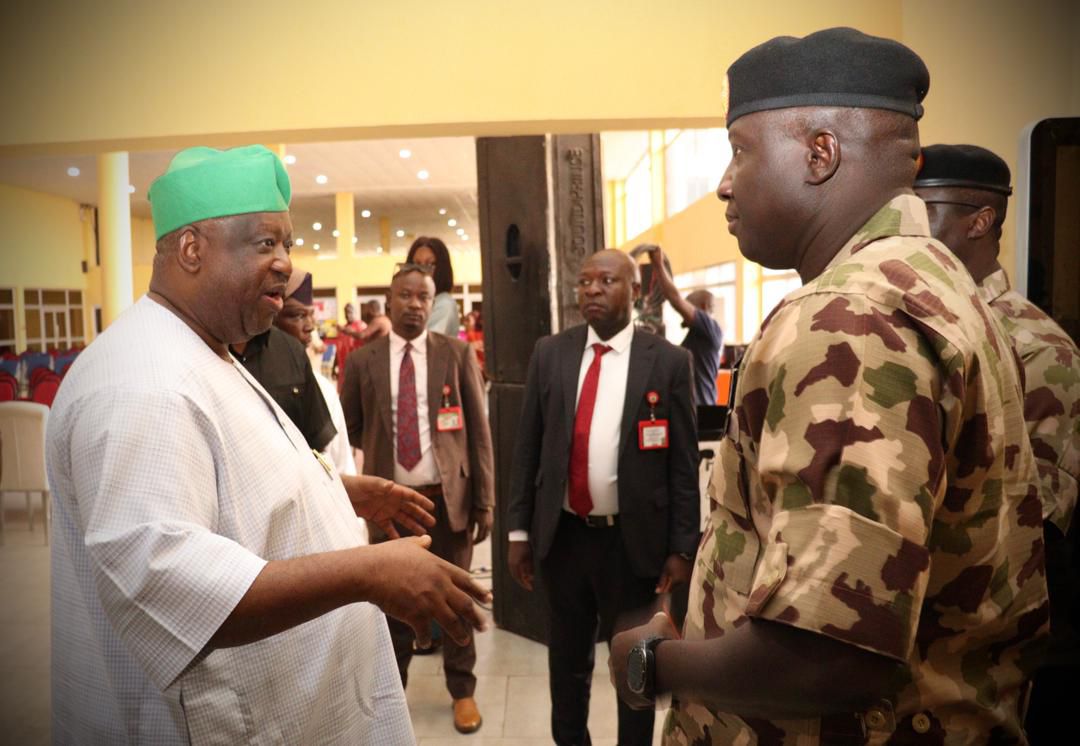
COAS Launches Nationwide Security Renewal Mission in Plateau
The Chief of Army Staff, Lieutenant General Waidi Shaibu, on Thursday led a high-level delegation of security chiefs to Plateau State, flagging off a nationwide security renewal mission aimed at strengthening civil-military cooperation and restoring lasting peace across the country.
The visit to Jos, the Plateau State capital, marks the first phase of a coordinated national effort to address persistent security challenges through joint operations, community engagement, and proactive intelligence gathering.

Governor Caleb Muftwang received the delegation, describing the initiative as a critical step toward stabilizing affected communities and reinforcing public confidence in security institutions.
Civil-Military Synergy Takes Centre Stage
At the heart of the mission is a renewed emphasis on collaboration between the military, civil authorities, and local communities. Speaking during the visit, Lt. Gen. Shaibu stressed that national security must be treated as a collective responsibility.
He urged citizens to support security agencies by remaining vigilant, sharing credible information, and complying with lawful directives, noting that effective security cannot be achieved in isolation.
Community Engagement as Confidence-Building Tool
In a departure from purely operational engagements, the Army Chief held direct consultations with community leaders and residents in Jos, reinforcing the importance of trust and dialogue in conflict resolution.
Lawmakers, including Dachung Bagos and Ladi Dangyok, commended the initiative, stating that visible engagement by top military leadership helps rebuild confidence among citizens and fosters cooperation.

Proactive Security Operations Underway
Operational updates were provided by Major General Folusho Oyinlola, who disclosed that troops under Operation Enduring Peace have intensified surveillance, intelligence-led patrols, and coordinated actions with other security agencies.
According to the Army, the approach is designed to prevent escalation of threats, safeguard lives and property, and stabilize vulnerable communities before crises emerge.
A Shift Toward Sustainable Peace
Military authorities emphasized that the Plateau visit is part of a broader, long-term strategy to transition from reactive responses to sustainable peacebuilding nationwide. The framework includes strengthening local resilience, ensuring justice, and maintaining continuous engagement with stakeholders.
Analysts view the initiative as a significant policy shift, reflecting a more inclusive security architecture that integrates community participation with military operations.
Call for National Unity
The Army leadership concluded with an appeal to Nigerians to reject divisive narratives and support ongoing efforts to promote unity and peace.
“The success of this mission depends not only on the armed forces but on the cooperation of every citizen,” the COAS stated.
The nationwide security renewal campaign is expected to extend to other regions in the coming weeks as authorities seek to consolidate gains and build a safer, more unified Nigeria.


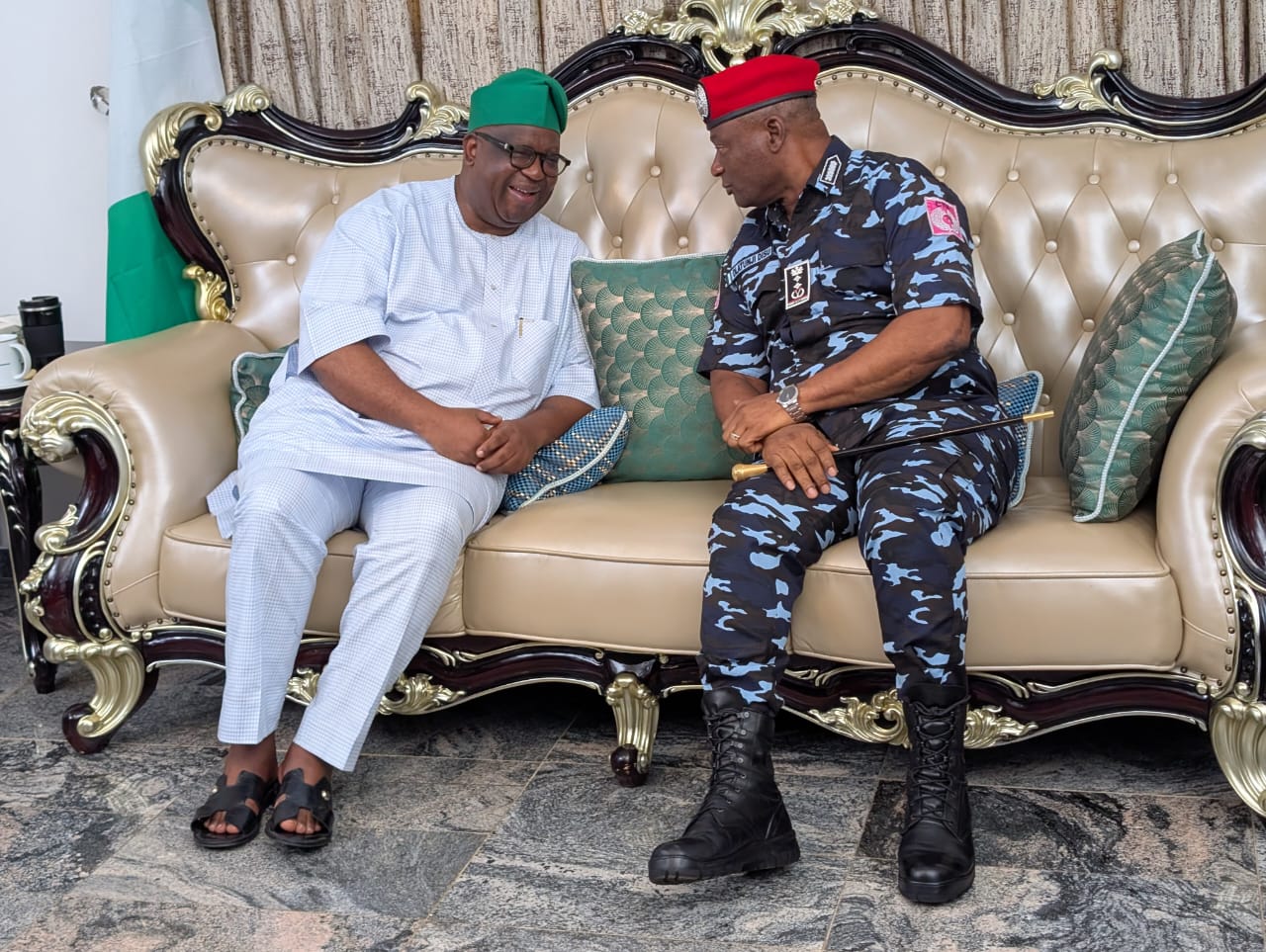
IGP Disu Visits Plateau, Orders Tactical Deployment To Reinforce Security
The Inspector General of Police, Olatunji Disu, on Thursday paid a working visit to Plateau State following recent unrest, holding strategic talks with Governor Caleb Muftwang on measures to strengthen security and prevent further disturbances.
As part of immediate steps to stabilise the situation, the police chief authorised the deployment of specialised tactical units to support officers already on ground across affected areas.
Governor Muftwang commended the swift intervention of the police leadership, praising the dedication and professionalism of security personnel working to restore calm. He also acknowledged the efforts of mobile police officers and lauded the leadership of the state’s Commissioner of Police, Bassey Ewah.
Both the Nigeria Police Force and the Plateau State Government reaffirmed their commitment to safeguarding lives and property, stressing that enhanced collaboration remains key to restoring lasting peace in Plateau State, popularly known as the Home of Peace and Tourism.


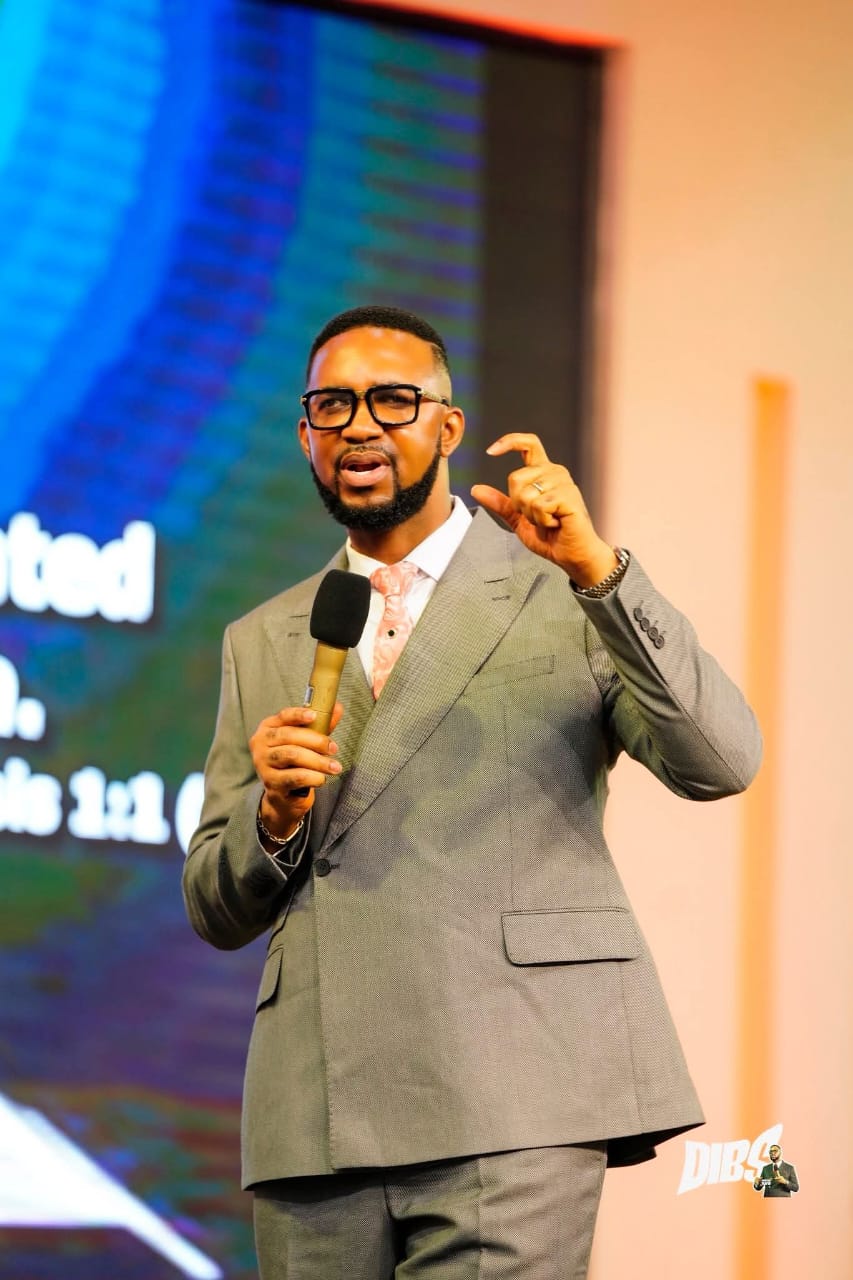
Grace Nation Worldwide: A Living Reality – Dr. Chris Okafor
……“Miracles, Healing, and Deliverance Overflow at Grace Nation Services”
The Grace Nation midweek Prophetic Healing, Deliverance, and Solutions (PHDS) Service on 2nd April 2026 at the international headquarters in Ojodu Berger, Lagos, was a spectacular display of God’s power, marked by miracles, healing, and deliverance.
The God of Grace Nation continues to demonstrate His authority, breaking strongholds, healing the sick, restoring lost glory, and providing solutions to every problem presented at His altar.
Testimonies of God’s Power
One woman, previously diagnosed with a terminal condition and slated for a ₦4.5 million surgery due to inability to excrete, was prayed for by the Generational Prophet, Christopher Okafor, just a week after visiting the church. Declaring healing within 24 hours, she returned to testify to God’s miraculous intervention.
Another pregnant woman, whose baby was bridged and at risk, was located and prayed for. She returned to service with confirmation that her child is now well-positioned for delivery. Similarly, a woman booked for a C-section due to an overdue and poorly positioned pregnancy testified during the service that her baby is now properly positioned, ready for birth.
These testimonies underscore the truth: what God cannot do does not exist. Grace Nation has entered a new level of spiritual authority, and with faith, believers are witnessing the impossible become reality.
God Works by Principle, Not Gossip
In his sermon, Dr. Okafor emphasized that God does not operate on superstition, gossip, or social media pressures. His work is grounded in His Word, and it is through adherence to His principles that Grace Nation continues to flourish.
The Generational Prophet stressed that to enjoy divine blessings and fruitfulness, believers must remain connected to God’s Word, faithfully serve Him, and ignore distractions or side-talks. Focused commitment to God’s service guarantees alignment with His miraculous power.
Join the Movement
Grace Nation Worldwide is open for all who desire a life transformed by divine intervention. Weekly services include:
Sunday Service: 7:00 AM
Grace Nation Island Service (Ogombo): Wednesday, 5:00 PM
Midweek PHDS Service: Thursday, 7:00 AM
Attending these services under the ministry of the Generational Prophet ensures encounters with God’s supernatural power, life-changing miracles, and lasting breakthroughs.
Grace Nation Worldwide is not just a church—it is a reality where faith meets the supernatural.
By Sunday Adeyemi


-

 society6 months ago
Religion: Africa’s Oldest Weapon of Enslavement and the Forgotten Truth
-

 news4 months ago
WHO REALLY OWNS MONIEPOINT? The $290 Million Deal That Sold Nigeria’s Top Fintech to Foreign Interests
-

 society6 months ago
“You Are Never Without Help” – Pastor Gebhardt Berndt Inspires Hope Through Empower Church (Video)
-

 celebrity radar - gossips2 months ago
Dr. Chris Okafor Returns with Power and Fire of the Spirit -Mounts Grace Nation Altar with Fresh Anointing and Restoration Grace on February 1, 2026