
news
“FRSC OFFICIALS NEED ARMS FOR NIGHT OPERATIONS ONLY” – Corps Oladele


 … Says Ogun Roads are safer for motorists
Corps Commander Clement Olafeminiyi Oladele, is the Ogun state Sector Commander of the Federal Road Safety Corps. A graduate of Ahmadu Bello University, Zaria. He obtained a Master’s Degree in Public Administration specialising in Public Finance in 1992, and had earlier in 1988 obtained Bachelor’s
Degree in Administration at the same institution with a second Class Upper Division.
Prior to his appointment as the Sector Commander of Ogun on Thursday 15 September, 2016, Oladele headed the Federal Road Safety Corps’ Planning
Advisory Unit. As Head of Planning Advisory, Oladele oversees Business Intelligence for the FRSC, and had then as basic responsibility, scanning of the environment for global good practice and the conversion of data into meaningful intelligence upon which the Corps makes evidence based decisions. Oladele while featuring as Guest of Month of February on a popular newspaper whatsapp forum, PLATFORM TIMES and monitored by our correspondent, MICHAEL-AZEEZ OGUNSIJI advocated for the use of fire arms by the Federal Road Safety Corps on night operations for protection from road defaulters and criminals.

The Kogi -born Federal Road Marshal, however called on private individuals and philanthropists in the society to collaborate with FRSC in provision of rescue operation aids to reduce dead casualties from road crashes. Excerpt.
Let’s start with the immediate past year (2017). On a scale of 1-10, to what extent would you say Ogun State Road users understood and obeyed traffic rules?
OLADELE: I don’t think it is fair to make me do that rating. I thought we serve the people and they should rate our performance. But on a personal note, I will classify them into two groups. The first is about 8/10 while the second group is about 4/10.
[cuts in]…. I mean the people. Not your men, Drivers and Road Users.
To what extent have they cooperated with you in obeying the traffic rules… Do they understand it?
OLADELE: My answer above suffices. Your question is two fold. Understand and obey. The first group is 8/10, they comprise the majority of the motorists here. They also obey traffic rules. albeit occasionally they may just forget to comply. For example, they may not remember to use the seat belt inside the town, which they could take to the highway. These people consist of about 90 percent of the motorists. But the remaining 10% rates 4/10. They are those posing risks not only to themselves but to other road users they share the road with.
Let’s talk about the second group. Who are they? And why have you rated them below average?
OLADELE: They are those that disregards every societal rules, including traffic rules. They are those that drive recklessly under the illusion that they are immune from road crashes. They also indulge in the use of drugs and other illicit substances while driving. They are dangerous, even to themselves on the highway.
These 90% people that flout the traffic rules , how have you been dealing with them sir?
OLADELE: No. 90% does not flout traffic rules. I said 10% rank 4/10. They are the ones which makes FRSC increases highway surveillance to enable us stop them from crashing into innocent, law abiding motorists. We apprehend them, default them, issue them citation or sometimes take them before magistrates especially during mobile court to get them disciplined for bad behaviour on the highway.
As a matter of public interest, kindly use this medium to differentiate between road ACCIDENT and road CRASHES.
OLADELE: Accidents are unplanned, which sometimes you may not be able to explain how it happened, like driving at regulated speed on an expressway and a little boy suddenly crosses the road in a place that is not a school or built up area. Thus an accident is unplanned and not expected. But a crash is planned and expected, caused by negligence. For instance, driving above stipulated speed, drunk and with worn out tyres or driving against traffic.
Sir, which one common in Ogun State?
OLADELE: Crashes is very high in Ogun State, it might not be too correct, as our statistics does not support that. Despite the high Motorisation here in Ogun State, compare with other states, we are not the most dangerous. I know before I arrived last year, Ogun state ranked within the ten most dangerous highways in Nigeria. In fact in 2015 at fatality rate or deaths from crashes at 307, Ogun ranked no 6 nationwide. But with our Ogun State road safety strategy (2017-2030), we reduced the fatality in 2016 to 270 making us rank no 12 nationwide . Meaning technically Ogun State highways have been removed from the list of the ten most dangerous highways in Nigeria. Last year 2017, fatality reduced to 210. The goal is to make highways in Ogun State not only the safest in Nigeria but the safest highways in the whole of West Africa.
The statutory functions of FRSC include: Making the highways safe for motorists and other road users as well as checking road worthiness of vehicles, recommending works and infrastructures to eliminate or minimize accidents on the highways and educating motorists and members of the public on the importance of road discipline , In the last 30 years, how far has the Corps ensured its mandate?
OLADELE: The Corps is a performance based organisation. We elected, albeit a public institution to do ISO 9001 QMS certification which enables us open up our internal processes for a third party evaluation, for continual impoundment. Thus FRSC Nigeria is the only law enforcement agency in Africa with ISO 9001 QMS certification. Realising this, we redefined the FRSC into ” who are we, what do we do, how do we do it and how best can we do it”. With this we took our mandates to deliver them all, which makes it very easy to rate the FRSC. Essentially we are to prevent crashes, where we failed to prevent a crash, we should not allow death by removing the injured from crash scene for proper medication. If in the course of the crash that road is blocked we remove promptly the obstruction. For instance in Ogun State last year alone 1.8 million passengers travelled on Ogun highways and 210 people died. This meant just because there is FRSC over 99% of travellers in Ogun State arrived their destinations safely as less than 1% of them only died. We are not even satisfied with this, we want zero death. On prompt removal of obstructions, this is priotized especially on the Lagos – Ibadan corridor, which in any ten minutes delay can cause us about one hour to completely restore traffic. The strategy therefore is do not allow any obstruction. We constantly recommend at least every quarter observations from our road audit and result of accident investigation which the FERMA, Federal Ministry of Power Works and Housing and the state government consider along other factors in Road rehabilitation.
How often do you sensitise motorists on safe driving especially members of Transport unions?
OLADELE: Sensitisation of motorists is routine. Apart from motor Park checks to talk to drivers and their passengers, we conduct PE for drivers apprehended before we release them. We use the social media to communicate highway safety. The traditional Mass Media have been very useful in assisting us reach the motorists and general public for PE. In fact the whole gamut of FRSC operations is to inform and educate motorists, drivers and the general public on proper use of the highway . However where recalcitrant drivers flout traffic rules we sanction.
The people complaints over the excesses of your men is becoming loud, what are the checkmating mechanisms put in place and how do you get feed backs?
OLADELE: We have a SERVICOM desk that receive and treat daily public complaints. My email is available for complaint oc. [email protected]. Those apprehended undergo administrative disciplinary process and those found wanting are meted with various sanctions, including outright dismissal. The only challenge we face is that some people who complained refuse to substantiate their claims to aid disciplinary measures. In fact, we have even commenced disciplinary actions, these complainant go behind to plead for leniency for defaulted personnel. Claiming they don’t want to be responsible for sacking such defaulted personnel.
What are those areas of your responsibility, that you feel the cooperation of the public would be needed to improve service delivery of the FRSC in Ogun State?
OLADELE: Almost every where. Road Safety is multi dimensional. The public do not need to give us money, they can just procure equipment for rescue. They can also assist us put on their payroll local divers to enable us mobilise them for rescue where the victims fall inside the river. Provision of trauma drugs to our road side accident clinics is also a good support. Also good is provision of standard road signs. We also want stakeholders provide educational materials to enable us teach road safety to school children, including organising road safety competition especially quiz to increase their road safety education, to make them better drivers when grown up. We also need media airtime dedicated to teaching the public proper use of the highway. No support is too little or too much. In my experience in highway safety, I have seen strong, rich and powerful people confused, helpless, and traumatised due to traffic crash. Road Traffic Crashes are levelers and no respecter of persons, not even road safety officials on rescue operations. Therefore any support to promote highway safety is significant.
What is your horrible experience on the job?
OLADELE: The most horrible is to break the news of the demise of a crash victim to their loved ones. We have a process, we can never say the victim died. We do not want secondary casualty. We request to speak to either the spouse or boss to inform them of such fatal crash. Like I always say, whenever you say goodbye to your loved ones, they expect a call from you. In any case a call must be made, but who made the call is important. Where you chose not to call your loved one after your trip due to carelessness or recklessness, the FRSC would be constrained to make the call. We at FRSC do not always want to make such calls. Some crashes have worried me in Ogun State. Few samples was the 14 January, 2017 where a couple slipped into Omu river by area J4 on Ore – Ijebu Ode highway. Why it was painful was that, even after mobilising JBN crane to remove the trapped couple from the river, we could not succeed as the local divers frustrated our desire to promptly bring out the couple from the river. Even my plea that the victim could even be people who may be privileged to employ the local divers in gainful employment. The action led us calling the rescue till the next day. After bringing out the couple from the river the medical doctor said they just died not too long. Meaning if the divers, which we do not yet have in FRSC, had remained in the river till we bring the victim out of the river, they might not have died. While trying to locate the victim family, the first alert received from the late couple phone, we recovered was N17 million naira. I then told the local divers I told you, though we did not know the victims, but if they had saved them, definitely they might have been positioned to employ some of the local divers.
Another disturbing crash was also on the ijebu ode road last month where we lost five Libyan returnees, travelling from Benin to Lagos. A truck driving against traffic at about 2230 hrs colluded against their bus. Some of those who survived told us they were going to Synagogue Church in Lagos. The FRSC has established a Command Outpost to stem the occurrence of driving against traffic along that J3 and J4 axis of Ore – Ijebu Ode corridor. The incident has abated.
There was another crash at Alapako /Ogunmakin opposite Four square church along the Lagos – Ibadan corridor, where a truck conveying a container locked 7 passengers inside the container and drove dangerously crashing into a fuel laden tanker around the 5km stretch of road between sancrete and Fidiwo where RCC constructing the road made a diversion to enable them complete the weakened bridges on that section of the road. There are other crashes but those mentioned above Stands out amongst disturbing crashes I witnessed since I assumed duties in Ogun State.
Many have been calling for the Corps to be armed. Would you subscribe that the Constitution should be amended to accommodate this?
OLADELE: I think arming the FRSC is a government decision. I am not sure the FRSC merely wants to use fire arms for patrols, except for protection during night operations. The country’s ultra modern licensing architecture is multi million naira investment. This is what makes it possible for holders of Nigeria drivers license, through reciprocity, allowed to drive with this drivers license in Europe and several states in the US. This is also the facility that enables holder of valid Nigeria drivers license renew such in any part of the world, without coming to Drivers License Center, provided you have access to the Internet and Web enabled payment. This infrastructure requires protection. Other sister security agencies do support, but due to ongoing security challenges, they too are constrained.
Your parting words to Ogun road users?
OLADELE: I thank the motoring public for good behaviour on the road. There are a few others that are however dangerous. We all have responsibility to stop them from hurting or even maiming us by their bad behaviour on the highway. Let’s stop them before they stop us. We all have responsibility to highway safety. Call FRSC toll free number 122 to report any road obstruction, road crash or any dangerous driver you come across on the highway. I also thank Nigerians for believing in FRSC in the last 30 years. Your prayers and support have sustained us. We even required closer collaboration and prayers to deliver efficiently on our core mandates. I commend the press for their support.





More than ₦3 billion was targeted, but about ₦677 million reached the culprits, with recovery and prosecutions underway, reflecting how banks are responding to more sophisticated fraud risks.
Nigeria’s expanding digital banking sector is facing increasingly sophisticated fraud attempts, as financial institutions adapt to faster transactions and broader online services.
A recent case involving First City Monument Bank (FCMB), linked to fraudulent activity detected in December 2025, has drawn attention to how banks are responding to such incidents, with a focus on limiting exposure, recovering funds and working with law enforcement.
According to findings referenced in proceedings before the Lagos State Special Offences Court, the incident involved unauthorised transactions tied to a digital product. Early reports erroneously suggested more than ₦3 billion was lost. Subsequent clarification shows that over ₦3 billion was targeted, ₦2.4 billion was blocked and recovered, while ₦677 million got into the possession of the culprits. This outcome reflects the bank’s cyber security and monitoring capabilities, as well as improved collaboration among regulated financial institutions and with law enforcement agencies. Several suspects and beneficiaries have been apprehended, while recovery and prosecution efforts are ongoing, led by the Economic and Financial Crimes Commission (EFCC).
Proceedings at the Lagos State Special Offences Court have resulted in convictions, including that of a repeat offender, with restitution orders issued. Related matters are also being handled at the Federal High Court in Lagos, where additional suspects are being tried in connection with the scheme. This process is aimed at ensuring that bad actors are identified and permanently blacklisted from the financial system.
Authorities say recovery efforts are continuing as additional funds are traced.
Analysts note that the pace of legal action reflects closer coordination between financial institutions and enforcement agencies in addressing cyber-related financial crime.
The case comes as banks contend with more complex fraud methods, including social engineering and automated exploitation of system processes.
As digital products and platforms expand, so too does the risk associated with cyber-crime and related fraud.
“The scale of digital banking means risks are evolving alongside the systems,” said a Lagos-based financial analyst. “Institutions are now judged by how they manage these events.”
Observers say the sector is moving toward a stronger focus on response and recovery, rather than prevention alone.
This includes improving monitoring capabilities, strengthening transaction controls and enhancing collaboration with regulators and law enforcement. The FCMB case, with limited exposure relative to the amount targeted and ongoing recovery, reflects that shift.
For customers, the primary concern is the safety of their funds. In this case, there has been no indication of losses affecting customer deposits. Maintaining that level of protection remains central to sustaining trust in the financial system.
Nigeria’s financial sector continues to grow, supported by digital innovation and expanding access to banking services.
However, analysts say fraud attempts are likely to persist as systems become more complex and interconnected.
They say institutions will increasingly be judged not only on their ability to prevent incidents, but on how effectively they respond and recover when they occur.
news
Ex-APC Deputy Guber flag bearer, Joshua MacIver backs Tinubu, express fears over implosion in Bayelsa APC
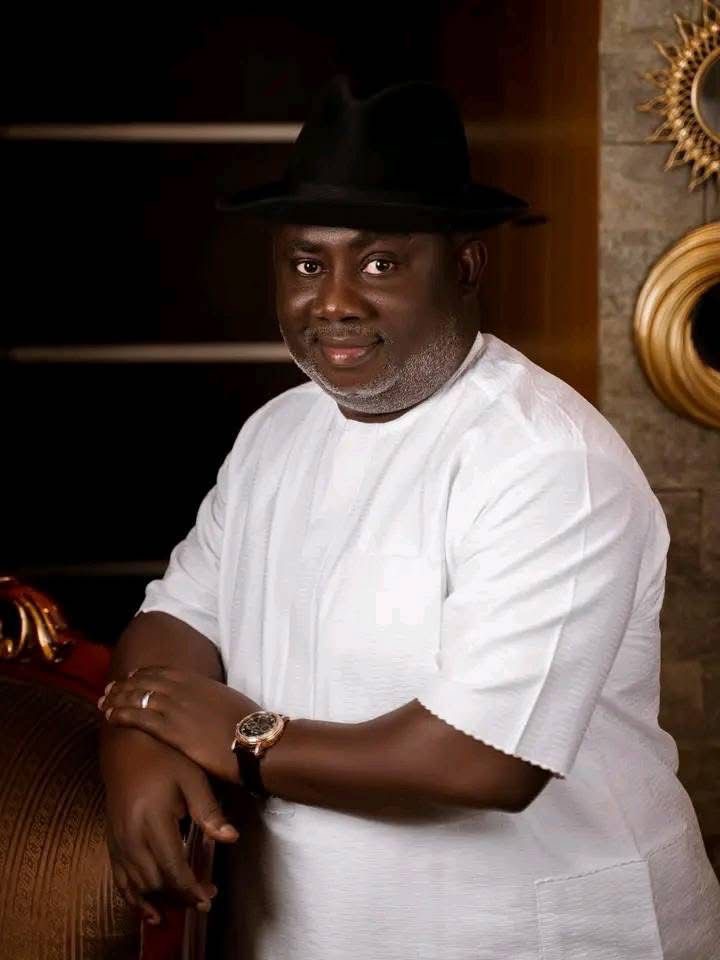
….congratulates new State Party Chairman, Warman Ogoriba
APC Deputy Governorship Candidate in the 2023 general elections in Bayelsa State, Great Joshua MacIver has declared his total commitment to the re-election of President Bola Tinubu come 2027, declaring that the Tinubu re-election project is non-negotiable.
Great Joshua MacIver, in his statement titled ” BAYELSA APC CONGRESSES: GOING FORWARD, A CALL TO LOOK INWARDS” and made available to newsmen in Yenagoa, warned APC leaders in the state to look Inward and take note of certain factors which may hinder or cut short our victory.
According to Great Joshua MacIver, such noticeable pitfalls include the imbalance in the united front being put up by the State Governor,Senator Douye Diri among various political blocs in the state.
In the statement issued at the weekend. Great Joshua MacIver stated that “First, before His Excellency, Senator Douye Diri, joined the APC in the state, there were clearly two political blocs that made up the party, with the approximate population ratios of the blocs standing at 95% to 5%.”
“After the entrance of His Excellency, Senator Douye Diri, ONLY THE SMALLER BLOC IS BEING CARRIED ALONG IN THE AFFAIRS OF THE PARTY, leaving the greater percentage to their fate, and this situation has the potential to build anger and dissatisfaction in our dear party.”
” The consequence of this has been the high level defection we have witnessed in the party recently and we believe more may likely follow, if we do not put our house in order.”
” If we do not pull together as a party, we may witness a situation where we will lose key stakeholders, especially after the State and National Assembly Primaries as well the Gubernatorial Primaries.”
“Finally, while it is very clear that we are the party to beat in the 2027 elections and that our loyalty to Mr. President IS NON-NEGOTIABLE, we must make haste to say that we cannot afford to create situations or loopholes in our unity which will be exploited by other political interests in the state. We cannot afford to under-rate anyone.”
“Our core interest remains the re-election of Mr. President, a project to which we have committed our all. We also pledge our total loyalty to the party as we have no alternative to the APC. However, our concern is that we must, as a party, look inwards and ensure that we do not create loopholes that can impede our common goal.”
Great Joshua MacIver, however congratulated the newly elected State Executives of the APC in Bayelsà State led by Hon. Warman Ogoriba, saying their emergence is welcomed at this critical time in our national history.
At least 23 people were killed in a series of suspected suicide bombings, police in Nigeria’s northeastern city of Maiduguri said on Tuesday.

https://www.stanbicibtcbank.com/nigeriabank/personal/products-and-services/all-loans/stanbic-ibtc-mreif-home-loans
More than 100 other people were injured in the blasts that took place on Monday evening in the capital of Nigeria’s restive Borno state.
No group has claimed responsibility for the suspected attacks.
The deadly blasts come after a military post was attacked overnight Sunday to Monday, which authorities blamed on suspected Islamist militants.
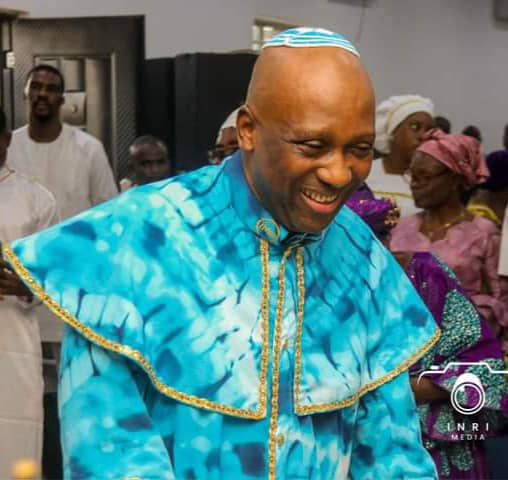
This sad incident is coming barely two weeks after Primate Elijah Ayodele, the Leader of INRI Evangelical Spiritual Church specifically warned against attacks in some states. He mentioned these states while calling on security operatives to pay close attention to them.
These were his words:
“Another attack is coming up in these following states where the military must watch carefully and intelligently; Kano, Kaduna, Zamfara, Kebbi, Niger, Borno, Kwara and Kogi state. They want to do a deadly attack, it’s preventable but it depends on how they will handle it. I have told you about the danger coming up.”
@primateayodele
Unfortunately, some of our military agencies don’t believe spiritual intelligence can save the country from so much danger hence, their neglect of this prophetic warning but now, it has been fulfilled with the miliary losing credibility by the day while Primate Ayodele continues to gain momentum.
Likewise, At least 26 passengers and crew sustained varying degrees of injuries on Monday following an accident involving the Kaduna–Abuja train, according to the Nigerian Railway Corporation (NRC).
Opeifa explained that the train departed Rigasa in Kaduna at 7:15 a.m. and was approaching Asham station around 9:16 a.m. when a loud bang was heard after the power car and trailing locomotive collided with one of the passenger coaches.
In July 2025, Primate Ayodele asked nigerians to pray not to see train mishap on the Kaduna-Abuja route.
@primateayodele #nigeriantiktok🇳🇬 #fulfillment #train #abuja #primateayodele
“Let’s pray not to see train mishap in Abuja-Kaduna, Kaduna-Abuja route.”
This has also been fulfilled.


- National Council for Curriculum Development (NCDC) seeks Shs17 Billion for curriculum review, teacher training April 9, 2026
- Senegal: A Decade of Unresolved Climate Displacement April 9, 2026
- Uganda engages its diaspora in Japan on national policy framework for inclusive development April 9, 2026
- Afreximbank supports Dangote Group as it targets US$100 billion annual revenue by 2030 April 8, 2026
- Africa's top-ranked Global Reporting Initiative (GRI) Training Partner launches 15th cohort of globally recognized sustainability reporting certification April 8, 2026
- African Energy Chamber (AEC) Intervenes in Landmark Climate Case to Defend Africa’s Energy Future April 8, 2026
- Eswatini opens to investors for first-of-its-kind roadshow April 8, 2026
- Egypt: President El-Sisi Meets Ministers of Electricity, Petroleum April 8, 2026
- Seychelles and Japan explore expanded cooperation and future partnerships April 8, 2026
- President Mahama to headline The Africa Debate 2026 as Ghana-United Kingdom (UK) investment ties deepen April 8, 2026
- National Council for Curriculum Development (NCDC) seeks Shs17 Billion for curriculum review, teacher training April 9, 2026
- Senegal: A Decade of Unresolved Climate Displacement April 9, 2026
- Uganda engages its diaspora in Japan on national policy framework for inclusive development April 9, 2026
- Afreximbank supports Dangote Group as it targets US$100 billion annual revenue by 2030 April 8, 2026
- Africa's top-ranked Global Reporting Initiative (GRI) Training Partner launches 15th cohort of globally recognized sustainability reporting certification April 8, 2026
- African Energy Chamber (AEC) Intervenes in Landmark Climate Case to Defend Africa’s Energy Future April 8, 2026
- Eswatini opens to investors for first-of-its-kind roadshow April 8, 2026
-

 news4 months ago
WHO REALLY OWNS MONIEPOINT? The $290 Million Deal That Sold Nigeria’s Top Fintech to Foreign Interests
-

 society7 months ago
“You Are Never Without Help” – Pastor Gebhardt Berndt Inspires Hope Through Empower Church (Video)
-

 celebrity radar - gossips2 months ago
Dr. Chris Okafor Returns with Power and Fire of the Spirit -Mounts Grace Nation Altar with Fresh Anointing and Restoration Grace on February 1, 2026
-

 celebrity radar - gossips4 months ago
Prophet Kingsley Aitafo Releases 2026 Prophecy: ‘Nigeria Will Rise, but the World Must Prepare for Turbulence’
You must be logged in to post a comment Login
You must log in to post a comment.