
Uncategorized
Full Inaugural Speech Of Osun State Gov., Adedamola Adeleke

Full Inaugural Speech Of Osun State Gov., Adedamola Adeleke
INAUGURATION ADDRESS DELIVERED BY THE GOVERNOR OF OSUN STATE, HIS EXCELLENCY, SENATOR ADEMOLA JACKSON NURUDEEN ADELEKE ON SUNDAY NOVEMBER 27TH, 2022
Protocol,
1. Today, I stand on the podium of history with a sacred pledge to God and the good people of Osun State that my intellect, passion and strength will be devoted to nothing but the welfare, peace and security of our people.

2. As I accept the mantle of leadership entrusted upon me by the people of our dear State, I am conscious of the enormous challenges and responsibilities ahead of me and will beginning from this hour work day and night with deep sense of purpose to be a servant to you all.
3. Our gathering here to witness the materialisation of a new era is not an accident of history. We are all programmed by the Almighty God to be what we have been, what we are and what we will be in future.
4. Let me use this occasion to salute the founding fathers of our dear state, all the past administrators and Governors of Osun state as well as everyone who has contributed one way or the other to the growth, stability and progress of our state in the last 31 years.
5. I equally salute our fallen heroes both at the national and state level for the great sacrifice they have made to have a country and a state to call our own.
6. I am well aware of the fact that my responsibility as the Governor and Chief Security Officer of Osun State entails meeting the legitimate expectations of our people. Therefore, I promise that those expectations of the workers, traders, artisans, farmers, business owners, students, pensioners, traditional and religious leaders and indeed all residents of Osun State will be met by the grace of God and the cooperation of everyone.
7. Under my watch as the Governor of Osun State, I will boldly correct all past injustice, corrupt acts or policies by any previous administration which are against the collective interest of our people.
8. Let me state here that from the education, health, mining Sector, agriculture, road infrastructure and supply of portable water, let it be known to all that it is no longer going to be business as usual. And I repeat, it is no longer business as usual.
9. Our administration will demonstrate a high sense of urgency, transparency, justice and innovation to tackle and solve the problems of poverty, illiteracy, disease, and poor infrastructure.
10. Your Governor will be a people’s Governor. I will be accessible, responsive, consultative and proactive in handling small and big matters of State Governance.
11. I know that as a product of the collective will of you my people, there is a heavy weight of history on my shoulders and I accept the urgency of your expectations, the depth of your aspirations and your conviction in me to build a better State.
DEVELOPMENT AGENDA FOR OSUN STATE
12. Ladies and Gentlemen, you will recall that our party, the Peoples Democratic Party campaigned on a five point agenda namely:
a. Welfare of workers and pensioners;
b. Boosting the state’s economy
c. Home-grown infrastructure policy;
d. People-focused policy on education, affordable Health Care, Security and Social Welfare;
e. Agro-Based Industrialization for Wealth and Job Creation.
13. While a detailed programme of action will soon be unveiled on each of these 5-point agenda, let me quickly give you some insights into our policy direction.
EDUCATION
14. It is disheartening to see our State at the bottom of the national educational ratings especially in public primary and Secondary schools examinations. My administration will launch reform with direct focus on improvement of learning environment and outcome. Our target is to reverse the poor performance of students in public examinations within the next few years.
15. To achieve this target, we will prioritise in-service training and welfare of teachers, enhancement of school environment, entrenchment of discipline in the school system as well as involvement of the Parents-Teachers Association in our school administration system.
16. Our administration will soon convene an emergency Education Conference to articulate our blueprint on the restoration of the state’s education glory.
AGRO-INDUSTRIAL
17. We regard as critical the need to boost wealth creation, job opportunities and food security through innovative agricultural reforms covering all the agricultural value chains.
18. Aside the introduction of modern agricultural practices, we will shift attention to agriculture for export to take advantage of global markets.
19. While we target agriculture export earnings, we will establish modern farmers’ markets where producers and off takers can transact businesses.
TOURISM
20. In our desire to diversify Osun economy, my administration will target the tourism sector to boost our GDP and create new jobs.
21. Osun State is the historical capital of the Yoruba people and it is my intention to develop a strong business model to transform this rich historical heritage into huge tourism. We will encourage and partner with the traditional institutions, business organisations and foreign partners to develop the culture and tourism industry which includes our beautiful waterfalls, the Osun Osogbo World Heritage site and many cultural festivals across the state.
WOMEN AND YOUTH DEVELOPMENT
22. Women and youths are important segments in our development programme. I had earlier set up a youth advisory council which has produced an impressive blueprint for youth development in Osun State. I plan to ensure speedy implementation of their recommendations. More importantly, let me assure our women that our administration will be gender – sensitive in all appointments.
HEALTH
23. The health sector in Osun State is in need of urgent attention. Our government will give premium attention to improvement of the Primary Health care services. We will improve the working conditions of health workers and expand the coverage of our health insurance scheme. We plan to establish a standard diagnostic centre using the Public Private Partnership model and adopt measures that will retain medical practitioners in Osun state.
CLIMATE CHANGE AND ICT
24. Our administration will collaborate with Development partners to address problems of environmental pollution and Climate Change. We will equally promote digital literacy, tech innovations and create opportunities for our teeming youths in the ICT sector.
LOCAL GOVERNMENT REFORMS
25. In line with our campaign manifesto, our government will ensure local government autonomy in line with the provisions of the Nigeria constitution.
26. We will restore the lost glory of our local governments in order to make them more responsive to the needs of the people at the grassroots.
27. All policies that are not favourable to the growth of effective local government administration will be reviewed in accordance with the law.
28. No form of illegality will be allowed to stand and all acts of impunity committed by the immediate past administration on local government administration will be reversed following due process.
THE PUBLIC SERVICE
29. My administration will restore the integrity of the civil service which has been bastardised through favouritism and political considerations.
30. We will give the civil service a better orientation with a view to restoring its professionalism. In doing this, we will be fair and firm as we act only in pursuance of public interest.
31. Let me therefore announce an immediate return to status quo of all fresh appointments, placements and other major decisions taken by the immediate past administration with effect from the 17th of July, 2022.
32. I wish to assure all labour unions in the state of our administration’s willingness to protect workers interest and promote their welfare at all times. We will be a labour friendly government.
SECURITY
33. We will embark on a security sector reform that will target crime prevention, detection, neighbourhood policing and better synergy among security agencies. The Amotekun Corps will be strengthened while our administration will ensure operational linkage between local hunters and the Amotekun Corps. A “Know Your Neighbour” security initiative will be implemented. By the grace of God, very soon, Osun will return to its old nature of being a haven of peace.
EXECUTIVE ORDERS
34. My Good People of Osun, since you elected me as your Governor on the 16th of July 2022, which the INEC announced on July 17th 2022, the former Governor, Alh Isiaka Gboyega Oyetola maliciously started putting road blocks to make things difficult and almost impossible for the new administration to serve you.
35. Mass employment were carried out without budgetary provisions for salary payments for the new employees; even when the state was struggling to pay salaries and deliver other services. Various hurried and criminally backdated Contracts were awarded and again without budgetary provisions.
36. Appointments of several Obas were hurriedly done without following due process, just to mention a few.
37. All efforts to get the Governor set up a Transition Committee and submit hand-over notes in line with best practices proved abortive.
38. It is therefore my desire to ask for your patience and understanding to give my administration a few weeks to review and sort out all the actions and malicious confusions which the immediate past administration has created since July 17th 2022. Those actions were indeed vindictive measures against the people of Osun State for voting them out of office.
39. Consequently, I hereby issue the following directives which will be backed up with appropriate Executive orders:
i. Immediate freezing of all government accounts in banks and other financial institutions
ii. Immediate establishment of a panel to carry out an inventory and recover all government assets
iii. An immediate establishment of a panel to review all appointments and major decisions of the immediate past administration taken after the 17th July, 2022
iv. An immediate reversal to the constitutionally recognised name of our state, Osun State. All government insignia, correspondences and signages should henceforth reflect Osun state rather than State of Osun which is unknown to the Nigerian constitution.
APRRECIATION
40. As I conclude this address, let me express my appreciation to the President and Commander-In-Chief of the Armed Forces of the Federal Republic of Nigeria, His Excellency Muhammadu Buhari, GCFR for allowing a conducive atmosphere for a peaceful, free and fair election in Osun state.
41. I thank the national leadership of our party, the Peoples Democratic Party under the able leadership of our Chairman, His Excellency Sen. Iyorchia Ayu and his National Working Committee for their immeasurable support.
42. I also thank our presidential candidate, His Excellency Alhaji Atiku Abubakar, GCON, Vice presidential candidate His Excellency Sen. Ifeanyi Okowa, CON, all PDP state Governors, the Minority caucuses of the Senate, House of Representatives and Osun State House of Assembly and other party stakeholders who stood by Osun state to reclaim our mandate which was stolen four years ago.
43. Let me also thank the state chapter of the PDP under the able leadership of Dr. Adekunle Akindele, the immediate past leadership under Hon. Sunday Bisi and all party leaders in the 30 local government areas and Ife East area office. I thank you for your steadfastness, loyalty and commitment to the ideals which the Peoples Democratic Party represents.
44. My deep sense of appreciation goes to my immediate family members beginning with my elder brother Dr, Adedeji Adeleke, my immediate elder sister Yeye Modupe Adeleke-Sanni, my wives Titi and Ngozi, my children, nephews and nieces especially David Adedeji Adeleke A.K.A. Davido for their love, support and sacrifice towards ensuring that we got this far. May your sacrifices never be in vain. I assure you that the selfless services of our late father Sen. Raji Ayoola Adeleke, our mother Prophetess Esther Adeleke and our late scion of the Adeleke family, the first Governor of Osun state, His Excellency Alhaji Isiaka Adetunji Adeleke will always guide my actions as I serve the good people of Osun state.
45. I must not end this address without appreciating the Nigerian judiciary and the Independent National Electoral Commission (INEC) for their uprightness, neutrality, professionalism and courage in protecting our democracy without fear or favour.
46. I commend our security agencies for providing a peaceful and conducive atmosphere before, during and after the electoral process.
47. Finally, I extend my thanks to party men and women, friends, associates, supporters across party lines, the Media and the courageous Osun voters who have stood resolutely to give and defend this mandate. I am most sincerely grateful.
CONCLUSION
48. Ladies and Gentlemen, I have a grand vision of a new Osun state. But I cannot do it alone. I therefore seek the support and cooperation of everyone to make this happen.
49. I hereby extend a strong hand of fellowship to the other arms of governments, the Legislature and the Judiciary. As a former lawmaker and a graduate of Criminal Justice, I appreciate the importance of collaboration among the Executive, the Legislature and the Judiciary.
50. I call on all political parties to unite in the best interest of the state. Election is over. Now is the time for governance. We are open to fresh ideas in line with our manifesto.
51. For the purpose of emphasis, I will be a Governor for all Osun people regardless of differences in language, faith, political affiliation or any other considerations.
52. Welcome to a new Osun State, The State of The Living Spring.
53. Thank you and God bless you all



FOPCHEN Calls for Dialogue as Court Fixes May 28 for Continuation
OTA, OGUN STATE — Proceedings in a widely followed legal case resumed on March 24, 2026, at the High Court of Ogun State, Ota Division, ending with a fresh adjournment as the court fixed May 28, 2026, for continuation.
During the session, legal representatives for all parties restated their positions and addressed preliminary matters, laying the groundwork for more substantive arguments at the next hearing. Observers noted that the case continues to attract significant public attention due to its perceived implications for law, culture, and societal values.
The Foundation for the Protection of Cultural Heritage in Nigeria (FOPCHEN) used the occasion to reiterate its call for constructive national dialogue. The group emphasized that while the judicial process must be respected, broader societal engagement remains essential.
According to the organization, issues relating to values, responsibility, and cultural identity should not be confined solely to courtroom deliberations but should involve active participation from various sectors of society.
Legal analysts present at the proceedings described the matter as one with far-reaching implications, noting that arguments advanced in court could shape future interpretations surrounding sensitive cultural and moral questions.
The presiding judge subsequently adjourned the case to May 28, granting all parties time to refine their submissions and respond to issues raised during the hearing.
As anticipation builds ahead of the next court date, Nigerians across different sectors continue to monitor developments closely, keen to see how the judiciary navigates the delicate balance between constitutional rights and cultural expectations.
Uncategorized
CRG: Politicians Must Stop Witch-Hunting, Focus on Nation Building — Says NYSC Cleared Deputy Speaker Since 2023
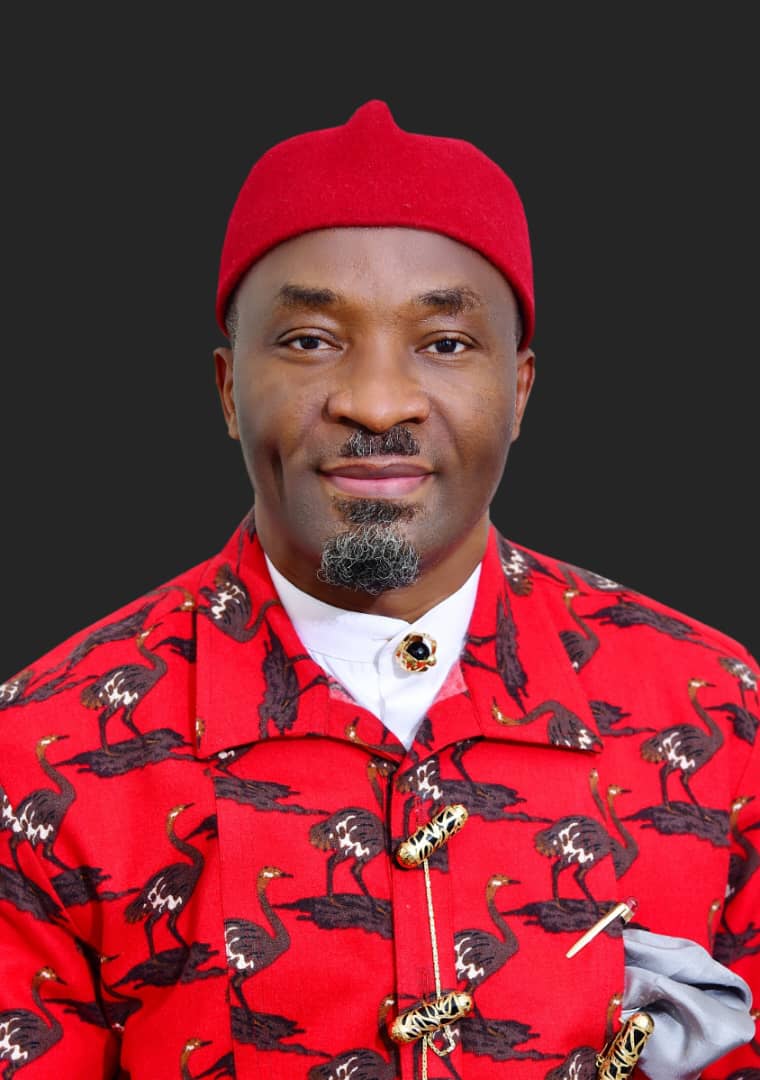
CRG: Politicians Must Stop Witch-Hunting, Focus on Nation Building — Says NYSC Cleared Deputy Speaker Since 2023
By: Boye Ola
The Centre for Responsible Governance (CRG) has called on political actors and interest groups to desist from what it described as needless witch-hunting of the Deputy Speaker of the House of Representatives, Benjamin Okezie Kalu, following renewed controversies surrounding his National Youth Service Corps records.
The organisation noted that the clarification by the National Youth Service Corps (NYSC) regarding the matter is not a recent development, as a formal verification letter had already been issued as far back as May 23, 2023.
The letter, referenced NYSC/CCD/VER/10/5.1/VOL1/02, had already addressed and cleared the questions surrounding the Deputy Speaker’s NYSC records.
Reacting to the renewed debate, the spokesman of the Centre,
Obande George, said it was troubling that issues which had already been clarified by a competent national institution were being resurrected for political purposes.
According to him, the time has come for political actors to move away from destructive engagements and concentrate on building the nation.
“It is important to note that the NYSC had already issued a verification letter dated May 23, 2023 addressing the matter.
Reopening issues that have already been clarified by a competent authority suggests that some individuals are more interested in political witch-hunting than in national progress,” George said.
The CRG stressed that democracy thrives when institutions are respected and their determinations are accepted in good faith rather than constantly questioned for political advantage.

George also commended the Deputy Speaker for demonstrating maturity and composure throughout the controversy, despite what he described as sustained provocations.
“Honourable Benjamin Kalu has shown remarkable calm and maturity in the face of intense public scrutiny and political provocation.
Instead of engaging in unnecessary public confrontation, he allowed institutions to speak through their records.”
The Centre warned that Nigeria’s political culture must evolve beyond constant character attacks and sensational allegations, which often distract public officials from their responsibilities.
According to the organisation, the country’s development requires constructive engagement among political actors rather than continuous attempts to discredit opponents.
“Nigeria cannot move forward if political energy is constantly spent on digging up allegations and amplifying rumours. Our leaders and political actors must redirect their focus to governance, policy and nation building.”
CRG therefore urged Nigerians to rely on verified information from credible institutions and avoid spreading speculative claims that could damage reputations or destabilise public discourse.
The organisation reiterated that respect for due process and institutional integrity remains essential for strengthening Nigeria’s democracy.

@The Centre for Responsible Governance, Email: [email protected], Instagram: crgngo6, Twitter: crgng06, Threads: crgngo6
Uncategorized
IWD 2026: Ajadi Celebrates Women, Urges Them To Seek More Elective Positions In Future Elections

IWD 2026: Ajadi Celebrates Women, Urges Them To Seek More Elective Positions In Future Elections
A Leading People’s Democratic Party, (PDP) Governorship Aspirant in Oyo State, Ambassador Olufemi Ajadi Oguntoyinbo has felicitates with women in the country on the occasion of this year’s International Women’s Day.
The international Women’s Day is celebrated on 8 March, commemorating women’s fight for equality and liberation along with the women right’s movement. It gives focus to issues such as gender equality and reproductive rights. International Women’s Day originated from labour movements in Europe and North America during the early 20th century.
In a statement issued on Sunday to commemorate this year’s edition of the International Women’s Day, Ajadi said the role of the women in nation building cannot be over emphasised.
He recalled the role played by prominent Nigerian women like Mrs Funmilayo Ransome- Kuti, Margaret Ekpo and Wuraola Esan towards the liberalization and the growth of the country and urges women to follow their footsteps by not only participate in the political process but seek more elective positions.
He urges the political leaders to encourage and give more chances to women for them to contest and occupy elective positions in the country.
Ajadi also called for more respect for women, saying they are definitely behind whatever success recorded by the menfolk.
He said domestic violence against women should be stopped, saying they deserves respect for their role in moulding the future leaders.
According to the statement, “I celebrate and congratulate our women on this year’s occasion of International Women’s Day. We cannot underestimate the role played by our women both at home, in the social circle and in politics. They deserve more respect.
“I equally called on them not only to be a passive participants in politics but to determine to seek more elected positions in future elections. They should aspire more from the position of dancing and singing at campaigns to seek more elective positions. The ratio of men to women in elective positions in the country is embarrassing. Women should stand up and fight for more elective positions.
“I also use the occasion of this year’s Women’s Day to appeal to Nigerians to stop domestic violence against the women. If we treat our women well, our country will witness unprecedented developments”.


-

 society6 months ago
Religion: Africa’s Oldest Weapon of Enslavement and the Forgotten Truth
-

 news4 months ago
WHO REALLY OWNS MONIEPOINT? The $290 Million Deal That Sold Nigeria’s Top Fintech to Foreign Interests
-

 society6 months ago
“You Are Never Without Help” – Pastor Gebhardt Berndt Inspires Hope Through Empower Church (Video)
-

 celebrity radar - gossips2 months ago
Dr. Chris Okafor Returns with Power and Fire of the Spirit -Mounts Grace Nation Altar with Fresh Anointing and Restoration Grace on February 1, 2026