
celebrity radar - gossips
Full Text Of Buhari’s Democracy Speech on Insecurity, Protest, Others

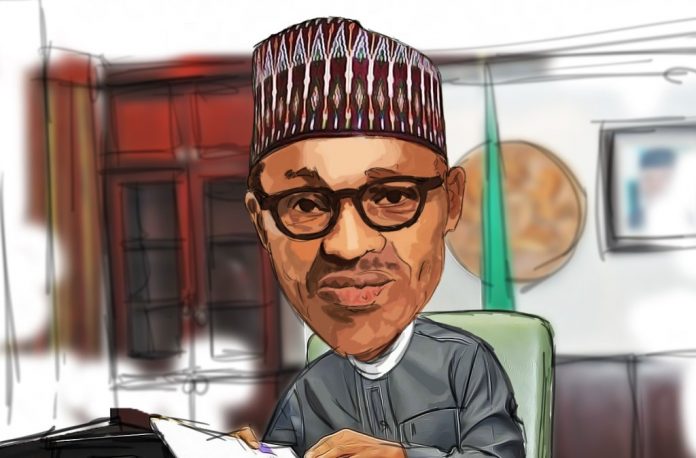
Full Text Of Buhari’s Democracy Speech on Insecurity, Protest, Others

I Buhari join you all today to commemorate and celebrate our Democracy Day. It is a celebration of freedom and a victory for one people, one country, and one Nigeria.
2. As with all democracies we will always be going through improvement processes in our desire to reach the goal of a mature democracy, a strong, evolved, and integrated nation-state to be reckoned with globally.
3. In the last two years we have witnessed and overcome a good number of testy challenges that would have destroyed other nations especially relating to our collective security.
4. The indefatigable CAN DO Spirit of the Nigerian has sustained us and would keep pushing us to put these challenges behind us.
5. Unfortunately some of these challenges came in the shape of violent outrages leading to the loss of lives of many of our dear compatriots and the destruction of some of our infrastructure, including those devoted to improving our democratic processes.
6. Once again, I want to render my sincere and heartfelt condolences to the families and friends of our gallant servicemen and women who lost their lives in the line of duty and as a sacrifice to keep Nigeria safe.
7. I extend the same condolence to the families and friends of our countrymen, women, and children who were unfortunate victims of such senseless arsons, kidnappings, and murders.
8. I also share the pains of families and direct victims of ransom-seeking, kidnaped victims who went through unimaginable trauma in the course of their forced imprisonment.
9. Let me assure my fellow citizens that every incident, however minor gives me great worry and concern and I immediately order security agencies to swiftly but safely rescue victims and bring perpetrators to justice.
Fellow Nigerians,
10. When you elected me as your President in 2015, you did so knowing that I will put an end to the growing insecurity, especially the insurgency in the North East, but the unintended consequences of our scattering them in the North East pushed them further in-country which is what we are now facing and dealing with.
11. We will, by the Grace of God put an end to these challenges too.
12. Unfortunately, like in most conflict situations, some Nigerian criminals are taking undue advantage of a difficult situation and profiteering therefrom with the misguided belief that adherence to the democratic norms handicaps this Administration from frontally and decisively tackling them.
13. We are already addressing these obstacles and we will soon bring some of these culprits to justice.
14. We are, at the same time addressing the twin underlying drivers of insecurity namely poverty and youth unemployment.
15. Interventions led by the Government and the Central Bank of Nigeria driving economic growth over the past 6 years are targeted mostly to the agricultural, services, infrastructure, power, and health care sectors of the economy.
16. In the Agricultural sector, for instance, the Anchor Borrowers Programme resulted in a sharp decline in the nation’s major food import bill from $2.23billion in 2014 to US$0.59billion by the end of 2018.
17. Rice import bill alone dropped from $1 billion to $18.5 million annually.
18. This initiative supported the local production of rice, maize, cotton, and cassava. The government-financed 2.5 million small-holder farmers cultivating about 3.2 million hectares of farmland all over the country and created 10 million direct and indirect jobs.
19. Several other initiatives, namely Agribusiness/Small and Medium Enterprise Investment Scheme, the Non-oil Export stimulation Facility, the Targeted Credit Facilities operated across the 774 Local Governments.
20. In the manufacturing sector the CBN – BOI N200 billion facility financed the establishment and operations of 60 new industrial hubs across the country, creating an estimated 890,000 direct and indirect jobs.
21. The CBN’s N50 billion Textile Sector intervention Facility increased capacity utilization of ginneries from 30% to nearly 90%.
22. The Economic Sustainability Plan – our rebound plan for the COVID-19 pandemic developed in 2020 is currently being executed. The plan is primarily focused on the non-oil sector, which has recorded phenomenal growth contributing over 90% to the GDP growth in Q1 2021.
23. Though marginal we have recorded GDP growth over two quarters; Q2 2020 and Q1 2021. This is evidence of successful execution of the ESP by the Federal Government.
24. My vision of pulling 100 million poor Nigerians out of poverty in 10 years has been put into action and can be seen in the National Social Investment Programme, a first in Africa and one of the largest in the world where over 32.6m beneficiaries are taking part. We now have a National Social register of poor and vulnerable households, identified across 708 local government areas, 8,723 wards, and 86,610 communities in the 36 States and the FCT.
25. Our conditional cash transfer program has benefited over 1.6 million poor and vulnerable households comprising more than 8 million individuals. This provides a monthly stipend of N10,000 per household.
26. I have also recently approved the National Poverty Reduction with Growth Strategy Plan that augments existing plans to further reduce poverty in Nigeria.
27. As of the end of 2020, the Development Bank of Nigeria had disbursed 324 billion Naira in loans to more than 136,000 MSMEs, through 40 participating Financial Institutions. I am to note that 57% of these beneficiaries are women while 27% are youth.
28. We are able to do all these and still accelerate our infrastructure development through sensible and transparent borrowing, improved capital inflow, improving and increasing revenue through capturing more tax bases, and prudent management of investment proceeds in the Sovereign Wealth Fund.
Fellow Nigerians,
29. Our infrastructure revolution continues with key projects attaining critical milestones under the Presidential Infrastructure Development Fund; The Second Niger Bridge, The Lagos- Ibadan Expressway, and the Abuja-Kaduna-Zaria-Kano Expressway.
30. I have also approved the establishment of Infraco Plc, a world-class infrastructure development vehicle wholly focused on Nigeria with a capital structure of N15 trillion.
31. The rail system is not left out as the Itakpe-Warri standard gauge rail was completed and commissioned 33 years after construction began. The Lagos-Ibadan double-track railway line which I have just commissioned has commenced operations.
32. We are focused on ensuring that our infrastructure drive is key to economic growth and one that can be felt by every Nigerian. Building critical infrastructure in our ports is also opening up opportunities for the Nigerian economy.
33. My approval for 4 new seaports using a Public-Private-Partnership approach is hinged on growing the Nigerian economy. These four seaports; Lekki Deep Sea Port, Bonny Deep Sea Port, Ibom Deep Sea Port, and Warri Deep Seaport will create massive job opportunities and foreign investment inflows.
34. We have worked at deepening our Eastern ports leading to success like having three container ships berth at Calabar port, a first in 11 years. Similarly, on October 30, 2019, an LPG tanker operated by NLNG berthed in Port Harcourt, the first time an LPG ship is berthing at any of the Eastern Ports.
35. As we invest in these new assets, we have also made strides in ensuring that they are secured and protected. In this regard I am also pleased to note the launch of the NIMASA Deep Blue project – which is an Integrated National Security and Waterways Protection Infrastructure that I recently commissioned. This initiative is designed to add to the layer of security we have to safeguard our maritime sector.
Dear Nigerians,
36. I will be the first to admit that in spite of our efforts and achievements which are there for all to see, there is still much more to be done and we are doing our best in the face of scarce resources and a galloping population growth rate that consistently outstrips our capacity to provide jobs for our populace. Our overall economic target of lifting 100 million Nigerians out of poverty in 10 years is our goal notwithstanding COVID-19.
37. In the last two years we lifted 10.5 million people out of poverty – farmers, small-scale traders, artisans, market women, and the like.
38. I am very convinced that this 100 million target can be met and this informed the development of a National Poverty Reduction with Growth Strategy. The specific details of this accelerated strategy will be unveiled shortly.
39. In the last year, Nigeria and the whole world faced COVID-19 for which no one was fully prepared.
40. Our response to the pandemic involved making hard choices in balancing livelihoods and public health concerns. You are all living witnesses to how successful this has been due to a number of proactive measures put in place. Our response to COVID-19 is globally acclaimed.
41. We were able to ensure that the various lockdown measures did not impact too negatively on the ability of ordinary Nigerians to continue sustaining their livelihoods.
42. During the pandemic, we disbursed N5,000 to 1 million Nigerians using a Rapid Response Register and advanced N20,000 to 750,000 beneficiaries of the Conditional Cash Transfer Progamme and provided 1.37 million Nigerians with palliatives from CACOVID.
43. At the same time the Federal Government released 109,000 metric tonnes of food reserve stocks and 70,000 metric tonnes of grains to the poor and vulnerable in all 36 states of the federation.
44. In addition, Government reduced interest rates from 9% to 5% for struggling businesses and extended credit facilities to 548,345 beneficiaries.
Fellow Nigerians,
45. When this administration decided to change our Democracy Day from 29th May to June 12th in my first tenure, it was not only to honour the sacrifices of the men and women of our country who fought for the return to democracy but also to demonstrate our commitment to satisfying the aspirations of the people and creating an environment for democracy to be an accepted way of life.
46. As your President, I remain committed to providing an enabling environment for a free, fair, and credible electoral system under my tenure.
47. However, you need to play your part by getting involved at any level you can supporting a democratic system that works for all and not for a section or a select few and demand accountability from your elected leaders.
48. My commitment to bequeathing a sustainable democratic culture remains resolute, my pursuit of a fair society remains unshaken and my desire to see that Nigeria remains a country for each and every one of us has never been stronger.
49. In responding to the challenges that this period imposes on us, Government also recognizes the need to acknowledge notions of marginalization and agitations for constitutional amendments among various segments of our population.
50. While this government is not averse to constitutional reform as part of our nation-building process, everyone must understand that the primary responsibility for constitutional amendments lies with the National Assembly.
51. This body which, as I said, is the arm of government responsible for constitutional changes has concluded the preliminary stages of amending and improving our constitution in a way that the majority of Nigerians will be happy with.
52. Government is, however, willing to play a critical role in the constitutional amendment process without usurping the powers of the National Assembly in this regard.
53. As a nation we have come very far from where we started and we are getting incrementally closer to where we ought to be.
54. Overcoming the present challenges is but one of a necessary process that we have to undergo as a nation so that we can come out stronger. The day I joined the Nigerian Army I was prepared to lay down my life for Nigeria.
55. As your President I remain ever committed to upholding and defending Nigeria’s Corporate existence.
56. In adhering to the Fundamental Objectives and Directive Principles of State Policy notably section 14(2)(b) I shall do all within my power to ensure that the Security and welfare of the people remain the primary purpose of government.
57. I have, throughout my tenure, provided the security agencies with all they require relative to available resources and will be providing more as the dynamics unfold to put an end to our security problems.
58. My strong belief in the Nigerian spirit gives me comfort that we are facing these challenges with renewed commitment to keep our country one.
59. I thank you for your patience and attention and more importantly your resolve to join hands in making Nigeria the country of our dream.
Happy Democracy Day! God Bless us All, God Bless the Federal Republic of Nigeria.




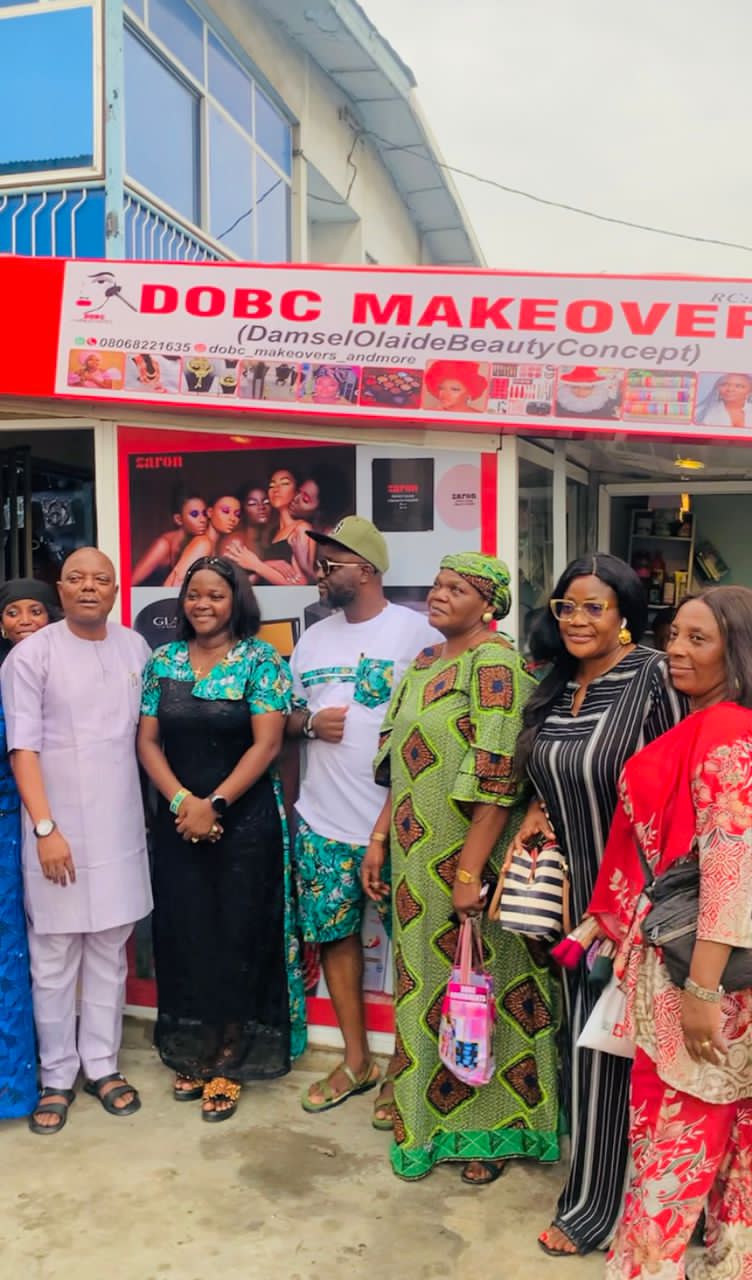
Beauty Meets Glamour as Olaide Ogunyemi Opens New Studio in Mushin
Popular Nollywood actress and professional makeup artiste, Olaide Ogunyemi Oluwayemisi aka Damilola, has expanded her footprint in the beauty industry with the grand opening of her new makeup studio in Lagos.
The talented thespian, who is also the Chief Executive Officer of @Dobc_makeovers_andmore, officially unveiled the ultra-modern beauty space last Thursday, April 2, 2026, in a colourful ceremony filled with glamour, fashion, and pageantry.
Strategically located at 101 Palm Avenue, right beside FitPlus and Sparklight Hospital in Mushin area of Lagos, the new studio is designed to offer top-notch beauty services, reflecting Ogunyemi’s commitment to excellence and professionalism in the ever-growing makeup industry.
The opening ceremony attracted friends, colleagues from the Nollywood industry, beauty enthusiasts, and well-wishers who came out in large numbers to celebrate the entrepreneur’s latest milestone. Guests were treated to a vibrant atmosphere that showcased creativity, style, and the evolving standards of the beauty business in Lagos.
Speaking at the event, Ogunyemi expressed her excitement and gratitude, noting that the new studio represents years of hard work, dedication, and passion for her craft. She reaffirmed her commitment to delivering premium beauty services while empowering aspiring makeup artistes.
The launch of the studio further cements her reputation as a dynamic force, successfully blending her career in Nollywood with a thriving beauty brand.
With this latest development, Olaide Damilola Ogunyemi continues to inspire many young entrepreneurs, proving that talent, consistency, and vision remain key drivers of success in Nigeria’s creative and business landscape.


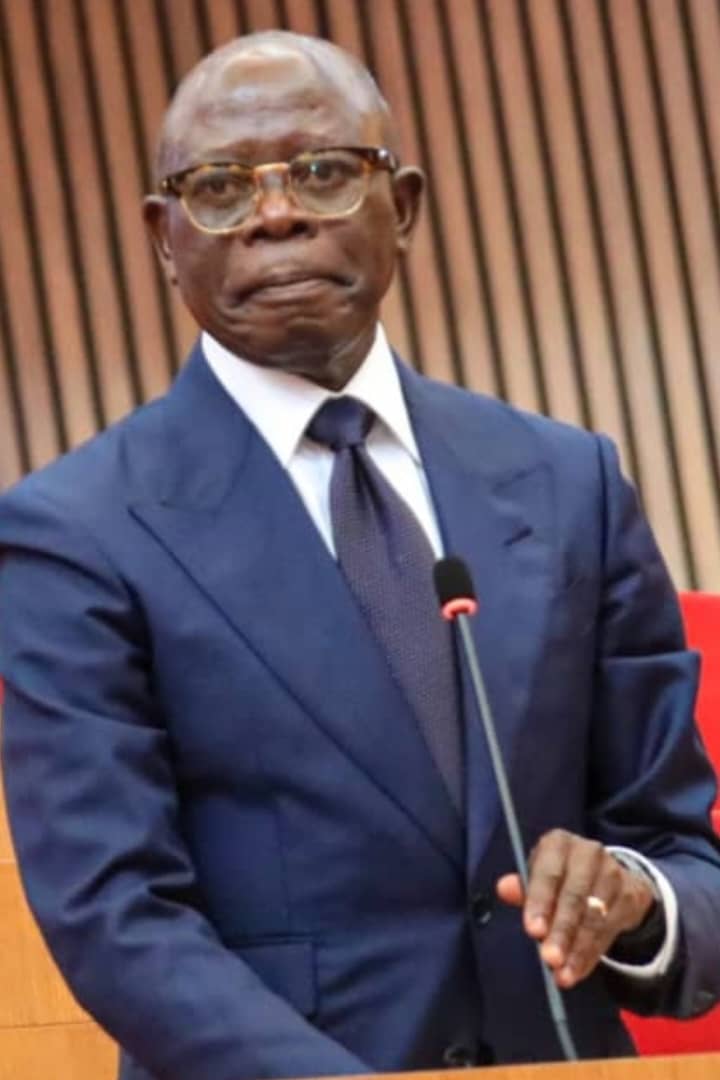
Daniel Eromosele Eulogize Adams Oshiomole as he turns 74 years
Today, I celebrate an exceptional leader, a fearless voice for the people, and a man whose life has remained a symbol of courage, sacrifice, and unwavering commitment to justice—Distinguished Comrade Senator Adams Aliu Oshiomhole.

Your journey has been nothing short of inspiring. From your days as a vibrant labour leader to your impactful tenure as the Executive Governor of Edo State, and now as a respected Senator of the Federal Republic, you have consistently demonstrated what it means to serve with integrity, strength, and purpose. Your contributions to the growth of our nation and the development of Edo State remain indelible and deeply appreciated.
You have not only built structures and institutions but have also built people. I am personally a beneficiary of your leadership, your guidance, and your belief in empowering others. Your influence in my life has been profound, and I remain grateful for the opportunities and inspiration you have given me.
On this special day, I celebrate not just your achievements, but the man you are—resilient, principled, and ever committed to the progress of Nigeria and her people.

May this new year bring you renewed strength, greater wisdom, good health, and more remarkable accomplishments. May your legacy continue to shine brighter with each passing year.
Happy Birthday, sir. Wishing you many more fruitful and impactful years ahead.
celebrity radar - gossips
Accolades to Empress Genevieve Wining as she Celebrate birthday in Grand style

Accolades to Empress Genevieve Wining as she Celebrate birthday in Grand style
Emmanuel Clement
Vilnius, Lithuania – The Grand Hotel Vilnius will host a grand birthday celebration in honor of Her Majesty The Empress Genevieve Wining of the United Kingdom of Atlantis (UKA) on April 4th, 2026.
The four-day event promises to be an extravagant affair, marking the special birthday of Empress Genevieve Wining. The celebration will take place at the prestigious Grand Hotel Vilnius, Lithuania, renowned for its luxurious ambiance and exceptional service.

According to the event flyer, the birthday celebration will be a spectacular occasion, fitting for an empress. Guests can expect an elegant setting adorned with golden accents, sparkling champagne, and festive decorations, creating a regal atmosphere befitting the occasion.
The Empress Genevieve Wining of UKA is expected to grace the event, which will include various festivities and celebrations in her honor. The occasion aims to bring together dignitaries, followers, and guests to commemorate the empress’s birthday with grandeur and joy.
For media inquiries, accreditation, or further information about the birthday celebration of The Empress Genevieve Wining of UKA, please contact the event organizers.
Courtesy of His Excellency Emperor Prof. Solomon Wining. UKA


-

 society7 months ago
Religion: Africa’s Oldest Weapon of Enslavement and the Forgotten Truth
-

 news4 months ago
WHO REALLY OWNS MONIEPOINT? The $290 Million Deal That Sold Nigeria’s Top Fintech to Foreign Interests
-

 society7 months ago
“You Are Never Without Help” – Pastor Gebhardt Berndt Inspires Hope Through Empower Church (Video)
-

 celebrity radar - gossips2 months ago
Dr. Chris Okafor Returns with Power and Fire of the Spirit -Mounts Grace Nation Altar with Fresh Anointing and Restoration Grace on February 1, 2026