
Business
FULL TEXT OF DR. KAYODE FAYEMI’S INAUGURAL PRESS BRIEFING (READ HERE)


STATE OF THE SOLID MINERALS SECTOR AND WAY FORWARD
Presented by
Dr. ‘Kayode Fayemi, CON
Minister of Solid Minerals Development at the Inaugural Media Briefing of the Ministry
on Monday, December 21, 2015
Protocols and Introduction
Good morning ladies and gentlemen. The core purpose of our gathering today is acquaint you with some of the emerging strategic priorities and plans of the Federal Ministry of Solid Minerals Development for accelerating and scaling up the role of solid minerals in Nigeria’s economy. I speak today on behalf of the core leadership of this ministry and duly acknowledge the support and contributions of my brother and colleague Hon. Abubakar Bawa Bwari, Minister of State and the Permanent Secretary, Mr. Istifanus Fuktur and the entire staff.
We will also like to thank President Muhammadu Buhari for the opportunity to serve our republic and her citizens. In the short period that we have been here, we must acknowledge the enriching support of staff of the Ministry and its key departments and agencies for their warm welcome, extensive briefings, insights, support and frankness.
I also want to thank all other stakeholders, Nigerians at home and abroad, the organised private sector, the Central Bank and CEOs of all Banks, local and international development agencies; envoys of leading mining countries who gave freely of their time to brief us since we resumed duties, technical experts in the mining sector, small scale miners in the field, traditional rulers in mining host communities, and all those who have taken their time to meet with us, and in some cases document their suggestions, as we consulted far and wide on where we are and where we want the solid minerals sector to be. In all my years in politics and the professions, not many issues have had such a sobering effect on me as what i have seen for myself and learnt since I resumed this assignment. For example, it is a collective shame for us that such a massive project as the Ajaokuta Steel Plant can be allowed to remain moribund inspite of our sovereign resources that have been invested and its immense potentials. I am inspired by the optimism in the media too and your commitment to our success. With your sustained support and feedback, we will win together.
Our Point of Departure: A Partially Leveraged Asset
Ladies and gentlemen, it is no news to anyone that Nigeria has tremendous mining endowments. Today, we have at least 44 known mineral assets that include precious minerals, base metals, bulk minerals and what are known as rare earth minerals. More specifically, our most promising mineral assets include gold, iron ore, baryte, bitumen, lead, zinc, tin and coal.
We have reasons to believe that available data of our reserves understates what the almighty God has blessed our country with in many cases. We have barely updated some of the geosciences data collected 50 years ago or earlier; so we are cautiously optimistic that our mining endowments actually exceed what is currently stated.
That said, based on current data, Nigeria’s solid minerals sector makes up about 0.34% of gross domestic product (GDP). That means that based on current official exchange rates, the mining sector contributes N400billion in value to the economy. While that is a significant role, it is smaller than its true potential as the vast majority of our mining assets have yet to be exploited. In fact, what has been happening is the the sector has more or less been operating sharply below capacity, with many mining operations manned by small scale artisanal miners, as opposed to the large scale players.
Mining is not new to Nigeria. As a nation, mining of our resources began in 1902 in key mining towns such as Jos and Enugu. From these early operations led by the then British Colonial government, we went on to a more private sector focused model, and then moved to companies controlled by government such as the National Steel Company and the National Coal Corporation. The policy shift created too much uncertainty which occasioned many private investors leaving Nigeria and the sector suffering sharply as a result. The government at the time unfortunately did not do a good job of running mining companies and as a result, the sector’s progress grounded to a halt. Needless to say, little attention paid to the sector over the years compounded by, in some cases, poor policy judgements of previous administrations are some of the factors that have stunted the sector’s growth.
Today, following extensive reforms started in 1999, which essentially crystallized around the Nigerian Minerals and Mining Act of 2007, Nigeria is once again on the path to providing a transparent and workable regulatory and policy environment for private sector led mining. And companies have started responding to all the efforts made by my predecessors. Today we have companies such as Tongyi Allied Mining, Dangote Group, Segilola Gold, Kogi Iron Mines, Multiverse Resources, and Australian Mines Ltd etc. blazing the trail in the mining sector. We also look forward to welcoming more companies into the sector.
Challenges and Constraints
That said, even for our pioneer miners, the road to mining prosperity has not been easy. Many companies who have kept faith with Nigeria have struggled due to challenges in the solid minerals sector. Today, the Nigerian mining industry faces two (2) sets of challenges: external and internal.
External Challenges
The global mining market is in turmoil as key sources of demand that supported prices over the past two decades have declined. As you all may be aware, there is continuous global decline in prices of mining products which has put mines and mining houses under tremendous pressure. We see this reflected in the sharp declines in the share prices of Glencore, BHP-Biliton, Anglo American and Rio Tinto for example.
Naturally, as a result of falling metal and asset prices, many of the top mining houses are pulling back from investment planning, shutting down mines and optimizing current operations. All mining now has to be cost and process efficient.
For Nigeria, it creates a challenge to attract the large houses in the current time frame but therein also lies a great opportunity. We have therefore adjusted our go to market strategy to reflect a need to jump start market growth using a mix of domestic mining houses, junior mining companies and large global miners. The good news for Nigeria is that we have tremendous domestic demand for industrial minerals and metals – in the construction industry for example, so we will be focusing on working with other key MDAs to ensure that demand is met by Nigerian miners and processors.
Internal Challenges
Our internal challenges are of a different nature, and not a supply-demand balance issue. Internally, we need more of the support structure that will enable industry growth. At present, there are eight key internal challenges we face:
- Limited Infrastructure: This is a key issue; the absence of appropriate infrastructure e.g. water, railroads and port handling facilities for base and bulk minerals makes it difficult for Nigeria to export iron ore for example. We need to improve energy, transport and market links to mines.
- Insufficient Geological Data: While we have some geosciences data, we are still heavily reliant on work done 30 to 50 years ago to estimate our reserve potential. We need to provide more detailed, investment grade data to support investors. Mining licenses issued by the Cadastre Office should be able to serve as collateral for loans, if supported by reliable information on the quality and grade of deposits.
- Limited Cooperative Federalism: Absence of incentives for states to become involved in mining is a key constraint i.e. royalties and taxes not directly accessible to states; need to review this arrangement. States have also not taken full advantage by setting up mining joint ventures, limiting their capacity to generate IGR.
- Low Productivity: Nigeria’s mining techniques and processes need to be upgraded in order to reduce mine site waste, and boost productivity of output. Ditto some of our older steel plants. Even in a labour intensive mining sector, it is important that miners have access to the most efficient supporting technology.
- Illegal Artisanal Mining and Community Challenges: Much of Nigeria’s mining is conducted informally at levels as high as 80% of activity in some regions of the country, not necessarily of Naira earnings. We need to bring these miners into a legalized framework, making them real start-up miners and ensuring they pay government the right set of taxes and royalties. I want to be clear: there will no longer be a free lunch, as the Mining Act will be firmly enforced.
- Weak Institutional Capacity: The Ministry has undergone significant changes since 2007 but still remains constrained with respect to enforcing existing laws and policies, supervising mines, and leading the provision of geo-sciences data. The Ministry will therefore need to add more technical staff and also upgrade the skill set of the Mining Inspectorate staff as well as other staff in the Ministry and its agencies.
- Insufficient Funding: Funding has been a challenge partially because the sector had not been a focus area for both government and financial institutions. Over the past five years for example, the total capital allocation to the Ministry and its agencies in the Federal budget had been less that N10 billion. And out of the N1 billion allocated in 2015, only N352 million was released. Equally, access to finance has been practically non- existent from the Banking industry. Indeed, as at today, the banking sector’s exposure to the sector is less than 1% of its total portfolio, which demonstrates the limited focus on the sector. Thus, a number of projects have drawn funding from offshore sources, while others have sought capital from a few Nigerian banks. We have commenced constructive engagement with the Central Bank of Nigeria (CBN) and with commercial lenders to help them create the teams to sharpen commercial options for Nigerian miners.
- Weak Ease of Doing Business and Perception Issues: Nigeria still remains a challenging place to do business based on data from the World Bank’s survey over the past decade; while we have improved, that has had a negative impact on mining. Mining specific data such as the Fraser Institute survey puts Nigeria nesr the bottom of investor friendly destinations, even if that is more perception than reality, it shapes investor decision making process.
For Nigeria, the continued presence of these issues will hold back market development. Therefore, we must resolve these set of issues as they impact how we choose to compete in the market. While external markets create opportunities we can exploit, improving ease of doing business or reducing transport costs will enable us to attack market opportunities as a lower cost competitor for example. Indeed, the global mining party is ours to attend, but we must dress appropriately and come with a competitive edge. My team and I will be spending more time on building collaborative links with other key ministries to enable us build a cost competitive industry.
The President’s Agenda and Promise
Beyond the challenges, the key question is if all goes well, what do we want to achieve in the Solid Minerals sector? You must have heard Mr. President oft repeated views that he wants the sector to be a key source of economic growth and diversified revenue base for Nigeria. In fact, Mr. President has stated clearly that our goal is to build a more diversified economy in which oil remains important, but its share of the overall portfolio of revenue sources declines as the whole pie grows bigger. The recently approved Medium Term Expenditure Framework (MTEF) and the Fiscal Strategy Paper (FSP) emphasizes the place of solid minerals in thr economic growth strategy of the country.
Based on that presidential promise, to build a more diversified economy, our task as a Ministry is therefore to remove any and all obstacles to such growth. From working with the National Assembly to receive the right budgetary provisions to ensuring expansion in bulk handling terminals at multiple river and ocean ports, our role is to ensure that things work as intended.
Our Emerging Vision – A Safe, Sustainable and Profitable Sector
The trajectory of Nigeria’s extractive industry has not been without controversy. We are all witnesses to the challenges in the oil industry over the past few decades. More recently, we have seen significant challenges in the gold, lead and zinc mines of Zamfara where illegal mining without a clear understanding of how to handle poisonous material such as lead has had incredibly devastating consequences. We will continue to work with all stakeholders on the remediation of the health challenges arising from poor mining activities.
Given where we are and the early stages of the industry in Nigeria, we believe it is important that we set the right tone and create a structure for long term success. Therefore our core philosophical beliefs that will guide our decisions are as follows:
- Jobs Creation – We want to build a sector that is a jobs and growth machine, capable of working alongside other sectors to create a range of career options for our citizens.
- Revenue Generation – We want to build a sector that blocks all forms of leakages in the revenue accruals with a view to ensuring prompt and comprehensive collection of revenues.
- Industrialisation – We want to build an industry that will support Nigeria’s industrialization, expansion of low cost coal generated power, earn foreign exchange and generate tax revenues for government at all levels.
- Sustainability – We want to build an industry that is sustainable, and will balance profit maximization with sustained economic options
- Transparency – We want to build a transparent industry that broadcasts what it pays to government and other partners.
- Environmentally Safe operations – We want to build an industry that values health and safety, environmental equity and fairness for any and all.
- Cooperation – We also want to build an industry that integrates states, communities and existing artisanal miners where possible into the mining ecosystem.
If we deliver on this vision, then we can build a mining sector that Nigerians can be proud of 30 years or more from now. This sector should deliver double digit growth over the next decade, with important direct and indirect economic impacts on households. To improve our likelihood of building such an outcome, the Ministry also sought to extensively understand the entire operations in the sector. Therefore, we continue to review lessons from some of the best mining industries to see what lessons we can draw from their experiences, balancing some of the objectives outlined above.
Our Emerging Federal Mining Strategy
Given all the opportunities and challenges outlined, as well as the global market outlook for mining, the Ministry has developed a framework strategy to drive growth. Let me outline the key elements of the strategy along 3 dimensions: what our aspirations are; where Nigeria should focus on; and how we intend to win.
Aspiration: First, our strategic aspiration is to build a sustainable, globally competitive mining sector, and related supporting sectors that will prudently use the finite resources available to improve the quality of life for Nigerians
Where to Focus: We will focus on supporting and growing Nigeria’s position in mineral assets with commercially proven reserves. Our assets will then be used to serve 2 key markets: a domestic industrialization market that is more beneficiation focused; and an export market that is more focused initially on the export of ores and raw materials. The mix of investors that will target Nigeria will reflect that preference of serving both the domestic and export markets. We anticipate that as we expand our geosciences databases and insights, we will also expand what minerals we compete in.
How to Win: Nigeria will focus on going to market as a quality and cost leader, rather than a scale based operation, pending further understanding of our reserves position. Be that as it may, we are interested in building a profitable solid minerals industry, not the largest in the world, hence we will always make shrewd decisions with our partners, communities and other stakeholders. For example, we will rather be the most competitive gold producer in the world and serve only a fraction of supply, than be the biggest producer and have equity investors generating losses.
Given the aspiration, the where to play and how to win choices, the role of government would be to invest in activities and levers that reduce the cost of doing business, and improve Nigeria’s perception as a high quality mining destination. Over the next few months, we will conduct additional analysis to refine our strategies and the policy regimes that will emerge to support and accelerate the execution of the strategy.
Ensuring Successful Execution of Emerging Strategy
To ensure a successful implementation of our strategy, we have also invested significant time in brainstorming key drivers of success. We have identified 8 key drivers of success which we will now review briefly.
- First, we will always work off an integrated plan that emerges from a broad consultation process; once the plan is finalized, we will actively communicate it to key stakeholders. Based on what we have shared today, much of it will not be a surprise.
- Second, we will build an investor friendly regulatory environment; today we have a very strong system but it can always be further improved; for now, our focus will be on enforcing its key elements including its “use it or lose it” license provisions and automating its operations.
- Third, we will champion and only use a partnership model with investors, communities, artisanal miners and states to create the right incentives for all parties. A good example is the Northern Numero Resources Ltd which is a partnership of an Australian group, the Federal Government and Kebbi State Government and the Community.
- Fourth, we will build a more widely available geosciences database; as we create more accurate geological maps, investors can become more confident and precise in their decision making
- Fifth, we will work closely with our colleagues in the Federal Executive Council particularly Environment, Finance, Industries, Trade and Investment, Interior, Transportation, Power, Works and Housing, Defence/ONSA, Customs and the BPE with a view to strengthening inter-agency collaboration and coordination.
- Sixth, we will work closely with banks, and other financial institutions, public and private to improve access to capital for solid minerals sector operators, large and small; we want Nigerian financiers to understand this industry again, and build teams to help drive its growth.
- Seventh, we will also look inward and rebuild the Ministry’s personnel, offices and teams to ensure we are streamlined, and investing appropriately to support growth; for example, we will add more technical and commercial persons, even as we consolidate certain functions to create efficiencies.
- Eight and finally, we intend to use solid minerals as a growth catalyst for communities. We will engage closely with multiple MDAs to ensure that communities we work in are treated with respect and professionalism to ensure that they can build a diversified economy over the years.
We have made varying levels of progress across each of these elements. Most would be classified as work in progress, while a few such as using solid minerals to drive growth and wealth in communities can be considered very early stage or not started. Over the next 12 to 36 months, we will periodically report back on progress against these 8 categories.
Next Steps: Some Short Term Actions
Before wrapping up today’s prepared remarks, I also want to talk about what my team and the entire Ministry will be doing in the next few months. Our immediate priority now is to accelerate investor confidence in the mining markets, and get the sector growing and jobs created. To do that within the context of the overall emerging strategy, we will be taking the following actions:
Finalize Market and Technical Diagnostic: We are working on creating one consistent view of Nigeria’s mining industry, drawing on a range of internal and external data; this will help inform our strategy as well as investor decisions.
Revenue Generation: Upgrading of the Mining Cadastre Office and the Mines Inspectorate Directorate – automation, efficient review of overlapping and inactive titles, guaranteeing the integrity of mining licenses, external audit of revenue receipts in the past years would be undertaken and the establishment of Mines Police
Formalising Artisanal and Small Scale Miners: Strengthen the institutional support to artisanal and small-scale miners for integrating them into the formal economy.
Finalise Privatisation Exercise: Based on the recent update provided by the Bureau of Public Enterprises to the Ministry, an audit of privatised assets would be undertaken.
Geosciences: Review and conclude all open contracts for collecting geosciences data; for projects that have been contracted and the collection flights flown, finalize payments and make these and other data available to investors.
Capacity Building: We will invest in capacity building for the technical and operational staff in the Ministry and organise the Ministry for optimal delivery of the goals outlined.
Non-State Actor Engagement: We will encourage and work in partnership with non-state actors especially Community Development Associations and Civil Society Organisations to promote participation and inclusion and ensure community development and safer/environmentally sustainable mining practices.
Regulation: We will work with stakeholders to review existing licenses and bring them up to date where there are issues; our goal is to get licensees who are sitting on the fence to have sufficient confidence to start investing real capital. That said, starting March 1, 2016, we will start enforcing the “use it or lose it” doctrine enshrined in the Nigerian Minerals and Mining Act, 2007. The period from today to 1st March 2016 should be considered an amnesty period to allow regularization of papers.
Formation of Investment and Business Support Team: There will be some low hanging fruits e.g. providing support to miners who are close to production but facing one or two administrative issues. We are setting up a new investment team that will help get such companies “over the line” and into production mode. We will also engage rapidly with key Nigerian companies that are today importing raw materials that can be supplied domestically e.g. coal for cement kilns. That import substitution push will be a quick to medium term win. The team will also start working closely with foreign investors who need guidance to launch operations in Nigeria.
Launch Stakeholder Communications: We will launch a series of targeted sessions with investors, communities and other parties in the next few weeks to continue the consultations we have begun since taking office. Our focus would be on ensuring that we are listening and acting as well in the best interests of committed partners. As much as possible, these sessions will be used to refine our thinking, as well as solve problems.
Conclusion
It is fair to say that we have a great deal of work ahead of us. That said, we are building on a hard fought legacy and it is important that we continue to refine that structure until it gives us the type of industry all Nigerians and our international investor friends will be proud of.
We ask for your patience but we also recognize our responsibility to boost confidence. As Solid Mineral’s share of GDP grows over the coming years, we will continually review what we have done well and what can be improved. One thing we can guarantee is that this Administration will make choices that will ensure that Nigeria and her partners, domestic and foreign, create a profitable, safe and sustainable solid minerals growth story. Hold us to account and challenge us.
Thank you for your kind attention.





Fidelity Bank grows gross earnings by 38% to N434.95b in Q1
Fidelity Bank Plc recorded 37.9 per cent growth in gross earnings to N434.95 billion in first quarter 2026 as the international commercial bank continued to expand its core banking market share.
Interim report and accounts of Fidelity Bank for the three months ended March 31, 2026 released at the Nigerian Exchange (NGX) showed that gross earnings rose from N315.42 billion in first quarter 20025 to N434.95 billion in first quarter 2026, representing an increase of 37.9 per cent.
The top-line performance was driven by impressive growth in the bank’s core business operations with interest incomes rising by 22.8 per cent to N314.48 billion in first quarter 2026 as against N256.10 billion in first quarter 2025.
With net interest income at N180.97 billion, the bank closed the period with profit before tax of N92.48 billion. After taxes, net profit stood at N74.47 billion for the three-month period. Earnings per share remained high at N5.69, underlining the capacity of the bank to reward its shareholders.
The balance sheet of the bank also emerged stronger. Total assets crossed the N11 trillion mark to N11.35 trillion by March 2026 compared with N10.46 trillion recorded in December 2025. Customers’ deposits increased from N6.89 trillion to N7.38 trillion. Total equity rode on the back of earnings growth to a 27.5 per cent increase from N1.09 trillion in December 2025 to N1.39 trillion by March 2026.
The first quarter 2026 results further consolidated the strong earnings outlook of the bank, which had successfully completed its recapitalisation amidst impressive earnings performance in 2025.
Fidelity Bank had recorded double-digit growths in interest and non-interest incomes as well as key balance sheet items during the year ended December 31, 2025.
The audited report showed that gross earnings rose from N1.04 trillion in 2024 to N1.52 trillion in 2025, an increase of 45.6 per cent. Interest and similar incomes had grown by 38.7 per cent from N803.1 billion in 2024 to N1.11 trillion in 2025. Fees and commission incomes also rose by 44.7 per cent from N78.4 billion to N113.4 billion. The bank recorded net profit after tax of N242.4 billion in 2025.
The bank’s balance sheet emerged stronger with total assets rising by 18.6 per cent to N10.46 trillion in 2025 as against N8.82 trillion in 2024. Customer deposits increased by 16.1 per cent from N5.94 trillion to N6.89 trillion, reflecting continued franchise strength and an improved funding profile. Net loans and advances meanwhile declined by 2.4 per cent to N4.28 trillion in 2025 as against N4.39 trillion in 2024, attributable to customers paying down on their mature obligations.
The bank had in 2025 strengthened its capital position, with eligible capital rising to N561 billion, above the regulatory minimum of N500 billion for banks with international authorisation. In addition, capital adequacy had remained robust, with Capital Adequacy Ratio of 30.94 per cent by December 2025 as against 23.47 per cent by December 2024.
Managing Director, Fidelity Bank Plc, Dr. Nneka Onyeali-Ikpe, said the first quarter 2026 results reinforced the bank’s strong and resilient business model.
She noted that with the remarkable success of its recapitalisation programme and continuing expansion, Fidelity Bank has entered a new era of growth and impressive returns.
“We are on a stronger footing and confident that we will set new growth records that are reflective of our legacy and the future we are working on,” Onyeali-Ikpe said.
Business
Dangote Refinery Ends Nigeria’s Era of Fuel Import Dependence, Boosts GDP, FX Earnings — EIU
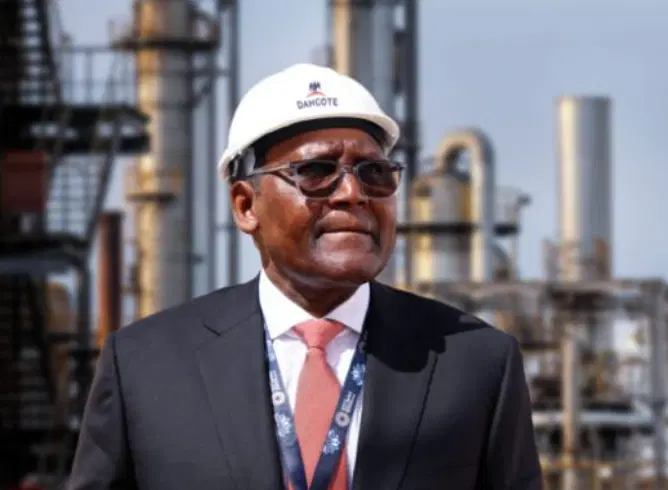
Dangote Refinery Ends Nigeria’s Era of Fuel Import Dependence, Boosts GDP, FX Earnings — EIU
The operational ramp up of the 650,000 barrels per day Dangote Petroleum Refinery & Petrochemicals is fundamentally reshaping Nigeria’s downstream oil sector, significantly reducing the country’s dependence on imported refined petroleum products and strengthening its external position, according to the Economist Intelligence Unit (EIU).
In its latest assessment on Nigeria’s fuel market and regulatory environment, the EIU said the refinery has already transformed a sector that was previously characterised by heavy reliance on imported fuel despite Nigeria being Africa’s largest crude oil producer. The report noted that the refinery met nearly 80 per cent of domestic petrol demand in April and produced enough volumes to satisfy local consumption requirements as operations approached full capacity.
The EIU described Nigeria’s downstream petroleum sector before the refinery as “long dysfunctional”, noting that the country had remained almost entirely dependent on costly imported fuel while producing nearly 1.5 million barrels of crude oil daily.
According to the report, the emergence of the refinery has reduced import dependence, improved domestic fuel availability and strengthened Nigeria’s balance of payments position through lower import demand and rising exports of refined petroleum products.
“The gradual ramp up of the 650,000 barrel/day Dangote refinery since May 2023 has transformed Nigeria’s long dysfunctional downstream sector,” the report stated. “The country’s main refineries, all state owned, had been inoperative for years and Nigeria was almost entirely reliant on costly imported fuel.”
The research and analysis division of The Economist Group, London added that the refinery’s attainment of full operational capacity and its planned expansion would further support Nigeria’s economic growth and foreign exchange earnings over the medium term.
“Meanwhile, the attainment of full capacity at, and an increase in exports from, the Dangote refinery will support real GDP growth and foreign exchange earnings in 2026 and 2027 and beyond, as a planned doubling of the plant’s output comes on stream around the end of the decade,” it added.
Industry analysts said the refinery is increasingly positioning Nigeria as an emerging refining and export hub, altering energy trade flows across Africa and reducing the vulnerability associated with fuel import dependence.
The EIU noted that the refinery’s expansion has coincided with major reforms in Nigeria’s downstream sector, including the removal of fuel subsidies and the introduction of market driven pricing mechanisms.
The report, however, said the transition from a state dominated fuel import structure to large scale domestic refining has triggered resistance from interests linked to the old import regime.
The latest tensions emerged following the decision by the Nigerian Midstream and Downstream Petroleum Regulatory Authority to relax restrictions on petrol imports despite the refinery’s growing capacity to meet domestic demand.
Dangote Industries subsequently initiated legal action, arguing that continued import approvals undermine domestic refining investments and conflict with the objectives of the Petroleum Industry Act, which seeks to encourage local refining capacity and reduce import dependence.
Analysts noted that the availability of large-scale domestic refining capacity has improved Nigeria’s energy security and reduced exposure to external supply shocks and foreign exchange volatility.
The Centre for the Promotion of Private Enterprise also cautioned against unrestrained importation of petroleum products, warning that such a policy could weaken Nigeria’s industrialisation drive and discourage investments in domestic refining.
Chief Executive Officer of CPPE, Muda Yusuf, said continued dependence on imported fuel had historically contributed to pressure on foreign reserves, exchange rate instability and fiscal leakages.
The refinery’s growing impact is also being reflected in Nigeria’s broader macroeconomic indicators. Earlier this month, S&P Global Ratings cited increased domestic refining capacity and rising hydrocarbon exports among the major factors supporting Nigeria’s sovereign credit rating upgrade – the first in 14 years.
Beyond Nigeria, analysts said the refinery is increasingly being viewed as a strategic industrial asset for Africa, where many countries remain heavily dependent on imported fuel despite rising demand for transportation, manufacturing, and power generation.
Business
BREAKING: Court Dismisses $19.6 Million Claim Against NNPCL — Rules Contract Scope Cannot Be Changed Orally
BREAKING: Court Dismisses $19.6 Million Claim Against NNPCL — Rules Contract Scope Cannot Be Changed Orally
In a landmark ruling on Friday, May 22, 2026, the Federal Capital Territory High Court in Abuja threw out a $19.6 million lawsuit filed by Alternate Dimensions Ventures Ltd against the Nigerian National Petroleum Company Limited (NNPCL), affirming a key legal principle: a written contract cannot be expanded through oral agreements or conduct.
Alternate Dimensions had sought $19,600,000 in professional fees, claiming the scope of its Direct Sale, Direct Purchase (DSDP e-pro) contract with NNPCL was orally expanded. Represented by counsel Patrick Peter, the firm argued it was entitled to the revised sum for services rendered under the alleged new terms.
But NNPCL, through its lawyer Ituah Imhanze of KENNA LP, pushed back sharply, arguing that parties are bound exclusively by the clear terms of their written agreement. Imhanze contended that without any written amendment, the claim was legally unsound, and the court agreed.
Delivering judgment, Justice Hamza Mu’azu upheld NNPCL’s defense, stating that the contract was unambiguous and that no evidence was adduced during the trial, which supported the alleged scope expansion. The court further found that NNPCL fully complied with all contractual terms and committed no breach.
Dismissing the suit as meritless, Justice Mu’azu reinforced the doctrine of sanctity of contract: any amendment to a written agreement must be express, unequivocal, and documented, not implied or verbal.
The ruling spares NNPCL from the S19.6 million claim and also a floodgate of similar potential liabilities.


- CANAL+ lists on the Johannesburg Stock Exchange (JSE), strengthening the Group’s dual-continental approach and reinforcing South Africa’s (SA) role as a gateway to global capital and African growth June 3, 2026
- African Mining Week (AMW) Country Focus to Spotlight Liberia’s Iron Ore, Gold and Critical Minerals Prospects June 3, 2026
- Venezuela to Host Its Largest-Ever International Energy Investment Summit June 3, 2026
- Canada–Africa Business Conference Preparations Advance Following Canadian Secretary of State’s High-Level Visit to Nigeria June 3, 2026
- Uganda: Parliament concludes vetting of ministers June 2, 2026
- Fund for Export Development in Africa (FEDA) Board Appoints Mr. Emmanuel Assiak as Chief Executive Officer June 2, 2026
- Ecobank Group Launches World First Nature Bond Mobilising Global Capital to Protect Africa’s Natural Ecosystems June 2, 2026
- Merck Foundation Chief Executive Officer (CEO) Dr. Rasha Kelej together with Kenya First Lady support the education of 47 Kenyan Schoolgirls by providing Annual Scholarships till they Graduate June 2, 2026
- Annual Meetings 2026: Governors Back the Bank’s Platform Solutions to Transform Aviation and Health Systems in Africa June 2, 2026
- ThinkMarkets launches ChelseaAI, bringing live CFD trading into Artificial Intelligence (AI) assistants June 2, 2026
- CANAL+ lists on the Johannesburg Stock Exchange (JSE), strengthening the Group’s dual-continental approach and reinforcing South Africa’s (SA) role as a gateway to global capital and African growth June 3, 2026
- African Mining Week (AMW) Country Focus to Spotlight Liberia’s Iron Ore, Gold and Critical Minerals Prospects June 3, 2026
- Venezuela to Host Its Largest-Ever International Energy Investment Summit June 3, 2026
- Canada–Africa Business Conference Preparations Advance Following Canadian Secretary of State’s High-Level Visit to Nigeria June 3, 2026
- Uganda: Parliament concludes vetting of ministers June 2, 2026
- Fund for Export Development in Africa (FEDA) Board Appoints Mr. Emmanuel Assiak as Chief Executive Officer June 2, 2026
- Ecobank Group Launches World First Nature Bond Mobilising Global Capital to Protect Africa’s Natural Ecosystems June 2, 2026
-

 news6 months ago
WHO REALLY OWNS MONIEPOINT? The $290 Million Deal That Sold Nigeria’s Top Fintech to Foreign Interests
-

 society1 month ago
SOCIAL MEDIA IS NOT A BATTLEFIELD COMMAND – WHY THE NIGERIAN ARMY’S ACTION AGAINST JUSTICE CRACK IS A NATIONAL SECURITY IMPERATIVE
-

 celebrity radar - gossips4 months ago
Dr. Chris Okafor Returns with Power and Fire of the Spirit -Mounts Grace Nation Altar with Fresh Anointing and Restoration Grace on February 1, 2026
-

 celebrity radar - gossips6 months ago
Prophet Kingsley Aitafo Releases 2026 Prophecy: ‘Nigeria Will Rise, but the World Must Prepare for Turbulence’
You must be logged in to post a comment Login
You must log in to post a comment.