
Politics
FULL TEXT: President Bola Tinubu’s national broadcast on 2024 Democracy Day

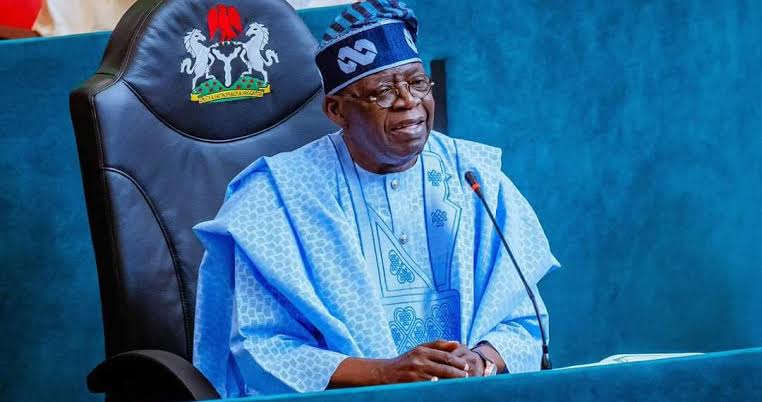
TEXT OF PRESIDENT BOLA TINUBU’S NATIONAL BROADCAST ON THE 25TH ANNIVERSARY OF UNBROKEN DEMOCRACY IN NIGERIA, DEMOCRACY DAY 12TH JUNE 2024 ABUJA
President Bola Tinubu on Wednesday, delivered the 2024 Democracy Day speech, addressing a variety of issues affecting the country.
Tinubu pledged to implement democracy as Nigerians’ way of life.
Read the full text below:
My fellow Nigerians, let me begin by congratulating all of us for witnessing the celebration of another Democracy Day today, the 12th day of June 2024. This year also marks our nation’s 25 years of uninterrupted democratic governance. On this day, 31 years ago, we entered our rites of passage to becoming a true and enduring democratic society. Going through this passage was hard and dangerous.
During the fateful six years that followed, we fought and struggled for our natural rights as human beings put on this earth by the divine hand of our Creator. We lost great heroes and heroines along the way. In this struggle, the winner of the June 12, 1993 presidential election, Chief MKO Abiola, the most significant symbol of our democratic struggle, his wife, Kudirat, General Shehu Musa Yar’Adua and Pa Alfred Rewane, among others sacrificed their very lives.
They bravely surrendered their futures, so that our nation might have a better one. Let us honour the memories of Chief Anthony Enahoro, Chief Abraham Adesanya, Commodore Dan Suleiman, Chief Arthur Nwankwo, Chief Chukwuemeka Ezeife, Admiral Ndubuisi Kanu, Chief Frank Kokori, Chief Bola Ige, Chief Adekunle Ajasin, Chief Ganiyu Dawodu, Chief Ayo Fasanmi, Chief Gani Fawehinmi, Chief Olabiyi Durojaiye, Dr. Beko Ransome-Kuti, Chima Ubani, and others who have transited to the higher realm.
The sacrifices of General Alani Akinrinade, Professor Bolaji Akinyemi, Professor Wole Soyinka, Chief Ralph Obioha, Chief Cornelius Adebayo, among many others, should never be forgotten. For at least six years, they bore the pains and difficulties of life in exile. While the exiled pro-democracy activists kept the fire burning, their comrades at home sustained the pressure on the military brass hats.
Among the latter are Olisa Agbakoba, Femi Falana, Abdul Oroh, Senator Shehu Sani, Governor Uba Sani, Chief Olu Falae, and other National Democratic Coalition leaders such as Chief Ayo Adebanjo and Chief Ayo Opadokun. The sacrifices they made, and the precious gift brought about by their selfless devotion can never be repaid. Neither shall it be forgotten.
We could not have won the battle against military dictatorship without the irrepressible Nigerian journalists who mounted the barricades along with the pro-democracy activists. We celebrate them today, along with their media establishments such as The Punch, Guardian, National Concord, Tribune, The News/Tempo, and TELL Magazines. Military authorities proscribed these media establishments and jailed their journalists for standing for free speech and civil liberties. Despite the lethal might of the military government, what appeared to be high and unyielding walls of dictatorship came tumbling down. The dismal fortress exists no longer.
The power of an idea, the power of the people proved more potent than all the guns and munitions, than all the guns, the munitions and the threats of the strongmen. The nation exited the yoke of military rule in 1999 to become the most populous democracy on African soil, the beacon of democratic self-determination for the black race and one of the largest democracies in the world. This change stands as a pivotal moment in human history. From this change, we shall never turn, nor shall the annals of mankind’s progress forget the sublime meaning of this great moment.
Today, 25 years later, we celebrate the silver anniversary of our journey in democracy. We have steadied the course. Democracy is neither a foreign nor abstract concept devoid of real-life meaning for us. Neither can we afford to reduce or minimalise it to being nothing but the mere holding of periodic elections where one candidate and party outdo another. While elections attract dramatic attention, they are but one aspect of democracy. Democracy is a way of life that encompasses a broad outlook of which elections are but a part. As such, a nation can have elections without being democratic. But a nation cannot be truly democratic without holding elections. That we have established a tradition of holding transparent, open, and fair elections gives credence to our democratic bearing. That we have experienced peaceful transitions of government affirms our democratic temperament.
Fellow Nigerians, true democracy shines its light into the daily lives of the people who live under its nurturing wings. It affords us the freedom and liberty to think as we want, live where we want and pursue whatever legitimate endeavour that suits us. Democracy does not assume some false or forced unity of opinion. In fact, democracy assumes that conflicting ideas and differing opinions shall be the order of the day. Given the diversity and variety of the human experience, there must be diverse perspectives and viewpoints.
What democracy demands is that we do not resolve differences through force and repression. But we make allowance for the legitimacy of views that differ from our own. Where other forms of government impose against the will of the people, democracy aims to make leaders sufficiently humble that they conduct themselves as servants of the common good, not as viceroys of the narrow interests of the mighty.
My dear compatriots, Nigeria faced a decision of untold gravity twenty-five years ago: Whether to veer toward a better destination or continue aimlessly in the fog of dictatorship. We made the right choice then. We must continue with that choice now. As Nigerians, we must remind ourselves that no matter how complicated democracy may be, it is the best form of governance in the long run. We must also be aware that there are those among us who will try to exploit current challenges to undermine, if not destroy, this democracy for which so much has already been given. These people do this not to make things better but to subject all other people and things to their control and dominance until the point that, if you are not counted among their elite, then your life will be small and no longer owned by you. This is the great battle of our day and the major reason we specially celebrate this Democracy day.
Fellow Nigerians, our Democracy is more than a historic fact. It is a living, breathing reality. The true meaning of this day is not to focus solely on the great deeds of the past that have brought us to this point. Yes, we pay eternal honour to those who laid down their lives, sacrificing everything to pave the way for the nation. I stand uniquely placed in this regard. I was among those who took the risk to midwife the birth of our democracy. I am now a direct and obvious beneficiary of the fruits of those historic efforts. As president of this nation, I am morally and constitutionally bound to preserve this precious form of governance. I vow to do my utmost best to protect your rights, freedoms, and liberties as citizens of Nigeria. Even more than that, I pledge to do whatever is necessary to cement democracy as our way of life.
Although the challenges are steep and multiple, I am grateful to lead Nigeria at this moment in her history and point in her democratic journey. I come before you also to declare that our most important work remains before us. This real test has never been whether we would rise to challenge the slings of misfortune and grievous pain of dictatorship. The real test is whether we shall lower our guards as the shadow of despotism and its evident physical danger fade. I say to you here and now that as we celebrate the enshrinement of our political democracy, let us commit ourselves to the fulfilment of its equally important counterpart, the realisation of our economic democracy. I understand the economic difficulties we face as a nation.
Our economy has been in desperate need of reform for decades. It has been unbalanced because it was built on the flawed foundation of over-reliance on revenues from the exploitation of oil. The reforms we have initiated are intended to create a stronger, better foundation for future growth. There is no doubt the reforms have occasioned hardship. Yet, they are necessary repairs required to fix the economy over the long run so that everyone has access to economic opportunity, fair pay and compensation for his endeavour and labour.
As we continue to reform the economy, I shall always listen to the people and will never turn my back on you. In this spirit, we have negotiated in good faith and with open arms with organized labour on a new national minimum wage. We shall soon send an executive bill to the National Assembly to enshrine what has been agreed upon as part of our law for the next five years or less. In the face of labour’s call for a national strike, we did not seek to oppress or crack down on the workers as a dictatorial government would have done. We chose the path of cooperation over conflict. No one was arrested or threatened. Instead, the labour leadership was invited to break bread and negotiate toward a good-faith resolution. Reasoned discussion and principled compromise are hallmarks of democracy. These themes shall continue to animate my policies and interaction with the constituent parts of our political economy. I take on this vital task without fear or favour and I commit myself to this work until we have built a Nigeria where no man is oppressed. In the end, our national greatness will not be achieved by travelling the easy road. It can only be achieved by taking the right one.
The words of the American President Franklin Roosevelt certainly ring true: ” There are many ways of going forward. But only one way of standing still”! We dare not slumber lest the good things awaiting our immediate future pass us by. We dare not plant our feet in idle standstill in the middle of the intersection of hope and despair. We know the proper way forward and we shall take it! The initial rays of a brighter tomorrow now appear on the early horizon. An abundant future and our capacity to achieve that future lie within our reach.
Democracy and the institutions it begets offer to take us to our profound destination. Let us board this progressive train together. Together, let us move Nigeria forward. Let’s continue to keep the fire of democracy burning. Let’s keep the torch lit for generations to come. May God continue to bless the Federal Republic of Nigeria and preserve our democracy. I wish us all a Happy Democracy Day.




Politics
Political Earthquake in Kano: How, Senator Rabiu Musa Kwankwaso, Nasiru Gawuna’s Move to ADC Reshapes North-West Politics
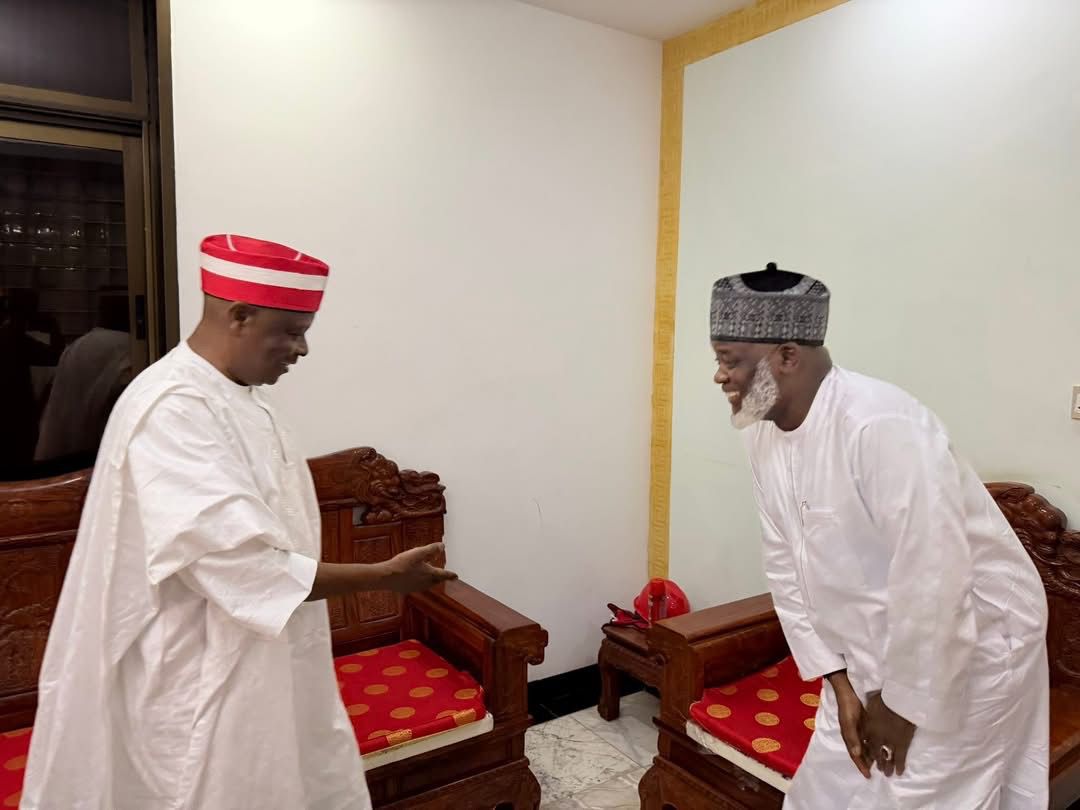
Political Earthquake in Kano: How, Senator Rabiu Musa Kwankwaso, Nasiru Gawuna’s Move to ADC Reshapes North-West Politics
The political atmosphere of Nigeria’s North-West was fundamentally altered on a sweltering afternoon in 2026 after Senator Rabiu Musa Kwankwaso former Governor of Kano State and Former Minister for Defence who is also the “Grand Commander” of the Red-Cap revolution, finalized a move that many viewed as the ultimate masterstroke of his political career. By transitioning from the NNPP to the African Democratic Congress (ADC), Kwankwaso did more than change platforms; he effectively reset the coordinates of the nation’s largest voting bloc.
Senator Kwankwaso’s pedigree is defined by a singular devotion to human capital development and an almost mythical grassroots loyalty preceded him. He turned a local movement, the Kwankwasiyya, into a disciplined, ideological army that transcends traditional party structures. His entry into the ADC instantly transformed a secondary party into a formidable fortress, signaling to the ruling elite that the North-West is no longer a monolith under their control.
The gravity of this shift is most profound in Kano, the heartbeat of Northern commerce. For years, the state was a polarized battlefield between the Kwankwasiyya and established conservative wings. However, the entry of Nasiru Yusuf Gawuna into the same ADC orbit has created a “Kano Super-Alliance” that was previously unthinkable. Kwankwaso, the visionary architect who sent thousands of Kano’s children to global universities, now finds his populist ideology merging with Gawuna’s administrative steadiness and deep-rooted institutional connections.
This synergy is a seismic departure from the politics of “zero-sum” rivalry; it is a calculated fusion of mass appeal and the strategic machinery required to protect and deliver votes.
This move reshuffles the entire North-West deck. As Kwankwaso plants the ADC flag across the region, he is attracting a wave of heavyweights from Kaduna to Sokoto who feel marginalized by the status quo. His political pedigree allows him to speak with a regional authority that others lack, positioning himself as a protector during a time of economic uncertainty. By bringing Gawuna into this fold, the dynamics of Kano politics have shifted from a war of attrition to a coalition of necessity. This alliance creates a “Third Way” that bypasses the failures of the old guard, promising a return to the rapid growth that defined the Kwankwaso years, but with a broader, more inclusive base that could dictate the occupant of Aso Rock in 2027.
Kwankwaso’s career has always been defined by a uniquely personal brand of power. From 1999 to 2015, he served two terms as Governor of Kano State, in addition to roles as Minister of Defence and Senator. While many were surprised by his recent maneuvers; especially following closed-door meetings with President Bola Tinubu, he chose the emerging ADC over the ruling APC.
In the high-stakes theater of Nigerian politics, few events have jolted the region quite like the defection of Nasiru Yusuf Gawuna from the APC to the ADC on March 31, 2026. Coming just twenty-four hours after Kwankwaso’s move, Gawuna’s transition fundamentally has also altered the political calculus in Kano. What makes this moment remarkable is the sheer drama of the reversal. Gawuna’s political journey has been a steady, calculated ascent through Kano’s establishment. He first shot to prominence as Commissioner of Agriculture under Governor Abdullahi Umar Ganduje, earning a reputation for hands-on management in a state where farming is the economic backbone. He eventually rose to Deputy Governor, serving for nearly six years and gaining invaluable executive experience. Beyond partisan politics, Gawuna distinguished himself as Chairman of the Governing Council of Bayero University and, most recently, as Chairman of the Federal Mortgage Bank of Nigeria (FMBN). He resigned from the FMBN on March 27, 2026, citing compliance with presidential directives regarding political appointees.
A look back at the 2023 gubernatorial election reveals just how significant Gawuna is. Running under the APC, he polled over 890,000 votes against the formidable Kwankwasiyya machine. This proved that he is one of the few politicians in Kano who can genuinely compete with Kwankwaso’s electoral machinery. His strength is threefold: he appeals to the youth, the religious establishment (Ulama), and the business community; he has the capacity to split the APC vote; and he has demonstrated he can deliver votes independently of a larger party wave. To understand the magnitude of this defection, one must appreciate the complete inversion of alliances since 2023. Back then, Governor Abba Kabir Yusuf ran on the NNPP ticket with Kwankwaso’s backing, while Gawuna carried the APC banner with Ganduje’s support. By 2027, the roles will likely reverse: Governor Yusuf is positioned to run under the APC with Ganduje’s blessing, while Gawuna is poised to run under the ADC with Kwankwaso’s endorsement.
From the perspective of the Kwankwasiyya movement, Gawuna’s arrival is a “return” rather than a “recruitment,” as he was part of the movement’s pioneer cohort. This narrative neutralizes accusations of opportunism. For his part, Gawuna framed his move in terms of service and divine guidance, with sources indicating he felt marginalized within the APC after his 2023 defeat.
The reaction from within the APC has been one of worry and regret. President Tinubu, recognizing the stakes, reportedly directed party leaders to prevent Gawuna’s move, even offering him an automatic Senatorial ticket for 2027. The failure of this pressure campaign, Gawuna reportedly placed his phone on “Do Not Disturb” and traveled abroad to avoid lobbyists represents a significant defeat for the presidency’s political management. This crisis prompted emergency meetings between President Tinubu, Dr. Ganduje, and Badaru Abubakar at the Presidential Villa to reorganize their strategy.
The long-term implication is the potential break of the APC-PDP duopoly. The ADC is now positioning itself as a genuine “third force” in the North-West. The defection of high-profile figures like Senator Ahmed Babba-Kaita, Senator Aishatu “Binani” Ahmed, and former Justice Minister Abubakar Malami suggests a coordinated realignment. This competition could force more substantive policy debates and reduce the “zero-sum” intensity of regional elections.
The projected 2027 gubernatorial rematch between Gawuna (ADC) and Governor Yusuf (APC) will be a battle between two men with established records. Voters will have a genuine choice between performance and platform rather than just shifting loyalties. As Gawuna put it: “Allah gives power to whom He wants and when He wants.” While the 2027 elections will reveal where that power flows, it is already clear that the political landscape of the North-West will never look the same again.
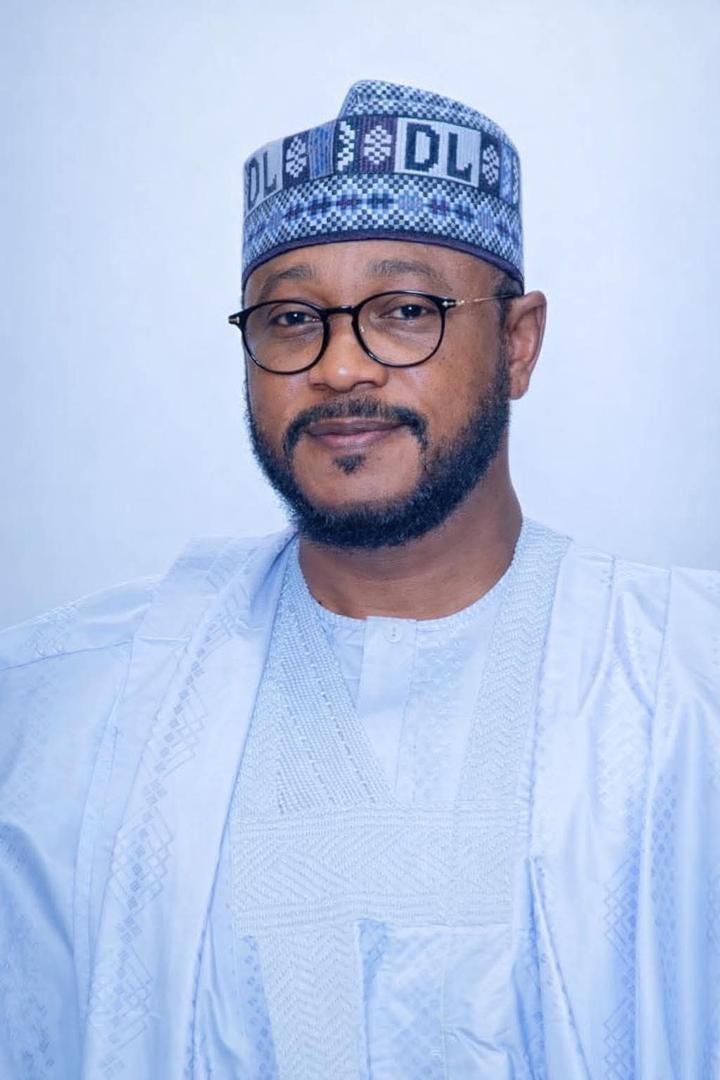
Governor Dauda Lawal Approves Gratuity Payment
The Zamfara State Government, under the visionary leadership of Governor Dauda Lawal, has approved the release of funds for the payment of Gratuity Batch 3 for the 2024/25 period. This decisive action underscores the administration’s unwavering commitment to the welfare of retired civil servants who dedicated years of service to the state’s development.
The Accountant General of the State is already working diligently to ensure that all eligible retirees receive their payments promptly and efficiently, reflecting the government’s resolve to uphold transparency and accountability in the disbursement process.
This timely gratuity payment is a testament to Governor Dauda Lawal’s people-centered leadership, which recognizes the sacrifices and contributions of retirees to the progress and stability of Zamfara State. It also reaffirms the government’s pledge to honor its financial obligations without unnecessary delays.
The Zamfara State Government calls on all retirees in the affected batch to exercise patience as the necessary administrative and financial processes are finalized. Every effort is being made to ensure smooth and uninterrupted payments.
This initiative is part of Governor Dauda Lawal’s broader vision to empower citizens and retirees, strengthen confidence in public service, and sustain the morale of those who have committed their lives to the growth of Zamfara State.
Politics
APC Group Endorses Fubara for 2027, Calls on Tinubu and APC to Prioritise Performance Over Politics in Backing Governor’s Second Term Ambition
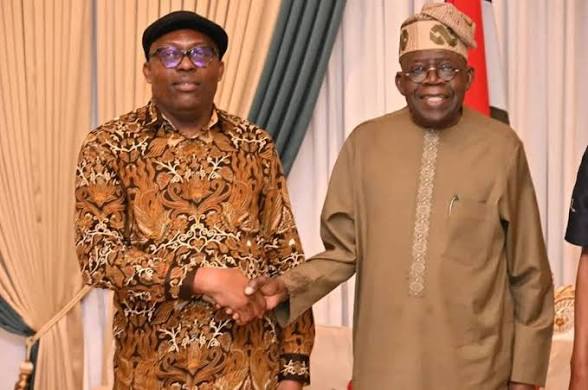
*APC Group Endorses Fubara for 2027, Calls on Tinubu and APC to Prioritise Performance Over Politics in Backing Governor’s Second Term Ambition*
The APC National Vanguard has appealed to President Bola Ahmed Tinubu and the leadership of the All Progressives Congress (APC) to support a second term in office for Siminalayi Fubara, citing what it described as “impressive and verifiable developmental strides” across Rivers State.
In a statement issued on Thursday by its National President, Dr Gbenga Salam (JP), the group said its position followed an extensive assessment tour of key infrastructure and public service projects executed under the Fubara administration.
The APC National Vanguard said the appeal was based strictly on performance, arguing that governance outcomes should outweigh partisan considerations, particularly in a state as economically significant as Rivers.
“We respectfully urge President Bola Ahmed Tinubu and the leadership of the All Progressives Congress to support the continuity of Governor Siminalayi Fubara beyond his current tenure, in recognition of his commitment to development, prudent resource management, and people-focused governance,” the statement read.
According to the group, its delegation visited multiple project sites across the state, observing ongoing and completed works spanning road construction, urban renewal, and public infrastructure upgrades.
It noted that the scale and distribution of these projects reflect a deliberate effort by the state government to extend development beyond traditional urban centres and into underserved communities.
“Our findings from the tour reveal a government that is not only active but intentional in its development agenda. The execution of capital projects across various parts of Rivers State demonstrates a clear understanding of the needs of the people and a commitment to addressing them,” Dr Salam said.
The group particularly commended what it described as prudent financial management by the administration, noting that the projects reviewed showed evidence of careful planning and efficient allocation of resources.
“At a time when economic pressures are evident across the country, it is commendable that the Rivers State government has managed its resources in a way that delivers visible and impactful development without signs of fiscal recklessness,” the statement added.
The APC National Vanguard further observed that despite political tensions in the state, the Fubara administration has maintained focus on governance, ensuring continuity in project execution and service delivery.
The group argued that such stability is critical for sustained development and should be encouraged rather than disrupted.
“Leadership must ultimately be judged by results. In Rivers State, there is clear evidence of progress—projects that are not only announced but executed, and policies that translate into real benefits for citizens,” Dr Salam noted.
The group warned that discontinuity in leadership could stall ongoing projects and reverse gains already recorded, stressing the importance of allowing a performing administration to consolidate its achievements.
“Rivers State is at a pivotal stage where continuity will allow for the completion of ongoing initiatives and the deepening of development gains. Supporting Governor Fubara for a second term is, therefore, a decision in the best interest of the people,” the statement said.
In addition to its call on the APC leadership, the group reaffirmed its support for President Tinubu, expressing confidence in his administration’s broader economic and governance reforms.
The APC group urged Nigerians to remain supportive of efforts aimed at stabilising the economy and strengthening public institutions.
“We reiterate our endorsement of President Bola Ahmed Tinubu for a second term in office, in recognition of his leadership and commitment to national development. With sustained support, the administration can consolidate its reform agenda for the benefit of all Nigerians,” Dr Salam added.
The APC National Vanguard concluded by calling on political actors to prioritise development and public interest over partisan divides, insisting that governance should always be guided by performance and accountability.
“Where leadership demonstrates prudence, delivers development, and remains focused on the welfare of the people, it deserves continuity. This is the position we have reached after a careful and independent assessment of Rivers State,” the statement added.


-

 society7 months ago
Religion: Africa’s Oldest Weapon of Enslavement and the Forgotten Truth
-

 news4 months ago
WHO REALLY OWNS MONIEPOINT? The $290 Million Deal That Sold Nigeria’s Top Fintech to Foreign Interests
-

 society6 months ago
“You Are Never Without Help” – Pastor Gebhardt Berndt Inspires Hope Through Empower Church (Video)
-

 celebrity radar - gossips2 months ago
Dr. Chris Okafor Returns with Power and Fire of the Spirit -Mounts Grace Nation Altar with Fresh Anointing and Restoration Grace on February 1, 2026