
Politics
Giving a bag of rice to 12 people, N100m to each lawmaker insulting – Labour

Giving a bag of rice to 12 people, N100m to each lawmaker insulting – Labour
•Govt has absconded from negotiation table, fails to meet workers’ demands, says NLC
Barely one week after leading a two-day nationwide warning strike, the organised labour on Tuesday threatened to begin an indefinite strike should the Federal Government fail to meet its demands at the end of a 21-day ultimatum which will expire in approximately one week’s time.
The workers union said the proposed strike was necessary following the failure of the Federal Government to provide palliatives to assuage the Nigerians hardships as a result of the fuel subsidy removal.
The Nigeria Labour Congress said the industrial action which may commence any day from next week would lead to an indefinite shutdown of commercial and economic activities across the country.

Speaking with The PUNCH on Tuesday, the National Assistant General Secretary of the NLC, Mr Christopher Onyeka, said the FG was wrong to share a bag of rice to a dozen citizens while reportedly giving N100m palliative to each member of the National Assembly.
The union had on September 1 handed down a 21-day ultimatum to the FG over the delay in sharing of palliatives, saying it might be compelled to declare an indefinite labour action if its demands were not met.
“If the government fails to provide the appropriate responses to our demands, we encourage you to maintain your steadfast resolve. The same passion and determination that fuelled this warning strike will be crucial if we find ourselves compelled to embark on an indefinite nationwide strike,’’ the labour body said in a letter to the FG.
To demonstrate its seriousness, the NLC mobilised workers for a two-day warning strike on September 5 and 6, partially grounding social and economic activities in several states with banks, ministries, agencies and departments closed to the public in some states.
The NLC leadership had said the action was in preparation for a total shutdown which would start at the expiration of the ultimatum next week.
Among other demands, the NLC and the Trade Union Congress were asking for wage awards, implementation of palliatives, tax exemptions and allowances to the public sector workers and a review of the minimum wage.
Though the FG made a commitment to restructure the framework for engagement with organised Labour on palliatives, the eight-week timeframe set for the conclusion of the process expired in August with no action whatsoever.
The committees were given eight weeks to conclude their assignment and hasten the implementation of the framework in cushioning the effect of petrol subsidy removal on Nigerians but weeks after the timeframe expired, the sub-committees had yet to meet or actualise their mandates.
President Bola Tinubu had since June 19 set up the Presidential Steering Committee and various sub-committees to discuss the framework to be adopted on the palliatives.
The sub-committees had been created to implement FG’s palliative package in areas such as Cash Transfers, Social Investment Programme, Cost of Governance, Energy, and Mass Transit and Housing.
This was a fall-out of the President’s closed-door session with the leadership of the NLC and the TUC during a nationwide protest by the organised labour.
Nationwide protest
Giving an update on the planned walk out following the lukewarm attitude of the government, Onyeka insisted that the FG had absconded from the negotiation table, noting that it had also failed to meet the workers’ demands.
The union leader hinted that the strike would not notify the government before carrying out any action it deems fit.
He said, “We sent the letter to the Federal Government on September 1, 2023, so by September 22, 2023, the 21-day ultimatum will end.
“We have made it clear that the Federal Government has abandoned and absconded from the table for negotiation; that government is no longer negotiating with Nigerians and there is no good faith negotiation that is going on.’’
“President Bola Tinubu promised Nigerians on his own on the television with the President of NLC, Joe Ajaero, that he was going to restructure the committees, but he did not do that, and since then the committees have not met and there has been no negotiation that is on-going. As it is, NLC is not negotiating with the government,” Onyeka said.
The Assistant General Secretary said Nigerians were insulted by the inadequate palliative being given.
He lamented, “Can you see the insult that a ward would share a bag of rice and the government calls that a palliative? It is an insult to Nigerians, whereas the government gave legislators N70bn and each of the legislators gets over N100m in a country where Nigerians are suffering.
“The FG is buying cars and houses of over N100m for each person and Nigerians are keeping quiet as if what is going on is a normal thing. NLC calls Nigerians to join hands together because they cannot do it alone.
‘’When NLC calls for action, people should come out, they should because it is a collective effort to make the government yield to the desires and the interest of Nigerians.”
Workers who spoke to our correspondents said they have been badly affected by the withdrawal of the fuel subsidy, urging the government to quickly cushion the pains.
In order to beat the harsh economic situation, civil servants said they have been devising various survival strategies, including skipping work as well as engaging in farming and trading to augment their incomes.
Some workers in the Federal Capital Territory, Abuja and Lagos revealed that their organisations have reduced the number of work hours and days.
They further noted that their organisations had also adopted the work-from-home model which became popular during the lockdown period following the COVID-19 pandemic in 2020.
An Abuja-based civil servant, Judith Obiora said, “Most of the offices at the Federal Secretariat are no longer filled up as they used to be before the fuel subsidy removal. Now, we only come to the office twice or thrice a week.”
A civil servant who is planning to relocate abroad said he could no longer cope with the high cost of living.
He said, “The situation in Nigeria is very terrible because the minimum wage no longer meets the cost of living. Civil servants are suffering because the prices of things have increased, and it is tough to cope these days.
“By the time you weigh everything, you will see that it is not worth it. Even as a businessman in this country, getting customers to patronise you is difficult, and getting your profit from the work you are doing is hard.”
A worker, who identified himself as Friday, said he had been going to work three times a week to cut costs.
He said, “It has greatly affected me because I can’t afford to go to work Monday through Friday anymore. I go three times a week. Even if the directors have their ways, they won’t show up.
“The effect of the subsidy removal is general. The bus provided for my area is an 18-seater bus but we have over 50 staff living in Kuje, and the senior staff always get preference over the junior staff.
‘’The junior staff members are left behind. I don’t even try boarding the bus because I don’t want any senior staff member to talk to me anyhow (disrespectfully).”
Hard times
A staff member of a prominent agency who wished to be known as Vivian stated, “It has been tough, especially in the area of feeding. Things are very expensive, and for people like us who still have young children, it has been quite difficult meeting up.
“If it is an adult, you can still manage, but how do you tell a child that the money is not enough? Also, in the area of transportation, it has been very difficult. For instance, the transport fare that used to be N100 before has jumped to N300, and when you calculate it, you will find out that the easiest thing to do is to work remotely once in a while.”
A civil servant who identified herself as Sade said she and her husband had been having sleepless nights over the survival of their family.
She lamented, “I was at the market yesterday, and I screamed. Things are too expensive. Honestly, we can’t continue like this. Apart from the high food prices, the school fees of my children have increased, and my husband and I have been having sleepless nights trying to manage ourselves.”
One Mr Kunle Adams, who worked with a federal agency, said he had been forced to become a cab driver in order to generate extra income.
He noted, “I usually do not like to pick passengers when going to work, but I have been doing it to cover the amount I spent on fuel. I once tried parking my car at home, but it was not convenient for me to do so; otherwise, I would have dropped it because it is cost-effective.
‘’If you are talking about high prices of commodities, that is everywhere, so who am I not to be affected? If only the government could intervene, it would be lovely.’’
Lamenting the situation, Ade Abayomi, a Lagos-based civil servant said, “It’s not been easy since the subsidy removal was announced. But I think the government has been reasonable too. I only go to work about thrice in a week these days.”
Hassan Ahmed, who works with a federal parastatal in Abuja, admitted that he works remotely and only visits the office occasionally.
“The cash crunch is affecting everyone, including government organisations and private companies and individuals. Most of us now work from home. I only go to the office occasionally now,” he disclosed.
The Ekiti State NLC Chairman, Kolapo Olatunde, declared that the workers were working under harsh conditions since the Federal Government removed the fuel subsidy.
Olatunde, who said the fuel subsidy removal had led to an increase in the prices of goods and services, justified the need for salary increment.
“If you must fill your car tank now with petrol, you must have over N35,000 and that won’t serve you for two weeks. It means you have to fill your tank twice amounting to N70,000 to take you for four weeks.
‘’If you are a civil servant from whichever level to grade level 14, I am not sure the salary is up to that on a monthly basis. The equation is not balanced, that is the truth. That is why the government should have a listening ear,” Olatunde said.
The NLC leader, who said reducing the working days was not the solution, noted, “The solution is to give workers what is required of them to do their work effectively so that at the end of the day, there will be a positive plough-back.
“If you go to the office to solve problems, someone is now saying don’t come to the office twice or thrice in a week, who solves the problems of those days? It means that the office is not doing anything. It means we are deceiving ourselves. ‘’
“Then, what becomes of the unemployed if you are asking the employed people to stay at home? Definitely, that is a brighter picture that people will no longer be employed,” he concluded.
Kwara workers
In Kwara State, workers go to their offices three times a week in order to save money in view of the high cost of petrol.
The state government had earlier directed the workers to report for work three times and added N10,000 to their salaries pending the review of the minimum wage.
A female civil servant simply identified as Lola, explained that since the fuel subsidy was removed, she had been going to work thrice a week.
‘’Workers in my office agreed that we should be reporting in the office three times a week. We have agreed on which days to come to the office since the government said that we should come to work for three days in a week,’’ she noted.
She complained about the high cost of transportation which she said had increased by 200 per cent.
‘’I have been reporting for work on Tuesday, Wednesday and Friday while others also selected other days of the week when they come to the office. In my house, we have also reduced the quantity of food we eat. We only eat in the morning and evening.
‘’On days that I don’t go to work, I supplement the feeding of my two children with garri in the afternoon if they complain of hunger as they are presently on holiday,” Lola stated.
A worker in the governor’s office, Mallam Makun Abdullahi, revealed that he had stopped bulk purchase of foodstuffs from the cooperative society as he used to do on a monthly basis.
“Though the government has added N10,000 to our monthly salary, it cannot take us anywhere. Our salary is no longer enough to feed our family. I am also involved in farming where I go on days I don’t go to work.”
Public workers in Sokoto State explained that many of them do not come to the office every day in order to save money on transportation.
Some of the civil servants in the state who spoke with our correspondent confirmed that the arrangement in most cases was among the junior staff without the knowledge of their boss.
A state worker said, “We have some arrangements among ourselves to deal with the situation even though it’s without the knowledge of the management but we cover for ourselves.
“Most of us use the spare time for farming as part of our own little way to tackle the current hardship.”
The Sokoto State NLC Chairman, Abdullahi Aliyu, and his secretary, Hamisu Yanduna, were unavailable for comment


Politics
Ogun Central To Host Final Zonal Townhall Meeting for Sen. Solomon Olamilekan Adeola, April 30
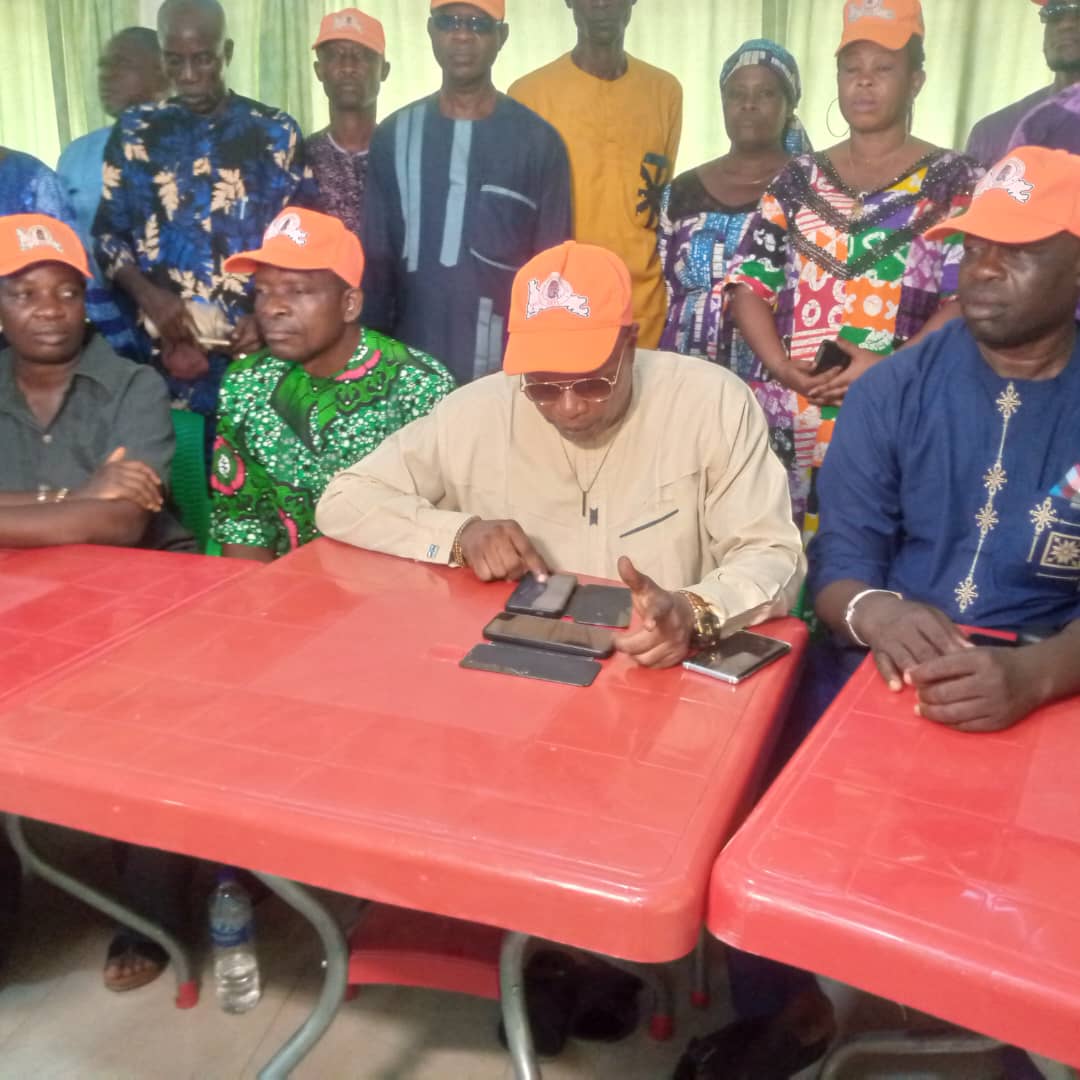
Ogun Central To Host Final Zonal Townhall Meeting for Sen. Solomon Olamilekan Adeola, April 30
-.Removes Hon.Olugbenga Lekuti as Deputy Director General,Ogun East
One of the leading Political Groups, Ogun Visionaries is set to host the final zonal edition of the Sen. Solomon Adeola Yayi town hall meetings in Abeokuta, Ogun State capital. The Ogun Central Edition, scheduled for April 30, 2026, aims to engage the electorate and push for Senator Yayi’s Governorship bid in 2027.
The event is themed ‘Ogun 2027: Yayi For All,’ marking the finale of the zonal town hall meetings.
Addressing Journalists on Tuesday in Abeokuta, Ogun State Capital,the Director General of Ogun Visionaries, Hon. Leye Odunjo, said the meeting will draw key stakeholders from Ogun Central’s political power circle.
Hon.odunjo stated that the event will kick off with a health walk, ‘Ogun Visionaries For Yayi Unity Walk,’ in the morning of April 30, 2026.The walk is themed ‘Let’s Walk for A United and Prosperous Ogun State,’ aiming to rally support for Senator Solomon Olamilekan Adeola Governorship aspiration.
“The town hall meeting is expected to feature prominent personalities, including Senator Solomon Olamilekan Adeola Yayi as the Special Guest of Honour. The event will provide a platform for interaction and engagement with the electorate”.
Ogun Visionaries has successfully held town hall meetings in Ogun West and Ogun East senatorial districts. The Ogun Central Edition is the final zonal meeting before moving to LGAs and wards.
The Director General while acknowledging the support received from various personalities since inception of the group,disclosed that distinguished individuals would be honoured with Award of Recognition during the event.
Odunjo, who is also a Senior Legislative Aide to the Deputy Senate President said “The political atmosphere in Ogun State is reportedly in tune with the people’s yearning for Yayi’s emergence. Ogun Visionaries is at the forefront of making this a reality.
“The event aims to unite stakeholders and push for a prosperous Ogun State. With Senator Yayi’s popularity growing, the meeting is expected to draw a large turnout.
“The Ogun Central Edition will provide a platform for stakeholders to interact and engage with the electorate. The event is seen as a crucial step towards achieving the group’s goals.
“Senator Solomon Olamilekan Adeola Yayi’s presence is expected to energize supporters and further boost his campaign for 2027” he added
Meanwhile, Ogun Visionaries has announced removal of Hon Olugbenga Lekuti as the Deputy Director General, DDG,Ogun East, of the group.
Announcing the removal in a brief statement made available to Journalists, Hon.Odunjo stated that Hon.Lekuti was relieved of the position as a result of his anti -group and anti -Yayi’s acts.
He added that a new Deputy Director General would be announced in due course.
Politics
Political Earthquake in Kano: How, Senator Rabiu Musa Kwankwaso, Nasiru Gawuna’s Move to ADC Reshapes North-West Politics
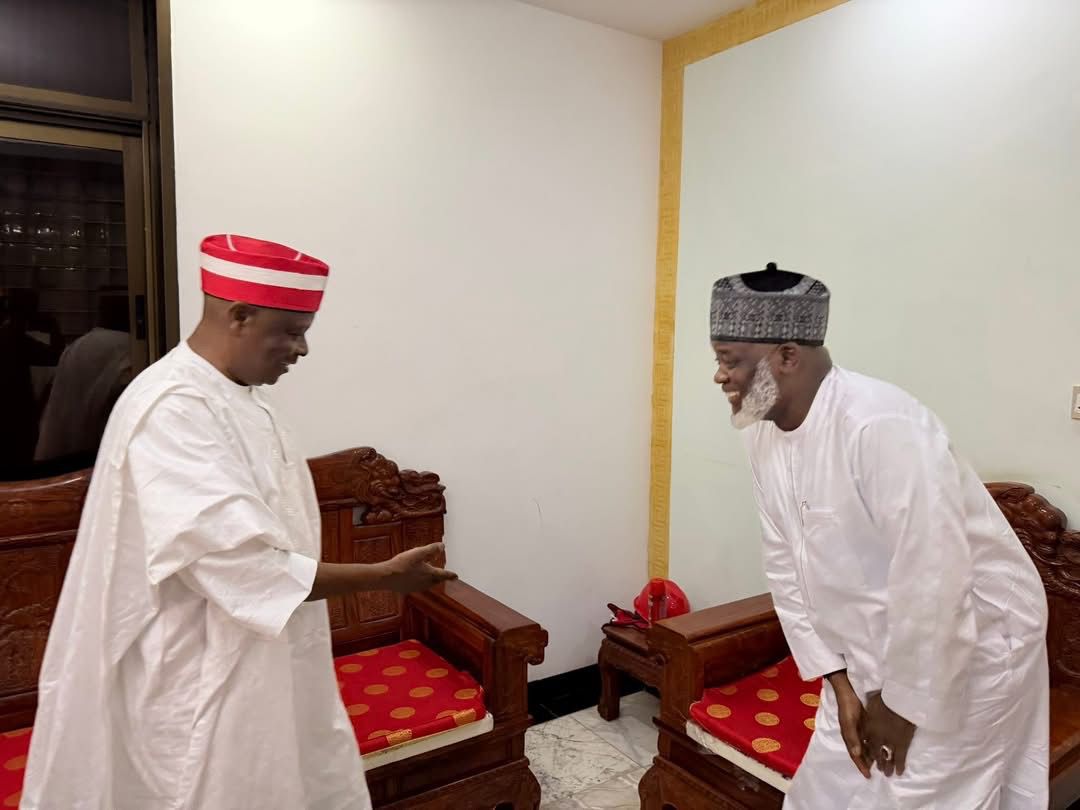
Political Earthquake in Kano: How, Senator Rabiu Musa Kwankwaso, Nasiru Gawuna’s Move to ADC Reshapes North-West Politics
The political atmosphere of Nigeria’s North-West was fundamentally altered on a sweltering afternoon in 2026 after Senator Rabiu Musa Kwankwaso former Governor of Kano State and Former Minister for Defence who is also the “Grand Commander” of the Red-Cap revolution, finalized a move that many viewed as the ultimate masterstroke of his political career. By transitioning from the NNPP to the African Democratic Congress (ADC), Kwankwaso did more than change platforms; he effectively reset the coordinates of the nation’s largest voting bloc.
Senator Kwankwaso’s pedigree is defined by a singular devotion to human capital development and an almost mythical grassroots loyalty preceded him. He turned a local movement, the Kwankwasiyya, into a disciplined, ideological army that transcends traditional party structures. His entry into the ADC instantly transformed a secondary party into a formidable fortress, signaling to the ruling elite that the North-West is no longer a monolith under their control.
The gravity of this shift is most profound in Kano, the heartbeat of Northern commerce. For years, the state was a polarized battlefield between the Kwankwasiyya and established conservative wings. However, the entry of Nasiru Yusuf Gawuna into the same ADC orbit has created a “Kano Super-Alliance” that was previously unthinkable. Kwankwaso, the visionary architect who sent thousands of Kano’s children to global universities, now finds his populist ideology merging with Gawuna’s administrative steadiness and deep-rooted institutional connections.
This synergy is a seismic departure from the politics of “zero-sum” rivalry; it is a calculated fusion of mass appeal and the strategic machinery required to protect and deliver votes.
This move reshuffles the entire North-West deck. As Kwankwaso plants the ADC flag across the region, he is attracting a wave of heavyweights from Kaduna to Sokoto who feel marginalized by the status quo. His political pedigree allows him to speak with a regional authority that others lack, positioning himself as a protector during a time of economic uncertainty. By bringing Gawuna into this fold, the dynamics of Kano politics have shifted from a war of attrition to a coalition of necessity. This alliance creates a “Third Way” that bypasses the failures of the old guard, promising a return to the rapid growth that defined the Kwankwaso years, but with a broader, more inclusive base that could dictate the occupant of Aso Rock in 2027.
Kwankwaso’s career has always been defined by a uniquely personal brand of power. From 1999 to 2015, he served two terms as Governor of Kano State, in addition to roles as Minister of Defence and Senator. While many were surprised by his recent maneuvers; especially following closed-door meetings with President Bola Tinubu, he chose the emerging ADC over the ruling APC.
In the high-stakes theater of Nigerian politics, few events have jolted the region quite like the defection of Nasiru Yusuf Gawuna from the APC to the ADC on March 31, 2026. Coming just twenty-four hours after Kwankwaso’s move, Gawuna’s transition fundamentally has also altered the political calculus in Kano. What makes this moment remarkable is the sheer drama of the reversal. Gawuna’s political journey has been a steady, calculated ascent through Kano’s establishment. He first shot to prominence as Commissioner of Agriculture under Governor Abdullahi Umar Ganduje, earning a reputation for hands-on management in a state where farming is the economic backbone. He eventually rose to Deputy Governor, serving for nearly six years and gaining invaluable executive experience. Beyond partisan politics, Gawuna distinguished himself as Chairman of the Governing Council of Bayero University and, most recently, as Chairman of the Federal Mortgage Bank of Nigeria (FMBN). He resigned from the FMBN on March 27, 2026, citing compliance with presidential directives regarding political appointees.
A look back at the 2023 gubernatorial election reveals just how significant Gawuna is. Running under the APC, he polled over 890,000 votes against the formidable Kwankwasiyya machine. This proved that he is one of the few politicians in Kano who can genuinely compete with Kwankwaso’s electoral machinery. His strength is threefold: he appeals to the youth, the religious establishment (Ulama), and the business community; he has the capacity to split the APC vote; and he has demonstrated he can deliver votes independently of a larger party wave. To understand the magnitude of this defection, one must appreciate the complete inversion of alliances since 2023. Back then, Governor Abba Kabir Yusuf ran on the NNPP ticket with Kwankwaso’s backing, while Gawuna carried the APC banner with Ganduje’s support. By 2027, the roles will likely reverse: Governor Yusuf is positioned to run under the APC with Ganduje’s blessing, while Gawuna is poised to run under the ADC with Kwankwaso’s endorsement.
From the perspective of the Kwankwasiyya movement, Gawuna’s arrival is a “return” rather than a “recruitment,” as he was part of the movement’s pioneer cohort. This narrative neutralizes accusations of opportunism. For his part, Gawuna framed his move in terms of service and divine guidance, with sources indicating he felt marginalized within the APC after his 2023 defeat.
The reaction from within the APC has been one of worry and regret. President Tinubu, recognizing the stakes, reportedly directed party leaders to prevent Gawuna’s move, even offering him an automatic Senatorial ticket for 2027. The failure of this pressure campaign, Gawuna reportedly placed his phone on “Do Not Disturb” and traveled abroad to avoid lobbyists represents a significant defeat for the presidency’s political management. This crisis prompted emergency meetings between President Tinubu, Dr. Ganduje, and Badaru Abubakar at the Presidential Villa to reorganize their strategy.
The long-term implication is the potential break of the APC-PDP duopoly. The ADC is now positioning itself as a genuine “third force” in the North-West. The defection of high-profile figures like Senator Ahmed Babba-Kaita, Senator Aishatu “Binani” Ahmed, and former Justice Minister Abubakar Malami suggests a coordinated realignment. This competition could force more substantive policy debates and reduce the “zero-sum” intensity of regional elections.
The projected 2027 gubernatorial rematch between Gawuna (ADC) and Governor Yusuf (APC) will be a battle between two men with established records. Voters will have a genuine choice between performance and platform rather than just shifting loyalties. As Gawuna put it: “Allah gives power to whom He wants and when He wants.” While the 2027 elections will reveal where that power flows, it is already clear that the political landscape of the North-West will never look the same again.
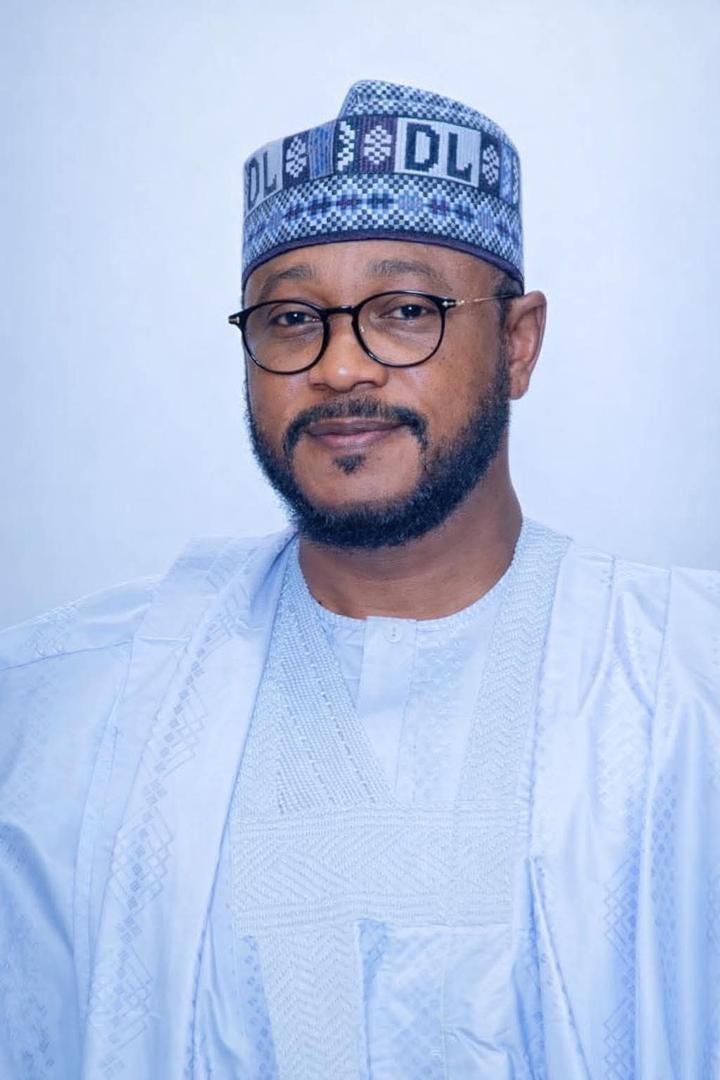
Governor Dauda Lawal Approves Gratuity Payment
The Zamfara State Government, under the visionary leadership of Governor Dauda Lawal, has approved the release of funds for the payment of Gratuity Batch 3 for the 2024/25 period. This decisive action underscores the administration’s unwavering commitment to the welfare of retired civil servants who dedicated years of service to the state’s development.
The Accountant General of the State is already working diligently to ensure that all eligible retirees receive their payments promptly and efficiently, reflecting the government’s resolve to uphold transparency and accountability in the disbursement process.
This timely gratuity payment is a testament to Governor Dauda Lawal’s people-centered leadership, which recognizes the sacrifices and contributions of retirees to the progress and stability of Zamfara State. It also reaffirms the government’s pledge to honor its financial obligations without unnecessary delays.
The Zamfara State Government calls on all retirees in the affected batch to exercise patience as the necessary administrative and financial processes are finalized. Every effort is being made to ensure smooth and uninterrupted payments.
This initiative is part of Governor Dauda Lawal’s broader vision to empower citizens and retirees, strengthen confidence in public service, and sustain the morale of those who have committed their lives to the growth of Zamfara State.


- Seychelles Strengthens Human Rights Reporting through National Workshop April 8, 2026
- ABB’s Application Configurator brings speed and precision to grid-feeding protection system design April 7, 2026
- Can Equatorial Guinea Reposition as West Africa’s Gas Hub? April 7, 2026
- Afreximbank Partners with African Energy Week 2026 to Drive Africa-Led Energy Deals April 7, 2026
- Merck Foundation Marks ‘World Health Day’ 2026 – Transforming Patient Care in Africa and Beyond through 2600+ Scholarships for Healthcare Providers From 52 Countries April 7, 2026
- Morocco Gas Plan Reset Could Open Door to New Investment Models April 7, 2026
- African Petroleum Producers Organization (APPO) Secretary General Joins Angola Oil & Gas (AOG) 2026 as African Energy Bank Eyes June 2026 Debut April 7, 2026
- Ghanaian Biomedical Specialist Receives International Award April 7, 2026
- Grey Connects the Africa-Canada Money Corridor With Instant Transfers via Interac April 7, 2026
- Nigeria’s Oil Revival in Focus as Petroleum Minister Lokpobiri Joins Paris Energy Forum April 7, 2026
- Seychelles Strengthens Human Rights Reporting through National Workshop April 8, 2026
- ABB’s Application Configurator brings speed and precision to grid-feeding protection system design April 7, 2026
- Can Equatorial Guinea Reposition as West Africa’s Gas Hub? April 7, 2026
- Afreximbank Partners with African Energy Week 2026 to Drive Africa-Led Energy Deals April 7, 2026
- Merck Foundation Marks ‘World Health Day’ 2026 – Transforming Patient Care in Africa and Beyond through 2600+ Scholarships for Healthcare Providers From 52 Countries April 7, 2026
- Morocco Gas Plan Reset Could Open Door to New Investment Models April 7, 2026
- African Petroleum Producers Organization (APPO) Secretary General Joins Angola Oil & Gas (AOG) 2026 as African Energy Bank Eyes June 2026 Debut April 7, 2026
-

 news4 months ago
WHO REALLY OWNS MONIEPOINT? The $290 Million Deal That Sold Nigeria’s Top Fintech to Foreign Interests
-

 society7 months ago
“You Are Never Without Help” – Pastor Gebhardt Berndt Inspires Hope Through Empower Church (Video)
-

 celebrity radar - gossips2 months ago
Dr. Chris Okafor Returns with Power and Fire of the Spirit -Mounts Grace Nation Altar with Fresh Anointing and Restoration Grace on February 1, 2026
-

 celebrity radar - gossips4 months ago
Prophet Kingsley Aitafo Releases 2026 Prophecy: ‘Nigeria Will Rise, but the World Must Prepare for Turbulence’