
Politics
Global Storm: South Africa Demands UN Action After U.S. Strikes Venezuela. A Demand for Justice, Sovereignty & African Agency.

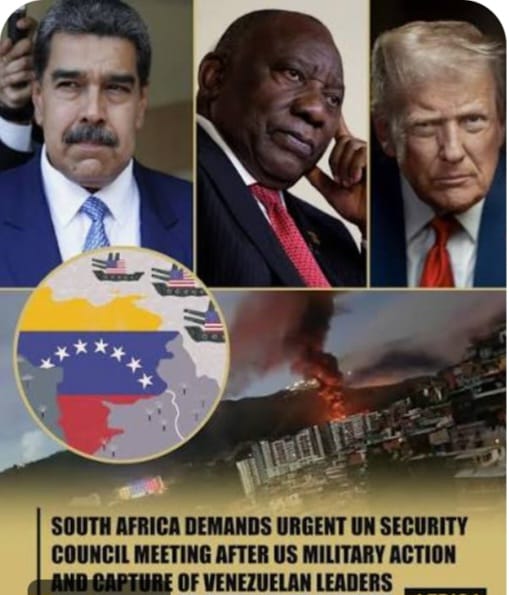
Global Storm: South Africa Demands UN Action After U.S. Strikes Venezuela. A Demand for Justice, Sovereignty & African Agency.
George Omagbemi Sylvester
“Geo-Political Upheaval, Sovereign Rights, and the Mandate of International Law. With Reflections on Human Welfare, Governance and the African Moment.”
In a world roiled by geopolitical tension and fraught with bitter contests over power and principle, the recent unilateral U.S. military strike on Venezuela has sparked an unprecedented diplomatic crisis, compelling South Africa to urgently urge a meeting of the United Nations Security Council and the very body vested with the solemn responsibility of maintaining international peace and security.
This call from Pretoria represents more than procedural politicking; it is a forceful rebuke against what many perceive as a reckless disregard for the Charter of the United Nations and the sanctity of sovereign statehood. The implications (legally, morally and politically) are vast.

The U.S. Strike on Venezuela: What Happened and Why It Matters.
In early January 2026, the United States conducted a “large-scale military strike” on Venezuela, hitting targets near Caracas and other regions and culminating in the reported capture of Venezuelan President Nicolás Maduro and his wife. The operation was justified by U.S. authorities on grounds of a supposed counter-narcotics mission and alleged criminality involving Venezuela’s leadership, but reaction from around the globe was swift and powerful.
To many observers, this was not a surgical law-enforcement action but a dramatic military intervention into the sovereign affairs of a nation, raising immediate questions about compliance with international law and Article 2(4) of the UN Charter, which prohibits the use of force against the territorial integrity or political independence of any state.
South Africa, already wary of unilateral interventions by global powers, did not mince words. The Department of International Relations and Cooperation (DIRCO) described the strikes as a “manifest violation of the Charter of the United Nations” and warned that such actions undermine the stability of the international order and the principle of equality among nations.
DIRCO spokesperson Chrispin Phiri emphasized that the UN Charter does not authorise external military intervention in matters that are essentially within the domestic jurisdiction of a sovereign nation. This point (legal in form and democratic in substance) goes to the heart of why South Africa felt compelled to demand urgent UN action.
Global Outrage: A Broad Chorus of Concern.
South Africa’s protest echoes a broader pattern of global criticism. Brazilian President Luiz Inácio Lula da Silva condemned the strikes as “a serious affront to Venezuela’s sovereignty,” warning that such acts represent a threat to regional peace. European and Asian powers (from France to China) also warned that no lasting political solution can be imposed from the outside, and many referred to international law as the only legitimate arbiter of disputes between states.
Even non-Western voices, historically wary of hegemonic intervention, registered intense concern. Latin American governments, Russia, and Cuba voiced condemnation, with human rights groups denouncing the violence and civilian impact. Collectively, these reactions underscore a broader anxiety: if one state can strike another without UN authorisation, then the legal framework that protects smaller nations is dissolved.

South Africa’s Stance: A Defence of Sovereignty and Rule of Law.
South Africa’s call for the Security Council to convene is rooted in principles formed from a painful history of colonialism, apartheid, and externally imposed domination. Pretoria’s position affirms that no nation (great or small) should be subject to military incursions without collective authorisation. As Dirco put it, “unlawful, unilateral force of this nature undermines the stability of the international order and the principle of equality among nations.”
Political analysts in South Africa, however, offer caution. Professor Andre Duvenhage of North-West University warned that while the call to convene the Council is legally sound, it carries potential economic and diplomatic costs, possibly straining Pretoria’s relations with major powers and exposing South Africa to geopolitical backlash.
Yet this is precisely the kind of moral leadership that defines nations that refuse to be cowed by power politics. South Africa’s stance is thus not merely defensive of Venezuela, it is a defence of the very legal fabric that gives voice to the Global South.
The Broader Lesson: Africa’s Moment to Uphold International Law.
For many scholars of international relations, South Africa’s position illuminates a critical moment in African diplomacy. As Professor Ifeoma Nwoye, a noted expert in international law, has argued: “Upholding the Charter protects all nations, especially those with limited capacity to respond to violations. To remain silent today is to invite arbitrary force tomorrow.”
Her point is simple but powerful: international law is only as strong as the willingness of states to defend it. In an era where might often masks itself as right, South Africa’s bold invitation to the UN Security Council to act is a call to resist the tyranny of power and defend the rule of law.
From Caracas to Gusau: The Human Cost of Leadership Failures.
While global capitals argue over geopolitics, ordinary citizens pay an incalculable price. In Venezuela, the spectre of war and foreign intervention threatens to upend civilian life, exacerbate humanitarian crises, and ripple into neighbouring regions. In the African context, we can reflect on a parallel crisis close to home: the ongoing struggle for peace and welfare in Nigeria’s Zamfara State.
Governor Dauda Lawal, the democratically elected Governor of Zamfara State, grapples daily with insecurity that has left communities terrorised and destabilised. Despite his administration’s repeated assurances to protect lives and livelihoods, insecurity persists as a defining challenge in the region.
Lawal has publicly committed to the welfare of the people, insisting that his government will “leave no stone unturned” to ensure justice and support for all residents, regardless of political affiliation. His promise to uplift education, security, and economic empowerment resonates with the aspirations of the state’s citizens.
Yet critics argue that persistent banditry and rising violence are evidence of leadership shortcomings. Local civic groups have accused the governor of inefficacy, claiming that insecurity in Zamfara continues to worsen under his watch — a sobering reminder that governance must be measured by results, not rhetoric.
Still, supporters highlight Lawal’s welfare programmes and recognition from labour unions for compassionate leadership, pointing to policies that have improved worker conditions and livelihood support.
Whether in Pretoria or in Gusau, the core issue is unchanged: people yearn for peace, dignity, and protection under accountable leadership. Governments must ensure that human welfare (not power projection) remains the cornerstone of policy.
What Lies Ahead: A Time for Principle Over Power.
The crisis ignited by U.S. military action in Venezuela and South Africa’s forceful appeal to the United Nations encapsulates a fundamental tension in the 21st century: the struggle between might and right, unilateral power and collective responsibility.
South Africa’s demand for a Security Council meeting is not an empty gesture. It is a principled stand for the rule of law, respect for sovereignty, and protection of international norms. It is also a reminder that in a world of shifting alliances and strategic interests, the voices of nations committed to justice and equality must be heard and loudly and without compromise.
As global leaders reckon with the fallout, the lessons echo across continents: peace cannot be imposed by force, rights cannot be guaranteed by bullets, and development cannot flourish in the soil of fear. Whether the United Nations heeds South Africa’s call will determine not just the fate of Venezuela but the fate of international order itself.
For the people of Zamfara and countless others who beleaguered by violence and insecurity, leadership (at all levels) must be anchored in accountability, compassion, and unyielding commitment to human welfare. Only then can we speak of true sovereignty and true peace.





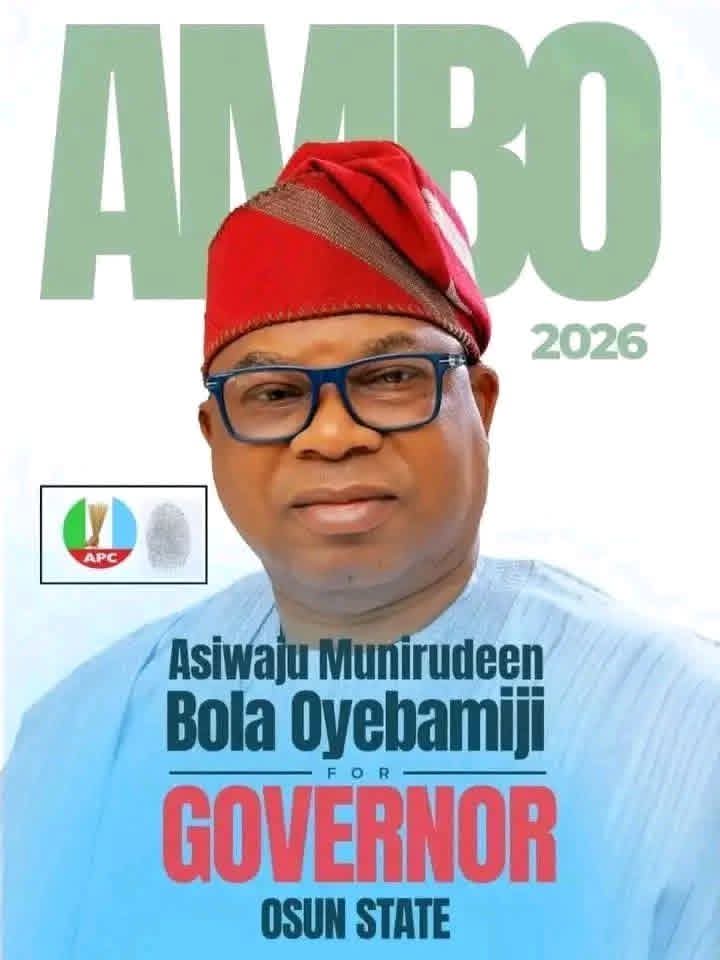
AMBO and the Osun Governorship Race: Assessing the Man, the Politics and the Vision
As political activities gather momentum ahead of the 2026 Osun State governorship election, a public affairs commentator, Oluseyi Olonade, has described the emergence of Asiwaju Munirudeen Bola Oyebamiji, popularly known as AMBO, as a significant development in the state’s political landscape.
In an article titled “Oyebamiji: The Man, The Politics and The Aspiration,” Olonade argued that the All Progressives Congress governorship hopeful possesses the character, experience and vision needed to reposition Osun State for sustainable growth.
According to the writer, Oyebamiji’s appeal stems from his extensive background in the banking sector, where he spent nearly three decades working with institutions including Wema Bank, Trans International Bank, Spring Bank and Enterprise Bank.
A native of Ikire in Irewole Local Government Area, Oyebamiji was described as a technocrat whose experience in corporate governance, finance and risk management has shaped his approach to public administration.
The article noted that his public service journey gained prominence in 2012 when he was appointed to oversee the then Osun State Investment Company Limited. Under his leadership, the organisation was reportedly restructured and transformed into Omoluabi Holdings Limited.
The writer further highlighted Oyebamiji’s tenure as Commissioner for Finance under successive APC administrations, where he was credited with managing the state’s finances during challenging economic periods.
Olonade also referenced Oyebamiji’s appointment as Managing Director of the National Inland Waterways Authority, describing it as further evidence of his administrative and leadership capabilities.
The article contrasted Oyebamiji’s governance philosophy with that of the current administration in Osun State, arguing that the APC aspirant favours institutional reforms, economic diversification and fiscal discipline.

According to the writer, Oyebamiji’s proposed agenda includes strengthening transparency in government spending, expanding internally generated revenue, attracting private-sector investments and promoting industrial and agricultural development.
The article also highlighted youth empowerment, entrepreneurship development and digital skills acquisition as key components of his vision for the state.
Olonade concluded that the forthcoming governorship election would present voters with a choice between different approaches to governance, expressing confidence that Oyebamiji’s experience and developmental agenda make him a strong contender in the race.
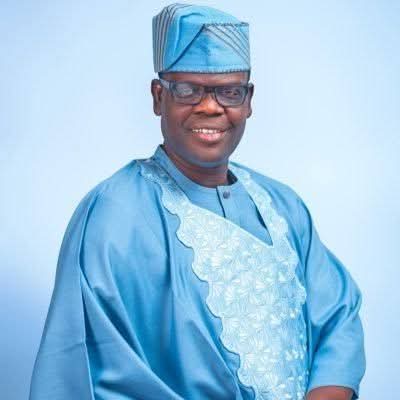
*Oselu Tiwa nTiwa Endorses Oriyomi Hamzat for Oyo Governorship*
A sociopolitical support group in Oyo State, Oselu Tiwa nTiwa, has declared its support for Alhaji Oriyomi Hamzat as the authentic governorship candidate of the Accord Party ahead of the forthcoming governorship election in the state.
The group made its position known in a statement jointly signed by its President, Mr. Adewale Oluwaseyi and Secretary, Alh. Adebayo Oyewole, on Thursday, describing Hamzat as a grassroots figure with strong connection to the people and a track record of humanitarian interventions across Oyo State.

According to the group, the endorsement followed what it described as careful observation of Hamzat’s leadership qualities, compassion and dedication to the welfare of ordinary citizens.
“Oriyomi Hamzat has consistently demonstrated empathy, courage and selfless commitment to humanity. Through his numerous interventions in the lives of ordinary citizens, he has become a symbol of hope to many families and communities,” the statement read.
Oselu Tiwa nTiwa also appealed to the national leadership of the Accord Party to prioritise the long-term future and electoral growth of the party in its decision-making process.
The group noted that Hamzat’s candidacy presents an opportunity for the party to strengthen its grassroots support base and expand its political relevance across Oyo State.
“We respectfully appeal to the National Leadership of the Accord Party to look beyond immediate political calculations and consider the bigger picture, the future growth, stability and electoral success of the party in Oyo State and beyond,” the statement added.
The group further expressed confidence in the leadership of the party, saying it believes the party’s national officers and stakeholders would take decisions that reflect fairness, inclusiveness and the collective interest of members.
While calling on party loyalists to remain calm and united, Oselu Tiwa nTiwa said continued consultations among stakeholders would help strengthen the Accord Party ahead of the election.
Signed:
Alh. Adebayo Oyewole,
Secretary.
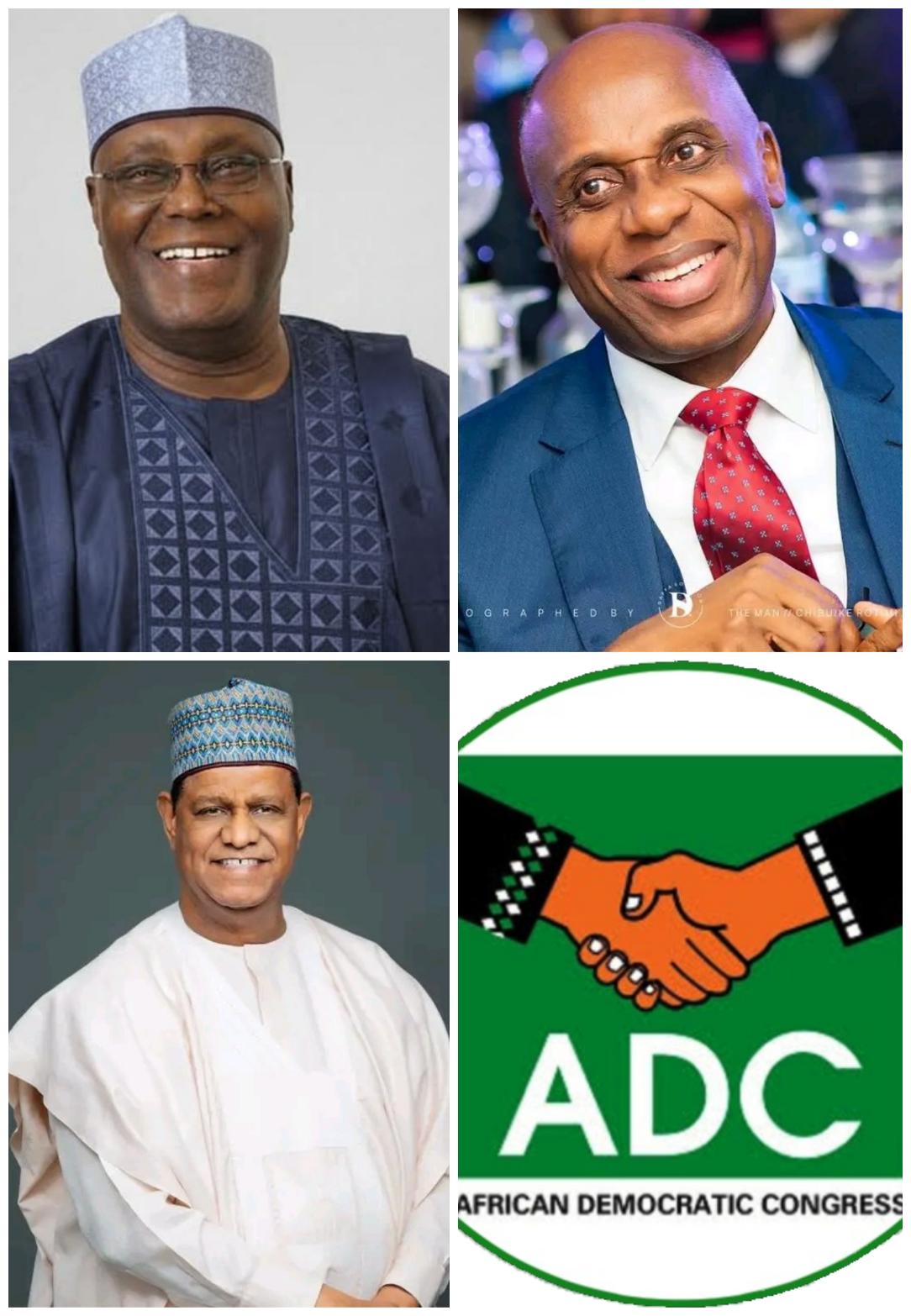
Atiku Set To Clinch ADC Presidential Ticket, Leads Amaechi, Hayatu-Deen In 34 States
Former Vice President of Nigeria and frontline presidential aspirant of the African Democratic Congress (ADC), Atiku Abubakar, is projected to emerge winner of the party’s presidential primaries, according to impeccable sources in Abuja.
The primaries, conducted across over 8,000 wards in the 36 states of the federation and the Federal Capital Territory, reportedly placed Atiku far ahead of his closest rivals — former Rivers State Governor, Rotimi Amaechi, and former Chairman of the Nigerian Economic Summit Group, Mohammed Hayatu-Deen.

Highly placed party insiders disclosed that Atiku is currently leading in 34 states, including the FCT, after securing dominance across the 19 Northern states, the five South-East states, and the six South-West states, while also maintaining a strong showing in at least three states in the South-South geopolitical zone.
The sources added that the outcome reflects what they described as “an overwhelming nationwide acceptance” of the former vice president within the opposition party ahead of the 2027 general election.
Meanwhile, the ADC leadership has invited members of the press to the official announcement of the final collated results scheduled for 11:00 a.m. on Tuesday, May 26, 2026, in Abuja.
The declaration of results is expected to be broadcast live on ARISE Television and two other major television stations, while also being livestreamed on the party’s official social media platforms on X and Facebook.
Speaking ahead of the announcement, the founding National Chairman of the ADC, Chief Ralph Nwosu, said the decision to televise the exercise live was aimed at promoting transparency and democratic accountability.
“We want millions of Nigerians at home and in the Diaspora to witness democracy in action,” Nwosu said.
He further revealed that the party leadership would encourage all three presidential aspirants to publicly embrace a peace accord and commit themselves to working together in unity for the party’s success.
According to him, the move is necessary to strengthen internal cohesion and position the ADC for victory in the presidential election scheduled for January 16, 2027.
Details later.


- Afreximbank Deepens Commitment to Economic Progress in The Bahamas June 1, 2026
- African Electric Vehicle (EV) platform Spiro raises $215M in equity to scale electric mobility and energy infrastructure across Africa June 1, 2026
- Africa Centres for Disease Control and Prevention (Africa CDC) Statement on Attacks Against Health Facilities During the Bundibugyo Virus Disease Response in the Democratic Republic of the Congo June 1, 2026
- Putting consumers at the centre of Africa’s dairy transformation June 1, 2026
- International Rescue Committee (IRC) warns Democratic Republic of the Congo (DRC) Ebola outbreak likely far larger than official figures suggest June 1, 2026
- South Africa: Portfolio Committee on Health Marks National Cancer Survivor Day and Reaffirms Importance of Early Detection and Public Awareness June 1, 2026
- Rwanda’s RSSB Tigers Crowned 2026 Basketball Africa League Champions June 1, 2026
- Uganda: Appointments Committee Begins Vetting of Ministerial Nominees June 1, 2026
- Sudan braces for worsening child malnutrition as pre-harvest season starts June 1, 2026
- Etu Energias Strengthens Angolan Footprint, Returns to Angola Oil & Gas (AOG) 2026 as Champion Sponsor June 1, 2026
- Afreximbank Deepens Commitment to Economic Progress in The Bahamas June 1, 2026
- African Electric Vehicle (EV) platform Spiro raises $215M in equity to scale electric mobility and energy infrastructure across Africa June 1, 2026
- Africa Centres for Disease Control and Prevention (Africa CDC) Statement on Attacks Against Health Facilities During the Bundibugyo Virus Disease Response in the Democratic Republic of the Congo June 1, 2026
- Putting consumers at the centre of Africa’s dairy transformation June 1, 2026
- International Rescue Committee (IRC) warns Democratic Republic of the Congo (DRC) Ebola outbreak likely far larger than official figures suggest June 1, 2026
- South Africa: Portfolio Committee on Health Marks National Cancer Survivor Day and Reaffirms Importance of Early Detection and Public Awareness June 1, 2026
- Rwanda’s RSSB Tigers Crowned 2026 Basketball Africa League Champions June 1, 2026
-

 news6 months ago
WHO REALLY OWNS MONIEPOINT? The $290 Million Deal That Sold Nigeria’s Top Fintech to Foreign Interests
-

 society4 weeks ago
SOCIAL MEDIA IS NOT A BATTLEFIELD COMMAND – WHY THE NIGERIAN ARMY’S ACTION AGAINST JUSTICE CRACK IS A NATIONAL SECURITY IMPERATIVE
-

 celebrity radar - gossips4 months ago
Dr. Chris Okafor Returns with Power and Fire of the Spirit -Mounts Grace Nation Altar with Fresh Anointing and Restoration Grace on February 1, 2026
-

 celebrity radar - gossips6 months ago
Prophet Kingsley Aitafo Releases 2026 Prophecy: ‘Nigeria Will Rise, but the World Must Prepare for Turbulence’