
Politics
SELECTIVE BENCHMARKING AND THE BURDEN OF DEMOCRACY IN NIGERIA

SELECTIVE BENCHMARKING AND THE BURDEN OF DEMOCRACY IN NIGERIA.
Written by George Omagbemi Sylvester
“Why Our Collective Guilt, Loud Arguments, and Even Biases Are Not the Problem; but the Path to National Renewal.”
Nigeria is a country permanently trapped in argument. From insecurity to economic hardship, from electoral controversies to judicial contradictions, every major national event immediately fractures public opinion. Social media explodes, dinner tables become parliaments, and WhatsApp groups transform into ideological battlegrounds. To the casual observer, this constant disagreement may appear unhealthy, divisive, and unproductive. But beneath the noise lies an uncomfortable truth Nigerians rarely admit: WE ARE ALL GUILTY BUT YET OUR GUILT IS ONE OF THE STRONGEST PILLARS OF DEMOCRACY.

This phenomenon can best be described as selective benchmarking though the habit of judging national events through selective moral, political and emotional lenses depending on our political alignment, expectations, or disappointments. When something goes wrong in Nigeria, citizens almost always fall into three broad groups.
The first group blames the government outright. They see every failure as evidence of incompetence, corruption, or deliberate sabotage of the national interest. They highlight institutional collapse, leadership failure, and broken promises. This group is often dismissed as pessimistic, noisy, or anti-government. Yet paradoxically, this is the group that gives democracy its teeth. Without relentless criticism, governments drift easily into complacency or authoritarian comfort.
The second group defends the government. They argue that leadership is difficult, that inherited problems are complex and that institutions require time to mature. They emphasize effort over outcome, intention over impact. This group is equally demonized and often labeled as enablers or apologists. But they too are indispensable to democracy. As political philosopher Edmund Burke warned, “To make us love our country, our country ought to be lovely.” Defenders, rightly or wrongly, try to preserve belief in the state, preventing total collapse of public trust.
The third group is the smallest and most intellectually seductive. These are the analysts, the balanced voices, the “let us look at it from all sides” commentators. They interrogate context, history, data, and comparative global standards. They resist emotional outrage and partisan loyalty. On paper, they are the most reasonable. In practice, however, they often contribute less to democratic energy. Their neutrality, while intellectually admirable, rarely mobilizes citizens or pressures power. As political scientist Samuel Huntington noted, democracy is not sustained by consensus alone but by “INSTITUTIONALIZED CONFLICT.”
This is the uncomfortable irony of Nigeria’s democratic struggle: the so-called ‘bad groups’ are often more useful to democracy than the ‘good’ neutral observers.
DEMOCRACY IS NOT POLITENESS, IT IS CONTESTATION. One of the greatest misconceptions Nigerians hold is that democracy is about unity of opinion. It is not. Democracy thrives on disagreement, protest, opposition, and constant benchmarking of power against public expectations. According to Robert Dahl, one of the world’s foremost democratic theorists, democracy requires “continuous responsiveness of the government to the preferences of its citizens.” That responsiveness is not activated by silence or neutrality but by pressure.
Nigeria’s problem, therefore, is not that citizens argue. The problem is how we argue.

Too often, selective benchmarking degenerates into tribalism, religious bias, and blind party loyalty. Government critics sometimes exaggerate failures, ignore progress, or frame every issue as ethnic conspiracy. Government defenders sometimes excuse the inexcusable, rationalize incompetence, or attack citizens instead of addressing facts. When benchmarking becomes tribal, democracy weakens. When it becomes evidence-based and goal-oriented, democracy matures.
As economist Amartya Sen argued, “Public reasoning is the backbone of democracy.” Public reasoning dies when facts are ignored and emotions weaponized.
WE ARE ALL GUILTY, AND THAT IS THE POINT. The honest confession Nigerians must make is simple: none of us is completely neutral. We all belong (consciously or unconsciously) to one of the first two groups. We criticize when our expectations are betrayed; we defend when our hopes are invested. Pretending otherwise is intellectual dishonesty.
This collective guilt is not a moral failure. It is a democratic reality. In advanced democracies, citizens align with ideologies, parties, or policy preferences and argue fiercely. What separates functional democracies from failing ones is not the absence of bias but the presence of strong institutions, verifiable data and civic discipline.
Nigeria’s institutions remain fragile, which means public debate carries even more responsibility. When institutions are weak, citizens become the loudest checks on power. That is why silencing dissent, labeling critics as enemies, or banning platforms of expression is fundamentally anti-democratic.
As John Stuart Mill famously warned, “He who knows only his own side of the case knows little of that.” Nigeria must learn to argue fiercely without dehumanizing one another.
SELECTIVE BENCHMARKING VS NATIONAL DEVELOPMENT. Benchmarking itself is not evil. Selective benchmarking becomes dangerous only when it abandons national development as its ultimate goal. The moment insecurity, inflation, corruption, or unemployment becomes an opportunity to score party points rather than solve problems, democracy becomes performative.
Countries that developed did so amid intense internal criticism. South Africa’s post-apartheid democracy, India’s noisy parliamentary culture and even the United States polarized system all prove one thing: development does not require silence; it requires structured disagreement.

Nigeria needs critics who demand accountability and defenders who insist on stability, but both must be anchored on facts, not sentiments. As governance expert Francis Fukuyama emphasized, “Political order depends not just on state power but on legitimacy.” Legitimacy is earned through results, transparency and honest engagement with criticism.
A MESSAGE ACROSS PARTY LINES. This reflection cuts across all political parties whether ADC, LP, PDP, APC, and others. Democracy does not belong to one party or ideology. It belongs to citizens who argue, vote, protest, defend, critique and demand better.
You are not a bad citizen because you criticize government.
You are not a traitor because you defend government efforts.
You are not superior because you claim neutrality.
What matters is intent and method.
Avoid tribalism.
Avoid religious manipulation.
Avoid over-politicising national pain.
Let national development be the benchmark and not party survival.
TOWARDS A MORE INTELLIGENT DEMOCRATIC CULTURE. Nigeria’s future depends on transforming selective benchmarking into selective responsibility. Criticize with facts. Defend with evidence. Analyze with relevance. Democracy is not about being right; it is about being accountable to the collective good.
As Nelson Mandela once said, “A critical, independent and investigative press is the lifeblood of any democracy.” The same applies to citizens.
So yes, we are all guilty. Guilty of bias. Guilty of passion. Guilty of selective outrage. Though, if properly channeled, this guilt can become Nigeria’s democratic strength rather than its curse.
Happy New Year to all Nigerians; across SDP, NNPP, ADC, LP, PDP, APC and beyond. May our arguments build institutions, not burn bridges.




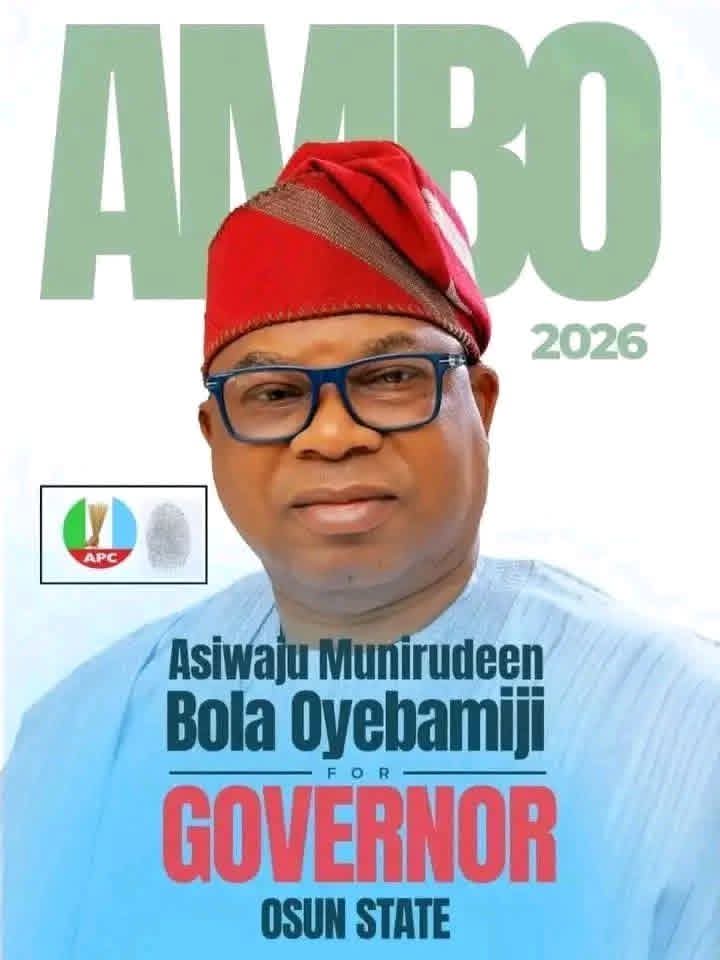
AMBO and the Osun Governorship Race: Assessing the Man, the Politics and the Vision
As political activities gather momentum ahead of the 2026 Osun State governorship election, a public affairs commentator, Oluseyi Olonade, has described the emergence of Asiwaju Munirudeen Bola Oyebamiji, popularly known as AMBO, as a significant development in the state’s political landscape.
In an article titled “Oyebamiji: The Man, The Politics and The Aspiration,” Olonade argued that the All Progressives Congress governorship hopeful possesses the character, experience and vision needed to reposition Osun State for sustainable growth.
According to the writer, Oyebamiji’s appeal stems from his extensive background in the banking sector, where he spent nearly three decades working with institutions including Wema Bank, Trans International Bank, Spring Bank and Enterprise Bank.
A native of Ikire in Irewole Local Government Area, Oyebamiji was described as a technocrat whose experience in corporate governance, finance and risk management has shaped his approach to public administration.
The article noted that his public service journey gained prominence in 2012 when he was appointed to oversee the then Osun State Investment Company Limited. Under his leadership, the organisation was reportedly restructured and transformed into Omoluabi Holdings Limited.
The writer further highlighted Oyebamiji’s tenure as Commissioner for Finance under successive APC administrations, where he was credited with managing the state’s finances during challenging economic periods.
Olonade also referenced Oyebamiji’s appointment as Managing Director of the National Inland Waterways Authority, describing it as further evidence of his administrative and leadership capabilities.
The article contrasted Oyebamiji’s governance philosophy with that of the current administration in Osun State, arguing that the APC aspirant favours institutional reforms, economic diversification and fiscal discipline.

According to the writer, Oyebamiji’s proposed agenda includes strengthening transparency in government spending, expanding internally generated revenue, attracting private-sector investments and promoting industrial and agricultural development.
The article also highlighted youth empowerment, entrepreneurship development and digital skills acquisition as key components of his vision for the state.
Olonade concluded that the forthcoming governorship election would present voters with a choice between different approaches to governance, expressing confidence that Oyebamiji’s experience and developmental agenda make him a strong contender in the race.
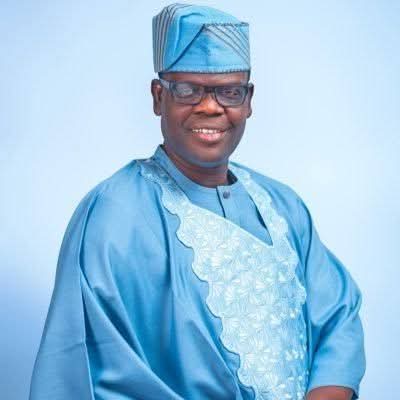
*Oselu Tiwa nTiwa Endorses Oriyomi Hamzat for Oyo Governorship*
A sociopolitical support group in Oyo State, Oselu Tiwa nTiwa, has declared its support for Alhaji Oriyomi Hamzat as the authentic governorship candidate of the Accord Party ahead of the forthcoming governorship election in the state.
The group made its position known in a statement jointly signed by its President, Mr. Adewale Oluwaseyi and Secretary, Alh. Adebayo Oyewole, on Thursday, describing Hamzat as a grassroots figure with strong connection to the people and a track record of humanitarian interventions across Oyo State.

According to the group, the endorsement followed what it described as careful observation of Hamzat’s leadership qualities, compassion and dedication to the welfare of ordinary citizens.
“Oriyomi Hamzat has consistently demonstrated empathy, courage and selfless commitment to humanity. Through his numerous interventions in the lives of ordinary citizens, he has become a symbol of hope to many families and communities,” the statement read.
Oselu Tiwa nTiwa also appealed to the national leadership of the Accord Party to prioritise the long-term future and electoral growth of the party in its decision-making process.
The group noted that Hamzat’s candidacy presents an opportunity for the party to strengthen its grassroots support base and expand its political relevance across Oyo State.
“We respectfully appeal to the National Leadership of the Accord Party to look beyond immediate political calculations and consider the bigger picture, the future growth, stability and electoral success of the party in Oyo State and beyond,” the statement added.
The group further expressed confidence in the leadership of the party, saying it believes the party’s national officers and stakeholders would take decisions that reflect fairness, inclusiveness and the collective interest of members.
While calling on party loyalists to remain calm and united, Oselu Tiwa nTiwa said continued consultations among stakeholders would help strengthen the Accord Party ahead of the election.
Signed:
Alh. Adebayo Oyewole,
Secretary.
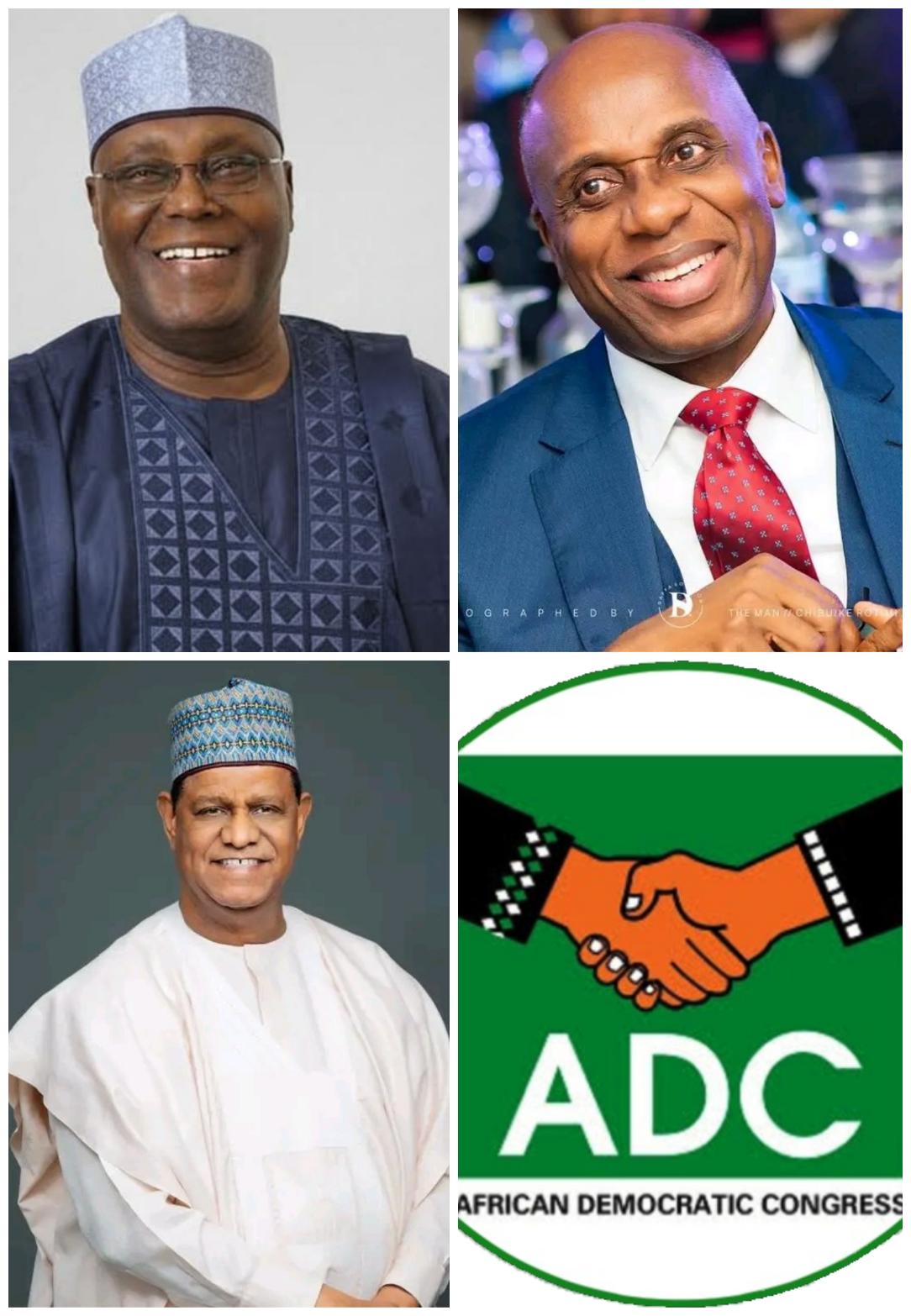
Atiku Set To Clinch ADC Presidential Ticket, Leads Amaechi, Hayatu-Deen In 34 States
Former Vice President of Nigeria and frontline presidential aspirant of the African Democratic Congress (ADC), Atiku Abubakar, is projected to emerge winner of the party’s presidential primaries, according to impeccable sources in Abuja.
The primaries, conducted across over 8,000 wards in the 36 states of the federation and the Federal Capital Territory, reportedly placed Atiku far ahead of his closest rivals — former Rivers State Governor, Rotimi Amaechi, and former Chairman of the Nigerian Economic Summit Group, Mohammed Hayatu-Deen.

Highly placed party insiders disclosed that Atiku is currently leading in 34 states, including the FCT, after securing dominance across the 19 Northern states, the five South-East states, and the six South-West states, while also maintaining a strong showing in at least three states in the South-South geopolitical zone.
The sources added that the outcome reflects what they described as “an overwhelming nationwide acceptance” of the former vice president within the opposition party ahead of the 2027 general election.
Meanwhile, the ADC leadership has invited members of the press to the official announcement of the final collated results scheduled for 11:00 a.m. on Tuesday, May 26, 2026, in Abuja.
The declaration of results is expected to be broadcast live on ARISE Television and two other major television stations, while also being livestreamed on the party’s official social media platforms on X and Facebook.
Speaking ahead of the announcement, the founding National Chairman of the ADC, Chief Ralph Nwosu, said the decision to televise the exercise live was aimed at promoting transparency and democratic accountability.
“We want millions of Nigerians at home and in the Diaspora to witness democracy in action,” Nwosu said.
He further revealed that the party leadership would encourage all three presidential aspirants to publicly embrace a peace accord and commit themselves to working together in unity for the party’s success.
According to him, the move is necessary to strengthen internal cohesion and position the ADC for victory in the presidential election scheduled for January 16, 2027.
Details later.


- Afreximbank Deepens Commitment to Economic Progress in The Bahamas June 1, 2026
- African Electric Vehicle (EV) platform Spiro raises $215M in equity to scale electric mobility and energy infrastructure across Africa June 1, 2026
- Africa Centres for Disease Control and Prevention (Africa CDC) Statement on Attacks Against Health Facilities During the Bundibugyo Virus Disease Response in the Democratic Republic of the Congo June 1, 2026
- Putting consumers at the centre of Africa’s dairy transformation June 1, 2026
- International Rescue Committee (IRC) warns Democratic Republic of the Congo (DRC) Ebola outbreak likely far larger than official figures suggest June 1, 2026
- South Africa: Portfolio Committee on Health Marks National Cancer Survivor Day and Reaffirms Importance of Early Detection and Public Awareness June 1, 2026
- Rwanda’s RSSB Tigers Crowned 2026 Basketball Africa League Champions June 1, 2026
- Uganda: Appointments Committee Begins Vetting of Ministerial Nominees June 1, 2026
- Sudan braces for worsening child malnutrition as pre-harvest season starts June 1, 2026
- Etu Energias Strengthens Angolan Footprint, Returns to Angola Oil & Gas (AOG) 2026 as Champion Sponsor June 1, 2026
- Afreximbank Deepens Commitment to Economic Progress in The Bahamas June 1, 2026
- African Electric Vehicle (EV) platform Spiro raises $215M in equity to scale electric mobility and energy infrastructure across Africa June 1, 2026
- Africa Centres for Disease Control and Prevention (Africa CDC) Statement on Attacks Against Health Facilities During the Bundibugyo Virus Disease Response in the Democratic Republic of the Congo June 1, 2026
- Putting consumers at the centre of Africa’s dairy transformation June 1, 2026
- International Rescue Committee (IRC) warns Democratic Republic of the Congo (DRC) Ebola outbreak likely far larger than official figures suggest June 1, 2026
- South Africa: Portfolio Committee on Health Marks National Cancer Survivor Day and Reaffirms Importance of Early Detection and Public Awareness June 1, 2026
- Rwanda’s RSSB Tigers Crowned 2026 Basketball Africa League Champions June 1, 2026
-

 news6 months ago
WHO REALLY OWNS MONIEPOINT? The $290 Million Deal That Sold Nigeria’s Top Fintech to Foreign Interests
-

 society4 weeks ago
SOCIAL MEDIA IS NOT A BATTLEFIELD COMMAND – WHY THE NIGERIAN ARMY’S ACTION AGAINST JUSTICE CRACK IS A NATIONAL SECURITY IMPERATIVE
-

 celebrity radar - gossips4 months ago
Dr. Chris Okafor Returns with Power and Fire of the Spirit -Mounts Grace Nation Altar with Fresh Anointing and Restoration Grace on February 1, 2026
-

 celebrity radar - gossips6 months ago
Prophet Kingsley Aitafo Releases 2026 Prophecy: ‘Nigeria Will Rise, but the World Must Prepare for Turbulence’