
celebrity radar - gossips
Gov. Aiyedatiwa: A Choice for Consolidation and Continuity


Gov. Aiyedatiwa: A Choice for Consolidation and Continuity
By IDOWU AJANAKU,
“You can see what I have been doing since I assumed office, so I promise you that I won’t relent in my infrastructural projects”
-Gov. Lucky Aiyedatiwa
” The governor is performing well and needs to be supported in his ambitions. Here in Akure we have benefitted from his support of infrastructure”
-Oba Aladetoyinbo Aladelusi ( The Deji of Akure)
With only a few days to the governorship election coming up in the acclaimed ‘Sunshine State’ precisely on Saturday, October 16, 2024 the empirical evidences on ground point to the political pendulum swinging in favour of the incumbent state governor Aiyedatiwa, for more reasons than one. While we must admit that it would likely evolve as an exciting two-horse race between two former deputy governors-Agboola Ajayi of the People’s Democratic Party ( PDP) and Aiyedatiwa of the All Progressives Congress) APC) the facilitating factors that favour the latter against the former are crystal clear.
One of such is continuity combined with consistency. Having taken over the baton of political leadership upon the painful death of the former state governor, Rotimi Akeredolu back then in December 2023 he has solidified his footsteps by continuing with the projects on infrastructure, agriculture, education, healthcare delivery, industrialization and youth employment. That is across the three Senatorial Districts of the state. And good enough, the Deji of Akure who, incidentally is the Chairman of the Council of Obas in the state has testified to this as reflected in the introductory quote.
Furthermore, Aiyedatiwa happens to be the first governor to hail from Ilaje, the oil-rich local government of the state which has amply qualified it as an oil-producing state. Apart from financially benefiting with the monthly 13 % derivation from the Federation Account it has made it possible for the state to belong to the Niger Delta Development Commission ( NDDC). The good people of Ondo state would therefore, not want to turn their back on the goose that lays the golden egg. That is common wisdom.
In a similar positive perspective, Ilaje Local Government boasts of the longest coastal line in the entire West African Sub-region. Once the seaport there which is under construction is fully developed, it will definitely act as the veritable linkage between the Lekki Seaport to the west and other seaports in Asaba, Calabar to the east.With Aiyedatiwa’s influence Ondo state would soon become an economic hub acting as a catalyst for massive employment generation, especially for the youths. With all that firmly in place Ondo state would continue to be well branded as an icon of peace, devoid of youth restiveness. But that is not all there is to the positive difference his presence in office would make on the quality of life or the Human Development Index (HDI) of Ondo people.
Like it or not, the power of incumbency has a critical role to play in boosting the chance of Aiyedatiwa emerging victorious in the forthcoming gubernatorial election.He belongs to the ruling APC and lest we forget, the party has over the years displayed the capacity to mend broken fences, assuage frayed nerves after contentious primaries, when it comes to being a united front to winning elections. We have seen that at play in states such as Katsina, Nasarawa, Kogi, Ogun, Ekiti and of course, Lagos. That explains why the current Chairman of APC, Abdullahi Ganduje has been doing all things humanly possible to offer the party’s support to Aiyedatiwa to win the election.
And as fate would have it, our subject has shown the consistent capacity to reach out to different segments of the Ondo state society- from the lowest rung through the middle class up to the upper echelon. He has given them his listening ear; promising solar light to the markets for the women to sell their sundry goods in the evening time, as well as stable infrastructure across the state. That of course, would provide the foundation for the Medium and Small Scale Enterprises MSMEs to keep thriving
Worthy of note is the interactive session the governor had with members of the Committee of Obas at the palace of the Deji of Akure Oba Aladelusi. After listening to their request for the construction of internal roads including those leading to and fro the markets, with Igbatoro Road not left out he had this to say. ” I won’t relent in my infrastructural projects.The solar power initiative will continue.We have competed phase one and we will move on to phase two”.
In addition, and to seal the unfailing element of Trust which is the key to the hearts of the led majority Aiyedatiwa affirmed that: “I have been addressing issues related to the Obas. The voice of the King is akin to God’s voice”. Such assurance would definitely have a spin-off effect on the kings convincing their people to throw their weight behind him.
So, looked at from the factors of incumbency, political affiliation, identity, zoning, having the common touch with the people right to the grassroots and of course, that of performance, Aiyedatiwa stands head and shoulders above his 16 other contesters. That is in a free, fair and credible election which we all look forward to during the governorship election in Ondo state, with the Independent National Electoral Commission, INEC ‘s quality performance to deliver the choice of the people. The Agency working in partnership with the police should guarantee security, to ensure that voting materials are delivered to the polling units as at when due. There should be no ballot box snatching, intimidation or shooting of innocent people by paid political thugs, to ensure the smooth conduct of the electoral process.
Interestingly, Aiyedatiwa has ‘Lucky’ as his name. Will it ring a loud and clear bell on that moment of the people ‘s decision? Time will tell.
But as Heather Wilson, the 11th President of the University of Texas at El Paso, United States of America, USA rightly stated: “The poll that matters is the one that happens on the election day”.
AJANAKU, is a member of strategic and communication committee of Aiyedatiwa campaign council.




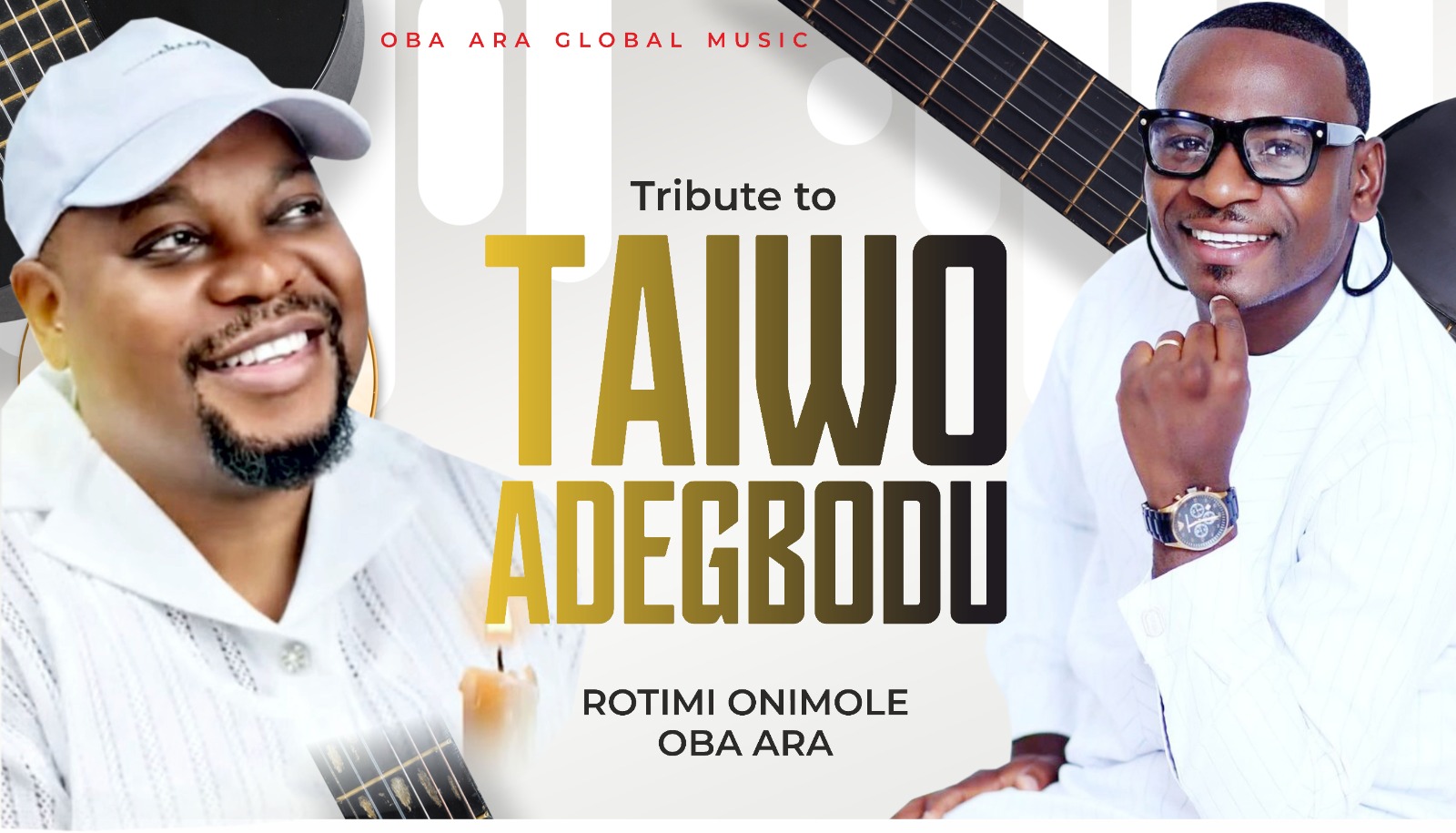
Oba Ara Releases Emotional Tribute to Late Taiwo Adegbodu
Taofik Afolabi
The gospel music community continues to grieve the painful loss of Taiwo Adegbodu, a beloved figure whose sudden departure left a deep void among fans, colleagues, and loved ones. In response to this loss, renowned gospel minister Rotimi Onimole, popularly known as Oba Ara, has released a moving tribute song that captures both the sorrow of the moment and the enduring legacy of the late singer.
Oba Ara, a proud son of Isale Eko, channels raw emotion throughout the song, using heartfelt lyrics and soul-stirring melodies to reflect on his personal connection with Taiwo Adegbodu. In the tribute, he openly expresses how deeply the news of Adegbodu’s passing shook him, describing it as a painful and unexpected loss that is difficult to come to terms with.
The song goes beyond mourning, it celebrates the life, ministry, and impact of Taiwo Adegbodu. Oba Ara highlights the late artist’s dedication to spreading the gospel through music, his inspiring voice, and the spiritual influence he had on many within and beyond Nigeria. Through powerful verses, he paints a picture of a man who lived for God and touched countless lives through his ministry.
Listeners have described the tribute as both comforting and deeply emotional, as it resonates with the collective grief of the gospel music community. It serves as a reminder that although Taiwo Adegbodu is no longer physically present, his music, message, and legacy will continue to live on.
In honoring his late colleague, Oba Ara not only pays his respects but also offers a source of healing for fans and fellow ministers, using music as a tool to process grief and celebrate a life well lived.
celebrity radar - gossips
Buratai, Fagbemi , Shagaya, Olofa, Others Eulogise Olowu Kuta’s Olori On 60th Birthday, Foundation Launch

Buratai, Fagbemi , Shagaya, Olofa, Others Eulogise Olowu Kuta’s Olori On 60th Birthday, Foundation Launch
Eminent personalities across the Nigeria stormed the TFK Event Centre, Bala Mohammed Way, Guzape, Abuja, to celebrate the 60th birthday of Olowu Kuta’s Olori, Queen Jumai Amoke and her Foundation Launch on Saturday 28, March 2026.

From former Chief of Army Staff, Lt Gen TY Buratai rtd, to the Minister of Justice and Attorney-General of the Federation, Prince Lateef Fagbemi; Olofa of Offa, HRM Oba Mufutau Gbadamosi. Even top businesswoman and socialite, Chief (Mrs) Bola Shagaya, was in attendance.


Other dignitaries were newly promoted Deputy Inspector-General of Police and former AIG Zone 2 , Lagos , Adegoke Fayoade, Major General Abdumalik, Major General Samuel Adebayo rtd (Fmr CDI);
Major General Anthony Omozoje rtd (Fmr Copp);
Alhaji Tajudeen Owoyemi (Asiwaju of Offa and CEO Radisson Hotel Nigeria;
Dr Waheed Olagunju, former managing director of Bank of Industry, Oniba of Iba, Lagos State, HRM Oba Dr Suleiman Raji ;
Justice Falola, Olu of Ile-Ogbo , Oba Adetoyese amongst many traditional rulers and captains of industry too numerous to mention.
Speaking at the occasion, the Chief Host, Olowu of Kuta, HRM Oba Dr Adekunle Oyelude Makama, CON , Tegbosun iii, who is also the husband of the celebrant commended Queen Jumai for ‘ her slender arms full of kindness’ to establish such humanitarian Foundation, ‘Amoke Children and mother in Need Foundation’ at a time Nigerians are going through economic crisis occassioned by the global meltdown.
Olowu also commended her steadfastness and love for the less privileged and downtrodden.
The monarch refrenced the task before his wife’s humanitarian gesture said her best is yet to come.
” Olori Amoke Jumai, I celebrate you. You will celebrate 70, 80, 90 and continue to shine as you continue to put a smile on people’s faces. I love you, “Olowu Kuta added.
To Lt Gen Buratai, a former army chief and former Nigerian Ambassador to Benin Republic, the reward of hard work is more work.
Buratai, who also doubles as Balogun Agba of Owu Kuta, a chieftaincy title reserved for a generalismo congratulated Queen Jumai for attaining the age of 60 in good health.
The retired army General said he’s not surprised by the turn out of eminent personalities across the country to celebrate the Olowu Kuta’s Olori because she merited it through her hospitality to all, adding that Allah the most merciful, most beneficial would accept all her act of ibadah.
The minister of Justice, Prince Fagbemi, was full of praises for Queen Jumai for deeming it fit to have a place in her heart to accommodate the needy and less privileged in ‘our society.’
Prince Fagbemi urged the guests to contribute generously to support the Foundation in order to continue to alleviate poverty and put a smile on the faces of the people.
” I congratulate you on your 60th birthday and Foundation Launch. I wish you many happy returns of the day and many more fruitful services to the country and motherland”, Prince Fagbemi added.
The celebrant, Queen Jumai who was grining from ear to ear thankfully said she was excited by the turn out and the response of the people to her foundation.
Queen Jumai, however, promised to continue to use her resources and donations received for the good of the needy and less privileged in the society.
” I want to appreciate my own Kabiesi Olofa of Offa , for his presence and im I’m using him as a point of contact to all other Kabiesis present here, the minister of justice and Attorney-General, you’re welcome, sir; Mrs Bola Shagaya, I salute your enterprise, Lt Gen Buratai, I’m grateful, sir; DIG Fayoade, Justice Falola and other dignitaries too numerous to mention, I thank you, all. To my darling husband, Kabiesi Olowu , I thank you immensely for your support. And to my family and friends, I thank you , all. E se pupo!”, she said.
celebrity radar - gossips
Adron Homes Elevates Cultural Pride as Dignitaries Grace 39th Lisabi Festival in Abeokuta
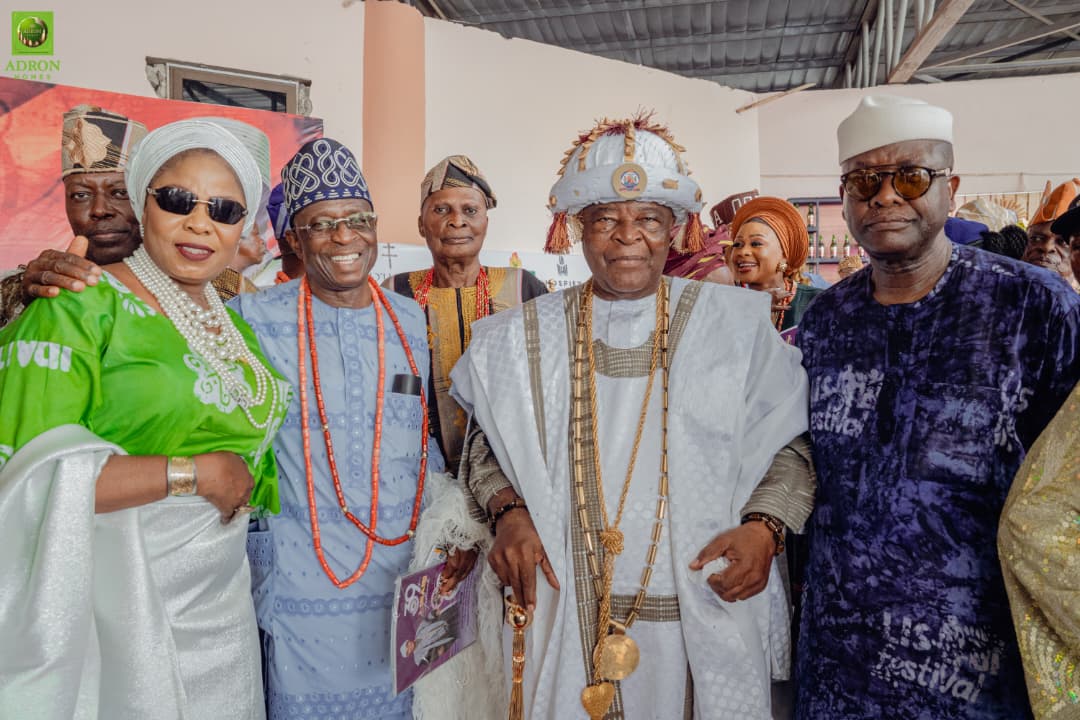
Adron Homes Elevates Cultural Pride as Dignitaries Grace 39th Lisabi Festival in Abeokuta
The ancient city of Abeokuta came alive in a grand display of culture, history, and unity as dignitaries from across Nigeria converged at the iconic Ake Palace Ground for the 39th edition of the Lisabi Festival, an annual celebration deeply rooted in the Egba people’s heritage.
The event, proudly supported by Adron Homes and Properties Limited, witnessed an impressive parade of distinguished personalities, traditional rulers, government officials, business leaders, and cultural enthusiasts, all captured in vibrant pictures that tell the story of a people united by history and pride.
From richly adorned monarchs in regal attire to elegantly dressed guests reflecting the depth of Yoruba tradition, the images from the festival encapsulate moments of honour, reverence, and celebration. Each photograph portrays not just faces, but influence, leaders, and stakeholders who continue to shape cultural preservation and community development.
At the heart of the celebration was the revered Oba Adedotun Aremu Gbadebo, whose presence underscored the festival’s significance as a symbol of Egba resilience and identity. Surrounding him were eminent dignitaries whose attendance further amplified the prestige of the event.
Adron Homes and Properties Limited stood out prominently, not only as a sponsor but as a key driver of cultural sustainability. Through its strategic support, the company reinforced its commitment to preserving indigenous heritage while fostering community engagement. The brand’s visibility across the venue and within the pictorial highlights reflects a deliberate alignment with culture, tradition, and people-centered development.
Beyond real estate, Adron Homes has continued to position itself as a cultural partner, investing in platforms that celebrate history and strengthen communal bonds. Its involvement in the Lisabi Festival is a testament to its broader vision of building not just homes, but legacies rooted in identity and pride.
The 39th Lisabi Festival, as captured through the lens of dignitaries in attendance, is more than an event, it is a narrative of continuity. And through its unwavering support, Adron Homes has once again set the pace, demonstrating that corporate institutions can play a vital role in sustaining the cultural heartbeat of a people.
As the echoes of drums fade and the colours of the festival linger in memory, one thing remains clear: the story told through these images is one of unity, heritage, and the enduring partnership between tradition and progress.


-

 society6 months ago
Religion: Africa’s Oldest Weapon of Enslavement and the Forgotten Truth
-

 news4 months ago
WHO REALLY OWNS MONIEPOINT? The $290 Million Deal That Sold Nigeria’s Top Fintech to Foreign Interests
-

 society6 months ago
“You Are Never Without Help” – Pastor Gebhardt Berndt Inspires Hope Through Empower Church (Video)
-

 celebrity radar - gossips2 months ago
Dr. Chris Okafor Returns with Power and Fire of the Spirit -Mounts Grace Nation Altar with Fresh Anointing and Restoration Grace on February 1, 2026