
society
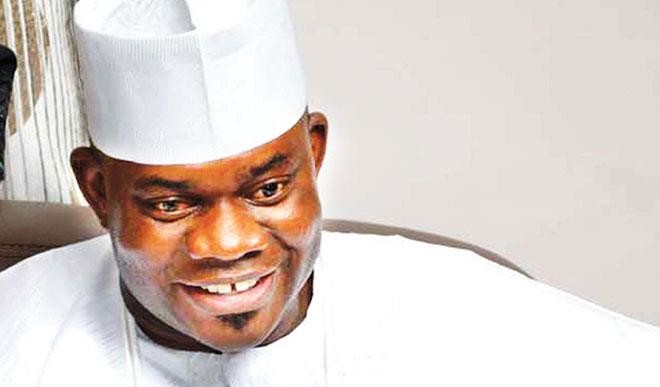
Gov Bello, Security And Flurry Of Well Deserved Accolades By Silas Momoh

Gov Bello, Security And Flurry Of Well Deserved Accolades By Silas Momoh
At all levels of the Nigerian federation, the Constitution thrust the management of security of lives and property on the president, governors and local council leaders.

Specifically, Article II of the 1999 Constitution of Nigeria vested the executive power of the state in the governor and charges them with the execution of state law. In view of the foregoing, the primary responsibility of any governmemt is first the security of lives and property.
The current administration in Kogi State, under the leadership of Governor Yahaya Adoza Bello, inherited a state that is divided into religious, tribal, and class lines, which culminated in a lot of security concerns. He inherited a state where division, oppression, deprivation and injustice were the order of the day
In terms of geography, Kogi is not only the hinge that holds the southern and northern parts of Nigeria together, Lokoja, the state capital, occupies an enviable place in the historical trajectory of Nigeria, having served as the first administrative capital of Nigeria.
Still standing on Mount Party, 1500 feet above the sea level, is the First Governor General Lord Lugard’s Guest House, where the British Journalist with Times of London, Flora Shaw, suggested in a newspaper article, that the place around the River Niger be named Nigeria.
Also, not only is the state a melting pot of the Nigeria nation, it is bordered by nine states of Nigeria. The states of Edo, Nasarawa, Niger, Ondo, Ekiti, Benue , Kwara, Enugu and the Federal Capital Territory borders Kogi. This scenario and it’s delicate ethnic balance make Kogi vulnerable to all manner of crimes and criminality.
True to expectations, Kogi became the epicenter of security concerns. In fact, pre 2015, all the three senatorial districts became a hot bed for kidnapping, political thuggery, armed robbery, youth cultism, herders-farmers clash, ethnic clashes, Boko Haram terrorism etc. Criminals had field day because of its accessibility through multiple points.
At the time, Kogi was daily in the news for every wrong reason. The government at the time was overwhelmed and helpless as security agencies could practically do nothing to remedy it. Kogi was a lucid example of a near-failed territory. Not to mince words, Okene, one of the major towns in the state used to be the operational base of ISWAP and other criminal elements.
Then comes Alhaji Yahaya Adoza Bello, a youngman considered by the political establishment as an underdog, lacking experience, guts and clout. Frankly speaking, many political leaders underrated him. Some even derided him to his face. As at the time he was sworn-in be on 27 January, 2016, some pundits and political bookmakers gave him six months to wear out.
Bello first took his battles to two purveyors of conflicts: the traditional Institutions and politicians. He sounded a clear note of warning to the traditional rulers, mandating them to do everything to secure their domain, while vowing not to spare them, if they are found culpable of fomenting troubles.
He also read a riot act to politicians in the State, that irrespective of their political persuasions, the heavy and long arms of the law will not spare anyone, found to be involved in act that could cause crisis in the State. This strategy worked like magic. Since then, many local council leaders, traditional rulers have paid prices for security breaches in their domains.
Less than three months after he took office, the tides began to turn.Those who had earlier underated him began to feel the heat. Those who think that they owned the State and that without them, nothing can work became jittery. Even criminal gangs, who were celebrating because a supposed inexperienced governor had emerged began to adjust.
Two things worked effectively for Governor Bello: the purity of his motives was not in doubt and courage to dare the powers behind the criminal enterprise in the State. He drew the red line for those who cared to take him serious. He began tightening the noose around kidnappers. His team went all out for their establishments. Their hideouts were invaded. Any house, suspected to belong to a kidnapper or kidnapping gang, were pulled down under his supervision.
One of the problems with fighting criminals in Kogi State before Bello, was the lack of courage to met out punishment to apprehended culprits. Bello’s style has no regard for sacred cows. Soon, the young men, who had settled in the believe that crimes pays faster than hard work, realised that they are out of jobs. They were put to flight. They dispersed in all directions to the bordering States. Suddenly, huge relief began to permeate the land.
Okene that was the den of ISWAP, soon came under Bello’s artillery. That’s where he hailed from but the heavy hand with which he descended on criminal hideout there, sent a clear message to the undesirable elements that the honeymoon was over. Having successfully set example with his own people, it wasn’t difficult for other area to ‘get sense.’
Apart from motivation for security agencies in the frontline, with logistic and other supports, the Kogi Government in partnership with the Nigeria Police Force also established two Mobile Police Squadron Bases along Obajana-Kabba road and in Okene. He also facilitated the location of a Naval Base in Lokoja, established to ensure adequate security of the waterways in the confluence state.
He personally commissioned the Nigeria Navy Ship Lugard and Navy Barracks.
In recognition of Governor Bello’s astounding performance in the security sector, he has been honoured with several prestigious awards from around Nigeria and beyond, amongst which is: President Muhammadu Buhari on Friday, 21 October, 2022, at the presidential villa, Abuja, honoured him with a distinguished Nigeria Excellence Award in Public Service.
One of Nigeria’s leading newspapers, Blueprint, honoured Bello at it’s 2021 Annual Public Lectures and Impact Series/Awards, the award was in recognition of his “outstanding leadership qualities and decisive handling of the security situation in the state.”
Also, the Nigerian Police honoured Bello for his unparalleled achievements in securing Kogi, the only State in Nigeria, that borders about 10 States.
He also won the Nigerian Union of Journalists (NUJ) ‘Torch bearer of Security’ award.
Similarly, the Association of Nigerians in Diaspora, bestowed its “Icon on Security” award on Governor Yahaya Bello in 2021.
Given the prevailing peace in Kogi state today, at a time other parts of Nigeria is in security turmoil, we can only but say thank you to Governor Yahaya Adoza Bello, for that will serve as spring under his feets to do more.
—Momoh is a security expert based in Idah.


*Centre defends due process in appointment of IST Chairman Aminu Junaidu*
*…says reforms boosting investor confidence in capital market*
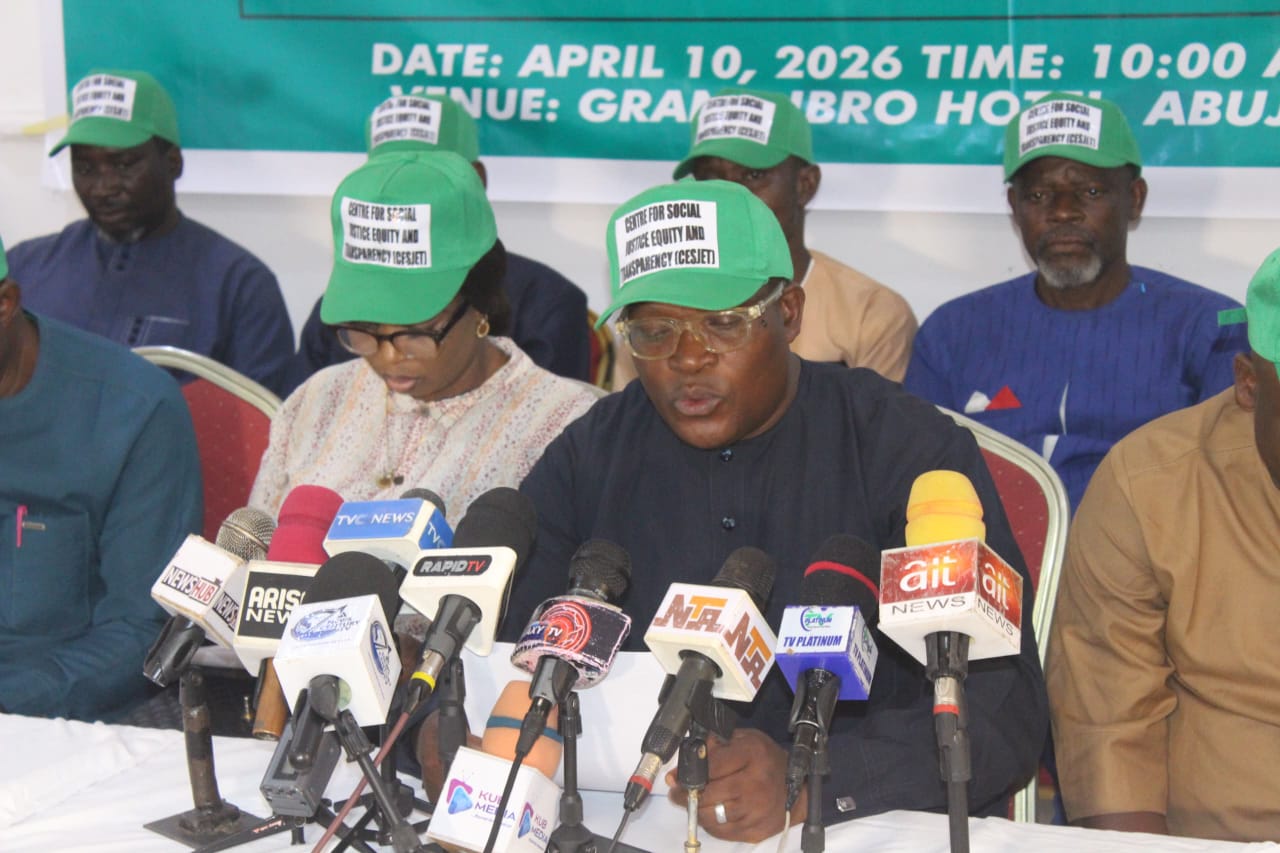
The Centre for Social Justice, Equity and Transparency (CSJET) has defended the appointment of Barrister Aminu Junaidu as Chairman of the Investment and Securities Tribunal (IST), insisting that due process was followed and rejecting claims that the appointment violated the Investment and Securities Act 2025.
Speaking at a press conference held on Friday in Abuja, Executive Director of the Centre, Pastor David D. Yakubu, said the appointment was approved by President Bola Ahmed Tinubu within his constitutional authority, and that there was no evidence of any breach of established legal or administrative frameworks.
CSJET said much of the public debate surrounding the appointment had been shaped by misinterpretation of governance processes, stressing that executive decisions must be understood within the context of institutional needs and constitutional powers.
“The appointment was duly approved by President Bola Ahmed Tinubu, acting within the constitutional powers vested in his office. In a constitutional democracy, such authority is exercised within defined legal and administrative frameworks, not arbitrarily,” Yakubu said.
The Centre also urged caution in interpreting administrative developments as illegality, warning against what it described as “selective readings” of government actions.
“The existence of differing narratives does not automatically translate into illegality. What must guide public judgment is the totality of the process, not isolated fragments of it,” he added.
CSJET further noted that appointments of heads of agencies are processed through the Office of the Secretary to the Government of the Federation, with formal letters issued through established channels.
“For clarity, appointments of Heads of Agencies are processed through the Office of the Secretary to the Government of the Federation, and formal letters of appointment are issued accordingly. This is a well-established administrative procedure,” Yakubu said.
The group also defended Junaidu’s qualifications, describing him as a seasoned legal practitioner with extensive experience in governance and public administration.
“Barrister Aminu Junaidu is a seasoned legal practitioner with extensive experience in governance and public administration. As a former Attorney-General of Zamfara State, he operated at the highest levels of legal advisory and institutional management,” CSJET stated.
The group added that his experience was relevant to the demands of the tribunal, which operates at the intersection of law and economic regulation.
“The argument that qualification must be narrowly restricted to a specific segment of capital market practice overlooks the broader competencies required for modern institutional leadership—analytical depth, legal expertise, and administrative capacity,” the Centre said.
On performance, CSJET said the tribunal had recorded improvements since Junaidu assumed office following a formal handover on October 26, 2025.
“Since assuming office, Barrister Aminu Junaidu has demonstrated a commitment to restoring order, stability, and efficiency within the Investment and Securities Tribunal,” he said.
The group added that there had been improvements in efficiency, inclusiveness, and case management, which it said had contributed to rising confidence among legal practitioners.
“More lawyers are increasingly bringing new cases before the Tribunal, encouraged by a growing reputation for timely and efficient dispute resolution,” CSJET said.
He also highlighted international engagements as evidence of growing institutional credibility, citing visits by foreign delegations.
“On March 13, 2026, the Ethiopian Ambassador to Nigeria paid an official visit to the tribunal to understudy its processes and engage with its leadership,” the group said.
“On March 27, 2026, a delegation from Ethiopia’s capital market institutions visited the tribunal to exchange ideas and learn from its evolving systems. These visits reflect increasing confidence in the tribunal’s direction,” he said.
CSJET said such engagements demonstrated that Nigeria’s capital market institutions were gaining recognition beyond the country’s borders.
“These visits reflect increasing confidence in the tribunal’s direction and the reforms being implemented. They show that Nigeria’s capital market institutions are being recognised beyond our borders,” he stated.
The organisation warned against what it described as narratives that could undermine institutional stability.
“We must be careful not to elevate disagreement into crisis, or to reinterpret administrative developments as constitutional breaches without clear and compelling evidence,” he said.
CSJET further stressed that investor confidence depended on stability and trust in regulatory institutions.
“The capital market thrives on trust, predictability, and stability. It is important that discourse around its institutions remains factual and balanced,” the group added.
The Centre reiterated that the appointment of Junaidu followed due process and was consistent with constitutional provisions.
“The appointment of Barrister Aminu Junaidu followed due process and reflects the lawful exercise of constitutional authority,” he added.
Leadership in Times of Crisis
~by Dare Adelekan.
In moments of national crisis, leadership is not only measured by policy decisions but by presence, empathy, and a visible commitment to the people. Nigeria today finds itself once again grappling with persistent insecurity, particularly in regions such as Benue and Plateau States, where communities continue to suffer devastating attacks.
A Contrast of Political Narratives
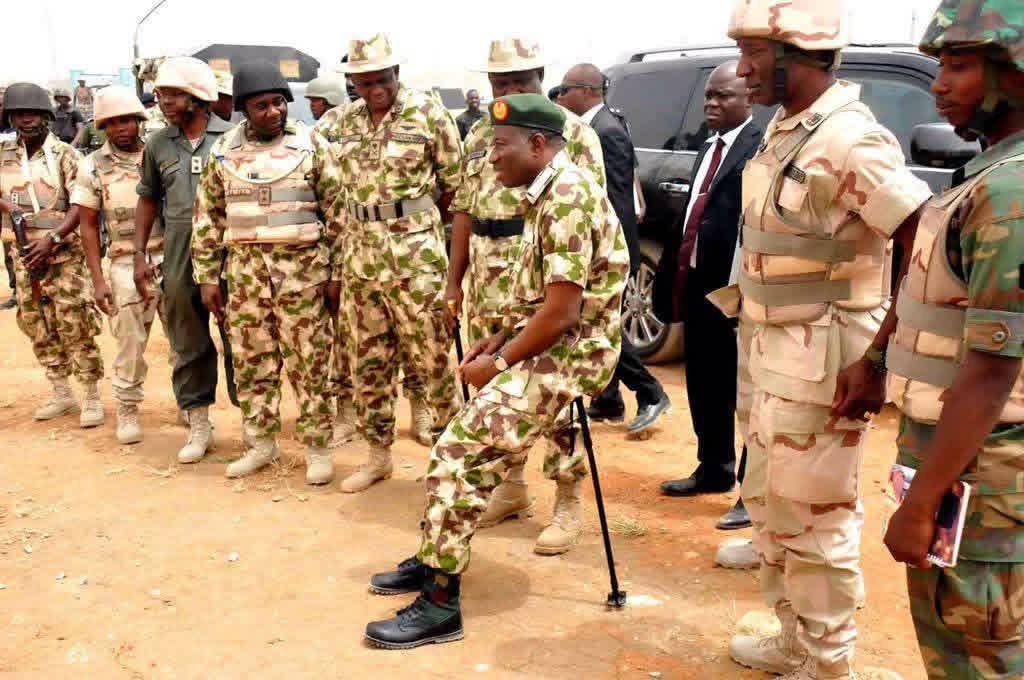
It is impossible to ignore the contrast between past and present political narratives. In 2015, during the insurgency under President Goodluck Jonathan, opposition voices—now part of the current administration—were unrelenting in their criticism. His efforts to engage troops at the theatre of war were dismissed in some quarters with derision, and his leadership was publicly questioned.
Today, under President Bola Ahmed Tinubu, the expectations set by that era demand reflection. The standards once used to judge leadership must now be applied with the same level of scrutiny and honesty.
Rising Security Concerns
Reports of continued attacks, including the tragic loss of senior military officers, have heightened public anxiety. Within a short span, the killing of two army generals by insurgents underscores the severity of the security challenges facing the nation. For many Nigerians, these incidents are not just statistics—they are painful reminders of a crisis that remains unresolved.
The Importance of Empathy and Presence
Equally concerning is the perception of distance between leadership and the people in times of grief. For communities in mourning, symbolic gestures—such as visits, condolences, and shared moments of solidarity—carry profound meaning. When these are absent or appear insufficient, it risks deepening the sense of abandonment felt by affected citizens.
The Core Responsibility of Government
The duty of government is clear: the security and welfare of the people must remain paramount. This is not merely a constitutional obligation but a moral one. At a time when Nigerians are looking to their leaders for reassurance and decisive action, there must be a renewed focus on confronting insecurity with urgency, transparency, and compassion.
Beyond Politics
Political ambitions and future elections will always be part of democratic life. However, they must never overshadow the immediate responsibility to protect lives and restore confidence in the state. Leadership, in its truest sense, demands prioritizing the nation’s pain over political calculations.
A Call for Responsible Leadership
Nigeria stands at a critical juncture. What is required now is not rhetoric, but resolve—demonstrated through action, accountability, and an unwavering commitment to the safety and dignity of every citizen.

Ifako Mini Stadium, Temitope Adewale And His Result-Oriented Youth Development
By Oluwatosin John
At last, the long awaited remodelling of Ifako Mini Stadium is coming to fruition, we say a ‘big kudos’ to Hon. Adewale Temitope Adedeji, OON, member representing Ifako-Ijaiye Constituency I at the Lagos State House of Assembly.
The Ifako Mini Stadium is the only sporting facility that serves over one million residents of Ifako-Ijaiye Local Government and environs including several youths in neighbouring communities in Ogun State. Since its demolition and approval for renovation, standard sporting activities had been put to halt.
The development and growing impact of the Ifako Mini Stadium is now being widely recognised as a significant step toward advancing grassroots sports and youth empowerment within the community.
Facilitated by Hon. Adewale and constructed by the Governor of Lagos State, Mr. Babajide Olusola Sanwo-Olu, the modern sporting facility is designed to provide accessible and functional infrastructure for recreational and competitive activities. It will also serve as a hub for youth engagement, talent discovery, and community development.
The initiative, according to residents who would benefit from it, reflects a broader commitment to addressing the challenges faced by young people, particularly the lack of structured recreational spaces and opportunities for personal growth.
The stadium features a beautiful standard football pitch, spectator seating area, floodlighting for evening activities as well as essential amenities such as world class changing rooms, restrooms, and administrative spaces. These features position the complex as a suitable venue for tournaments, training programmes and community events.
For emphasis and the purpose of appreciation, it is noted again that central to the success and visibility of this initiative is Hon. Temitope Adewale, a son of Ifako-Ijaiye whose continued commitment to youth development and community advancement has been instrumental in promoting projects that directly impact the lives of residents in the area.
This lawmaker’s dedication underscores the importance of leadership that prioritizes sustainable development through investments in young people and community infrastructure. His education initiatives have catapulted Ifako-Ijaiye from the bottom to the top.
“The Ifako Mini Stadium represents more than just a place for sports—it is a foundation for opportunity, growth, and the future of our youth,” Mr. Johnson Oredolu, a community representative, said about the facility and he is right.
Before now, sporting activities in the constituency and its neighbourhood had been reduced to streets and school compounds leaving no room for professional experiences and exposures to expert connections. The youth are now excitedly optimistic believing that these challenges will become ‘a thing of the past’.
The Ifako Mini Stadium will surely create opportunities for local coaches, sports organisers, and small businesses to benefit from activities hosted at the venue.
Residents and observers note that the stadium has the potential to serve as a pipeline for discovering and nurturing future professional athletes while also strengthening community ties through regular sporting and social events.
As Lagos State continues to expand its investment in grassroots sports infrastructure, the Ifako Mini Stadium stands out as a model of how targeted initiatives can drive meaningful change at the community level.
With sustained support, effective management, and active community participation, the facility is expected to remain a cornerstone for youth empowerment and sports development in Ifako-Ijaiye for years to come. The long awaited JAHrity Cup, a novel football competition to combine sports and charity will be unveiled soon at the stadium.
The enormous value of this infrastructure will remain unquantifiable as it will attract sports enthusiasts from around the state and beyond to experience classical games at a standard-class facility, thus putting Ifako-Ijaiye in the spotlight as a destination for sports lovers.
With the continued efforts of this worthy legislator, our own Hon. Adewale Temitope Adedeji, OON, the future of sports in Ifako-Ijaiye can only be more experienced than imagined.


- Century Group Joins African Energy Week (AEW) 2026 as Floating Production Storage and Offloading (FPSO) Partner, Showcasing Regional Offshore Expansion April 10, 2026
- Climate Litigation Surge Reshapes Energy Policy as Africa Seeks Stronger Legal Voice April 10, 2026
- ES-KO Secures Five-Year Catering & Facilities Management Contract Renewal with TotalEnergies EP Congo April 10, 2026
- Beyond the Court: The Kalahari Conference Solidifies its Status as Africa’s Premier Sports & Lifestyle Destination April 10, 2026
- Africa Sports Unified Launches Pan-African Sports Deals Tracker to Improve Market Visibility and Decision-Making April 10, 2026
- Nigeria and Senegal Must Follow Ghana and Mozambique Against Exclusionary Practices April 10, 2026
- Sheraton Nouakchott marks the entry of Marriott International in Mauritania April 10, 2026
- Eritrea: Seminar to Nationals in Nairobi and Its Environs April 10, 2026
- African financial institutions call for coordinated financing solutions to unlock Africa’s digital transformation April 9, 2026
- African Energy Chamber (AEC) Supports Perenco Partnership to Advance Industry 4.0 Skills in Central Africa April 9, 2026
- Century Group Joins African Energy Week (AEW) 2026 as Floating Production Storage and Offloading (FPSO) Partner, Showcasing Regional Offshore Expansion April 10, 2026
- Climate Litigation Surge Reshapes Energy Policy as Africa Seeks Stronger Legal Voice April 10, 2026
- ES-KO Secures Five-Year Catering & Facilities Management Contract Renewal with TotalEnergies EP Congo April 10, 2026
- Beyond the Court: The Kalahari Conference Solidifies its Status as Africa’s Premier Sports & Lifestyle Destination April 10, 2026
- Africa Sports Unified Launches Pan-African Sports Deals Tracker to Improve Market Visibility and Decision-Making April 10, 2026
- Nigeria and Senegal Must Follow Ghana and Mozambique Against Exclusionary Practices April 10, 2026
- Sheraton Nouakchott marks the entry of Marriott International in Mauritania April 10, 2026
-

 news4 months ago
WHO REALLY OWNS MONIEPOINT? The $290 Million Deal That Sold Nigeria’s Top Fintech to Foreign Interests
-

 society7 months ago
“You Are Never Without Help” – Pastor Gebhardt Berndt Inspires Hope Through Empower Church (Video)
-

 celebrity radar - gossips2 months ago
Dr. Chris Okafor Returns with Power and Fire of the Spirit -Mounts Grace Nation Altar with Fresh Anointing and Restoration Grace on February 1, 2026
-

 celebrity radar - gossips4 months ago
Prophet Kingsley Aitafo Releases 2026 Prophecy: ‘Nigeria Will Rise, but the World Must Prepare for Turbulence’