
society
Governor Dauda Lawal transforms Zamfara into the most improved state in Nigeria

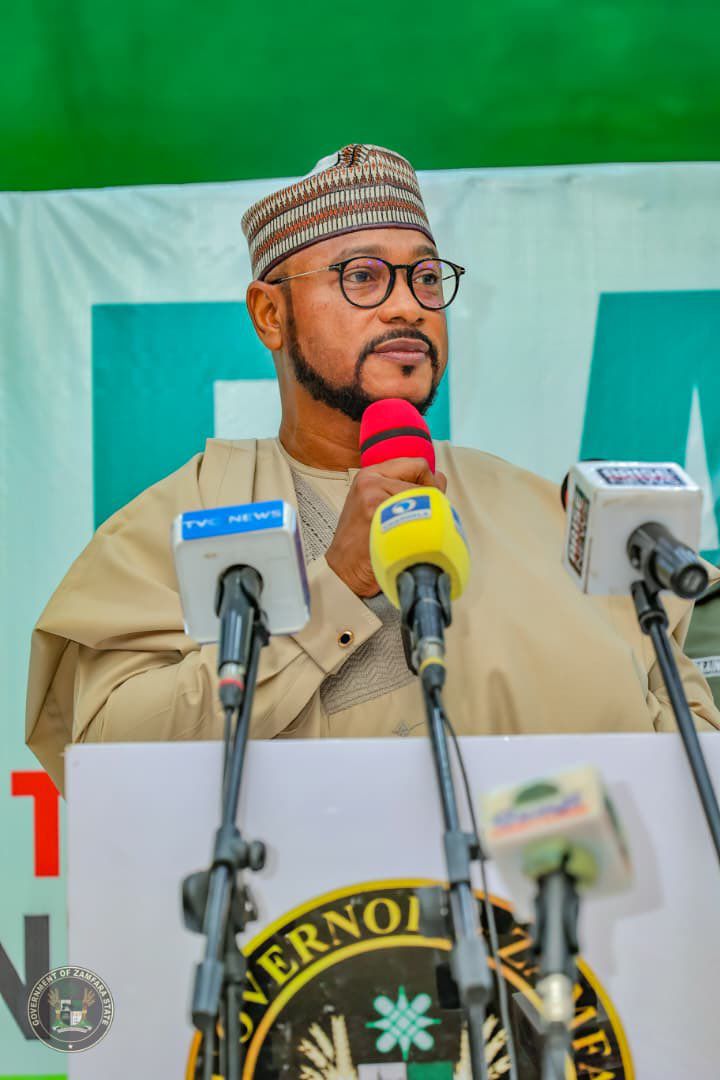
Governor Dauda Lawal transforms Zamfara into the most improved state in Nigeria
Recent reports, including the UK Country Policy and Information Report for 2025, classifying Zamfara State as one grappling with significant governance and security challenges. While it is critical to acknowledge the genuine security concerns that have plagued the region for years, Labeling Zamfara as one of the “worst governed” states represents a mischaracterization that fails to recognize the profound and strategic interventions initiated since the inauguration of His Excellency, Governor Dauda Lawal as Governor of the mineral rich state.
Governor Lawal took office in May 2023, inheriting a state on the brink of collapse, characterized by an alarming security crisis, a crippled civil service, and almost nonexistent public infrastructure. Health care services were in dire straits, effectively on the verge of comatose functionality. To evaluate governance solely based on the depth of the challenges inherited, without acknowledging the vigorous and structured efforts currently underway to rehabilitate the state, is not only unfair but does a disservice to the real progress being made. Notably, Zamfara’s internally generated revenue has surged from 90 million Naira to 2 billion Naira within just two years, illustrating a significant turnaround.
Under Governor Lawal, Zamfara is undergoing a historic, multi-faceted transformation built on three foundational pillars: Security, Infrastructure Development and Economic Revitalization, and Good Governance. His commitment to hard work and resilience has resonated throughout the state, earning him the title of “Chief Rescurer.” His administration is striving to revitalize every aspect of governance and infrastructure, steering the state toward an admirable future. Notably, the ongoing construction of the Zamfara Cargo Airport exemplifies Governor Lawal’s foresight, as it is expected to greatly enhance air travel to the state and attract foreign direct investment.
Zamfara, traditionally recognized for its agricultural potential, has bolstered growth under Governor Lawal’s policies. Initiatives such as fertilizer distribution have been initiated to ensure abundant harvests, while efforts are underway to connect farmers with offtakers, thereby increasing trade activity and ultimately promoting economic growth within the agricultural sector.
A Paradigm Shift in Security Strategy
The concept of “limited state presence” is being rigorously challenged by the emergence of a new security framework: the Zamfara Community Protection Guard (ZCPG). Launched in early 2024 under the leadership of Governor Lawal, this state-sanctioned community guard represents a significant evolution in local security initiatives. As a well-structured and community-informed security outfit, the ZCPG is designed to address the unique challenges faced by the State.
Central to this initiative is the establishment of the Zamfara State Security Trust Fund, which is headed by former Inspector General of Police, IGP MD Abubakar Rtd. This fund aims to provide essential resources and support to the security agencies operating within the state. In a substantial recruitment drive, over 2,600 personnel are being meticulously vetted and deployed across 14 local government areas, tasked with the critical role of working alongside national security agencies to bolster their efforts.
The results of the ZCPG’s implementation have already begun to manifest, with noticeable improvements in security across previously volatile regions. Despite the inherent challenges of the security landscape, Governor Lawal has demonstrated a firm commitment to supporting various security agencies. This includes mobilization for critical operations, creating funds specifically for fuel to ensure that vehicles are operational, providing suitable accommodations for personnel, and distributing brand new patrol vehicles to all security agencies across the state, thereby facilitating enhanced patrol capabilities.
Moreover, Governor Lawal’s administration has placed a strong emphasis on Technology-Driven Surveillance. This involves significant investments in modern surveillance equipment and advanced communication systems, designed to amplify the effectiveness of security forces. The administration has established a framework for constant dialogue with security chiefs, thereby fostering a more coordinated and robust presence of both military and police forces. This strategic collaboration has led not only to the liberation of numerous kidnapping victims but also to the disruption and dismantling of various criminal networks operating within the state.
These initiatives put forth by Governor Lawal and the ZCPG reflect a comprehensive approach to security that prioritizes community involvement, efficient resource allocation, and the integration of modern technology. This shift is poised to create a safer environment and restore confidence among the citizens of Zamfara.
Heavy Investment in Infrastructure and Social Services
Governor Lawal’s administration is spearheading what can be described as the most ambitious infrastructure revolution in the history of our state, effectively challenging the prevailing narrative of governmental failure. Prior to his tenure, Gusau, the state capital, was plagued by neglect and deterioration, it was, by many standards, an eyesore that failed to reflect the potential of the state. However, with fresh vision and determination, Governor Lawal initiated a comprehensive remodeling of the capital aimed at elevating it to meet global standards of urban development.
At the heart of this transformation lies the audacious ‘Gusau Mega Project,’ a bold urban renewal initiative designed to revitalize the city. This project features an extensive overhaul of the road networks, introducing modern and spacious thoroughfares that facilitate smooth traffic flow and enhanced accessibility. Additionally, state-of-the-art drainage systems are being installed to mitigate flooding and improve environmental conditions, addressing a longstanding issue that has hampered urban living.
The project also prioritizes sustainability and community welfare with the introduction of environmentally friendly bus stop covers that provide shelter and comfort to commuters. Furthermore, the rollout of Bazamfara Buses for the Zamfara State Mass Transit Authority marks a significant enhancement in public transportation, offering residents reliable and efficient transit options.
In tandem with these transportation upgrades, the administration is focused on developing public facilities that restore dignity and order to our urban landscape. These facilities not only serve to improve the quality of life for citizens but also foster a sense of community pride and engagement.
Through these strategic investments in infrastructure and social services, Governor Lawal’s administration is laying the groundwork for a brighter future, ensuring that Gusau transforms into a thriving urban center that meets the needs of its residents while attracting investment and promoting economic growth.
Education Revolution: A State of Emergency in Education
In a bold move to transform the educational landscape, Governor Lawal declared a state of emergency in education in Zamfara State. With the ambitious “Education for All” initiative overhaul and rehabilitate primary and secondary schools throughout the region, ensuring that every child has access to a quality education.
For many years, students in Zamfara State faced significant barriers to their academic progress, notably being unable to sit for crucial examinations like the West African Examination Council (WAEC) and the National Examination Council (NECO). This troubling situation stemmed from the substantial funds owed to these examination bodies by the previous administration, amounting to an alarming N1.5 billion. Recognizing the critical importance of education for the state’s future, Governor Dauda took decisive action to clear this outstanding debt, enabling students to participate in these vital assessments.
Beyond clearing the backlog, Governor Dauda made a significant financial commitment to strengthen the educational sector. His administration has invested in revamping schools, many of which have been modernized with state-of-the-art learning equipment designed to facilitate an engaging and effective learning environment. Classrooms are being equipped with the latest technology, and teachers are receiving the support and resources they need to deliver high-quality education.
The state has embarked on the establishment of a fully equipped modern Computer-Based Testing (CBT) center. This facility will empower students to take their computer-based tests and examinations locally, eliminating the need for them to travel out of the state. This initiative not only enhances accessibility but also minimizes the associated travel costs and logistical challenges.
Through these comprehensive reforms and investments, the administration is committed to ensuring that every student in Zamfara State receives the education they deserve, paving the way for a brighter, more prosperous future. The “Education for All” initiative is not just a program; it is a promise to the children of Zamfara State that the Government is dedicated to unlocking their full potential.
Healthcare Revitalization:
Zamfara has renovates and re-equipped general hospitals and primary healthcare centers across the state to ensure quality healthcare is accessible to the people. In the area of health care delivery, the state has improved significantly. Governor Lawal has made significant strides in improving healthcare infrastructure by inaugurating fully renovated and equipped General Hospitals across key locations in Zamfara State, including Gusau, Anka, Maradun, Maru, Kaura, and Nasarawa Burkullu. These hospitals now feature state-of-the-art amenities designed to enhance patient care and medical services. Among the modernized facilities are Accident and Emergency Units, Special Care Baby Units (SCBUs), Maternity Wards, Radiology Departments, Dental Clinics, Orthopaedic Wards, and Operating Theatres, each equipped to meet the diverse health needs of the population. For instance, in Anka, the governor unveiled a comprehensive facility upgrade that included the construction of a new laboratory, maternity unit, and emergency services department. Additionally, patient wards and pharmacy blocks underwent extensive refurbishment, resulting in improved environments for both patients and healthcare professionals. To complement these enhancements, the administration has acquired advanced medical equipment essential for modern healthcare, including diagnostic imaging tools and surgical instruments.
Agricultural Resuscitation:
Recognizing that insecurity crippled the states agrarian economy, Zamfara state provided support to farmers through the distribution of fertilizers, improved seedlings, and facilitating access to secure farmlands to restore Zamfara’s status as a food basket. As part of these efforts, the state has successfully distributed an impressive 59,205 bags of fertilisers, utilising 98 trucks for logistics. This extensive distribution is a crucial intervention, as it directly empowers local farmers to maximise productivity during the upcoming wet season, an essential period for crop cultivation. In addition to fertilisers, the initiative includes the provision of 34,800 kilograms of rice seeds and 80,000 kilograms of maize seeds, which are key staples for the state. Furthermore, the government has distributed 23,740 litres of herbicides, 11,735 litres of insecticides, and 23,470 sachets of seed dressing chemicals, all of which are vital in enhancing crop yields and ensuring the health of the crops.
Restoring the Pillars of Good Governance
Governor Lawal’s administration is firmly grounded in the principles of transparency, accountability, and fiscal responsibility, which are essential for fostering public trust and effective governance. Under his leadership, the state recently held its 52nd State Executive Council meeting, a significant milestone where key topics such as budget performance and various pressing issues affecting the state’s development were thoroughly discussed. These gatherings not only facilitate transparency but also ensure that decision-making processes are inclusive and reflective of the diverse needs within the community.
In line with its commitment to accountability, the state government publishes its budget performance annually. This comprehensive report details expenditures, revenue sources, and overall financial performance, allowing citizens to see exactly how public funds are utilized. Furthermore, Governor Lawal’s administration maintains an open-door policy, actively engaging with traditional institutions, community leaders, and stakeholders. This approach fosters unity and collective action, essential for addressing the multifaceted challenges facing the state.
Regular engagement meetings with the Commissioner of Budget are also held to critically assess budget performance and identify areas needing enhancement. This proactive outreach has contributed to significant advancements in fiscal accountability. Notably, the administration has successfully resolved a substantial portion of the inherited debt, including the payment of overdue gratuities owed to civil servants and pensioners from previous administrations, demonstrating a commitment to honoring obligations and supporting those who have served the state.
Remarkably, under Governor Lawal’s stewardship, Zamfara state has not taken out any loans from the Federal Government or external sources. Instead, the administration has effectively funded capital projects through prudent financial management and visionary leadership. By implementing stringent financial controls, the Governor has safeguarded public resources, ensuring that every Naira allocated is used for the benefit of the community.

While acknowledging the state’s complex security situation, it is crucial to recognize that Zamfara is on a determined path toward recovery and prosperity. The label of “worst governed” reflects a painful past but does not accurately capture the dynamic present or the promising future being forged by the current administration. Local and international organizations are advised to go beyond sensational headlines and conduct thorough fact-finding missions to gain a deeper understanding of the state’s progress and challenges. Current data available illustrates that Zamfara is on the right trajectory, with decisive actions being taken to address its issues.
Before 2023, Zamfara state was so neglected that a low-performing governor would have been hailed for accomplishing a mere fraction of just 5% of what Governor Lawal has done in just two years in charge. He didn’t just meet that low bar; he shattered it, achieving all of this in a stunning two-year period.
Under Governor Lawal, Zamfara has opened its arm wide for partnerships and invites collaborative efforts. With the steadfast leadership of Governor Dauda Lawal, the state will soon serve as a benchmark for successful post-conflict transformation in Nigeria, showcasing resilience, innovation, and a commitment to sustainable governance.
Oladapo A. Sofowora Writes from Lagos





ABEOKUTA FILM FESTIVAL AT ILEYA
Kayshow Multimedia a filmmaking and Media organization this year 2026 holds its annual Abeokuta film festival at the Ake Palace in Abeokuta.
Alake of Egba land, Ọba Michael Adedotun Arẹmu Gbadebo has graciously endorsed the Free Training of Egba Youths on Film and Arts and the Entertainment of the the People with a FREE FILM SHOW at the AKE PAVILION. as part of the ABEOKUTA FILM FESTIVAL 2.0.
The Convener of the Film Festival Honorable Kehinde Soaga says this year’s event promises to be more exciting as distinguished personalities are sure to attend.
This includes the honorable Minister for Art Culture and Creative Economy in Nigeria, Barr. Hannatu Musa Musawa, Ààrẹ Lai Labode, Sen. Ibikunle Amosun and other special guests.
The event will feature Film, Cultural Dance Cultural foods and Award Ceremony.
The general public is hereby invited to the Free film show at the Abeokuta film festival at the Alake Palace Pavilion on Thursday 28th of May 2026 by 4:00 p.m.
Only well dressed is the Entry. The Abeokuta Film Festival is an annual event taking place in the capital city of Ogun State state.
society
Still Earth Holdings Strengthens Governance Structure Through EFCC–SCUML Compliance Training
Still Earth Holdings Strengthens Governance Structure Through EFCC–SCUML Compliance Training
Lagos, Nigeria – The Economic and Financial Crimes Commission (EFCC), through its Special Control Unit against Money Laundering (SCUML), has conducted an intensive Anti-Money Laundering and Counter-Financing of Terrorism (AML/CFT) compliance training for the board and senior management of Still Earth Holdings.
The programme, held over the weekend, was designed to reinforce corporate governance, regulatory compliance, and risk management across the group and its subsidiaries.
Delivering the keynote, Ibinabo Mary Amachree, Head of SCUML Lagos, underscored the importance of board-level responsibility in compliance. She emphasised that under the Money Laundering (Prevention and Prohibition) Act 2022 and the Terrorism Financing Prevention and Prohibition Act 2022, directors now face both personal and corporate liability for systemic failures.
Reinforcing this regulatory warning with a strategic vision, Mr. Mutiu Sunmonu, Chairman of Still Earth Holdings, framed governance as both a moral compass and a competitive differentiator for the group.
“Our responsibility as leaders is not only to deliver profits but to safeguard the reputation and resilience of the institutions we steward,” Sunmonu noted. He asserted that the board’s role is to ensure that every subsidiary—whether in construction, energy, or finance—operates under the same uncompromising ethical framework. “Governance is not a department; it is the DNA of Still Earth,” he added, highlighting that the company’s legacy depends on its ability to harmonize compliance with innovation.
The training session covered critical areas including board responsibilities in AML/CFT oversight, fundamentals of money laundering, terrorism financing risks, legal frameworks, preventive measures, and governance duties. Participants were trained on Know Your Customer (KYC) procedures, customer due diligence, suspicious transaction reporting, targeted financial sanctions screening, and record keeping.
Interactive case studies exposed sector-specific risks across subsidiaries such as Tirex Petroleum & Energy, Still Earth Construction, and Still Earth Capital Finance. Discussions highlighted issues including over-invoicing, shell companies, offshore payments, contract splitting, and the identification of politically exposed persons (PEPs).
Commenting on the operational impact of this vision, Kingsley Inyama, Head of Credit Risk, described the programme as both timely and essential.
He noted: “The essence of the training is to understand when anti-money laundering violations or terrorism financing may be taking place. In business, especially in the international sector, it is important to know the source of funds.” Inyama stressed the importance of identifying beneficial owners in transactions, noting that “the penalties for failing to do so can include fines, sanctions, and even imprisonment.”
The training concluded with a commitment to several high-level board resolutions aimed at cultivating a brand synonymous with probity and excellence:
• Adoption of a zero-tolerance policy on money laundering and terrorism financing.
• Establishment of compliance committees to ensure constant oversight.
• Mandating annual training programmes for staff and management.
• Approval for independent audits to validate internal compliance claims.
The annual compliance programme was attended by staff and management of Still Earth Holdings and its subsidiaries, reinforcing the group’s commitment to embedding integrity at the heart of its operations and building a corporate legacy that transcends financial earnings.
society
King Saheed Osupa Releases New 2-in-1 Album, Acapella & Metamorphosis By Alhaji Arems (Baba Fuji)
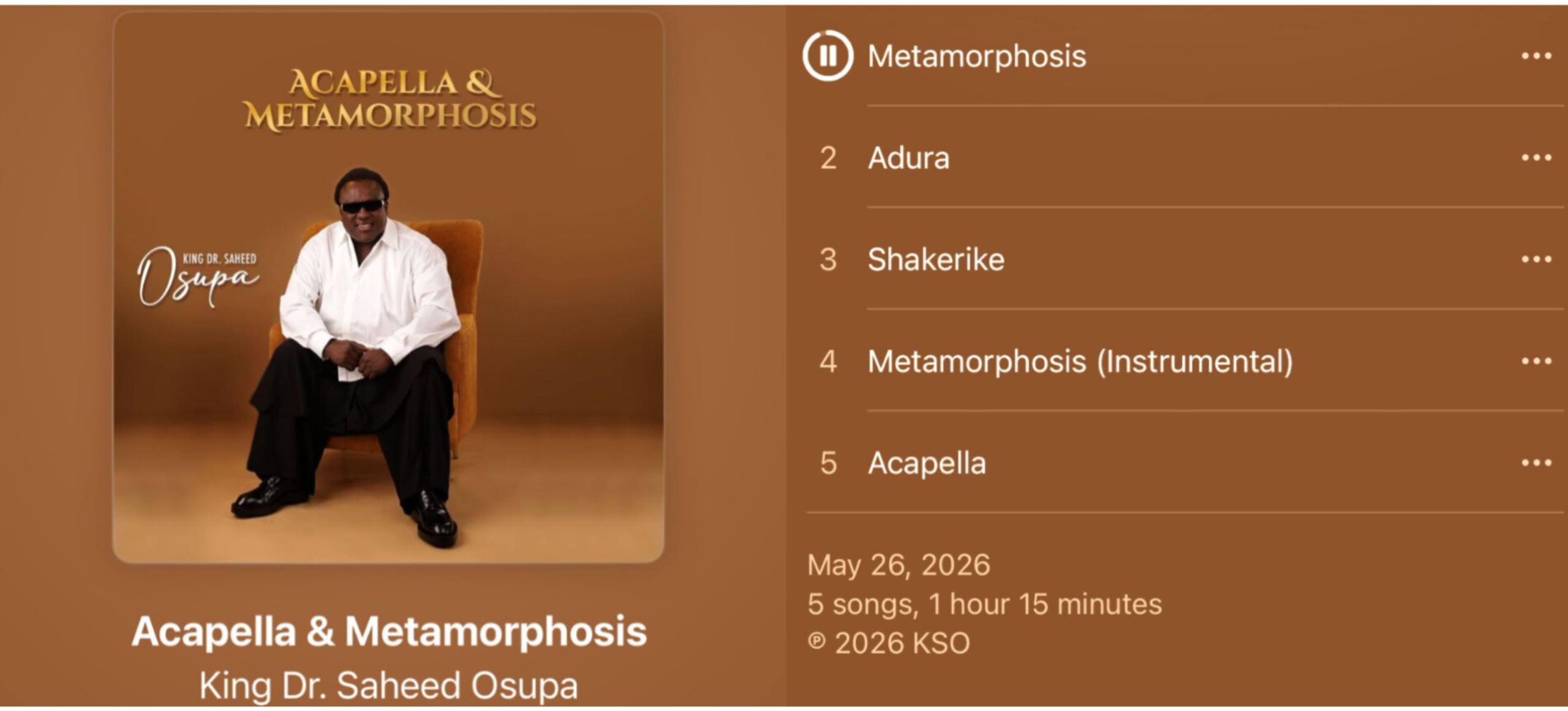
King Saheed Osupa Releases New 2-in-1 Album, Acapella & Metamorphosis
By Alhaji Arems (Baba Fuji)
Veteran Fuji music icon King Dr. Saheed Osupa has officially released his new 2-in-1 album, Acapella & Metamorphosis, now live on Apple Music and being promoted across other digital platforms. Apple Music lists the project as a 2026 Fuji release containing five songs with a total runtime of 1 hour and 15 minutes.
The release arrives after a buildup of promotional activity across social media, where posts describing the project as available on major streaming platforms helped fuel anticipation ahead of the drop. Public-facing materials tied to the rollout also framed the album as a significant new entry in Osupa’s catalog.
With Acapella & Metamorphosis, Osupa extends a career that has long positioned him among the most respected voices in Fuji music. His work has consistently carried the weight of Yoruba cultural storytelling, strong lyrical identity, and a sound that continues to resonate with longtime Fuji listeners as well as newer audiences drawn to traditional rhythms. Apple Music’s artist page also places the album at the top of his latest releases, underscoring the project’s arrival as his newest major body of work.
The album’s title gives the project an immediate conceptual edge. Acapella suggests a stripped-down, voice-led expression, while Metamorphosis points toward growth, reinvention, and artistic transition. Together, the two titles create the sense of a project that may balance classic Fuji sensibilities with a refreshed presentation, a combination that fits Osupa’s reputation for preserving the foundation of the genre while remaining visibly active in the present era. That reading is an editorial inference based on the album title and release framing, not an official statement from the artist.
The release also reflects a wider pattern among legacy acts who continue to treat full-length projects as statements of intent. In an era where many artists rely heavily on singles and shorter drops, a five-track, hour-long album signals patience, range, and confidence in the listening experience. For Osupa, it is also another reminder that Fuji still has room to breathe, evolve, and command attention in a fast-moving streaming landscape.
Fans following the rollout have continued to react positively online, with messages of support and anticipation circulating ahead of the release. With the album now available, attention will turn to how listeners receive the project and whether Acapella & Metamorphosis becomes another defining entry in the singer’s long-running catalogue.
Acapella & Metamorphosis is available now for streaming.


- African Leaders Mobilise Funding and Regional Response as Ebola Outbreak Escalates May 26, 2026
- Seychelles: Appointment of the Chief Executive Officer of the Careers and Further Education Agency May 26, 2026
- African Leadership Magazine Announces Winners of the 16th African Business Leadership Awards (ABLA) 2026 May 26, 2026
- President receives credentials of Ambassador of the Kingdom of Sweden to the Republic of Seychelles May 26, 2026
- Seychelles: President Herminie Presented with Future Development Vision for New Baie St Anne Jetty May 26, 2026
- Ammat Global Resources Redefines Local Content Through Congolese-Led Operations May 26, 2026
- Republic of Congo’s Newly-Appointed Hydrocarbons Minister Stev Simplice Onanga to Speak at African Energy Week (AEW) 2026 Amid Major Gas Expansion Push May 26, 2026
- Merck Foundation in partnership with Ghana First Lady and Lordina Foundation launch their “Educating Linda” Program to support Girl Education May 26, 2026
- Transforming Healthcare and Empowering Women: Dr. Rasha Kelej Recognized Among Africa’s 100 Most Influential Women May 25, 2026
- 2026 BASKETBALL AFRICA LEAGUE SEASON: BY THE NUMBERS May 25, 2026
- African Leaders Mobilise Funding and Regional Response as Ebola Outbreak Escalates May 26, 2026
- Seychelles: Appointment of the Chief Executive Officer of the Careers and Further Education Agency May 26, 2026
- African Leadership Magazine Announces Winners of the 16th African Business Leadership Awards (ABLA) 2026 May 26, 2026
- President receives credentials of Ambassador of the Kingdom of Sweden to the Republic of Seychelles May 26, 2026
- Seychelles: President Herminie Presented with Future Development Vision for New Baie St Anne Jetty May 26, 2026
- Ammat Global Resources Redefines Local Content Through Congolese-Led Operations May 26, 2026
- Republic of Congo’s Newly-Appointed Hydrocarbons Minister Stev Simplice Onanga to Speak at African Energy Week (AEW) 2026 Amid Major Gas Expansion Push May 26, 2026
-

 news5 months ago
WHO REALLY OWNS MONIEPOINT? The $290 Million Deal That Sold Nigeria’s Top Fintech to Foreign Interests
-

 society3 weeks ago
SOCIAL MEDIA IS NOT A BATTLEFIELD COMMAND – WHY THE NIGERIAN ARMY’S ACTION AGAINST JUSTICE CRACK IS A NATIONAL SECURITY IMPERATIVE
-

 celebrity radar - gossips4 months ago
Dr. Chris Okafor Returns with Power and Fire of the Spirit -Mounts Grace Nation Altar with Fresh Anointing and Restoration Grace on February 1, 2026
-

 celebrity radar - gossips6 months ago
Prophet Kingsley Aitafo Releases 2026 Prophecy: ‘Nigeria Will Rise, but the World Must Prepare for Turbulence’