
society
Some Lessons in Leadership for the Architects of Tomorrow

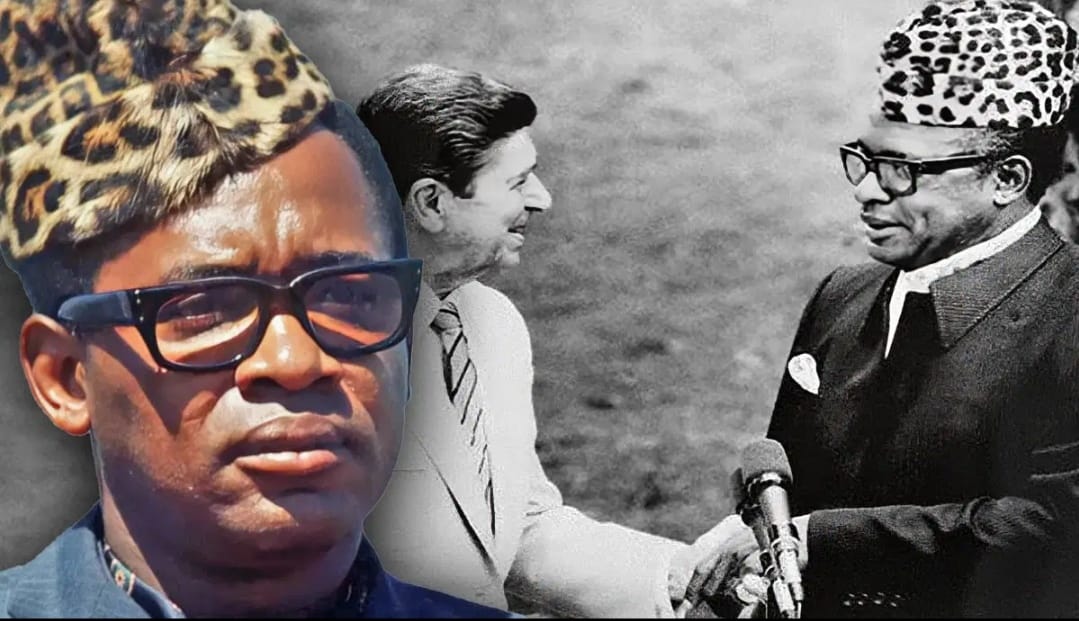
Some Lessons in Leadership for the Architects of Tomorrow.
By George Omagbemi Sylvester | Published by SaharaWeeklyNG.com
My Research about the Power of Ethical Leadership in Nation-Building.
A Call from History.
In the chronicles of African history, amidst the turbulence of post-colonial struggles and the shadows of corruption, there exist luminous episodes that stand as blueprints for transformative leadership. These stories are not mere anecdotes; they are moral compasses, urging us to reimagine governance as a sacred trust.

One such account, drawn from the annals of the 1970s, unveils a profound lesson in integrity, vision and national development. It is a story not only about TWO PRESIDENT’S but about TWO PATHS: one that reflects GENEROSITY and the other that demonstrates PURPOSE. Together, they offer timeless guidance for today’s leaders and the architects of tomorrow’s world.
A Tale of Two Presidents: Generosity Meets Purpose.
The year was 1973. General Mobutu Sese Seko, then-President of Zaire (now the Democratic Republic of Congo), embarked on a state visit to Mauritania. At that time, Mauritania was one of the poorest countries in Africa, still grappling with the harsh realities of nationhood after its liberation from French colonial rule.

Leading this fledgling republic was President Moktar Ould Daddah, Mauritania’s first head of state. A man of modesty and simplicity, Moktar carried himself with quiet dignity. Yet, during the visit, Mobutu noticed something that struck him deeply. Over the course of three days of discussions and public appearances, Moktar wore the same suit.
For Mobutu, who was accustomed to the opulence of Parisian tailors and the pomp of presidential life, this was a startling revelation. His Mauritanian counterpart clearly lacked the resources to indulge in the luxuries befitting a head of state. Moved by this realization, Mobutu made a discreet gesture. He presented a check for $5 million to President Moktar’s secretary, accompanied by a note suggesting addresses of renowned Paris fashion houses. The intention was unmistakable: to help his host acquire a wardrobe that reflected the stature of a president.

A Gift Redirected: Prioritizing Nation Over Self.
What happened next, however, etched President Moktar’s name into the history books as a rare example of ethical leadership. When the check reached his hands, Moktar did not see it as a PERSONAL WINDFALL. Instead, he saw in it an OPPORTUNITY to ADDRESS one of Mauritania’s GREATEST CHALLENGES: the ACUTE SHORTAGE of TEACHERS.
Rather than splurge on fine clothing, he redirected the funds into the nation’s treasury. With that $5 million, Mauritania established and equipped the Higher School for Teachers Training, an institution that would become a cornerstone in the country’s fight against ILLITERACY and POVERTY.
This act was more than financial prudence. It was a bold declaration of values. Moktar made it clear that leadership is not about personal comfort but about the collective good. His choice reflected a conviction that education is the bedrock of national progress, the ONE INVESTMENT that yields GENERATIONAL DIVIDENDS.
Gratitude Etched in History.
Five years later, in 1978, Mobutu once again visited Mauritania on his way back from the United States. This time, something unexpected awaited him. The streets of Nouakchott were lined with banners and signs that read:
“Thank you, Zaire. Thank you, President Mobutu. Thank you for the gift.”
Perplexed, Mobutu turned to his host and asked why such messages adorned the capital. President Moktar then led him to the Teacher Training School and explained:
“This is your valuable gift. With the $5 million you gave five years ago, we built this institution to fight illiteracy and poverty. My people needed education not my personal extravagance.”
Mobutu, a man often criticized for his own excesses, was visibly moved. He embraced Moktar and admitted with a tone of regret:
“If only the rest of African leaders were like you, our continent would not be paralyzed by poverty, ignorance and underdevelopment.”
The True Moral Compass of Leadership.
The story of President Moktar Ould Daddah stands in stark contrast to the many African leaders who, cloaked in the rhetoric of patriotism, siphon national wealth for private indulgence. His humility and prioritization of collective progress over personal vanity set a timeless standard.
Moktar once explained his philosophy with refreshing candor:
“I draw my salary from the state treasury, so I am not working without compensation. That gift belonged to the Mauritanian people, not me. My appearance and clothing should reflect the reality of my people’s struggles. With education, we can conquer the barriers that hold us back.”
A Simplified Legacy of Service.
Even after leaving office, President Moktar maintained a life of simplicity. He passed away in 2003, leaving behind not palaces or secret accounts but a legacy of moral clarity. His residence (a modest three-room house) stood as a symbol of his disdain for luxury and his commitment to public service as a sacred trust.
This modest lifestyle amplified his credibility. It reminded the world that leadership is about stewardship, not ownership. Moktar’s story embodies a principle that must be restored in African governance: public service is a duty, not an entitlement.
The Challenge to Today’s Leaders.
This story is more than a HISTORICAL ANECDOTE; it is a mirror reflecting the moral choices confronting leaders today. It raises uncomfortable but necessary questions:
Do our leaders see power as a PLATFORM for SERVICE or a LICENSE for SELF-ENRICHMENT?
Do they measure success by the number of CARS in their CONVOYS or by the number of SCHOOLS and HOSPITALS they BUILD?
Do they embody the STRUGGLES of their PEOPLE, or do they INSULATE themselves in GLASS TOWERS far removed from REALITY?
For leaders who exploit the rhetoric of patriotism while pillaging their nations, Moktar’s story stands as a rebuke. For aspiring leaders, it is an invitation to emulate the virtues of selflessness, accountability and vision.
Modern Comparisons: Leadership in Our Time.
When we contrast Moktar’s legacy with modern realities, the lesson becomes even sharper. In Nigeria today, BILLIONS of NAIRA are squandered on LUXURY CONVOYS, PRESIDENTIAL PALACES and FOREIGN MEDICAL TRIPS, while PUBLIC UNIVERSITIES remain underfunded and doctors flee abroad. In South Africa, millions are wasted in corruption scandals like “STATE CAPTURE,” even as young people march for jobs and education.
Globally, we can see parallels. Leaders such as Nelson Mandela and Julius Nyerere chose modesty and service over personal enrichment. Mandela famously declared:
“Real leaders must be ready to sacrifice all for the freedom of their people.”
He lived those words, donating part of his salary and keeping his Soweto home even as president.
Similarly, Nyerere, affectionately called Mwalimu (the teacher), left office without riches but with dignity. He reminded us that:
“Leadership is not about power or privilege, it is about responsibility.”
On the economic front, leaders like Ngozi Okonjo-Iweala continue to show that integrity is not a weakness in governance but a strength. As she often notes:
“Corruption is dangerous because it distorts priorities, diverts resources and destroys trust.”
In stark contrast, leaders like Mobutu himself, who amassed billions while Zaire collapsed or others who loot their nations under the guise of patriotism, serve as cautionary tales. Their wealth bought them fleeting comfort, but their legacies remain symbols of betrayal.
Building a Future Through Ethical Leadership.
Tomorrow’s leaders must recognize that the strength of a nation lies not in its mineral wealth or natural resources but in its people, its institutions and its commitment to justice and equity. Education remains the most potent weapon against poverty and inequality.
As President Moktar demonstrated, a single ethical decision can echo across generations. One redirected gift built an institution that produced thousands of teachers, each shaping the minds of future leaders, workers and citizens. From one school, a nation’s destiny was altered.
This is the power of ethical leadership. It transforms gifts into opportunities, resources into institutions and moments into legacies.
A Legacy to Embrace.
The story of Moktar Ould Daddah is a beacon for the architects of tomorrow’s world. It is a reminder that integrity, humility and vision are not outdated ideals but essential tools for nation-building.
As Africa continues to grapple with corruption, inequality and underdevelopment, leaders must look back to examples like Moktar’s and draw courage to chart a different path. His legacy tells us that simplicity is not weakness, that service is not servitude and that ethical choices (no matter how small) can reshape a nation’s future.
Let this story inspire leaders across the globe to act with courage, integrity and an unwavering commitment to the collective good. In the words of President Moktar himself:
“With education, we can defeat the plagues that hinder our progress.”
This, indeed, is an amazing legacy to truly embrace without biased intentions.






ABEOKUTA FILM FESTIVAL AT ILEYA
Kayshow Multimedia a filmmaking and Media organization this year 2026 holds its annual Abeokuta film festival at the Ake Palace in Abeokuta.
Alake of Egba land, Ọba Michael Adedotun Arẹmu Gbadebo has graciously endorsed the Free Training of Egba Youths on Film and Arts and the Entertainment of the the People with a FREE FILM SHOW at the AKE PAVILION. as part of the ABEOKUTA FILM FESTIVAL 2.0.
The Convener of the Film Festival Honorable Kehinde Soaga says this year’s event promises to be more exciting as distinguished personalities are sure to attend.
This includes the honorable Minister for Art Culture and Creative Economy in Nigeria, Barr. Hannatu Musa Musawa, Ààrẹ Lai Labode, Sen. Ibikunle Amosun and other special guests.
The event will feature Film, Cultural Dance Cultural foods and Award Ceremony.
The general public is hereby invited to the Free film show at the Abeokuta film festival at the Alake Palace Pavilion on Thursday 28th of May 2026 by 4:00 p.m.
Only well dressed is the Entry. The Abeokuta Film Festival is an annual event taking place in the capital city of Ogun State state.
society
Still Earth Holdings Strengthens Governance Structure Through EFCC–SCUML Compliance Training
Still Earth Holdings Strengthens Governance Structure Through EFCC–SCUML Compliance Training
Lagos, Nigeria – The Economic and Financial Crimes Commission (EFCC), through its Special Control Unit against Money Laundering (SCUML), has conducted an intensive Anti-Money Laundering and Counter-Financing of Terrorism (AML/CFT) compliance training for the board and senior management of Still Earth Holdings.
The programme, held over the weekend, was designed to reinforce corporate governance, regulatory compliance, and risk management across the group and its subsidiaries.
Delivering the keynote, Ibinabo Mary Amachree, Head of SCUML Lagos, underscored the importance of board-level responsibility in compliance. She emphasised that under the Money Laundering (Prevention and Prohibition) Act 2022 and the Terrorism Financing Prevention and Prohibition Act 2022, directors now face both personal and corporate liability for systemic failures.
Reinforcing this regulatory warning with a strategic vision, Mr. Mutiu Sunmonu, Chairman of Still Earth Holdings, framed governance as both a moral compass and a competitive differentiator for the group.
“Our responsibility as leaders is not only to deliver profits but to safeguard the reputation and resilience of the institutions we steward,” Sunmonu noted. He asserted that the board’s role is to ensure that every subsidiary—whether in construction, energy, or finance—operates under the same uncompromising ethical framework. “Governance is not a department; it is the DNA of Still Earth,” he added, highlighting that the company’s legacy depends on its ability to harmonize compliance with innovation.
The training session covered critical areas including board responsibilities in AML/CFT oversight, fundamentals of money laundering, terrorism financing risks, legal frameworks, preventive measures, and governance duties. Participants were trained on Know Your Customer (KYC) procedures, customer due diligence, suspicious transaction reporting, targeted financial sanctions screening, and record keeping.
Interactive case studies exposed sector-specific risks across subsidiaries such as Tirex Petroleum & Energy, Still Earth Construction, and Still Earth Capital Finance. Discussions highlighted issues including over-invoicing, shell companies, offshore payments, contract splitting, and the identification of politically exposed persons (PEPs).
Commenting on the operational impact of this vision, Kingsley Inyama, Head of Credit Risk, described the programme as both timely and essential.
He noted: “The essence of the training is to understand when anti-money laundering violations or terrorism financing may be taking place. In business, especially in the international sector, it is important to know the source of funds.” Inyama stressed the importance of identifying beneficial owners in transactions, noting that “the penalties for failing to do so can include fines, sanctions, and even imprisonment.”
The training concluded with a commitment to several high-level board resolutions aimed at cultivating a brand synonymous with probity and excellence:
• Adoption of a zero-tolerance policy on money laundering and terrorism financing.
• Establishment of compliance committees to ensure constant oversight.
• Mandating annual training programmes for staff and management.
• Approval for independent audits to validate internal compliance claims.
The annual compliance programme was attended by staff and management of Still Earth Holdings and its subsidiaries, reinforcing the group’s commitment to embedding integrity at the heart of its operations and building a corporate legacy that transcends financial earnings.
society
King Saheed Osupa Releases New 2-in-1 Album, Acapella & Metamorphosis By Alhaji Arems (Baba Fuji)
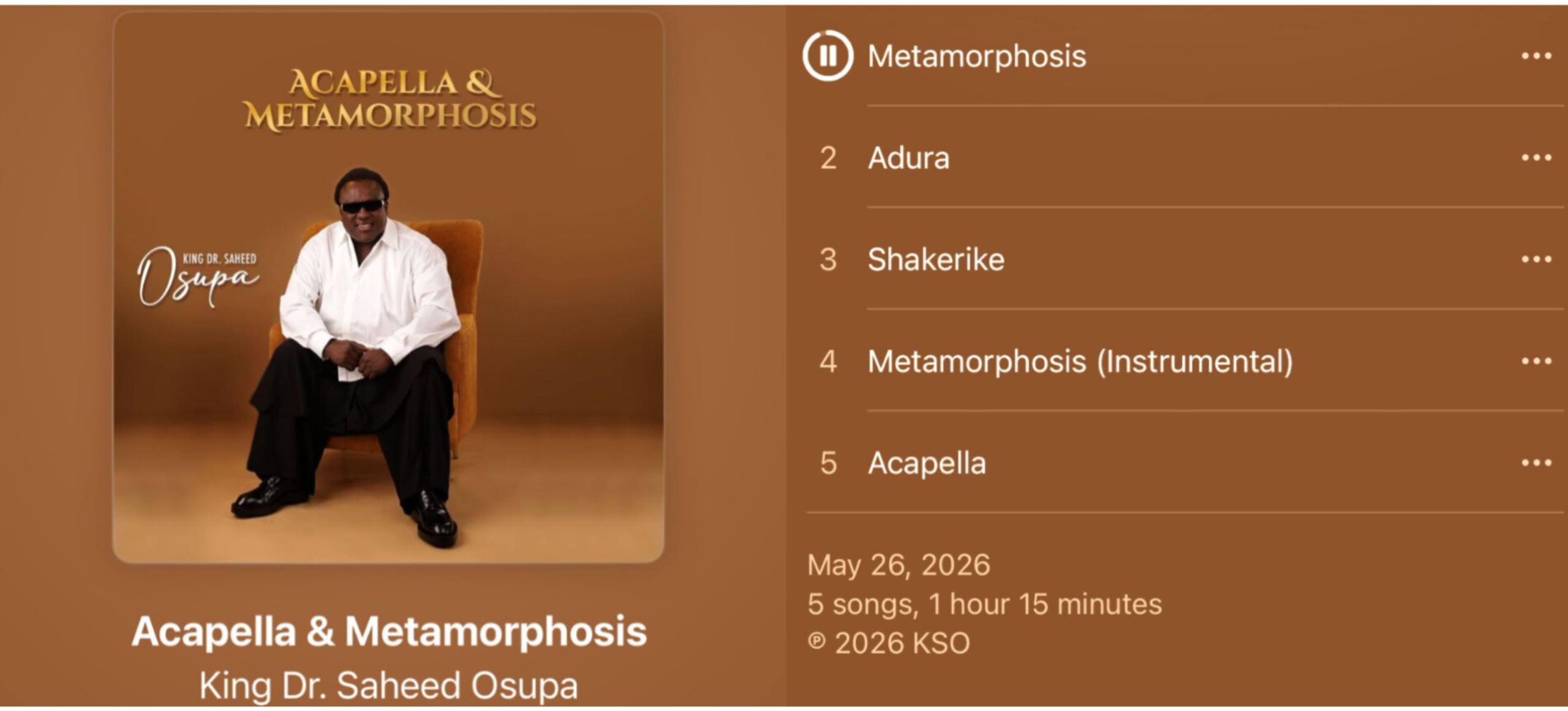
King Saheed Osupa Releases New 2-in-1 Album, Acapella & Metamorphosis
By Alhaji Arems (Baba Fuji)
Veteran Fuji music icon King Dr. Saheed Osupa has officially released his new 2-in-1 album, Acapella & Metamorphosis, now live on Apple Music and being promoted across other digital platforms. Apple Music lists the project as a 2026 Fuji release containing five songs with a total runtime of 1 hour and 15 minutes.
The release arrives after a buildup of promotional activity across social media, where posts describing the project as available on major streaming platforms helped fuel anticipation ahead of the drop. Public-facing materials tied to the rollout also framed the album as a significant new entry in Osupa’s catalog.
With Acapella & Metamorphosis, Osupa extends a career that has long positioned him among the most respected voices in Fuji music. His work has consistently carried the weight of Yoruba cultural storytelling, strong lyrical identity, and a sound that continues to resonate with longtime Fuji listeners as well as newer audiences drawn to traditional rhythms. Apple Music’s artist page also places the album at the top of his latest releases, underscoring the project’s arrival as his newest major body of work.
The album’s title gives the project an immediate conceptual edge. Acapella suggests a stripped-down, voice-led expression, while Metamorphosis points toward growth, reinvention, and artistic transition. Together, the two titles create the sense of a project that may balance classic Fuji sensibilities with a refreshed presentation, a combination that fits Osupa’s reputation for preserving the foundation of the genre while remaining visibly active in the present era. That reading is an editorial inference based on the album title and release framing, not an official statement from the artist.
The release also reflects a wider pattern among legacy acts who continue to treat full-length projects as statements of intent. In an era where many artists rely heavily on singles and shorter drops, a five-track, hour-long album signals patience, range, and confidence in the listening experience. For Osupa, it is also another reminder that Fuji still has room to breathe, evolve, and command attention in a fast-moving streaming landscape.
Fans following the rollout have continued to react positively online, with messages of support and anticipation circulating ahead of the release. With the album now available, attention will turn to how listeners receive the project and whether Acapella & Metamorphosis becomes another defining entry in the singer’s long-running catalogue.
Acapella & Metamorphosis is available now for streaming.


- African Leaders Mobilise Funding and Regional Response as Ebola Outbreak Escalates May 26, 2026
- Seychelles: Appointment of the Chief Executive Officer of the Careers and Further Education Agency May 26, 2026
- African Leadership Magazine Announces Winners of the 16th African Business Leadership Awards (ABLA) 2026 May 26, 2026
- President receives credentials of Ambassador of the Kingdom of Sweden to the Republic of Seychelles May 26, 2026
- Seychelles: President Herminie Presented with Future Development Vision for New Baie St Anne Jetty May 26, 2026
- Ammat Global Resources Redefines Local Content Through Congolese-Led Operations May 26, 2026
- Republic of Congo’s Newly-Appointed Hydrocarbons Minister Stev Simplice Onanga to Speak at African Energy Week (AEW) 2026 Amid Major Gas Expansion Push May 26, 2026
- Merck Foundation in partnership with Ghana First Lady and Lordina Foundation launch their “Educating Linda” Program to support Girl Education May 26, 2026
- Transforming Healthcare and Empowering Women: Dr. Rasha Kelej Recognized Among Africa’s 100 Most Influential Women May 25, 2026
- 2026 BASKETBALL AFRICA LEAGUE SEASON: BY THE NUMBERS May 25, 2026
- African Leaders Mobilise Funding and Regional Response as Ebola Outbreak Escalates May 26, 2026
- Seychelles: Appointment of the Chief Executive Officer of the Careers and Further Education Agency May 26, 2026
- African Leadership Magazine Announces Winners of the 16th African Business Leadership Awards (ABLA) 2026 May 26, 2026
- President receives credentials of Ambassador of the Kingdom of Sweden to the Republic of Seychelles May 26, 2026
- Seychelles: President Herminie Presented with Future Development Vision for New Baie St Anne Jetty May 26, 2026
- Ammat Global Resources Redefines Local Content Through Congolese-Led Operations May 26, 2026
- Republic of Congo’s Newly-Appointed Hydrocarbons Minister Stev Simplice Onanga to Speak at African Energy Week (AEW) 2026 Amid Major Gas Expansion Push May 26, 2026
-

 news5 months ago
WHO REALLY OWNS MONIEPOINT? The $290 Million Deal That Sold Nigeria’s Top Fintech to Foreign Interests
-

 society3 weeks ago
SOCIAL MEDIA IS NOT A BATTLEFIELD COMMAND – WHY THE NIGERIAN ARMY’S ACTION AGAINST JUSTICE CRACK IS A NATIONAL SECURITY IMPERATIVE
-

 celebrity radar - gossips4 months ago
Dr. Chris Okafor Returns with Power and Fire of the Spirit -Mounts Grace Nation Altar with Fresh Anointing and Restoration Grace on February 1, 2026
-

 celebrity radar - gossips6 months ago
Prophet Kingsley Aitafo Releases 2026 Prophecy: ‘Nigeria Will Rise, but the World Must Prepare for Turbulence’