
Business
Group slams NMDPRA Boss Farouk’s Diversionary Newspapers Ads On $5.5 Million In Children’s Tuition Fees

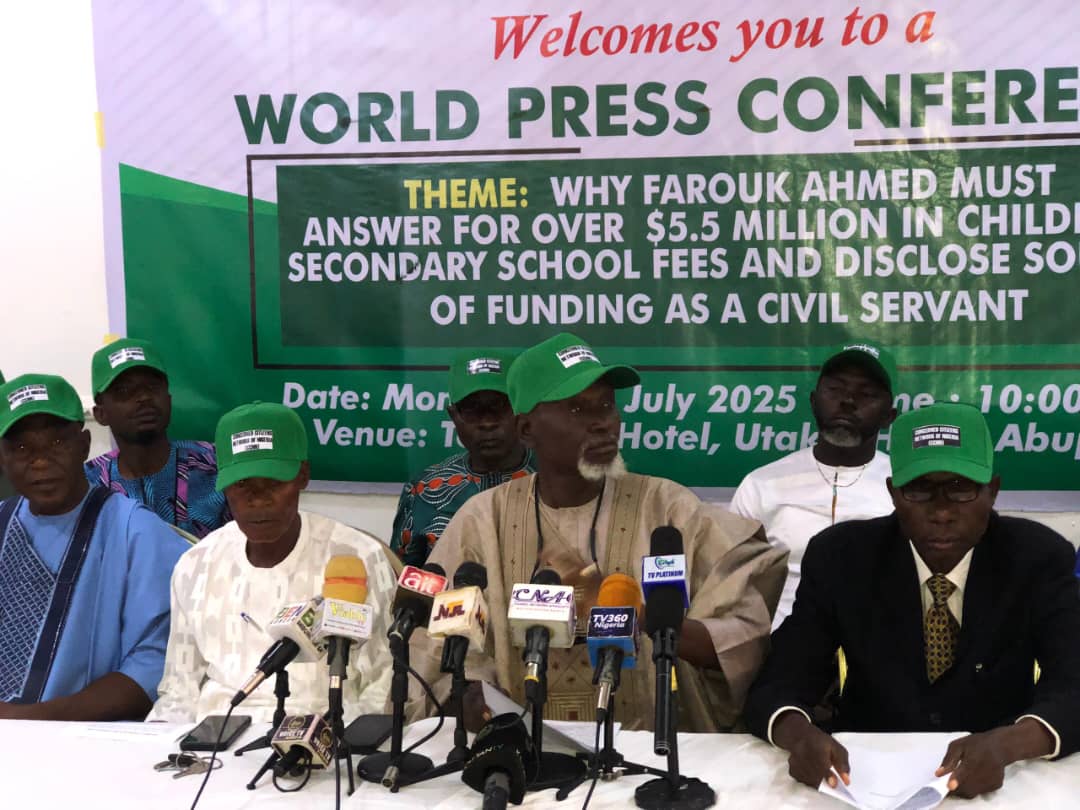
…charges relevant agencies to open immediate investigation.
The Concerned Citizens Network of Nigeria (CCNN) has slammed Engineer Farouk Ahmed, Chief Executive of the Nigerian Midstream and Downstream Petroleum Regulatory Authority (NMDPRA), for his full-page newspaper advertisements published on July 11, 2025, as a “disgraceful charade” and “diversionary” designed to dodge accountability.
The group said the ads, appearing on page 12 of Thisday, page 17 of The Guardian, page 15 of Vanguard, page 3 of BusinessDay, and page 19 of Daily Trust, were unsigned and devoid of substance, failing to address explosive allegations that Ahmed spent over $5.5 million (approximately N8.25 billion) on his children’s secondary education abroad.
In a fiery press conference on Monday in Abuja, the CCNN, led by Dr. Emmanuel Agibi, demanded an immediate investigation, accusing Ahmed of insulting Nigerians’ intelligence with his evasive tactics.
The CCNN highlighted that Ahmed’s children—Faisal Farouk attended the Montreux school, Farouk Jr attended the Aiglon college, Ashraf Farouk attended the Institut Le Rosey while Farhana Farouk attended the La Garenne International School for six years each.
With annual tuition and upkeep exceeding $200,000 per school, the total cost for the four children is estimated at $5 million, or roughly $1.2 million per child over six years.
“The cost per child included annual tuition fees of approximately $130,000–$150,000 and an additional $50,000 for upkeep, flights, and other expenses. For each child, this amounts to roughly $180,000–$200,000 annually, or $1,080,000–$1,200,000 over six years,” the statement said.
“For four children, the total expenditure ranges from $4,320,000–$4,800,000. Even now, questions remain unanswered about the tertiary education of Ahmed’s children. Having completed their secondary education, Faisal, Farouk Jr., Ashraf, and Farhana are enrolled in prestigious universities abroad, where annual costs often exceed $70,000–$100,000 per student.
“Further compounding public outrage, Engr. Farouk Ahmed’s son recently graduated from Harvard University, where tuition and associated costs exceeded $152,000, with additional expenses in the range of $100,000. This extravagant expenditure, far beyond the gross earnings of a civil servant of his calibre, places an immense burden on Nigeria’s poor taxpayers, many of whom struggle to afford three meals a day or school uniforms for their children, particularly in the northern regions.
“Notably, Ahmed has never held employment outside his role with the Federal Government since leaving school, raising further questions about the source of his wealth. The opulence displayed in funding such elite education underscores a stark disconnect between Ahmed’s lifestyle and the economic realities faced by ordinary Nigerians.”
The group urged the Code of Conduct Bureau (CCB), Independent Corrupt Practices Commission (ICPC), and Economic and Financial Crimes Commission (EFCC) to investigate how a civil servant’s salary could fund such lavish expenditure.
“In a nation where over 10 million children, particularly in the north, lack access to basic education, this lavish spending by a public servant is not merely a matter of personal choice—it is a moral outrage,” the statement added.
“While countless Nigerian families struggle to afford primary schooling, Ahmed’s children attended secondary institutions costing more per term than the annual budgets of some federal colleges. This stark inequality represents an injustice that cannot be ignored.
“The absence of transparency regarding how these ongoing expenses are funded further fuels public suspicion. If Ahmed’s wealth can support such elite secondary and tertiary education, the public deserves to know the legitimate sources of these funds, especially given his role as a public servant accountable to Nigerian taxpayers.
“The CCNN’s allegations are grounded in rigorous evidence, stemming from a petition to the Attorney-General of the Federation after weeks of verification, fact-finding, and public record reviews.We question how a public official, whose salary is known and whose assets must be constitutionally declared, could finance such an extraordinary level of overseas education without a visible commercial empire or disclosed inheritance.
“The petition raises serious concerns about potential abuse of office, asset concealment, or diversion of public funds under Ahmed’s leadership at NMDPRA. Public response has been resolute, with peaceful protests by lawyers, students, and civic groups targeting the Attorney-General’s office, ICPC, EFCC, National Assembly, and NMDPRA headquarters. These demonstrations, supported by formal letters and placards, demanded a transparent investigation.
“The NMDPRA’s attempt to dismiss these voices as ‘faceless’ is a cynical effort to undermine lawful civic engagement, further eroding public trust. The NMDPRA’s statement conspicuously avoided addressing key issues: it did not deny the children’s attendance at the listed secondary schools, nor did it provide any breakdown of how tuition was funded.
“It offered no details on asset declarations, loans, business income, family inheritance, or blind trusts, relying instead on vague appeals to Ahmed’s ‘reputation’ and ‘integrity.’ In a democracy, such claims are insufficient when a public servant’s lifestyle appears misaligned with their declared income. The burden of proof rests with Ahmed, not the public.
“The CCB, ICPC, and EFCC have constitutional mandates to investigate cases of unexplained wealth, ensuring that public officials are held accountable. This case tests the credibility of President Bola Tinubu’s anti-corruption and transparency agenda. The CCNN is not calling for Ahmed’s immediate removal but for an open, independent investigation. If he is innocent, a transparent process will vindicate him.
“However, continued silence risks tarnishing both his reputation and the government’s reform efforts. Ignoring these allegations would be a grave miscalculation. The CCNN is submitting additional letters, pursuing legal action, and mobilising further protests to ensure accountability. Civic vigilance is not a nuisance—it is the cornerstone of a functioning democracy.

“Engr. Farouk Ahmed must step forward, disclose his funding sources, and submit to a full inquiry. This is not persecution—it is the price of public trust. The CCB, ICPC, and EFCC must act swiftly to investigate these allegations, ensuring that justice and transparency prevail.”




Business
Alpha Morgan Bank Reinforces Commitment to Education at Redeemer’s University Business School Commissioning
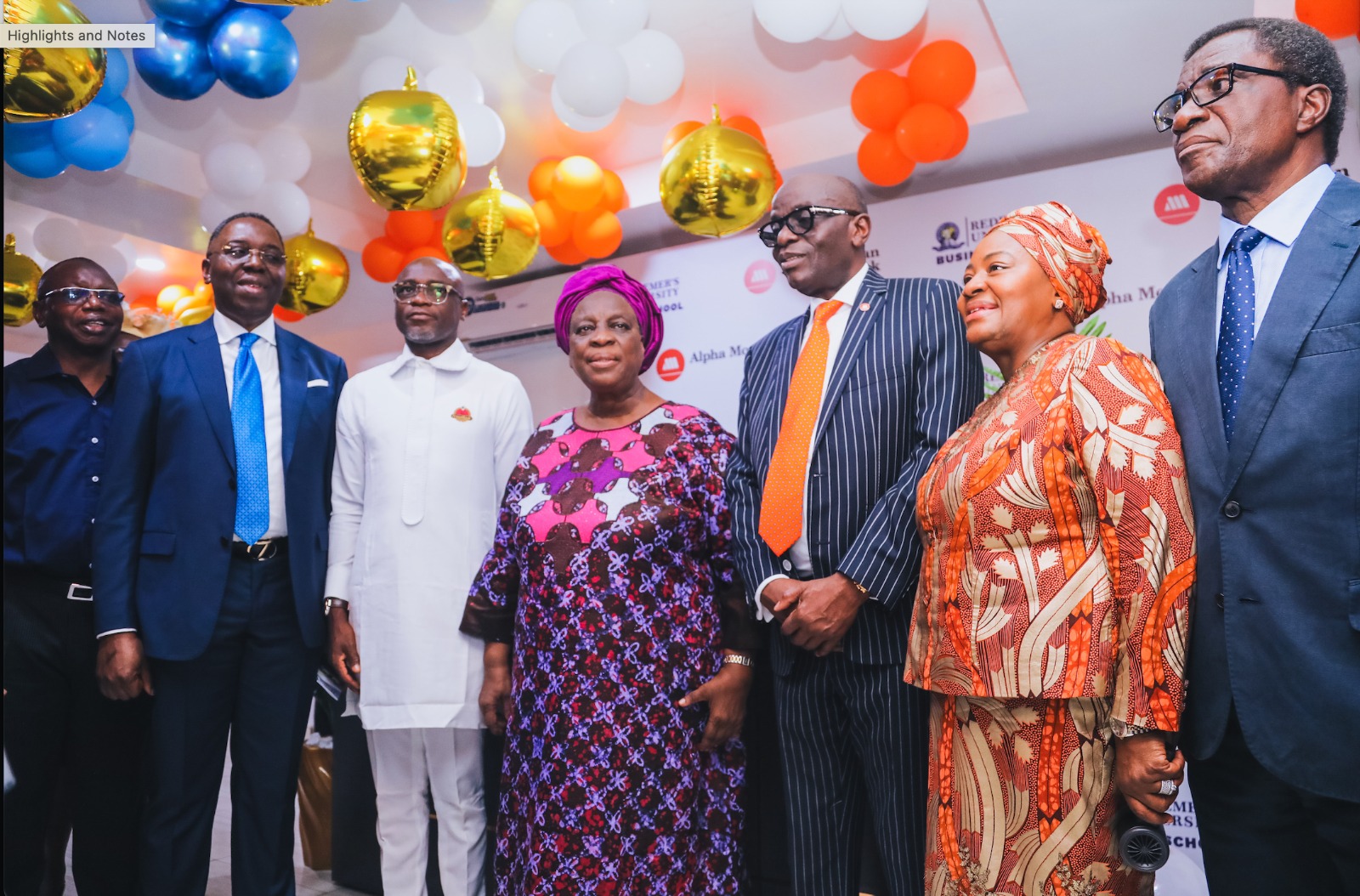
Alpha Morgan Bank Reinforces Commitment to Education at Redeemer’s University Business School Commissioning
Alpha Morgan Bank has reaffirmed its commitment to education and institutional development through its support for the commissioning of the Redeemer’s University Business School.
The Business School was officially inaugurated by Pastor (Mrs.) Folu Adeboye, at the commissioning ceremony attended by distinguished guests including Her Excellency, Mrs. Bola Obasanjo; the Pro-Chancellor and Chairman, Governing Council of Redeemers University, Professor Oluwatoyin Ogundipe; the Vice Chancellor, Professor Shadrach Olufemi Akindele; and other notable dignitaries.
Speaking at the event, the Managing Director of Alpha Morgan Bank reiterated the Bank’s commitment to supporting institutions that drive intellectual growth and national development.
As part of its broader focus on knowledge sharing and thought leadership, Alpha Morgan Bank will host its Economic Review Webinar in May 2026, bringing together experts to share insights on key economic trends and opportunities.
The Bank’s involvement reflects its continued dedication to empowering institutions and shaping the future of business and leadership in Nigeria.
Read more about Alpha Morgan Bank on www.alphamorganbank.com
PHOTO
L-R: Prof. Shadrach Olufemi Akindele, Vice Chancellor, Redeemers University, Engr. Eloka Eje, Dr Perez Araka, Pastor (Mrs) Folu Adeboye, Mother-In-Israel, The Redeemed Christian Church of God, Mr Ade Buraimo, MD/CEO Alpha Morgan Bank, Dr (Mrs) Oluwatomi Somefun, Dr. Simeon Ifere, at the inauguration of the Redeemer’s University Business School, Redemption City, Ogun State on Thursday 2nd April, 2026
Tinubu Aide Rebuts Rufai Oseni Over ₦3.3tn Power Debt Deal
Business
Aare Adetola Emmanuelking Welcomes President Tinubu to Gateway International Airport Commissioning in Iperu-Remo

Aare Adetola Emmanuelking Welcomes President Tinubu to Gateway International Airport Commissioning in Iperu-Remo
In a momentous occasion that underscores the rapid infrastructural advancement of Ogun State, renowned real estate mogul and philanthropist, Aare Adetola Emmanuelking, warmly received the President of the Federal Republic of Nigeria, Bola Ahmed Tinubu, at the official commissioning of the Gateway International Airport, located in Iperu-Remo.
The landmark event, held under the visionary leadership of the Ogun State Governor, Dapo Abiodun, marks a significant stride in the state’s economic transformation agenda, positioning Ogun as a key hub for aviation, commerce, and investment in Nigeria.
Aare Emmanuelking, who is also the Chairman/CEO of Adron Homes and Properties, commended the Ogun State Government for its foresight and commitment to infrastructural excellence. He described the airport project as a “game-changer” that will not only boost connectivity but also stimulate real estate growth, tourism, and industrial expansion across the region.
Speaking during the commissioning, President Tinubu lauded Governor Abiodun’s administration for delivering a world-class facility that aligns with the Federal Government’s Renewed Hope Agenda, emphasizing the importance of strategic infrastructure in driving national development.
The Gateway International Airport is expected to serve as a critical gateway for investors and travelers, further enhancing Ogun State’s reputation as one of Nigeria’s most business-friendly environments.
The presence of top dignitaries, industry leaders, and stakeholders at the event underscores the project’s significance and its anticipated impact on the state’s socio-economic landscape and beyond.


- Afreximbank supports Dangote Group as it targets US$100 billion annual revenue by 2030 April 8, 2026
- Africa's top-ranked Global Reporting Initiative (GRI) Training Partner launches 15th cohort of globally recognized sustainability reporting certification April 8, 2026
- African Energy Chamber (AEC) Intervenes in Landmark Climate Case to Defend Africa’s Energy Future April 8, 2026
- Eswatini opens to investors for first-of-its-kind roadshow April 8, 2026
- Egypt: President El-Sisi Meets Ministers of Electricity, Petroleum April 8, 2026
- Seychelles and Japan explore expanded cooperation and future partnerships April 8, 2026
- President Mahama to headline The Africa Debate 2026 as Ghana-United Kingdom (UK) investment ties deepen April 8, 2026
- Angolan Production Gets New Uplift as Eni’s Guido Brusco Joins Angola Oil & Gas (AOG) 2026 April 8, 2026
- Liquid C2 launches Africa’s first Google Cloud-powered Experience Centre to accelerate Artificial Intelligence (AI) adoption April 8, 2026
- Uganda: Opposition calls for reforms amid rising debt burden April 8, 2026
- Afreximbank supports Dangote Group as it targets US$100 billion annual revenue by 2030 April 8, 2026
- Africa's top-ranked Global Reporting Initiative (GRI) Training Partner launches 15th cohort of globally recognized sustainability reporting certification April 8, 2026
- African Energy Chamber (AEC) Intervenes in Landmark Climate Case to Defend Africa’s Energy Future April 8, 2026
- Eswatini opens to investors for first-of-its-kind roadshow April 8, 2026
- Egypt: President El-Sisi Meets Ministers of Electricity, Petroleum April 8, 2026
- Seychelles and Japan explore expanded cooperation and future partnerships April 8, 2026
- President Mahama to headline The Africa Debate 2026 as Ghana-United Kingdom (UK) investment ties deepen April 8, 2026
-

 news4 months ago
WHO REALLY OWNS MONIEPOINT? The $290 Million Deal That Sold Nigeria’s Top Fintech to Foreign Interests
-

 society7 months ago
“You Are Never Without Help” – Pastor Gebhardt Berndt Inspires Hope Through Empower Church (Video)
-

 celebrity radar - gossips2 months ago
Dr. Chris Okafor Returns with Power and Fire of the Spirit -Mounts Grace Nation Altar with Fresh Anointing and Restoration Grace on February 1, 2026
-

 celebrity radar - gossips4 months ago
Prophet Kingsley Aitafo Releases 2026 Prophecy: ‘Nigeria Will Rise, but the World Must Prepare for Turbulence’