
Business
“Hate” speech: Between Apostle Suleman and the Sultan of Sokoto by Jude Ndukwe

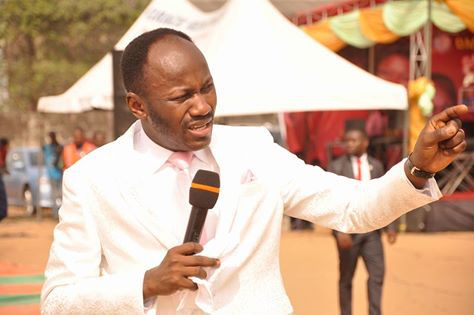


At a two-day conference organized by the International Dialogue Centre (KAICIID), an inter-governmental organization that promotes dialogue to build peace in conflict areas, the Sultan of Sokoto, in a veiled reference to the recent calls on Christians by Christian leaders to defend themselves against the unabated and murderous attacks of genocidal magnitude by Islamist Boko Haram terrorists and Fulani herdsmen terrorists, called for the arrest of such leaders.
One of the most outspoken Christian leaders on the issue of Southern Kaduna killings is Apostle John Suleiman of the Omega Fire Ministry whose video of him calling on his members to fight back against any threat of terror noticed around him or the church went viral and made the DSS to embark on the ill-advised attempt to have him arrested in Ekiti. Thanks to the resistance by Governor Ayodele Fayose.
Bishop Oyedepo of the Living Faith Ministries (Winners’ Chapel) had also made similar calls against the murderous Boko Haram sect in a video that went viral recently as well.
Also, Pa Adeboye had, in a message that seemed to threaten the Fulani establishment and the stranglehold of Islamic fanatics on Nigeria, called on his members to ensure they register with parties of their choice and participate actively in such parties even at the ward levels.
Those who could read the handwriting on the wall understood this as a veiled threat for members of the Redeemed Christian Church of God to use their voting power to rout the government of the day which is seen largely as promoting only the Fulani and religious extremism of Sunni Muslims to the detriment of other ethno-religious interests in the country.
In calling for the arrest of such leaders whose words shake the very foundation of terrorism and extremism, the Sultan betrays the trust reposed on him as a religious leader.
He has to know that when Fulani herdsmen, a people of his ethnic and religious group, relentlessly murder fellow citizens in Agatu, Enugu, Plateau, Abia, Ekiti, Ondo, Southern Kaduna, and other places which are all Christian communities, without being resisted by security forces or arrested even after they confess to such crimes.
Christian leaders whose patience have been stretched over the years by such senseless killings would be left with no other choice but to change their message from that of restraint to self-defence.
Anyone who has a problem with the message of self-defence being preached by Christian leaders after years of suffering irreparable losses without justice from the authorities will need to have his head examined.
It is therefore most unfortunate that the Sultan would call for the arrest of those who preach self-defence while perpetrators of genocide in Southern Kaduna are walking free.
It is even more regrettable that perpetrators of these mindless massacres are rewarded by Mallam Nasir El Rufai, the governor of Kaduna State, rather than being arrested and prosecuted.
It was this same El Rufai who in his tweet of July 15, 2012, at 7:51 pm said “We will write this for all to read. Anyone, soldier or not that kills a Fulani takes a loan repayable one day no matter how long it takes”.
Need we look any further to know why the herdsmen seem to be enjoying government cover?
With such statement made under the reign of this same Sultan, does one then need to wonder too long why the Southern Kaduna crisis has been left to fester for so long while the Fulani herdsmen killers get compensated?
Why is it that the Sultan did not call for the arrest of people like El Rufai then? Or is it because El Rufai is Fulani and Muslim like himself? Is there any message that could cause more friction and crisis between Christians and Muslims than this?
Also, on May 14, 2012, during the visit of some members of the Niger State chapter of the defunct Congress for Progressive Change (CPC) to him in Kaduna, Muhammadu Buhari, current president of Nigeria, had made that infamous speech of “dogs and baboons will be soaked in blood” still under the reign of Sa’ad Abubakar 111, yet, the Sultan never called for his arrest.
What about the open confessions of the Miyetti Allah Cattle Breeders Association of Nigeria (MACBAN) that they were responsible for the attacks on Southern Kaduna and Agatu, yet, no arrests are made?
Who should the Sultan be calling for their arrests and prosecution? Is it those who attack communities, killing men, abusing women, maiming children, destroying sources of livelihood, and burning down houses with reckless abandon, or those who call on the victims to get themselves ready and girded for self-defence against such attacks?
Most of the religious crises that have happened in this country started after hate speeches by imams from the mosques encouraging worshippers to embark on killing sprees. Who among them was arrested?
Or who among them did the Sultan ask to be arrested? It is time we started being brutally truthful to ourselves.
It is a further insult to our sensibilities not just as Christians or Muslims but as citizens to hear from the Sultan, the governor and other top government officials that perpetrators of such attacks are not Nigerians but Fulani from neighbouring countries, as if being a foreigner is a licence to come into the country and kill while the government looks away!
It was this same Sultan while on a visit to Enugu recently that said there cannot be peace without justice.
Having known this fact, why does he think there would be peace when those responsible for these massacres are not being arrested and he is not calling for their arrests or questioning why they are not being arrested? Why is he so fixated on Christian leaders who call their people out to defend themselves?
Or does the Sultan think Christians would forever fold their arms and watch while their fathers are killed in cold blood, their mothers are abused right before them, their children hurt for life and their ancestral homes burnt?
It is not only hypocritical but also false of the Sultan to insinuate that men like Apostle Suleiman by their preaching are responsible for the friction between Christians and Muslims.
The fact is that the crises engulfing Southern Kaduna and such other places predate the reactions of Suleiman and his fellow pastors.
What is responsible for the continued attacks on communities by terrorist Fulani herdsmen is that they get compensated rather than being arrested and prosecuted. That is not justice!
And until the likes of the Sultan come out clean and be honest about the situation, the self-defence of victims when such happens is very near at hand.
When people lose confidence in government ability or sincerity to provide security for them, they would be left with no other option but to embark on self-help.
The Christians have since turned the other cheek several times and the cheeks have been ripped off to the extent that they have no cheek to turn any more. When they get to that stage, self-defence becomes the only option.
Rather than calm the situation, the purported attempt to arrest Apostle Suleiman and other Christian leaders would only aggravate it. Christians in this country have already been pushed to the edge. Any attempt to push them any further would be counter-productive.
Leave Apostle Suleiman alone! We will not sit by and watch our leaders being ridiculed or humiliated!
SOURCE : Naij.com



Fidelity Bank grows gross earnings by 38% to N434.95b in Q1
Fidelity Bank Plc recorded 37.9 per cent growth in gross earnings to N434.95 billion in first quarter 2026 as the international commercial bank continued to expand its core banking market share.
Interim report and accounts of Fidelity Bank for the three months ended March 31, 2026 released at the Nigerian Exchange (NGX) showed that gross earnings rose from N315.42 billion in first quarter 20025 to N434.95 billion in first quarter 2026, representing an increase of 37.9 per cent.
The top-line performance was driven by impressive growth in the bank’s core business operations with interest incomes rising by 22.8 per cent to N314.48 billion in first quarter 2026 as against N256.10 billion in first quarter 2025.
With net interest income at N180.97 billion, the bank closed the period with profit before tax of N92.48 billion. After taxes, net profit stood at N74.47 billion for the three-month period. Earnings per share remained high at N5.69, underlining the capacity of the bank to reward its shareholders.
The balance sheet of the bank also emerged stronger. Total assets crossed the N11 trillion mark to N11.35 trillion by March 2026 compared with N10.46 trillion recorded in December 2025. Customers’ deposits increased from N6.89 trillion to N7.38 trillion. Total equity rode on the back of earnings growth to a 27.5 per cent increase from N1.09 trillion in December 2025 to N1.39 trillion by March 2026.
The first quarter 2026 results further consolidated the strong earnings outlook of the bank, which had successfully completed its recapitalisation amidst impressive earnings performance in 2025.
Fidelity Bank had recorded double-digit growths in interest and non-interest incomes as well as key balance sheet items during the year ended December 31, 2025.
The audited report showed that gross earnings rose from N1.04 trillion in 2024 to N1.52 trillion in 2025, an increase of 45.6 per cent. Interest and similar incomes had grown by 38.7 per cent from N803.1 billion in 2024 to N1.11 trillion in 2025. Fees and commission incomes also rose by 44.7 per cent from N78.4 billion to N113.4 billion. The bank recorded net profit after tax of N242.4 billion in 2025.
The bank’s balance sheet emerged stronger with total assets rising by 18.6 per cent to N10.46 trillion in 2025 as against N8.82 trillion in 2024. Customer deposits increased by 16.1 per cent from N5.94 trillion to N6.89 trillion, reflecting continued franchise strength and an improved funding profile. Net loans and advances meanwhile declined by 2.4 per cent to N4.28 trillion in 2025 as against N4.39 trillion in 2024, attributable to customers paying down on their mature obligations.
The bank had in 2025 strengthened its capital position, with eligible capital rising to N561 billion, above the regulatory minimum of N500 billion for banks with international authorisation. In addition, capital adequacy had remained robust, with Capital Adequacy Ratio of 30.94 per cent by December 2025 as against 23.47 per cent by December 2024.
Managing Director, Fidelity Bank Plc, Dr. Nneka Onyeali-Ikpe, said the first quarter 2026 results reinforced the bank’s strong and resilient business model.
She noted that with the remarkable success of its recapitalisation programme and continuing expansion, Fidelity Bank has entered a new era of growth and impressive returns.
“We are on a stronger footing and confident that we will set new growth records that are reflective of our legacy and the future we are working on,” Onyeali-Ikpe said.
Business
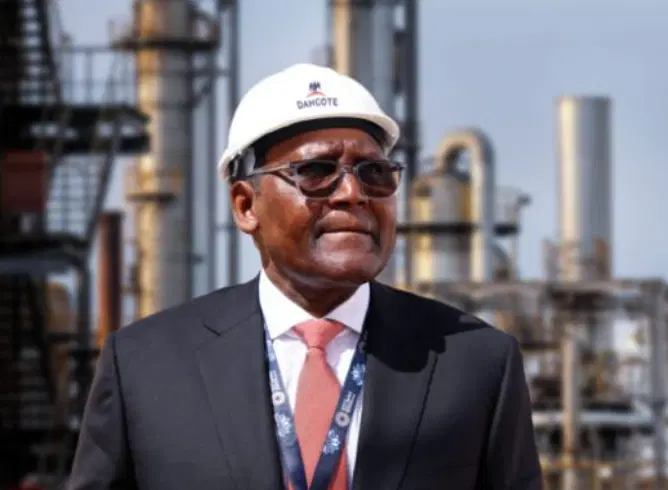
Dangote Refinery Ends Nigeria’s Era of Fuel Import Dependence, Boosts GDP, FX Earnings — EIU
Dangote Refinery Ends Nigeria’s Era of Fuel Import Dependence, Boosts GDP, FX Earnings — EIU
The operational ramp up of the 650,000 barrels per day Dangote Petroleum Refinery & Petrochemicals is fundamentally reshaping Nigeria’s downstream oil sector, significantly reducing the country’s dependence on imported refined petroleum products and strengthening its external position, according to the Economist Intelligence Unit (EIU).
In its latest assessment on Nigeria’s fuel market and regulatory environment, the EIU said the refinery has already transformed a sector that was previously characterised by heavy reliance on imported fuel despite Nigeria being Africa’s largest crude oil producer. The report noted that the refinery met nearly 80 per cent of domestic petrol demand in April and produced enough volumes to satisfy local consumption requirements as operations approached full capacity.
The EIU described Nigeria’s downstream petroleum sector before the refinery as “long dysfunctional”, noting that the country had remained almost entirely dependent on costly imported fuel while producing nearly 1.5 million barrels of crude oil daily.
According to the report, the emergence of the refinery has reduced import dependence, improved domestic fuel availability and strengthened Nigeria’s balance of payments position through lower import demand and rising exports of refined petroleum products.
“The gradual ramp up of the 650,000 barrel/day Dangote refinery since May 2023 has transformed Nigeria’s long dysfunctional downstream sector,” the report stated. “The country’s main refineries, all state owned, had been inoperative for years and Nigeria was almost entirely reliant on costly imported fuel.”
The research and analysis division of The Economist Group, London added that the refinery’s attainment of full operational capacity and its planned expansion would further support Nigeria’s economic growth and foreign exchange earnings over the medium term.
“Meanwhile, the attainment of full capacity at, and an increase in exports from, the Dangote refinery will support real GDP growth and foreign exchange earnings in 2026 and 2027 and beyond, as a planned doubling of the plant’s output comes on stream around the end of the decade,” it added.
Industry analysts said the refinery is increasingly positioning Nigeria as an emerging refining and export hub, altering energy trade flows across Africa and reducing the vulnerability associated with fuel import dependence.
The EIU noted that the refinery’s expansion has coincided with major reforms in Nigeria’s downstream sector, including the removal of fuel subsidies and the introduction of market driven pricing mechanisms.
The report, however, said the transition from a state dominated fuel import structure to large scale domestic refining has triggered resistance from interests linked to the old import regime.
The latest tensions emerged following the decision by the Nigerian Midstream and Downstream Petroleum Regulatory Authority to relax restrictions on petrol imports despite the refinery’s growing capacity to meet domestic demand.
Dangote Industries subsequently initiated legal action, arguing that continued import approvals undermine domestic refining investments and conflict with the objectives of the Petroleum Industry Act, which seeks to encourage local refining capacity and reduce import dependence.
Analysts noted that the availability of large-scale domestic refining capacity has improved Nigeria’s energy security and reduced exposure to external supply shocks and foreign exchange volatility.
The Centre for the Promotion of Private Enterprise also cautioned against unrestrained importation of petroleum products, warning that such a policy could weaken Nigeria’s industrialisation drive and discourage investments in domestic refining.
Chief Executive Officer of CPPE, Muda Yusuf, said continued dependence on imported fuel had historically contributed to pressure on foreign reserves, exchange rate instability and fiscal leakages.
The refinery’s growing impact is also being reflected in Nigeria’s broader macroeconomic indicators. Earlier this month, S&P Global Ratings cited increased domestic refining capacity and rising hydrocarbon exports among the major factors supporting Nigeria’s sovereign credit rating upgrade – the first in 14 years.
Beyond Nigeria, analysts said the refinery is increasingly being viewed as a strategic industrial asset for Africa, where many countries remain heavily dependent on imported fuel despite rising demand for transportation, manufacturing, and power generation.
Business
BREAKING: Court Dismisses $19.6 Million Claim Against NNPCL — Rules Contract Scope Cannot Be Changed Orally
BREAKING: Court Dismisses $19.6 Million Claim Against NNPCL — Rules Contract Scope Cannot Be Changed Orally
In a landmark ruling on Friday, May 22, 2026, the Federal Capital Territory High Court in Abuja threw out a $19.6 million lawsuit filed by Alternate Dimensions Ventures Ltd against the Nigerian National Petroleum Company Limited (NNPCL), affirming a key legal principle: a written contract cannot be expanded through oral agreements or conduct.
Alternate Dimensions had sought $19,600,000 in professional fees, claiming the scope of its Direct Sale, Direct Purchase (DSDP e-pro) contract with NNPCL was orally expanded. Represented by counsel Patrick Peter, the firm argued it was entitled to the revised sum for services rendered under the alleged new terms.
But NNPCL, through its lawyer Ituah Imhanze of KENNA LP, pushed back sharply, arguing that parties are bound exclusively by the clear terms of their written agreement. Imhanze contended that without any written amendment, the claim was legally unsound, and the court agreed.
Delivering judgment, Justice Hamza Mu’azu upheld NNPCL’s defense, stating that the contract was unambiguous and that no evidence was adduced during the trial, which supported the alleged scope expansion. The court further found that NNPCL fully complied with all contractual terms and committed no breach.
Dismissing the suit as meritless, Justice Mu’azu reinforced the doctrine of sanctity of contract: any amendment to a written agreement must be express, unequivocal, and documented, not implied or verbal.
The ruling spares NNPCL from the S19.6 million claim and also a floodgate of similar potential liabilities.


- When women farm better, Eswatini eats better June 3, 2026
- Togo Hosts the 8th Annual Forum of National Volunteer Agencies in the Economic Community of West African States (ECOWAS) Region June 3, 2026
- Indigenous Peoples gravely vulnerable to Ebola epidemic, warn United Nations (UN) independent experts June 3, 2026
- Meeting between Parliamentary Vice-Minister ONISHI and His Excellency (H.E.) Mr. Cosgrow, Principal Minister and Minister for Agriculture, Fisheries and Blue Economy of Seychelles June 3, 2026
- Eritrea: Construction of Elementary School in Gogni Sub-Zone June 3, 2026
- African Union Commission (AUC) Chairperson His Excellency (H.E.) Mahmoud Ali Youssouf highlighted thePermanent Representatives’ Committee (PRC) critical role in advancing the Union’s agenda and laying the groundwork for the forthcoming Mid-Year Coordination Meeting (MYCM) June 3, 2026
- Eritrea: Eighth Grade National Examination Commences June 3, 2026
- Many Africans see justice system as unequal, costly, and slow, Afrobarometer survey reveals June 3, 2026
- Prof. Benedict Oramah to Chair Finance Summit as African Energy Week (AEW) 2026 Prepares for Major Deal Flow June 3, 2026
- The Islamic Development Bank (IsDB) Group Affiliates to Host the 14th Private Sector Forum in Baku, Azerbaijan (16-19 June 2026) June 3, 2026
- When women farm better, Eswatini eats better June 3, 2026
- Togo Hosts the 8th Annual Forum of National Volunteer Agencies in the Economic Community of West African States (ECOWAS) Region June 3, 2026
- Indigenous Peoples gravely vulnerable to Ebola epidemic, warn United Nations (UN) independent experts June 3, 2026
- Meeting between Parliamentary Vice-Minister ONISHI and His Excellency (H.E.) Mr. Cosgrow, Principal Minister and Minister for Agriculture, Fisheries and Blue Economy of Seychelles June 3, 2026
- Eritrea: Construction of Elementary School in Gogni Sub-Zone June 3, 2026
- African Union Commission (AUC) Chairperson His Excellency (H.E.) Mahmoud Ali Youssouf highlighted thePermanent Representatives’ Committee (PRC) critical role in advancing the Union’s agenda and laying the groundwork for the forthcoming Mid-Year Coordination Meeting (MYCM) June 3, 2026
- Eritrea: Eighth Grade National Examination Commences June 3, 2026
-

 news6 months ago
WHO REALLY OWNS MONIEPOINT? The $290 Million Deal That Sold Nigeria’s Top Fintech to Foreign Interests
-

 society1 month ago
SOCIAL MEDIA IS NOT A BATTLEFIELD COMMAND – WHY THE NIGERIAN ARMY’S ACTION AGAINST JUSTICE CRACK IS A NATIONAL SECURITY IMPERATIVE
-

 celebrity radar - gossips4 months ago
Dr. Chris Okafor Returns with Power and Fire of the Spirit -Mounts Grace Nation Altar with Fresh Anointing and Restoration Grace on February 1, 2026
-

 celebrity radar - gossips6 months ago
Prophet Kingsley Aitafo Releases 2026 Prophecy: ‘Nigeria Will Rise, but the World Must Prepare for Turbulence’
You must be logged in to post a comment Login
You must log in to post a comment.