
Bank
Heritage Bank, others canvass adequate Agric Financing for finance services repositioning

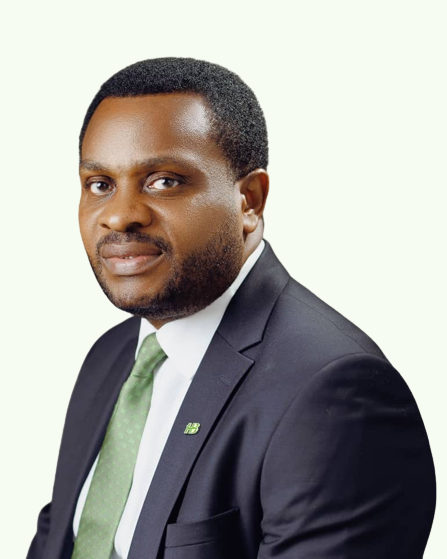
Heritage Bank, others canvass adequate Agric Financing for finance services repositioning

Heritage Bank Plc has affirmed that adequate agricultural financing is critical in defining Nigeria’s trade competitiveness, which guarantees sustainable agricultural systems, generates foreign exchange – a critical aspect that equips the financial sector to respond to changing market requirements and address critical sector needs for global competitiveness.
The Executive Director of Heritage Bank Plc, George Oko-Oboh disclosed this, during the Chartered Institute of Bankers of Nigeria’s (CIBN)15th Annual Banking and Finance Conference, tagged: “Repositioning the Financial Services Industry for an Evolving Global Context” in Abuja.
He disclosed that Heritage Bank has been at the forefront of financing Agric value chains that have upped its competitiveness in the global market and helping to boost local production, conserve scarce foreign exchange and enhance food security, and ultimately result in the creation of hundreds of new jobs.
According to Oko-Oboh, the bank’s involvement in the sector dated back to many years ago and it has always been at the forefront of ensuring overall growth and development of commodities products in Nigeria. For these feats, Heritage Bank disbursed the CBN’s N41billion intervention in wheat production in Nigeria for commodity associations and anchor companies.
“We have continued to create market linkages between smallholders’ farmers and Anchors/Processors, create an ecosystem that drives value chain financing, improve access to credit by the smallholders’ farmers by developing credit history through the scheme and many more.
“As a Bank, we partnered CBN and other stakeholders such as wheat farmers association of Nigeria, wheat farmers, processors and marketers’ association of Nigeria, Lake Chad Research Institute and other development partners, flour mills of Nigeria and several seed companies and others to support over 100,000 farmers in wheat production.
“Also, Heritage Bank further factored consideration of value addition of financial services and products flowing to and/or through value chain participants to address and alleviate constraints to growth that have distorted product financing, receivables financing, physical-asset collateralization, risk mitigation products and financial enhancements,” said the executive director.
Also, the Chairman, Union Bank of Nigeria Plc, Farouk Gumel has said Nigerian banks must invest in modernising agriculture, helping it to be more resilient, more dynamic and better able to adapt for the banking sector to favourably compete in the evolving global context. “Modernisation means much more than technology alone. It is also about farming techniques, he said.
Gumel noted, “to reposition the industry for a ‘Glocal context, we need also to look more inwards,” saying repositioning is not an option. It is a necessity Nigerian has begun an agricultural renaissance over the past seven years. To be truly Glocal, we must commit the same resources and investments to rural-local customers as we have done to urban global clients.”
He agreed that the local players must keep an eye on what global happenings to stay in tune with international best practices, while asking that local/rural farmers should never be forgotten.
President/chairman of council for CIBN Dr. Ken Opara said the financial services industry needs to adapt to much faster pace of change in advancement in technology and innovation, saying services, products, and technologies that were new and useful in the past will not necessarily be so soon.
Opara said advancement in technology and innovation is bringing about another wave of revolution that will change the landscape of the financial services sector more than ever.




GTCO Plc Releases 2025 Full Year Audited Result
…Declares Another Record Dividend of ₦12.76k; Re-affirming Unrivalled Capacity to Creating Value
Guaranty Trust Holding Company Plc (“GTCO” or the “Group”) has released its Audited Consolidated and Separate Financial Statements for the year ended December 31, 2025, to the Nigerian Exchange Group (NGX) and London Stock Exchange (LSE).
The Group reported profit before tax of ₦1.23trillion underpinned by strong growth in core earnings, with interest income and fee income increasing y-o-y by 23.2% and 25.9%, respectively. The performance reaffirms its capacity to generate sustainable earnings and builds on the momentum from 2024, when GTCO delivered a record profit of ₦1.27trillion, driven in part by ₦517.5billion in fair value gains, which did not recur in 2025.
The Group’s 2025 profit after tax came in at ₦865.75billion against ₦1.02trillion recorded in 2024. The profit after tax reflects the impact of recent fiscal policy adjustments to the taxation of investment securities, notably withholding tax on short-term instruments. However, when normalised for this effect, underlying earnings remain robust, driven by growth in core operating income.
The Group continues to maintain a well-structured, healthy, and diversified balance sheet in all the jurisdictions wherein it operates a Banking franchise, as well as across its Payments, Pension and Funds Management business verticals. Total assets and shareholders’ funds closed at ₦17.8trillion and ₦3.4trillion, respectively. Capital Adequacy Ratio (CAR) remained very robust and strong, closing at 43.8%, likewise asset quality improved as evidenced by IFRS 9 Stage 3 Loans which closed at 3.4% and 5.0% at Bank and Group level in FY-2025 (Bank, 3.5%, and Group, 5.2% in December 2024). Cost of Risk (COR) also improved to 2.2% from 4.9% in December 2024. In specific terms, the Group’s loan book (net) grew by 12.4% from ₦2.79trillion as of December 2024 to ₦3.13trillion in December 2025. Similarly, deposit liabilities grew by 23.8% from ₦10.40trillion to ₦12.87trillion during the same period.
Commenting on the results, the Group Chief Executive Officer of Guaranty Trust Holding Company Plc, Mr. Segun Agbaje, said: “Our 2025 result underscores the resilience and depth of our earnings capacity. Following a record 2024, which included significant fair value gains, our focus has been on strengthening the sustainability of our earnings by driving growth across our core banking and ecosystem businesses. The strength of our underlying earnings, despite a stronger Naira and tighter regulatory parameters, reflects the quality of our franchise and the discipline with which we execute our strategy. Importantly, this strong core earnings performance underpins our capacity to sustain and grow shareholder returns. Our record dividend payout this year is not only a reflection of our current profitability but also of our confidence in the Group’s long-term earnings potential. Looking ahead, we remain focused on scaling our ecosystem, driving innovation across our financial services platform, and delivering consistent, high-quality earnings that support superior value creation for our shareholders.”
Overall, the Group continues to post one of the best metrics in the Nigerian Financial Services Industry in terms of key financial ratios i.e., Post-Tax Return on Equity (ROAE) of 28.3%, Post-Tax Return on Assets (ROAA) of 5.3%, Capital Adequacy Ratio (CAR) of 43.8% and Cost to Income Ratio of 27.9%.
Guaranty Trust Holding Company Plc is a leading financial services group with operations across Africa and the United Kingdom. Renowned for its strong corporate governance, innovative financial solutions, and customer-centric approach, the Group provides a wide range of banking and non-banking services including payments, funds management, and pension fund administration. GTCO Plc is committed to delivering long-term value to stakeholders while driving growth and development across its markets

ZENITH BANK OPENS MANCHESTER BRANCH TO SUPPORT CROSS-BORDER TRADE AND INVESTMENT
Zenith Bank Plc has announced the opening of a new branch in Manchester, United Kingdom, marking another significant milestone in the bank’s international growth and its commitment to strengthening financial connections between Africa and global markets.
The official opening ceremony, scheduled to hold on Tuesday, March 17, 2026, is expected to attract government officials from Nigeria and the United Kingdom, regulators, investors, customers, and business leaders from both countries, underscoring the growing economic ties and investment opportunities between the two markets.
The new Manchester branch will complement Zenith Bank’s existing operations in the United Kingdom and serve as a strategic hub for supporting businesses engaged in international trade and investment. Through the branch, the bank will provide corporate banking, trade finance, treasury and related financial services to clients operating across the United Kingdom, Europe and Africa.Speaking ahead of the launch, the Group Managing Director/Chief Executive Officer of Zenith Bank Plc, Dame Dr. Adaora Umeoji, OON, said: “The opening of our Manchester branch represents another important step in Zenith Bank’s growth as a leading African financial institution connecting businesses and markets across continents. Manchester is one of the United Kingdom’s most dynamic commercial centres, and our presence here will further strengthen financial connections between businesses in the UK and opportunities across Africa’s rapidly expanding markets.
”Founded in 1990 by its Founder and Chairman, Jim Ovia, CFR, Zenith Bank has grown into one of Africa’s most respected banking institutions, boasting a robust capital base and a remarkable history of year-on-year profitability. Built on a strong foundation of people, technology and service, the Bank has consistently delivered innovative financial solutions while maintaining a disciplined approach to growth and risk management. The impressive performance of the Bank has consistently earned it excellent ratings, recognition and endorsement from local and international agencies and institutions.Headquartered in Lagos, Nigeria, Zenith Bank operates over 500 branches and business offices across the 36 States of the Federation and the Federal Capital Territory (FCT). The Bank currently operates subsidiaries in several African countries including Ghana, Sierra Leone, Gambia, and Cote d’Ivoire, while maintaining a presence in major international financial centres including the United Kingdom, France, UAE and China.
In recent years, Zenith Bank has continued to expand its international network as part of its strategy to support global trade and investment flows involving Africa.Manchester, widely regarded as one of the United Kingdom’s most vibrant economic centres, hosts a diverse base of businesses across sectors such as manufacturing, engineering, logistics, technology and consumer goods. The city’s strong commercial ecosystem and international outlook align closely with Zenith Bank’s expertise in corporate banking, structured finance and trade finance.The Manchester branch will work closely with the Bank’s London operations and its broader international network to support clients seeking to expand across markets and unlock new opportunities in both the United Kingdom and Africa.
With the opening of the Manchester branch, Zenith Bank continues to advance its vision of building a truly global African banking institution that connects businesses, facilitates trade and investment, and creates stronger economic bridges between Africa and the world.

Alpha Morgan Bank Deepens Presence in Abuja with New Branch in Utako
Marking another milestone in its expansion drive, Alpha Morgan Bank has opened a new branch in Utako, Abuja, reinforcing its strategy of building closer institutional ties within key business communities and bringing its financial expertise closer to individuals, and enterprises driving the city’s growth.
The new branch, located at Plot 1121 Obafemi Awolowo Way, Utako, Abuja is strategically positioned to serve individuals, entrepreneurs, and corporate clients within Utako and surrounding districts.
The expansion follows the Bank’s recently concluded Economic Review Webinar held in February 2026, as the bank continues to position as a thought-leader in the financial services industry.
Speaking on the opening, Ade Buraimo, Managing Director of Alpha Morgan Bank, said the move underscores the Bank’s commitment to accessibility and service excellence.
“Proximity matters in banking. As communities grow and commercial activity expands, financial institutions also evolve to meet customers where they are. The Utako Branch allows us to deliver our services to people in that community efficiently while maintaining the high standards our customers expect,”
The Utako location will provide a full suite of retail and corporate banking services, including account opening, deposits, transfers, business banking solutions, and financial advisory support.
Customers and members of the public are invited to visit the new Utako Branch to experience the Bank’s approach to satisfying banking.


-

 society7 months ago
Religion: Africa’s Oldest Weapon of Enslavement and the Forgotten Truth
-

 news4 months ago
WHO REALLY OWNS MONIEPOINT? The $290 Million Deal That Sold Nigeria’s Top Fintech to Foreign Interests
-

 society6 months ago
“You Are Never Without Help” – Pastor Gebhardt Berndt Inspires Hope Through Empower Church (Video)
-

 celebrity radar - gossips2 months ago
Dr. Chris Okafor Returns with Power and Fire of the Spirit -Mounts Grace Nation Altar with Fresh Anointing and Restoration Grace on February 1, 2026