
celebrity radar - gossips
How Businessman, Dr Ernest Azudialu Obiejesi’s Donation of Ultra-modern Building Brought Peace and Unity To Okija


How Businessman, Dr Ernest Azudialu Obiejesi’s Donation of Ultra-modern Building Brought Peace and Unity To Okija
It’s often said, the people we get along with, trust and feel simpatico with are the strongest links in our networks. Indeed,in a conscious and deliberate quest to institutionalize that culture of philanthropy that spurs him to do good deeds, Dr. Ernest Azudialu-Obiejesi, would rather spend his fortune on improving lives. He knows, however, that the world cannot be healed hurriedly on the knee. Thus, he eschews impatience and quick-fix solutions to societal problems. He desires neither typhoon nor tempest. He is content in his harbour to listen to the storm upon the rocks, if now and then by a lucky chance he can shelter someone from the wreck.
Interestingly, however, noiseless but impactful philanthropy is the watchword of Dr Ernest Azudialu Obiejesi, Group Managing Director/Chief Executive Officer of NESTOIL Group. He has mastered the art of spreading his wealth among kith and kin, and the next needy family on the block. His philanthropy is innate, a voluntary act that cannot be manufactured. He provides a wide range of social welfare programs with the intent to be the voice of those who desperately need help.
For his fellow Okija brethren straddling about 31 villages in Anambra State who used to move from one location to the other to have their town hall meetings, Dr Azudialu has stepped in once again to resolve that. Days back, he declared open the ultra-modern Obijackson Centre Lagos (Okija Town Union Building), Amuwo Odofin, Lagos.
The well-appointed building, which will henceforth serve as the meeting point for all Okija people and would bring peace and unity to them, was declared open by Governor Babajide Sanwo-Olu. According to the governor, “In Lagos, our strength lies in our diversity, and that is what sets us apart. We have created an enabling environment for people and businesses from all walks of life to thrive. Therefore, it was a pleasure to attend the commissioning of the OBIJACKSON CENTER (Okija Town Union Building) in Amuwo Odofin LGA.
This center was built by my dear friend, Dr Ernest Nnaemeka Azudialu-Obiejesi OFR, Chairman/CEO of Obijackson Group and Foundation.”

The donation of the building is coming barely a year after the billionaire businessman and his wife founded a school called Gonzaga Jesuit College in Okija, a co-educational institution whose goal is not just to educate, but to form people of depth – intellectually, spiritually, and psychologically; and form people who are open to change, who exercise aptitude for personal conversion and social transformation.

Azudialu does all these under the auspices of the Obijackson Foundation established to tackle the issues of extreme poverty, illiteracy, hunger, and poor healthcare and make a real and measurable change in Eastern Nigeria and beyond. “The organisation is dedicated to improving the socio-economic well-being of the nation’s people through improved access to good quality education and healthcare in addition to cultural enrichment. Our intervention areas range from community development initiatives to food programmes to health schemes, the gemstone of which is the Obijackson Children’s Hospital in Okija, Anambra State,” he said.
It was also under the foundation that he built the the Obijackson Women and Children’s Hospital in Okija, which he has evolved into the foremost women & paediatric healthcare institution – the first of its kind in eastern Nigeria. The hospital, with state-of-the-art diagnostic, surgical and other equipment, has delivered hundreds of women. Patients who have no funds to pay for treatment are catered for by the Obijackson Foundation. Nobody has turned away from this hospital on account of their inability to pay their bills. Dr Azudialu says the sheer profile of the hospital and the impact in saving the lives of women and children across eastern Nigeria makes this project extremely humbling and fulfilling for him. The hospital directly employs about 100 locals. Hundreds more are indirect employees in the form of contractors and other service providers.
In his early 60s, Dr Azudialu’s Nestoil Group is a reference point in the oil and gas industry for its exceptional services in Pipeline Construction, Repairs and Maintenance, Fabrication and Pressure Vessel Manufacturing; Detailed Engineering Design and consultancy; Civil Construction Works as well as Dredging and Shoreline protection.





celebrity radar - gossips
Adron Homes Celebrates Visionary Chairman, Aare Adetola Emmanuel King, at 51
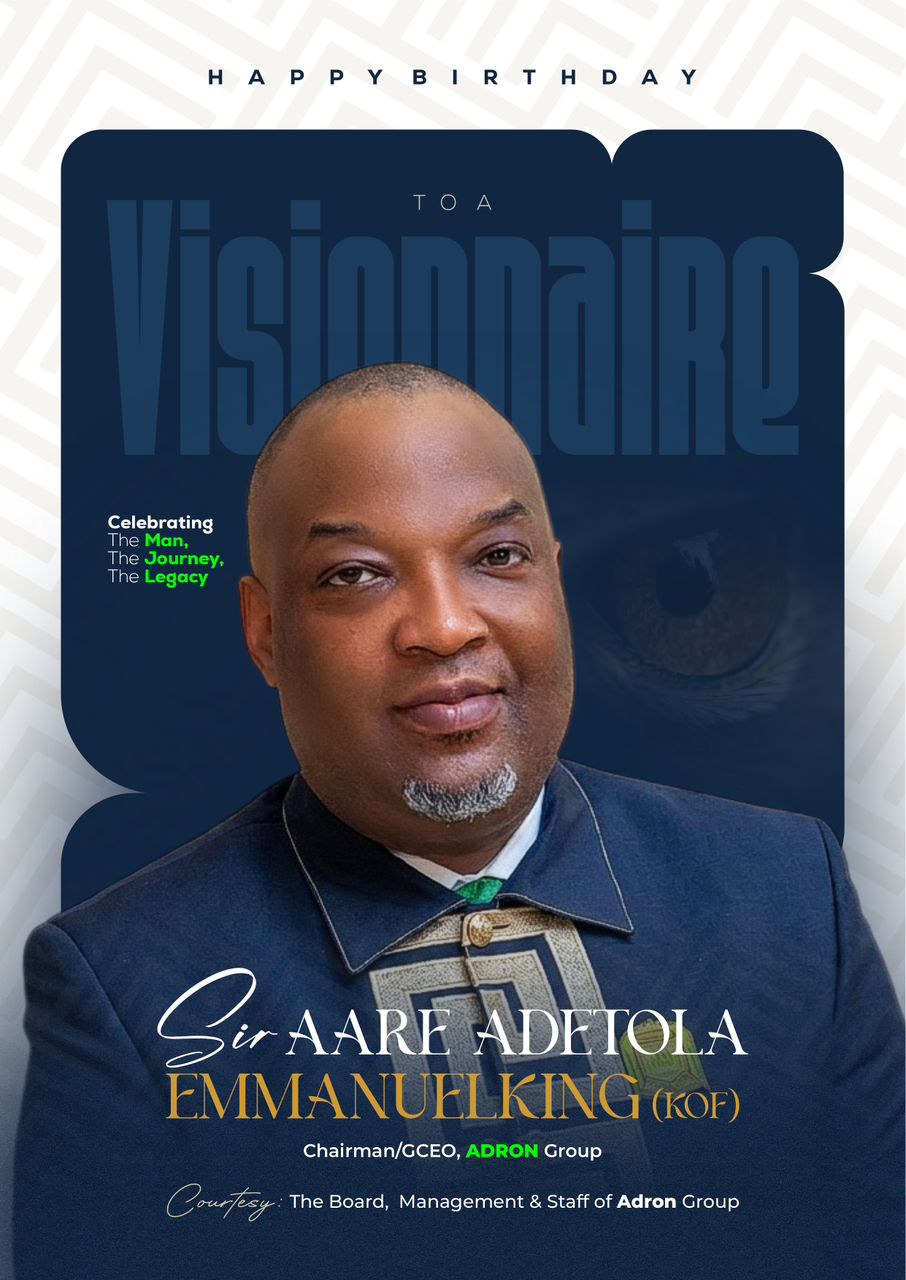
Adron Homes Celebrates Visionary Chairman, Aare Adetola Emmanuel King, at 51
The management and staff of Adron Homes and Properties Limited have joined family, friends, associates, and well-wishers across the globe to celebrate their Chairman and Chief Executive Officer, Aare Adetola EmmanuelKing, as he marks his 51st birthday.

In a statement released by the company, the milestone was described as a celebration of an exceptional leader whose vision, resilience, and entrepreneurial brilliance have not only transformed Adron Homes into a household name in Nigeria’s real estate sector but have also redefined affordable housing across the country.
Under his dynamic leadership, Adron Homes has continued to expand its footprint, delivering value-driven residential solutions while empowering thousands of Nigerians with opportunities for home ownership. His commitment to excellence, innovation, and customer satisfaction has remained the driving force behind the company’s sustained growth and industry leadership.
The statement further highlighted Aare EmmanuelKing’s passion for nation-building and community development, noting his significant contributions to job creation, youth empowerment, and the promotion of socio-economic development through real estate investments.
“As a leader, mentor, and visionary, Aare Adetola EmmanuelKing has consistently inspired a culture of excellence, integrity, and dedication within the organization. His ability to turn bold ideas into reality continues to position Adron Homes as a trailblazer in the industry,” the statement read.
The company expressed profound gratitude for his steadfast leadership and prayed for continued wisdom, strength, and sound health as he embarks on another year of impactful achievements.
As he celebrates his 51st birthday, the entire Adron Homes family proudly honours a man whose legacy continues to shape the future of real estate in Nigeria.
Happy 51st Birthday, Aare Adetola EmmanuelKing!
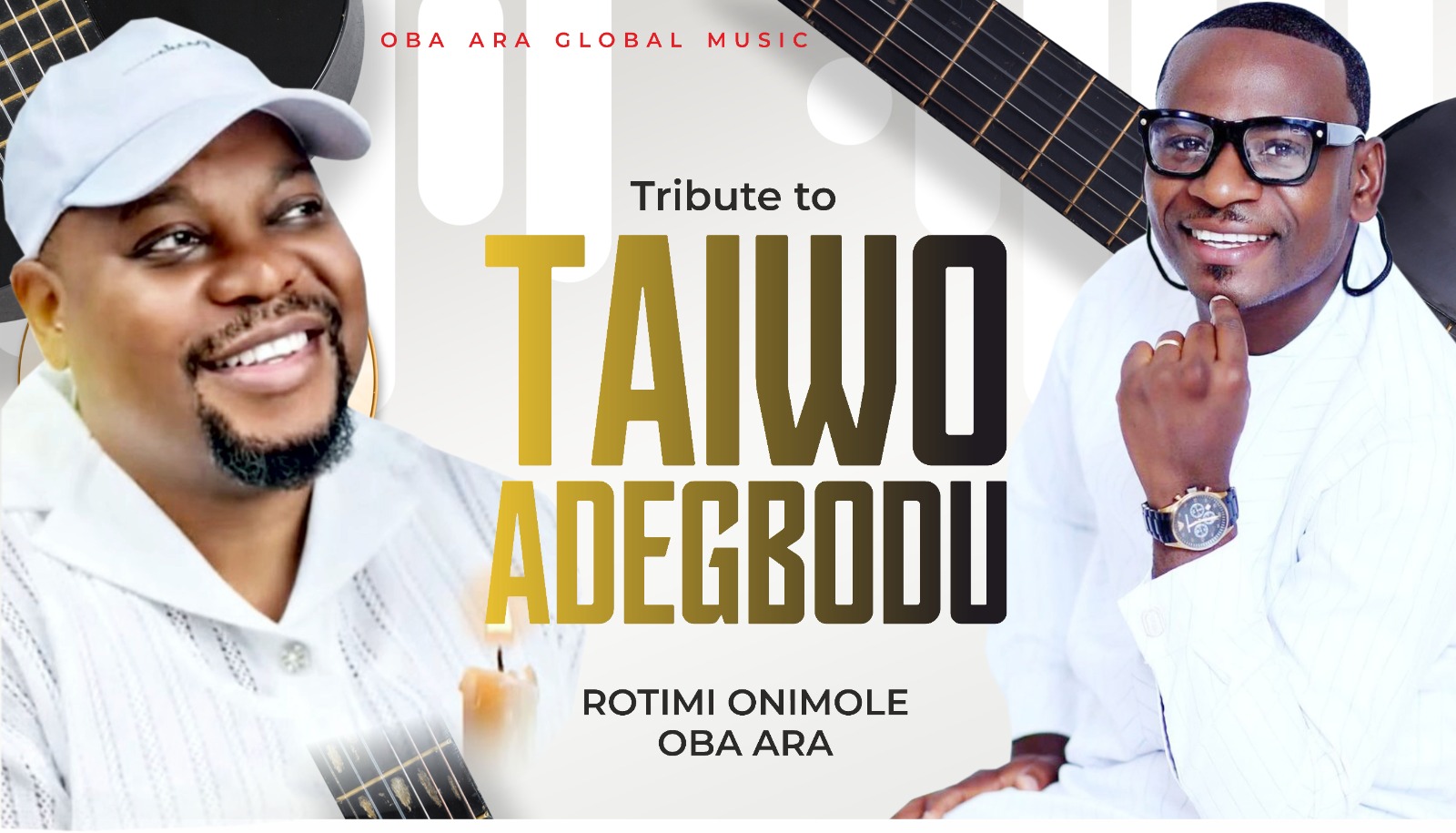
Oba Ara Releases Emotional Tribute to Late Taiwo Adegbodu
Taofik Afolabi
The gospel music community continues to grieve the painful loss of Taiwo Adegbodu, a beloved figure whose sudden departure left a deep void among fans, colleagues, and loved ones. In response to this loss, renowned gospel minister Rotimi Onimole, popularly known as Oba Ara, has released a moving tribute song that captures both the sorrow of the moment and the enduring legacy of the late singer.
Oba Ara, a proud son of Isale Eko, channels raw emotion throughout the song, using heartfelt lyrics and soul-stirring melodies to reflect on his personal connection with Taiwo Adegbodu. In the tribute, he openly expresses how deeply the news of Adegbodu’s passing shook him, describing it as a painful and unexpected loss that is difficult to come to terms with.
The song goes beyond mourning, it celebrates the life, ministry, and impact of Taiwo Adegbodu. Oba Ara highlights the late artist’s dedication to spreading the gospel through music, his inspiring voice, and the spiritual influence he had on many within and beyond Nigeria. Through powerful verses, he paints a picture of a man who lived for God and touched countless lives through his ministry.
Listeners have described the tribute as both comforting and deeply emotional, as it resonates with the collective grief of the gospel music community. It serves as a reminder that although Taiwo Adegbodu is no longer physically present, his music, message, and legacy will continue to live on.
In honoring his late colleague, Oba Ara not only pays his respects but also offers a source of healing for fans and fellow ministers, using music as a tool to process grief and celebrate a life well lived.
celebrity radar - gossips
Buratai, Fagbemi , Shagaya, Olofa, Others Eulogise Olowu Kuta’s Olori On 60th Birthday, Foundation Launch

Buratai, Fagbemi , Shagaya, Olofa, Others Eulogise Olowu Kuta’s Olori On 60th Birthday, Foundation Launch
Eminent personalities across the Nigeria stormed the TFK Event Centre, Bala Mohammed Way, Guzape, Abuja, to celebrate the 60th birthday of Olowu Kuta’s Olori, Queen Jumai Amoke and her Foundation Launch on Saturday 28, March 2026.

From former Chief of Army Staff, Lt Gen TY Buratai rtd, to the Minister of Justice and Attorney-General of the Federation, Prince Lateef Fagbemi; Olofa of Offa, HRM Oba Mufutau Gbadamosi. Even top businesswoman and socialite, Chief (Mrs) Bola Shagaya, was in attendance.


Other dignitaries were newly promoted Deputy Inspector-General of Police and former AIG Zone 2 , Lagos , Adegoke Fayoade, Major General Abdumalik, Major General Samuel Adebayo rtd (Fmr CDI);
Major General Anthony Omozoje rtd (Fmr Copp);
Alhaji Tajudeen Owoyemi (Asiwaju of Offa and CEO Radisson Hotel Nigeria;
Dr Waheed Olagunju, former managing director of Bank of Industry, Oniba of Iba, Lagos State, HRM Oba Dr Suleiman Raji ;
Justice Falola, Olu of Ile-Ogbo , Oba Adetoyese amongst many traditional rulers and captains of industry too numerous to mention.
Speaking at the occasion, the Chief Host, Olowu of Kuta, HRM Oba Dr Adekunle Oyelude Makama, CON , Tegbosun iii, who is also the husband of the celebrant commended Queen Jumai for ‘ her slender arms full of kindness’ to establish such humanitarian Foundation, ‘Amoke Children and mother in Need Foundation’ at a time Nigerians are going through economic crisis occassioned by the global meltdown.
Olowu also commended her steadfastness and love for the less privileged and downtrodden.
The monarch refrenced the task before his wife’s humanitarian gesture said her best is yet to come.
” Olori Amoke Jumai, I celebrate you. You will celebrate 70, 80, 90 and continue to shine as you continue to put a smile on people’s faces. I love you, “Olowu Kuta added.
To Lt Gen Buratai, a former army chief and former Nigerian Ambassador to Benin Republic, the reward of hard work is more work.
Buratai, who also doubles as Balogun Agba of Owu Kuta, a chieftaincy title reserved for a generalismo congratulated Queen Jumai for attaining the age of 60 in good health.
The retired army General said he’s not surprised by the turn out of eminent personalities across the country to celebrate the Olowu Kuta’s Olori because she merited it through her hospitality to all, adding that Allah the most merciful, most beneficial would accept all her act of ibadah.
The minister of Justice, Prince Fagbemi, was full of praises for Queen Jumai for deeming it fit to have a place in her heart to accommodate the needy and less privileged in ‘our society.’
Prince Fagbemi urged the guests to contribute generously to support the Foundation in order to continue to alleviate poverty and put a smile on the faces of the people.
” I congratulate you on your 60th birthday and Foundation Launch. I wish you many happy returns of the day and many more fruitful services to the country and motherland”, Prince Fagbemi added.
The celebrant, Queen Jumai who was grining from ear to ear thankfully said she was excited by the turn out and the response of the people to her foundation.
Queen Jumai, however, promised to continue to use her resources and donations received for the good of the needy and less privileged in the society.
” I want to appreciate my own Kabiesi Olofa of Offa , for his presence and im I’m using him as a point of contact to all other Kabiesis present here, the minister of justice and Attorney-General, you’re welcome, sir; Mrs Bola Shagaya, I salute your enterprise, Lt Gen Buratai, I’m grateful, sir; DIG Fayoade, Justice Falola and other dignitaries too numerous to mention, I thank you, all. To my darling husband, Kabiesi Olowu , I thank you immensely for your support. And to my family and friends, I thank you , all. E se pupo!”, she said.


-

 society6 months ago
Religion: Africa’s Oldest Weapon of Enslavement and the Forgotten Truth
-

 news4 months ago
WHO REALLY OWNS MONIEPOINT? The $290 Million Deal That Sold Nigeria’s Top Fintech to Foreign Interests
-

 society6 months ago
“You Are Never Without Help” – Pastor Gebhardt Berndt Inspires Hope Through Empower Church (Video)
-

 celebrity radar - gossips2 months ago
Dr. Chris Okafor Returns with Power and Fire of the Spirit -Mounts Grace Nation Altar with Fresh Anointing and Restoration Grace on February 1, 2026