
Business
How i made Wasiu Ayinde known to Asiwaju Bola Tinubu + Why i decided to feature Olamide’ – Fuji Icon, Obesere reveals

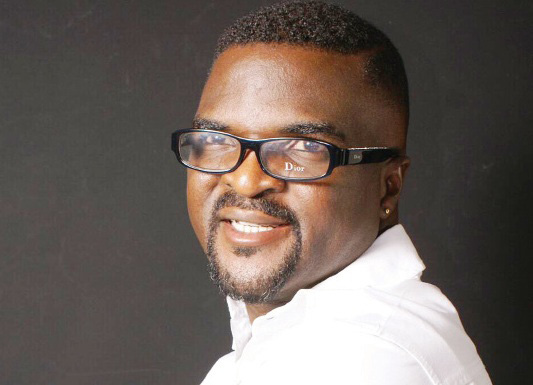

Abass Akande Obesere, also known as Omo Rapala is a popular Fuji musician, who forced his way into the limelight through his “Vulgar” songs, which openly touch on issues that are considered taboo in the conservative Yoruba community. Following the paths of other successful musicians such as Sikiru Ayinde Barrister, Obesere also has taken his own brand of Fuji music all over the world. He was initially signed with Sony Music but moved onto other labels after payment disputes. The Ibadan,Oyo -born musician recently stormed City People Magazine Corporate Office for its Showbiz Roundtable talk. The charismatic musician, who is set to release 2 new albums on Fuji and Hip-Hop titled Aja 1 spoke on his recent fight with his Marketer, Solid Worth Entertainment over the leak of his hip hop track, Ebelesua featuring Olamide, online. He also spoke on the controversy surrounding a sex tape allegedly involving him and a lady recently and many more. Excerpts
What is your say on the current rumour making the rounds that you were taken to court over the release of your new single “Ebelesua” featuring Olamide?
What I can say about it is that, there is no how you produce a good product that people wouldn’t want to pirate and that simply means you have done something good that many want to benefit from. The video was shot by Dr B Visual but I wouldn’t know if anyone used his/her phone to record us when we were on location because we are now living in a technology era, the piracy could have come from that area before leaked online which got the Promoter upset. A lot of people use their phones to record artistes or take pictures anytime we are shooting on location or at events. There are times that my security guys will be chasing them away, stop them because aside being a fan and you want to take selfie with me, I am very sure that such person may want to share it on social media for people to see, that moment, somebody who has forgotten about you or that want to do something with you will remember you. That is one of the advantages of taking pictures with your fans. Don’t ever downgrade anyone because for a person to take picture with you, that means he appreciates you, accommodate them. That may be where the video leaked out but the Promoter was like, he had spent so much on the video and he had the belief that he will make his money from it before the unexpected set in. He knew that the job was going places because a Fuji Artiste doing collabo with hip hop act, Olamide, is set to be a hit. That was what got the Promoter, Solid worth Entertainment upset. He tried to contact me but my numbers were not going through because I went to check on my family in Dublin. He called my manager to tell me that I should call him because he has something very urgent to tell me but also couldn’t inform me because he believed that apart from being a Promoter, he is also my friend and may be just wanted to gist with me. To my own surprise, I started reading it in the Newspaper that he will sue me and he got upset. I couldn’t fume at him also because naturally, I don’t fight my Promoters, right from the genesis of my career.
Don’t you think that one of your boys in the studio such as the Editor may have leaked the video online?
I wouldn’t know. Thank God Dr B is here, I didn’t even know this kind of question will come up before I told him to come here with me. He just came to check on me at home and I told him I am going to City People for an interview and he followed me. He can tell you one or two things about the video.
How did you resolve the issue?
We have resolved it. I have gone to meet him and he was lamenting about his loss. He said he checked Naijaloaded, he could see thousands of people downloading it and how did it get there. I told him I also don’t know and I am also doing my own investigation underground. I know he has spent a lot on the project which he needs to make back but the worse has been done. I told him even at that, he will still make his money back from it. After several pleading, he said it’s okay that he is no longer angry. He is now set to release the full album of my hip hop songs by the end of this Ramadan. At the same time, I am releasing another Fuji album and he is selling it.
What are you currently working on ?
Like I said earlier on, by the end of this Ramadan I will release my latest Fuji album titled “Aja 1”. It is God who made me number 1 and he said I should keep going as number one and that is the meaning. And I want people to know that because we are now in the hip hop world, I have no option than to blend in and that is why I did a collabo with some artistes such as Olamide, Reminisce and I have once worked with people like Timaya, 9ice, Lord of Ajasa and others. I have been on it for a long time. But everything is about time and everything is coming out now.
Olamide has been appreciating me for so long because I recall in his first album, “Eni Duro” where he said he will be jumping like Obesere Papa Tosibe and he is still doing that. I have watched most of his video, at the end, he will do something that has to do with me. That was why when I called him for us to do a collabo, he was excited about it. He asked me if I was to do the beat or him and I said do yours and I will do mine here, the two beats are okay and he agreed that we should release mine first before it was later leaked on-line. His own version is the one we are set to release now.
What was the experience like working with Olamide and can you tell us what Ebelesua means.?
Working with Olamide was fun. Ebelesua is a slang to appreciate something. If you buy a new car, people will say this car is fucking good, that’s Ebelesua.
We saw a report recently which stated that 3 years after, Obesere’s sex scandal video leaks out, what do you have to say about it?
In Nigeria, a lot of people respect me a lot because they see me as a decent person, reliable and responsible man; I am an easy going person. This issue of rape scandal has been forgotten by a lot of people but because of my status and the new generation that will still come will hear about it, so I intentionally did the video for a record purpose and that was when it was boiling. And that is why the lady couldn’t come out again because if you go to Panti Police Station, you will find out that the lady is still wanted and all I did was to clear the air on my own side of the story. That was why I shot the video titled Stop Sebe. When it happened, I felt so bad because I am equally a man of my words. I stood on what I said which never changed and God was at my side and he really proved himself that I am innocent in the allegation forcefully put on me. It was just a scam.
How did you get out of the issue?
Nobody assisted me before I came out of the case; it was only God who brought me out of it. The Policemen in Panti really did their job diligently. This particular lady in question has done the same thing to several people and they came out to the Police station to share their encounters with the Police. They were ready to face her, the Police went to the address she dropped and on getting there, they found out that she gave them a fake address.
How did you meet the lady?
I met her through someone in Ibadan, the woman is called Bola, she has been a fan for a very long time before she came to me to assist her to talk to one of my biggest fans, a big time businesswoman, to be suppling her bags of rice. I only did her a favour.
At a point, we hardly heard about you before you later bounced back, what really happened?
It is still all for God. Even Jesus also mentioned it in the bible that “I will be visible but a time comes that you won’t see me again,” not for evil. But sometimes you fight some battles underground. This life is full of war and the prayer we should all be praying when we wake up in the morning is that we should conquer our enemies. There is no particular day that I want to eat that I won’t think about the masses who couldn’t afford to feed themselves, and I always make sure I cater for them in my own little way because I know the definition of hunger and suffering.
What are the battles you fought that made you fizzle out just like that?
It is not as if I just went on a sabbatical, I was releasing album back to back. They started the battle with me with words of mouth by saying I said I won’t sing my style of music again when I return from hajj. That alone distracted the attention of my fans. Even if I release any album, they won’t buy it because they believe that I have said I won’t sing the kind of music they want again, but with prayers and my ruggedness, I conquered them. I have lost count of the album I did while I laid low. I have a studio in my house where I work also.
Who do you suspect may be responsible for these wars you battled in the last few years?
They have once battled me spiritually but when they couldn’t get me, they began to disseminate fallacy about me. I want people to present the newspaper or TV/Radio station that reported that I said I won’t sing my style of music “Ashakasha” again. That is why whenever I go out and I overheard people saying it, I will just say God will soon manifest Himself to them. Even if I have other businesses I do beside music, I will never make it paramount over my music because that is what gave birth to others. So, I wouldn’t know who is exactly behind it but I know it is not natural. All I know is that don’t join the people saying “Kosi Aye” (terrestrial power”), there is terrestrial power and also there is prayers but believe in yourself that you shall accomplish that which God said about you. Pray that it is only if God has been captured that you will be captured. In my style of music, present governor Ambode can sing out of it, Ex governors, Babatunde Fashola and Asiwaju Bola Tinubu too. When Fashola was still on seat and he met me in Tinubu’s office one day where I sat quietly at a corner, he shouted my name “Rapala” so serious that people around got to know that I was around. He didn’t act as a governor but as a fan. In 2003 when Tinubu wanted to re-contest, he instructed his aides to look for me to handle his campaign song. Rilwan Aleshinloye (Alesh) was assigned to look for me and he said he doesn’t know how to look for me because Wasiu Ayinde is his friend, Asiwaju insisted that he wanted me, to an extent that he made it compulsory and even ready to fight them also. Alesh told me all these that I am saying. Alesh met with Gaji who was K1’s manager at the time and he came to me. GSM wasn’t common like that in that period. When I got to Alausa the following day, they were congratulating themselves and said how did you get him and I was wondering what’s going on. They told me they wanted me to do an album for Asiwaju’s campaign. In that same meeting, I told them I won’t do the job alone that I have other competent Fuji Artistes. I recommended Alhaji Wasiu Ayinde for them. I remember I once told Wasiu Ayinde when we were having a meeting at Too Much Money’s office and i said Alhaji, I was the one who made Tinubu recognize you because I recommended you to him. I told his aides to call you, if I was your enemy, I don’t think I will do that. After that, I recommended other Fuji artistes also. What I want to bring out of this is that I already have my fans who are prominent people and they are interested in my kind of music such as Otunba Omisore, former minister, Alhaji Jelili Adesiyan, several kings and prominent people are my diehard fans and I perform at their events regularly. So, if you are after my downfall, you will remain at the bus stop forever because you can’t stop my destiny from shining, you can only drag it back a little. I still remain number one in my own kind of music. The kind of voice I use and my style isn’t what anyone can copy. No matter where I am performing, once you hear my voice, you will easily recognize me.




Business
Alpha Morgan Bank Reinforces Commitment to Education at Redeemer’s University Business School Commissioning
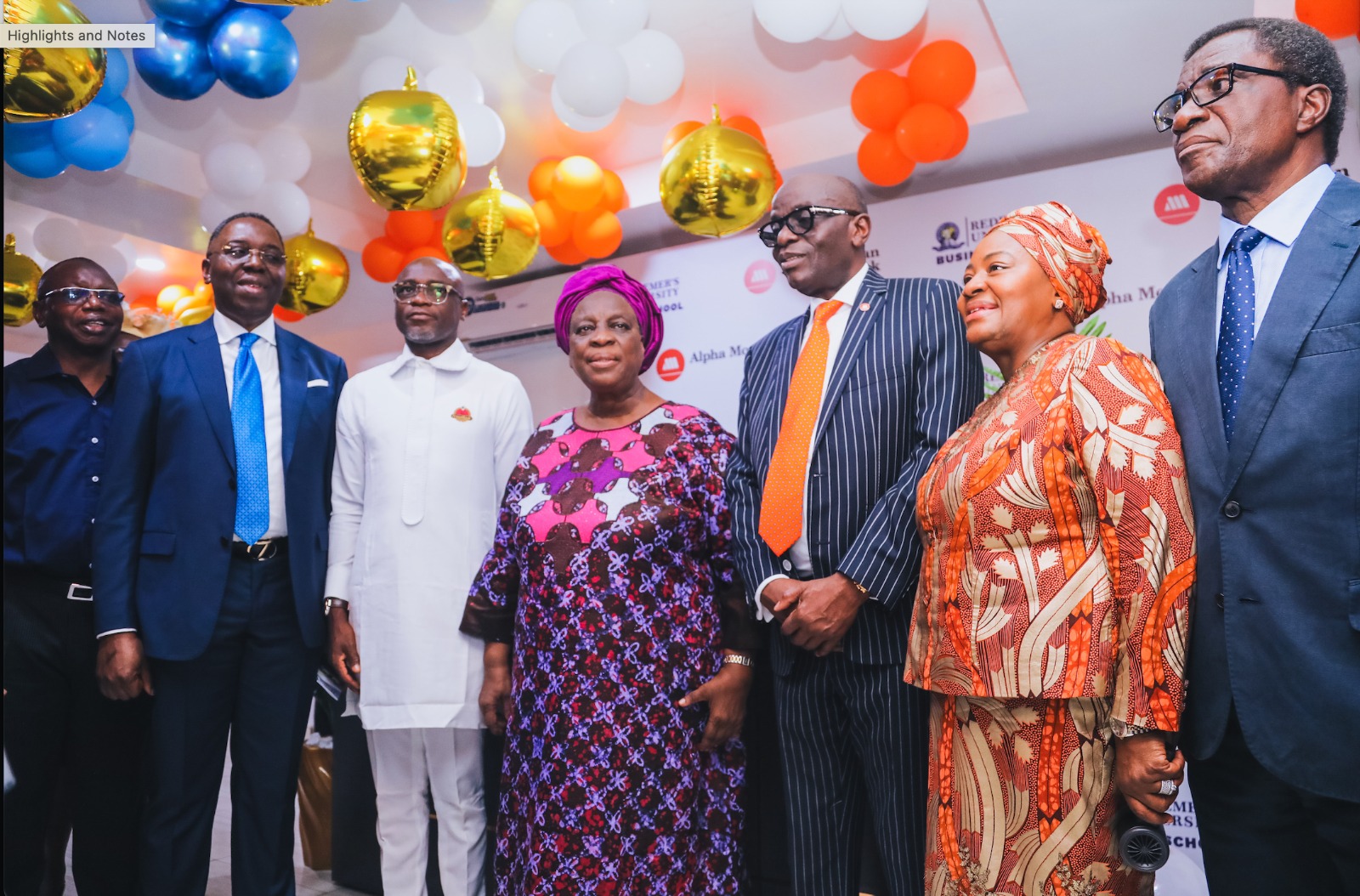
Alpha Morgan Bank Reinforces Commitment to Education at Redeemer’s University Business School Commissioning
Alpha Morgan Bank has reaffirmed its commitment to education and institutional development through its support for the commissioning of the Redeemer’s University Business School.
The Business School was officially inaugurated by Pastor (Mrs.) Folu Adeboye, at the commissioning ceremony attended by distinguished guests including Her Excellency, Mrs. Bola Obasanjo; the Pro-Chancellor and Chairman, Governing Council of Redeemers University, Professor Oluwatoyin Ogundipe; the Vice Chancellor, Professor Shadrach Olufemi Akindele; and other notable dignitaries.
Speaking at the event, the Managing Director of Alpha Morgan Bank reiterated the Bank’s commitment to supporting institutions that drive intellectual growth and national development.
As part of its broader focus on knowledge sharing and thought leadership, Alpha Morgan Bank will host its Economic Review Webinar in May 2026, bringing together experts to share insights on key economic trends and opportunities.
The Bank’s involvement reflects its continued dedication to empowering institutions and shaping the future of business and leadership in Nigeria.
Read more about Alpha Morgan Bank on www.alphamorganbank.com
PHOTO
L-R: Prof. Shadrach Olufemi Akindele, Vice Chancellor, Redeemers University, Engr. Eloka Eje, Dr Perez Araka, Pastor (Mrs) Folu Adeboye, Mother-In-Israel, The Redeemed Christian Church of God, Mr Ade Buraimo, MD/CEO Alpha Morgan Bank, Dr (Mrs) Oluwatomi Somefun, Dr. Simeon Ifere, at the inauguration of the Redeemer’s University Business School, Redemption City, Ogun State on Thursday 2nd April, 2026
Tinubu Aide Rebuts Rufai Oseni Over ₦3.3tn Power Debt Deal
Business
Aare Adetola Emmanuelking Welcomes President Tinubu to Gateway International Airport Commissioning in Iperu-Remo

Aare Adetola Emmanuelking Welcomes President Tinubu to Gateway International Airport Commissioning in Iperu-Remo
In a momentous occasion that underscores the rapid infrastructural advancement of Ogun State, renowned real estate mogul and philanthropist, Aare Adetola Emmanuelking, warmly received the President of the Federal Republic of Nigeria, Bola Ahmed Tinubu, at the official commissioning of the Gateway International Airport, located in Iperu-Remo.
The landmark event, held under the visionary leadership of the Ogun State Governor, Dapo Abiodun, marks a significant stride in the state’s economic transformation agenda, positioning Ogun as a key hub for aviation, commerce, and investment in Nigeria.
Aare Emmanuelking, who is also the Chairman/CEO of Adron Homes and Properties, commended the Ogun State Government for its foresight and commitment to infrastructural excellence. He described the airport project as a “game-changer” that will not only boost connectivity but also stimulate real estate growth, tourism, and industrial expansion across the region.
Speaking during the commissioning, President Tinubu lauded Governor Abiodun’s administration for delivering a world-class facility that aligns with the Federal Government’s Renewed Hope Agenda, emphasizing the importance of strategic infrastructure in driving national development.
The Gateway International Airport is expected to serve as a critical gateway for investors and travelers, further enhancing Ogun State’s reputation as one of Nigeria’s most business-friendly environments.
The presence of top dignitaries, industry leaders, and stakeholders at the event underscores the project’s significance and its anticipated impact on the state’s socio-economic landscape and beyond.


- ABB’s Application Configurator brings speed and precision to grid-feeding protection system design April 7, 2026
- Can Equatorial Guinea Reposition as West Africa’s Gas Hub? April 7, 2026
- Afreximbank Partners with African Energy Week 2026 to Drive Africa-Led Energy Deals April 7, 2026
- Merck Foundation Marks ‘World Health Day’ 2026 – Transforming Patient Care in Africa and Beyond through 2600+ Scholarships for Healthcare Providers From 52 Countries April 7, 2026
- Morocco Gas Plan Reset Could Open Door to New Investment Models April 7, 2026
- African Petroleum Producers Organization (APPO) Secretary General Joins Angola Oil & Gas (AOG) 2026 as African Energy Bank Eyes June 2026 Debut April 7, 2026
- Ghanaian Biomedical Specialist Receives International Award April 7, 2026
- Grey Connects the Africa-Canada Money Corridor With Instant Transfers via Interac April 7, 2026
- Nigeria’s Oil Revival in Focus as Petroleum Minister Lokpobiri Joins Paris Energy Forum April 7, 2026
- CLG Expands into Libya and Central Africa, Named Official Legal Partner for African Energy Week (AEW) 2026 April 7, 2026
- ABB’s Application Configurator brings speed and precision to grid-feeding protection system design April 7, 2026
- Can Equatorial Guinea Reposition as West Africa’s Gas Hub? April 7, 2026
- Afreximbank Partners with African Energy Week 2026 to Drive Africa-Led Energy Deals April 7, 2026
- Merck Foundation Marks ‘World Health Day’ 2026 – Transforming Patient Care in Africa and Beyond through 2600+ Scholarships for Healthcare Providers From 52 Countries April 7, 2026
- Morocco Gas Plan Reset Could Open Door to New Investment Models April 7, 2026
- African Petroleum Producers Organization (APPO) Secretary General Joins Angola Oil & Gas (AOG) 2026 as African Energy Bank Eyes June 2026 Debut April 7, 2026
- Ghanaian Biomedical Specialist Receives International Award April 7, 2026
-

 society7 months ago
Religion: Africa’s Oldest Weapon of Enslavement and the Forgotten Truth
-

 news4 months ago
WHO REALLY OWNS MONIEPOINT? The $290 Million Deal That Sold Nigeria’s Top Fintech to Foreign Interests
-

 society7 months ago
“You Are Never Without Help” – Pastor Gebhardt Berndt Inspires Hope Through Empower Church (Video)
-

 celebrity radar - gossips2 months ago
Dr. Chris Okafor Returns with Power and Fire of the Spirit -Mounts Grace Nation Altar with Fresh Anointing and Restoration Grace on February 1, 2026
You must be logged in to post a comment Login
You must log in to post a comment.