
Business
How My Son shocked everyone by becoming a Pilot at 21 – Femi Adesina reveals




Be careful what you dream about, it may well come to pass. Oluwatobi is my firstborn, “my might, and the beginning of my strength.” One day, when he was just four years old, we were all in the living room; myself, his mom, and his sister, when he exclaimed:”Daddy, I’ll be a pilot!”
I looked at him, looked at his mother, and said casually: “What does he know about piloting?” For by then, Oluwatobi had not gone near an airport, not to talk of entering an airplane.
But somehow, what he said refused to leave my mind. Just like the biblical Mary, after the angel told her of the virgin conception, I “kept all those things, and pondered them” in my heart.
‘Tobi (as we call him) began to live his dreams. He needed to see only the picture of an airplane in a newspaper or magazine, and he would cut it, file it away, or paste on the wall of his bedroom. When he was old enough to manipulate a computer, he always went to sites where he could read about aircraft.
I had thought he would outgrow the passion. But the older he grew, the firmer and clearer the dream became. “Daddy, I’ll be a pilot!”
As a growing journalist with growing means, I got to the point I could go on vacation with my family once a year. We started with Ghana. Then South Africa. And London… Tobi was in secondary school, and talked about nothing save flying a plane. Each time we travelled, it was like nirvana. While I kept looking at my wristwatch, expecting the time we would land, my son, and his sister, Tosin, felt completely at home in the sky.
I had expected two people to baulk, and talk Tobi out of his dreams. His mother, and my own mother (Tobi’s grandma, whom he was particularly close to). But the two women surprisingly did not dissuade the boy. They submitted to the perfect will of the Almighty. Underneath are the Everlasting Arms.
Never underestimate the power of dreams. At 18, my son packed his baggage, and was on the way to Aeronav Academy, in South Africa. The fees were staggering, but by then, I was Deputy Managing Director/ Deputy Editor-in-Chief of The Sun Newspapers. The pay was good enough, and with some belt tightening and lots of sacrifice, I could afford the fees.
Tobi got to Johannesburg at the peak of winter. “A cold coming we had of it, just the worst time of the year. For a journey, and such a long journey, the ways deep and the weather sharp, the very dead of winter.” (T.S Eliot, The Journey of the Magi). I remember the first email he sent to me:”Daddy, it’s so cold, I had to sleep with my shoes on.” Lol. My heart went out to him, but he that would eat honey from the rock must never consider the blade of his axe.
By the end of his first year, he got the private pilot license. Second year, he got the commercial license. I was breathing like a hog under the financial burden, but didn’t Jesus promise that his yoke was easy, “and my burden is light?” I kept trudging on, and one day, at age 21, my son was back, a fully licensed pilot.
But there was still one more river to cross. And when he told me about it, I almost bolted (just as our President almost did, when he saw the state of the treasury after inauguration into office). Tobi told me of the need to proceed to Sweden, for a type rating license, in which he would specialize on the Boeing 737. A boy of 21 years, planning to fly a whole house in the sky? The money, in dollars, sent my heart racing, and my head spinning. But by then, I was already Managing Director/Editor-in-Chief of The Sun. The publisher was a welfarist, and he took good care of his staff. If the family would take garri, instead of corn flakes, well, we could send Tobi to Sweden. And off he went, coming back months later with a type rating license. Arik Airline gracefully gave him a job.
For almost two years, the young pilot has been plying his trade, but he never flew me. The closest we got was one Saturday morning, about a year ago. I had just landed in Lagos, and who did I meet on the tarmac? Tobi and the crew that was taking over the airplane for the next flight. Safe skies, I told him, after we had taken some pictures, along with Captain Mohammed, an Arik veteran.
Then D-day came. And it was Monday this week. I had gone to Lagos to be part of Fathers Day celebration in my church, Foursquare Gospel Church, which held on Sunday. Return journey was 7 a.m Monday, aboard Arik.
On Sunday night, Tobi told me: “Daddy, you’ll be on my flight back to Abuja tomorrow.” Great expectations.
I approached the aircraft with Mr Peter Obi, former governor of Anambra State, and an old friend. An airline staff collected my hand luggage, and took it onboard. I then offered to relieve the former governor of the burden of his own luggage. Trust the ever self-effacing man. He hid the bag behind his back, as I made for it. We laughed.
I was on Seat 1D. The former governor was directly behind me. I told him my son was the co-pilot, and he was so very happy and excited at the news. And then, who came in, and took Seat 1F, right beside me? Another gentleman and friend, Mr Godwin Emefiele, governor of the Central Bank of Nigeria. We began to chat about the economy, and the risks falling oil prices in the international market could pose to the steadying exchange rate of the dollar to the naira. That was when Tobi struck. He came out from the cockpit, and said the Captain had consented that I should be their guest throughout the flight.
I first declined. Flying in the air was tough enough, who wants to go and frighten himself to death in a cockpit?
“Daddy, come and see what you paid for. Come and see where your money went,” my son said. I introduced him to the CBN governor, and excused myself from the cabin. The co-pilot to the co-pilot had come. Father and son were in the cockpit.
Captain Carretero Alberto hails from Spain. And what a genial man he turned out to be throughout the 55 minutes flight. I got to know about his family, his professional background, and many others. He had kind words to say about Tobi, and, indeed gave him the thumbs up sign many times, as the young pilot flew the plane, and made what he considered smart moves.
Preparing to lift into the air was a whole set of ceremony. Many things to check. Engines, lights, wings, doors, everything.As Tobi handled the joystick, the joy kiln was kindled in the heart of a proud father.
Communication with the control tower was continuous, and lasted almost throughout the flight. As the plane lifted, and soared into the deep, azure sky, I could not see a thing. Not the foggiest thing. How do pilots do it? But there was a forest of buttons and knobs. They kept touching and pressing them. Is this what they call instrumentation? At a point, the sun streamed in powerfully, in all its brightness. And they fixed their sun visors.
“This is why pilots wear sunglasses,” Tobi told me.
As the journey progressed, memories flooded in. The plane was moving forward, but I was going back in time. I remembered that June 25, when unto me a child was born, and unto the Adesinas a son was given. When I got to the hospital, and he was brought out for me to have a look, I remember the yell he gave. Now, the tot of that day is flying a Boeing 737. What will he fly next, a 747 or Dreamliner? The wonders of our God.
Then I chuckled. What did I remember? When Tosin, my daughter was born. Tobi was already three. He had not seen as much soft drinks as on the naming ceremony day. He drank Coke, Fanta, Pepsi, Sprite, everything. Then later, he came to meet me: “Daddy, my tomach (that was how he called it) is paining me. ” I laughed, and asked why his tomach would not pain him, as I had seen him, mixing the drinks? Now, the boy is flying a plane.
I chuckled again. What is it this time? The time he was going to secondary school. A day before resumption, I had taken him to Ikeja, where we bought a pair of boots, which would be part of the school uniform. We barely got home before Tobi slipped into the boots, and for the rest of the evening, he strutted round the house in the jackboot. It was yeoman’s effort to get him to remove it at bedtime. Even then, he put the boots daintily on his bed, throughout the night.
And then, the winter night he slept with his shoes on, in Johannesburg. Lol.
Soon, the plane swung right. And Tobi pointed the runway of the Abuja airport to me. We had begun to descend earlier, and would land in eight minutes. At the dot of that time, he brought the big bird gently onto the runway. What an experience for a father!
Since that Monday, when I posted the pictures of father and son on Facebook, the thanksgiving on our behalf has been overwhelming. I thank everyone who commented, and prayed for us. May your day of joy not be postponed. Amen.
My friend and brother, Onochie Anibeze, editor of Saturday Vanguard, asked for this write up exclusively for his newspaper. I was glad to oblige. Gloating is not one of the reasons I went public about my joy. Far from it. Rather, it is out of thankfulness to God. “And they overcame him by the blood of the Lamb, and the word of their testimony.” Glad to talk about the wonders of our God.
This is my story, this is my song. May every father have cause to rejoice in his son. And on the day of that joy, may the fathers not have toothache.
I can hear the amen. Oh, glory to God.





Fidelity Bank grows gross earnings by 38% to N434.95b in Q1
Fidelity Bank Plc recorded 37.9 per cent growth in gross earnings to N434.95 billion in first quarter 2026 as the international commercial bank continued to expand its core banking market share.
Interim report and accounts of Fidelity Bank for the three months ended March 31, 2026 released at the Nigerian Exchange (NGX) showed that gross earnings rose from N315.42 billion in first quarter 20025 to N434.95 billion in first quarter 2026, representing an increase of 37.9 per cent.
The top-line performance was driven by impressive growth in the bank’s core business operations with interest incomes rising by 22.8 per cent to N314.48 billion in first quarter 2026 as against N256.10 billion in first quarter 2025.
With net interest income at N180.97 billion, the bank closed the period with profit before tax of N92.48 billion. After taxes, net profit stood at N74.47 billion for the three-month period. Earnings per share remained high at N5.69, underlining the capacity of the bank to reward its shareholders.
The balance sheet of the bank also emerged stronger. Total assets crossed the N11 trillion mark to N11.35 trillion by March 2026 compared with N10.46 trillion recorded in December 2025. Customers’ deposits increased from N6.89 trillion to N7.38 trillion. Total equity rode on the back of earnings growth to a 27.5 per cent increase from N1.09 trillion in December 2025 to N1.39 trillion by March 2026.
The first quarter 2026 results further consolidated the strong earnings outlook of the bank, which had successfully completed its recapitalisation amidst impressive earnings performance in 2025.
Fidelity Bank had recorded double-digit growths in interest and non-interest incomes as well as key balance sheet items during the year ended December 31, 2025.
The audited report showed that gross earnings rose from N1.04 trillion in 2024 to N1.52 trillion in 2025, an increase of 45.6 per cent. Interest and similar incomes had grown by 38.7 per cent from N803.1 billion in 2024 to N1.11 trillion in 2025. Fees and commission incomes also rose by 44.7 per cent from N78.4 billion to N113.4 billion. The bank recorded net profit after tax of N242.4 billion in 2025.
The bank’s balance sheet emerged stronger with total assets rising by 18.6 per cent to N10.46 trillion in 2025 as against N8.82 trillion in 2024. Customer deposits increased by 16.1 per cent from N5.94 trillion to N6.89 trillion, reflecting continued franchise strength and an improved funding profile. Net loans and advances meanwhile declined by 2.4 per cent to N4.28 trillion in 2025 as against N4.39 trillion in 2024, attributable to customers paying down on their mature obligations.
The bank had in 2025 strengthened its capital position, with eligible capital rising to N561 billion, above the regulatory minimum of N500 billion for banks with international authorisation. In addition, capital adequacy had remained robust, with Capital Adequacy Ratio of 30.94 per cent by December 2025 as against 23.47 per cent by December 2024.
Managing Director, Fidelity Bank Plc, Dr. Nneka Onyeali-Ikpe, said the first quarter 2026 results reinforced the bank’s strong and resilient business model.
She noted that with the remarkable success of its recapitalisation programme and continuing expansion, Fidelity Bank has entered a new era of growth and impressive returns.
“We are on a stronger footing and confident that we will set new growth records that are reflective of our legacy and the future we are working on,” Onyeali-Ikpe said.
Business
Dangote Refinery Ends Nigeria’s Era of Fuel Import Dependence, Boosts GDP, FX Earnings — EIU
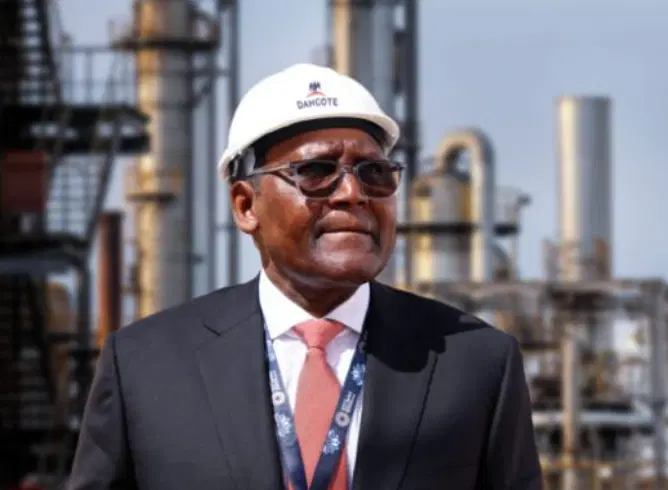
Dangote Refinery Ends Nigeria’s Era of Fuel Import Dependence, Boosts GDP, FX Earnings — EIU
The operational ramp up of the 650,000 barrels per day Dangote Petroleum Refinery & Petrochemicals is fundamentally reshaping Nigeria’s downstream oil sector, significantly reducing the country’s dependence on imported refined petroleum products and strengthening its external position, according to the Economist Intelligence Unit (EIU).
In its latest assessment on Nigeria’s fuel market and regulatory environment, the EIU said the refinery has already transformed a sector that was previously characterised by heavy reliance on imported fuel despite Nigeria being Africa’s largest crude oil producer. The report noted that the refinery met nearly 80 per cent of domestic petrol demand in April and produced enough volumes to satisfy local consumption requirements as operations approached full capacity.
The EIU described Nigeria’s downstream petroleum sector before the refinery as “long dysfunctional”, noting that the country had remained almost entirely dependent on costly imported fuel while producing nearly 1.5 million barrels of crude oil daily.
According to the report, the emergence of the refinery has reduced import dependence, improved domestic fuel availability and strengthened Nigeria’s balance of payments position through lower import demand and rising exports of refined petroleum products.
“The gradual ramp up of the 650,000 barrel/day Dangote refinery since May 2023 has transformed Nigeria’s long dysfunctional downstream sector,” the report stated. “The country’s main refineries, all state owned, had been inoperative for years and Nigeria was almost entirely reliant on costly imported fuel.”
The research and analysis division of The Economist Group, London added that the refinery’s attainment of full operational capacity and its planned expansion would further support Nigeria’s economic growth and foreign exchange earnings over the medium term.
“Meanwhile, the attainment of full capacity at, and an increase in exports from, the Dangote refinery will support real GDP growth and foreign exchange earnings in 2026 and 2027 and beyond, as a planned doubling of the plant’s output comes on stream around the end of the decade,” it added.
Industry analysts said the refinery is increasingly positioning Nigeria as an emerging refining and export hub, altering energy trade flows across Africa and reducing the vulnerability associated with fuel import dependence.
The EIU noted that the refinery’s expansion has coincided with major reforms in Nigeria’s downstream sector, including the removal of fuel subsidies and the introduction of market driven pricing mechanisms.
The report, however, said the transition from a state dominated fuel import structure to large scale domestic refining has triggered resistance from interests linked to the old import regime.
The latest tensions emerged following the decision by the Nigerian Midstream and Downstream Petroleum Regulatory Authority to relax restrictions on petrol imports despite the refinery’s growing capacity to meet domestic demand.
Dangote Industries subsequently initiated legal action, arguing that continued import approvals undermine domestic refining investments and conflict with the objectives of the Petroleum Industry Act, which seeks to encourage local refining capacity and reduce import dependence.
Analysts noted that the availability of large-scale domestic refining capacity has improved Nigeria’s energy security and reduced exposure to external supply shocks and foreign exchange volatility.
The Centre for the Promotion of Private Enterprise also cautioned against unrestrained importation of petroleum products, warning that such a policy could weaken Nigeria’s industrialisation drive and discourage investments in domestic refining.
Chief Executive Officer of CPPE, Muda Yusuf, said continued dependence on imported fuel had historically contributed to pressure on foreign reserves, exchange rate instability and fiscal leakages.
The refinery’s growing impact is also being reflected in Nigeria’s broader macroeconomic indicators. Earlier this month, S&P Global Ratings cited increased domestic refining capacity and rising hydrocarbon exports among the major factors supporting Nigeria’s sovereign credit rating upgrade – the first in 14 years.
Beyond Nigeria, analysts said the refinery is increasingly being viewed as a strategic industrial asset for Africa, where many countries remain heavily dependent on imported fuel despite rising demand for transportation, manufacturing, and power generation.
Business
BREAKING: Court Dismisses $19.6 Million Claim Against NNPCL — Rules Contract Scope Cannot Be Changed Orally
BREAKING: Court Dismisses $19.6 Million Claim Against NNPCL — Rules Contract Scope Cannot Be Changed Orally
In a landmark ruling on Friday, May 22, 2026, the Federal Capital Territory High Court in Abuja threw out a $19.6 million lawsuit filed by Alternate Dimensions Ventures Ltd against the Nigerian National Petroleum Company Limited (NNPCL), affirming a key legal principle: a written contract cannot be expanded through oral agreements or conduct.
Alternate Dimensions had sought $19,600,000 in professional fees, claiming the scope of its Direct Sale, Direct Purchase (DSDP e-pro) contract with NNPCL was orally expanded. Represented by counsel Patrick Peter, the firm argued it was entitled to the revised sum for services rendered under the alleged new terms.
But NNPCL, through its lawyer Ituah Imhanze of KENNA LP, pushed back sharply, arguing that parties are bound exclusively by the clear terms of their written agreement. Imhanze contended that without any written amendment, the claim was legally unsound, and the court agreed.
Delivering judgment, Justice Hamza Mu’azu upheld NNPCL’s defense, stating that the contract was unambiguous and that no evidence was adduced during the trial, which supported the alleged scope expansion. The court further found that NNPCL fully complied with all contractual terms and committed no breach.
Dismissing the suit as meritless, Justice Mu’azu reinforced the doctrine of sanctity of contract: any amendment to a written agreement must be express, unequivocal, and documented, not implied or verbal.
The ruling spares NNPCL from the S19.6 million claim and also a floodgate of similar potential liabilities.


- When women farm better, Eswatini eats better June 3, 2026
- Togo Hosts the 8th Annual Forum of National Volunteer Agencies in the Economic Community of West African States (ECOWAS) Region June 3, 2026
- Indigenous Peoples gravely vulnerable to Ebola epidemic, warn United Nations (UN) independent experts June 3, 2026
- Meeting between Parliamentary Vice-Minister ONISHI and His Excellency (H.E.) Mr. Cosgrow, Principal Minister and Minister for Agriculture, Fisheries and Blue Economy of Seychelles June 3, 2026
- Eritrea: Construction of Elementary School in Gogni Sub-Zone June 3, 2026
- African Union Commission (AUC) Chairperson His Excellency (H.E.) Mahmoud Ali Youssouf highlighted thePermanent Representatives’ Committee (PRC) critical role in advancing the Union’s agenda and laying the groundwork for the forthcoming Mid-Year Coordination Meeting (MYCM) June 3, 2026
- Eritrea: Eighth Grade National Examination Commences June 3, 2026
- Many Africans see justice system as unequal, costly, and slow, Afrobarometer survey reveals June 3, 2026
- Prof. Benedict Oramah to Chair Finance Summit as African Energy Week (AEW) 2026 Prepares for Major Deal Flow June 3, 2026
- The Islamic Development Bank (IsDB) Group Affiliates to Host the 14th Private Sector Forum in Baku, Azerbaijan (16-19 June 2026) June 3, 2026
- When women farm better, Eswatini eats better June 3, 2026
- Togo Hosts the 8th Annual Forum of National Volunteer Agencies in the Economic Community of West African States (ECOWAS) Region June 3, 2026
- Indigenous Peoples gravely vulnerable to Ebola epidemic, warn United Nations (UN) independent experts June 3, 2026
- Meeting between Parliamentary Vice-Minister ONISHI and His Excellency (H.E.) Mr. Cosgrow, Principal Minister and Minister for Agriculture, Fisheries and Blue Economy of Seychelles June 3, 2026
- Eritrea: Construction of Elementary School in Gogni Sub-Zone June 3, 2026
- African Union Commission (AUC) Chairperson His Excellency (H.E.) Mahmoud Ali Youssouf highlighted thePermanent Representatives’ Committee (PRC) critical role in advancing the Union’s agenda and laying the groundwork for the forthcoming Mid-Year Coordination Meeting (MYCM) June 3, 2026
- Eritrea: Eighth Grade National Examination Commences June 3, 2026
-

 news6 months ago
WHO REALLY OWNS MONIEPOINT? The $290 Million Deal That Sold Nigeria’s Top Fintech to Foreign Interests
-

 society1 month ago
SOCIAL MEDIA IS NOT A BATTLEFIELD COMMAND – WHY THE NIGERIAN ARMY’S ACTION AGAINST JUSTICE CRACK IS A NATIONAL SECURITY IMPERATIVE
-

 celebrity radar - gossips4 months ago
Dr. Chris Okafor Returns with Power and Fire of the Spirit -Mounts Grace Nation Altar with Fresh Anointing and Restoration Grace on February 1, 2026
-

 celebrity radar - gossips6 months ago
Prophet Kingsley Aitafo Releases 2026 Prophecy: ‘Nigeria Will Rise, but the World Must Prepare for Turbulence’
You must be logged in to post a comment Login
You must log in to post a comment.