
society
How to kill Biafra and Oduduwa Republics – by Uzoma Ahamefule Part 1

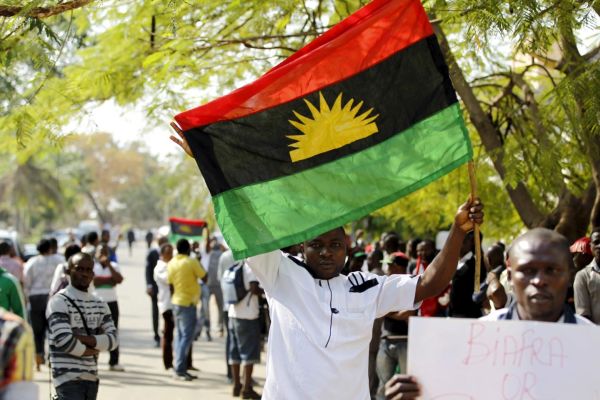
How to kill Biafra and Oduduwa Republics – by Uzoma Ahamefule
Part 1
The basic causes for the clamoring of Biafra and Oduduwa republics were results of injustice and unfairness. Consequently, if we must talk on how to kill the agitations, we must first briefly look at the foundations on which this injustice stands because the doctrine of the maxim of equity states that one who goes to equity must go with clean hands.
It is a common historical knowledge that the amalgamation of all the nations British people invaded as a union in 1914 was forcefully done without the consent of the component units. It was the colonial master’s idea solely for the British interests. History also recorded that all the Nigerian constitutions prior to independence – Clifford’s Constitution of 1922, Richard’s Constitution of 1946, Macpherson’s Constitution of 1951 and Lyttleton’s constitution of 1954 – were never from Nigerians. It is also on record that the constitution we are presently using isreally not written by Nigerians with people’s mandate to do so, but rather by a few privileged military officers who only were highly qualified as ethnic leaders considering the one–sided book they wrote as a statute. It is equally of importance to note that Nigeria would have had independence before 1960, but it was shifted and negotiated with the influence of the British colonists to be in 1960 because the northerners would not have been ready before then.

Once more, records available show that in exception of Major General Aguiyi Ironsi’s 194 days as military head of state, Gen. Olusegun Obasango’s 11 years leadership – three (3) years as a military dictator and eight (8) years as a civilian president – and Dr. Goodluck Jonathan’s five (5) years as a civilian president every other Nigerian leader since the independence in October 1960 has continued to come from the north. Mathematically, for almost 62 years existence of Nigeria as an independent nation the entire south (south-west, south-east and south-south) has had only about 16 years at the helm of affairs while the north at the end of Buhari’s regime would have already had more than 46 years. Now within the political regions in the south, while the south west has had good 11 solid years through Obasanjo, south-south five (5) years via Jonathan, the people from the eastern part of the country – the Igbos – are conspicuously missing except the merely 194 days of Ironsi.
Consequently, there is absolutely nothing in the Nigerian union that was fundamentally built on equity and fairness. These are some of the basic squabbles of Nigeria’s troubles that we have unfortunately expanded instead of redressing them. How?
We have 36 states in Nigeria, and 19 states are located in the north and if one includes Abuja, the federal capital, it becomes 20, and 16 states in the south. Nigeria has about 774 local governments and Kano and Katsina alone have more than 78 local governments and 845 political wards. I am perplexed because I cannot fathom out the criteria used in creating 44 local governments – and 484 political wards – in Kano State alone and only 20 local governments in a state like Lagos with just 245 political wards. I do not understand the index applied that made it a taboo not to create another state from Oyo and Akwa Ibom States and two more states from the eastern political region.
Since Nigerian leaders for the sake of justice and equity thought it to be wise to have what they called quota system so that money or allocations from the federal level can in equilibrium be distributed to every part of Nigeria fairly in order to make all have that feeling of belonging in one country, it will equally be reasonable and just that the same quota system is applied in sharing power so that we all will also have that sense of belonging. Anything less is a well-calculated attempt to manipulate justice, and it is evil.
The basic principles of “Federal Character” as enshrined in the fraudulent Nigerian constitution in 1979 was to promote national unity and to avoid predominance of persons or ethnic groups against another. This simply translates that we have differences, and that we have recognized these unavoidable facts and tried to justly do something to foster unity amongst us, and in our diversity coexist in fairness and harmony. Sequel to the fact that we have applied “Federal Character” or “Quota System” in making sure that the natural resources from petroleum products that come from the south are equitably distributed, we are irredeemably pinned without any option to also apply the same system in power sharing for a healthy and a rancor free society.
The president of Nigeria should be rotational because under the current arrangement and considering our sentiments and mentalities – where religion, ethnicity and money play big roles – for instance, minority groups and Igbos are highly disadvantaged and can never produce the president of Nigeria under this structure. The system looks standard and democratic, but the real fact is that there is absolutely nothing standard and democratic about it. It is an unfair systematic strategy concocted and made to look acceptable by legalizing it to the advantage of the north against other regions. The damage was done when they created more states, more local governments and more wards in the north and less in the south thereby getting more federal allocations every month, more lawmakers in the lower and upper chamber and a greater number of party delegates who actually decide the person that becomes the presidential flag bearer of every political party. How fair is this structure for other regions to competitively challenge the north in producing a presidential candidate of their respective parties or passing balanced bills in the Senate and House of Reps in Nigeria? Constitutionalized unjustness like this is why some people have got the guts and the impetus to arrogantly make provocative statements boldly that Nigeria belongs to them. How can we in all conscience accept, approve and justify the high level of injustice, inequality, anti-progress and unjustifiable arrangements clearly practiced in Nigeria?
To be continued.
Uzoma Ahamefule, a concerned patriotic citizen and a refined African traditionalist, writes from Vienna, Austria




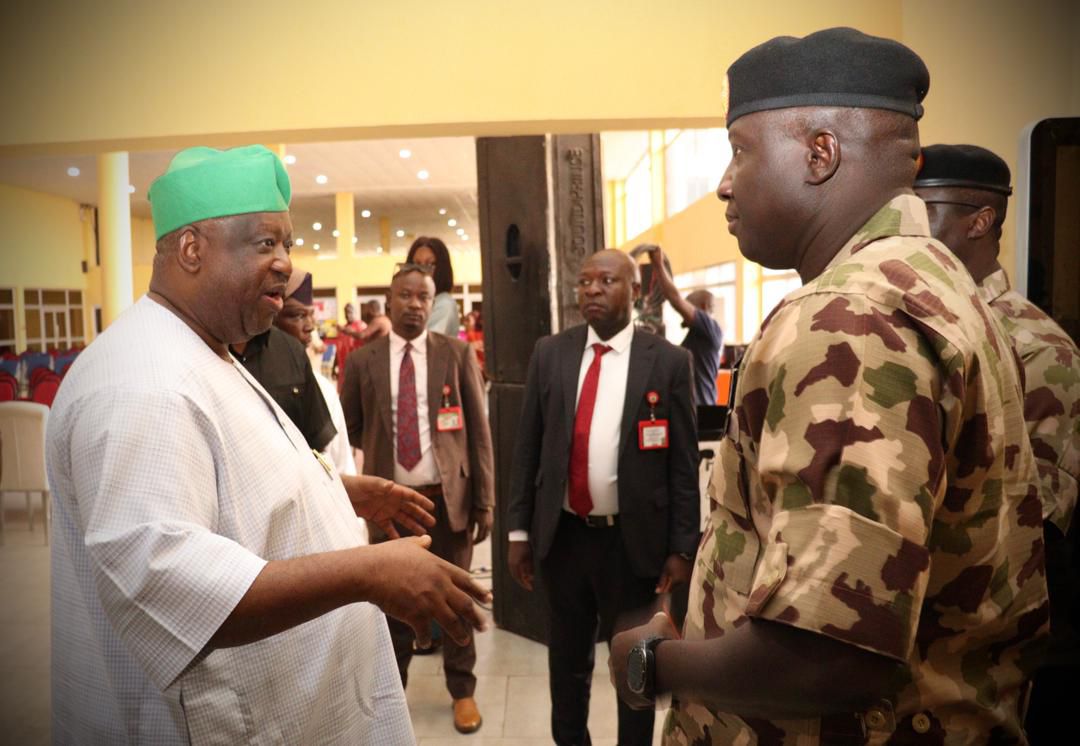
COAS Launches Nationwide Security Renewal Mission in Plateau
The Chief of Army Staff, Lieutenant General Waidi Shaibu, on Thursday led a high-level delegation of security chiefs to Plateau State, flagging off a nationwide security renewal mission aimed at strengthening civil-military cooperation and restoring lasting peace across the country.
The visit to Jos, the Plateau State capital, marks the first phase of a coordinated national effort to address persistent security challenges through joint operations, community engagement, and proactive intelligence gathering.

Governor Caleb Muftwang received the delegation, describing the initiative as a critical step toward stabilizing affected communities and reinforcing public confidence in security institutions.
Civil-Military Synergy Takes Centre Stage
At the heart of the mission is a renewed emphasis on collaboration between the military, civil authorities, and local communities. Speaking during the visit, Lt. Gen. Shaibu stressed that national security must be treated as a collective responsibility.
He urged citizens to support security agencies by remaining vigilant, sharing credible information, and complying with lawful directives, noting that effective security cannot be achieved in isolation.
Community Engagement as Confidence-Building Tool
In a departure from purely operational engagements, the Army Chief held direct consultations with community leaders and residents in Jos, reinforcing the importance of trust and dialogue in conflict resolution.
Lawmakers, including Dachung Bagos and Ladi Dangyok, commended the initiative, stating that visible engagement by top military leadership helps rebuild confidence among citizens and fosters cooperation.

Proactive Security Operations Underway
Operational updates were provided by Major General Folusho Oyinlola, who disclosed that troops under Operation Enduring Peace have intensified surveillance, intelligence-led patrols, and coordinated actions with other security agencies.
According to the Army, the approach is designed to prevent escalation of threats, safeguard lives and property, and stabilize vulnerable communities before crises emerge.
A Shift Toward Sustainable Peace
Military authorities emphasized that the Plateau visit is part of a broader, long-term strategy to transition from reactive responses to sustainable peacebuilding nationwide. The framework includes strengthening local resilience, ensuring justice, and maintaining continuous engagement with stakeholders.
Analysts view the initiative as a significant policy shift, reflecting a more inclusive security architecture that integrates community participation with military operations.
Call for National Unity
The Army leadership concluded with an appeal to Nigerians to reject divisive narratives and support ongoing efforts to promote unity and peace.
“The success of this mission depends not only on the armed forces but on the cooperation of every citizen,” the COAS stated.
The nationwide security renewal campaign is expected to extend to other regions in the coming weeks as authorities seek to consolidate gains and build a safer, more unified Nigeria.


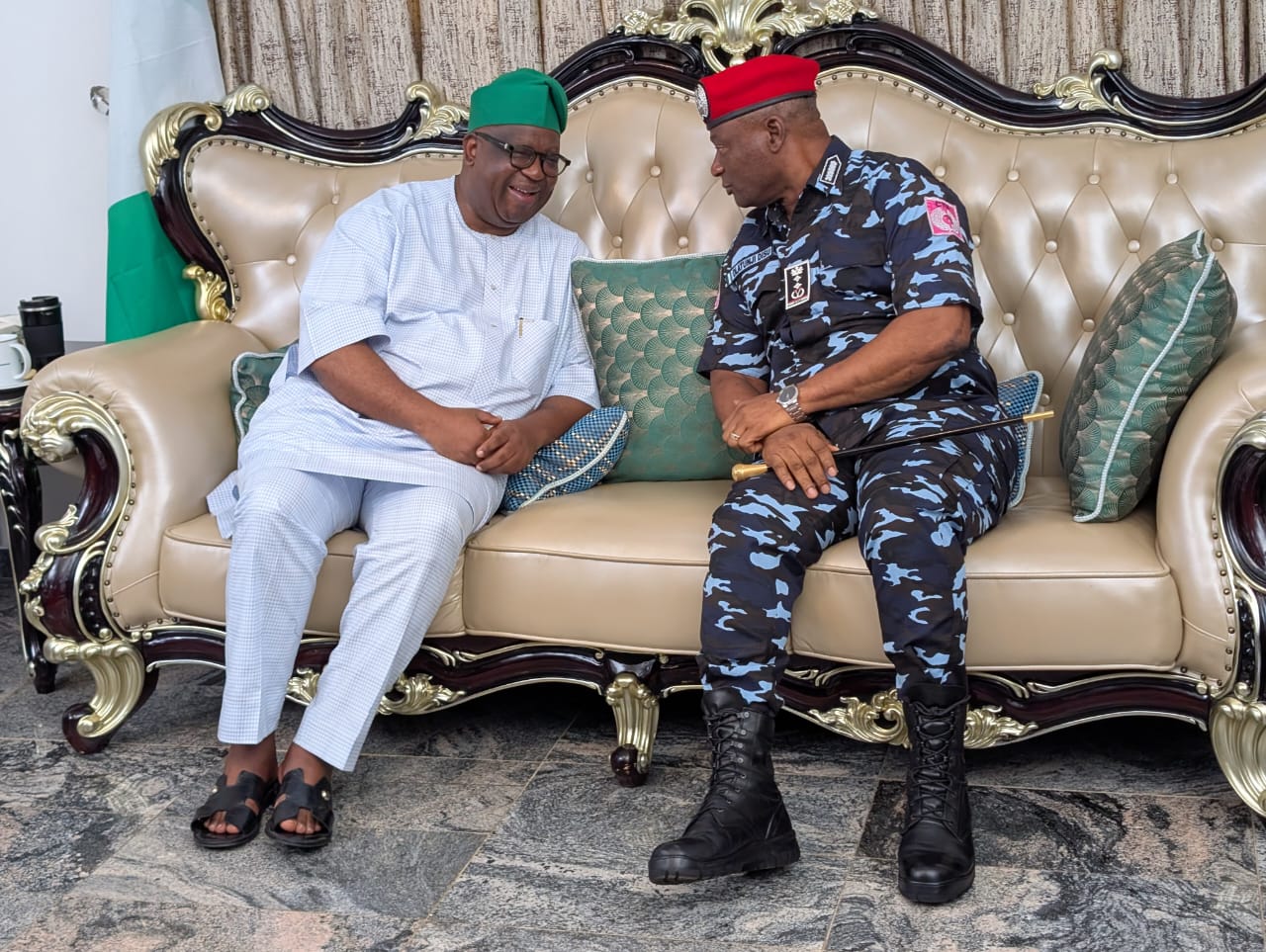
IGP Disu Visits Plateau, Orders Tactical Deployment To Reinforce Security
The Inspector General of Police, Olatunji Disu, on Thursday paid a working visit to Plateau State following recent unrest, holding strategic talks with Governor Caleb Muftwang on measures to strengthen security and prevent further disturbances.
As part of immediate steps to stabilise the situation, the police chief authorised the deployment of specialised tactical units to support officers already on ground across affected areas.
Governor Muftwang commended the swift intervention of the police leadership, praising the dedication and professionalism of security personnel working to restore calm. He also acknowledged the efforts of mobile police officers and lauded the leadership of the state’s Commissioner of Police, Bassey Ewah.
Both the Nigeria Police Force and the Plateau State Government reaffirmed their commitment to safeguarding lives and property, stressing that enhanced collaboration remains key to restoring lasting peace in Plateau State, popularly known as the Home of Peace and Tourism.


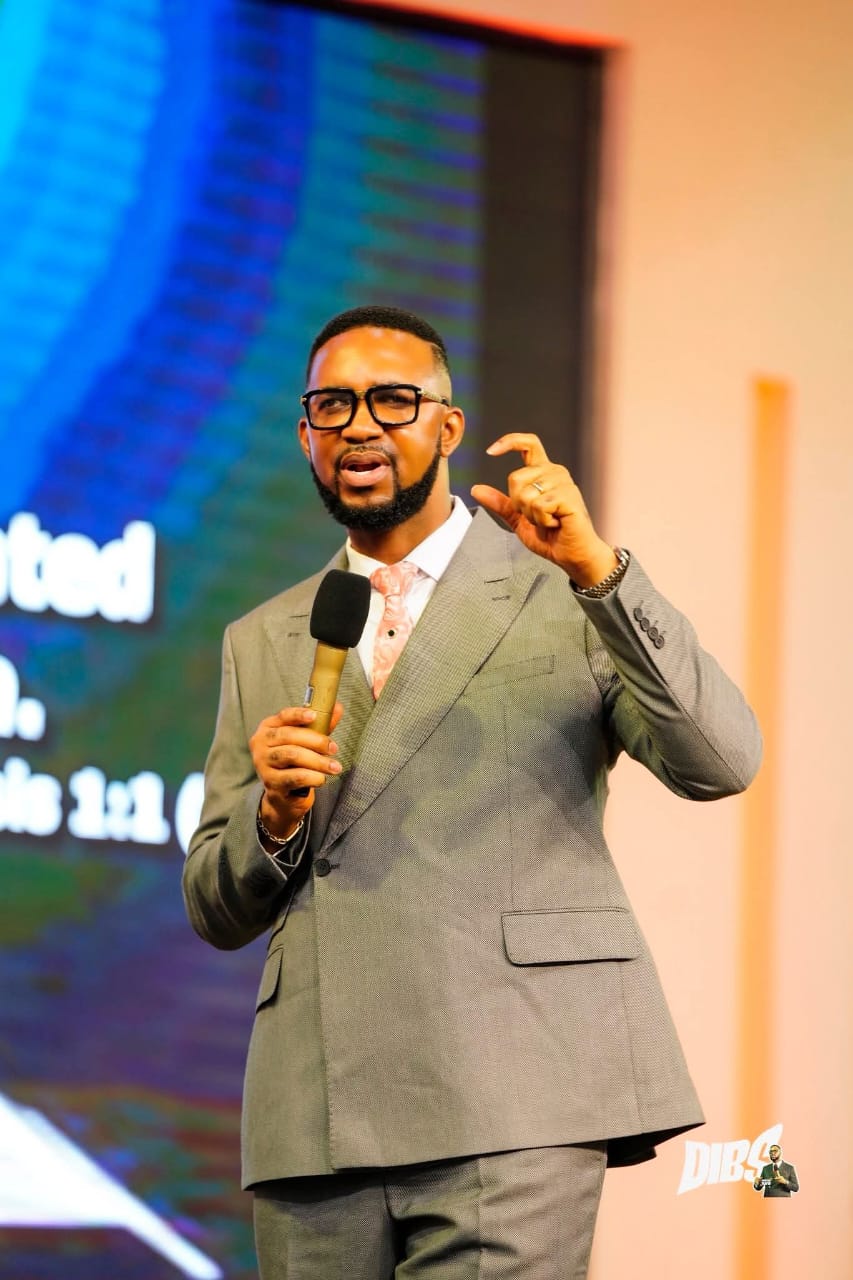
Grace Nation Worldwide: A Living Reality – Dr. Chris Okafor
……“Miracles, Healing, and Deliverance Overflow at Grace Nation Services”
The Grace Nation midweek Prophetic Healing, Deliverance, and Solutions (PHDS) Service on 2nd April 2026 at the international headquarters in Ojodu Berger, Lagos, was a spectacular display of God’s power, marked by miracles, healing, and deliverance.
The God of Grace Nation continues to demonstrate His authority, breaking strongholds, healing the sick, restoring lost glory, and providing solutions to every problem presented at His altar.
Testimonies of God’s Power
One woman, previously diagnosed with a terminal condition and slated for a ₦4.5 million surgery due to inability to excrete, was prayed for by the Generational Prophet, Christopher Okafor, just a week after visiting the church. Declaring healing within 24 hours, she returned to testify to God’s miraculous intervention.
Another pregnant woman, whose baby was bridged and at risk, was located and prayed for. She returned to service with confirmation that her child is now well-positioned for delivery. Similarly, a woman booked for a C-section due to an overdue and poorly positioned pregnancy testified during the service that her baby is now properly positioned, ready for birth.
These testimonies underscore the truth: what God cannot do does not exist. Grace Nation has entered a new level of spiritual authority, and with faith, believers are witnessing the impossible become reality.
God Works by Principle, Not Gossip
In his sermon, Dr. Okafor emphasized that God does not operate on superstition, gossip, or social media pressures. His work is grounded in His Word, and it is through adherence to His principles that Grace Nation continues to flourish.
The Generational Prophet stressed that to enjoy divine blessings and fruitfulness, believers must remain connected to God’s Word, faithfully serve Him, and ignore distractions or side-talks. Focused commitment to God’s service guarantees alignment with His miraculous power.
Join the Movement
Grace Nation Worldwide is open for all who desire a life transformed by divine intervention. Weekly services include:
Sunday Service: 7:00 AM
Grace Nation Island Service (Ogombo): Wednesday, 5:00 PM
Midweek PHDS Service: Thursday, 7:00 AM
Attending these services under the ministry of the Generational Prophet ensures encounters with God’s supernatural power, life-changing miracles, and lasting breakthroughs.
Grace Nation Worldwide is not just a church—it is a reality where faith meets the supernatural.
By Sunday Adeyemi


-

 society6 months ago
Religion: Africa’s Oldest Weapon of Enslavement and the Forgotten Truth
-

 news4 months ago
WHO REALLY OWNS MONIEPOINT? The $290 Million Deal That Sold Nigeria’s Top Fintech to Foreign Interests
-

 society6 months ago
“You Are Never Without Help” – Pastor Gebhardt Berndt Inspires Hope Through Empower Church (Video)
-

 celebrity radar - gossips2 months ago
Dr. Chris Okafor Returns with Power and Fire of the Spirit -Mounts Grace Nation Altar with Fresh Anointing and Restoration Grace on February 1, 2026