
society
I Better Pass My Neighbour: The Toxic Superiority Complex Destroying the Nigerian Social Fabric

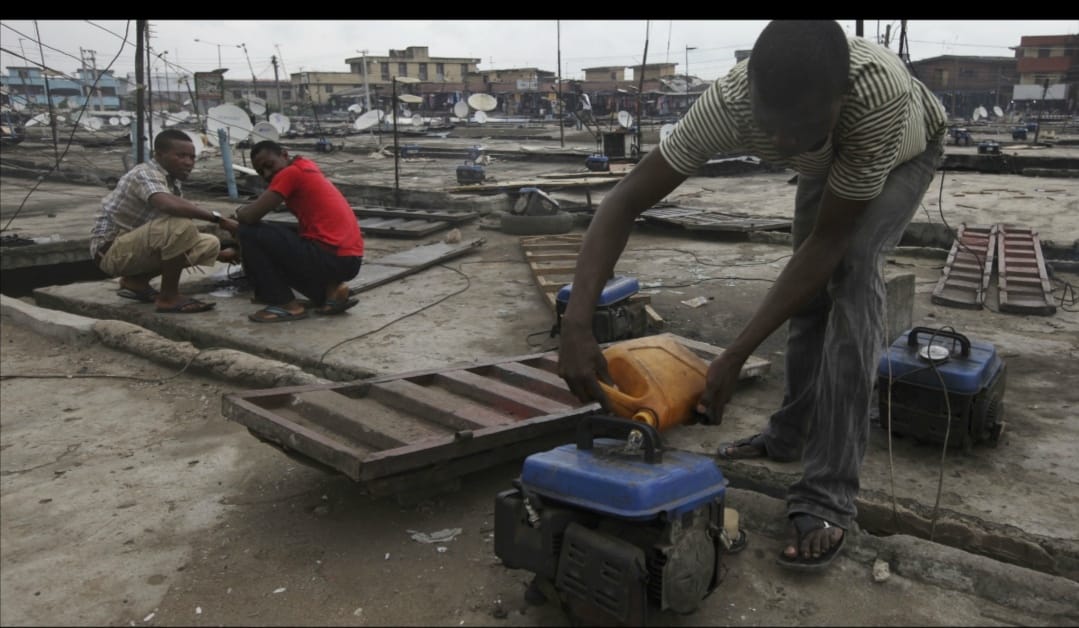
I Better Pass My Neighbour: The Toxic Superiority Complex Destroying the Nigerian Social Fabric.
By George Omagbemi Sylvester | Published by SaharaWeeklyNG.com
In Nigeria, the societal obsession with “I better pass my neighbour” is no longer just a joke tied to a noisy portable generator. It has become a deeply entrenched cultural mindset, festering across economic classes and bleeding into every corner of our interactions. From the university campus to the corridors of political power and even in the dusty streets of Ajegunle or the polished parlours of Ikoyi, this mentality thrives; silently yet destructively.
The average Nigerian isn’t interested in community progress as much as they are obsessed with individual advancement; not for survival, but for status. Status, in this context, doesn’t mean achievement through merit; it means appearing to be doing better than the next man. In a country where poverty, unemployment and insecurity are rife, many Nigerians have resorted to comparison as a means of self-validation. And what’s more tragic? This mindset has become generational.
A Society Obsessed with Appearances, Not Substance
The infamous phrase “I better pass my neighbour,” associated with a low-cost power generator, wasn’t just a brand gimmick; it was a mirror of Nigerian society. We laugh at it, but its popularity reflects the larger societal mindset: as long as I’m better off than you, I’m winning. No concern for collective good. No solidarity. No empathy. Just one goal ~ to appear more successful, even if it means going into debt, lying or oppressing others.
A few months ago, shortly after President Bola Ahmed Tinubu assumed office, a popular slogan emerged from many Nigerians: “ _This government will favour me and my family_.” That single statement, echoed in countless WhatsApp groups and street corners, revealed a chilling truth: _we no longer care about national good; all that matters is personal gain._
How can a country grow when its citizens only think in terms of “ _me and mine_”? How do we demand accountability when the average voter supports looters simply because they belong to the same tribe, party or religion?
Classism in Everyday Life
Let’s not deceive ourselves; Nigerians are deeply classist. We respect people based on their financial worth or material possessions. You can be wise, moral or kind, but in Nigeria, if you don’t drive a flashy car or have a prestigious job title, YOU’RE NOT RESPECTED. This toxic culture plays out in the smallest things, like when someone insists on walking you to the gate after a visit. Not out of hospitality, but to PEEP at your CAR and MEASURE your STATUS.
A wealthy man gets away with fraud and we say, “ _At least he helps people_.” A poor man commits the same crime, and he’s crucified. HYPOCRISY wears a Nigerian jersey.
Even among peers, standards are selectively enforced. A person from a lower socio-economic background is mocked for speaking poor English or dressing modestly. But if the same mistake is made by a rich person or someone of similar social standing, we look the other way.
The Uber Example: Misplaced Arrogance
Consider a 25-year-old lady, fresh out of NYSC, who hasn’t held a proper job, yet she sits in an Uber and speaks down at the driver like he’s trash. Why? Because society has taught her that being a passenger puts her above the driver (never mind that he’s probably more hardworking and better educated. In another setting, where social roles are reversed, say she’s on foot and he’s in a private car) she would suddenly find her manners.
As Chinua Achebe once said, ” _The trouble with Nigeria is simply and squarely a failure of leadership._” But one might add, it’s also a failure of character, widespread across the citizenry. Leadership doesn’t exist in a vacuum; it reflects the people. The leader is often the loudest echo of the society that produced him.
Cultural Hypocrisy and the Nigerian Middle Class
The middle class (supposedly the moral compass of any democratic society) is no better. Rather than pushing for reforms, they engage in ostentatious displays of wealth, from social media brags to naming their kids after luxury cars. They rent expensive outfits for weddings, borrow money to fund birthdays and are obsessed with outshining their friends. Conversations in many Nigerian homes are filled with phrases like:
_“My friend just bought a Benz.”_
_“Why is your cousin still living in that area?”_
_“We can’t send our kids to that school; it’s for poor people.”_
Meanwhile, these same individuals will remain silent on governance failures, injustice or even inflation as long as they can still afford _SUYA,_ _DSTV_ and _WEEKEND DRINKS._
A Nation Divided by Petty Competition
This unhealthy rivalry isn’t limited to the elite or the educated. From the mechanic in Ibadan to the petty trader in Aba, everyone is competing, often against invisible enemies. Instead of lifting one another, we ridicule. Instead of mentoring, we mock. Nigerians build fences taller than their houses not just for security, but to hide what’s going on inside. It’s not just about being safe, it’s about being mysterious and envied.
According to a report by the World Inequality Database, Nigeria is one of the most unequal societies on earth, with the top 1% earning disproportionately more than the bottom 50%. Yet, even within the bottom 50%, the quest to “ _APPEAR BETTER_ ” persists, a sign that our value system is not just broken but dangerously inverted.
How Did We Get Here?
Post-colonial Nigeria inherited a distorted social structure, but what we’ve done with it is far worse. Decades of bad governance, corruption and social instability have made many Nigerians see survival as a game of one-upmanship. The social contract has broken down. Nobody trusts the system, so everyone looks out for themselves, even at the expense of others.
As Fela Kuti famously sang, “ _Suffer, suffer for world… enjoyment for heaven_!” Nigerians have been told to endure, aspire and dream (but the dreams are no longer about dignity or justice. They’re about owning iPhones, buying plots in Banana Island and being invited to exclusive weddings. The average man no longer dreams of a better Nigeria) he dreams of escaping it or at least looking like he already has.
The Way Forward: Reorienting Our Value System
It’s time we had difficult conversations. WHAT KIND OF SOCIETY DO WE WANT TO BUILD? DO WE WANT A NIGERIA WHERE SELF-WORTH IS MEASURED BY HOW MANY PEOPLE WE’RE BETTER THAN, OR ONE WHERE WE LIFT EACH OTHER UP?
As former Nigerian President Goodluck Jonathan once said, “ _If you don’t value education, you will be ruled by ignorance._” Similarly, if we don’t value humility, empathy and collective progress, we will continue to be ruled by greed, classism and moral emptiness.
This is a call for social introspection. Let’s teach our children that drivers, cleaners and artisans are not beneath them. Let’s celebrate hard work over handouts, values over valuables. Let’s walk each other to the gate not to assess, but to appreciate. Let us normalize treating everyone with dignity not because of what they own, but because they are human.
Until then, _“I better pass my neighbour”_ will remain more than a noisy generator. It will continue to be the anthem of a decaying society.


Published by SaharaWeeklyNG.com
Written by George Omagbemi Sylvester
For inquiries, feedback, or republishing rights, contact [email protected]




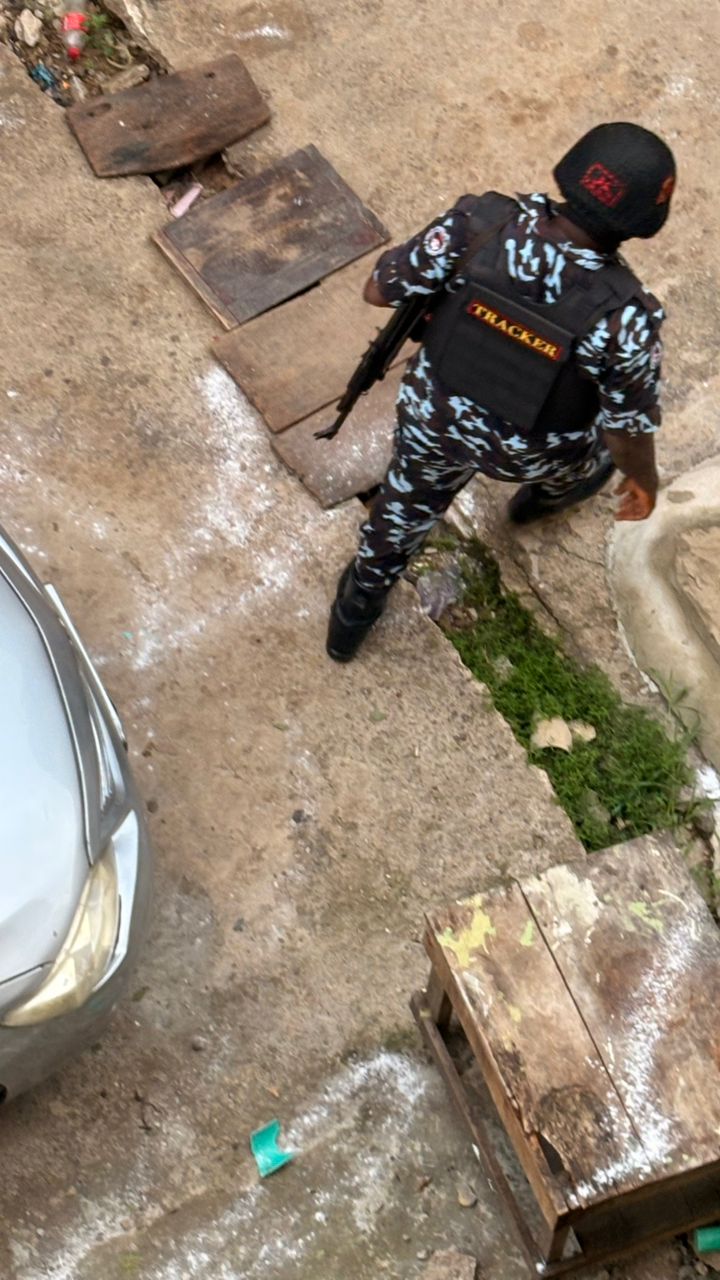
Police Officers Detained as Family Property Dispute Sparks Demolition Controversy in Lagos
By Ifeoma Ikem
A property dispute within the Omotayo-Ojo family has taken a dramatic turn following a controversial demolition exercise at a residential building in Ikosi-Ketu, Lagos State, which reportedly left tenants displaced and led to the detention of some police officers allegedly involved in the operation.

The property, located at 23B Loveall Street, Ikosi-Ketu, has been the subject of a prolonged ownership tussle since the death of its owner, Chief Oludola Omotayo Ojo, the Babaalaje of Imesi-Ile, Osun State, in 2019.
Residents said tension erupted when a group of individuals, accompanied by security operatives, stormed the premises and commenced demolition activities.
According to eyewitnesses, portions of the building were pulled down while tenants rushed to salvage their belongings from affected apartments.
The residents alleged that windows, doors and roofing sheets were damaged during the exercise, exposing parts of the building to the elements and causing significant losses to occupants.
At the centre of the dispute is Mrs Mojisola Omotayo Ojo Alolagbe, who claimed that the property was allocated to her by her late father during his lifetime as a source of financial support.
She alleged that some family members had persistently challenged her ownership claim despite ongoing legal proceedings relating to the administration of the deceased’s estate.
Alolagbe further claimed that the latest incident was part of a series of attempts to wrest control of the property, citing previous cases of alleged vandalism and partial demolition in November 2025, January 2026 and February 2026.
The situation escalated further when reports emerged that police officers allegedly involved in the demolition were later apprehended and conveyed in a Black Maria vehicle over questions surrounding the legality of their participation in the operation.
Sources familiar with the matter said those behind the demolition had initially claimed to be acting on approval from the Lagos State Ministry of Lands. However, the authenticity and extent of such approval could not be independently verified as of the time of filing this report.
The development has generated concern among residents and community members, who questioned the involvement of security personnel in what they described as a civil matter.
Some tenants, who said they had recently renewed their tenancy agreements, lamented the destruction of their property and appealed to the authorities for protection and possible compensation.

They also called for a thorough investigation into the circumstances surrounding the demolition, insisting that the rights of all parties involved should be protected.
Stakeholders have urged the Lagos State Government, security agencies and the judiciary to intervene and ensure that the dispute is resolved through lawful means to prevent further escalation.
The controversy has continued to draw public attention, raising concerns over property rights, estate administration and the role of law enforcement agencies in civil disputes.

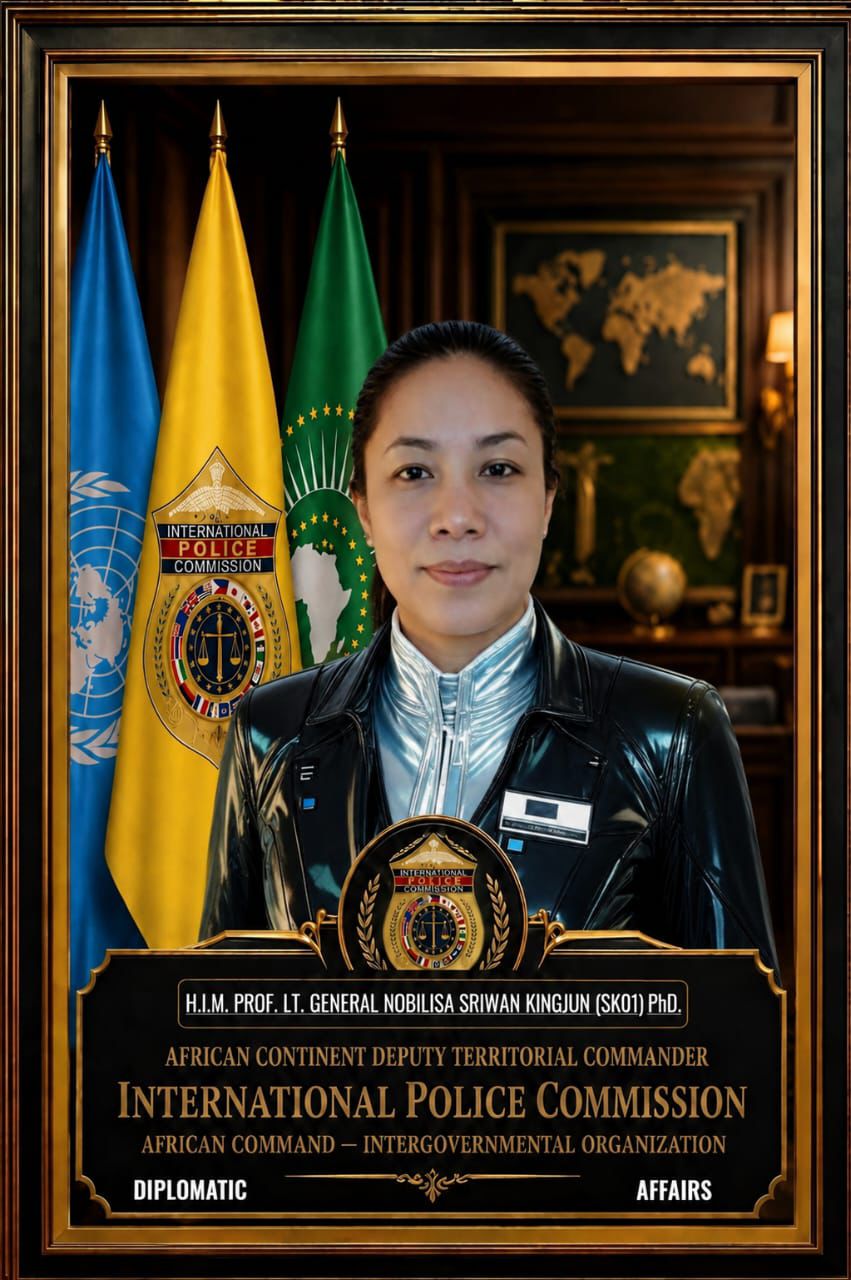
UKA Gears Up for Final ATC Exchangeability Test Run as June Preparations Begin.
May 30, 2026 – As the month of June gathers momentum, the *United Kingdom of Atlantis, UKA*, a sovereign nation has unveiled a series of vital guidelines and preparatory packages to ensure citizens and stakeholders run the *ATC Exchangeability* process effectively.
In an official update, the *President of Atlantic Crown Limited, Empress of Attica Empire UKA*, confirmed that the *Final Test Run of ATC Exchangeability* is scheduled for the month of June 2026. The exercise marks a key phase ahead of the *Official Exchangeability Window, set to run from July 2026 to February 2027*.
### Key Highlights from the Presidential Briefing
1. *Final Test Run – June 2026*
The test run is designed to validate systems, procedures, and user readiness before full activation. Citizens, partners, and designated participants are urged to follow all official advisories released by UKA authorities during this period.
2. *Official Exchangeability Period*
Following the successful completion of the June test run, the Official Exchangeability will commence in july 2026 and we are Expecting Full Exchange ability between July Ending, 2026 to February 2026.
UKA stated that detailed schedules, eligibility requirements, and step-by-step instructions will be communicated progressively through verified UKA channels.
3. *Benefiting Packages for June*
In line with UKA’s commitment to citizen empowerment, the month of June will feature “benefiting packages” aimed at education, preparation, and seamless onboarding. These packages are intended to equip the people of UKA with the knowledge and tools needed for effective participation.
4. *Commitment to Transparency*
Addressing the nation, the Empress of Attica Empire UKA emphasized:
_“Final Test Run of ATC Comes up in The Month of June, As We Prepare For The Official Exchangeability, Between July 2026 To Feb 2027. All Information Will Be Communicated.”_
UKA reaffirmed that only information released through official UKA platforms should be regarded as authoritative.
The United Kingdom of Atlantis is encouraging all citizens, representatives, and interested parties to remain alert to official communications, attend designated orientation sessions, and avoid unofficial sources. UKA’s dedication to order, clarity, and the collective benefit of its people as the nation moves into this significant phase.
For updates, advisories, and participation guidelines, citizens are advised to monitor official UKA communication channels.
United Kingdom of Atlantis, UKA, is a sovereign nation, committed to national development, citizen welfare, and structured economic participation through initiatives such as ATC Exchangeability.
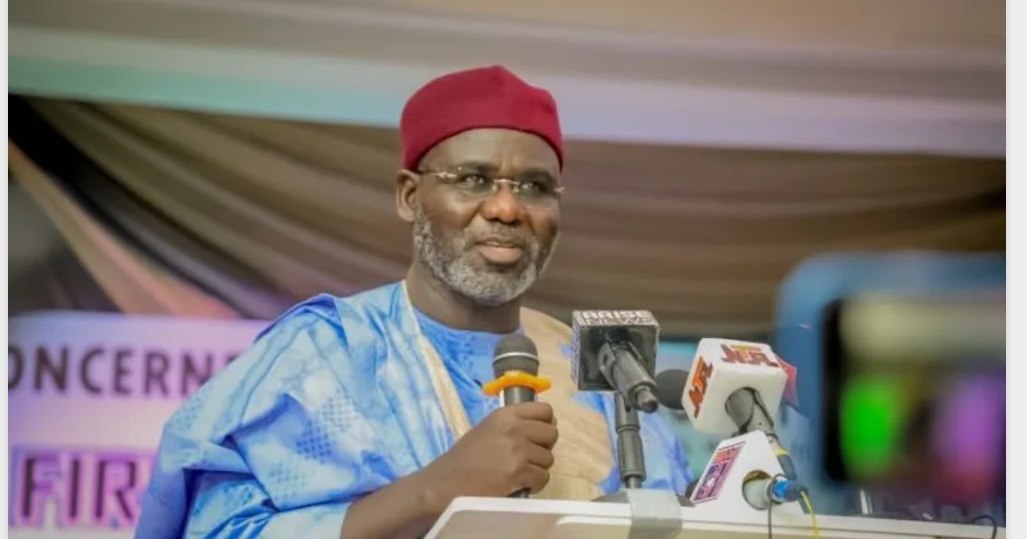
Three Years On, General Buratai Hails Tinubu’s Economic, Security Achievements
Former Chief of Army Staff, Lt. Gen. Tukur Buratai (retd.), has commended President Bola Ahmed Tinubu for what he described as bold economic reforms and improved security efforts as the President marks three years in office.
In a goodwill message on Thursday to commemorate Tinubu’s third anniversary as President and Commander-in-Chief of the Armed Forces, Buratai said the administration had taken courageous decisions that would leave a lasting impact on Nigeria’s development.

According to him, President Tinubu broke a long-standing cycle that had hindered national growth by removing fuel subsidy and implementing foreign exchange reforms aimed at stabilising the naira and strengthening the economy.
He noted that the reforms were beginning to yield positive results, citing the global acceptance of Nigerian debit cards, the gradual revival of local refineries, access to student loans, and ongoing road and infrastructure projects across the country.
“The FCT Administration has also recorded remarkable progress, completing major road projects that remained unfinished for over 16 years,” Buratai stated.
The former army chief also praised the administration’s security efforts, saying renewed military offensives against insurgents, terrorists and bandits had led to notable successes across various parts of the country.
He specifically lauded recent joint operations involving Nigerian and United States forces against Boko Haram and ISWAP in the North-East, as well as intensified counter-banditry operations in the North-West.
“We have seen notorious ISWAP commanders being neutralised. I congratulate the Commander-in-Chief, the Minister of Defence, the Chief of Defence Staff, the Service Chiefs, the Inspector-General of Police and heads of intelligence agencies for their efforts,” he said.
Buratai, however, acknowledged that challenges remained, stressing the need for more aggressive military operations and intelligence-driven strategies in the coming year.
While urging Nigerians to remain hopeful, he said celebrating the President’s achievements did not amount to ignoring the difficulties facing the nation.
“Because you truly care, you have shown the courage to trade short-term comfort for long-term hope. Nigerians need your reassurances, and that is why we remain optimistic and full of confidence,” he added.
The retired military officer reaffirmed his support for the Tinubu administration and expressed confidence that the foundation being laid by the government would deliver a brighter future for the country.
He also prayed for God’s guidance, wisdom, strength and good health for the President as he continues to lead Nigeria.


- Deputy (Dep.) Finance Minister Courts Investors to Transform Ghana’s rice Economy June 4, 2026
- Mobile health services in Kenya reduce the risk of stillbirths June 4, 2026
- JustMarkets Research Highlights Global Growth Divergence as a Key Market Driver June 4, 2026
- African Development Bank Group approves $125 million investment in African Trade and Investment Development Insurance (ATIDI) to expand risk insurance capacity in Africa June 4, 2026
- Congo Energy & Investment Forum 2027 to Position Brazzaville as a Hub for Global Energy Deal-Making June 4, 2026
- Africa Skills Hub (ASH) Transitions to ASH Africa as it Marks 10 Years of Impact June 4, 2026
- When women farm better, Eswatini eats better June 3, 2026
- Togo Hosts the 8th Annual Forum of National Volunteer Agencies in the Economic Community of West African States (ECOWAS) Region June 3, 2026
- Indigenous Peoples gravely vulnerable to Ebola epidemic, warn United Nations (UN) independent experts June 3, 2026
- Meeting between Parliamentary Vice-Minister ONISHI and His Excellency (H.E.) Mr. Cosgrow, Principal Minister and Minister for Agriculture, Fisheries and Blue Economy of Seychelles June 3, 2026
- Deputy (Dep.) Finance Minister Courts Investors to Transform Ghana’s rice Economy June 4, 2026
- Mobile health services in Kenya reduce the risk of stillbirths June 4, 2026
- JustMarkets Research Highlights Global Growth Divergence as a Key Market Driver June 4, 2026
- African Development Bank Group approves $125 million investment in African Trade and Investment Development Insurance (ATIDI) to expand risk insurance capacity in Africa June 4, 2026
- Congo Energy & Investment Forum 2027 to Position Brazzaville as a Hub for Global Energy Deal-Making June 4, 2026
- Africa Skills Hub (ASH) Transitions to ASH Africa as it Marks 10 Years of Impact June 4, 2026
- When women farm better, Eswatini eats better June 3, 2026
-

 news6 months ago
WHO REALLY OWNS MONIEPOINT? The $290 Million Deal That Sold Nigeria’s Top Fintech to Foreign Interests
-

 society1 month ago
SOCIAL MEDIA IS NOT A BATTLEFIELD COMMAND – WHY THE NIGERIAN ARMY’S ACTION AGAINST JUSTICE CRACK IS A NATIONAL SECURITY IMPERATIVE
-

 celebrity radar - gossips4 months ago
Dr. Chris Okafor Returns with Power and Fire of the Spirit -Mounts Grace Nation Altar with Fresh Anointing and Restoration Grace on February 1, 2026
-

 celebrity radar - gossips6 months ago
Prophet Kingsley Aitafo Releases 2026 Prophecy: ‘Nigeria Will Rise, but the World Must Prepare for Turbulence’