
Business
‘I can no longer walk on the street without taking at least 200 pictures with People – BBN Winner, Efe cries out



Bug Brother Naija winner, Efe, who also doubles as an artiste has revealed that he can no longer walk on the street without taking at least 200 pictures with his fans. This is no doubt the continuation of the love shown to him when he was in the house.
He has been signed to Davido’s record label and good music is expected to come from him anytime soon
Furthermore, Over the weekend, reports making rounds revealed that he visited the IDP Camp and shared provisions to the vulnerable over there




Business
HabariPay Launches Maiden “HabariPay Impact Report 2025”, Showcasing Its Journey, Business Evolution, and Contributions to Digital Payments
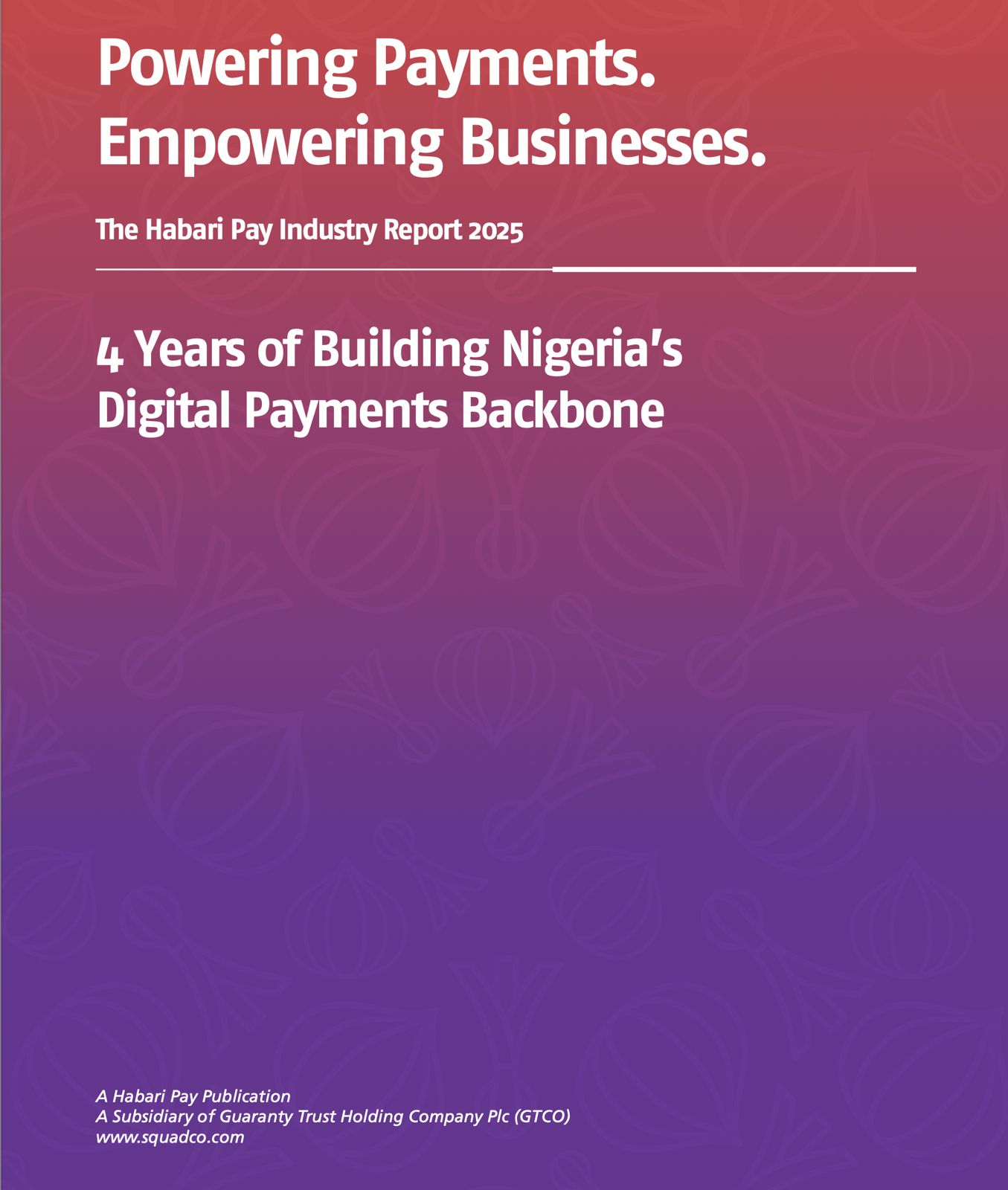
HabariPay Launches Maiden “HabariPay Impact Report 2025”, Showcasing Its Journey, Business Evolution, and Contributions to Digital Payments
HabariPay Limited, the fintech subsidiary of Guaranty Trust Holding Company Plc (“GTCO” or the “Group”), has unveiled its maiden HabariPay Impact Report 2025, providing stakeholders with a comprehensive account of the company’s evolution, innovation journey, business performance, and impact on the digital payments landscape.
The report captures HabariPay’s transformation from a newly established fintech venture into one of Nigeria’s leading payment infrastructure providers, highlighting the milestones, strategic decisions, and investments that have shaped its growth. It showcases the company’s contributions to enabling digital commerce, supporting businesses, strengthening payment infrastructure, and expanding financial access through technology-driven solutions.
The HabariPay Impact Report 2025 also highlights the company’s strong financial and operational performance, the growth of the Squad platform, and the development of infrastructure that powers payment acceptance, switching, transfers, merchant services, and value-added solutions. The publication further explores the role of innovation, talent development, and ecosystem partnerships in driving the company’s success.
Speaking on the launch of the report, the Managing Director of HabariPay, Eduofon Japhet, said: “As a technology-driven company, we believe that impact extends beyond financial performance. It is reflected in the businesses we enable, the merchants we support, the infrastructure we build, and the opportunities we create for the next generation of innovators. The HabariPay Impact Report 2025 captures this journey and demonstrates our commitment to creating sustainable value for customers, partners, and the broader economy.”
She further added: “The HabariPay Impact Report 2025 represents more than a reflection on our achievements; it is a testament to the deliberate investments we have made in building sustainable payment infrastructure, empowering businesses, fostering innovation, and creating long-term value for our stakeholders. As we look ahead, we remain committed to expanding our capabilities, deepening our impact, and shaping the future of digital payments through technology-driven solutions that are secure, scalable, and inclusive.”
The report also showcases HabariPay’s investments in innovation through initiatives such as the Take on Squad Hackathon and the Squad Hackademy, both of which are helping to develop future technology talent and accelerate the creation of practical solutions to real-world challenges.
Looking ahead, the publication outlines HabariPay’s vision for the future, including continued investment in payment infrastructure, merchant solutions, digital innovation, and intelligent technologies that will shape the future of financial services.
To access the HabariPay Impact Report 2025, please click the below: https://squadco.com/impact-report/
About HabariPay
HabariPay Ltd is the fintech subsidiary of Guaranty Trust Holding Company Plc (GTCO), one of the largest financial services institutions in Africa with direct and indirect investments in a network of operating entities located in 10 countries across Africa and the United Kingdom.
Licensed by the Central Bank of Nigeria (CBN), our goal is to support SMEs, micro merchants, large corporations, and other fintechs (Tech Stars) with the tools they need to thrive in an evolving digital economy and expand beyond their current market reach. HabariPay’s solutions include Squad, a full-scale digital payments toolkit to make in-person and online payments simpler, HabariPay Storefront, an e-commerce website to facilitate online purchases, Value-Added Services to help merchants access cost-effective and flexible airtime and data bundles to run their businesses, as well as a switching infrastructure that enables tech-focused businesses to optimise cost and make transactions more efficient.
HabariPay’s contributions to Accelerating Digital Acceptance in Africa have not gone unnoticed–it received Mastercard’s Innovative Mobile Payment Solution Award at TIA 2022 for its innovative payment solution, SquadPOS.
About Squad
Squad is a complete digital payments solution that is reliable, secure, and affordable, making receiving in-person and online payments simpler and convenient.
Thousands of merchants currently leverage Squad’s payment solutions for their daily business operations. Squad’s current products and service offerings include SquadPOS, Squad Payment Links, Squad Virtual Accounts, USSD, and E-Commerce Storefront.
Find out more at www.squadco.com

Fidelity Bank grows gross earnings by 38% to N434.95b in Q1
Fidelity Bank Plc recorded 37.9 per cent growth in gross earnings to N434.95 billion in first quarter 2026 as the international commercial bank continued to expand its core banking market share.
Interim report and accounts of Fidelity Bank for the three months ended March 31, 2026 released at the Nigerian Exchange (NGX) showed that gross earnings rose from N315.42 billion in first quarter 20025 to N434.95 billion in first quarter 2026, representing an increase of 37.9 per cent.
The top-line performance was driven by impressive growth in the bank’s core business operations with interest incomes rising by 22.8 per cent to N314.48 billion in first quarter 2026 as against N256.10 billion in first quarter 2025.
With net interest income at N180.97 billion, the bank closed the period with profit before tax of N92.48 billion. After taxes, net profit stood at N74.47 billion for the three-month period. Earnings per share remained high at N5.69, underlining the capacity of the bank to reward its shareholders.
The balance sheet of the bank also emerged stronger. Total assets crossed the N11 trillion mark to N11.35 trillion by March 2026 compared with N10.46 trillion recorded in December 2025. Customers’ deposits increased from N6.89 trillion to N7.38 trillion. Total equity rode on the back of earnings growth to a 27.5 per cent increase from N1.09 trillion in December 2025 to N1.39 trillion by March 2026.
The first quarter 2026 results further consolidated the strong earnings outlook of the bank, which had successfully completed its recapitalisation amidst impressive earnings performance in 2025.
Fidelity Bank had recorded double-digit growths in interest and non-interest incomes as well as key balance sheet items during the year ended December 31, 2025.
The audited report showed that gross earnings rose from N1.04 trillion in 2024 to N1.52 trillion in 2025, an increase of 45.6 per cent. Interest and similar incomes had grown by 38.7 per cent from N803.1 billion in 2024 to N1.11 trillion in 2025. Fees and commission incomes also rose by 44.7 per cent from N78.4 billion to N113.4 billion. The bank recorded net profit after tax of N242.4 billion in 2025.
The bank’s balance sheet emerged stronger with total assets rising by 18.6 per cent to N10.46 trillion in 2025 as against N8.82 trillion in 2024. Customer deposits increased by 16.1 per cent from N5.94 trillion to N6.89 trillion, reflecting continued franchise strength and an improved funding profile. Net loans and advances meanwhile declined by 2.4 per cent to N4.28 trillion in 2025 as against N4.39 trillion in 2024, attributable to customers paying down on their mature obligations.
The bank had in 2025 strengthened its capital position, with eligible capital rising to N561 billion, above the regulatory minimum of N500 billion for banks with international authorisation. In addition, capital adequacy had remained robust, with Capital Adequacy Ratio of 30.94 per cent by December 2025 as against 23.47 per cent by December 2024.
Managing Director, Fidelity Bank Plc, Dr. Nneka Onyeali-Ikpe, said the first quarter 2026 results reinforced the bank’s strong and resilient business model.
She noted that with the remarkable success of its recapitalisation programme and continuing expansion, Fidelity Bank has entered a new era of growth and impressive returns.
“We are on a stronger footing and confident that we will set new growth records that are reflective of our legacy and the future we are working on,” Onyeali-Ikpe said.
Business
Dangote Refinery Ends Nigeria’s Era of Fuel Import Dependence, Boosts GDP, FX Earnings — EIU

Dangote Refinery Ends Nigeria’s Era of Fuel Import Dependence, Boosts GDP, FX Earnings — EIU
The operational ramp up of the 650,000 barrels per day Dangote Petroleum Refinery & Petrochemicals is fundamentally reshaping Nigeria’s downstream oil sector, significantly reducing the country’s dependence on imported refined petroleum products and strengthening its external position, according to the Economist Intelligence Unit (EIU).
In its latest assessment on Nigeria’s fuel market and regulatory environment, the EIU said the refinery has already transformed a sector that was previously characterised by heavy reliance on imported fuel despite Nigeria being Africa’s largest crude oil producer. The report noted that the refinery met nearly 80 per cent of domestic petrol demand in April and produced enough volumes to satisfy local consumption requirements as operations approached full capacity.
The EIU described Nigeria’s downstream petroleum sector before the refinery as “long dysfunctional”, noting that the country had remained almost entirely dependent on costly imported fuel while producing nearly 1.5 million barrels of crude oil daily.
According to the report, the emergence of the refinery has reduced import dependence, improved domestic fuel availability and strengthened Nigeria’s balance of payments position through lower import demand and rising exports of refined petroleum products.
“The gradual ramp up of the 650,000 barrel/day Dangote refinery since May 2023 has transformed Nigeria’s long dysfunctional downstream sector,” the report stated. “The country’s main refineries, all state owned, had been inoperative for years and Nigeria was almost entirely reliant on costly imported fuel.”
The research and analysis division of The Economist Group, London added that the refinery’s attainment of full operational capacity and its planned expansion would further support Nigeria’s economic growth and foreign exchange earnings over the medium term.
“Meanwhile, the attainment of full capacity at, and an increase in exports from, the Dangote refinery will support real GDP growth and foreign exchange earnings in 2026 and 2027 and beyond, as a planned doubling of the plant’s output comes on stream around the end of the decade,” it added.
Industry analysts said the refinery is increasingly positioning Nigeria as an emerging refining and export hub, altering energy trade flows across Africa and reducing the vulnerability associated with fuel import dependence.
The EIU noted that the refinery’s expansion has coincided with major reforms in Nigeria’s downstream sector, including the removal of fuel subsidies and the introduction of market driven pricing mechanisms.
The report, however, said the transition from a state dominated fuel import structure to large scale domestic refining has triggered resistance from interests linked to the old import regime.
The latest tensions emerged following the decision by the Nigerian Midstream and Downstream Petroleum Regulatory Authority to relax restrictions on petrol imports despite the refinery’s growing capacity to meet domestic demand.
Dangote Industries subsequently initiated legal action, arguing that continued import approvals undermine domestic refining investments and conflict with the objectives of the Petroleum Industry Act, which seeks to encourage local refining capacity and reduce import dependence.
Analysts noted that the availability of large-scale domestic refining capacity has improved Nigeria’s energy security and reduced exposure to external supply shocks and foreign exchange volatility.
The Centre for the Promotion of Private Enterprise also cautioned against unrestrained importation of petroleum products, warning that such a policy could weaken Nigeria’s industrialisation drive and discourage investments in domestic refining.
Chief Executive Officer of CPPE, Muda Yusuf, said continued dependence on imported fuel had historically contributed to pressure on foreign reserves, exchange rate instability and fiscal leakages.
The refinery’s growing impact is also being reflected in Nigeria’s broader macroeconomic indicators. Earlier this month, S&P Global Ratings cited increased domestic refining capacity and rising hydrocarbon exports among the major factors supporting Nigeria’s sovereign credit rating upgrade – the first in 14 years.
Beyond Nigeria, analysts said the refinery is increasingly being viewed as a strategic industrial asset for Africa, where many countries remain heavily dependent on imported fuel despite rising demand for transportation, manufacturing, and power generation.


- President El-Sisi Receives President of the Democratic Republic of the Congo Tshisekedi June 10, 2026
- Eritrea: President Isaias visits industrial plants and logistics facilities June 10, 2026
- Venezuela Energy Week 2026 to Define New Investment Pathways as Hydrocarbons and Power Sector Reforms Move into Implementation June 10, 2026
- President Museveni Assures World Health Organization (WHO) of Uganda's Readiness to Contain Ebola and Calls for Stronger Regional Collaboration June 10, 2026
- Uganda: Ministers take oath as ex officio Members of Parliament June 10, 2026
- Democratic Republic of Congo (DR Congo): Rwanda, M23 Forcibly Recruit, Detain Thousands June 10, 2026
- Uganda: Government (Gov't) to review policy on payment of medical interns June 10, 2026
- Africa Centres for Disease Control and Prevention (Africa CDC) Science Advisors Call for Stronger Cross-Border Preparedness as Ebola Response Intensifies June 10, 2026
- Libya Energy & Economic Summit (LEES) 2027 to Host In-Country Value Forum on Youth, Women in Energy, Artificial Intelligence (AI) and Workforce Development June 10, 2026
- Vaccination: A thread of protection across generations June 10, 2026
- President El-Sisi Receives President of the Democratic Republic of the Congo Tshisekedi June 10, 2026
- Eritrea: President Isaias visits industrial plants and logistics facilities June 10, 2026
- Venezuela Energy Week 2026 to Define New Investment Pathways as Hydrocarbons and Power Sector Reforms Move into Implementation June 10, 2026
- President Museveni Assures World Health Organization (WHO) of Uganda's Readiness to Contain Ebola and Calls for Stronger Regional Collaboration June 10, 2026
- Uganda: Ministers take oath as ex officio Members of Parliament June 10, 2026
- Democratic Republic of Congo (DR Congo): Rwanda, M23 Forcibly Recruit, Detain Thousands June 10, 2026
- Uganda: Government (Gov't) to review policy on payment of medical interns June 10, 2026
-

 news6 months ago
WHO REALLY OWNS MONIEPOINT? The $290 Million Deal That Sold Nigeria’s Top Fintech to Foreign Interests
-

 society1 month ago
SOCIAL MEDIA IS NOT A BATTLEFIELD COMMAND – WHY THE NIGERIAN ARMY’S ACTION AGAINST JUSTICE CRACK IS A NATIONAL SECURITY IMPERATIVE
-

 celebrity radar - gossips5 months ago
Dr. Chris Okafor Returns with Power and Fire of the Spirit -Mounts Grace Nation Altar with Fresh Anointing and Restoration Grace on February 1, 2026
-

 celebrity radar - gossips6 months ago
Prophet Kingsley Aitafo Releases 2026 Prophecy: ‘Nigeria Will Rise, but the World Must Prepare for Turbulence’
You must be logged in to post a comment Login
You must log in to post a comment.