
Business
‘I have the Best husband in the world, He is my Engine room’ – Zonal PPRO, Dolapo Badmus



Public Relations Officer, responds to questions on pertinent issues regarding her profession. She also shares her passion for the job, humanity and she tells us what people might not know about her when not in uniform. She speaks to the Editor, FOLORUNSHO HAMSAT, in this interview conducted Excerpt…
In law enforcement, women seem to have advanced far beyond the days they were considered as matrons. How would you describe the transformation?
That’s a very funny question, though you forgot to also put “teachers” . Well, you will agree with me that the transformation is not only in law enforcement unit alone, we now have female doctors, engineers etc. and they are doing well. The only reason why that of law enforcement seems spectacular is because it’s a profession generally believed to be male dominated and it’s considered a duty basically for men but I will want to say that the transformation we are witnessing today is because some women I considered “courageous” decided to explore the “world” of men.
Was it your childhood dream to be in the police?
Well, I never thought of being a police officer while I was growing up. I always think I will grow up to be a medical doctor, saving lives and be a care giver but as faith will have it, I became a police officer still caring and saving lives because policing is all about protecting lives, ensuring there is no oppression.
Being a woman in law enforcement is not easy. It remains a predominantly male profession that does not easily accept them because it is believed that women possess inherent physical and emotional weaknesses. But you are very lucky to find yourself at the top and doing well too. How did it happen in your career, I mean the success?
Like I said earlier on the profession, it is believed to be and I will agree is predominantly male profession and for a woman to attain the height I am today, first I will say it could only be God, He gave me the physical strength needed, at times, I ask myself “Dolapo from where are you getting this strength?” And the other thing is basically while we were in Academy undergoing training, part of the things we were taught and I ensured it stuck to my brain was “A police officer should never be controlled by emotion” for you to be successful in this job, you won’t let emotions override you rather you should be compassionate. If you allow emotion, then you are bound to fail, at times you arrest a suspect and then he starts feigning ignorance up to the extent of crying and wailing and if you are not careful, you might want to believe that someone crying and wailing like this should be ignorant, at this point emotions sets in and you might want to set the suspect free which invariably might not be healthy for the society but when you are compassionate, you will only treat the suspect with caution, ensuring his rights are respected while you carry on your investigation with utmost sense of professionalism. At the end, you might discover evidences and exhibits that show he’s even the kingpin in the crime. If you have allowed emotion to override you, then you have failed. Let me quickly add that in any chosen career not only the police, passion and dedication are the keys. I want to believe my passion for the job backed with great sense of dedication has helped me this far.
We’ve interacted with some policewomen and we found out that the police academies are also places where female recruits learn a lot; from trainers allegedly being hard on them, to alleged sexual harassment, to having to deal with female competitors, and so on. Would you like to honestly share your experience at the academy level?
Ok. Now, let me tell you the difference when you talk about police academies that is where senior cadres are trained, we call those ones CADET while recruits go to police colleges which is for lower cadres. We have only one academy in the whole federation while we have like five or six colleges in Nigeria. So tell me how do you want to harass a senior cadre officer sexually? Someone that has been to the university? That knows her left from her right? I can’t see that happen in Academy? Never! Meanwhile, in the college which is for the recruits, the trainers know that these are low cadre officers which you should not unduly take advantage of, the force does not permit it, because the system understands they are naïve, so if you are caught taking advantage of them, it’s outright dismissal so who wants to take such risk? Such things do not occur because there is even a rule that if You go through such and didn’t report, you are even liable.
Concerning the issue of trainers being hard on trainees, it’s normal, you don’t expect them to be too familiar with us. In fact, most of the ones that trained us are our juniors but you need to see how we fear them but after passing out parade, they were the first set to pay us compliment but up till today, most of us still call them oga. So it’s not a big deal for instructors to be perceived as tough people. Let me also state here that there is no competition in life, the world is full of various tracks where each individual runs his/her race. I don’t want to be anyone else. The farthest I could go is to choose who I want to emulate or seek strength from and that is permitted; it’s called “role model “. Academy to me was full of ups and down, low moments and high points but it’s a training ground, it toughens me. My experience at Academy makes me know that I can be responsible for other people’s misdeeds which awakens the team spirit in me, you watch your team mates back but funny enough when you jointly ask for a favour, they will tell you there is no “we” in police; there and then you get confused but what I deduced from that is when you ask as a group, it becomes sort of revolution and revolution is felony. The force wants to guide against that but they encourage team work because you can only succeed as a team not individually.
Women solve problems with brains rather than with muscles, as they say. What are the qualities that you think won you the hearts of your equals and superiors’ equals?
This is me, I’m my normal self, I don’t think there is anything extra ordinary about me. But I think my superiors will be in the best position to answer the question but like I told you earlier, I love my job, I do it with passion and I’m dedicated to it. So if that is what makes me win their hearts, I won’t know.
What are your fears about the job you do?
Sincerely, there is no fear, maybe it’s because I believe in life there is nothing to be afraid off. There are three things that govern life; your trust in God, hardwork and destiny. I stand on this tripod and with that, no shaking.
Did it ever get to a point that you felt like quitting?
I agree there were low moments but that does not mean I should quit, have you heard about the phrase “there is light at the end of a tunnel”? Those low moments represent the tunnel period, so when I know there is light at the end, why should I quit? Winners don’t quit. There is a goal I set my eyes on and if I’m not there yet, why should I get discouraged?
Please, share your successes in your brief tenure as Divisional Police Officer of Isokoko?
Yes, the success recorded at Isokoko is as a result of embracing the concept of community policing. I tag it “policing of the people by the people and for the people” did you get that? The communities are their own police, they see us as partners in progress, we do periodical meeting, we decide policing priorities for them, you know they know each other in the community, so when they see a stranger, they place a tab and even challenge him or her when they are not comfortable with such person and when there are difficulties, they call on police and spontaneously we react and by that, the area remains peaceful. Agege people are fantastic; they even have what we call Voluntary Policing Sector. So that is their own native police, they wake up at night to do neighbourhood watch and patrol in conjunction with police so whenever any stranger is accosted, they easily recognize if such person is their own or not? About the police angle, I ensure our personnel in that division imbibe the spirit of community policing although most policemen do not like the idea of community policing because it’s not lucrative (you know what I mean?) Because under community policing, we ensure bail is totally free, because we have synergy with members of the public and on the other hand, there is reduction in crime because everyone in the community has no choice than to behave responsibly.
In other words, I also operate open door policies, I have my phone number written everywhere so the community members have direct access to the DPO and can report conduct of my personnel to me and because the policemen know that members of the public have access to me, they behave as expected. Above it all, I think it’s the grace of God that helped me because basically it’s tough being a DPO. From patrol to traffic duties, operations day and night and then administrative duties.
Tell us about some of the situations that you have encountered in which being a policewoman helped out?
Hmnnnnn! I don’t think I have any of such situations! But I can just say being a uniformed personnel has made me to rescue family and friends from any form of oppression in the hand of security personnel.
Please, describe in simple terms Dolapo Badmos, the policewoman and Dolapo Badmos the noncombatant lady.
(Smiles) Well, I don’t know how you want to take away non-combatant from a force personnel, once a combatant is always a combatant( laughs) but if your question means who am I away from uniform, I will tell you that I’m a fun loving go-go type, a down to earth chic (laughing) Dolapo hates oppression and cheating. God first in anything I do. I’m a good wife and wonderful mum. My son calls me yummy mummy (laughter)
Please, share the experiences of being a DPO and being a PPRO.
It’s basically two different assignments; as a DPO you are an operational personnel but as a PPRO, you are viewed as administrative personnel. But I must confess both are taxing.
What’s your definition of success and failure?
Well, in my own opinion, success is having fulfillment and making marks/impact in whatever you do while Failure means when you are static, refusing to try your hand on anything.
As a top cop, how would you define the link between knowing God and enforcing law?
Knowing God is the stamp you need to enforce law. To enforce law, you need to know God to be above board or else you will misbehave. Knowing God will make you have what is called conscience. If your conscience is dead, you can’t be an upright law enforcer. So you can’t separate the two
How do you find time for leisure, given your tight schedules and the job at home as wife and mother?
It is not easy I must say but with God, I’ve been pulling through. I do steal time for leisure though. You know, basically police job is for 24 hours, so you need to steal time to have fun. As for home front, thank God for my husband, he’s been supportive and understanding. He urges me on, I have the best husband in the world. I can shout it from the mountain top, and I thank God for the day I decided to marry him. He’s my engine room. He makes my life worth living. Above all, it’s been God.





Fidelity Bank grows gross earnings by 38% to N434.95b in Q1
Fidelity Bank Plc recorded 37.9 per cent growth in gross earnings to N434.95 billion in first quarter 2026 as the international commercial bank continued to expand its core banking market share.
Interim report and accounts of Fidelity Bank for the three months ended March 31, 2026 released at the Nigerian Exchange (NGX) showed that gross earnings rose from N315.42 billion in first quarter 20025 to N434.95 billion in first quarter 2026, representing an increase of 37.9 per cent.
The top-line performance was driven by impressive growth in the bank’s core business operations with interest incomes rising by 22.8 per cent to N314.48 billion in first quarter 2026 as against N256.10 billion in first quarter 2025.
With net interest income at N180.97 billion, the bank closed the period with profit before tax of N92.48 billion. After taxes, net profit stood at N74.47 billion for the three-month period. Earnings per share remained high at N5.69, underlining the capacity of the bank to reward its shareholders.
The balance sheet of the bank also emerged stronger. Total assets crossed the N11 trillion mark to N11.35 trillion by March 2026 compared with N10.46 trillion recorded in December 2025. Customers’ deposits increased from N6.89 trillion to N7.38 trillion. Total equity rode on the back of earnings growth to a 27.5 per cent increase from N1.09 trillion in December 2025 to N1.39 trillion by March 2026.
The first quarter 2026 results further consolidated the strong earnings outlook of the bank, which had successfully completed its recapitalisation amidst impressive earnings performance in 2025.
Fidelity Bank had recorded double-digit growths in interest and non-interest incomes as well as key balance sheet items during the year ended December 31, 2025.
The audited report showed that gross earnings rose from N1.04 trillion in 2024 to N1.52 trillion in 2025, an increase of 45.6 per cent. Interest and similar incomes had grown by 38.7 per cent from N803.1 billion in 2024 to N1.11 trillion in 2025. Fees and commission incomes also rose by 44.7 per cent from N78.4 billion to N113.4 billion. The bank recorded net profit after tax of N242.4 billion in 2025.
The bank’s balance sheet emerged stronger with total assets rising by 18.6 per cent to N10.46 trillion in 2025 as against N8.82 trillion in 2024. Customer deposits increased by 16.1 per cent from N5.94 trillion to N6.89 trillion, reflecting continued franchise strength and an improved funding profile. Net loans and advances meanwhile declined by 2.4 per cent to N4.28 trillion in 2025 as against N4.39 trillion in 2024, attributable to customers paying down on their mature obligations.
The bank had in 2025 strengthened its capital position, with eligible capital rising to N561 billion, above the regulatory minimum of N500 billion for banks with international authorisation. In addition, capital adequacy had remained robust, with Capital Adequacy Ratio of 30.94 per cent by December 2025 as against 23.47 per cent by December 2024.
Managing Director, Fidelity Bank Plc, Dr. Nneka Onyeali-Ikpe, said the first quarter 2026 results reinforced the bank’s strong and resilient business model.
She noted that with the remarkable success of its recapitalisation programme and continuing expansion, Fidelity Bank has entered a new era of growth and impressive returns.
“We are on a stronger footing and confident that we will set new growth records that are reflective of our legacy and the future we are working on,” Onyeali-Ikpe said.
Business
Dangote Refinery Ends Nigeria’s Era of Fuel Import Dependence, Boosts GDP, FX Earnings — EIU
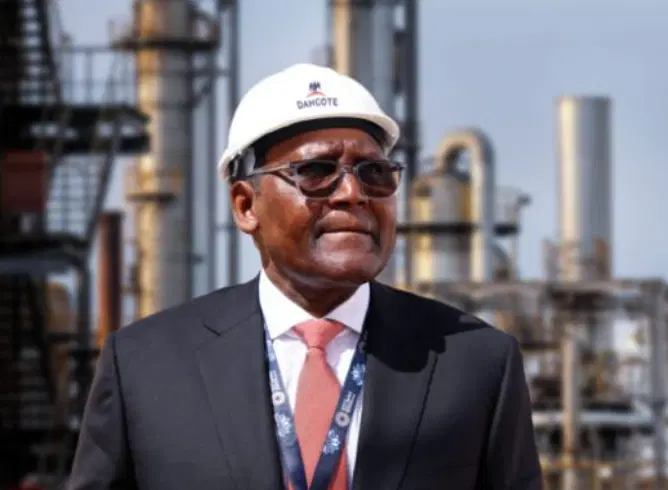
Dangote Refinery Ends Nigeria’s Era of Fuel Import Dependence, Boosts GDP, FX Earnings — EIU
The operational ramp up of the 650,000 barrels per day Dangote Petroleum Refinery & Petrochemicals is fundamentally reshaping Nigeria’s downstream oil sector, significantly reducing the country’s dependence on imported refined petroleum products and strengthening its external position, according to the Economist Intelligence Unit (EIU).
In its latest assessment on Nigeria’s fuel market and regulatory environment, the EIU said the refinery has already transformed a sector that was previously characterised by heavy reliance on imported fuel despite Nigeria being Africa’s largest crude oil producer. The report noted that the refinery met nearly 80 per cent of domestic petrol demand in April and produced enough volumes to satisfy local consumption requirements as operations approached full capacity.
The EIU described Nigeria’s downstream petroleum sector before the refinery as “long dysfunctional”, noting that the country had remained almost entirely dependent on costly imported fuel while producing nearly 1.5 million barrels of crude oil daily.
According to the report, the emergence of the refinery has reduced import dependence, improved domestic fuel availability and strengthened Nigeria’s balance of payments position through lower import demand and rising exports of refined petroleum products.
“The gradual ramp up of the 650,000 barrel/day Dangote refinery since May 2023 has transformed Nigeria’s long dysfunctional downstream sector,” the report stated. “The country’s main refineries, all state owned, had been inoperative for years and Nigeria was almost entirely reliant on costly imported fuel.”
The research and analysis division of The Economist Group, London added that the refinery’s attainment of full operational capacity and its planned expansion would further support Nigeria’s economic growth and foreign exchange earnings over the medium term.
“Meanwhile, the attainment of full capacity at, and an increase in exports from, the Dangote refinery will support real GDP growth and foreign exchange earnings in 2026 and 2027 and beyond, as a planned doubling of the plant’s output comes on stream around the end of the decade,” it added.
Industry analysts said the refinery is increasingly positioning Nigeria as an emerging refining and export hub, altering energy trade flows across Africa and reducing the vulnerability associated with fuel import dependence.
The EIU noted that the refinery’s expansion has coincided with major reforms in Nigeria’s downstream sector, including the removal of fuel subsidies and the introduction of market driven pricing mechanisms.
The report, however, said the transition from a state dominated fuel import structure to large scale domestic refining has triggered resistance from interests linked to the old import regime.
The latest tensions emerged following the decision by the Nigerian Midstream and Downstream Petroleum Regulatory Authority to relax restrictions on petrol imports despite the refinery’s growing capacity to meet domestic demand.
Dangote Industries subsequently initiated legal action, arguing that continued import approvals undermine domestic refining investments and conflict with the objectives of the Petroleum Industry Act, which seeks to encourage local refining capacity and reduce import dependence.
Analysts noted that the availability of large-scale domestic refining capacity has improved Nigeria’s energy security and reduced exposure to external supply shocks and foreign exchange volatility.
The Centre for the Promotion of Private Enterprise also cautioned against unrestrained importation of petroleum products, warning that such a policy could weaken Nigeria’s industrialisation drive and discourage investments in domestic refining.
Chief Executive Officer of CPPE, Muda Yusuf, said continued dependence on imported fuel had historically contributed to pressure on foreign reserves, exchange rate instability and fiscal leakages.
The refinery’s growing impact is also being reflected in Nigeria’s broader macroeconomic indicators. Earlier this month, S&P Global Ratings cited increased domestic refining capacity and rising hydrocarbon exports among the major factors supporting Nigeria’s sovereign credit rating upgrade – the first in 14 years.
Beyond Nigeria, analysts said the refinery is increasingly being viewed as a strategic industrial asset for Africa, where many countries remain heavily dependent on imported fuel despite rising demand for transportation, manufacturing, and power generation.
Business
BREAKING: Court Dismisses $19.6 Million Claim Against NNPCL — Rules Contract Scope Cannot Be Changed Orally
BREAKING: Court Dismisses $19.6 Million Claim Against NNPCL — Rules Contract Scope Cannot Be Changed Orally
In a landmark ruling on Friday, May 22, 2026, the Federal Capital Territory High Court in Abuja threw out a $19.6 million lawsuit filed by Alternate Dimensions Ventures Ltd against the Nigerian National Petroleum Company Limited (NNPCL), affirming a key legal principle: a written contract cannot be expanded through oral agreements or conduct.
Alternate Dimensions had sought $19,600,000 in professional fees, claiming the scope of its Direct Sale, Direct Purchase (DSDP e-pro) contract with NNPCL was orally expanded. Represented by counsel Patrick Peter, the firm argued it was entitled to the revised sum for services rendered under the alleged new terms.
But NNPCL, through its lawyer Ituah Imhanze of KENNA LP, pushed back sharply, arguing that parties are bound exclusively by the clear terms of their written agreement. Imhanze contended that without any written amendment, the claim was legally unsound, and the court agreed.
Delivering judgment, Justice Hamza Mu’azu upheld NNPCL’s defense, stating that the contract was unambiguous and that no evidence was adduced during the trial, which supported the alleged scope expansion. The court further found that NNPCL fully complied with all contractual terms and committed no breach.
Dismissing the suit as meritless, Justice Mu’azu reinforced the doctrine of sanctity of contract: any amendment to a written agreement must be express, unequivocal, and documented, not implied or verbal.
The ruling spares NNPCL from the S19.6 million claim and also a floodgate of similar potential liabilities.


- Uganda: Parliament concludes vetting of ministers June 2, 2026
- Fund for Export Development in Africa (FEDA) Board Appoints Mr. Emmanuel Assiak as Chief Executive Officer June 2, 2026
- Ecobank Group Launches World First Nature Bond Mobilising Global Capital to Protect Africa’s Natural Ecosystems June 2, 2026
- Merck Foundation Chief Executive Officer (CEO) Dr. Rasha Kelej together with Kenya First Lady support the education of 47 Kenyan Schoolgirls by providing Annual Scholarships till they Graduate June 2, 2026
- Annual Meetings 2026: Governors Back the Bank’s Platform Solutions to Transform Aviation and Health Systems in Africa June 2, 2026
- ThinkMarkets launches ChelseaAI, bringing live CFD trading into Artificial Intelligence (AI) assistants June 2, 2026
- Afreximbank Invites Rugby Africa President Herbert Mensah to Address the 33rd Annual Meetings on a Panel Exploring Sport as a Driver of African Industrialisation June 2, 2026
- Afreximbank Deepens Commitment to Economic Progress in The Bahamas June 1, 2026
- African Electric Vehicle (EV) platform Spiro raises $215M in equity to scale electric mobility and energy infrastructure across Africa June 1, 2026
- Africa Centres for Disease Control and Prevention (Africa CDC) Statement on Attacks Against Health Facilities During the Bundibugyo Virus Disease Response in the Democratic Republic of the Congo June 1, 2026
- Uganda: Parliament concludes vetting of ministers June 2, 2026
- Fund for Export Development in Africa (FEDA) Board Appoints Mr. Emmanuel Assiak as Chief Executive Officer June 2, 2026
- Ecobank Group Launches World First Nature Bond Mobilising Global Capital to Protect Africa’s Natural Ecosystems June 2, 2026
- Merck Foundation Chief Executive Officer (CEO) Dr. Rasha Kelej together with Kenya First Lady support the education of 47 Kenyan Schoolgirls by providing Annual Scholarships till they Graduate June 2, 2026
- Annual Meetings 2026: Governors Back the Bank’s Platform Solutions to Transform Aviation and Health Systems in Africa June 2, 2026
- ThinkMarkets launches ChelseaAI, bringing live CFD trading into Artificial Intelligence (AI) assistants June 2, 2026
- Afreximbank Invites Rugby Africa President Herbert Mensah to Address the 33rd Annual Meetings on a Panel Exploring Sport as a Driver of African Industrialisation June 2, 2026
-

 news6 months ago
WHO REALLY OWNS MONIEPOINT? The $290 Million Deal That Sold Nigeria’s Top Fintech to Foreign Interests
-

 society1 month ago
SOCIAL MEDIA IS NOT A BATTLEFIELD COMMAND – WHY THE NIGERIAN ARMY’S ACTION AGAINST JUSTICE CRACK IS A NATIONAL SECURITY IMPERATIVE
-

 celebrity radar - gossips4 months ago
Dr. Chris Okafor Returns with Power and Fire of the Spirit -Mounts Grace Nation Altar with Fresh Anointing and Restoration Grace on February 1, 2026
-

 celebrity radar - gossips6 months ago
Prophet Kingsley Aitafo Releases 2026 Prophecy: ‘Nigeria Will Rise, but the World Must Prepare for Turbulence’
You must be logged in to post a comment Login
You must log in to post a comment.