
Business
“I Want To Go To London ….. To See Buhari” – Written By Reuben Abati

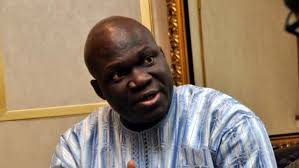

When 15 million plus Nigerians voted for President Muhammadu Buhari in the 2015 General elections, their expectation was that he would be available to serve them 24/7/365, and that those who fielded him as their candidate had done their home work to avoid what is curiously becoming the Katsina problem in Nigerian politics. Katsina! But we have now found ourselves in a situation whereby our President is now in London, for more than one month sir, ma, and we are here, and we have an acting President, who according to everybody, including the extremists and the mischievous, and the politically partisan, is beginning to try his best, with his admirers, now praying for the worst. For that reason alone, we have an emotionally, politically and spiritually divided country on our hands. Don’t mind what they tell you, and don’t deceive yourself, the Nigerian Presidency is in turmoil. It is not our wish. It is not what the voters asked for. But that is how democracy works. You cannot predict the results that democracy produces. Not even in America. Or Russia. Now that we have found ourselves in this situation, anyway – an absentee President trying to remain relevant and an acting President struggling to put up appearances, and struggling harder not to be seen to be ambitious (sorry, Prof. I was your student but I have something to say sir, I don’t mean any harm – truth be told), where should the Nigerian people stand? For the past one month, we have all been trapped in a post-truth situation, pretending as if all is normal. We should stop pretending. Those who supported and are supporting the APC that brought President Muhammadu Buhari to power and office cannot talk. They cannot talk due to embarrassment and shame.
They are busy putting up a face. But for how long can they do this? The Nigerian media is also on its knees, looking so pitiable, with the exception of a few blogs, newspapers that we can’t even trust, professional media consultants who are in disarray, a few bloggers and then some gentlemen: Pa Ikhide, Farooq Kperogi, Sonala Olumhense, Omoyele Sowore, Pius Adesanmi and Okey Ndibe who have since been specially illuminated as they journeyed to Damascus. I will return to this subject some other day. But I think right now, we should begin to take the subject of the absence of President Muhammadu Buhari more seriously. Bukola Saraki, our Senate President has visited him in London, twice, within two weeks. I don’t think we should leave this business of visiting the President to party chieftains, the executive and the Federal Legislature. If care is not taken, Senator Saraki may be tempted to visit the President again next week. And the week after and he may even be tempted to travel with all the members of the National Assembly. There must be equity in this matter. Figure it out as follows: we all know that President Buhari is now in London and he is the man Nigerians chose as their President in 2015. We cannot forsake him. He is in London on working leave, for more than one month now, and we don’t know when that leave will end. We have been told it will end soon. Later. One day. Whenever. We are not God. Let the leave end when it will. But we, the people, have a duty to stand by our President. This is the point of this article. We are Africans. We have traditions. We respect elders. We don’t joke with old age. The time has come, right now, for Nigerians to behave like Africans. We should therefore, not leave this business of visiting to Senator Busola Saraki alone. Party chieftains have visited Mr. President. The leadership of the National Assembly has also gone to London to be part of President Buhari’s working leave. I think Vice-President-Acting-President Yemi Osinabjo should also visit his boss, this week, next week, or ASAP. Henceforth, he should be in London at least once a week. Let us stop pretending that the President is not in charge. He is. If Aso Villa is now in London, let us make it work. The Acting President and the real President need quality face time. If the acting President must go to London everyday, let him do so, but don’t let us run Nigeria by telephone or DHL Am I making sense? I am not talking about common sense. I mean real sense. So, do I make any sense at all? After the Acting President’s visit, all former Presidents should also start going to London to see the President. Those former Presidents are not as harmless as they pretend to be. They are projected to the public as advisers but they are more than that: they all left something in Aso Villa that makes them eternally powerful. It is like leaving your DNA in a woman’s body. They should be allowed or perhaps encouraged to visit President Buhari while he is on working leave. I think our Baba in Abeokuta, Ota and Ibogun should be the first to visit. That may negate the order of seniority, but trust the Ebora Owu to return from London with front-page news! After him, the others can start visiting and probably advise on the possibility of holding a Council of State meeting in London. As it were, the Nigerian Constitution does not insist that the Council of State Meeting must be held inside Nigeria. The main subject of that first historic, diaspora, Council of State Meeting should be phrased by OBJ in his own unique way: “Momodu: are you well or sick?” There is something called the separation of powers. I don’t want to disrespect mi’lords but I think they too should go to London. The National Judicial Council (NJC) should put together a high-powered delegation of judges from every part of the country, from all divisions, and level, to proceed post-haste to London to visit, no, to confer with President Buhari on matters of judicial interest to the nation. But Sirs, don’t go there and talk about the welfare of judges, or the non-payment of your entitlements – if you try that, well, I won’t be in a position to tell you what awaits you on your return. You know mi’lords, as well as I do, that the law in Nigeria is now being made to look truly like an ass! After the judges, okay may be the Nigerian Bar Association should also send a delegation, but I don’t trust many of our lawyers. They think they know the law, and they could go to London and say things that will disrupt the President’s working leave. To make that impossible, members of the NBA should be booked on an Arik flight to London, please. But if they get there, fine. The next delegation should be that of Permanent Secretaries. These ones should spend more than a week in London with the President. In fact, they can stay with him till he returns. If they also have medical issues, they should use the opportunity to ask for tests, with the condition that they must return immediately the President leaves London, notwithstanding the status of their own medical tests! Once the Permanent Secretaries have been fully accommodated in London, the Ministers, those who were once dismissed by their own employer as “noise-makers”, and who have proven to be no better, should also visit London. They can go ahead and make as much noise as they wish in London and even enjoy the benefit of a full Federal Executive Council Meeting. I suspect that this will be a particularly productive FEC meeting. If the people in the Foreign Affairs Ministry know what they are doing, however, they would arrange ahead of that meeting in London, a special meeting with Theresa May, Prime Minister of Great Britain, followed by a dinner with Her Majesty the Queen of England, with a proviso, please, please, please, that nobody should bring up the issue of Biafra or Southern Kaduna after shaking the Queen’s hand, and there should be a strict guarantee that President Buhari will be accompanied by his extremely beautiful wife, Aisha, and he will not, meeting the Queen, no matter how excited, make the mistake of referring to “za oza room”. Stop laughing, my friend; this is how you people cause problems for innocent writers. What I am now trying to add having made all these points above, is that the Governors’ Forum should also visit President Buhari in London. The Governors have already signified their intention to do so and that seems to be fine with the Nigerian public. The Governors should therefore appoint representatives who should proceed to London. When they meet with the President, they should hold a special prayer session with three prayer points: one, that President Buhari will not work for another person to come and eat; two: that the demons of Aso Rock will spare and forgive him and his family; three: that President Buhari will return to Nigeria with his two feet. The Governor to lead the prayer should be Peter Ayo Fayose of Ekiti State. If he starts sounding as he has been sounding in recent times, Nasir el-Rufai should be asked to take the microphone from him. And if Nasir sounds like he is playing politics, as he has been doing, Adams Oshiomhole who will like to be there anyway, as a Governor ex-officio, should be given the microphone and asked to pray for the President as best as he can or as best as Trotsky could. I have left out some people. In the past month, some Imams and ulamas and concerned relatives have been reported in the media, holding prayer sessions for a hale and hearty President who is just in London to enjoy the weather and do some quality check-ups, private and public. These prayer warriors have prayed and prayed in Abuja, Daura, Borno and everywhere else. The matter is so serious that nobody should be surprised if Rochas Okorocha or James Ibori organizes a prayer session for Muhammadu Buhari. This is the biggest business in Nigeria at this moment. I think, therefore, that we should also encourage the ulamas and the imams to visit. Let them go to London and pray for their President. We have been told they have been sending prayers through skype, whatsapp and the air, the same channels that GSM service providers in Nigeria now want to block. Let the imams go to London then and let the verses of the Holy Quoran rain down. It will be unfair not to allow Christian leaders to go to London too. They are also anxious to go to London. Pastor Tunde Bakare, my beloved, secondary school senior should lead that team. His job should be to screen out any Pastor with Biafra, or Southern Kaduna or pro-PDP blood in him or her. I mean Pastors like Reno Omokri, Ebun Adegboruwa…. you get what I am saying? The prayer should be commissioned! Traditional rulers, bloggers, public intellectuals, trolls, and journalists! Oh, I almost forgot. I think we should also be invited to London to have tea with the President. I volunteer to lead that team but if I am considered unpopular, since they say I am not one of them, let @ikhide, @akaebube, or @dejiadeyanju, @realFFK, or @YeleSowore, be the team leader. But please, make sure we have on that list, @lindaikeji, @SDimokoKORKUS, @emepretty1, @bellanaija, @omojuwa, @ChiomaChuka, @AbangMercy, @toyeenb, @MrStanleyNwabia and… and… My friend, STFU! I am not planning a special episode of #bbnaija. I just want to go to London and see …my President.




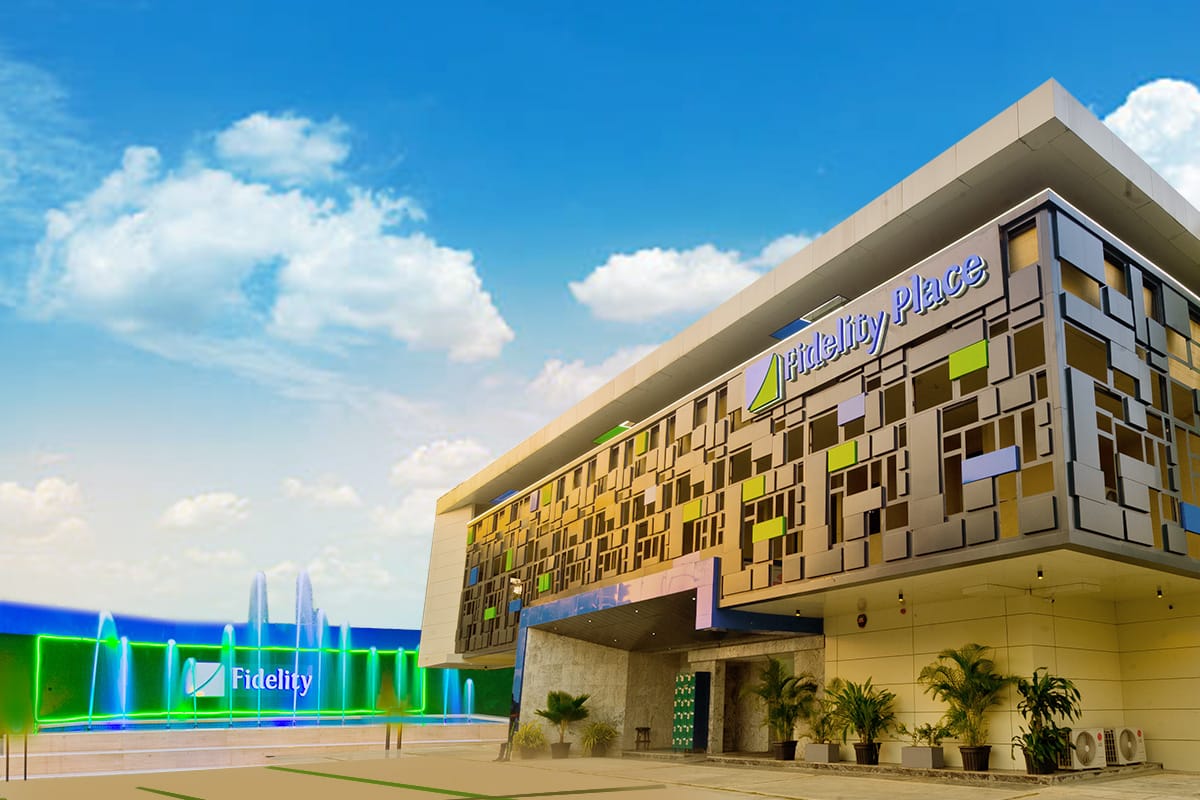
Fidelity Bank grows gross earnings by 38% to N434.95b in Q1
Fidelity Bank Plc recorded 37.9 per cent growth in gross earnings to N434.95 billion in first quarter 2026 as the international commercial bank continued to expand its core banking market share.
Interim report and accounts of Fidelity Bank for the three months ended March 31, 2026 released at the Nigerian Exchange (NGX) showed that gross earnings rose from N315.42 billion in first quarter 20025 to N434.95 billion in first quarter 2026, representing an increase of 37.9 per cent.
The top-line performance was driven by impressive growth in the bank’s core business operations with interest incomes rising by 22.8 per cent to N314.48 billion in first quarter 2026 as against N256.10 billion in first quarter 2025.
With net interest income at N180.97 billion, the bank closed the period with profit before tax of N92.48 billion. After taxes, net profit stood at N74.47 billion for the three-month period. Earnings per share remained high at N5.69, underlining the capacity of the bank to reward its shareholders.
The balance sheet of the bank also emerged stronger. Total assets crossed the N11 trillion mark to N11.35 trillion by March 2026 compared with N10.46 trillion recorded in December 2025. Customers’ deposits increased from N6.89 trillion to N7.38 trillion. Total equity rode on the back of earnings growth to a 27.5 per cent increase from N1.09 trillion in December 2025 to N1.39 trillion by March 2026.
The first quarter 2026 results further consolidated the strong earnings outlook of the bank, which had successfully completed its recapitalisation amidst impressive earnings performance in 2025.
Fidelity Bank had recorded double-digit growths in interest and non-interest incomes as well as key balance sheet items during the year ended December 31, 2025.
The audited report showed that gross earnings rose from N1.04 trillion in 2024 to N1.52 trillion in 2025, an increase of 45.6 per cent. Interest and similar incomes had grown by 38.7 per cent from N803.1 billion in 2024 to N1.11 trillion in 2025. Fees and commission incomes also rose by 44.7 per cent from N78.4 billion to N113.4 billion. The bank recorded net profit after tax of N242.4 billion in 2025.
The bank’s balance sheet emerged stronger with total assets rising by 18.6 per cent to N10.46 trillion in 2025 as against N8.82 trillion in 2024. Customer deposits increased by 16.1 per cent from N5.94 trillion to N6.89 trillion, reflecting continued franchise strength and an improved funding profile. Net loans and advances meanwhile declined by 2.4 per cent to N4.28 trillion in 2025 as against N4.39 trillion in 2024, attributable to customers paying down on their mature obligations.
The bank had in 2025 strengthened its capital position, with eligible capital rising to N561 billion, above the regulatory minimum of N500 billion for banks with international authorisation. In addition, capital adequacy had remained robust, with Capital Adequacy Ratio of 30.94 per cent by December 2025 as against 23.47 per cent by December 2024.
Managing Director, Fidelity Bank Plc, Dr. Nneka Onyeali-Ikpe, said the first quarter 2026 results reinforced the bank’s strong and resilient business model.
She noted that with the remarkable success of its recapitalisation programme and continuing expansion, Fidelity Bank has entered a new era of growth and impressive returns.
“We are on a stronger footing and confident that we will set new growth records that are reflective of our legacy and the future we are working on,” Onyeali-Ikpe said.
Business
Dangote Refinery Ends Nigeria’s Era of Fuel Import Dependence, Boosts GDP, FX Earnings — EIU
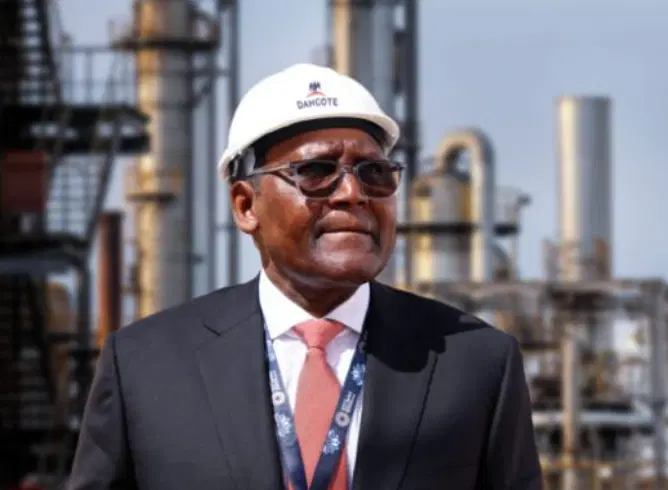
Dangote Refinery Ends Nigeria’s Era of Fuel Import Dependence, Boosts GDP, FX Earnings — EIU
The operational ramp up of the 650,000 barrels per day Dangote Petroleum Refinery & Petrochemicals is fundamentally reshaping Nigeria’s downstream oil sector, significantly reducing the country’s dependence on imported refined petroleum products and strengthening its external position, according to the Economist Intelligence Unit (EIU).
In its latest assessment on Nigeria’s fuel market and regulatory environment, the EIU said the refinery has already transformed a sector that was previously characterised by heavy reliance on imported fuel despite Nigeria being Africa’s largest crude oil producer. The report noted that the refinery met nearly 80 per cent of domestic petrol demand in April and produced enough volumes to satisfy local consumption requirements as operations approached full capacity.
The EIU described Nigeria’s downstream petroleum sector before the refinery as “long dysfunctional”, noting that the country had remained almost entirely dependent on costly imported fuel while producing nearly 1.5 million barrels of crude oil daily.
According to the report, the emergence of the refinery has reduced import dependence, improved domestic fuel availability and strengthened Nigeria’s balance of payments position through lower import demand and rising exports of refined petroleum products.
“The gradual ramp up of the 650,000 barrel/day Dangote refinery since May 2023 has transformed Nigeria’s long dysfunctional downstream sector,” the report stated. “The country’s main refineries, all state owned, had been inoperative for years and Nigeria was almost entirely reliant on costly imported fuel.”
The research and analysis division of The Economist Group, London added that the refinery’s attainment of full operational capacity and its planned expansion would further support Nigeria’s economic growth and foreign exchange earnings over the medium term.
“Meanwhile, the attainment of full capacity at, and an increase in exports from, the Dangote refinery will support real GDP growth and foreign exchange earnings in 2026 and 2027 and beyond, as a planned doubling of the plant’s output comes on stream around the end of the decade,” it added.
Industry analysts said the refinery is increasingly positioning Nigeria as an emerging refining and export hub, altering energy trade flows across Africa and reducing the vulnerability associated with fuel import dependence.
The EIU noted that the refinery’s expansion has coincided with major reforms in Nigeria’s downstream sector, including the removal of fuel subsidies and the introduction of market driven pricing mechanisms.
The report, however, said the transition from a state dominated fuel import structure to large scale domestic refining has triggered resistance from interests linked to the old import regime.
The latest tensions emerged following the decision by the Nigerian Midstream and Downstream Petroleum Regulatory Authority to relax restrictions on petrol imports despite the refinery’s growing capacity to meet domestic demand.
Dangote Industries subsequently initiated legal action, arguing that continued import approvals undermine domestic refining investments and conflict with the objectives of the Petroleum Industry Act, which seeks to encourage local refining capacity and reduce import dependence.
Analysts noted that the availability of large-scale domestic refining capacity has improved Nigeria’s energy security and reduced exposure to external supply shocks and foreign exchange volatility.
The Centre for the Promotion of Private Enterprise also cautioned against unrestrained importation of petroleum products, warning that such a policy could weaken Nigeria’s industrialisation drive and discourage investments in domestic refining.
Chief Executive Officer of CPPE, Muda Yusuf, said continued dependence on imported fuel had historically contributed to pressure on foreign reserves, exchange rate instability and fiscal leakages.
The refinery’s growing impact is also being reflected in Nigeria’s broader macroeconomic indicators. Earlier this month, S&P Global Ratings cited increased domestic refining capacity and rising hydrocarbon exports among the major factors supporting Nigeria’s sovereign credit rating upgrade – the first in 14 years.
Beyond Nigeria, analysts said the refinery is increasingly being viewed as a strategic industrial asset for Africa, where many countries remain heavily dependent on imported fuel despite rising demand for transportation, manufacturing, and power generation.
Business
BREAKING: Court Dismisses $19.6 Million Claim Against NNPCL — Rules Contract Scope Cannot Be Changed Orally
BREAKING: Court Dismisses $19.6 Million Claim Against NNPCL — Rules Contract Scope Cannot Be Changed Orally
In a landmark ruling on Friday, May 22, 2026, the Federal Capital Territory High Court in Abuja threw out a $19.6 million lawsuit filed by Alternate Dimensions Ventures Ltd against the Nigerian National Petroleum Company Limited (NNPCL), affirming a key legal principle: a written contract cannot be expanded through oral agreements or conduct.
Alternate Dimensions had sought $19,600,000 in professional fees, claiming the scope of its Direct Sale, Direct Purchase (DSDP e-pro) contract with NNPCL was orally expanded. Represented by counsel Patrick Peter, the firm argued it was entitled to the revised sum for services rendered under the alleged new terms.
But NNPCL, through its lawyer Ituah Imhanze of KENNA LP, pushed back sharply, arguing that parties are bound exclusively by the clear terms of their written agreement. Imhanze contended that without any written amendment, the claim was legally unsound, and the court agreed.
Delivering judgment, Justice Hamza Mu’azu upheld NNPCL’s defense, stating that the contract was unambiguous and that no evidence was adduced during the trial, which supported the alleged scope expansion. The court further found that NNPCL fully complied with all contractual terms and committed no breach.
Dismissing the suit as meritless, Justice Mu’azu reinforced the doctrine of sanctity of contract: any amendment to a written agreement must be express, unequivocal, and documented, not implied or verbal.
The ruling spares NNPCL from the S19.6 million claim and also a floodgate of similar potential liabilities.


- Uganda: Parliament concludes vetting of ministers June 2, 2026
- Fund for Export Development in Africa (FEDA) Board Appoints Mr. Emmanuel Assiak as Chief Executive Officer June 2, 2026
- Ecobank Group Launches World First Nature Bond Mobilising Global Capital to Protect Africa’s Natural Ecosystems June 2, 2026
- Merck Foundation Chief Executive Officer (CEO) Dr. Rasha Kelej together with Kenya First Lady support the education of 47 Kenyan Schoolgirls by providing Annual Scholarships till they Graduate June 2, 2026
- Annual Meetings 2026: Governors Back the Bank’s Platform Solutions to Transform Aviation and Health Systems in Africa June 2, 2026
- ThinkMarkets launches ChelseaAI, bringing live CFD trading into Artificial Intelligence (AI) assistants June 2, 2026
- Afreximbank Invites Rugby Africa President Herbert Mensah to Address the 33rd Annual Meetings on a Panel Exploring Sport as a Driver of African Industrialisation June 2, 2026
- Afreximbank Deepens Commitment to Economic Progress in The Bahamas June 1, 2026
- African Electric Vehicle (EV) platform Spiro raises $215M in equity to scale electric mobility and energy infrastructure across Africa June 1, 2026
- Africa Centres for Disease Control and Prevention (Africa CDC) Statement on Attacks Against Health Facilities During the Bundibugyo Virus Disease Response in the Democratic Republic of the Congo June 1, 2026
- Uganda: Parliament concludes vetting of ministers June 2, 2026
- Fund for Export Development in Africa (FEDA) Board Appoints Mr. Emmanuel Assiak as Chief Executive Officer June 2, 2026
- Ecobank Group Launches World First Nature Bond Mobilising Global Capital to Protect Africa’s Natural Ecosystems June 2, 2026
- Merck Foundation Chief Executive Officer (CEO) Dr. Rasha Kelej together with Kenya First Lady support the education of 47 Kenyan Schoolgirls by providing Annual Scholarships till they Graduate June 2, 2026
- Annual Meetings 2026: Governors Back the Bank’s Platform Solutions to Transform Aviation and Health Systems in Africa June 2, 2026
- ThinkMarkets launches ChelseaAI, bringing live CFD trading into Artificial Intelligence (AI) assistants June 2, 2026
- Afreximbank Invites Rugby Africa President Herbert Mensah to Address the 33rd Annual Meetings on a Panel Exploring Sport as a Driver of African Industrialisation June 2, 2026
-

 news6 months ago
WHO REALLY OWNS MONIEPOINT? The $290 Million Deal That Sold Nigeria’s Top Fintech to Foreign Interests
-

 society1 month ago
SOCIAL MEDIA IS NOT A BATTLEFIELD COMMAND – WHY THE NIGERIAN ARMY’S ACTION AGAINST JUSTICE CRACK IS A NATIONAL SECURITY IMPERATIVE
-

 celebrity radar - gossips4 months ago
Dr. Chris Okafor Returns with Power and Fire of the Spirit -Mounts Grace Nation Altar with Fresh Anointing and Restoration Grace on February 1, 2026
-

 celebrity radar - gossips6 months ago
Prophet Kingsley Aitafo Releases 2026 Prophecy: ‘Nigeria Will Rise, but the World Must Prepare for Turbulence’
You must be logged in to post a comment Login
You must log in to post a comment.