
society
IDI MUKHTAR: BUILDING ON THE GAINS OF G-20 SUMMIT TO HARNESS MULTI-BILLION NIGERIAN LIVESTOCK INDUSTRY

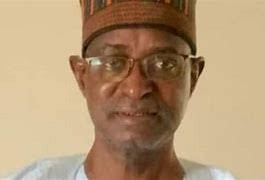
IDI MUKHTAR: BUILDING ON THE GAINS OF G-20 SUMMIT TO HARNESS MULTI-BILLION NIGERIAN LIVESTOCK INDUSTRY
By Butrous Pembi
With a massive swathe of arable land measuring about 930 sq km, the chunk of it being Sahel Savanah in the north and tropical rain forest in the south, Nigeria’s geography makes it ideal for agricultural practices particularly food cultivation and livestock production. And coupled with the array of solid material resources, rich oil and gas reserves, Nigeria therefore has no business to be poor nor underdeveloped by any standard.
Given the “Renewed Hope Agenda” of the current government of Bola Ahmed Tinubu, Nigerians are adopting cautious optimism that beyond sloganeering the government would change the fortunes and social condition of the critical mass of the population.
should not be a rocket science but through deep and critical thinking development that are people-focused and people-driven.
It is widely believed that the new Ministry of Livestock Development was birthed to harness Nigeria’s huge potential in animal husbandry, which is not only a pro-poor preoccupation, but equally a business venture that could be transformed with actionable agric-business models. Nigeria with an estimated burgeoning population of over 200 million people needs to modernize its livestock production to be able to feed itself nutritional animal proteins for a healthy, strong and productive populace as well as providing huge market for its meat, dairy as well as hides and skin products for export, towards its balance of trade potential. Through huge investments in the sub-sector and providing enabling environment, Nigeria should be an ideal destination for Foreign Direct Investment (FDI) in the livestock food chain.
It is against this background that President Ahmed Bola Tinubu appointed Mukhtar Idi Maiha, a technocrat with extensive knowledge and hand-on experience spanning over two decades as the pioneer minister of the newly established Ministry of Livestock Development. Expectantly Idi Mukhtar is mandated to lay not only a solid foundation but to equally foster confidence and trust from all stakeholders, big or small, in the industry. His leadership and his personal capacity to turn things by providing authentic leadership that is very necessary towards actualizing the renewed hope agenda in the sub-sector would surely transform the future of livestock farming.
Justifiably, with a great deal of purpose and understanding of his herculean task, the minister has since assured the Nigerians of “the lowest hanging fruit” in animal husbandry, which are, the availability of health, hygienic meal & dairy products, as well as increasingly building the local capacity & providing enabling the environment to transform a hitherto subsistence pre-occupation to a full-fledged and viable agric business.
By and large, the minister is expected to grow livestock practices into a viable and well-structured value chain, with all the intended consequences by creating massive jobs poverty alleviation and employment opportunities across the board. It is also envisioned that the minister should push for value-addition in the whole gamut of the livestock practices from the farm to make product cycle towards boosting local consumption and for export too.
All these might look like lofty and ambitious targets but not unsurmountable, given the strong political will of the Tinubu administration to diversify the country’s mono-product economy that is heavily dependent petrol dollar.
Specifically, the Ministry of Livestock Development, must put in place a mechanism for periodic peer reviews. This is to under study global best practices within the livestock domain with a view to leverage on new ideas, creating and evolving information as well as technologies that are indispensable to the optimal performance of the new and promising ministry, going forward.
For example, a random sampling is strategic to understudy countries within a comparative advantages in livestock management and production within West Africa, East Africa, North and South African countries. To achieve global competitiveness the ministry should also painstakingly, undertake, aggregate and synthetize best practices in livestock production across Europe, US, Canada, Latin, Scandinavian countries. This is essentially to give Nigeria’s livestock a competitive edge and with a view to making the country a choice destination for huge investments and viable franchises across the continent.
The good news is that the minister’s pedigree as a human resource technocrat with hands-on experience in livestock management and production with deep sense of best practices in agric business is well positioned to make a huge difference in the livestock chain, i.e., from production storage, processing, promotion and distribution, (Farms to markets).
Fortunately for the Minister, his task and mandate have been fully defined and spelt out by the professor Attahiru Jega-led presidential committee on livestock development, that had just summited its report on the potential and frame-work for optimizing livestock production in Nigeria.
Moreover, Idi Mukhtar has already demonstrated his commitment and zeal to leverage the much-needed best practices during his recent trip to Brazil, as part of the African Union delegation led by President Tinubu to the G20-summit hosted in Sao-Polo, the Brazilian Capital, a couple weeks ago.
At the sidelines of the G20 forum, Idi Mukhtar had along with the Secretary of the Presidential Committee on Livestock Development, Prof. Mohammed Kuta had engaged frontline players in the livestock domain with extensive franchises and markets, particularly in the US, Canada, Europe and Latin American countries with a view to exploring the unlimited possibilities of livestock industry at the global level.
There and then, some American and Brazilian conglomerates, who are livestock industry global giants, with a huge potential of generating annual sales of over USSD 100 billion in revenue are reported to have expressed keen interest in developing Nigeria’s fledgling livestock industry to a competitive level. This was no doubt a cheering news and a big take-away from the2024, G20 summit.
According to reports the Minister of Livestock Development, Idi Muhktar Mahia, who led the delegation visited farms and saw what his dreams could translate to for Nigeria. Specifically it was reported that he had extensive tours of advanced facilities in São Paulo and selected JBS S.A. for its global expertise.
Mahia described JBS as the second-largest meat processor worldwide, capable of handling 33,000 cattle and over eight million birds daily while employing advanced zero-waste practices.
Wesley Batista, founder and President of JBS, expressed optimism about the collaboration. He described Nigeria as a potential hub for protein supply across Africa and committed to advancing the partnership.
“We are excited to work with Nigeria to develop its livestock industry. We see great opportunities for our business in Nigeria and across Africa,” Batista said, adding that the company plans to visit Nigeria soon.
The good news however is that less than a month after the Brazil visit, the company’s team is already in Nigeria.
Following a $2.5 Billion Memorandum of Understanding (MoU) with the Brazilian firm for investment in the livestock sector, a team from the Brazilian protein company were in Niger state for a fact-finding mission of some livestock facilities in Minna, the State capital few days ago.
Niger State Governor Mohammed Umaru Bago, who received them, said the livestock development project between the Federal Government of Nigeria and a Brazilian firm would open more doors of development.
The Governor was upbeat about the development while hosting the Brazilian protein company’s team on a fact-finding mission to some livestock facilities in the State.
Addressing the team led by the Executive Secretary and Chief Executive Officer of the Nigerian Investment Promotion Commission (NIPC), Hajiya Aisha Rimi, he said.
the State government is indeed excited with the project as the effects of its value chain are huge.
He pointed out that it cuts across crop production and animal husbandry, among other things, adding that “it is heartwarming, having the world’s largest protein company, with a huge turnover, visit the State for investment.”
This is a major win for the Livestock Development Ministry as well as Niger State government.
It is believed that the success of the Niger experience will spur other states into action in other to harness the potentials of the Livestock industry and enhance its contributions to the nation’s economy apart from diffusing the tension generated through farmer-herders clashes.
Butrous Pembi






NASRE: Building A Safety Net For Nigeria’s Journalists
At a time when Nigeria’s media industry is strained by economic uncertainty, job instability, and shrinking newsroom resources, the Nigerian Association of Social and Resourceful Editors (NASRE) is redefining professional solidarity. More than a network of editors, it is emerging as a critical support system for journalists navigating an increasingly precarious landscape.
Founded on the principles of welfare, solidarity, and professional growth, NASRE has positioned itself as a responsive and forward-looking body within the media ecosystem. While many professional associations remain focused on advocacy and training, NASRE distinguishes itself by combining these roles with direct and practical support for journalists and their families.
At the core of its mission is a clear proposition that no journalist should be abandoned in times of need. Through financial assistance, targeted outreach, and sustained engagement, the association has supported members facing hardship, as well as widows and families of deceased practitioners. These largely understated interventions have steadily earned NASRE credibility and respect across the industry.
The organisation’s approach reflects a keen awareness of the pressures confronting media professionals, including irregular pay, job insecurity, and limited institutional backing. In such an environment, NASRE’s welfare initiatives are not merely charitable, they are essential.
Beyond welfare, the association is investing in professional resilience. Through collaboration, networking, and knowledge-sharing platforms, it is equipping editors and practitioners to remain competitive in a rapidly evolving digital media space, where adaptability is no longer optional.
Headquartered in Lagos, NASRE continues to broaden its reach, attracting a growing membership united by the need for a more responsive and supportive professional community. Its expansion signals a shift in expectations within the industry, away from symbolic affiliations towards institutions that deliver measurable value.
For many observers, NASRE represents a necessary evolution, a professional body anchored not just in ideals, but in impact. By combining empathy with structure, it offers a model of what media associations can become in challenging times.
As the industry continues to evolve, organisations like NASRE may prove indispensable. In a profession devoted to telling society’s stories, it is ensuring that the storytellers themselves are not left behind.
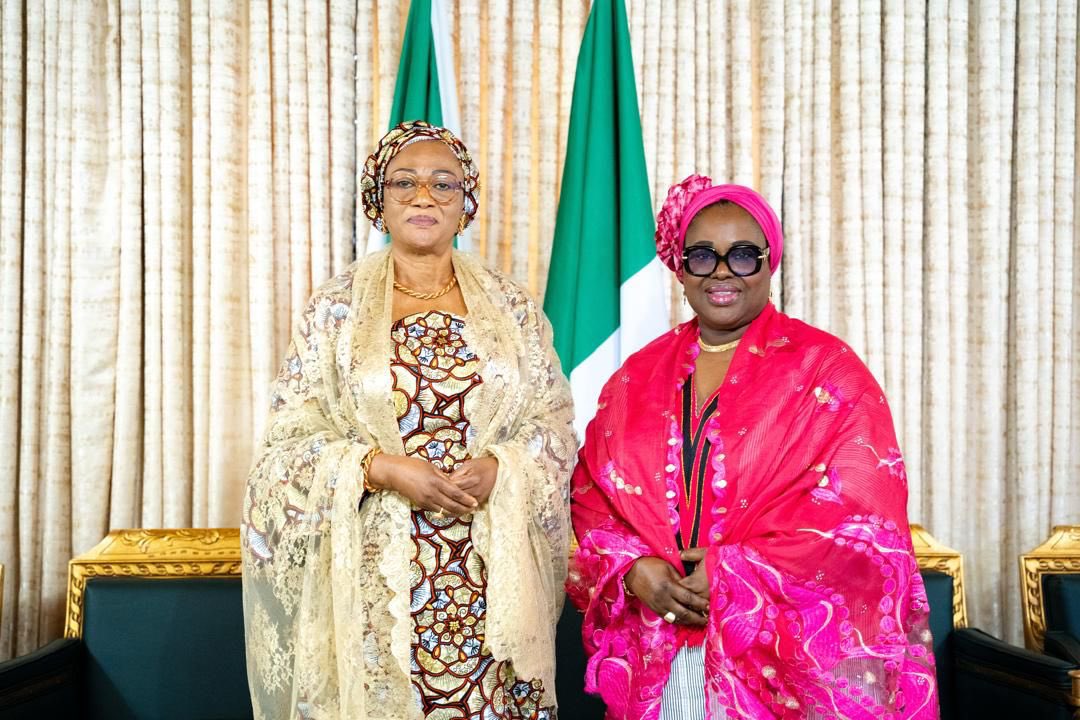
Oluremi Tinubu Hosts Wife of New IGP, Talks Welfare, Empowerment for Police Families
The First Lady of the Federal Republic of Nigeria, Senator Oluremi Tinubu, today welcomed Mrs. Mutiat Disu, wife of the Inspector General of Police, at the State House in Abuja.

During the meeting, the First Lady encouraged Mrs. Disu to continue championing the welfare and wellbeing of police officers’ families, especially through impactful support for their wives.
Speaking after the meeting, Mrs. Mutiat Disu shared her excitement about partnering with the First Lady’s Renewed Hope Initiative (RHI), noting that she is ready to leverage its programs to empower police officers’ wives across the country.
Mrs. Disu, who also serves as the National President of the Police Officers’ Wives Association (POWA), described the meeting as insightful and inspiring. She emphasized her commitment to using RHI platforms to improve healthcare, welfare, and economic empowerment for POWA members nationwide.
“The purpose of this visit is to tap into her wealth of experience and explore how POWA can benefit from her programs,” she said.
She added that her engagement with the First Lady has already provided valuable direction, especially in areas of social intervention and healthcare support for police families.
“I’m ready to work closely with Mama to ensure our women benefit fully, especially since RHI focuses on uplifting women, and POWA is largely made up of women.”
Mrs. Disu assumed leadership of POWA following the appointment of Tunji Disu as Inspector General of Police on February 24, 2026, succeeding Kayode Egbetokun.
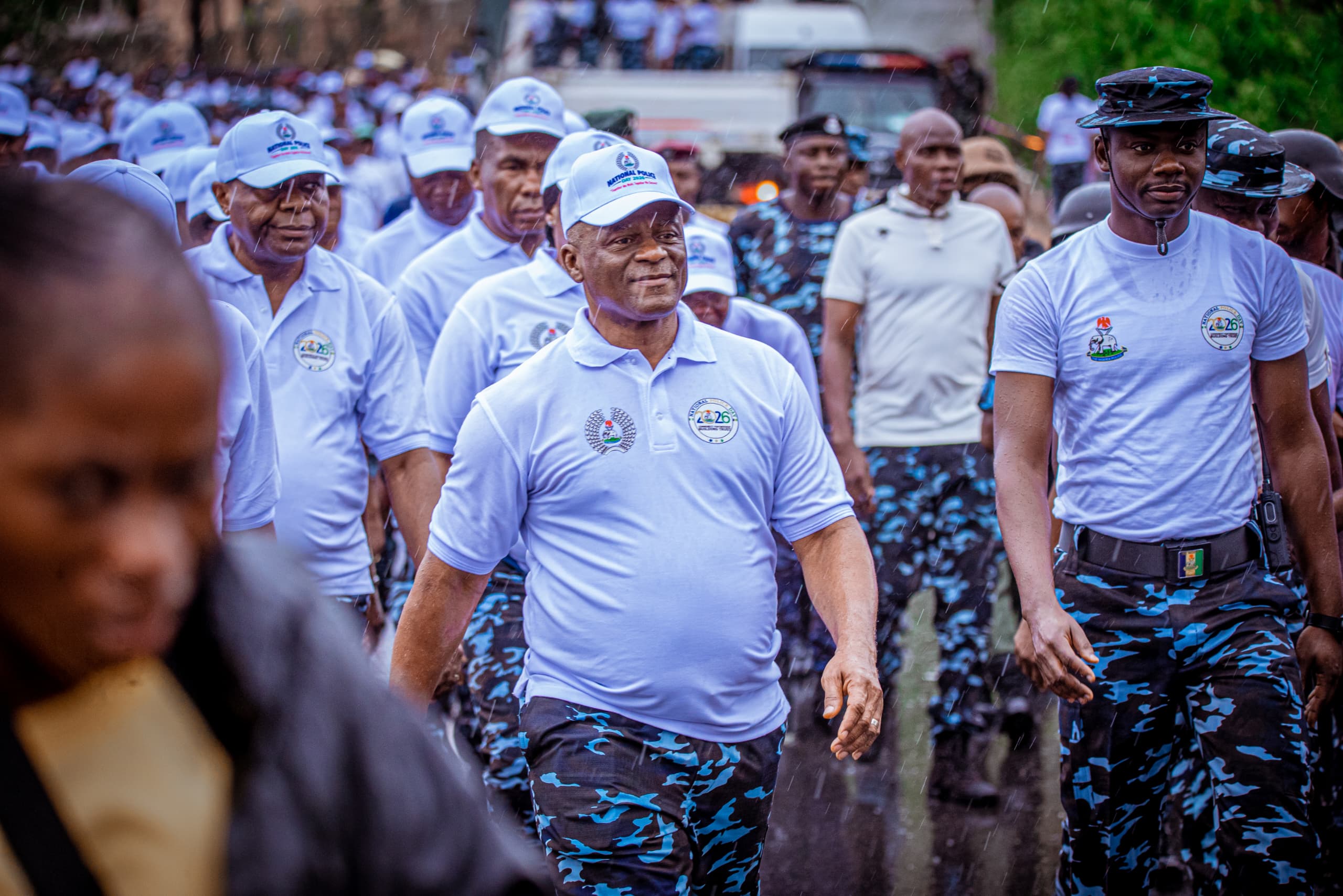
Police Day 2026: IGP Disu Leads Nationwide Walkathon To Strengthen Community Trust
The Inspector-General of Police, Olatunji Disu, on Tuesday led the management team, alongside officers and personnel of the Nigeria Police Force, in a nationwide walkathon to commemorate the 2026 National Police Day.
The event, held across state capitals and the Federal Capital Territory, formed part of activities marking Day Two of the annual celebration, themed “Community Partnership: Building Trust.”
The symbolic exercise, which drew participation from both police personnel and members of the public, was aimed at showcasing unity, discipline, and a renewed commitment to community policing and public safety.
According to the Force leadership, the walkathon underscores the Nigeria Police Force’s resolve to strengthen public trust, deepen engagement with citizens, and enhance collaboration in tackling security challenges across the country.
Participants described the initiative as a practical step toward bridging the gap between law enforcement and the communities they serve, while also promoting physical fitness and mental well-being among officers and civilians alike.
With the theme reflecting a shared responsibility for safety, the Police reiterated that sustainable security can only be achieved through active partnership with the public.
The event concluded with a renewed call for collective action under the banner: “Together We Walk, Together We Secure,” emphasizing unity of purpose in building a safer and more secure society for all Nigerians.


-

 society6 months ago
Religion: Africa’s Oldest Weapon of Enslavement and the Forgotten Truth
-

 news4 months ago
WHO REALLY OWNS MONIEPOINT? The $290 Million Deal That Sold Nigeria’s Top Fintech to Foreign Interests
-

 society6 months ago
“You Are Never Without Help” – Pastor Gebhardt Berndt Inspires Hope Through Empower Church (Video)
-

 celebrity radar - gossips2 months ago
Dr. Chris Okafor Returns with Power and Fire of the Spirit -Mounts Grace Nation Altar with Fresh Anointing and Restoration Grace on February 1, 2026