
Business
IGP, Solomon Arase orders immediate investigation of Journalist’s torture by police officer


The Inspector General of Police, Solomon Arase, has ordered an investigation over claims of torture by a Lagos-based journalist last Friday, which was published by Punch on Monday.
Aproko247 reproduced the said report on Monday and from what we learnt, authorities of the Nigeria Police have contacted the journalist to apologise for the treatment meted out on him by their men. Below is the report published by Punch on Tuesday concerning the query sent to the Lagos State Commissioner of Police, Fatai Owoseni.
Following the PUNCH publication, it was learnt that the Force Headquarters, Abuja, reached out to the journalist and ordered a full-scale investigation into the matter.
A top police source said the IG had given the Lagos police boss 48 hours to investigate what happened with a view to arresting the culprits.
The source said, “The IG has been briefed of what happened to the journalist last Friday and he has given the Lagos CP 48 hours to investigate this and give him a report. The Deputy Commissioner of Police at the SDCI has also been ordered to call the journalist to verify his claims and see if he can identify the policemen that tortured him.”
Owolabi confirmed to PUNCH Metro that the Deputy Force Public Relations Officer, Mr. Abayomi Shogunle, had contacted him and apologised over the incident.
He said, “The Force Deputy PRO called me over the phone. He continually asked about my health and told me how sorry he was.
“He asked if I got the names of those policemen who assaulted me and I gave him the only name I could pick, Isiaka.
“I, however, told him I could identify the others by their faces. He told me my phone number had been forwarded to the CP and he should reach me before the end of today (yesterday), to invite me so I could further assist with their investigation.”
However, activists who spoke to our correspondent on Monday said an apology was not enough.
A Senior Advocate of Nigeria, Mr. Mike Ozekhome, said the police must pay damages to Owolabi while the policemen who carried out the alleged crime must be jailed.
He said, “The apology is good because it is an acceptance of wrongdoing but it is not enough. They must compensate him monetarily. They must also penalise the officers that were involved so as to serve as a deterrent to other trigger-happy goons within the system.
“The Inspector-General of Police, Solomon Arase, who is a lawyer, knows the importance of protecting the sanctity of human life.”
Ozekhome decried the increase in police brutality and extra-judicial killings but attributed them to bad political leadership. He said any policeman that kills must be charged and killed in accordance with the law.
Another activist, Mr. Ebun-Olu Adegboruwa, said extra-judicial killings and police brutality had increased under the present administration.
He said the impunity of politicians was rubbing off on policemen. He said Owolabi’s ordeal in the hands of policemen could be likened to the torture of a blogger, Emmanuel Ojo, who was allegedly arrested on the orders of Ogun State Governor, Ibikunle Amosun, for publishing a story against the governor’s wife, Olufunso.
Adegboruwa said the police institution must stop seeing itself as a ‘force’ but as a service-oriented agency.
He said, “When it is clear that a citizen has been denied his fundamental human rights, an apology is not enough. The constitution states in Section 34 that nobody must be treated in a degrading and inhumane manner. It states that nobody must be subjected to torture such as flogging and beating and that once that happens, it is an assault and the only remedy is exemplary damages which is meant to teach the officer involved a hard lesson.
“So, an apology is an insult. There must be damages and they must be deducted from the salaries of those involved and not just from the purse of the Nigeria Police.”
Another activist, Mr. Fred Agbaje, commended The PUNCH for dedicating two pages daily to report and expose police brutality and misdemeanours.
Agbaje said most policemen were not happy with the government and were taking their anger out on the people because they had no easy access to those in power.
He said, “The press must continue to be an uncompromised mouthpiece of the people against all forms of brutality against the helpless people. If not for the critical role the PUNCH has played over the years, how many of such cases would have gone unnoticed?
“The IG is a lawyer and knows the importance of human rights including freedom from arbitrary punishment. The IG has every opportunity to make the needed change. He should quickly investigate the matter and anyone found wanting should be punished.
“Apologising to the journalist is not enough. If the matter is taken to court and a case of brutality is established against the police, it attracts a substantial amount in damages.”
The National Coordinator, Network on Police Reform in Nigeria, Okechukwu Nwanguma, said police brutality and corruption remained shocking despite attempts by the IG to restore sanity.
He said the Police Service Commission must look into crimes committed by policemen instead of the police institution investigating itself.
He said, “Police cover up their colleagues who are responsible for abuse and this is where a civilian external oversight mechanism, such as the PSC is important.”




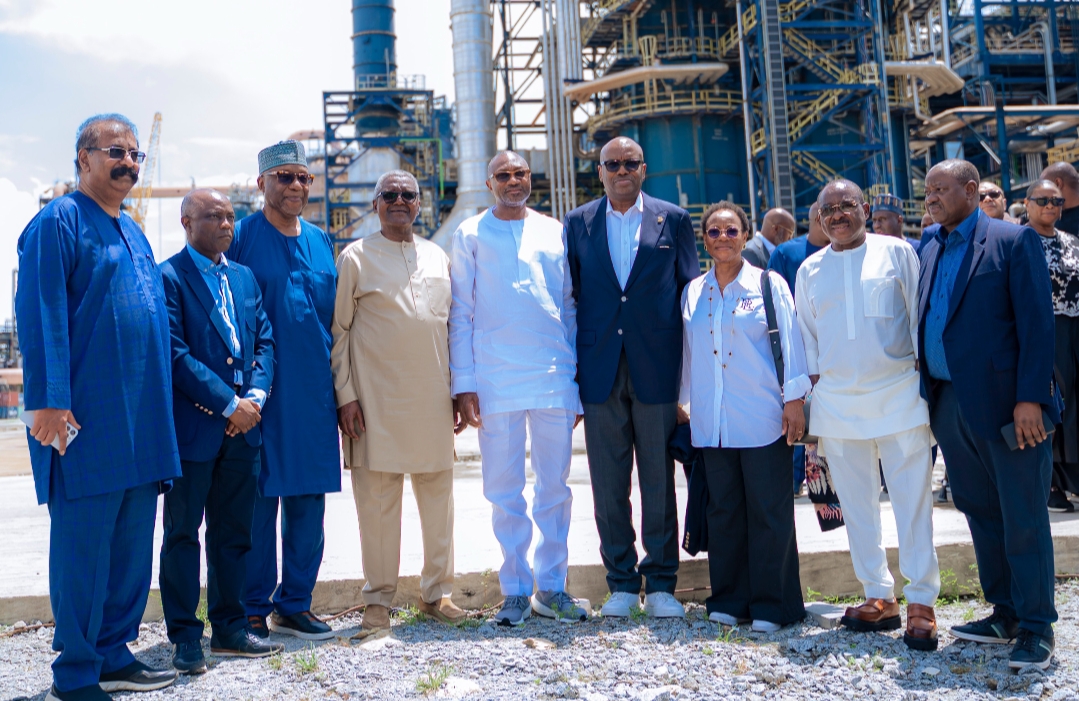
First HoldCo Group Companies’ Boards and Management teams visit Dangote Refinery
…All Nigerians will have access to the Refinery’s IPO and be part-owners-Dangote
Chairman of FirstHoldCo, Femi Otedola, has appealed to the President of Dangote Group, Aliko Dangote, to allocate $100 million worth of shares to him in the proposed listing of Dangote Petroleum Refinery & Petrochemicals. He disclosed that he divested his stake in Geregu Power Plc specifically to position himself for investment in the refinery’s initial public offering (IPO), which he described as a transformative industrial platform helping to free Africa from decades of reliance on imported petroleum products.
Otedola made these remarks during a visit by the FirstHoldCo leadership team to the 650,000 barrels-per-day refinery and Dangote Fertiliser Limited in Ibeju Lekki, Lagos, where he commended Dangote for building the world’s largest single-train refinery and accelerating Africa’s industrial transformation.
“He is a genius and one of the greatest men to emerge from Africa. What he has achieved is helping to liberate the continent from economic dependency and import reliance,” Otedola said. “I have visited this refinery more than 25 times, and I have consistently appealed for $100 million worth of shares during the private placement. That informed my decision to sell my stake in Geregu so I can reinvest in the Dangote Petroleum Refinery.”
Otedola also expressed strong confidence in the Group’s planned expansion of refining capacity to 1.4 million barrels per day, noting that Africa’s growing demand for refined petroleum products clearly supports further investment in domestic refining infrastructure.


In his remarks, President of Dangote Group, Aliko Dangote, assured that the refinery’s IPO would be broadly inclusive, enabling ordinary Nigerians to become part-owners and benefit from its value creation. He emphasised that the Group is committed to democratising access to investment opportunities by opening participation to retail investors across Nigeria and the African continent.
“We want ordinary Africans to participate in the value being created,” Dangote said. “What companies like Amazon and Apple achieved globally in terms of wealth creation is what we seek to replicate in Africa. We want people to invest, grow with us, and share in the prosperity.”
Dangote further disclosed plans for a proposed East Africa refinery with a projected capacity of 700,000 barrels per day, alongside polypropylene and base oil production facilities. According to him, the project could commence within the next three to four years once construction begins. He noted that the initiative was not originally captured in the Group’s Vision 2030 strategy, underscoring the company’s trajectory toward exceeding its long-term growth targets.
Chief Executive Officer of FirstBank Group, Olusegun Alebiosu, described the refinery as a symbol of vision, courage, and industrial ambition capable of inspiring similar investments across Africa.
“If you see this refinery and realise that an individual conceived and delivered a project of this magnitude, already helping to stabilise energy supply across Africa, you cannot help but be inspired,” Alebiosu said. “We have delegates here from the United Kingdom and several African countries who will return home with renewed commitment to building industries that can transform their economies. It is about building Africa together.”
Dangote also highlighted the Group’s sustained leadership across its core businesses over the past five years, including cement operations in 11 African countries, alongside significant investments in refining, petrochemicals, and fertiliser production. He noted that cement capacity has expanded to 55 million tonnes per annum, supported by the development of clinker export terminals to strengthen regional trade.
“We have built businesses that address Africa’s critical needs and create long-term value for the continent,” Dangote said. “Africa must stop exporting raw materials and importing finished goods. That amounts to exporting jobs and importing poverty.”
He added that investor appetite for the refinery’s listing on the Nigerian Exchange has remained exceptionally strong, with demand for the private placement already exceeding $2 billion.
“There is significant interest in both the IPO and the private placement,” he said. “While we are not able to meet all requests, the strong demand reflects investors’ confidence in the refinery and in Africa’s industrial future.”

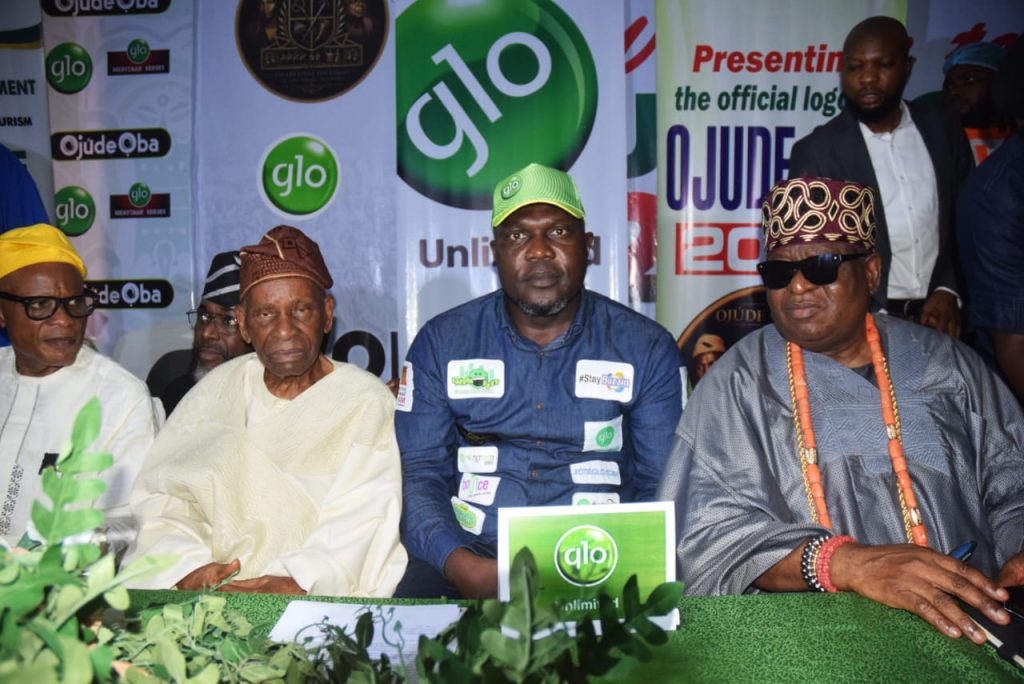
Globacom Marks 21 Years Of Ojude Oba Festival Sponsorship
Nigeria’s leading indigenous digital solutions company, Globacom, has reaffirmed its support for cultural preservation with the announcement of its headline sponsorship of the 2026 Ojude Oba Festival, marking 21 consecutive years of partnership with the people of Ijebuland.
Speaking at the festival’s pre-event press conference in Ijebu-Ode, Globacom’s representative, Mr. Olumide Orojimi, described the milestone as a testament to the company’s commitment to promoting culture, unity, and national identity.
“This edition represents a defining milestone for us,” he stated. “For twenty-one unbroken years, Globacom has walked this cultural journey with the people of Ijebuland.
“Beyond sponsorship, this partnership symbolises our deep respect for tradition, community, and the enduring spirit of our heritage.
“To commemorate this historic anniversary, we are committed to making this year’s celebration even more colourful, memorable, and impactful for Ijebu sons and daughters across the world.”
He noted that the company’s longstanding collaboration with the festival has helped enhance its profile as a globally recognised cultural and tourism event, adding that culture remains “the invisible architecture of a people’s soul.”
The 2026 edition, themed “Ojude Oba: Celebration of Culture Beyond Borders,” will also honour the legacy of the late Awujale of Ijebuland, Oba Sikiru Kayode Adetona, whose reign significantly shaped the festival’s growth and prominence.
Globacom disclosed that winners in the age-grade competitions will receive cash prizes of ₦750,000, ₦600,000, and ₦500,000 for first, second, and third places respectively. Festival attendees will also have access to a range of Globacom products and devices during the event.
In his remarks, the Coordinator of the Ojude Oba Festival Organising Committee, Chief Fassy Adetokunbo Yusuff, described Globacom as “the Pacesetter in the sponsorship of Ojude Oba” and commended the company for its unwavering support over the past 21 years.
Said he, ” this festival serves as a major catalyst for economic growth and commercial activities throughout Ijebuland, “as he gave kudos to Globacom for raising the bar of the event.
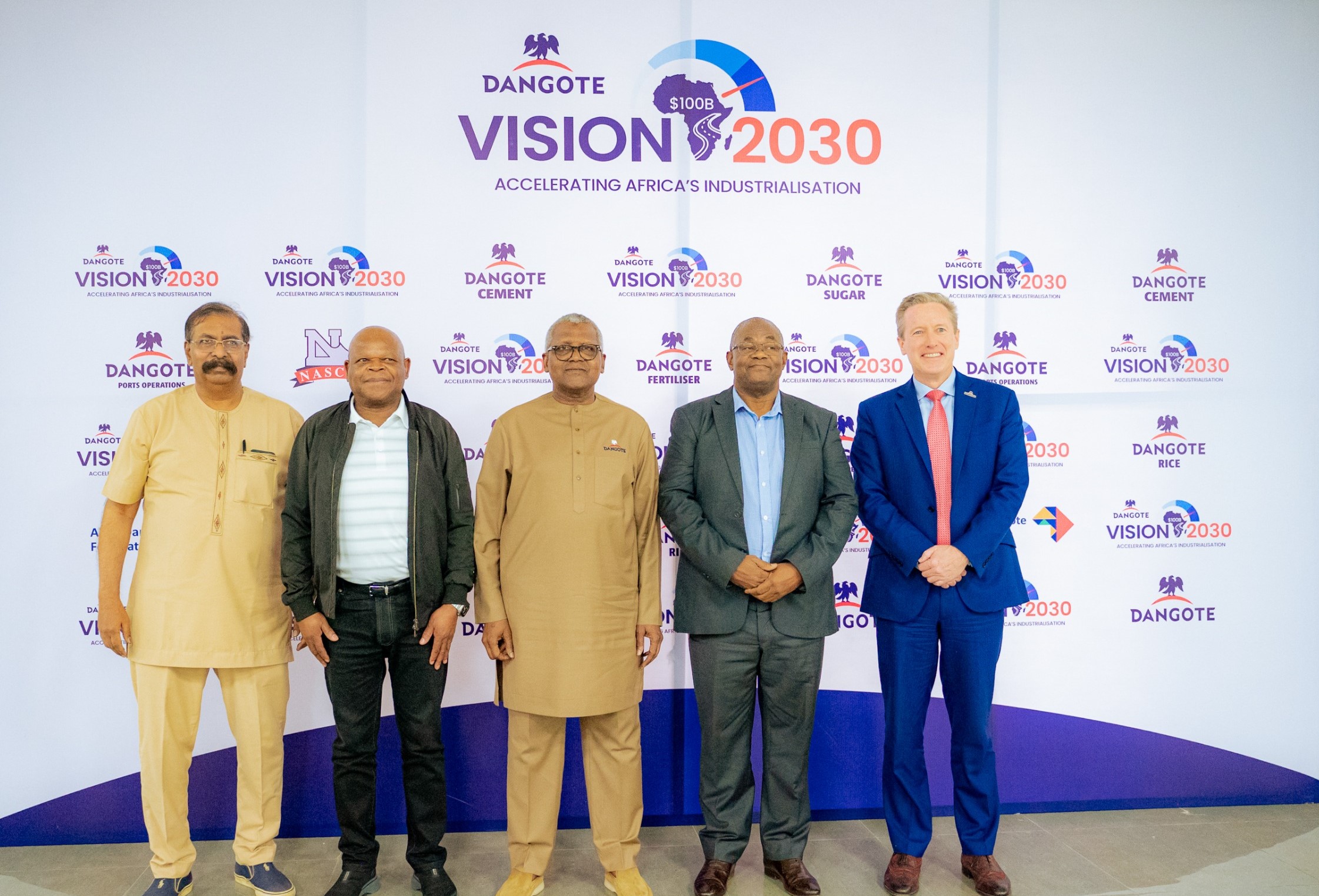
Refinery Listing Will Democratise Africa’s Industrial Prosperity – Dangote
… South African investors eye investment opportunities
President/Chief Executive, Dangote Group, Aliko Dangote, has said the planned listing of the Dangote Petroleum Refinery & Petrochemicals on the Nigerian Exchange is designed to democratise wealth creation and give Africans direct access to participate in the continent’s industrial transformation.
Dangote spoke during the visit of the leadership of South Africa’s Government Employees Pension Fund (GEPF), alongside the Public Investment Corporation and Alterra Capital Partners, to the Dangote Petroleum Refinery & Petrochemicals and Dangote Fertiliser Limited in Lagos. The South African delegation included Chairperson of GEPF, Frans Baleni; Principal Executive Officer of GEPF, Musa Mabesa; Deputy Chairperson of PIC, Mongwena Maluleke; Chief Executive Officer of PIC, Patrick Dlamini; and Managing Partner of Alterra Capital Partners, Genevieve Sangudi.
The visit comes amid rising investor interest in Africa-led industrialisation and long-term infrastructure investments. GEPF is Africa’s largest defined benefit pension fund, managing the retirement and associated benefits of more than 1.8 million public sector workers in South Africa, while PIC is the continent’s largest asset manager.
Speaking on the planned refinery listing, Dangote said Africa’s next phase of economic growth must be anchored on large-scale industrial projects capable of creating jobs, strengthening domestic production capacity and generating broad-based prosperity.
“We are opening the doors for investors to participate directly in Africa’s industrial future and the prosperity it will create,” Dangote said.
According to him, the refinery project reflects the scale of untapped opportunities within Africa’s energy market, particularly as most African countries remain dependent on imported refined petroleum products despite growing industrial demand and rising consumption.
Dangote said the Group’s long-term investment strategy is driven by Africa’s expanding energy needs and the urgent requirement for regional refining capacity capable of serving multiple markets across the continent.
The billionaire industrialist noted that demand for products such as polypropylene, aviation fuel and refined petroleum products has exceeded earlier projections, reinforcing the commercial viability of the refinery and shaping future expansion plans.
“We thought about Nigeria first and then exports, but even with our current production, we are practically living hand to mouth because the market demand is extremely high,” he said.
Speaking after the tour of the Dangote facilities in Ibeju-Lekki, the Chairperson of GEPF, Frans Baleni, said that the refinery stands as evidence that Africa can execute transformational infrastructure projects when backed by visionary leadership, long-term investment and strong technical expertise.
“If it can be done anywhere else in the world, it can be done in Africa,” he said. “This project has shown that the continent is capable of achieving world-class industrialisation at scale.”
Baleni added that the significance of the project extends well beyond Nigeria’s borders. “What has been built here is reshaping how the world should think about African industrial capability — and it should reshape how Africa thinks about itself. For too long, projects of this magnitude have been associated with other parts of the world. The Dangote Refinery and Petrochemicals Complex is a powerful demonstration that, with visionary leadership and long-term capital, that perception no longer holds. This is the kind of African-led industrial scale that institutional investors on this continent should be backing.”
On his part, Chief Executive Officer of PIC, Patrick Dlamini, described the refinery as one of the most transformative industrial projects undertaken on the continent, saying it is reshaping global perceptions about Africa’s industrial capabilities and economic potential.
Quoting former South African President Nelson Mandela, Dlamini said: “It always looks impossible until it’s done. This project is redefining the story of Africa and the possibilities of Africa.”
He said PIC, which manages about $230 billion in assets largely on behalf of South Africa’s Government Employees Pension Fund, is actively seeking long-term partnerships aligned with infrastructure development, industrialisation and economic transformation across Africa.
“PIC’s mandate is to deploy long-term, patient capital in service of industrialisation, infrastructure and economic transformation across Africa,” Dlamini said. “What we have seen today reinforces our conviction that the next chapter of African prosperity will be written through partnership between African institutional capital and African industrial champions. There is real strategic alignment between Dangote’s industrial agenda and how we are positioning our portfolio, and we look forward to exploring meaningful avenues for collaboration.”
According to him, poverty, unemployment and economic exclusion remain major drivers of instability across Africa, making industrialisation and large-scale job creation critical to the continent’s long-term development.


- Strengthening Zambia’s Readiness for Health Emergencies: From Surveillance to Pandemic Preparedness May 21, 2026
- Economic Community of West African States (ECOWAS) Strengthens Regional Integration Through Cross-Border Cooperation Stakeholders’ Meeting in Abuja, Nigeria May 21, 2026
- Senegal Retains Title as Overall Champion at ECOWAS African Wrestling Tournament (TOLAC 14) May 21, 2026
- Eritrea: Diaspora Nationals Celebrate Independence Day Anniversary May 21, 2026
- Seychelles: President Herminie Visits District Administration Office and Library on La Digue May 21, 2026
- Egypt: President El-Sisi Meets Tunisian Minister Mohamed Ali Nafti May 21, 2026
- Joint statement welcoming the Republic of Togo’s announcement on Visa facilitation for African nationals May 21, 2026
- Advancing Regional Political Commitment and Cross Border Coordination for Ebola Preparedness and Response May 21, 2026
- Morocco: African Development Bank commits €200 Million to boost employability and develop future skills May 21, 2026
- Société Nationale des Pétroles du Congo (SNPC) Targets Global Operator Status as African Energy Chamber (AEC) Engagement Reinforces Congo’s Energy Ambitions May 21, 2026
- Strengthening Zambia’s Readiness for Health Emergencies: From Surveillance to Pandemic Preparedness May 21, 2026
- Economic Community of West African States (ECOWAS) Strengthens Regional Integration Through Cross-Border Cooperation Stakeholders’ Meeting in Abuja, Nigeria May 21, 2026
- Senegal Retains Title as Overall Champion at ECOWAS African Wrestling Tournament (TOLAC 14) May 21, 2026
- Eritrea: Diaspora Nationals Celebrate Independence Day Anniversary May 21, 2026
- Seychelles: President Herminie Visits District Administration Office and Library on La Digue May 21, 2026
- Egypt: President El-Sisi Meets Tunisian Minister Mohamed Ali Nafti May 21, 2026
- Joint statement welcoming the Republic of Togo’s announcement on Visa facilitation for African nationals May 21, 2026
-

 news5 months ago
WHO REALLY OWNS MONIEPOINT? The $290 Million Deal That Sold Nigeria’s Top Fintech to Foreign Interests
-

 society3 weeks ago
SOCIAL MEDIA IS NOT A BATTLEFIELD COMMAND – WHY THE NIGERIAN ARMY’S ACTION AGAINST JUSTICE CRACK IS A NATIONAL SECURITY IMPERATIVE
-

 celebrity radar - gossips4 months ago
Dr. Chris Okafor Returns with Power and Fire of the Spirit -Mounts Grace Nation Altar with Fresh Anointing and Restoration Grace on February 1, 2026
-

 celebrity radar - gossips5 months ago
Prophet Kingsley Aitafo Releases 2026 Prophecy: ‘Nigeria Will Rise, but the World Must Prepare for Turbulence’
You must be logged in to post a comment Login
You must log in to post a comment.