
Business
‘I’ll be the First Nigerian actress to feature in Hollywood’ – Nkechi Emmanuel AKA Nurse Titi




Q – How would you describe stardom and to what extent would you say clinic matters has helped you?
A- clinic matters has really helped me in every area of my life; career wise, it has boasted my career, it has boosted my career, it has open doors for me in nollywood,it has given me opportunities to work with better people in the industry and through that channel, they’ve been able to believe in me and in what I can deliver and give me the opportunity to do other jobs. Clinic matters was the last audition I attended, after that, I’ve just been getting my roles. I can’t even remember the last time I went for a table casting, all I do is receive call to pick a script and see if I like the story, I go for it so clinic matters is a great opportunity and a great channel for me.
Talking about my life, it has given me the opportunity to meet with other people everywhere I go, everyone likes me. my family have been able to come closer, not like we weren’t close before but the bond is now there, they feel happy and love has increased so clinic matters has been a plus in my life.
Q – I read a lot about you and I could remember then when you said you attend more than three auditions in a day in different locations, would we be right to say clinic matters is a move that shot you to limelight?
A – yes, it is. Like I said earlier, before clinic matters, I’ve been everywhere in lagos, I’ve been jumping from one place to another without even knowing if I’ll be chosen for the role or not. When I was doing clinic matters season 1, used to go to paul’s office casually and he will just call me to come get my script for the next season and I’ll just walk in and go. After season 2, I couldn’t pass his office peacefully anymore, anytime I get to his office, I will just sit in the car for like 10 – 15 minutes to gather up courage because he has people selling something around his office.most times, I met my other colleagues there and it’s always like a movie itself. It’s just been God, I’ve stopped doing what I used to do, that’s when I realized clinic matters has shot me to limelight.
Q – I could remember before then, people know you as sexy but now, it seems “Nurse Titi” has rub-off that nick from you, what’s your take on that?
A – I would say people usually call me ENKAY SEXY. Yes even till date but people who are closer to me still call me sexy, even till tomorrow, people will still call me sexy but most people who would prefer to call me nurse Titi call me that and some people even tag me as “sexy nurse Titi”. Even my sister calls me sexy at home.
Q – At what point did you dad actually accept you as actress and not the lawyer he wanted you to be?
A – it was when He started watching clinic matters on TV. Clinic matters was first aired on national TV and not on CD and every time I’m not in the house I maybe I’ve gone out for shooting, when I get back, I’m always like my dad is gonna scream, but when come in, he will be smiling and I started getting the knowledge that he’s been watching some episodes on TV. Gradually, he started accepting it cos of the role I’m playing. The role gave him more reason to accept it because I didn’t go on TV and start playing a romance scene, the character is cool, educative, in formative and he even got to learn some things from my mouth on TV so I think those are the things that made him relax.
Q – All that time when he was on your neck, was there a time you felt like giving up?
R – There was no time like that. There was no space because the thing just happened suddenly. There was a church programme which we all attended then, they brought actors to our church and that same day, I told my mum that I want to act and on Monday, I saw an advert on TV for those interested in acting and on Monday evening, I told my mum and requested for some money to go for audition, that same night, I prayed, gathered courage and told my dad. The whole thing happened in the course of the week, I went to national theatre on Thursday of the week and I started attending audition so there was no time for him to pressurize me and not after that,I got my first major role where I played the role of a nurse titled ‘ When you are mine’ and the producer of the movie is a fast person so in a week, the movie came out and it went viral so the producer of clinic matters saw my performance and the next week, he invited me for an audition. Immediately we finished audition, we started shooting and it went on air so in a month, everything happened so there was no space for him to really press me down.
Q – What would you describe as the secret of your success?
R –I would say its God, perseverance, focus and humility. I was opportuned to meet ‘Klint D Drunk; on a movie set and I watched him and was pleased. He was down to earth, playing with everybody, you will not even know he was the one. We became friends and he picked me as a sister, always advising me to always drop my shoulder and be humble, coupled with the fact that I was focused, determined, prayerful, and with my humility, everything just worked together and that has been what pushed me to success till date.
Q – What were the challenges you faced and how were you able to overcome them?
Q – I went through a lot of challenges; going for audition very early in the morning and seeing that you are number 71 on the list and looking around, you begin to wonder where the remaining 70 are. It was bad that some people would come very early, write their names and go back home to shower. I’ll stay under the sun, no food, no water, till they call you, the competition will be very high because you are not the only best actress and after you are done, they will promise to get back, some will, some will not, so many disappointments. Some will call you and give you role and promise to pay when you done but they eventually end up giving you stories, they will leave you empty handed. So many debt outside there but you can’t just start pursuing them, you just have to focus on what you want so the challenges have been so bad but I thank God I’ve overcome and outgrown some.
Q – Everybody has their source of Inspiration, anytime you are acting, what inspires you?
R – There was a job I was doing, I was acting and the director just stopped suddenly and asked me to come and said ‘ let me tell you something today and have it at the back your mind, job you are doing, always do it like it’s your last Job on earth’’ and after that word, I did the scene again and he was pleased. That got me going, you know, everytime I remember it, it just rings a bell to me and whenever I remember that, I act like it’s going to be my last. Another thing that inspires me is my Mother. She has always been supportive and likes to see every little thing I do. Anytime I act, she’s always glad to see it. She’s always been there to support my career. Whenever I’m driving out of the house, she comes to the veranda and start looking at me like I’m not going to return and she’s just somebody I don’t want to disappoint so anytime I remember her, I want to do more and she’s a woman who has always been there for her kids. She’s strong, I want to be stronger than she is, she has always been inspiring me.
In acting, I’ve always loved Angelina Jolie, she’s a strong woman. When she acts, she acts like there is no tomorrow so when I remember her, it give me motivation, even if nobody has ever broken that bond in Nigeria from Nollywood, I’ll do it.
I’ve made inquires about how it happens over there and I’ve seen how they do it. They have white skin Hollywood and black skin Hollywood. Going through the black skin Hollywood isn’t that easy not to talk of white skin Hollywood, it’s a No No and I’m like this barrier, I’ll break it. All I pray for is the strength; opportunity and I know it will come soon because I’m on that channel now.
Q – Why do you prefer acting in movies shot in Warri?
R – One, Warri people are fun to be with, two, the environment is conducive enough. I just like Warri, the way they talk alone can drag you to joy, there’s this their broken way of talking, their acting, when you see a small Warri boy, you won’t even know he’s small. Little things gives me Joy and I love to be wherever I find joy. My first film there was ‘Free Langua’ Where I had to learn how to speak their Langua, and act with it so it was fun.
Q- What’s your plan about shooting your own movie?
R – I don’t know if I would produce a movie of mine, if God says Yes. I’ll do it but for now, even if I want to do that, I wouldn’t want to venture into it ‘cos I see one or two people do it. I’ll want to go and study because it’s a course on it’s own, even if it’s for three months, I’ll have to study the basics so I don’t make mistakes in the end or regret. I know a whole lot of people who are now producing but I’ll have to study it first so I’ll go into it as a professional. Now, I’ve a lot on my desk as an actress so I’ll have to clear my desk first, only God knows maybe in the next five years.
Q – Who are those you admire in the industry?
R – I admire a lot of people, a lot inspires me, lot of role model I can’t start listing but I like Genevieve, Omotola Jolade.
In fact, when I was coming up, she was one of those that took me to her office and made me understand that I should study first cos I was in school then and that I should come back to acting later so I went back to study though I was still acting but when it comes to exam time, I put acting aside. I don’t know how the devil works, when it’s exam period, that’s when I get the best job.
Q – What can you say your smile has open doors for?
R – My smile, it has opened doors ooo…most times when I go to a place and it’s becoming difficult, I’ll be lie let me just see the Manager. Getting in there, i’ll smile to the person first because it says another different thing, it creates a better audience so when I smile to the person, no matter the sex, he or she will ask me to have my sit and from there, the conversation begins. Some other people will just call me to do a video of me smiling and many more, it’s a way of helping me look younger and open doors, it’s now part of me.
Q – Can you take us through your beauty routine?
R – When I wake up in morning, I do exercise, have my shower and use my cosmetics. I make sure I don’t sleep with my make-up on no matter how tired I am and I make sure I brush my teeth before I sleep. I also mind what I take into my body, not just because I don’t want to add up weight but I need to keep up my skin.
Q – Some people believe men are more emotional than women, what’s your take on this?
R – I’m a very emotional person but to compare between men and women, you guys are strong (laughs). Hardly will you see a man that will start crying over job loss, heart-break, but you can see a girl crying because she’s broke, you will still see a broke guy playing around with his friends.
Q – In your lonely moment, what do you do?
R – I just stuck in my headphone and listen to music then relax. The lyrics help me get over any situation and the next day, I’m good to go and sometimes, I could be like ‘ this life, I cannot kill myself’. I just call my friends or colleagues and party with them. I just let God take control.
Q – When was the last time you cried?
R – that was on a Movie set.
Q – In the midst of your busy schedule, how do you unwind?
R – I just find time, either I just want to be alone and listen to music or I go out to party.
Q – To what extent would you say fame rob-off your relationship?
R – It hasn’t
Q – How do you deal with crazy fans?
R – I’m one person that likes to give audience to my fans but we don’t get close. I’ve this fan that sent me a mess mess ago but I was busy doing something at the moment so I didn’t reply. Suddenly, I just saw his message, abusing me, insulting me, I just didn’t say a word. I understand how he felt but he didn’t understand I was just waiting for the perfect time. There’s another that sends me airtime every weekend. I accepted the first one so it doesn’t look like I’m rejecting but he kept sending it and it started looking like a weekend gift so I called his attention and he was like he’s not requesting for anything, that he just feels like giving me. I was surprised so I have so many of them. My male crazy fans are much but I thank God I handle them with wisdom. Some are beginning to understand that I’m trying ‘cos I got a lengthy message from one of them appreciating the fact that I’ve time to reply my fans, there are people who don’t reply at all
Q – What are you working on presently?
R – There’s something I’m working on presently but I don’t want to let it out now. I don’t want to say anything about it now. The next one is i’m working on a new TV series.





Fidelity Bank grows gross earnings by 38% to N434.95b in Q1
Fidelity Bank Plc recorded 37.9 per cent growth in gross earnings to N434.95 billion in first quarter 2026 as the international commercial bank continued to expand its core banking market share.
Interim report and accounts of Fidelity Bank for the three months ended March 31, 2026 released at the Nigerian Exchange (NGX) showed that gross earnings rose from N315.42 billion in first quarter 20025 to N434.95 billion in first quarter 2026, representing an increase of 37.9 per cent.
The top-line performance was driven by impressive growth in the bank’s core business operations with interest incomes rising by 22.8 per cent to N314.48 billion in first quarter 2026 as against N256.10 billion in first quarter 2025.
With net interest income at N180.97 billion, the bank closed the period with profit before tax of N92.48 billion. After taxes, net profit stood at N74.47 billion for the three-month period. Earnings per share remained high at N5.69, underlining the capacity of the bank to reward its shareholders.
The balance sheet of the bank also emerged stronger. Total assets crossed the N11 trillion mark to N11.35 trillion by March 2026 compared with N10.46 trillion recorded in December 2025. Customers’ deposits increased from N6.89 trillion to N7.38 trillion. Total equity rode on the back of earnings growth to a 27.5 per cent increase from N1.09 trillion in December 2025 to N1.39 trillion by March 2026.
The first quarter 2026 results further consolidated the strong earnings outlook of the bank, which had successfully completed its recapitalisation amidst impressive earnings performance in 2025.
Fidelity Bank had recorded double-digit growths in interest and non-interest incomes as well as key balance sheet items during the year ended December 31, 2025.
The audited report showed that gross earnings rose from N1.04 trillion in 2024 to N1.52 trillion in 2025, an increase of 45.6 per cent. Interest and similar incomes had grown by 38.7 per cent from N803.1 billion in 2024 to N1.11 trillion in 2025. Fees and commission incomes also rose by 44.7 per cent from N78.4 billion to N113.4 billion. The bank recorded net profit after tax of N242.4 billion in 2025.
The bank’s balance sheet emerged stronger with total assets rising by 18.6 per cent to N10.46 trillion in 2025 as against N8.82 trillion in 2024. Customer deposits increased by 16.1 per cent from N5.94 trillion to N6.89 trillion, reflecting continued franchise strength and an improved funding profile. Net loans and advances meanwhile declined by 2.4 per cent to N4.28 trillion in 2025 as against N4.39 trillion in 2024, attributable to customers paying down on their mature obligations.
The bank had in 2025 strengthened its capital position, with eligible capital rising to N561 billion, above the regulatory minimum of N500 billion for banks with international authorisation. In addition, capital adequacy had remained robust, with Capital Adequacy Ratio of 30.94 per cent by December 2025 as against 23.47 per cent by December 2024.
Managing Director, Fidelity Bank Plc, Dr. Nneka Onyeali-Ikpe, said the first quarter 2026 results reinforced the bank’s strong and resilient business model.
She noted that with the remarkable success of its recapitalisation programme and continuing expansion, Fidelity Bank has entered a new era of growth and impressive returns.
“We are on a stronger footing and confident that we will set new growth records that are reflective of our legacy and the future we are working on,” Onyeali-Ikpe said.
Business
Dangote Refinery Ends Nigeria’s Era of Fuel Import Dependence, Boosts GDP, FX Earnings — EIU
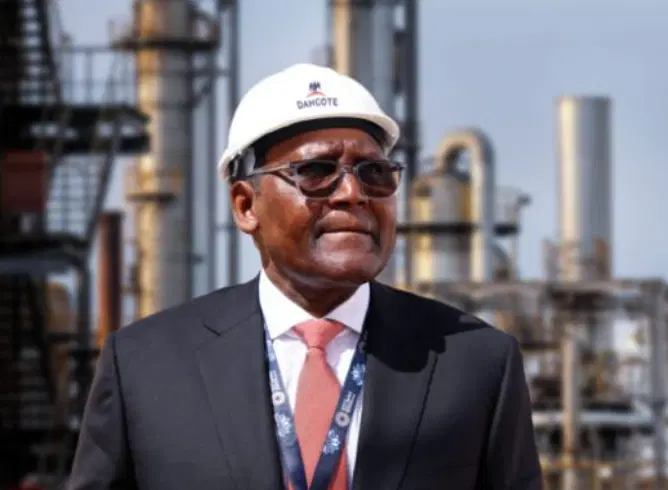
Dangote Refinery Ends Nigeria’s Era of Fuel Import Dependence, Boosts GDP, FX Earnings — EIU
The operational ramp up of the 650,000 barrels per day Dangote Petroleum Refinery & Petrochemicals is fundamentally reshaping Nigeria’s downstream oil sector, significantly reducing the country’s dependence on imported refined petroleum products and strengthening its external position, according to the Economist Intelligence Unit (EIU).
In its latest assessment on Nigeria’s fuel market and regulatory environment, the EIU said the refinery has already transformed a sector that was previously characterised by heavy reliance on imported fuel despite Nigeria being Africa’s largest crude oil producer. The report noted that the refinery met nearly 80 per cent of domestic petrol demand in April and produced enough volumes to satisfy local consumption requirements as operations approached full capacity.
The EIU described Nigeria’s downstream petroleum sector before the refinery as “long dysfunctional”, noting that the country had remained almost entirely dependent on costly imported fuel while producing nearly 1.5 million barrels of crude oil daily.
According to the report, the emergence of the refinery has reduced import dependence, improved domestic fuel availability and strengthened Nigeria’s balance of payments position through lower import demand and rising exports of refined petroleum products.
“The gradual ramp up of the 650,000 barrel/day Dangote refinery since May 2023 has transformed Nigeria’s long dysfunctional downstream sector,” the report stated. “The country’s main refineries, all state owned, had been inoperative for years and Nigeria was almost entirely reliant on costly imported fuel.”
The research and analysis division of The Economist Group, London added that the refinery’s attainment of full operational capacity and its planned expansion would further support Nigeria’s economic growth and foreign exchange earnings over the medium term.
“Meanwhile, the attainment of full capacity at, and an increase in exports from, the Dangote refinery will support real GDP growth and foreign exchange earnings in 2026 and 2027 and beyond, as a planned doubling of the plant’s output comes on stream around the end of the decade,” it added.
Industry analysts said the refinery is increasingly positioning Nigeria as an emerging refining and export hub, altering energy trade flows across Africa and reducing the vulnerability associated with fuel import dependence.
The EIU noted that the refinery’s expansion has coincided with major reforms in Nigeria’s downstream sector, including the removal of fuel subsidies and the introduction of market driven pricing mechanisms.
The report, however, said the transition from a state dominated fuel import structure to large scale domestic refining has triggered resistance from interests linked to the old import regime.
The latest tensions emerged following the decision by the Nigerian Midstream and Downstream Petroleum Regulatory Authority to relax restrictions on petrol imports despite the refinery’s growing capacity to meet domestic demand.
Dangote Industries subsequently initiated legal action, arguing that continued import approvals undermine domestic refining investments and conflict with the objectives of the Petroleum Industry Act, which seeks to encourage local refining capacity and reduce import dependence.
Analysts noted that the availability of large-scale domestic refining capacity has improved Nigeria’s energy security and reduced exposure to external supply shocks and foreign exchange volatility.
The Centre for the Promotion of Private Enterprise also cautioned against unrestrained importation of petroleum products, warning that such a policy could weaken Nigeria’s industrialisation drive and discourage investments in domestic refining.
Chief Executive Officer of CPPE, Muda Yusuf, said continued dependence on imported fuel had historically contributed to pressure on foreign reserves, exchange rate instability and fiscal leakages.
The refinery’s growing impact is also being reflected in Nigeria’s broader macroeconomic indicators. Earlier this month, S&P Global Ratings cited increased domestic refining capacity and rising hydrocarbon exports among the major factors supporting Nigeria’s sovereign credit rating upgrade – the first in 14 years.
Beyond Nigeria, analysts said the refinery is increasingly being viewed as a strategic industrial asset for Africa, where many countries remain heavily dependent on imported fuel despite rising demand for transportation, manufacturing, and power generation.
Business
BREAKING: Court Dismisses $19.6 Million Claim Against NNPCL — Rules Contract Scope Cannot Be Changed Orally
BREAKING: Court Dismisses $19.6 Million Claim Against NNPCL — Rules Contract Scope Cannot Be Changed Orally
In a landmark ruling on Friday, May 22, 2026, the Federal Capital Territory High Court in Abuja threw out a $19.6 million lawsuit filed by Alternate Dimensions Ventures Ltd against the Nigerian National Petroleum Company Limited (NNPCL), affirming a key legal principle: a written contract cannot be expanded through oral agreements or conduct.
Alternate Dimensions had sought $19,600,000 in professional fees, claiming the scope of its Direct Sale, Direct Purchase (DSDP e-pro) contract with NNPCL was orally expanded. Represented by counsel Patrick Peter, the firm argued it was entitled to the revised sum for services rendered under the alleged new terms.
But NNPCL, through its lawyer Ituah Imhanze of KENNA LP, pushed back sharply, arguing that parties are bound exclusively by the clear terms of their written agreement. Imhanze contended that without any written amendment, the claim was legally unsound, and the court agreed.
Delivering judgment, Justice Hamza Mu’azu upheld NNPCL’s defense, stating that the contract was unambiguous and that no evidence was adduced during the trial, which supported the alleged scope expansion. The court further found that NNPCL fully complied with all contractual terms and committed no breach.
Dismissing the suit as meritless, Justice Mu’azu reinforced the doctrine of sanctity of contract: any amendment to a written agreement must be express, unequivocal, and documented, not implied or verbal.
The ruling spares NNPCL from the S19.6 million claim and also a floodgate of similar potential liabilities.


- When women farm better, Eswatini eats better June 3, 2026
- Togo Hosts the 8th Annual Forum of National Volunteer Agencies in the Economic Community of West African States (ECOWAS) Region June 3, 2026
- Indigenous Peoples gravely vulnerable to Ebola epidemic, warn United Nations (UN) independent experts June 3, 2026
- Meeting between Parliamentary Vice-Minister ONISHI and His Excellency (H.E.) Mr. Cosgrow, Principal Minister and Minister for Agriculture, Fisheries and Blue Economy of Seychelles June 3, 2026
- Eritrea: Construction of Elementary School in Gogni Sub-Zone June 3, 2026
- African Union Commission (AUC) Chairperson His Excellency (H.E.) Mahmoud Ali Youssouf highlighted thePermanent Representatives’ Committee (PRC) critical role in advancing the Union’s agenda and laying the groundwork for the forthcoming Mid-Year Coordination Meeting (MYCM) June 3, 2026
- Eritrea: Eighth Grade National Examination Commences June 3, 2026
- Many Africans see justice system as unequal, costly, and slow, Afrobarometer survey reveals June 3, 2026
- Prof. Benedict Oramah to Chair Finance Summit as African Energy Week (AEW) 2026 Prepares for Major Deal Flow June 3, 2026
- The Islamic Development Bank (IsDB) Group Affiliates to Host the 14th Private Sector Forum in Baku, Azerbaijan (16-19 June 2026) June 3, 2026
- When women farm better, Eswatini eats better June 3, 2026
- Togo Hosts the 8th Annual Forum of National Volunteer Agencies in the Economic Community of West African States (ECOWAS) Region June 3, 2026
- Indigenous Peoples gravely vulnerable to Ebola epidemic, warn United Nations (UN) independent experts June 3, 2026
- Meeting between Parliamentary Vice-Minister ONISHI and His Excellency (H.E.) Mr. Cosgrow, Principal Minister and Minister for Agriculture, Fisheries and Blue Economy of Seychelles June 3, 2026
- Eritrea: Construction of Elementary School in Gogni Sub-Zone June 3, 2026
- African Union Commission (AUC) Chairperson His Excellency (H.E.) Mahmoud Ali Youssouf highlighted thePermanent Representatives’ Committee (PRC) critical role in advancing the Union’s agenda and laying the groundwork for the forthcoming Mid-Year Coordination Meeting (MYCM) June 3, 2026
- Eritrea: Eighth Grade National Examination Commences June 3, 2026
-

 news6 months ago
WHO REALLY OWNS MONIEPOINT? The $290 Million Deal That Sold Nigeria’s Top Fintech to Foreign Interests
-

 society1 month ago
SOCIAL MEDIA IS NOT A BATTLEFIELD COMMAND – WHY THE NIGERIAN ARMY’S ACTION AGAINST JUSTICE CRACK IS A NATIONAL SECURITY IMPERATIVE
-

 celebrity radar - gossips4 months ago
Dr. Chris Okafor Returns with Power and Fire of the Spirit -Mounts Grace Nation Altar with Fresh Anointing and Restoration Grace on February 1, 2026
-

 celebrity radar - gossips6 months ago
Prophet Kingsley Aitafo Releases 2026 Prophecy: ‘Nigeria Will Rise, but the World Must Prepare for Turbulence’
You must be logged in to post a comment Login
You must log in to post a comment.