
Business
Import Bans, Empty Boasts and Economic Delusion: Tinubu’s Recipe for Nigeria’s Economic Disaster


Import Bans, Empty Boasts and Economic Delusion: Tinubu’s Recipe for Nigeria’s Economic Disaster
By George Omagbemi Sylvester | Sahara Weekly Nigeria
When President Bola Ahmed Tinubu declared that banning the importation of foreign goods would “revive” Nigeria’s economy, one would think the man had a Nobel Prize in economic policy. Instead, what we get is textbook delusion coming from a self-proclaimed “first-class accountant” from Chicago State University, a claim with no official transcript, certificate or academic record in public view to validate it. In a time when Nigeria urgently needs innovative, export-driven policies, Tinubu is trying to build an economic miracle on import bans, slogans and the illusion of industrial rebirth in a country plagued by power failure, insecurity and corruption.

The Import Ban Illusion
Let’s start with the cold, hard facts. NIGERIA is not an INDUSTRIAL NATION. According to World Bank data (2024), manufacturing contributes less than 9% to Nigeria’s GDP. The country imports over 80% of its essential goods, including food, pharmaceuticals, refined petroleum and machinery. In such a context, banning imports without ensuring local capacity is not “patriotic policy” but economic sabotage.
Tinubu’s administration recently restricted the importation of over 40 items, including rice, cement, toothpicks and even poultry products. His argument? Local production must be encouraged. The problem, however, is that there’s no infrastructure to support that ambition. As of Q1 2025, Nigeria still suffers from epileptic electricity supply, averaging just 4,000 MW for over 200 million people, according to the Nigerian Electricity Regulatory Commission. For comparison, South Africa, with a population of 62 million, produces over 45,000 MW (Eskom, 2024 data).

No economy thrives under darkness. You cannot ban the importation of toothpicks and expect bamboo to magically morph into industry without electricity, investment or skilled labor.
Failed Economic Patriotism
The Tinubu administration is recycling the failed policies of past governments. We saw this playbook under former President Muhammadu Buhari, another disciple of economic isolationism. The Central Bank of Nigeria, under Godwin Emefiele, banned 41 items from forex access, yet inflation soared, local substitutes remained expensive and smuggling boomed. The result? Nigeria became the poverty capital of the world in 2018.
Tinubu is repeating that cycle. According to the National Bureau of Statistics (NBS), food inflation stood at 40.53% as of April 2025, with staple items like rice, bread and oil becoming unaffordable for millions. The average Nigerian is now spending over 70% of their income on food—a clear indicator of economic dysfunction.
“The idea that a country can simply ban its way to prosperity is not just misguided; it’s reckless” said Dr. Kingsley Moghalu, former Deputy Governor of the CBN. “You need to create an enabling environment not a restrictive one. Industrialization thrives on productivity not prohibitions.”
A Mouthful of Academic Fraud?
While the economic policy is bad enough, the president’s intellectual credentials are also under serious scrutiny. Tinubu continues to tout his supposed “first-class” status from Chicago State University (CSU). Yet the institution, under subpoena in 2023, confirmed Tinubu did not graduate with honors and discrepancies exist between submitted documents and university records.
As Nigerian lawyer and public affairs analyst Dele Farotimi noted during a Channels TV interview:
“We are being governed by ghosts, people with no verifiable history, no transparency, yet they want to dictate economic truths to over 200 million people.”
How can a man who allegedly forged his way through academic corridors be trusted to engineer genuine economic transformation?
Export, Not Ban: The Real Path to Growth
Rather than banning imports, any serious leader would focus on boosting non-oil exports, supporting SMEs and fixing power, roads and insecurity. For instance, Vietnam (once as poor as Nigeria) embraced export-led growth. According to the International Monetary Fund, Vietnam’s exports in 2023 stood at $371 billion, compared to Nigeria’s paltry $67 billion, 85% of which was crude oil.
In the words of Professor Pat Utomi, political economist and founder of the Centre for Values in Leadership:
“We don’t have a productive economy; we have a transactional economy. Until we invest in human capital, reduce power costs and create policies that invite rather than repel investment, we will keep declining.”
Tinubu’s Propaganda Economics
Let’s also talk about perception. Tinubu’s administration spends more time defending economic disaster than solving it. The presidential spokesman, Bayo Onanuga, recently claimed that the economy is “on track” and that “Nigerians should endure.” This while the naira trades at ₦1,580 to $1 on the official market and youth unemployment hovers at 53.4% (NBS Q1 2025 report).
The government is delusional and more obsessed with optics than outcomes. The average Nigerian doesn’t care about economic jargon. They care about whether they can afford a bag of rice, fuel their car, pay school fees and stay safe.
As Nigerian writer and columnist Gimba Kakanda aptly wrote:
“The tragedy of Nigeria’s leadership is that they see national sacrifice as something the people alone must endure, while they dine on luxury.”
No Vision, No Results
To put it bluntly: Tinubu’s administration is a regime without vision. Import bans are the policies of lazy governments & those without the courage to compete, reform or innovate. These are leaders who cannot think beyond customs tariffs and control levers.
We’ve seen this movie before. In 1984, Buhari as military Head of State implemented similar bans. Nigeria became a nation of smugglers. In 2015, he repeated it. The economy crashed. Now Tinubu is borrowing from that same dusty playbook.
Even in India, a country once famous for import substitution, policymakers have long since abandoned that model in favor of “Make in India” a strategy built on exports, competitiveness and infrastructure.
What Nigeria needs is a Productive Economy and not a prohibited one.
The Final Blow: A Dangerous Gamble
Tinubu’s economic policy is not just wrong but it’s dangerous. Banning imports without providing alternatives is a betrayal of the masses. It punishes consumers, stifles innovation and invites corruption at the borders.
The president wants applause for forcing Nigerians to buy inferior, expensive local goods they don’t want, while politicians and their families still travel abroad for healthcare, holidays and education. What hypocrisy.
Nigeria deserves better. We deserve a leader with real academic credibility, real economic vision and real empathy, not one obsessed with clinging to propaganda while the nation bleeds.
As Chinua Achebe once warned: “The trouble with Nigeria is simply and squarely a FAILURE of LEADERSHIP.”
And Bola Ahmed Tinubu is living proof of that FAILURE…first-class in name only, and utterly bankrupt in strategy.






Fidelity Bank grows gross earnings by 38% to N434.95b in Q1
Fidelity Bank Plc recorded 37.9 per cent growth in gross earnings to N434.95 billion in first quarter 2026 as the international commercial bank continued to expand its core banking market share.
Interim report and accounts of Fidelity Bank for the three months ended March 31, 2026 released at the Nigerian Exchange (NGX) showed that gross earnings rose from N315.42 billion in first quarter 20025 to N434.95 billion in first quarter 2026, representing an increase of 37.9 per cent.
The top-line performance was driven by impressive growth in the bank’s core business operations with interest incomes rising by 22.8 per cent to N314.48 billion in first quarter 2026 as against N256.10 billion in first quarter 2025.
With net interest income at N180.97 billion, the bank closed the period with profit before tax of N92.48 billion. After taxes, net profit stood at N74.47 billion for the three-month period. Earnings per share remained high at N5.69, underlining the capacity of the bank to reward its shareholders.
The balance sheet of the bank also emerged stronger. Total assets crossed the N11 trillion mark to N11.35 trillion by March 2026 compared with N10.46 trillion recorded in December 2025. Customers’ deposits increased from N6.89 trillion to N7.38 trillion. Total equity rode on the back of earnings growth to a 27.5 per cent increase from N1.09 trillion in December 2025 to N1.39 trillion by March 2026.
The first quarter 2026 results further consolidated the strong earnings outlook of the bank, which had successfully completed its recapitalisation amidst impressive earnings performance in 2025.
Fidelity Bank had recorded double-digit growths in interest and non-interest incomes as well as key balance sheet items during the year ended December 31, 2025.
The audited report showed that gross earnings rose from N1.04 trillion in 2024 to N1.52 trillion in 2025, an increase of 45.6 per cent. Interest and similar incomes had grown by 38.7 per cent from N803.1 billion in 2024 to N1.11 trillion in 2025. Fees and commission incomes also rose by 44.7 per cent from N78.4 billion to N113.4 billion. The bank recorded net profit after tax of N242.4 billion in 2025.
The bank’s balance sheet emerged stronger with total assets rising by 18.6 per cent to N10.46 trillion in 2025 as against N8.82 trillion in 2024. Customer deposits increased by 16.1 per cent from N5.94 trillion to N6.89 trillion, reflecting continued franchise strength and an improved funding profile. Net loans and advances meanwhile declined by 2.4 per cent to N4.28 trillion in 2025 as against N4.39 trillion in 2024, attributable to customers paying down on their mature obligations.
The bank had in 2025 strengthened its capital position, with eligible capital rising to N561 billion, above the regulatory minimum of N500 billion for banks with international authorisation. In addition, capital adequacy had remained robust, with Capital Adequacy Ratio of 30.94 per cent by December 2025 as against 23.47 per cent by December 2024.
Managing Director, Fidelity Bank Plc, Dr. Nneka Onyeali-Ikpe, said the first quarter 2026 results reinforced the bank’s strong and resilient business model.
She noted that with the remarkable success of its recapitalisation programme and continuing expansion, Fidelity Bank has entered a new era of growth and impressive returns.
“We are on a stronger footing and confident that we will set new growth records that are reflective of our legacy and the future we are working on,” Onyeali-Ikpe said.
Business
Dangote Refinery Ends Nigeria’s Era of Fuel Import Dependence, Boosts GDP, FX Earnings — EIU
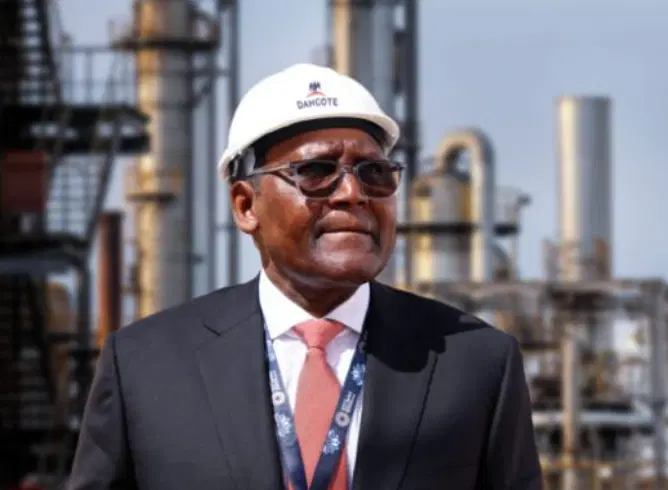
Dangote Refinery Ends Nigeria’s Era of Fuel Import Dependence, Boosts GDP, FX Earnings — EIU
The operational ramp up of the 650,000 barrels per day Dangote Petroleum Refinery & Petrochemicals is fundamentally reshaping Nigeria’s downstream oil sector, significantly reducing the country’s dependence on imported refined petroleum products and strengthening its external position, according to the Economist Intelligence Unit (EIU).
In its latest assessment on Nigeria’s fuel market and regulatory environment, the EIU said the refinery has already transformed a sector that was previously characterised by heavy reliance on imported fuel despite Nigeria being Africa’s largest crude oil producer. The report noted that the refinery met nearly 80 per cent of domestic petrol demand in April and produced enough volumes to satisfy local consumption requirements as operations approached full capacity.
The EIU described Nigeria’s downstream petroleum sector before the refinery as “long dysfunctional”, noting that the country had remained almost entirely dependent on costly imported fuel while producing nearly 1.5 million barrels of crude oil daily.
According to the report, the emergence of the refinery has reduced import dependence, improved domestic fuel availability and strengthened Nigeria’s balance of payments position through lower import demand and rising exports of refined petroleum products.
“The gradual ramp up of the 650,000 barrel/day Dangote refinery since May 2023 has transformed Nigeria’s long dysfunctional downstream sector,” the report stated. “The country’s main refineries, all state owned, had been inoperative for years and Nigeria was almost entirely reliant on costly imported fuel.”
The research and analysis division of The Economist Group, London added that the refinery’s attainment of full operational capacity and its planned expansion would further support Nigeria’s economic growth and foreign exchange earnings over the medium term.
“Meanwhile, the attainment of full capacity at, and an increase in exports from, the Dangote refinery will support real GDP growth and foreign exchange earnings in 2026 and 2027 and beyond, as a planned doubling of the plant’s output comes on stream around the end of the decade,” it added.
Industry analysts said the refinery is increasingly positioning Nigeria as an emerging refining and export hub, altering energy trade flows across Africa and reducing the vulnerability associated with fuel import dependence.
The EIU noted that the refinery’s expansion has coincided with major reforms in Nigeria’s downstream sector, including the removal of fuel subsidies and the introduction of market driven pricing mechanisms.
The report, however, said the transition from a state dominated fuel import structure to large scale domestic refining has triggered resistance from interests linked to the old import regime.
The latest tensions emerged following the decision by the Nigerian Midstream and Downstream Petroleum Regulatory Authority to relax restrictions on petrol imports despite the refinery’s growing capacity to meet domestic demand.
Dangote Industries subsequently initiated legal action, arguing that continued import approvals undermine domestic refining investments and conflict with the objectives of the Petroleum Industry Act, which seeks to encourage local refining capacity and reduce import dependence.
Analysts noted that the availability of large-scale domestic refining capacity has improved Nigeria’s energy security and reduced exposure to external supply shocks and foreign exchange volatility.
The Centre for the Promotion of Private Enterprise also cautioned against unrestrained importation of petroleum products, warning that such a policy could weaken Nigeria’s industrialisation drive and discourage investments in domestic refining.
Chief Executive Officer of CPPE, Muda Yusuf, said continued dependence on imported fuel had historically contributed to pressure on foreign reserves, exchange rate instability and fiscal leakages.
The refinery’s growing impact is also being reflected in Nigeria’s broader macroeconomic indicators. Earlier this month, S&P Global Ratings cited increased domestic refining capacity and rising hydrocarbon exports among the major factors supporting Nigeria’s sovereign credit rating upgrade – the first in 14 years.
Beyond Nigeria, analysts said the refinery is increasingly being viewed as a strategic industrial asset for Africa, where many countries remain heavily dependent on imported fuel despite rising demand for transportation, manufacturing, and power generation.
Business
BREAKING: Court Dismisses $19.6 Million Claim Against NNPCL — Rules Contract Scope Cannot Be Changed Orally

BREAKING: Court Dismisses $19.6 Million Claim Against NNPCL — Rules Contract Scope Cannot Be Changed Orally
In a landmark ruling on Friday, May 22, 2026, the Federal Capital Territory High Court in Abuja threw out a $19.6 million lawsuit filed by Alternate Dimensions Ventures Ltd against the Nigerian National Petroleum Company Limited (NNPCL), affirming a key legal principle: a written contract cannot be expanded through oral agreements or conduct.
Alternate Dimensions had sought $19,600,000 in professional fees, claiming the scope of its Direct Sale, Direct Purchase (DSDP e-pro) contract with NNPCL was orally expanded. Represented by counsel Patrick Peter, the firm argued it was entitled to the revised sum for services rendered under the alleged new terms.
But NNPCL, through its lawyer Ituah Imhanze of KENNA LP, pushed back sharply, arguing that parties are bound exclusively by the clear terms of their written agreement. Imhanze contended that without any written amendment, the claim was legally unsound, and the court agreed.
Delivering judgment, Justice Hamza Mu’azu upheld NNPCL’s defense, stating that the contract was unambiguous and that no evidence was adduced during the trial, which supported the alleged scope expansion. The court further found that NNPCL fully complied with all contractual terms and committed no breach.
Dismissing the suit as meritless, Justice Mu’azu reinforced the doctrine of sanctity of contract: any amendment to a written agreement must be express, unequivocal, and documented, not implied or verbal.
The ruling spares NNPCL from the S19.6 million claim and also a floodgate of similar potential liabilities.


- When women farm better, Eswatini eats better June 3, 2026
- Togo Hosts the 8th Annual Forum of National Volunteer Agencies in the Economic Community of West African States (ECOWAS) Region June 3, 2026
- Indigenous Peoples gravely vulnerable to Ebola epidemic, warn United Nations (UN) independent experts June 3, 2026
- Meeting between Parliamentary Vice-Minister ONISHI and His Excellency (H.E.) Mr. Cosgrow, Principal Minister and Minister for Agriculture, Fisheries and Blue Economy of Seychelles June 3, 2026
- Eritrea: Construction of Elementary School in Gogni Sub-Zone June 3, 2026
- African Union Commission (AUC) Chairperson His Excellency (H.E.) Mahmoud Ali Youssouf highlighted thePermanent Representatives’ Committee (PRC) critical role in advancing the Union’s agenda and laying the groundwork for the forthcoming Mid-Year Coordination Meeting (MYCM) June 3, 2026
- Eritrea: Eighth Grade National Examination Commences June 3, 2026
- Many Africans see justice system as unequal, costly, and slow, Afrobarometer survey reveals June 3, 2026
- Prof. Benedict Oramah to Chair Finance Summit as African Energy Week (AEW) 2026 Prepares for Major Deal Flow June 3, 2026
- The Islamic Development Bank (IsDB) Group Affiliates to Host the 14th Private Sector Forum in Baku, Azerbaijan (16-19 June 2026) June 3, 2026
- When women farm better, Eswatini eats better June 3, 2026
- Togo Hosts the 8th Annual Forum of National Volunteer Agencies in the Economic Community of West African States (ECOWAS) Region June 3, 2026
- Indigenous Peoples gravely vulnerable to Ebola epidemic, warn United Nations (UN) independent experts June 3, 2026
- Meeting between Parliamentary Vice-Minister ONISHI and His Excellency (H.E.) Mr. Cosgrow, Principal Minister and Minister for Agriculture, Fisheries and Blue Economy of Seychelles June 3, 2026
- Eritrea: Construction of Elementary School in Gogni Sub-Zone June 3, 2026
- African Union Commission (AUC) Chairperson His Excellency (H.E.) Mahmoud Ali Youssouf highlighted thePermanent Representatives’ Committee (PRC) critical role in advancing the Union’s agenda and laying the groundwork for the forthcoming Mid-Year Coordination Meeting (MYCM) June 3, 2026
- Eritrea: Eighth Grade National Examination Commences June 3, 2026
-

 news6 months ago
WHO REALLY OWNS MONIEPOINT? The $290 Million Deal That Sold Nigeria’s Top Fintech to Foreign Interests
-

 society1 month ago
SOCIAL MEDIA IS NOT A BATTLEFIELD COMMAND – WHY THE NIGERIAN ARMY’S ACTION AGAINST JUSTICE CRACK IS A NATIONAL SECURITY IMPERATIVE
-

 celebrity radar - gossips4 months ago
Dr. Chris Okafor Returns with Power and Fire of the Spirit -Mounts Grace Nation Altar with Fresh Anointing and Restoration Grace on February 1, 2026
-

 celebrity radar - gossips6 months ago
Prophet Kingsley Aitafo Releases 2026 Prophecy: ‘Nigeria Will Rise, but the World Must Prepare for Turbulence’