
society
INEC Chairmanship in Crisis: Prof. Joash Ojo Amupitan’s CV Under the Microscope. A Pandora’s Box for Nigeria’s Electoral Credibility

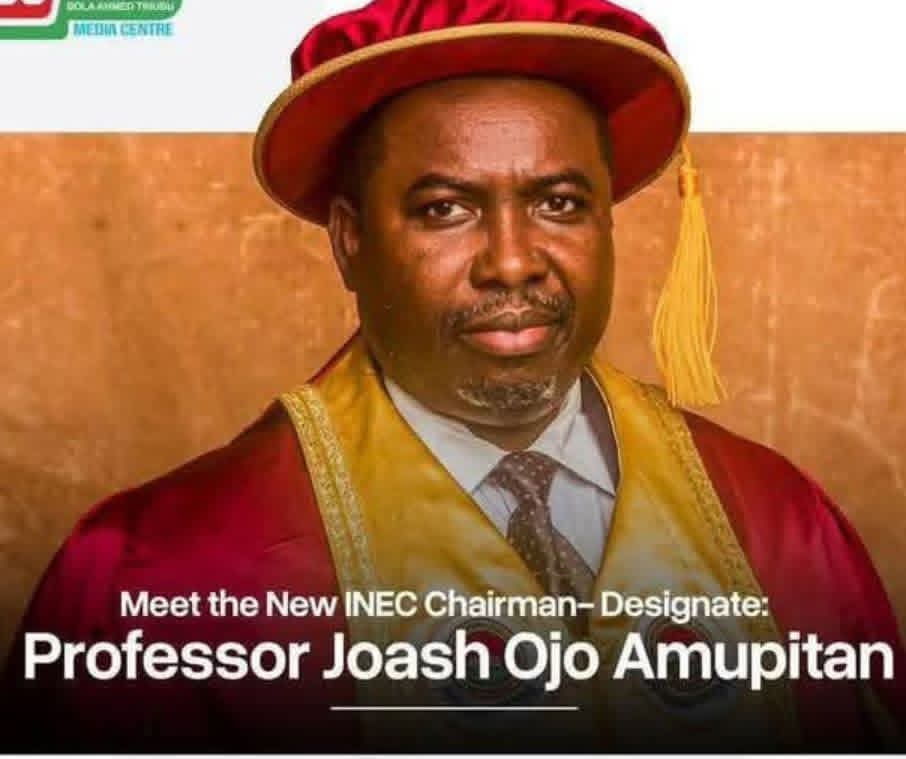
INEC Chairmanship in Crisis: Prof. Joash Ojo Amupitan’s CV Under the Microscope. A Pandora’s Box for Nigeria’s Electoral Credibility.
By George Omagbemi Sylvester | SaharaWeeklyNG.com
“When your electoral umpire is steeped in suspicion, DEMOCRACY becomes the biggest CASUALTY.”
From the moment Professor Joash Ojo Amupitan’s name surfaced as the new Chairman of the Independent National Electoral Commission (INEC), a tidal wave of skepticism has engulfed the appointment. At the heart of the storm lie serious, unanswered questions about inconsistencies in his curriculum vitae; issues that go beyond mere gossipy chatter and strike at the heart of electoral legitimacy in Nigeria. In an era where “CERTIFICATE FORGERY” has become political shorthand for deceit, the nation cannot afford a blind eye when its most sacred democratic institution’s leadership is shrouded in doubt.

Let’s cut through the haze: we are not here for hearsay, but for documented anomalies demanding clarity and accountability.
I. The AGE-TO-POLYTECHNIC CONUNDRUM, 1967 to 1982.
Professor Amupitan is publicly recorded to have been born on 25 April 1967.
Yet, the State House press statement claims he attended Kwara State Polytechnic from 1982 to 1984. If true, this would place him at 15 years old entering tertiary education; a highly irregular, almost unheard-of scenario in Nigeria’s educational system. (Even assuming early schooling, bridging primary and secondary before the age of 15, then immediately into a polytechnic without documented transitional schooling is extremely unlikely.)
Notably, no public record (in his official CV or the press release) provides the names of his primary or secondary schools, or the years he attended them. That omission alone is suspicious. How can Nigerians verify whether he was fast-tracked, homeschooled or fabricated?

Some defenders will argue that prodigies exist, but in Nigeria (with its notoriously uneven record-keeping in education) such a claim demands rather than defies scrutiny. If indeed Amupitan did enter the polytechnic at 15, documentary evidence must exist: admission letters, transcripts or contemporaneous records from Kwara State Polytechnic.
As of this writing, none of these have been made public.
II. The “THREE-YEAR LAW DEGREE” Claim.
According to multiple press narratives, from 1984 to 1987, Amupitan studied Law at the University of Jos (UNIJOS), graduating with an LL.B in 1987.
Here is the problem, under Nigeria’s legal education system, the standard law program (LL.B) runs for five years for first-degree entrants (unless one is entering through some advanced standing or transfer system, which is rarely applicable to a polytechnic background). That means compressing a five-year programme into three years triggers alarm bells. One might argue that he transferred, had exemptions or entered an accelerated program. But the press release (and accompanying CV) provide no such clarifications. Indeed, none of the online profiles mention how or why this anomaly is valid. This glaring omission raises the credible possibility of misreporting or worse; embellishment.

If he truly graduated from University of Jos in three years, the university’s records should reflect:
Admission date and conditions
Course loads (whether he took heavy course overloads)
Approved credit exemptions, if any
Transcript that tracks semester by semester
The absence of such data is conspicuous. And until those transcripts or academic records are produced and verified, the suspicion of misrepresentation cannot be dismissed.
III. The ILLUSION of CHRONOLOGY. Head of Department and PhD Paradox.
Another weak link, Amupitan is said to have become. Head, Department of Public Law from 2006 to 2008.
Dean, Faculty of Law from 2008 to 2014. Meanwhile, his PhD in Law was awarded only in 2007.
The implication is stark, he allegedly held the Head of Department position before the completion of his doctoral degree – i.e. served 2006–2007 while still PhD candidate. Most federal universities, accustomed to bureaucratic propriety (or at least the fiction of it), require that department heads at the law school level hold the rank of professor or at minimum associate professor with terminal qualifications. To lead a department (public law) without a PhD or full professorial rank is uncommon, particularly in Nigeria’s federal university system.
Even more, becoming Dean only one year after the PhD (2008) is unusually rapid. The usual trajectory is that one must first serve years as professor, accumulate academic seniority, administrative experience and robust scholarship. While exceptional merit can accelerate promotion, the absence of any explanation in his CV (e.g. “unusually meritorious research output,” “special appointment”) only deepens the suspicion.
To be clear, in many Nigerian universities, administrators and deans must be senior professors. The fact that Amupitan’s trajectory places him in leadership roles while still in nascent academic rank counts against the narrative of a conventional academic progression.
IV. CHERRY-PICKED OMISSIONS and POLICY IMPLICATIONS.
Beyond these glaring inconsistencies, the State House press release (signed by Bayo Onanuga) is oddly devoid of.
Names of primary and secondary schools and the years he attended them.
Exact program or course of study at Kwara Polytechnic and whether he obtained an ND, HND or other diploma.
Admission documents or certified transcripts from Kwara Poly and UNIJOS.
University of Jos’s defense or third-party confirmation of claimed accelerated LL.B.
It is textbook practice in academic staff portfolios and public service nominations to list institutions, course majors, grades and timelines in full. The absence of those details here suggests selective presentation and precisely the kind of “CV PACKAGING” that raises red flags in the public interest.
Consider also the broader context of certificate forgery is not trivial in Nigeria. It is a criminal offence under the law, often grounds for disqualification in public service and election. Peter Obi, a former presidential candidate, has been vociferous in calling for full verification of academic credentials, noting that
“Criminal offences should not be dismissed as a mere procedural matter. We must end the era where forgery and deceit are rewarded with power. True leadership must begin with truth.”
Similarly, in one of his own statements, Obi attacked the impotence of INEC’s vetting systems
“It is appalling that our electoral body carries out little or no due diligence in confirming certificates submitted by candidate’s. Continuous discrepancies, false declarations and forged credentials undermine the credibility of our democracy.”
Festus Keyamo, a Senior Advocate of Nigeria (SAN) once declared, “anyone who presents forged certificate to INEC is doomed.”
Peoples Gazette Nigeria
In this case, this warning returns as prophecy — if the new INEC boss’s own CV is in question, who remains beyond suspicion?
V. What Must Be Done? No STONE Left UNTURNED.
The anomalies in Amupitan’s CV are not inconsequential footnotes; they are fundamental challenges to his legitimacy as the custodian of Nigeria’s electoral process. Here is a non-exhaustive list of demands that must accompany his confirmation to restore at least minimal credibility.
Mandatory production of authenticated academic transcripts and certificates from Kwara State Polytechnic and University of Jos, including admission letters, course outlines and grades.
Independent verification from Kwara Poly and UNIJOS (registrars, academic boards) confirming the timelines, mode of entry and whether any exemptions or acceleration were granted.
Submission of primary and secondary school records to validate the early schooling that would make the age-to-polytechnic timing plausible.
Senate should demand a public hearing during confirmation, where Amupitan is cross-examined on discrepancies by educational experts, civil society and legal practitioners.
Judicial or statutory probe, perhaps by the National Assembly’s anti-fraud agencies, on the authenticity of his credentials before he assumes sovereign authority over Nigeria’s elections.
Amendments to the electoral law to mandate full public disclosure of academic credentials for all holders of high public office (especially the head of INEC) and automatic disqualification if material discrepancies are found.
Civil society oversight, including legal “fact-check panels” empowered to audit in real time any misrepresentations by public office holders.
Unless these steps are enforced, Amupitan’s tenure will begin under a cloud of legitimacy; a fatal handicap for an agency whose entire mandate rests on trust.
VI. Why This Matters: The STAKES Are Too HIGH.
This is not about taking cheap swipes at an individual; it is about national integrity. INEC is Nigeria’s electoral umpire, the guardian of free and fair elections. If its leader is himself mired in alleged misrepresentations, then every result, every polling unit, every count becomes suspect.
The presumption of innocence is not the same as public complacency. In matters of public trust, transparency is the only immunity. By refusing or failing to clarify these serious gaps, Amupitan and those who packaged his nomination risk dragging the electoral commission into the same contagion of public cynicism that dogged past presidencies and APC’s anomalies.
As Wole Soyinka once quipped, “Truth is the first casualty of politics.” But truth, once buried, morphs into rot. Nigeria cannot afford that decay in its most sacred institutions.
When you place the commander of your electoral army under such suspicion before a single general election takes place, your democracy enters the battlefield already wounded.
Let this be a warning to all; No public office is immune from scrutiny. If Prof. Joash Ojo Amupitan claims legitimacy, let him first prove it (in raw, verifiable documents) before presiding over the destiny of Nigeria’s votes.





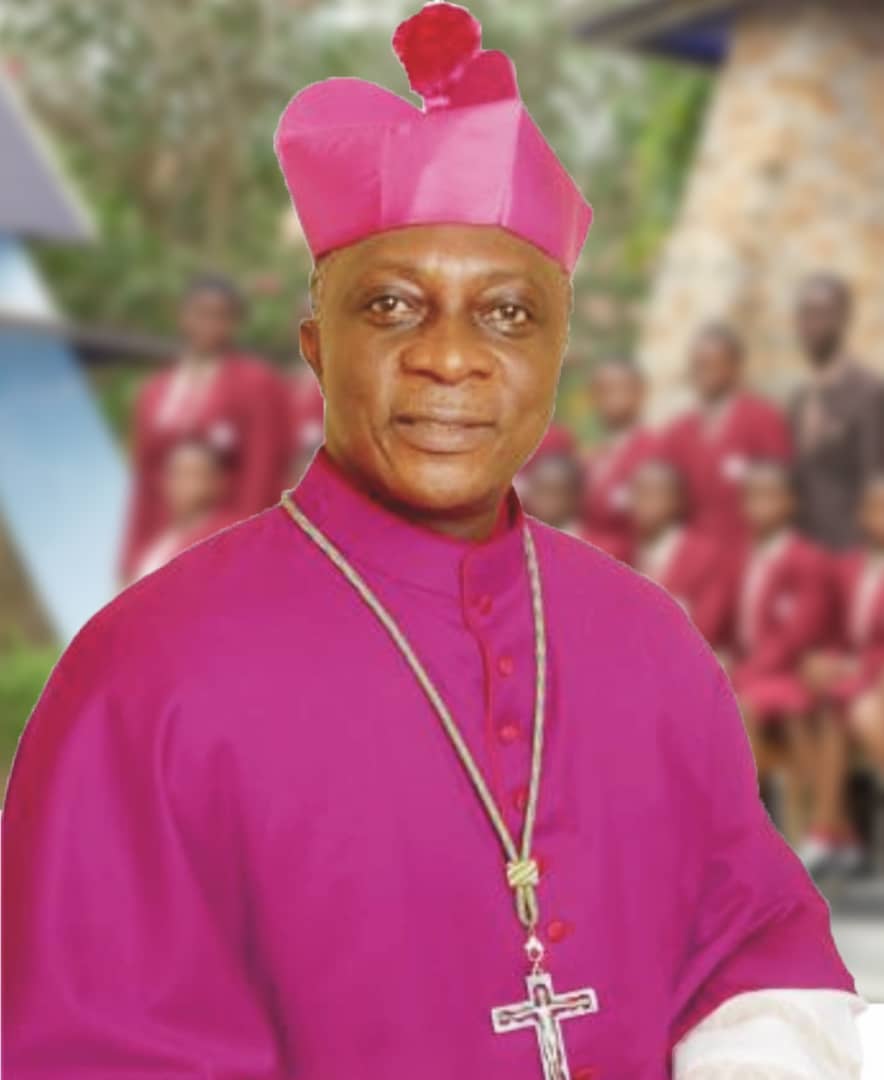
GOVERNMENT MUST TACKLE NATION’S PRESSING CHALLENGES — BISHOP MARTINS URGES AT CHRISM MASS
By Ifeoma Ikem
The Holy Cross Cathedral, Lagos, was filled with joy, reverence, and renewed commitment on Holy Thursday as Catholic faithful across the metropolis gathered for the annual Chrism Mass — a solemn celebration marking the institution of the priesthood, the Holy Eucharist, and the blessing of sacred oils used throughout the liturgical year.

During the ceremony, the Catholic Archbishop of Lagos, Most Rev. Adewale Martins, described the Chrism Mass as a profound moment in the life of the Church.
He noted that it offers priests an opportunity to renew their vows and reflect on the centrality of the Eucharist, which he emphasized remains the heartbeat of the Catholic faith.
Addressing national issues, Bishop Martins acknowledged the government’s ongoing efforts to tackle Nigeria’s current challenges.
However, he stressed the need for more decisive and accelerated interventions, particularly in securing lives and easing the economic burdens confronting citizens.
He congratulated priests on their feast day and reflected on the rising influence of digital evangelization. While recognizing that many people now “inhabit online spaces,” he warned clergymen to handle social media with caution, discipline, and fidelity to Church teachings. According to him, digital influence must never overshadow spiritual integrity.
“The oils blessed today are not simply symbols; they speak of being set apart by a mark not earned, not crafted, but given,” he said. “As we renew our promises, we do not recreate ordination; we awaken memory. We were not ordained to build profiles but to bear Christ.”
He further noted that the digital world has become a place where people “gather, argue, celebrate, confess, misunderstand, and sometimes encounter truth.” For this reason, he said the Church recognizes the need to take the Gospel into that space without compromising its authenticity.
In his homily, Rev. Fr. Paul Akin-Otiko, Chaplain of St. Thomas More Catholic Chaplaincy, University of Lagos, emphasized the enduring significance of the Chrism Mass as an ancient tradition where sacred oils are consecrated.
He urged priests to pray fervently for the sick using the blessed oils, reminding them that true healing comes from God.
Fr. Akin-Otiko encouraged clergy to remain selfless, warning them never to turn the Church into a source of personal gain.
He stressed that their primary duty is the salvation of souls and the welfare of the people entrusted to them.
Monsignor John Aniagwu took a moment to appreciate Anthony Cardinal Olubunmi Okogie for his fatherly guidance and exemplary leadership. He prayed for God’s continued blessings, asking that all present be granted good health to witness many more Chrism Masses.
The highlight of the ceremony was the renewal of vows by hundreds of priests, who reaffirmed their commitment to lives of dedication, chastity, and obedience to the Church and their bishop — an act that drew heartfelt applause from the congregation.
The celebration concluded with songs of thanksgiving, joy, and renewed devotion.
society
Liberian Leaders, Citizens Bear Witness as Apostle Suleman Hosts Two-Day Power-Packed Crusade
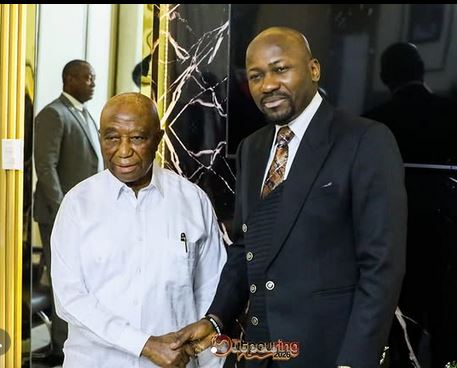
Liberian Leaders, Citizens Bear Witness as Apostle Suleman Hosts Two-Day Power-Packed Crusade
It was testimonies galore on Tuesday, March 31, the first day of the famous servant of God and founder of the Omega Fire Ministries (OFM) worldwide, Apostle Johnson Suleman’s power-packed two-day crusade. The event documented impactful moments with the Gospel and miracles, emphasizing the power of faith and the tangible confirmation of God’s Word through signs and wonders. It was equally an atmosphere of miraculous healing, restoration of lives, and the strengthening of faith.
At the crusade, which was held at the SKD Sports Stadium in Paynesville City, and themed, “Liberia Outpouring Crusade” witnessed testimonies of impact and miracles with participants experiencing instant healing of various kinds of challenges.
Apostle Suleman’s first port of call was Paynesville, the office of Liberian government’s president, Mr. Joseph Nyuma Boakai, who received him in an audience with his junior ministers. Apostle Suleman, who also met with the vice-president, Mr. Jeremiah Kpan Koung, was welcomed by the Liberian leader’s office as part of the president’s ongoing engagements with religious leaders aimed at fostering spiritual support for national development.
The president expressed profound appreciation to Apostle Suleman for the visit and continued prayers and intercessions by men and women of God on behalf of Liberia, emphasizing his firm belief that sustained spiritual guidance and prayer remain vital to the transformation and progress of the nation.
During the visit, Apostle Suleman offered prayers for President Boakai, his cabinet and the Liberian nation, invoking divine alignment, wisdom, and insight in Liberia’s path toward growth and stability. He prayed that the Almighty God would position Liberia for relevance and fulfillment of its national destiny.
Apostle Johnson Suleman, an evangelist who knows no bounds of where preaching the gospel comes to a stop, visited Liberia prepared with the message, compelling power of the Gospel and the work of the Holy Spirit, and bringing people to a point of decision where they surrendered their lives to Christ.
Aside from being prophetic and timely, OFM sources disclosed that the servant of God’s visit underscores the importance of faith-based partnerships in supporting governance and national renewal efforts.
society
Middle Belt Forum Hails Tinubu’s Jos Visit, Calls for United Civil-Military Effort to Restore Lasting Peace
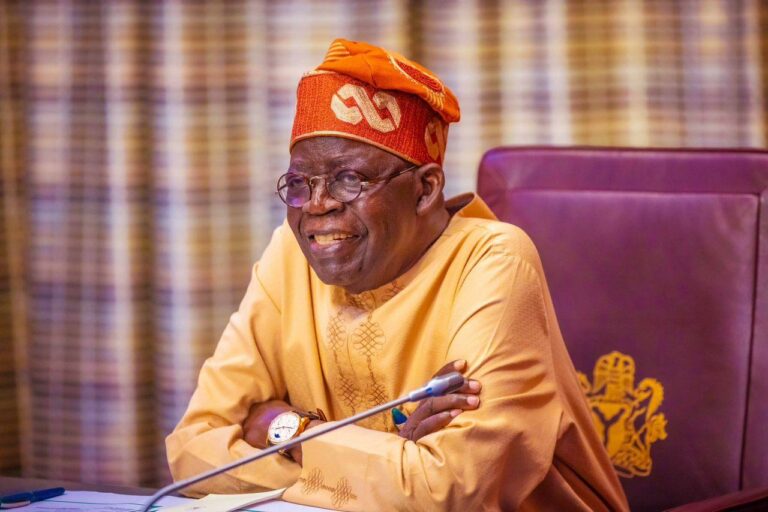
*Middle Belt Forum Hails Tinubu’s Jos Visit, Calls for United Civil-Military Effort to Restore Lasting Peace
The Middle Belt Peace Forum (MBPF) has commended President Bola Ahmed Tinubu for his profound demonstration of empathy and responsive leadership following his decision to postpone an official engagement in Iperu in order to visit victims of the recent attacks in Jos.
In a statement signed by its National Coordinator, Pastor Bulus Garba, in Jos on Friday, the Forum said the President’s decision to personally identify with grieving communities sends a powerful message of solidarity and reinforces public confidence in the commitment of the Federal Government to the protection of lives and property.
“The Middle Belt Peace Forum warmly commends President Bola Ahmed Tinubu for prioritising compassion over ceremony. At a time of deep sorrow for the people of Plateau State, his decision to visit Jos stands as a mark of true leadership—one that listens, responds, and stands with the people in their moment of pain,” the statement read.
The Forum described the perpetrators of the recent attacks as “cowards who prey on innocent and defenceless citizens,” stressing that such acts of violence are not only inhumane but also a direct assault on the unity and peace of the nation.
“We condemn in the strongest terms the actions of these cowardly attackers whose only aim is to instil fear and destabilise peaceful communities. Their actions must be met with firm and decisive resistance from all arms of the state,” Pastor Garba said.
The MBPF further used the opportunity to salute the courage, gallantry, and sacrifices of the Armed Forces of Nigeria under the leadership of the Chief of Defence Staff, General Olufemi Oluyede, noting that their continued efforts remain central to restoring stability across troubled parts of the country.
According to the Forum, the Armed Forces have demonstrated resilience and professionalism in the face of complex security challenges, often operating under difficult conditions to safeguard communities and defend Nigeria’s territorial integrity.
“We salute the Armed Forces of Nigeria for their unwavering commitment and sacrifices. Their gallantry in confronting criminal elements and reclaiming territories is a testament to their dedication to national service. We recognise that the path to peace is demanding, and we honour those who stand daily in defence of our nation,” the statement added.
The Forum pledged its full support to ongoing military operations and called for strengthened collaboration between security agencies and local communities as a critical factor in achieving lasting peace.
It also urged citizens across the Middle Belt to cooperate with security forces by providing timely information and fostering unity within their communities.
The MBPF, however, expressed concern over the need for greater synergy among security agencies, particularly the role of the Nigeria Police in consolidating gains made by the military.
“We call on the Nigeria Police Force to rise fully to its constitutional responsibility by effectively supporting the Armed Forces in stabilising and securing areas that have been cleared of criminal elements. Holding and policing such territories is essential to preventing a resurgence of violence,” Pastor Garba stated.
The Forum emphasised that sustainable peace requires a coordinated approach in which the military clears and secures areas, while the police maintain law and order to enable displaced communities to return and rebuild their lives.
The MBPF concluded by reiterating its commitment to peacebuilding efforts across the Middle Belt and expressed optimism that with sustained leadership, coordinated security efforts, and active citizen participation, lasting peace can be achieved.
“Together, through unity, vigilance, and collective resolve, we can overcome these challenges and build a safer and more peaceful Middle Belt,” the statement added.


-

 society7 months ago
Religion: Africa’s Oldest Weapon of Enslavement and the Forgotten Truth
-

 news4 months ago
WHO REALLY OWNS MONIEPOINT? The $290 Million Deal That Sold Nigeria’s Top Fintech to Foreign Interests
-

 society6 months ago
“You Are Never Without Help” – Pastor Gebhardt Berndt Inspires Hope Through Empower Church (Video)
-

 celebrity radar - gossips2 months ago
Dr. Chris Okafor Returns with Power and Fire of the Spirit -Mounts Grace Nation Altar with Fresh Anointing and Restoration Grace on February 1, 2026