
society
Inferno at Ipele: A Nation’s Peace Shattered — The Terrorist Bombing of an Ondo Police Station and the Looming Spectre of National Insecurity

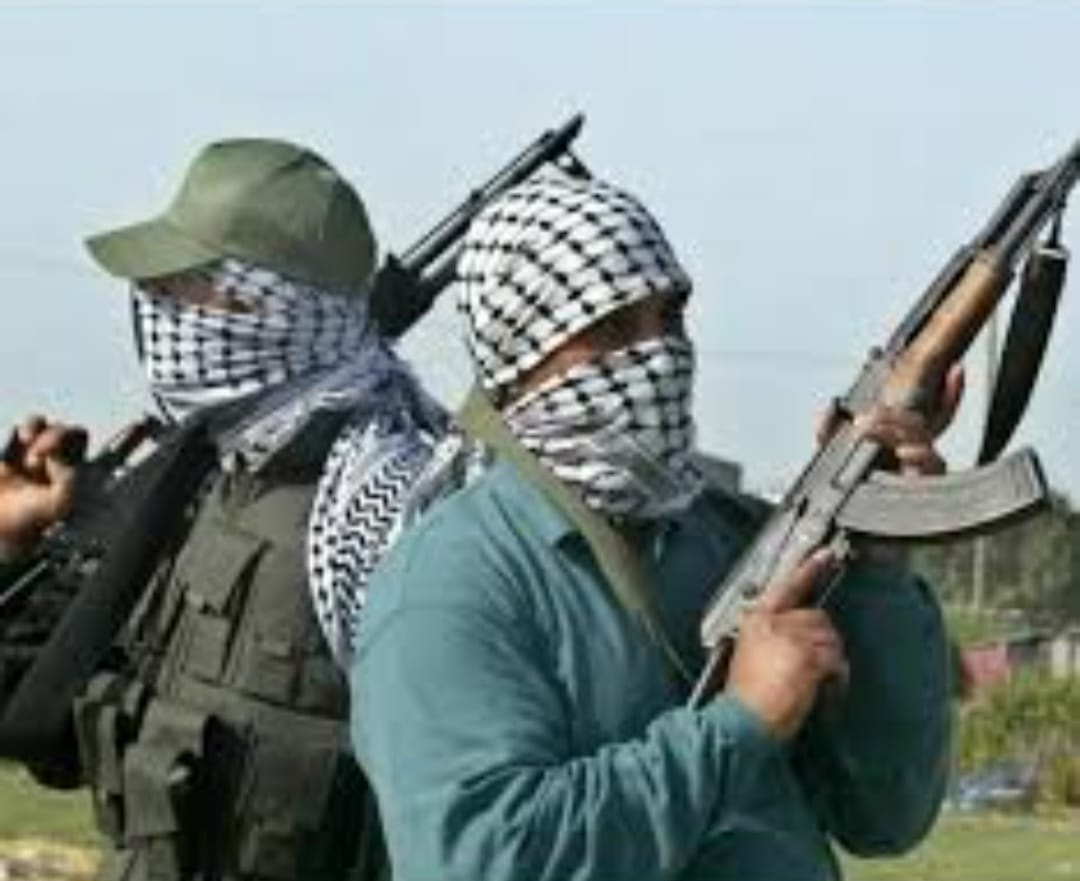
Inferno at Ipele: A Nation’s Peace Shattered — The Terrorist Bombing of an Ondo Police Station and the Looming Spectre of National Insecurity.
By George Omagbemi Sylvester | Published by saharaweeklyng.com
“A Detailed and Fact-Checked Exposé of the New Year’s Eve Terror Attack in Ipele, Ondo State.”
As the clock struck 9:41 pm on December 31, 2025, residents of Ipele community in Owo Local Government Area of Ondo State were plunged into chaos and disbelief. What should have been a peaceful New Year’s Eve celebration quickly degenerated into a harrowing assault on the very institutions meant to protect the citizenry. A coordinated group of 20 to 30 armed assailants stormed the Ipele Divisional Police Headquarters, firing assault rifles and deploying explosive devices. In a calculated act of terror, they razed the station whereby reducing it to smoldering ruins and underscoring a grim truth: Nigeria’s long-simmering security crisis has spread its malignant tendrils deeper into the South-West than previously acknowledged.

This attack (verified by multiple eyewitness accounts and the official statement of the Ondo State Police Command) was not an isolated incident of vandalism but a terrorist offensive that strikes at the very heart of Nigeria’s fragile peace. The assailants, whose identities and affiliations have not yet been conclusively determined, carried out the assault with military precision with an ominous signal that the threat of terrorism in Nigeria is evolving and expanding.
The Incident: A Night of Gunfire and Flames. According to the Sahara news report, the armed men launched their assault with lethal intent. They fired indiscriminately before deploying dynamite to ignite the police station structure and destroy its exhibits. Residents fled into surrounding bushes, their screams echoing through the night as gunfire rent the air.
DSP Abayomi Jimoh, the Police Public Relations Officer for Ondo State, confirmed that no lives were lost in the attack; a claim that, while heartening, should not be misconstrued as a sign that the danger has passed. The absence of fatalities in this instance may be more attributable to timing and luck than to any systemic success of security defenses. Jimoh added that despite misinformation circulating on social media (including claims of a church attack) no religious facility was targeted during this incident.

“The Ondo State Police Command remains committed to ensuring the safety and security of the community, and is actively working to restore peace in the region,” said CP Adebowale Lawal, the Commissioner of Police, in a statement condemning the attack.
Law enforcement swiftly mobilised Tactical Teams, EOD-CBRN units, and Police Mobile Force personnel, and a coordinated manhunt for the attackers is now underway.
Context: Terrorism’s Shifting Geographies in Nigeria. Ondo State, part of the usually peaceful South-West geopolitical zone, has historically been considered more secure than the North-East and North-West, which have borne the brunt of the Boko Haram insurgency and attacks by Islamic State West Africa Province (ISWAP) militants over the last 15-plus years. Yet recent security alerts suggest a worrying shift in militant strategy.
In October 2025, credible intelligence circulated within the Department of State Services (SSS) and the Nigerian Army warned of imminent coordinated terrorist attacks on several communities in Ondo and neighbouring Kogi States. The leaked memo specifically mentioned Owo town (the broader region encompassing Ipele) among the likely targets.
While state officials later characterised the memo as routine intelligence information, security analysts noted that such warnings reflect a broader trend: terror groups are attempting to expand beyond their traditional strongholds in the North-East into Southern and Middle Belt states.
The emergence of such threats has not come in a vacuum. In May 2025, the Ondo State Police Command proactively deployed personnel to churches and mosques to preempt potential attacks, a move explicitly tied to fears of terror activities following deadly incidents in other states.
The Evolving Threat: From Boko Haram to ISWAP. Boko Haram and its splinter group ISWAP have dominated Nigeria’s terrorism landscape for more than a decade, collectively responsible for tens of thousands of deaths and millions displaced. Their tactics (including ambushes, bombings, kidnappings, and raids) have been extensively documented and condemned both locally and internationally.
Although neither group has issued a claim regarding the Ipele attack, experts warn that terrorist organisations are adapting to counter-insurgency pressures, shifting tactics, and sometimes relocating operational focus to “softer” targets in underserved regions. Some security analysts argue it would be reckless to dismiss the possibility of their involvement, especially given previous intelligence warnings.
According to the 2025 Global Terrorism Index, groups like ISWAP prioritize attacks on state and military assets (including police stations and other symbols of government authority) with the dual aim of undermining public confidence and weakening the state’s monopoly on force.

Voices of Authority: What Experts Are Saying. Renowned security expert Dr. Aisha Bello, Director at the Centre for Strategic Studies, recently observed:
“The expansion of terrorist footprints into Nigeria’s South-West is not accidental. It signifies a strategic recalibration by extremists seeking to exploit governance vacuums and over-stretched security apparatuses.”
Her words resonate with chilling clarity in light of the Ipele incident and broader intelligence trends.
Similarly, Professor Emmanuel Okonkwo, a specialist in counter-terrorism studies, remarked:
“The attack on Ipele’s police infrastructure is symbolic. It conveys a message that no part of our nation is immune to insecurity unless we address the root political, economic, and intelligence failures that have emboldened these groups.”
These reflections underscore a sobering reality: Nigeria’s security challenges are as much structural and systemic as they are tactical. Without sustainable reforms in governance, community engagement, and intelligence integration, such attacks risk becoming routine rather than exceptional.
What This Means for Nigeria. The burning of the Ipele Police Station is more than an assault on bricks and mortar; it is an assault on public trust and national stability. It illuminates deep and festering fractures within Nigeria’s national security architecture.
While authorities have shown resolve by condemning the attack and promising decisive follow-up actions, the broader question looms large: Can Nigeria protect its citizens and institutions with the urgency and strategic foresight this moment demands?
The answer to this question will determine not only the future of security in Ondo State but the very cohesion of the Nigerian state itself.
Final Truth: A Time for Reflection and Action. As Nigeria steps into 2026, the Ipele attack serves as a grim reminder that terrorism (in all its brutality and unpredictability) remains a potent threat. Yet beyond the fear and destruction lies an opportunity: an undeniable call for unified national resolve, stronger intelligence cooperation, and meaningful reforms in governance and security operations.
In the words of Dr. Aisha Bello: “Our collective response to terror attacks must transcend condemnation and it must inspire strategic transformation.”
Nigeria must act (decisively, inclusively, and intelligently) if the hope for peace and security is to be more than a fleeting promise.





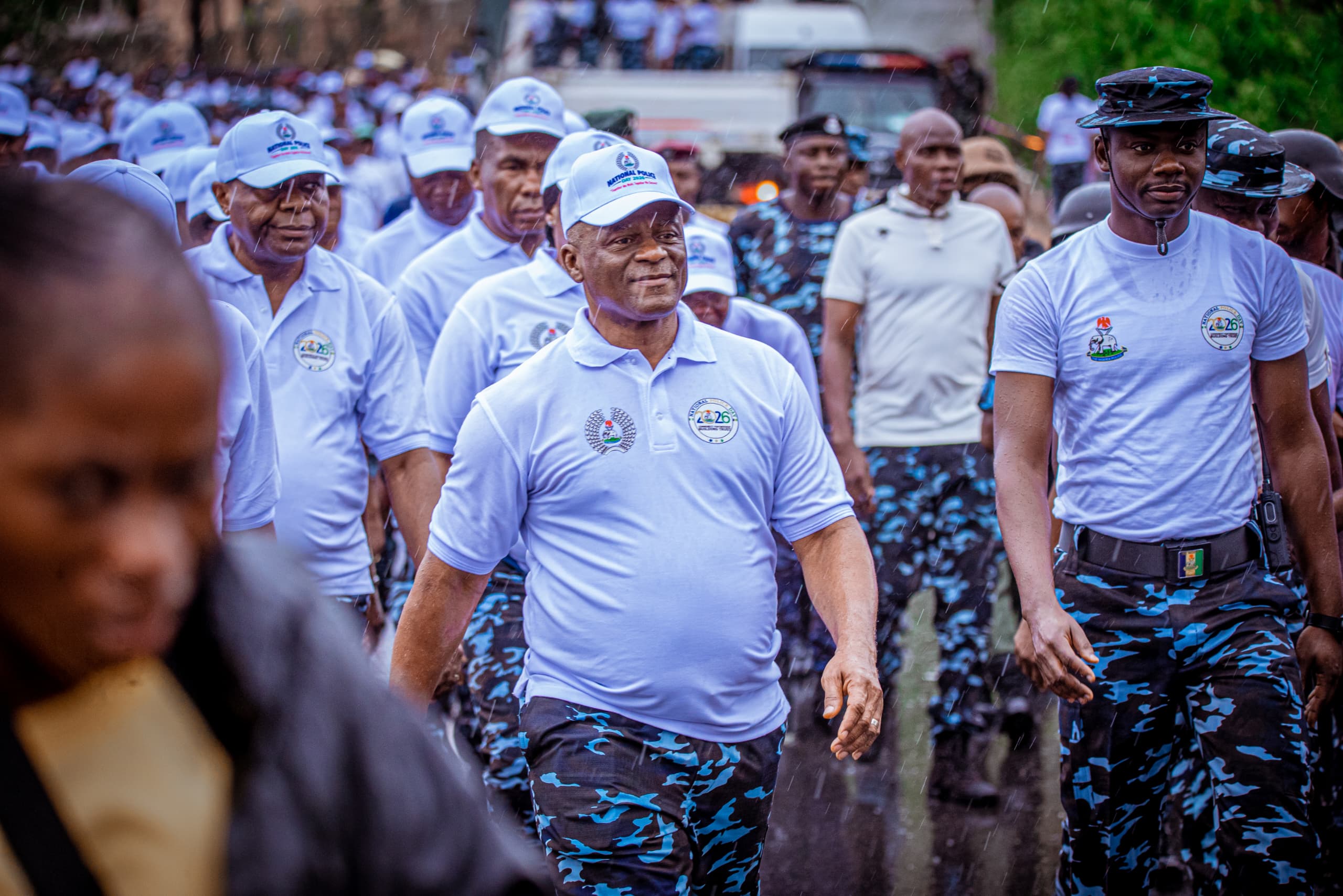
Police Day 2026: IGP Disu Leads Nationwide Walkathon To Strengthen Community Trust
The Inspector-General of Police, Olatunji Disu, on Tuesday led the management team, alongside officers and personnel of the Nigeria Police Force, in a nationwide walkathon to commemorate the 2026 National Police Day.
The event, held across state capitals and the Federal Capital Territory, formed part of activities marking Day Two of the annual celebration, themed “Community Partnership: Building Trust.”
The symbolic exercise, which drew participation from both police personnel and members of the public, was aimed at showcasing unity, discipline, and a renewed commitment to community policing and public safety.
According to the Force leadership, the walkathon underscores the Nigeria Police Force’s resolve to strengthen public trust, deepen engagement with citizens, and enhance collaboration in tackling security challenges across the country.
Participants described the initiative as a practical step toward bridging the gap between law enforcement and the communities they serve, while also promoting physical fitness and mental well-being among officers and civilians alike.
With the theme reflecting a shared responsibility for safety, the Police reiterated that sustainable security can only be achieved through active partnership with the public.
The event concluded with a renewed call for collective action under the banner: “Together We Walk, Together We Secure,” emphasizing unity of purpose in building a safer and more secure society for all Nigerians.


society
Dr. Chris Okafor invokes divine retribution upon individuals blackmailing the Grace Nation church

Dr. Chris Okafor invokes divine retribution upon individuals blackmailing the Grace Nation church
… Affirming God’s omnipotence to unveil malicious schemes.
To be frank, the ability of Doris Ogala and her associates to withstand the arduous challenges set by Senior Pastor Dr. Chris Okafor of Grace Nation Global at the culmination of the Harvest of Babies 2026 conference, the church’s flagship event, continues to elude me.
It’s advisable not to offend a powerful spiritual leader like Prophet Chris Okafor to avoid potential consequences, as seen in the situation with Doris Ogala, who was rebuked by the prophet; can she rectify the situation through confession?
Insiders close to the man of God claim that despite relentless online bullying and blackmailing, the Generational Prophet remains resolute, stating that God’s power has been evident throughout the commission’s existence. The reason for this wonderful statement is found in the scriptures, “Upon this rock I shall build my Church, and the gates of hell shall not prevail.” The more falsehoods are spread about the church and its leader, the more God elevates the church and propels him to greater heights, he asserted. He emphasized that blessings and fruitfulness are antidotes to curses, noting that God continues to bestow blessings upon the church, including miracles and the gift of children, which is one reason for the grand finale of the annual family liberation program, The Harvest of Babies.
However, the man of God issued a curse on each person speaking ill of the church, blackmailing, and uttering all sorts of falsehoods against the church, declaring that if they refused to repent within a few days, the earth would swallow them and their family members, stating that they would be of no use to themselves, their families, or society at large.
The spiritual leader cautions his followers to beware of such individuals including Doris Ogala who may taint their faith, and urges them to treat these persons as emissaries of the devil, avoiding them altogether.
Recall that the 2026 harvest of babies concluded with a remarkable birth of a miracle baby boy to a woman on the third day of the conference, accompanied by the dedication of several other miracle babies, all to the glory of God.
Christopher Sunday David writes from
Austria
“Together We Walk, Together We Secure”: Police Launch 2026 Walkathon In Abuja
The Nigeria Police Force has announced plans to host a walkathon in commemoration of the 2026 National Police Day, aimed at promoting unity, peace, and stronger community partnership.
The event is scheduled to take place on Tuesday, March 31, 2026, with participants expected to converge at the Force Headquarters Abuja by 6:00 a.m., where the walk will commence.
According to the organisers, the walkathon is designed to bring together members of the public, stakeholders, and security personnel in a show of solidarity and shared commitment to national security.
With the theme, “Together we walk, together we secure,” the initiative underscores the importance of collaboration between the police and citizens in maintaining peace and safety across the country.
Members of the public have been encouraged to participate in the exercise, which forms part of activities lined up to mark this year’s National Police Day celebration.
It is believed that the walkathon would not only foster closer ties between the police and the communities but also serve as a platform to promote awareness on collective responsibility in ensuring a safer society.


-

 society6 months ago
Religion: Africa’s Oldest Weapon of Enslavement and the Forgotten Truth
-

 news4 months ago
WHO REALLY OWNS MONIEPOINT? The $290 Million Deal That Sold Nigeria’s Top Fintech to Foreign Interests
-

 society6 months ago
“You Are Never Without Help” – Pastor Gebhardt Berndt Inspires Hope Through Empower Church (Video)
-

 celebrity radar - gossips2 months ago
Dr. Chris Okafor Returns with Power and Fire of the Spirit -Mounts Grace Nation Altar with Fresh Anointing and Restoration Grace on February 1, 2026