
celebrity radar - gossips
Inside Ngige’s Arraignment: The Allegations, the Stakes, and the Future of Accountability

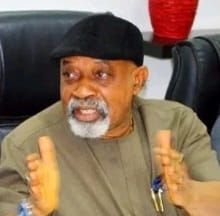
Inside Ngige’s Arraignment: The Allegations, the Stakes, and the Future of Accountability
Written by George Omagbemi Sylvester for SaharaWeeklyNG.com
“A Judicial Watershed and National Reckoning, Exposing Systemic Corruption in the Heart of Federal Governance.”
In a dramatic legal climax befitting Nigeria’s deepening battle against entrenched corruption, Dr. Chris Nwabueze Ngige, former Minister of Labour and Employment and one-time Governor of Anambra State, was arraigned on Friday, December 12, 2025, at the Federal Capital Territory High Court in Gwarinpa, Abuja. The Economic and Financial Crimes Commission (EFCC) charged him with an eight-count indictment involving alleged fraud, abuse of office, and illicit enrichment totalling N2.2 billion. Following his arraignment, Justice Maryam Hassan ordered the 73-year-old defendant to be remanded at the Kuje Correctional Centre pending his bail application scheduled for December 15.

This moment marks a critical inflection in Nigeria’s anti-graft campaign and a test of the judiciary’s resolve and of the nation’s commitment to making public office synonymous with public trust rather than personal gain.
Context: Who is Chris Ngige and Why This Matters. Dr. Chris Ngige is no ordinary subject of criminal process. A seasoned politician, medical doctor, former Governor of Anambra State, and long-serving Minister of Labour (under then-President Muhammadu Buhari’s administration from 2015 to 2023) he has occupied the corridors of power for decades. His tenure as a public official, therefore, carries immense weight, not only in policy but in public expectation.
The charges against him are severe and wide-ranging. They allege that Ngige used his official positions — including his supervisory role over the Nigeria Social Insurance Trust Fund (NSITF) — to confer unfair advantage on companies linked to personal associates, approving lucrative contracts improperly. Furthermore, he is accused of corruptly receiving monetary “gifts” disguised as legitimate transfers through organisations tied to him.
Such systemic corruption allegations are not mere bookkeeping disputes and they strike at the core of Nigeria’s governance architecture, where public institutions are expected to serve citizens, not patronage networks.
The EFCC’s Charges: Abuse of Office and Illicit Gains
The EFCC’s charges (contained in FCT/HC/CR/726/2025) lay out a detailed pattern of alleged wrongdoing:

Count One alleges that between September 2015 and May 2023, Ngige used his influence to confer unfair advantages upon Cezimo Nigeria Limited, a company linked to his associate, by approving seven NSITF contracts for consultancy, training, and supply.
Further counts include allegations that the former minister accepted gifts amounting to tens of millions of naira, channelled through both a campaign organisation and an ostensible scholarship scheme, all tied to contractors working with the NSITF.
These actions, if proven, violate Sections 17(a) and 19 of the Corrupt Practices and Other Related Offences Act, 2000, which criminalise abuse of office for private advantage and the acceptance of gratification by public officials.
The charges do not allege that Ngige stole public funds directly (a technical distinction that his defence emphasised) but they do suggest legal impropriety, circumvention of procurement standards, and a chilling erosion of ethical conduct in public service.
Judicial Response: From Courtroom to Kuje
During proceedings, Ngige entered a plea of not guilty to all charges. Yet even before the trial begins, the court’s decision to remand him to Kuje Correctional Centre underscores the perceived gravity of the offence and the risk the judiciary believes he may pose if released.
Represented by Senior Advocate Patrick Ikwueto, SAN, the former minister’s defence argued that:
“The Constitution guarantees the right to bail and his health needs urgent attention.”
Conversely, EFCC counsel Sylvanus Tahir, SAN insisted:
“The offences for which the defendant was charged are by no means minor If convicted, he faces nothing less than five years’ imprisonment.”
Justice Hassan fixed the bail hearing for Monday, December 15, a key date that will determine Ngige’s custodial fate pending trial.
Scholarly Perspectives: Why This Case Matters
Legal scholars and anti-corruption experts note that prosecuting high-profile figures like Ngige is essential in breaking the culture of impunity that has long plagued Nigeria’s political class.
Professor Adewale Ojo, a constitutional law expert at the University of Lagos, argues:
“For too long, Nigeria’s public office has been a conduit for personal enrichment rather than national service. Prosecuting leaders sends a message that public trust is not dispensable.”
Similarly, Dr. Nkechi Ibe-Johnson, a public governance analyst, asserts:
“Corruption at this scale erodes not only fiscal integrity but public faith in institutions. A robust legal process here could help restore confidence in Nigeria’s commitment to accountability.”

These expert voices reflect a growing consensus: accountability must be unwavering, even (and especially) when it touches the powerful.
Public Reaction: Divided but Engaged Public commentary on Ngige’s arraignment has been mixed. Sections of the populace view the prosecution as overdue accountability; others see a potential political vendetta or selective justice.
This tension mirrors Nigeria’s broader struggle with corruption perception and enforcement. Transparency International’s most recent Corruption Perceptions Index underscores that nations prone to the perception of elite impunity invariably see a decline in investment and social cohesion.
Broader Implications: Nigeria’s Anti-Corruption Trajectory. The Ngige case arrives at a critical juncture. President Bola Ahmed Tinubu’s administration has publicly championed anti-graft efforts, yet critics allege inconsistency and selective enforcement.
A landmark concern for governance analysts is not merely the prosecution itself, but whether the trial will proceed with transparency, due process, and impartiality — key ingredients for legal legitimacy.
If Ngige’s case results in a conviction based on clear, constitutional evidence, it could strengthen civil society’s confidence that nobody is above the law. If it falters due to procedural flaws or perceived bias, it may reinforce long-held scepticism about Nigeria’s anti-corruption machinery.
Last Words: A Defining Moment for Justice and Nigeria’s Future. The arraignment of Dr. Chris Ngige on alleged fraud charges is more than a legal proceeding; it is a symbolic battleground for Nigeria’s institutional credibility. It forces the nation to wrestle with uncomfortable questions:
Can Nigeria enforce anti-corruption with equal application across all levels of society?
Will political influence shield the powerful from accountability?
How will the judiciary navigate pressure from both elites and the public?
As the case progresses, the world watches — not merely for a verdict, but for what the verdict signifies about Nigeria’s evolving democratic integrity.
For a nation long battered by corruption scandals, this moment matters profoundly. The outcome will speak loudly about whether Nigeria chooses a culture of impunity or a culture of accountability.




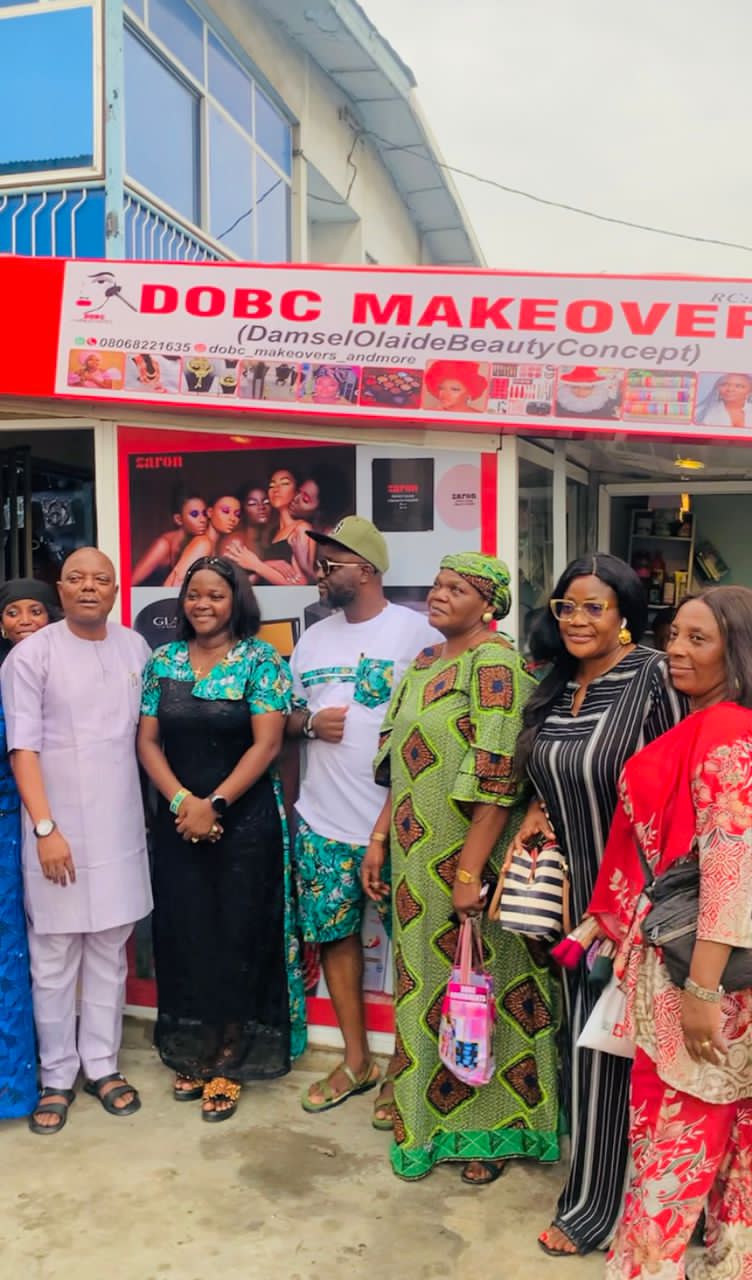
Beauty Meets Glamour as Olaide Ogunyemi Opens New Studio in Mushin
Popular Nollywood actress and professional makeup artiste, Olaide Ogunyemi Oluwayemisi aka Damilola, has expanded her footprint in the beauty industry with the grand opening of her new makeup studio in Lagos.
The talented thespian, who is also the Chief Executive Officer of @Dobc_makeovers_andmore, officially unveiled the ultra-modern beauty space last Thursday, April 2, 2026, in a colourful ceremony filled with glamour, fashion, and pageantry.
Strategically located at 101 Palm Avenue, right beside FitPlus and Sparklight Hospital in Mushin area of Lagos, the new studio is designed to offer top-notch beauty services, reflecting Ogunyemi’s commitment to excellence and professionalism in the ever-growing makeup industry.
The opening ceremony attracted friends, colleagues from the Nollywood industry, beauty enthusiasts, and well-wishers who came out in large numbers to celebrate the entrepreneur’s latest milestone. Guests were treated to a vibrant atmosphere that showcased creativity, style, and the evolving standards of the beauty business in Lagos.
Speaking at the event, Ogunyemi expressed her excitement and gratitude, noting that the new studio represents years of hard work, dedication, and passion for her craft. She reaffirmed her commitment to delivering premium beauty services while empowering aspiring makeup artistes.
The launch of the studio further cements her reputation as a dynamic force, successfully blending her career in Nollywood with a thriving beauty brand.
With this latest development, Olaide Damilola Ogunyemi continues to inspire many young entrepreneurs, proving that talent, consistency, and vision remain key drivers of success in Nigeria’s creative and business landscape.


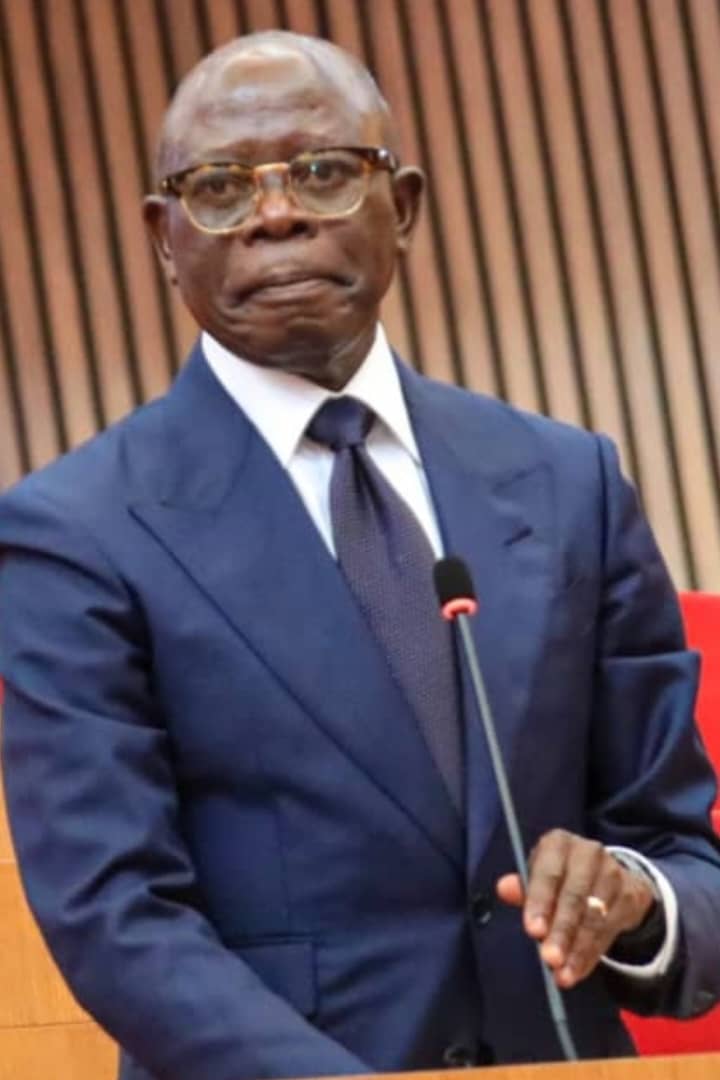
Daniel Eromosele Eulogize Adams Oshiomole as he turns 74 years
Today, I celebrate an exceptional leader, a fearless voice for the people, and a man whose life has remained a symbol of courage, sacrifice, and unwavering commitment to justice—Distinguished Comrade Senator Adams Aliu Oshiomhole.

Your journey has been nothing short of inspiring. From your days as a vibrant labour leader to your impactful tenure as the Executive Governor of Edo State, and now as a respected Senator of the Federal Republic, you have consistently demonstrated what it means to serve with integrity, strength, and purpose. Your contributions to the growth of our nation and the development of Edo State remain indelible and deeply appreciated.
You have not only built structures and institutions but have also built people. I am personally a beneficiary of your leadership, your guidance, and your belief in empowering others. Your influence in my life has been profound, and I remain grateful for the opportunities and inspiration you have given me.
On this special day, I celebrate not just your achievements, but the man you are—resilient, principled, and ever committed to the progress of Nigeria and her people.

May this new year bring you renewed strength, greater wisdom, good health, and more remarkable accomplishments. May your legacy continue to shine brighter with each passing year.
Happy Birthday, sir. Wishing you many more fruitful and impactful years ahead.
celebrity radar - gossips
Accolades to Empress Genevieve Wining as she Celebrate birthday in Grand style

Accolades to Empress Genevieve Wining as she Celebrate birthday in Grand style
Emmanuel Clement
Vilnius, Lithuania – The Grand Hotel Vilnius will host a grand birthday celebration in honor of Her Majesty The Empress Genevieve Wining of the United Kingdom of Atlantis (UKA) on April 4th, 2026.
The four-day event promises to be an extravagant affair, marking the special birthday of Empress Genevieve Wining. The celebration will take place at the prestigious Grand Hotel Vilnius, Lithuania, renowned for its luxurious ambiance and exceptional service.

According to the event flyer, the birthday celebration will be a spectacular occasion, fitting for an empress. Guests can expect an elegant setting adorned with golden accents, sparkling champagne, and festive decorations, creating a regal atmosphere befitting the occasion.
The Empress Genevieve Wining of UKA is expected to grace the event, which will include various festivities and celebrations in her honor. The occasion aims to bring together dignitaries, followers, and guests to commemorate the empress’s birthday with grandeur and joy.
For media inquiries, accreditation, or further information about the birthday celebration of The Empress Genevieve Wining of UKA, please contact the event organizers.
Courtesy of His Excellency Emperor Prof. Solomon Wining. UKA


- ABB’s Application Configurator brings speed and precision to grid-feeding protection system design April 7, 2026
- Can Equatorial Guinea Reposition as West Africa’s Gas Hub? April 7, 2026
- Afreximbank Partners with African Energy Week 2026 to Drive Africa-Led Energy Deals April 7, 2026
- Merck Foundation Marks ‘World Health Day’ 2026 – Transforming Patient Care in Africa and Beyond through 2600+ Scholarships for Healthcare Providers From 52 Countries April 7, 2026
- Morocco Gas Plan Reset Could Open Door to New Investment Models April 7, 2026
- African Petroleum Producers Organization (APPO) Secretary General Joins Angola Oil & Gas (AOG) 2026 as African Energy Bank Eyes June 2026 Debut April 7, 2026
- Ghanaian Biomedical Specialist Receives International Award April 7, 2026
- Grey Connects the Africa-Canada Money Corridor With Instant Transfers via Interac April 7, 2026
- Nigeria’s Oil Revival in Focus as Petroleum Minister Lokpobiri Joins Paris Energy Forum April 7, 2026
- CLG Expands into Libya and Central Africa, Named Official Legal Partner for African Energy Week (AEW) 2026 April 7, 2026
- ABB’s Application Configurator brings speed and precision to grid-feeding protection system design April 7, 2026
- Can Equatorial Guinea Reposition as West Africa’s Gas Hub? April 7, 2026
- Afreximbank Partners with African Energy Week 2026 to Drive Africa-Led Energy Deals April 7, 2026
- Merck Foundation Marks ‘World Health Day’ 2026 – Transforming Patient Care in Africa and Beyond through 2600+ Scholarships for Healthcare Providers From 52 Countries April 7, 2026
- Morocco Gas Plan Reset Could Open Door to New Investment Models April 7, 2026
- African Petroleum Producers Organization (APPO) Secretary General Joins Angola Oil & Gas (AOG) 2026 as African Energy Bank Eyes June 2026 Debut April 7, 2026
- Ghanaian Biomedical Specialist Receives International Award April 7, 2026
-

 news4 months ago
WHO REALLY OWNS MONIEPOINT? The $290 Million Deal That Sold Nigeria’s Top Fintech to Foreign Interests
-

 society7 months ago
“You Are Never Without Help” – Pastor Gebhardt Berndt Inspires Hope Through Empower Church (Video)
-

 celebrity radar - gossips2 months ago
Dr. Chris Okafor Returns with Power and Fire of the Spirit -Mounts Grace Nation Altar with Fresh Anointing and Restoration Grace on February 1, 2026
-

 celebrity radar - gossips4 months ago
Prophet Kingsley Aitafo Releases 2026 Prophecy: ‘Nigeria Will Rise, but the World Must Prepare for Turbulence’