
celebrity radar - gossips
Inside The World of Three Richest Bishops In Nigeria + Their Stupendous Wealth uncovered


They are popular, vibrant and quite rich. However, to every glory is a story to tell. They have paid their dues in the ministry and from scratch have built dynamic ministries which are forces to be reckoned with. Sahara Weekly presents to you three Bishops whose ministries arguably rank top three in Pentecostal today.

Arguably the richest clergyman in Africa, Bishop David Oyedepo is worth over N700 billion. The founder and shepherd-in-charge of Living Faith World Outreach Ministry, popularly known as Winners’ Chapel, is an epitome of wealth and affluence.
With the outstanding Cannanland, reportedly worth over N100 billion, with diverse projects erected and revenue accruing from it, four jets valued at N25 billion, N16 billion on about four universities and several other schools, a housing estate estimated to be worth N250 billion when completed, annual offering and tithes to the tune of N31.2 billion annually, seven million books estimated to have raked in N1 billion, 400 buses worth N600 million, N10 billion Goshen City at Abuja, and several other ventures have made him a pastor with uncommon grace for prosperity.
According to the Wikianswers.com, Bishop Oyedepo is arguably the richest pastor in Africa. The church he founded in 1981 has grown in leaps and bounds. The ministry now has over 2000 satellite branches and is present in 60 countries and reportedly boasts of over two million members worldwide and several others via outreaches.
The bishop pranced into the Guinness Book of World Records in 2008, when he became the pastor of the largest worship centre in the world, with a sitting capacity of 50,000 and an overflow of 250,000, in Canaanland, Ota, Ogun State.
“The international headquarters of Winners’ Chapel is called Faith Tabernacle. It covers about 70 acres (280,000 m2) and is built inside an over 10,500-acre (42 km2) church complex called Canaanland, the international headquarters of the ministry in Ota, a suburb of Lagos. The building took 12 months to be completed. The foundation laying held on August 29, 1998 and the announcement of the time frame of one year for the building project was announced on September 13, 1998, by Bishop Oyedepo at the Iyana Ipaja church while work began on September 18, 1998. The dedication of the building held on September 19, 1999 with 97,800 faithful in attendance.
“Faith Tabernacle is presently the largest church building in the world, with a sitting capacity of 50,400 people and an outside overflow capacity of over 250,000, with four services every Sunday. Construction completed in Canaanland till date is estimated to be not less than $600 million (N90 billion), with an additional Canaan City Estate currently under construction which will be the largest housing estate in Africa and easily one of the largest in the world with 15,000 housing units and at a cost of N250 billion or $1.6 billion. This is part of a grander scheme of 150,000 houses to be built by the church.”
We scooped that he picks an average of N100 million offering and N500 million tithe weekly. The estimate was that if a worshipper pays at least N100 during their four services weekly on Sunday, their over one million members would have paid N100 million. And an average of 500,000 of the worshippers fulfilling their tithes every Sunday with an average of N1,000 is N5 million. If we add the offering and tithe annually that’s N600 million times 52 weeks and that’s N31.2 billion annually. But note that even an individual at times paid several millions on a Sunday as tithe,” a source divulged.
Faith Academy on the other hand placed fourth of all secondary schools in Nigeria during the 2010 Senior Secondary Certificate Examination (SSCE). The second university of the church, known as Landmark University in Omu Aran, Kwara State, was approved by the Nigerian Government in March 2011 and immediately resumed academic activities the same month with about 1,000 students. Construction at Landmark University is estimated to be in the realm of at least $50 million (N7 billion) so far, while Bishop Oyedepo insists that ‘spending continues’. Landmark University (LU) has the mandate of spearheading an agrarian revolution in Nigeria. Bishop David Oyedepo stated in August 2010 that it takes a ride of more than 100km to go around the walls of Landmark University. Landmark University is 1,400 acres. The third one under construction is Crown University in Calabar, Cross River State. There are strong plans for about four more universities across Africa, including Abuja, Ghana, Democratic Republic of Congo and Kenya, as announced by Bishop Oyedepo during Shiloh 2007.
1,000 acres have already been acquired for the university in Ghana, while 300 hectares (about 750 acres) have been acquired for the Congo university and this is going to be a French speaking university. Recently, President Yahya Jammeh of The Gambia appealed to the World Mission Agency (WMA) of the Living Faith Church to build a university in The Gambia.
Some other projects that were announced during the initial foundation laying in Canaanland in 1999, include a towering administrative headquarters and a 500-bed hospital, among many other projects.
Winners’ Chapel also runs a chain of about 30 secondary schools and over 50 primary and nursery schools in Nigeria. The secondary schools are known as Faith Academies except those within the universities, known as Covenant University and Landmark University Secondary Schools respectively. The nursery and primary schools are known as Kingdom Heritage Model Schools (KHMS). Some of the secondary schools are in Badagry, Iyana Ipaja, Ibadan, Asaba, Kaduna, Ilorin and Osogbo. The mission is presently working on building at least a secondary school each in every country in Africa.
The Winners’ Chapel currently has a Goshen City, which is a camp like Canaanland, in Abuja and is along kilometre 26, Abuja-Keffi Road. It has an ultra-modern auditorium which accommodates over 15,000 and a secondary school, Faith Academy, a youth centre as well as Kingdom Heritage Model School (nursery and primary) which were all dedicated on October 2, 2010. The auditorium is a replica of the Faith Tabernacle.
Goshen is complete with a dual-carriage way running through the 740 acre facility with street lighting as well as a housing estate with over 45 housing units among others, and all these were constructed in only 15 months. There are plans for a university to be built in Goshen. Goshen is now the mission headquarters of the Living Faith Church. It is worth over N15 billion.
All over Nigeria and Africa, Winners’ Chapel has a lot of architectural masterpieces which emphasise utility. The use of pillars in their auditorium is de-emphasised. This enables every worshipper to have visual access to the altar. Some of these masterpieces are Faith Tabernacle, Canaanland, Goshen, along Km 26 Abuja-Keffi Expressway, the old site of Winners Chapel in Durumi, Abuja, built in 6 months; Garden of Faith, Kaduna, Winners Chapel, Kano, Winners Chapel, Benue and Winners Chapel, Nairobi (Wonderland), Kenya to mention a few. Winners’ Chapel, Nairobi is the largest church auditorium in East and Central Africa and the auditorium sits 20,000. Reportedly worth N3.5 billion, it was dedicated on April 20, 2013.
Other assets of the church include four aircraft (Gulfstream 1, 2 and 4 and a Lear jet). Currently each of the Gulfsteam is worth N8 billion. That’s N24 billion, while the Lear jet, an old one, is worth N1 billion.
During a Powerhouse Meeting in April 1982, David Oyedepo listed seven areas where God had spoken to him concerning the future of the ministry. He stated that, “At the base of the commission will be a tent which will sit 50,000 people.” He stated that very soon there will be millions gathering at the base to listen to the gospel. He added that he saw them flying with the gospel on wings, which showed that soon the ministry will have its own aircraft. He added that the whole world will soon be able to hear the message of the commission from the base. At that time, the internet as we know it today was not in view.
At the inception of the ministry, David Oyedepo got instruction to commit the spoken word into writing with the same measure of proof. This led to the establishment of the Dominion Publishing House, which won the Economic Community of West African States (ECOWAS) Gold Award in 1996, and has produced over 7 million books till date.
Every December, Winners’ Chapel holds its annual prophetic gathering, called Shiloh. The annual Shiloh and normal church services at the Faith Tabernacle can be viewed online real time. Over 500,000 people attend the Shiloh and if each of them spent at least 2,000 at the six-day event, that’s an average of N1 billion.
PROPERTIES WORTH
Canaanland N100 billion
4 jets N25 billion
Canaanland Housing Estate N250 billion
Annual tithes and offering N31.2 billion
Books N1 billion
Buses and cars N600 million
Goshen City N10 billion
Universities and schools N15 billion
Kenya 20000 seater auditorium N3.5 billion
Other structures such as bakery,
Bible schools, tapes, international
Houses and churches: N25 billion
TOTAL N510.7 billion

At 70, Bishop Mike Okonkwo, of The Redeemed Evangelical Mission (TREM), is arguably one of the fathers of Pentecostalism in Nigeria.
TREM is big enough to contain you, small enough to reach you, and powerful enough to deal with anything the devil brings against you.
This is the articulated vision statement of the Bishop Mike Okonkwo-led The Redeemed Evangelical Mission, which was launched on January 4, 1987. The ministry, which took off from a humble beginning in an uncompleted building, has grown into a household name with over 160 branches in 10 nations of the world. The ministry, with presence in Africa, Middle East, America and Europe, is making waves and reportedly raking in a monthly income of N50 million from tithes, aside offerings and special donations.
Also, the ministry, which has its world headquarters at Obanikoro/Anthony Oke, Lagos, dedicated its cathedral on Saturday, July 2, 2011. The multi-million naira auditorium would comfortably seat over 20,000 worshippers. The intimidating auditorium has an oval shape of a standard stadium and the equipment were all procured abroad. The funds for the cathedral came from pledges by friends and worshippers.
Bishop Okonkwo operates a prisons’ outreach which ministers to inmates of various prisons and remand homes across the country. He also runs the Care Ministry, which caters for the less privileged with relief items, food stuff, soft short-term loans and encouraging petty trading in order to be self-subsistent. He spends an estimated sum of N5 million monthly on this ministry. This includes his popular project, Forte Competition, for young inventors.
His Dunamis Publications is also a source of revenue for the ministry. It is a department charged with the responsibility for church publications such as, The Power in the Word magazine and books authored by the bishop and his wife. This department nets an average of N50 million annually as the magazine is in huge demand across their 160 branches. Aside that, The Power Media also brings income to the ministry. The Power Media is subdivided into two: the video unit and the audio unit. This branch records all the programmes, messages and crusades by the ministry. They are then replicated in audio tapes, CDs and VCDs. This ministry makes an average of N1 million every week from its teeming worshippers.
It was alleged that the presiding bishop of The Redeemed Evangelical Mission, Bishop Mike Okonkwo, at the annual conference in 2011, informed the excited guests that the ministry will soon own a jet which would facilitate the new phase of the ministry.
Okonkwo was born in Enugu on September 6, 1945, to the family of Pa and Ma Okonkwo of Ogbunike in Oyi local government area of Anambra State. He started his primary education at Salivation Army Primary School, Enugu, but later moved to Ijero Baptist Primary Schol, Ebute Metta, Lagos.
He, however, completed his primary education at St. Mark’s Primary School, Offa, Kwara State. He started his secondary education at Mayflower College, Ikenne, Ogun State and completed it at Merchants of Light Grammar School, Oba, Anambra State, in 1963. He joined the Nigerian Ports Authority in 1964, where he worked only for three months before crossing over to the defunct African Continental Bank, with the mind of making a career in banking. A pioneer member of staff of the Martins Street, Lagos branch from 1964 to 1966, Okonkwo was deployed to the western branch of ACB during the civil war, which eventually interrupted his career.
During the war, he underwent military training but had no opportunity to practise what he had learnt because the war ended the very night he was deployed to the war front. He later “had an encounter with Jesus” in November 1970 and for the first time, he started attending church services before launching his ministry on January 4, 1981.

49-year-old Bishop Tom Samson Worth N20b
At 49 and from being a squatter to a bishop commanding a ministry estimated to be worth over N20 billion, the success story of the Bishop Tom Samson-led Christ Royal Family International Church has left many pondering over the secret.
Today, he has a Royal City reportedly worth about N10billion. It is 1000 acres at Iyana-Iyesi, Ota, Ogun State. It boasts a thousand chalets, hospital, vocational training centre, publishing outfit, a mini stadium under construction, college of education which had its first matriculation in 2011. It also has a 5,000-seater auditorium, fully furnished male and female hostels, etc.
Furthermore, in 2011, he acquired another 1,000 acres which would be the permanent site of his N1.5 billion Monarch University. The project, we learnt, is a three-year plan. The first phase includes the administrative blocks, senate building, lecture rooms, a 10,000-seater hall, laboratories, among others.
The architectural design of the structures is handled by an American firm.
Aside that, he has expended over N100 million on education. And it has been generating huge funds for the ministry. He also has seven schools. There is Royal Dynasty International School which is a nursery and primary school at Egbeda, Ikeja and Ota in Ogun State.
He also started the Royal City College, a mixed school which has boarding facilities – one in Lagos and another in Ogun State – and the big one, Royal City College of Education, inside the Royal City, Ogun State.
The bespectacled bishop caused a stir in 2011 when he built a glittering all-marble architectural wonder within five months.
The huge cathedral sits on three plots at the ever-busy Obafemi Awolowo Way, Ikeja, Lagos, opposite the Ikeja Local Government secretariat. The worship centre is now the new international centre of Christ Royal Family International Church.
Work began on the site in February 2011 and was commissioned on Saturday, July 16, 2011.
According to inside sources, the reason for the magnificent edifice was to call the bluff of the landlord of its Ikeja branch at Makinde Street, off Obafemi Awolowo Way, by Testing Ground bus stop, Alausa, Ikeja, Lagos. We scooped that the landlord decided to hike the annual rent of the 1,000 worshippers church from N7 million per annum to about N10 million.
This, we learnt, irked the charismatic clergy, who felt the increase was rather ridiculous and therefore unacceptable. Thus, he bought off some bungalows on No 1-3, Obafemi Awolowo Way, Ikeja, Lagos, for N100 million.
The building has three floors. The ground floor is the auditorium, which can accommodate quite a handful of worshippers. However, its gallery can conveniently accommodate about 5,000 worshippers.
The second floor is wide and can take about 3,000 worshippers, while the third floor can pocket close to 1,000 worshippers. He claimed the cathedral gulped N1 billion, including cost of acquiring the land.
Their Egbeda, Lagos national centre sits over 2,000 worshippers comfortably. The church has branches in Abuja, Port Harcourt, Atlanta in the USA, London and Dublin.
Dousing speculation as to the source of funding for his multi-billion naira ministry, he said they were products of covenant partners whose lives have been transformed through his ministry, home and abroad.
“The funds came from nowhere but from friends and partners. And I owe no bank a kobo.”
Interestingly, the ministry began as a fellowship in 1986 while he was a year-one student at the Bendel State University, Ekpoma, Edo State. It later transformed into a church in December 1991, with five members and in a rented apartment.
The ministry became a success through notable service groups like the Media and Publicity arm of the church. This ministry handles their audio and video production. Reigning in Life Partner is a gathering of millionaires who have been the backbone of the man of God.
Bishop (Dr.) Tom Samson is a native of Ogbagu-Ogume in Ndokwa local government area of Delta State. Born in Ile-Ife, Osun State on December 13, 1965, he has a television and radio outreach ministry called Reigning in Life Conference with over 17 media stations across the country and beyond.
He is also the only bishop who rides a customised limousine estimated to cost over N80 million.
Also, he just got another property for his branch at Ojokoro axis in Lagos. It was commissioned few weeks back and estimated at N50 million.
Blessed with a kind, adorable wife, Rev. (Mrs.) Lanre Samson, they have four children, namely, Wale, Toun, Stanley and Precious. He is no doubt a flamboyant minister who loves good things. He has over seven customised, exotic cars marked Royal 1-7. He has a palatial home at Ota, Ogun State, called Royal Tower




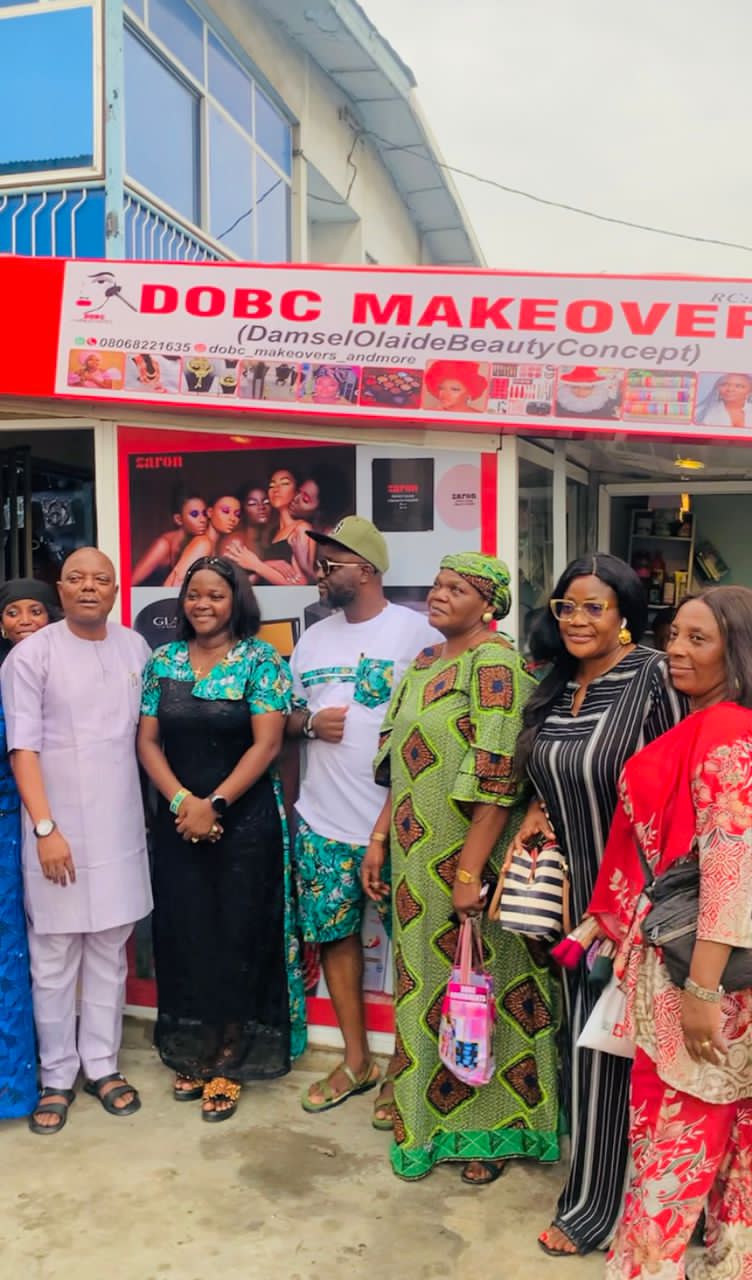
Beauty Meets Glamour as Olaide Ogunyemi Opens New Studio in Mushin
Popular Nollywood actress and professional makeup artiste, Olaide Ogunyemi Oluwayemisi aka Damilola, has expanded her footprint in the beauty industry with the grand opening of her new makeup studio in Lagos.
The talented thespian, who is also the Chief Executive Officer of @Dobc_makeovers_andmore, officially unveiled the ultra-modern beauty space last Thursday, April 2, 2026, in a colourful ceremony filled with glamour, fashion, and pageantry.
Strategically located at 101 Palm Avenue, right beside FitPlus and Sparklight Hospital in Mushin area of Lagos, the new studio is designed to offer top-notch beauty services, reflecting Ogunyemi’s commitment to excellence and professionalism in the ever-growing makeup industry.
The opening ceremony attracted friends, colleagues from the Nollywood industry, beauty enthusiasts, and well-wishers who came out in large numbers to celebrate the entrepreneur’s latest milestone. Guests were treated to a vibrant atmosphere that showcased creativity, style, and the evolving standards of the beauty business in Lagos.
Speaking at the event, Ogunyemi expressed her excitement and gratitude, noting that the new studio represents years of hard work, dedication, and passion for her craft. She reaffirmed her commitment to delivering premium beauty services while empowering aspiring makeup artistes.
The launch of the studio further cements her reputation as a dynamic force, successfully blending her career in Nollywood with a thriving beauty brand.
With this latest development, Olaide Damilola Ogunyemi continues to inspire many young entrepreneurs, proving that talent, consistency, and vision remain key drivers of success in Nigeria’s creative and business landscape.


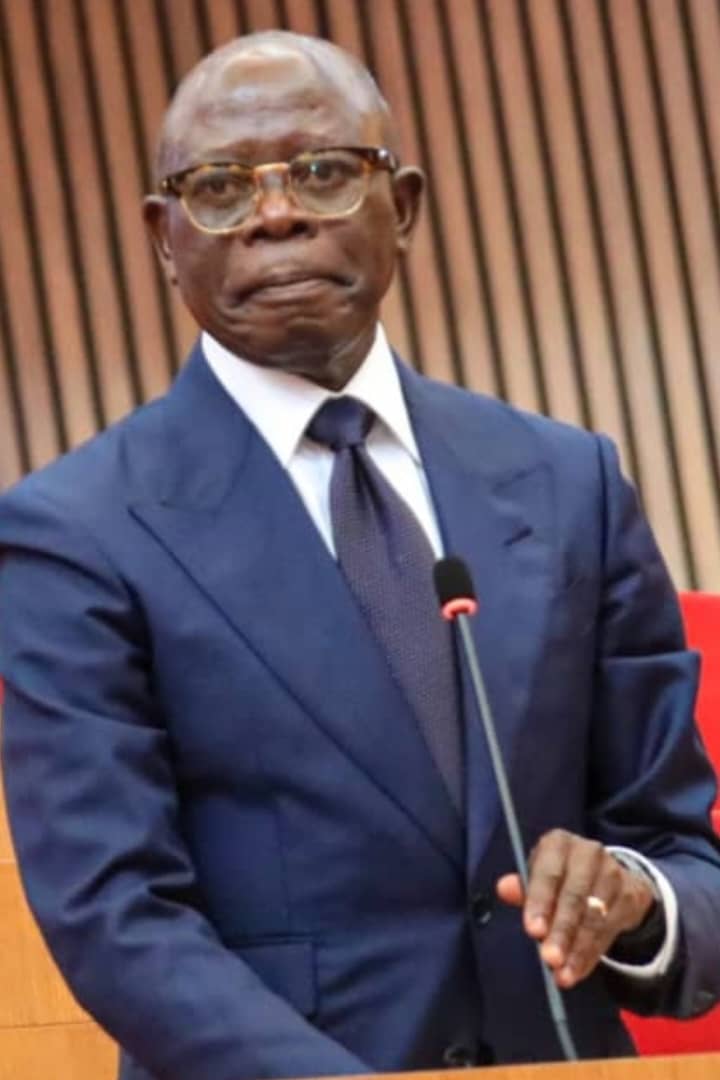
Daniel Eromosele Eulogize Adams Oshiomole as he turns 74 years
Today, I celebrate an exceptional leader, a fearless voice for the people, and a man whose life has remained a symbol of courage, sacrifice, and unwavering commitment to justice—Distinguished Comrade Senator Adams Aliu Oshiomhole.

Your journey has been nothing short of inspiring. From your days as a vibrant labour leader to your impactful tenure as the Executive Governor of Edo State, and now as a respected Senator of the Federal Republic, you have consistently demonstrated what it means to serve with integrity, strength, and purpose. Your contributions to the growth of our nation and the development of Edo State remain indelible and deeply appreciated.
You have not only built structures and institutions but have also built people. I am personally a beneficiary of your leadership, your guidance, and your belief in empowering others. Your influence in my life has been profound, and I remain grateful for the opportunities and inspiration you have given me.
On this special day, I celebrate not just your achievements, but the man you are—resilient, principled, and ever committed to the progress of Nigeria and her people.

May this new year bring you renewed strength, greater wisdom, good health, and more remarkable accomplishments. May your legacy continue to shine brighter with each passing year.
Happy Birthday, sir. Wishing you many more fruitful and impactful years ahead.
celebrity radar - gossips
Accolades to Empress Genevieve Wining as she Celebrate birthday in Grand style

Accolades to Empress Genevieve Wining as she Celebrate birthday in Grand style
Emmanuel Clement
Vilnius, Lithuania – The Grand Hotel Vilnius will host a grand birthday celebration in honor of Her Majesty The Empress Genevieve Wining of the United Kingdom of Atlantis (UKA) on April 4th, 2026.
The four-day event promises to be an extravagant affair, marking the special birthday of Empress Genevieve Wining. The celebration will take place at the prestigious Grand Hotel Vilnius, Lithuania, renowned for its luxurious ambiance and exceptional service.

According to the event flyer, the birthday celebration will be a spectacular occasion, fitting for an empress. Guests can expect an elegant setting adorned with golden accents, sparkling champagne, and festive decorations, creating a regal atmosphere befitting the occasion.
The Empress Genevieve Wining of UKA is expected to grace the event, which will include various festivities and celebrations in her honor. The occasion aims to bring together dignitaries, followers, and guests to commemorate the empress’s birthday with grandeur and joy.
For media inquiries, accreditation, or further information about the birthday celebration of The Empress Genevieve Wining of UKA, please contact the event organizers.
Courtesy of His Excellency Emperor Prof. Solomon Wining. UKA


-

 society7 months ago
Religion: Africa’s Oldest Weapon of Enslavement and the Forgotten Truth
-

 news4 months ago
WHO REALLY OWNS MONIEPOINT? The $290 Million Deal That Sold Nigeria’s Top Fintech to Foreign Interests
-

 society6 months ago
“You Are Never Without Help” – Pastor Gebhardt Berndt Inspires Hope Through Empower Church (Video)
-

 celebrity radar - gossips2 months ago
Dr. Chris Okafor Returns with Power and Fire of the Spirit -Mounts Grace Nation Altar with Fresh Anointing and Restoration Grace on February 1, 2026
You must be logged in to post a comment Login
You must log in to post a comment.