
Business
Interview: Meet First Bank First Female Chairman Ibukun Awosika As She Want An Economy That Works For All

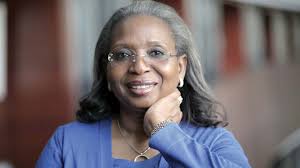

Ibukun Awosika is an entrepreneur of many virtues, and the first woman to be appointed the chairman, board of directors of the country’s oldest bank, First Bank of Nigeria Limited, after 123 years of existence. She is also the founder and CEO of The Chair Centre Group. The companies in the group include: The Chair Centre Limited, Sokoa Chair Centre Limited, Furniture Manufacturers Mart, TCC Security Systems and Cubes and Boxes Limited. These companies are involved in manufacturing, retail and bank-way security systems services. She sits on the boards of Cadbury Nigeria Plc., Digital Jewel Limited and Convention on Business Integrity (CBI). She was Chairman, FBN Life Assurance Limited, FBN Capital Limited and Kakawa Discount House Limited. She also served on the board of Nigerian Sovereign Investment Authority (NSIA).
Ibukun is a graduate of Chemistry from University of Ife (now Obafemi Awolowo University), Nigeria; an alumna of the Chief Executive Programme of Lagos Business School; the Global Executive MBA of IESE Business School, Barcelona-Spain; and Global CEO Programme of Wharton, IESE and China European International Business School (CEIBS).
In this interview, Awosika speaks on the transformation of the depository as the bank of choice and efforts being made by the board and management to grow the larger economy, particularly the SME sector.
As the chairman of Nigeria’s biggest bank, FirstBank and given that banks have been recently blamed for being partly responsible for the current recession that we are witnessing in the economy because they allegedly have refused to lend to the real sector. How would you assess this, given your position as a stakeholder?
I will answer your question with a question. My question is, if you are a business person who sets up business to trade in a particular product and you have to find buyers for your product, does it make sense for you not to want to trade in that product? Except if you have set out to fail. Money is the product banks trade with and lending to customers that want to borrow from the bank is one of the core businesses of the bank. So, obviously, it is not logical that the bank would just want to sit on the money and not want to give loans to customers.
Things are not isolated. You can’t look at the decision an institution takes based on one factor. The banks themselves will be responding to the overall economy and whatever it is saying at any point in time. It is in the interest of all financial institutions that there is a dynamic economy because that is where you make money from. When businesses are growing, when businesses are doing well, then you can prosper, everything we offer as a financial institution will be active and a lot of value will be created for the institution and stakeholders. So the greatest benefactor of a dynamic economy is the financial services sector. So it is not logical that banks would not lend to the real sector.
As an insider and a key player in the economy, what would you attribute or blame for the lack of adequate funding to the real sector ?
Well, let’s not play a blame game. What do we all want? I am known for always being clear about what our goal is. We want a Nigeria that works; we want an economy that works for all of us. And what is important is that we all work together – government in its role in terms of policy, creating the enabling environment and encouragement for all the different sectors. All of us working together to make sure that we can provide the right products, the right service to support the real sector in its effort and commitment to create dynamism within the economy.
Obviously the real sector itself being responsible for productivity, because without the real sector functioning, being dynamic and productive, a major part of the economy will be affected. And as a major employer of labour, whether it is from SMEs to larger corporations, it is obviously in the interest of the banks to lend to the sector so as to create the expected dynamism within the economy.In doing that, we create a cycle that continues to work, the real sector works, the financial services sector works, government gets taxes, the GDP of the country is great, government gets good recommendation. So it is not about who is responsible, it is about every one of us standing up in own our space and being responsible for our part of the whole system and making sure that it works. When it works, it works for all of us.
But when I think of your throwback question and then I look at your full year report for 2016, given what you just said about helping the SMEs to grow because of their importance in the economy, you find that in your loan book for 2016 you had a high percentage that went to Oil and Gas alone.
If you look at the banking sector, that is something that is common. The loan book portfolios are all heavily tended towards the oil and gas, power sector etc perhaps partly because of the significant importance the sectors havein thecountry’s economy.
As at today, FirstBank is the biggest lender to the SME sector. I believe that in 2016 we gave out over 24 billion naira. Our investment in the SME sector is beyond money. As an established entrepreneur, starting from a small business to where my businesses are right now and from my experience, most times people think you just need to give money to entrepreneurs or people with business ideas and you will get the kind of return you want. But in my interaction with business people and entrepreneurs I have also realised there is a lot of knowledge gap within that segment.
So as a Bank, we have been very committed to investing in the development of entrepreneurs for the long-term gain of the economy.I remember about three years ago, there was a programme I hosted on TV called Ignite TV Nigeria. It was a project funded by FirstBank, Lagos state government and Bank of Industry.
If you go on YouTube, there are still all 52 episodes of the programme for people to watch. It was also broadcasted live on Channels TV and LTV. For three years, we ran those series because we realised that filling the knowledge gap will be critical to empowering the SMEs to be successful. And we knew that after we’ve done that for a season, we can thenmove to having enlightened entrepreneurs as SMEs that you can better commit money into their hands.
Now don’t forget that banks are businesses, the money traded with belongs to shareholders and depositors. It is a responsibility of the banks to ensure that the money given out comes back; otherwise we will all be in trouble. And as you can see, there’s a reason people don’t like it when you have to provide for a lot of Non performing loans (NPLs) as we’ve had to do in a short while. But what we are doing is cleaning up so we can move forward. But the lessons have been learnt. The amount an individual SMEs will take compared to what one oil and gas transaction will require is what will create the difference in the weighted average of the amount that goes to SME and the amount that goes to a particular sector. Whether it is oil and gas or agriculture, whether it is power and infrastructure etc, as the largest bank in the country and the most embedded in the economy, we are fully entrenched and involved because our commitment as a bank is to be a facilitator of the growth and development of the country. That will inevitably show up in our numbers and sometimes you won’t always get it all right because when things go wrong in those sectors, the Bank also gets impacted.
In the SME sector, the loan book percentage might look smaller, but you should look at the absolute numbers. And with over N24 billionIn 2016alone to the SME sectorand you know the size of the portions of each SME will take, that will give you an idea of the number of SMEs that the Bank has impacted and you can now better appreciate the level of support not in percentage term, but in absolute size and numbers.
As proof of our commitment to the SME sector, we invested heavily in their skill development and capacity building and we have continued in many other ways including our ongoing partnership with the Lagos Business School in running the FirstBank Sustainability Center to build capacity for SMEs, SME-centric radio programme on Sundays featuring established entrepreneurs who share their success story and tips for building sustainable businesses.And we have multiple products that will make the life and business development of most SMEs better. Last week,, my team and I and multiple other teams within the Bank were at different locations having engagement with SMEs to educate them on the requirement and procedures to access the CBN FX window. Very few SMEs are aware of the procedures and documentation required to obtain FX from the CBN provision for their businesses.
We identified the knowledge gap in relation to the low uptake and decided that beyond advertising, it was important to make the investment in enlightening the SMEs on all the benefits related to the new FX policy of the Central Bank for SMEs. For us, this initiative will help the SMEs to build strategically and build forward. Because the more successful businesses that are built, the more successful customers we get and the better for us and for the economy.
That is our commitment.
NPL has been an issue in the banking sector and FirstBank is not insulated from this, what are the steps being taken by the Board and the Management to address the issue and achieve an NPL portfolio within the regulatory thresholds.?
What you’ve just asked is what keeps us awake at night, and I mean that with all sense of seriousness. We understand that millions of people have trusted the Bank with their monies because that is what shareholders do when they invest in the shares of an institution. We do everything in every way to protect that. Since the new management team took over in January 2016, we have effectively worked to restructure our loan books to mitigate a spike in NPL which is a situation every bank faces. If the economy is challenged and businesses are challenged, the ability to payback is also challenged.
We remain committed within our means to recover and remediate whatever risk assets thatare challenged. From the board level down, we have constituted deliberate teams to lead the recovery drive and resolve as many NPL issues as possible. We are applying a corporate responsible approach as a bank, first being transparent and open, second in making provisions aggressively in compliance with regulatory requirements. The recovery and remediation task is a fulltime job for my entire board and I believe that shows how engaged we are in this process.
Would you agree with the general notion that banks are more interested in racking up numbers as against contributing to the economy growth
The banks are not isolated from the economy. It is foolishness for a bank to think it can continue to sponge on an economy without contributing to its growth. There will be a point where there is nothing to take because if the economy does not thrive, business also cannot thrive. For some seasons of imbalance it might look like that but in reality there have been so many regulatory changes that make it difficultfor banks to make arbitrary charges. In total, if we do not conduct our business in a responsible and sustainable manner to facilitate the growth of the economy, we ourselves as a business will be challenged. This is my submission, even with my experience in the real sector.
Any bank that isn’t smart enough to harmonise its desires and dreams as an institution to align with the survival and growth of the economy will ultimately pay the price down the line. And you can see that banks are continually making efforts to engage the real sector through funding, facilitation and business support. At the end of the day, you cannot be a responsible institution if you do not look beyond the numbers into the community where you operate. That is why we will invest so much in supporting SMEs and building long term capacity to serve our entire clientele better.
Beyond SMEs, we understand that agriculture is part of diversification of the economy – a major focus of the government. We have heavily invested in agric development. We had an agric forum and fair in Lagos recently where we worked with the Federal Ministry of Agriculture to expose, support and facilitate effective development of the agricultural sector. We’ve worked to fund other projects such as the Fiesta of Flavours to create empowerment for the entire value chain in this sector, including agro allied industries,and to boost job creation.
FirstBank is an aggressive CSR institution in many spaces. We are funding the creative and performing arts industry together with its value chain as well as other areas we believe are critical to building a complete community. As stakeholders in these communities, the sanity and success of this community is what feeds our business.
It’s been two years since the implementation of the Treasury Single Account (TSA) How would you assess its impact on the banks and the banking industry liquidity?
On government policies and regulations, the government has the right to enact these regulations and when that is done, they remain binding. What is important for me is that – we were not affected because we are one of the most liquid institutions in the country today with a liquidity ratio of about 52%, revealing that TSAhas hadlimited effect on our liquidity position.
The government made its own decision for good reasons. What is important is for the private sector to adjust itself in order to do business without being awash with public funds in the financial sector, and I believe that has already happened. Ultimately, the financialsector has settled and is moving on.
Delay in passing the national budget and its implication on the economy
When you live within a context or reality, you adjust yourself to thrive within that context. What the budget does is that it releases funds and stimulates spending activities in the economy. The political process which leads to it is not one in which you and I are involved in. What we can do as citizens is to pray and push for a system where the budgets kick in as early as they can so we can get the full benefit of the economic plan the budget is based on within the year it is assigned for. That will be a great blessing for the economy because a lot of things are held up before it kicks off.
Let us go back to FirstBank, looking at your full year report, you came out stronger. All the indices were up and better., what are the drivers of growth for this positive numbers?
First and foremost, we are pretty focused on what our goals are and we have invested heavily in restructuring from the board all the way down. We have a board that has been strengthened in many ways, governance has been at the centre of our board processes and we have strengthened our hands to have better oversight of the institution.
On the management side, we have had a lot of qualified new hands from across the world. We have attracted and retained the best talents in our team. In terms of our systems, we are investing heavily in the right technology to aid all our processes and the way our business is done. We are also investing in our people in training and development.Our risk oversight system is totally overhauled. We are also engaged in strategic partnerships with leading institutions that are aligned to achieving our corporate goals. We are running a very transparent shop and have accepted the results of the environment and the season that we are in vis-a-vis its impact on our business. We have set ourselves a deliberate goal of cleaning up and forging ahead,which is what we are currently doing with all the provisioning that we have made in a short period of time, knowing that once our goal is accomplished, the sky becomes our limit as to where we can go.
We have assembled the best group of talents in the industry, and we are focused on driving stronger business performance.
When you are an institution of 123 years old, it means that you must have been doing things right over the years for you to get to where you are. We intend to lay a sound foundation for the next 120 years of the bank, and I know that we will by the grace of God.
Credits: Nike Sotade, Clara Nwachukwu and Chijioke Nelson,
Source: The Guardian.





Fidelity Bank grows gross earnings by 38% to N434.95b in Q1
Fidelity Bank Plc recorded 37.9 per cent growth in gross earnings to N434.95 billion in first quarter 2026 as the international commercial bank continued to expand its core banking market share.
Interim report and accounts of Fidelity Bank for the three months ended March 31, 2026 released at the Nigerian Exchange (NGX) showed that gross earnings rose from N315.42 billion in first quarter 20025 to N434.95 billion in first quarter 2026, representing an increase of 37.9 per cent.
The top-line performance was driven by impressive growth in the bank’s core business operations with interest incomes rising by 22.8 per cent to N314.48 billion in first quarter 2026 as against N256.10 billion in first quarter 2025.
With net interest income at N180.97 billion, the bank closed the period with profit before tax of N92.48 billion. After taxes, net profit stood at N74.47 billion for the three-month period. Earnings per share remained high at N5.69, underlining the capacity of the bank to reward its shareholders.
The balance sheet of the bank also emerged stronger. Total assets crossed the N11 trillion mark to N11.35 trillion by March 2026 compared with N10.46 trillion recorded in December 2025. Customers’ deposits increased from N6.89 trillion to N7.38 trillion. Total equity rode on the back of earnings growth to a 27.5 per cent increase from N1.09 trillion in December 2025 to N1.39 trillion by March 2026.
The first quarter 2026 results further consolidated the strong earnings outlook of the bank, which had successfully completed its recapitalisation amidst impressive earnings performance in 2025.
Fidelity Bank had recorded double-digit growths in interest and non-interest incomes as well as key balance sheet items during the year ended December 31, 2025.
The audited report showed that gross earnings rose from N1.04 trillion in 2024 to N1.52 trillion in 2025, an increase of 45.6 per cent. Interest and similar incomes had grown by 38.7 per cent from N803.1 billion in 2024 to N1.11 trillion in 2025. Fees and commission incomes also rose by 44.7 per cent from N78.4 billion to N113.4 billion. The bank recorded net profit after tax of N242.4 billion in 2025.
The bank’s balance sheet emerged stronger with total assets rising by 18.6 per cent to N10.46 trillion in 2025 as against N8.82 trillion in 2024. Customer deposits increased by 16.1 per cent from N5.94 trillion to N6.89 trillion, reflecting continued franchise strength and an improved funding profile. Net loans and advances meanwhile declined by 2.4 per cent to N4.28 trillion in 2025 as against N4.39 trillion in 2024, attributable to customers paying down on their mature obligations.
The bank had in 2025 strengthened its capital position, with eligible capital rising to N561 billion, above the regulatory minimum of N500 billion for banks with international authorisation. In addition, capital adequacy had remained robust, with Capital Adequacy Ratio of 30.94 per cent by December 2025 as against 23.47 per cent by December 2024.
Managing Director, Fidelity Bank Plc, Dr. Nneka Onyeali-Ikpe, said the first quarter 2026 results reinforced the bank’s strong and resilient business model.
She noted that with the remarkable success of its recapitalisation programme and continuing expansion, Fidelity Bank has entered a new era of growth and impressive returns.
“We are on a stronger footing and confident that we will set new growth records that are reflective of our legacy and the future we are working on,” Onyeali-Ikpe said.
Business
Dangote Refinery Ends Nigeria’s Era of Fuel Import Dependence, Boosts GDP, FX Earnings — EIU
Dangote Refinery Ends Nigeria’s Era of Fuel Import Dependence, Boosts GDP, FX Earnings — EIU
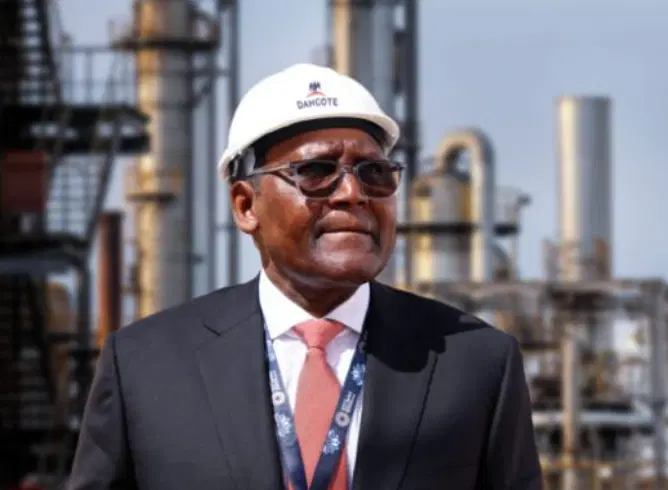
The operational ramp up of the 650,000 barrels per day Dangote Petroleum Refinery & Petrochemicals is fundamentally reshaping Nigeria’s downstream oil sector, significantly reducing the country’s dependence on imported refined petroleum products and strengthening its external position, according to the Economist Intelligence Unit (EIU).
In its latest assessment on Nigeria’s fuel market and regulatory environment, the EIU said the refinery has already transformed a sector that was previously characterised by heavy reliance on imported fuel despite Nigeria being Africa’s largest crude oil producer. The report noted that the refinery met nearly 80 per cent of domestic petrol demand in April and produced enough volumes to satisfy local consumption requirements as operations approached full capacity.
The EIU described Nigeria’s downstream petroleum sector before the refinery as “long dysfunctional”, noting that the country had remained almost entirely dependent on costly imported fuel while producing nearly 1.5 million barrels of crude oil daily.
According to the report, the emergence of the refinery has reduced import dependence, improved domestic fuel availability and strengthened Nigeria’s balance of payments position through lower import demand and rising exports of refined petroleum products.
“The gradual ramp up of the 650,000 barrel/day Dangote refinery since May 2023 has transformed Nigeria’s long dysfunctional downstream sector,” the report stated. “The country’s main refineries, all state owned, had been inoperative for years and Nigeria was almost entirely reliant on costly imported fuel.”
The research and analysis division of The Economist Group, London added that the refinery’s attainment of full operational capacity and its planned expansion would further support Nigeria’s economic growth and foreign exchange earnings over the medium term.
“Meanwhile, the attainment of full capacity at, and an increase in exports from, the Dangote refinery will support real GDP growth and foreign exchange earnings in 2026 and 2027 and beyond, as a planned doubling of the plant’s output comes on stream around the end of the decade,” it added.
Industry analysts said the refinery is increasingly positioning Nigeria as an emerging refining and export hub, altering energy trade flows across Africa and reducing the vulnerability associated with fuel import dependence.
The EIU noted that the refinery’s expansion has coincided with major reforms in Nigeria’s downstream sector, including the removal of fuel subsidies and the introduction of market driven pricing mechanisms.
The report, however, said the transition from a state dominated fuel import structure to large scale domestic refining has triggered resistance from interests linked to the old import regime.
The latest tensions emerged following the decision by the Nigerian Midstream and Downstream Petroleum Regulatory Authority to relax restrictions on petrol imports despite the refinery’s growing capacity to meet domestic demand.
Dangote Industries subsequently initiated legal action, arguing that continued import approvals undermine domestic refining investments and conflict with the objectives of the Petroleum Industry Act, which seeks to encourage local refining capacity and reduce import dependence.
Analysts noted that the availability of large-scale domestic refining capacity has improved Nigeria’s energy security and reduced exposure to external supply shocks and foreign exchange volatility.
The Centre for the Promotion of Private Enterprise also cautioned against unrestrained importation of petroleum products, warning that such a policy could weaken Nigeria’s industrialisation drive and discourage investments in domestic refining.
Chief Executive Officer of CPPE, Muda Yusuf, said continued dependence on imported fuel had historically contributed to pressure on foreign reserves, exchange rate instability and fiscal leakages.
The refinery’s growing impact is also being reflected in Nigeria’s broader macroeconomic indicators. Earlier this month, S&P Global Ratings cited increased domestic refining capacity and rising hydrocarbon exports among the major factors supporting Nigeria’s sovereign credit rating upgrade – the first in 14 years.
Beyond Nigeria, analysts said the refinery is increasingly being viewed as a strategic industrial asset for Africa, where many countries remain heavily dependent on imported fuel despite rising demand for transportation, manufacturing, and power generation.
Business
BREAKING: Court Dismisses $19.6 Million Claim Against NNPCL — Rules Contract Scope Cannot Be Changed Orally
BREAKING: Court Dismisses $19.6 Million Claim Against NNPCL — Rules Contract Scope Cannot Be Changed Orally
In a landmark ruling on Friday, May 22, 2026, the Federal Capital Territory High Court in Abuja threw out a $19.6 million lawsuit filed by Alternate Dimensions Ventures Ltd against the Nigerian National Petroleum Company Limited (NNPCL), affirming a key legal principle: a written contract cannot be expanded through oral agreements or conduct.
Alternate Dimensions had sought $19,600,000 in professional fees, claiming the scope of its Direct Sale, Direct Purchase (DSDP e-pro) contract with NNPCL was orally expanded. Represented by counsel Patrick Peter, the firm argued it was entitled to the revised sum for services rendered under the alleged new terms.
But NNPCL, through its lawyer Ituah Imhanze of KENNA LP, pushed back sharply, arguing that parties are bound exclusively by the clear terms of their written agreement. Imhanze contended that without any written amendment, the claim was legally unsound, and the court agreed.
Delivering judgment, Justice Hamza Mu’azu upheld NNPCL’s defense, stating that the contract was unambiguous and that no evidence was adduced during the trial, which supported the alleged scope expansion. The court further found that NNPCL fully complied with all contractual terms and committed no breach.
Dismissing the suit as meritless, Justice Mu’azu reinforced the doctrine of sanctity of contract: any amendment to a written agreement must be express, unequivocal, and documented, not implied or verbal.
The ruling spares NNPCL from the S19.6 million claim and also a floodgate of similar potential liabilities.


- CANAL+ lists on the Johannesburg Stock Exchange (JSE), strengthening the Group’s dual-continental approach and reinforcing South Africa’s (SA) role as a gateway to global capital and African growth June 3, 2026
- African Mining Week (AMW) Country Focus to Spotlight Liberia’s Iron Ore, Gold and Critical Minerals Prospects June 3, 2026
- Venezuela to Host Its Largest-Ever International Energy Investment Summit June 3, 2026
- Canada–Africa Business Conference Preparations Advance Following Canadian Secretary of State’s High-Level Visit to Nigeria June 3, 2026
- Uganda: Parliament concludes vetting of ministers June 2, 2026
- Fund for Export Development in Africa (FEDA) Board Appoints Mr. Emmanuel Assiak as Chief Executive Officer June 2, 2026
- Ecobank Group Launches World First Nature Bond Mobilising Global Capital to Protect Africa’s Natural Ecosystems June 2, 2026
- Merck Foundation Chief Executive Officer (CEO) Dr. Rasha Kelej together with Kenya First Lady support the education of 47 Kenyan Schoolgirls by providing Annual Scholarships till they Graduate June 2, 2026
- Annual Meetings 2026: Governors Back the Bank’s Platform Solutions to Transform Aviation and Health Systems in Africa June 2, 2026
- ThinkMarkets launches ChelseaAI, bringing live CFD trading into Artificial Intelligence (AI) assistants June 2, 2026
- CANAL+ lists on the Johannesburg Stock Exchange (JSE), strengthening the Group’s dual-continental approach and reinforcing South Africa’s (SA) role as a gateway to global capital and African growth June 3, 2026
- African Mining Week (AMW) Country Focus to Spotlight Liberia’s Iron Ore, Gold and Critical Minerals Prospects June 3, 2026
- Venezuela to Host Its Largest-Ever International Energy Investment Summit June 3, 2026
- Canada–Africa Business Conference Preparations Advance Following Canadian Secretary of State’s High-Level Visit to Nigeria June 3, 2026
- Uganda: Parliament concludes vetting of ministers June 2, 2026
- Fund for Export Development in Africa (FEDA) Board Appoints Mr. Emmanuel Assiak as Chief Executive Officer June 2, 2026
- Ecobank Group Launches World First Nature Bond Mobilising Global Capital to Protect Africa’s Natural Ecosystems June 2, 2026
-

 news6 months ago
WHO REALLY OWNS MONIEPOINT? The $290 Million Deal That Sold Nigeria’s Top Fintech to Foreign Interests
-

 society1 month ago
SOCIAL MEDIA IS NOT A BATTLEFIELD COMMAND – WHY THE NIGERIAN ARMY’S ACTION AGAINST JUSTICE CRACK IS A NATIONAL SECURITY IMPERATIVE
-

 celebrity radar - gossips4 months ago
Dr. Chris Okafor Returns with Power and Fire of the Spirit -Mounts Grace Nation Altar with Fresh Anointing and Restoration Grace on February 1, 2026
-

 celebrity radar - gossips6 months ago
Prophet Kingsley Aitafo Releases 2026 Prophecy: ‘Nigeria Will Rise, but the World Must Prepare for Turbulence’
You must be logged in to post a comment Login
You must log in to post a comment.