
society
INTERVIEW WITH TOHEEB DELE-BALOGUN; A CREATIVE ADVERTISING EXPERT AS HE TELLS HIS STORY ABOUT HIS RECENT BOOK PROJECT ~BY CHINEDU NSOFOR


INTERVIEW WITH TOHEEB DELE-BALOGUN; A CREATIVE ADVERTISING EXPERT AS HE TELLS HIS STORY ABOUT HIS RECENT BOOK PROJECT
~BY CHINEDU NSOFOR
Please can you start by sharing a bit about yourself and your background? What led you to pursue your current field?*
My name is Toheeb Dele-Balogun, and I’m a Nigerian based in Lagos and in the UK. I work in the creative side of advertising, where I tell stories for brands. Currently, I am Partner at The hook Creative Agency. My role involves creating impactful brand ideas and communication strategies for private and public institutions. I have always believed in the power of storytelling to shape individuals and society at large.
So how have you been telling these stories over the years?*
I was copywriter for along time. I did campaigns for most of the top brands in Nigeria and won lots of industry awards. I still tell brand stories now but my role has evolved. I consult for brands as a Partner at The hook. And I am currently exploring other forms of storytelling, particularly, fiction. I have a book coming out later in October 2024. It’s called Don’t Tell these stories. In fact we just did a pre-launch show at Creative Bloc Carnival.Interesting. What were the highlights at the Pre-launch show?*
Creative Bloc Carnival is an annual event. I used the carnival to preview my book. The reaction to the book project was massive. “Don’t Tell These Stories” is a thought-provoking collection featuring about 70 short stories. These include stories on child marriage, moral decline, patriotism, politics among others. Each story addresses a different human issue, and the book is an artwork in its execution. It is unique and rare in its format.
See, I wanted to rekindle the passion for reading by presenting the book in ways that attract the modern reader. You will pick it up if you see it, it’s irresistible. The cover will immediately attract you. Once you start a story, you will finish it because it’s short. We’ll produce copies in different forms; for instance, one version will be entirely black with white text, limited to only 10 copies. Then, there will be burnt copy. These ones will have visible burnt scars on them and impactful visuals inside, it will be available at the exhibition later this month and will be sold in Art galleries across country. Lastly, we will have the basic copy, it’s text only. It will be available in bookstores across Nigeria and, globally, on Amazon.com and their kindle platform.
What inspired you to write this story?*
About ten years ago, I stumbled on this six-word story written by Ernest Heminway, For sale: baby’s shoes. Never used. Tt’s about a pregnant woman who bought shoes for her future child, but tragically, the child never got to wear them. The story is really brief and profound. So I gave myself a challenge to write something similar. This project started as that, six-word story. With time I discovered that some stories couldn’t retain their profoundness within the limit of six-words. I became more flexible with the number of words I used but I as still committed to using the least number of words possible for as long as the story is profound. In Don’t Tell These Stories you will find stories that are just six words and other that are more, in fact most of the stories can be described as very short stories, not six-word stories. I didn’t want to box myself with number of words. I followed my muse.
*Q: Why very short stories?*
Times have changed. We live in the most distracted era ever so literature as we know it needs to evolve as well to keep performing its function in shaping the consciousness of society as large. I am writing for the distracted generation. Thomas Hardy wrote Tess of the d’Urbervilles for people without Television, radio or digital entertainment. He wrote for people that will queue to read the news bulletin. His writings were accessed by most people that could read then. Literature and fiction, as a genre, were the mainstream entertainment. So people that could read had their consciousness and morality shaped by the works of these great authors. Overtime, literature has been struggling to have that kind of influence because of the influx of other active entertainment platforms. Most people that could read now don’t see literature as the go-to entertainment. The percentage of literary audience among the large literate population is decreasing every year. We need to do something about it.
I’m writing for a people with fleeting attention span. I want to do fiction that will actually be read by most people that can read and I hope to have profound effect on their consciousness using the least number of words possible. All the feedback I have had on this project have been exciting. “I will totally read this”, I have heard that from countless number of people during preview sessions.
How do stories shape the society?*
We are shaped by things we experience. If people are exposed to low-thought materials on social media it will influence the how they think and perceive the world around them. There’s no vacuum in nature. Literature and its long form structure have struggled to keep up with the evolving reading audience. That needs to be fixed. Literary works are not just stories, they are philosophical gems delivered in stories. I aim to improve the quality of thought and conversation with my work. The stories in my book might be short but a lot thought went into writing every single line.
Can you give a general view of what the book is book?*
The themes I explored are today’s: the external pressures on relationships, the daily conflict with conscience, japa, race, morality, traditional values that we need to regain and those we need to lose among others. There’s a story that I really like, it’s titled Viral Hugs:
John’s depression tweet got 30,000 likes, 10,000 shares. And zero phone call.
The story is really short but it’s gained traction among younger audience that are living in the dual reality of digital vs physical worlds.
Looking ahead, what upcoming events are you most excited about?*
I am most excited about my upcoming exhibition on the 27th of October, which will take place in Lagos, Nigeria. It’s an exclusive event to launch my project. The exhibition is set to fully explore the multi-modal nature of the book, Don’t Tell These Stories. We’re creating a space for people to not just read, but experience these stories and make memories off it.
What is your long-term vision for these project? How do you hope they will evolve in the future?*
My long-term vision is to take my exhibitions beyond Lagos. I plan to host book shows and exhibitions events in various cities across world. After I’m done with Lagos, London is next.
There’s a universal aspect to my stories and I think the world should experience it.
What challenges did you encounter while writing this book, and how did you overcome them?*
Honestly, I didn’t face many external challenges, but I did struggle personally. There were moments I had doubts on proceeding on a story because of its sensitive nature but I remind myself that that’s the whole essence of the book, Stories that shouldn’t be told.
The stories are thought-provoking and addresses themes that some might find uncomfortable. I have pushed through that internal struggle and defied self-doubts to finish the project. I was able to pushcthrough because of the support of family, my partners at The hook and my creative sparring partner, Ayo Ishola. They have all made these project a reality.
What impact do you want your project to have on the world?*
To make the world a better place: from the level of the individual to the world at large
Thank you for making out time to have this conversation*
Thank you for having me.




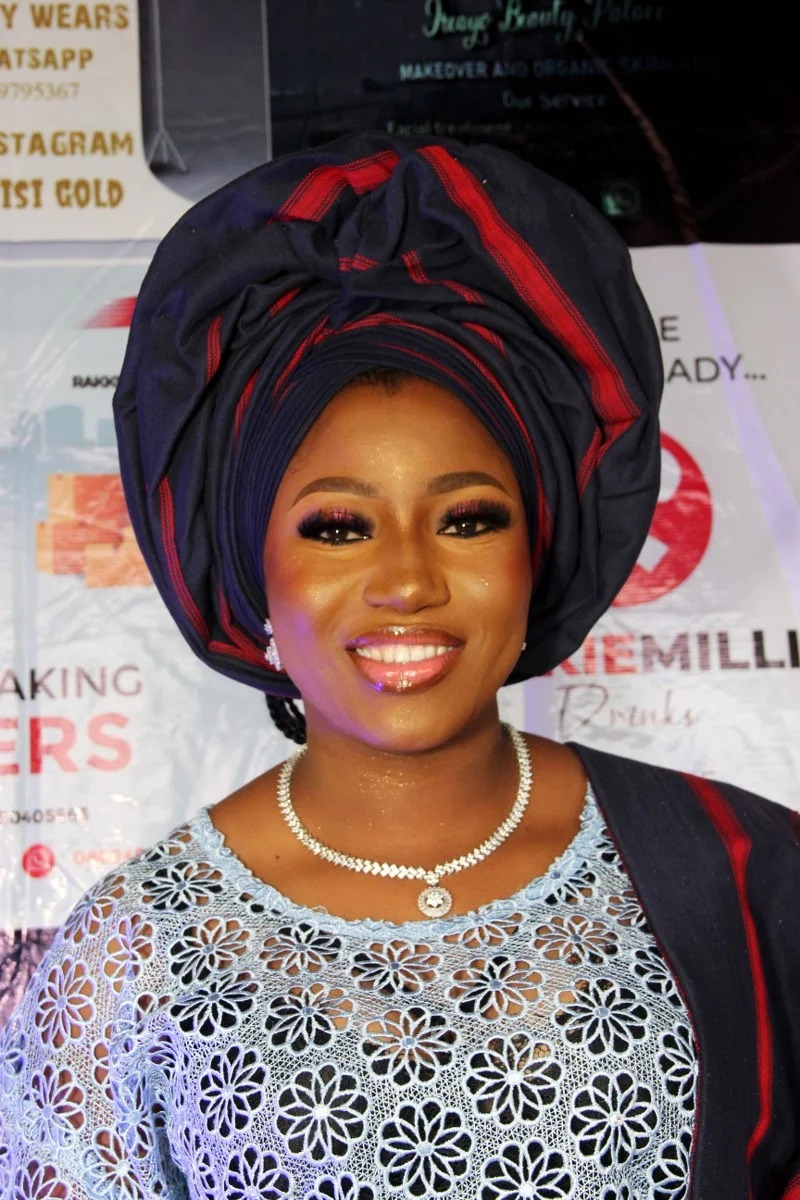
US-Based Society Lady, Fehintola-Brat Extends Eid-El-Kabir Greetings To Muslims
United States based fahionista of class, Chief (Mrs) Ayoola Fehintola-Brat has extended a warm greetings to Muslim faithful all over the world on the occasion of the 2026 Eid-El-Kabir celebration.
Fehintola-Brat who is the Balogun Egbe Obaneye Obinrin Akile Ijebu, and the Yeye Asofin of Idenaland in her message to Journalists urged Muslim to continually uphold the enduring values of sacrifice, obedience, faith, and compassion, which are central to the significance of Eid-El-Kabir festival.
A quiet philantropist whose humanitarian services has won her several laurels urged Muslims to use the spiritual occasion to pray for the peace co-existence of Nigerians regardless of religious, social and political leanings stressing that the oneness of the country should not be underplay.
In a related development, she expressed her felicitations to all sons and daughters of Ijebuland on the forthcoming Ojude Oba 2026 celebration, tasking age-groups otherwise known as Regbregbe to be more proactive in giving back to their immediate communities.
According to her, the beauty of the age-groups in Ijebuland is the need to contribute immensely to the development of the land in no small means. “This we will continue to achieve with God on our side”, she concluded.
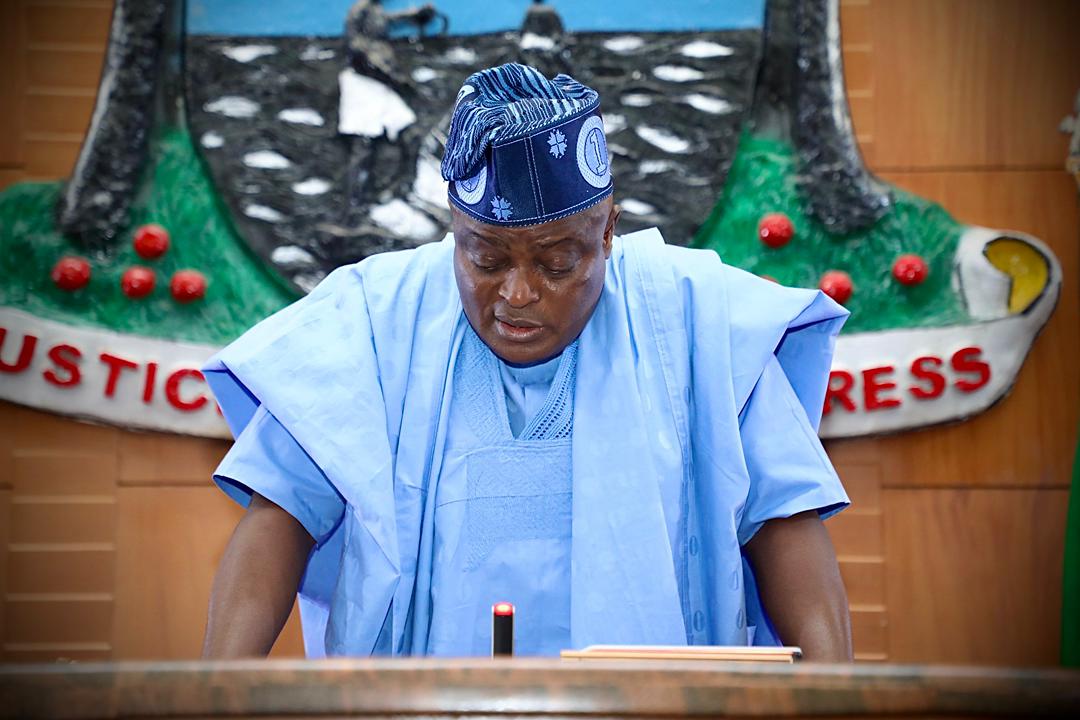
Sallah: Obasa Felicitates Muslim Ummah, Commends Nigerians for APC Primaries Turnout
The Speaker of the Lagos State House of Assembly, Rt. Hon. Mudashiru Obasa has extended warm felicitations to Muslims in Lagos State and across Nigeria on the occasion of Eid al-Adha.
In a statement released by his Chief Press Secretary, Mr. Dave Agboola, Obasa described the festival as a season of sacrifice, reflection, and gratitude, urging the faithful to continue to uphold the values of peace, unity, and love that strengthen the nation.
He noted that the celebration of Eid al-Adha is not only a spiritual milestone but also a reminder of the importance of togetherness and collective responsibility in building a stronger society.
He, likewise, emphasized that the festival provides an opportunity for Nigerians to renew their commitment to national progress and to support leadership that prioritizes development and prosperity.
Obasa, however, commended Nigerians, particularly members of the All Progressives Congress (APC), for their massive turnout during the recently concluded party primaries. He described the participation as a clear demonstration of the people’s confidence in the government of President Bola Ahmed Tinubu and their belief in the administration’s vision for a greater Nigeria.
“The APC primaries have shown the resilience of our democracy and the confidence Nigerians have in the leadership of President Bola Ahmed Tinubu and the Renewed Hope Agenda. This is a strong message that our people are ready to continue supporting policies that will drive growth and prosperity,” Obasa stated.
The Speaker further encouraged Muslims to celebrate responsibly, stressing that the joy of Eid should be accompanied by prayers for the continued peace and progress of Lagos State and Nigeria.
“As you celebrate with family and loved ones, may this season bring joy, peace, and prosperity to your homes. Let us remain united in our resolve to build a stronger nation,” he added.
On behalf of the Lagos State House of Assembly, Obasa wished all Muslims a happy and fulfilling Eid al-Adha celebration.
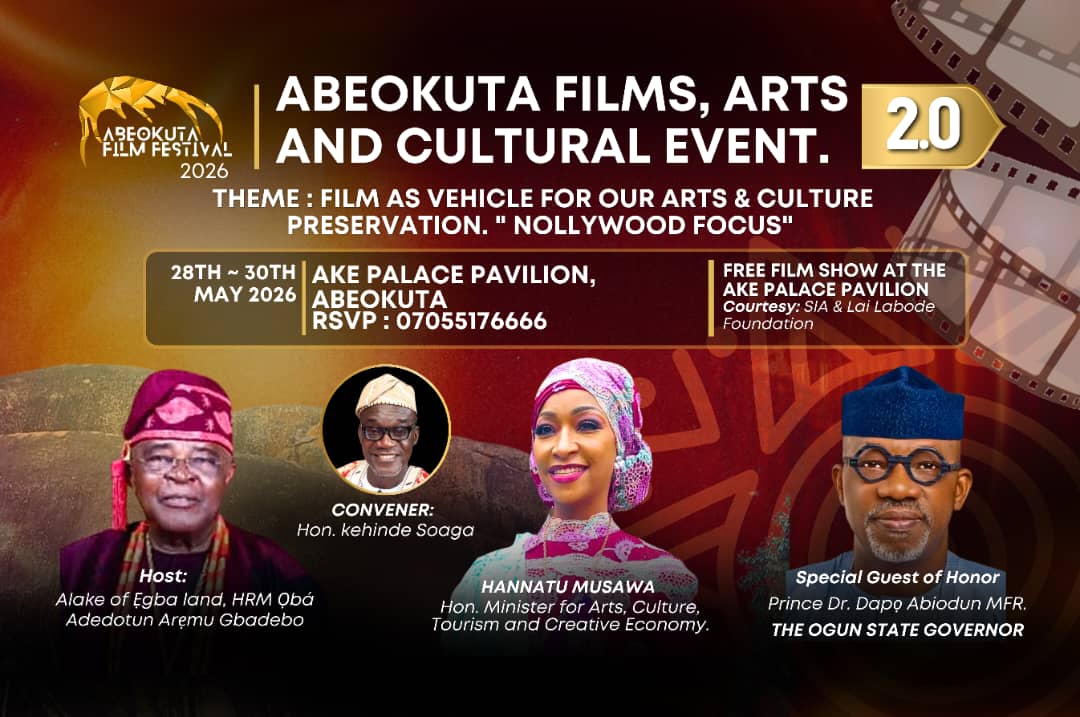
ABEOKUTA FILM FESTIVAL AT ILEYA
Kayshow Multimedia a filmmaking and Media organization this year 2026 holds its annual Abeokuta film festival at the Ake Palace in Abeokuta.
Alake of Egba land, Ọba Michael Adedotun Arẹmu Gbadebo has graciously endorsed the Free Training of Egba Youths on Film and Arts and the Entertainment of the the People with a FREE FILM SHOW at the AKE PAVILION. as part of the ABEOKUTA FILM FESTIVAL 2.0.
The Convener of the Film Festival Honorable Kehinde Soaga says this year’s event promises to be more exciting as distinguished personalities are sure to attend.
This includes the honorable Minister for Art Culture and Creative Economy in Nigeria, Barr. Hannatu Musa Musawa, Ààrẹ Lai Labode, Sen. Ibikunle Amosun and other special guests.
The event will feature Film, Cultural Dance Cultural foods and Award Ceremony.
The general public is hereby invited to the Free film show at the Abeokuta film festival at the Alake Palace Pavilion on Thursday 28th of May 2026 by 4:00 p.m.
Only well dressed is the Entry. The Abeokuta Film Festival is an annual event taking place in the capital city of Ogun State state.


- Qrent says delaying Information Technology (IT) refresh cycles may be increasing operational risk for businesses in Africa May 27, 2026
- Dentons’ Iyunola Adekanye Appointed to African Mining Week (AMW) Advisory Board May 27, 2026
- United Nations (UN) Women Liberia and Partners Convene for Spotlight Initiative 2.0 Women’s Economic Empowerment Inception Meeting May 27, 2026
- African Mining Week (AMW) to Host Central Bank Governors Roundtable as Monetary Authorities Deepen Role in Mining Sector Growth May 27, 2026
- Eritrea: Diaspora Nationals Celebrate Independence Day Anniversary May 27, 2026
- Africa Unveils Landmark Humanitarian Coordination Platform to Strengthen aligned Response to Humanitarian Crises May 27, 2026
- Seychelles: President Herminie Engages with Police and Fire Services on Praslin May 27, 2026
- Issue 3 of Mining Review Africa now available for free download May 27, 2026
- NOV Joins African Energy Week (AEW) 2026 as Gold Sponsor Amid Africa’s Offshore Expansion Push May 26, 2026
- African Union of Broadcasting (AUB) and United Nations University Institute for Water, Environment and Health (UNU-INWEH) Launch Landmark Webinar Series on Africa’s Water Crisis, Starting June 2, 2026 May 26, 2026
- Qrent says delaying Information Technology (IT) refresh cycles may be increasing operational risk for businesses in Africa May 27, 2026
- Dentons’ Iyunola Adekanye Appointed to African Mining Week (AMW) Advisory Board May 27, 2026
- United Nations (UN) Women Liberia and Partners Convene for Spotlight Initiative 2.0 Women’s Economic Empowerment Inception Meeting May 27, 2026
- African Mining Week (AMW) to Host Central Bank Governors Roundtable as Monetary Authorities Deepen Role in Mining Sector Growth May 27, 2026
- Eritrea: Diaspora Nationals Celebrate Independence Day Anniversary May 27, 2026
- Africa Unveils Landmark Humanitarian Coordination Platform to Strengthen aligned Response to Humanitarian Crises May 27, 2026
- Seychelles: President Herminie Engages with Police and Fire Services on Praslin May 27, 2026
-

 news5 months ago
WHO REALLY OWNS MONIEPOINT? The $290 Million Deal That Sold Nigeria’s Top Fintech to Foreign Interests
-

 society3 weeks ago
SOCIAL MEDIA IS NOT A BATTLEFIELD COMMAND – WHY THE NIGERIAN ARMY’S ACTION AGAINST JUSTICE CRACK IS A NATIONAL SECURITY IMPERATIVE
-

 celebrity radar - gossips4 months ago
Dr. Chris Okafor Returns with Power and Fire of the Spirit -Mounts Grace Nation Altar with Fresh Anointing and Restoration Grace on February 1, 2026
-

 celebrity radar - gossips6 months ago
Prophet Kingsley Aitafo Releases 2026 Prophecy: ‘Nigeria Will Rise, but the World Must Prepare for Turbulence’