
society
It’s Time to Decriminalize Defamation in Nigeria


It’s Time to Decriminalize Defamation in Nigeria
In many societies, the boundaries between personal freedom of speech and the right to protect one’s reputation are carefully balanced. In Nigeria, however, defamation — whether slander or libel — remains a criminal offense, with severe consequences for those accused. It is time to reconsider this approach and shift towards decriminalizing defamation, making it a purely civil matter, as it is in many of the world’s major democracies.
The Case for Decriminalization
Criminal defamation laws were initially introduced to protect individuals from malicious harm to their reputation. However, in the modern era, they have often become tools of harassment and oppression, particularly in the hands of powerful individuals. Defamation cases are increasingly used by those in positions of power to silence critics, intimidate journalists, and subjugate less fortunate citizens.
Most developed nations, including the United States, the United Kingdom, and many European countries, have long abolished criminal defamation, opting instead for civil defamation laws. These countries focus on providing avenues for individuals who believe their reputation has been damaged to seek compensation through civil suits, rather than involving the police or criminal justice system.
The shift from criminal to civil defamation has allowed for a more balanced and equitable approach to handling reputation-related disputes. It ensures that individuals are not subjected to arbitrary arrests, prolonged detention, or unfair punishment for matters that could be resolved through civil litigation.
Abuse of Defamation Laws in Nigeria
In Nigeria, criminal defamation has been increasingly weaponized by those with influence and resources, particularly public figures and wealthy individuals. The cases of Erisco and Chioma, Burna Boy and Speed Darlington, and Afe Babalola and Dele Farotimi are just a few examples of how the criminal defamation law has been allegedly misused to silence individuals and suppress free expression.
In some cases, complainants have filed petitions, often accusing someone of making a false or damaging statement. The response, instead of being a simple legal dispute, involves the police swooping in, arresting the accused, and whisking them away to distant locations. In many instances, these individuals are detained for weeks, sometimes months, without formal charges being brought against them. The sheer inconvenience and trauma caused by these actions are disproportionate to the alleged offense.
This practice has led to an alarming trend where those in power allegedly manipulate the legal system to punish those who dare to question or criticize them. Defamation, in these cases, becomes a tool not for justice, but for maintaining control and suppressing free speech.
The Role of the Police
One of the most troubling aspects of criminal defamation is the involvement of the police in what should essentially be a private dispute. Defamation is, at its core, a disagreement about reputation, a civil matter between two parties. The idea that the police should be involved in arresting individuals over “he said, she said” disputes is deeply problematic.
When the police are called upon to investigate defamation claims, it opens the door to manipulation and potential abuse of power. Arresting someone over an alleged defamatory statement, often based on little more than the complainant’s word, is an unjust use of law enforcement resources. The police, who should be focused on public safety and crime prevention, are instead drawn into disputes that are better suited for civil courts.
It is essential to understand that defamation, like other civil matters, can be addressed through appropriate legal channels without the need for criminal intervention. If someone feels they have been defamed, they should have the right to sue for damages in a court of law. There is no need to escalate the matter into a criminal issue, nor should the police be involved in what is essentially a civil grievance.
A Call for Legal Reform
To move forward, Nigeria must revisit its stance on defamation and adopt a system that encourages civil litigation rather than criminal prosecution. This would align the country with international standards, reduce the abuse of power by the elite, and safeguard individuals’ rights to free speech and expression.
The time has come to shift the focus from punitive measures to restorative justice, where victims of defamation can seek compensation and where the police are not burdened with trivial civil matters. Such a reform would not only make the legal system more just and fair but also restore the integrity of our justice system, ensuring that it serves the public rather than protecting the interests of the powerful few.


society
Buratai Highlights Leadership, Community Support In Defeating Insurgency As Shettima, Defence Chiefs Rally Support For Counterterrorism Documentation At Book Launch
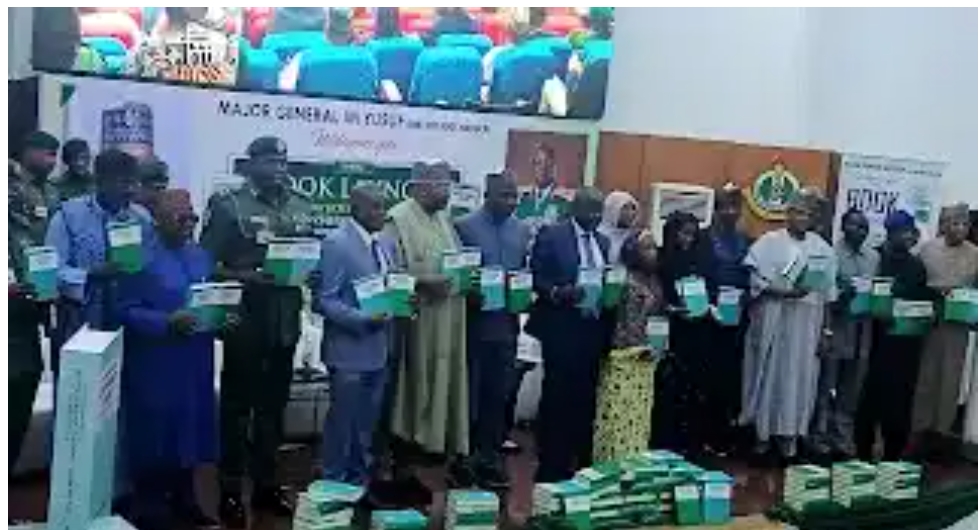
Buratai Highlights Leadership, Community Support In Defeating Insurgency As Shettima, Defence Chiefs Rally Support For Counterterrorism Documentation At Book Launch
Prominent Nigerians including Vice President Kashim Shettima, Defence Minister Christopher Musa, senior military officers, and political leaders on Thursday underscored the importance of documentation, collective national responsibility, and sustained military professionalism in the fight against terrorism during the unveiling of a new book titled “Counterterrorism and Counterinsurgency Operations in North East Nigeria (Volumes 1 & 2)” authored by retired Major-General Ibrahim Yusuf.

Representing Vice President Kashim Shettima, the Special Adviser on General Duties, Dr. Aliyu Modibbo, described the publication as a timely and strategic contribution to Nigeria’s national security discourse.
According to him, Nigeria’s experience with terrorism and insurgency in the North-East reflects not a nation defeated by insecurity, but the resilience and courage of citizens and security forces defending the country’s shared destiny.
He noted that the conflict in the North-East remained a deep human tragedy affecting communities with rich historical and cultural heritage, stressing that terrorism requires sustained vigilance, intelligence gathering, diplomacy, technology, and strong civil-military cooperation.
The Vice President further commended the author for documenting operational experiences and strategic lessons from the theatre of operations, saying such insights would prove invaluable to policymakers, scholars, and future military leaders.
He also reaffirmed the commitment of President Bola Ahmed Tinubu’s administration to strengthening the operational readiness, welfare, and dignity of members of the Armed Forces.
In his goodwill message, the Minister of Defence, Christopher Musa, praised the author as a respected mentor whose professionalism and leadership continued to inspire younger officers even after retirement.
“The lion may be retired, but he is certainly not tired,” he remarked.
Musa described the insurgency in the North-East as one of Nigeria’s most complex security challenges, noting that the asymmetric nature of the conflict means it cannot be won by military force alone.
According to him, victory against terrorism depends on collective national responsibility involving the Armed Forces, civil authorities, and citizens working together to deny insurgents support and legitimacy.
He also urged serving military officers to study the publication carefully, noting that it contains valuable operational lessons from years of counterinsurgency operations.
The Chief of Defence Staff, Olufemi Oluyede, described the two-volume publication as a major intellectual contribution bridging theory and practice in counterterrorism and counterinsurgency operations.
Oluyede commended the author for preserving decades of operational knowledge gained from commanding the 21 Brigade, 7 Division, and the Multinational Joint Task Force.
He stressed that modern security threats demand continuous learning, adaptation, and proper documentation of operational experiences, adding that the publication would serve as a useful resource for military practitioners, researchers, and policymakers.
Former Chief of Army Staff, Lt. Gen. Tukur Buratai, also applauded the author for documenting operational experiences from the counterinsurgency campaign in the North-East.
Buratai stated that operational success in counterinsurgency warfare depends largely on the quality of commanders in the field and the ability of military leaders to adapt to complex realities.
He recalled the significance of operations such as Deep Punch I and Deep Punch II, as well as the critical role played by the Nigerian Air Force in degrading terrorist capabilities between 2015 and 2017.
According to him, resilient leadership and community support remain crucial elements in defeating insurgency.
Earlier, retired Major-General Ibrahim Yusuf said the publication represented the fulfilment of an eight-year intellectual ambition aimed at contributing to military scholarship and national security discourse.
He explained that the book was inspired by a desire to provide younger military officers and policymakers with first-hand insights into the successes and challenges of counterterrorism operations in Nigeria.
The retired general added that the publication drew from over a decade of operational experience in the North-East and the Lake Chad Basin while deliberately avoiding sensitive information capable of compromising ongoing operations.
He also urged retired military officers to document their operational experiences for future generations, stressing that such efforts are essential for institutional memory and national development.
Reviewing the publication, renowned scholar Eghosa Osaghae described the work as a landmark contribution to military scholarship.
Osaghae noted that the two volumes combine academic depth with practical operational experience, offering insights into intelligence-led operations, joint force coordination, psychological warfare, and post-conflict management.
He added that the publication effectively situates Nigeria’s counterinsurgency experience within the broader realities of modern asymmetric warfare and evolving global security threats.
The event attracted senior serving and retired military officers, heads of security agencies, members of the diplomatic corps, academics, and policymakers from across the country.
society
Oduduwa Integrity Association Announces Adoption of Governor Ademola Adeleke as “Performing Governor” in the Southwest*
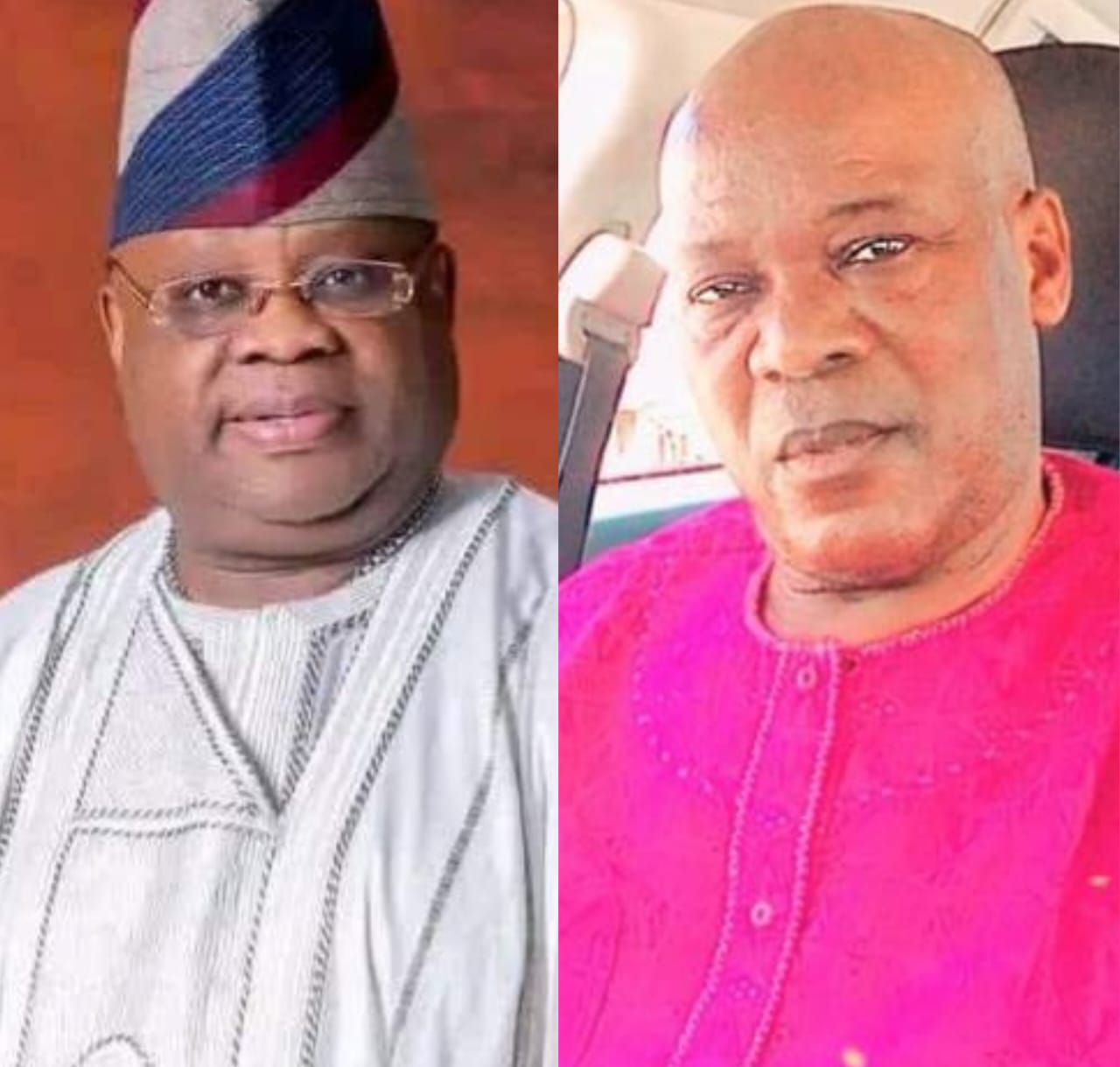
Oduduwa Integrity Association Announces Adoption of Governor Ademola Adeleke as “Performing Governor” in the Southwest*
*Osun State, Nigeria* – The Oduduwa Integrity Association, one of the prominent socio-cultural and advocacy groups in the Southwest region, has announced its decision to adopt and publicly recognize Governor Ademola Adeleke of Osun State as a performing governor in the Southwest.
According to the Association, the adoption is based on its independent monitoring of governance and project delivery across the region. The group stated that Governor Adeleke’s administration has demonstrated measurable progress in areas including infrastructure, workers’ welfare, education, and youth empowerment, which aligns with the association’s mandate to promote accountability and good governance.
“This adoption is our way of encouraging performance and responsible leadership,” Evang /Hon Omotoso Banji, the President and Founder of Oduduwa Integrity Association said. “We believe that recognizing leaders who are delivering on their mandate helps strengthen democratic values and motivates others to prioritize the people.”
The Association noted that its adoption does not imply political affiliation but is a non-partisan endorsement of what it describes as visible and verifiable governance outcomes within Osun State. It added that the move is part of its broader initiative to highlight and support public officials across the Southwest who meet its standards for transparency, service delivery, and integrity.
Governor Adeleke’s administration has been marked by policy focus on infrastructural renewal, payment of salary arrears, and investment in grassroots development since assuming office. The Oduduwa Integrity Association said it will continue to monitor and document these efforts as part of its civic oversight role.
The formal adoption ceremony and presentation of recognition materials are expected to be announced in the coming weeks.
The Oduduwa Integrity Association is a Southwest-based civil society and advocacy group committed to promoting good governance, transparency, and accountability across Yoruba-speaking states presided by Evang / Hon Omotoso Banji.The Association conducts independent assessments of public service delivery and engages in community enlightenment programs.

AjilalaOso Day 2026: Women Union Make Donations To Hospital
The women wing of the Ede Descendants Union has donated 42 bedsheets and 44 pillow cases to Cottage Hospital, Ede, in Osun State, as part of activities marking preparations for AjilalaOso Day 2026.
The donation was aimed at supporting healthcare services at the hospital while also demonstrating the union’s commitment to community development and humanitarian service.
Members of the union said the gesture formed part of efforts to give back to society and contribute meaningfully to the wellbeing of patients receiving treatment at the health facility.
Speaking during the presentation, the leader of the women wing, Mrs Silifat Shittu, described the initiative as a reflection of the values of compassion, unity and service which AjilalaOso Day represents.
She noted that the annual cultural celebration is not only about showcasing the rich heritage of Ede but also about promoting development-oriented projects capable of impacting lives positively.
The group further urged individuals, organisations and stakeholders in Edeland to continue supporting community-based initiatives aimed at improving the welfare of residents.
Speaking on behalf of the hospital management, the Chief Medical Officer, Dr Isiaka Alade, appreciated the women group for the donation, describing the items as timely and beneficial to patients and the hospital environment.
Chairman of the AjilalaOso Day 2026 Planning Committee, Prince Adewale Laoye while addressing the gathering appealed to other well-meaning individuals and organisations to extend similar gestures to the hospital, noting that some roofing sections of the facility require urgent repairs.
He also commended the women wing of the union for the initiative and support shown to Cottage Hospital.
Prince Laoye, who spoke extensively on the objectives of the AjilalaOso festival, explained that the annual celebration would not only be about funfair and merriment but would also focus on touching the lives of the needy through impactful community projects.
According to him,“We also want associations to have a project executed in Ede every year, such as what the women wing of EDU has done today.”


- Strengthening Zambia’s Readiness for Health Emergencies: From Surveillance to Pandemic Preparedness May 21, 2026
- Economic Community of West African States (ECOWAS) Strengthens Regional Integration Through Cross-Border Cooperation Stakeholders’ Meeting in Abuja, Nigeria May 21, 2026
- Senegal Retains Title as Overall Champion at ECOWAS African Wrestling Tournament (TOLAC 14) May 21, 2026
- Eritrea: Diaspora Nationals Celebrate Independence Day Anniversary May 21, 2026
- Seychelles: President Herminie Visits District Administration Office and Library on La Digue May 21, 2026
- Egypt: President El-Sisi Meets Tunisian Minister Mohamed Ali Nafti May 21, 2026
- Joint statement welcoming the Republic of Togo’s announcement on Visa facilitation for African nationals May 21, 2026
- Advancing Regional Political Commitment and Cross Border Coordination for Ebola Preparedness and Response May 21, 2026
- Morocco: African Development Bank commits €200 Million to boost employability and develop future skills May 21, 2026
- Société Nationale des Pétroles du Congo (SNPC) Targets Global Operator Status as African Energy Chamber (AEC) Engagement Reinforces Congo’s Energy Ambitions May 21, 2026
- Strengthening Zambia’s Readiness for Health Emergencies: From Surveillance to Pandemic Preparedness May 21, 2026
- Economic Community of West African States (ECOWAS) Strengthens Regional Integration Through Cross-Border Cooperation Stakeholders’ Meeting in Abuja, Nigeria May 21, 2026
- Senegal Retains Title as Overall Champion at ECOWAS African Wrestling Tournament (TOLAC 14) May 21, 2026
- Eritrea: Diaspora Nationals Celebrate Independence Day Anniversary May 21, 2026
- Seychelles: President Herminie Visits District Administration Office and Library on La Digue May 21, 2026
- Egypt: President El-Sisi Meets Tunisian Minister Mohamed Ali Nafti May 21, 2026
- Joint statement welcoming the Republic of Togo’s announcement on Visa facilitation for African nationals May 21, 2026
-

 news5 months ago
WHO REALLY OWNS MONIEPOINT? The $290 Million Deal That Sold Nigeria’s Top Fintech to Foreign Interests
-

 society3 weeks ago
SOCIAL MEDIA IS NOT A BATTLEFIELD COMMAND – WHY THE NIGERIAN ARMY’S ACTION AGAINST JUSTICE CRACK IS A NATIONAL SECURITY IMPERATIVE
-

 celebrity radar - gossips4 months ago
Dr. Chris Okafor Returns with Power and Fire of the Spirit -Mounts Grace Nation Altar with Fresh Anointing and Restoration Grace on February 1, 2026
-

 celebrity radar - gossips5 months ago
Prophet Kingsley Aitafo Releases 2026 Prophecy: ‘Nigeria Will Rise, but the World Must Prepare for Turbulence’