
society
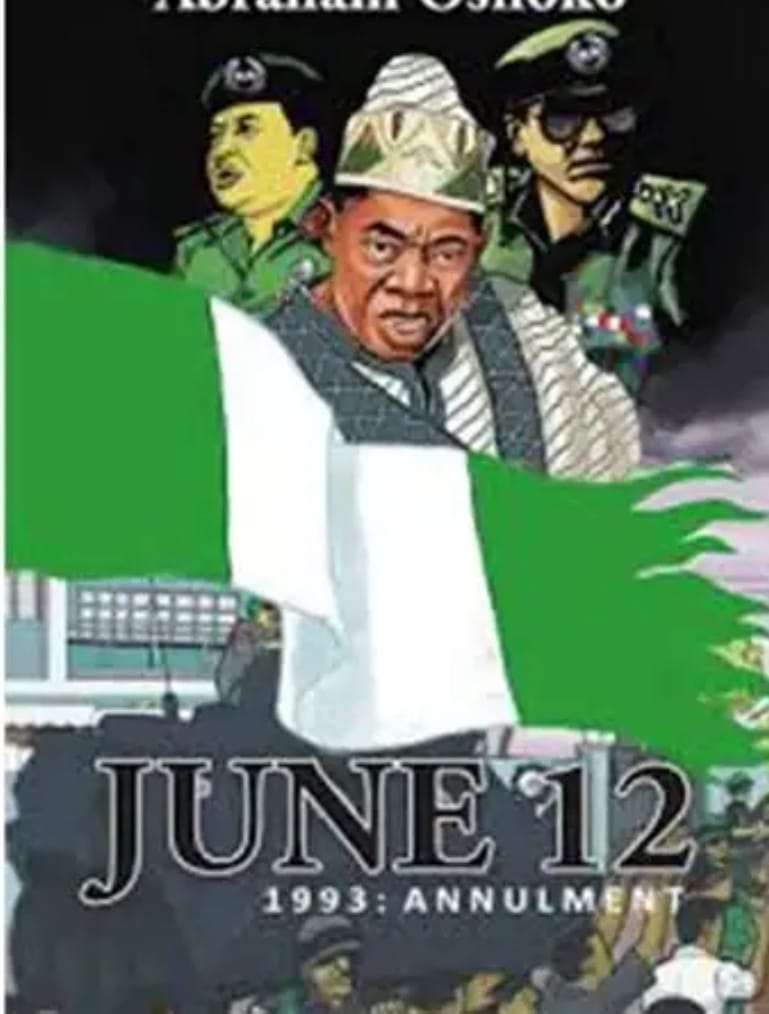
June 12, 1993: The Day Democracy Was Promised. Then Stolen!!

June 12, 1993: The Day Democracy Was Promised. Then Stolen!!
By George Omagbemi Sylvester | Published by SaharaWeeklyNG.com
“They voted. Power panicked. History remembers. Three decades on, the ghost of June 12 still haunts Nigeria’s democracy.”
June 12, 1993, should have been the beginning of a new chapter in Nigeria’s modern history, a peaceful transfer from military rule to a democratically elected civilian president. Instead it became the day the state reneged on its word, the day a legitimate popular verdict was extinguished by the brass of power. The annulment of that election did more than deny one man the presidency; it punctured the fragile hopes of an entire nation and set Nigeria on a grievous detour that cost lives, liberties and decades of political trust.

The vote itself was, by all credible accounts, decisive. Chief Moshood Kashimawo Olawale (M.K.O.) Abiola, the Social Democratic Party’s candidate, SDP won a clear nationwide plurality, with unofficial tallies putting him well ahead of his rival, Bashir Tofa of the National Republican Convention, NRC. The results made Abiola the first candidate in modern Nigerian history to assemble a truly cross-regional coalition, carrying the southwest and large tracts of the north and middle belt. Unofficial tabulations commonly cited put Abiola’s share near 58 percent against Tofa’s roughly 42 percent. These figures, reported by independent observers and later compiled by historians and news outlets, left little doubt about the will of the electorate.
Yet that mandate was never honoured. On 24 June 1993, General Ibrahim Badamasi Babangida (IBB), the country’s military ruler, announced the outright annulment of the election, citing irregularities and legal technicalities. The announcement was more than a bureaucratic reversal; it was a renunciation of popular sovereignty. The National Electoral Commission had begun releasing state-by-state results; civil society groups, foreign observers and the citizenry at large had accepted the outcome as the genuine expression of the people. To nullify that expressed will was to signal that POWER, not LAW or CONSCIENCE, would write Nigeria’s political future.

The consequences were immediate and brutal. Protests erupted across the southwest and in other cities; security forces responded with deadly force. Independent human-rights investigations documented mass arrests, press closures and a systematic campaign to silence dissent. Human Rights Watch, in its contemporaneous reporting, described the post-annulment months as a hardening of repression (“hundreds arrested and press muzzled”) and traced how the regime’s maneuvers culminated in renewed military domination and the eventual rise of Sani Abacha. The democratic promise of 12 June was replaced by a night of state-sanctioned fear.
It is tempting to reduce June 12 to a story about one man or to an arithmetic of votes. The annulment lit a torch that illuminated fault lines and truths about Nigeria’s political order. Firstly, the military’s professed “TRANSITION” was always precarious; power retains habits and the guardians of order are often the last to relinquish it. Secondly, civic cohesion had matured enough to cross ethnic and regional barriers; millions voted not for parochial advantage but for national possibility; and Thirdly, when the state violates the most basic democratic compacts, the price is paid in legitimacy and human life. Scholars who studied the period later characterized the annulment as the climax of a failed transition and a deliberate, avoidable betrayal. Peter Lewis, writing on Nigeria’s failed transition, concluded that the annulment irreparably undermined the trust that a durable democratic order requires.
Over the long arc of history, however, the memory of June 12 refused to die. The struggle for recognition of that mandate became a moral and political rallying point for activists, lawyers and the bereaved. Chief Abiola’s eventual declaration of himself as the rightful president in 1994 (and his subsequent arrest and detention) turned him from an ELECTORAL VICTOR into a MARTYR for DEMOCRATIC LEGITIMACY. His death in custody in July 1998 seared the issue into the national conscience and foreshadowed the end of the Abacha era. The narrative of June 12 thus transformed from a tale of theft into an enduring assertion that the people’s choice must count.

International reaction to the annulment was swift and unequivocal; governments suspended aid, international organizations condemned the action and a global spotlight shone on Nigeria’s betrayal of democratic norms. Yet external pressure, while symbolically important, could not substitute for internal repair. That repair required accountability (an honest accounting of how and why a transition was broken) and institutional reforms that would render future annulments impossible. For a time, Nigeria’s political institutions lay weakened and hollowed, susceptible to the predators of authoritarianism.
Time, ironically, has helped vindicate the moral core of June 12. In 2018 the Nigerian state (belatedly) took the symbolic step of renaming Democracy Day to June 12, acknowledging the election’s place in national memory. Even Ibrahim Babangida, in later years, publicly expressed regret about the annulment, admitting that the election had been free and fair; “A RECOGNITION THAT CAN NEVER UNDO THE PAST” but does confirm the original truth of the vote. Still, symbolic gestures are only the start; institutional guarantees are the remedy.
So what does June 12 teach us today? Firstly, that democracy is not merely a schedule of elections but a system of rules, norms and respect for outcomes. When leaders treat elections as optional, they invite cycles of instability that corrode development and human dignity. Secondly, the legitimacy of a polity rests on its willingness to accept inconvenient truths, including the possibility of losing power. Thirdly, the people’s memory is a political force. The tens of thousands who marched, protested, litigated and mourned after June 12 ensured that the event became a permanent reference point for claims to justice and reform.
Finally, if June 12 is to be more than a commemorative date, Nigeria must translate memory into measurable reforms and transparent electoral administration, an empowered and independent judiciary, protections for the press and a security apparatus subordinated to constitutional authority. Without these, anniversaries become mere ceremonies and history becomes a mourning ritual instead of a blueprint for progress.
June 12, 1993, remains a wound and a promise. It is a wound for the lives lost, the liberty denied and the democratic years squandered. It is a promise because millions of Nigerians made a deliberate choice for inclusion, reform and national cohesion. A choice that, despite the state’s betrayal, has continued to haunt and eventually to guide the nation’s democratic restoration. To honor June 12 is to insist that no future annulment can ever again stand. It is to demand that the people’s voice be the final arbiter in a nation still searching for government by consent.
“They voted. The Army stole it. Three decades later, Nigeria still pays the price.”
– George Omagbemi Sylvester






US-Based Society Lady, Fehintola-Brat Extends Eid-El-Kabir Greetings To Muslims
United States based fahionista of class, Chief (Mrs) Ayoola Fehintola-Brat has extended a warm greetings to Muslim faithful all over the world on the occasion of the 2026 Eid-El-Kabir celebration.
Fehintola-Brat who is the Balogun Egbe Obaneye Obinrin Akile Ijebu, and the Yeye Asofin of Idenaland in her message to Journalists urged Muslim to continually uphold the enduring values of sacrifice, obedience, faith, and compassion, which are central to the significance of Eid-El-Kabir festival.
A quiet philantropist whose humanitarian services has won her several laurels urged Muslims to use the spiritual occasion to pray for the peace co-existence of Nigerians regardless of religious, social and political leanings stressing that the oneness of the country should not be underplay.
In a related development, she expressed her felicitations to all sons and daughters of Ijebuland on the forthcoming Ojude Oba 2026 celebration, tasking age-groups otherwise known as Regbregbe to be more proactive in giving back to their immediate communities.
According to her, the beauty of the age-groups in Ijebuland is the need to contribute immensely to the development of the land in no small means. “This we will continue to achieve with God on our side”, she concluded.
Sallah: Obasa Felicitates Muslim Ummah, Commends Nigerians for APC Primaries Turnout
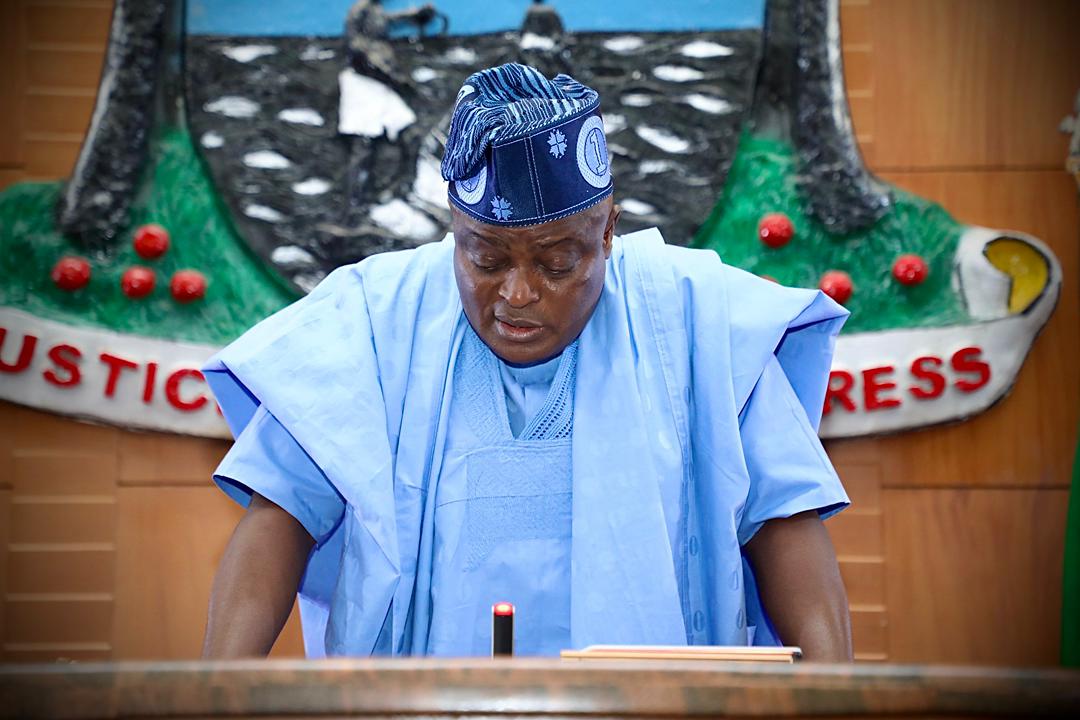
The Speaker of the Lagos State House of Assembly, Rt. Hon. Mudashiru Obasa has extended warm felicitations to Muslims in Lagos State and across Nigeria on the occasion of Eid al-Adha.
In a statement released by his Chief Press Secretary, Mr. Dave Agboola, Obasa described the festival as a season of sacrifice, reflection, and gratitude, urging the faithful to continue to uphold the values of peace, unity, and love that strengthen the nation.
He noted that the celebration of Eid al-Adha is not only a spiritual milestone but also a reminder of the importance of togetherness and collective responsibility in building a stronger society.
He, likewise, emphasized that the festival provides an opportunity for Nigerians to renew their commitment to national progress and to support leadership that prioritizes development and prosperity.
Obasa, however, commended Nigerians, particularly members of the All Progressives Congress (APC), for their massive turnout during the recently concluded party primaries. He described the participation as a clear demonstration of the people’s confidence in the government of President Bola Ahmed Tinubu and their belief in the administration’s vision for a greater Nigeria.
“The APC primaries have shown the resilience of our democracy and the confidence Nigerians have in the leadership of President Bola Ahmed Tinubu and the Renewed Hope Agenda. This is a strong message that our people are ready to continue supporting policies that will drive growth and prosperity,” Obasa stated.
The Speaker further encouraged Muslims to celebrate responsibly, stressing that the joy of Eid should be accompanied by prayers for the continued peace and progress of Lagos State and Nigeria.
“As you celebrate with family and loved ones, may this season bring joy, peace, and prosperity to your homes. Let us remain united in our resolve to build a stronger nation,” he added.
On behalf of the Lagos State House of Assembly, Obasa wished all Muslims a happy and fulfilling Eid al-Adha celebration.

ABEOKUTA FILM FESTIVAL AT ILEYA
Kayshow Multimedia a filmmaking and Media organization this year 2026 holds its annual Abeokuta film festival at the Ake Palace in Abeokuta.
Alake of Egba land, Ọba Michael Adedotun Arẹmu Gbadebo has graciously endorsed the Free Training of Egba Youths on Film and Arts and the Entertainment of the the People with a FREE FILM SHOW at the AKE PAVILION. as part of the ABEOKUTA FILM FESTIVAL 2.0.
The Convener of the Film Festival Honorable Kehinde Soaga says this year’s event promises to be more exciting as distinguished personalities are sure to attend.
This includes the honorable Minister for Art Culture and Creative Economy in Nigeria, Barr. Hannatu Musa Musawa, Ààrẹ Lai Labode, Sen. Ibikunle Amosun and other special guests.
The event will feature Film, Cultural Dance Cultural foods and Award Ceremony.
The general public is hereby invited to the Free film show at the Abeokuta film festival at the Alake Palace Pavilion on Thursday 28th of May 2026 by 4:00 p.m.
Only well dressed is the Entry. The Abeokuta Film Festival is an annual event taking place in the capital city of Ogun State state.


- Qrent says delaying Information Technology (IT) refresh cycles may be increasing operational risk for businesses in Africa May 27, 2026
- Dentons’ Iyunola Adekanye Appointed to African Mining Week (AMW) Advisory Board May 27, 2026
- United Nations (UN) Women Liberia and Partners Convene for Spotlight Initiative 2.0 Women’s Economic Empowerment Inception Meeting May 27, 2026
- African Mining Week (AMW) to Host Central Bank Governors Roundtable as Monetary Authorities Deepen Role in Mining Sector Growth May 27, 2026
- Eritrea: Diaspora Nationals Celebrate Independence Day Anniversary May 27, 2026
- Africa Unveils Landmark Humanitarian Coordination Platform to Strengthen aligned Response to Humanitarian Crises May 27, 2026
- Seychelles: President Herminie Engages with Police and Fire Services on Praslin May 27, 2026
- Issue 3 of Mining Review Africa now available for free download May 27, 2026
- NOV Joins African Energy Week (AEW) 2026 as Gold Sponsor Amid Africa’s Offshore Expansion Push May 26, 2026
- African Union of Broadcasting (AUB) and United Nations University Institute for Water, Environment and Health (UNU-INWEH) Launch Landmark Webinar Series on Africa’s Water Crisis, Starting June 2, 2026 May 26, 2026
- Qrent says delaying Information Technology (IT) refresh cycles may be increasing operational risk for businesses in Africa May 27, 2026
- Dentons’ Iyunola Adekanye Appointed to African Mining Week (AMW) Advisory Board May 27, 2026
- United Nations (UN) Women Liberia and Partners Convene for Spotlight Initiative 2.0 Women’s Economic Empowerment Inception Meeting May 27, 2026
- African Mining Week (AMW) to Host Central Bank Governors Roundtable as Monetary Authorities Deepen Role in Mining Sector Growth May 27, 2026
- Eritrea: Diaspora Nationals Celebrate Independence Day Anniversary May 27, 2026
- Africa Unveils Landmark Humanitarian Coordination Platform to Strengthen aligned Response to Humanitarian Crises May 27, 2026
- Seychelles: President Herminie Engages with Police and Fire Services on Praslin May 27, 2026
-

 news5 months ago
WHO REALLY OWNS MONIEPOINT? The $290 Million Deal That Sold Nigeria’s Top Fintech to Foreign Interests
-

 society3 weeks ago
SOCIAL MEDIA IS NOT A BATTLEFIELD COMMAND – WHY THE NIGERIAN ARMY’S ACTION AGAINST JUSTICE CRACK IS A NATIONAL SECURITY IMPERATIVE
-

 celebrity radar - gossips4 months ago
Dr. Chris Okafor Returns with Power and Fire of the Spirit -Mounts Grace Nation Altar with Fresh Anointing and Restoration Grace on February 1, 2026
-

 celebrity radar - gossips6 months ago
Prophet Kingsley Aitafo Releases 2026 Prophecy: ‘Nigeria Will Rise, but the World Must Prepare for Turbulence’