
society
When Freedom Bled: Nigeria’s Hard Road from Independence to the Biafran Cataclysm

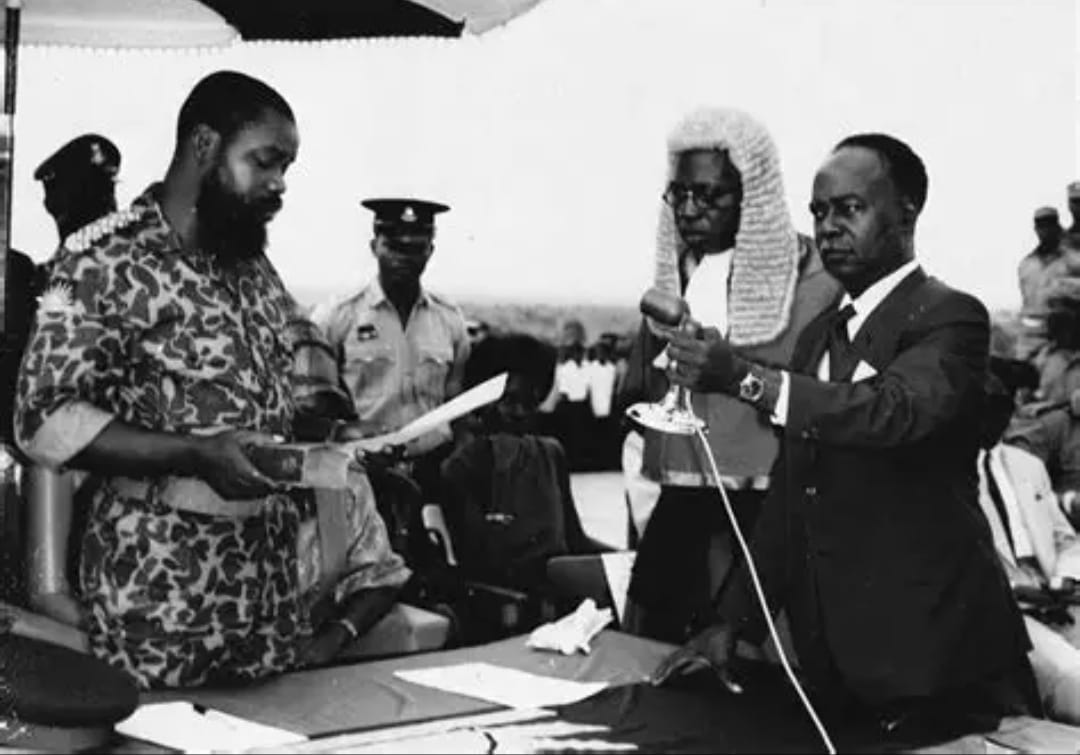
When Freedom Bled: Nigeria’s Hard Road from Independence to the Biafran Cataclysm.
By George Omagbemi Sylvester
“WE WON INDEPENDENCE AND THEN ALMOST DESTROYED THE COUNTRY TRYING TO KEEP IT.”
On October 1, 1960, Nigeria emerged from the long shadow of British colonial rule and took its place (in name and ceremony) amongst the WORLD’S INDEPENDENT NATIONS. That date remains a lodestar, the end of formal imperial control and the beginning of a treacherous experiment in self-government for a country STITCHED TOGETHER from hundreds of ethnic groups, languages, religions and colonial legacies. Yet independence did not magically end the structural fractures that British rule had deepened; instead it exposed them. Within seven fraught years those fractures detonated into a conflict that became one of modern Africa’s most brutal tragedies; the Nigerian Civil War (1967–1970).

Independence was, for many Nigerians, a moment of dizzying hope. Leaders who had campaigned for self-rule (Nnamdi Azikiwe, Obafemi Awolowo, Ahmadu Bello, Abubakar Tafawa Balewa among them) promised unity, development and dignity. Azikiwe himself, whose life had been bound to nationalist struggle, famously said on independence: “My stiffest earthly assignment is ended and my major life’s work is done. My country is now free” Those words captured the public optimism (and the weight of expectation) that independence bequeathed.
Although beneath the pageantry were unresolved structural dangers. Colonial rule had created administrative regions, promoted uneven economic development and favoured some groups over others; the partitioning logic of empire left behind artificial boundaries and competition for resources and political power. As historian Toyin Falola notes, the legacy of colonial boundaries and the unequal modern structures they produced made citizenship and belonging contested in the newborn state; a volatile mix when combined with elites jockeying for advantage.

The first years of independence saw fragile experiments in parliamentary democracy. But the window for peaceful resolution of deep grievances closed fast. A series of political crises, contested elections and ethnic paranoia culminated in military coups in 1966, assassinations and anti-Igbo pogroms in the north that forced tens of thousands to flee. The Eastern Region, led by Colonel Odumegwu Ojukwu, declared secession as the Republic of Biafra in May 1967. The federal government, under General Yakubu Gowon, answered with military force and a blockade that would be devastating in its human consequences.
The war that followed was not merely a clash of armies, it was a political catastrophe with a staggering humanitarian price. Biafra, initially militarily agile, soon found itself landlocked, deprived of seaports and fuel and subjected to an effective blockade. Starvation (weaponized by logistics and politics) ravaged civilians. Modern estimates of the civilian death toll range widely; reputable historical accounts place the figures between roughly 500,000 and several million, with many scholars converging on a figure that reflects the horrifying scale of famine and disease. No number adequately conveys the moral and social ruin, families destroyed, entire generations scarred and civic trust pulverized.
This violence was not inevitable. It was the foreseeable consequence of leadership failures, hurried nation-building and the refusal of political elites (civilian and military) to forge stabilizing institutions. Atrocities and miscalculations escalated because neither side was prepared to manage the political compromises necessary for plural coexistence. The oft-invoked post-war slogan “NO VICTOR, NO VANQUISHED,” pronounced by Gowon at the war’s end, was meant to close wounds; in practice, it papered over grievances rather than heal them, leaving many questions of justice and reconciliation unanswered. The absence of accountability and meaningful inclusion after the war seeded later crises of trust.

Literature and memory have been the country’s conscience. Chinua Achebe’s account in There Was a Country and Wole Soyinka’s anguished reflections remind us that intellectuals and artists were not mere bystanders (they were witnesses and participants who tried to make sense of the wrenching ruptures. Achebe’s writing, in particular, documents how the Igbo were singled out both as scapegoats and as targets of structural resentment) resentment that predated independence but metastasized in the post-colonial scramble for power. These cultural testimonies force a nation to look unflinchingly at itself.
To say “LESSONS” is not to indulge in cheap moralizing. The real lessons are concrete and urgent. Firstly; nationhood demands institutions that outlive individual politicians; impartial judiciaries, professional civil services, credible electoral systems and federal arrangements that balance unity with regional autonomy. Secondly; economic equity is not optional. When wealth (whether oil or agricultural bounty) is distributed through patronage rather than transparent mechanisms, grievance becomes fuel for conflict. Thirdly; truth and reconciliatory processes matter. The war’s victims deserved a public reckoning; without it, hurt festers and narratives ossify into rival myths that fracture the public sphere. Britannica’s sober accounting of the war shows how the interplay of ethnic tensions, economic disparity and weak institutions produced the catastrophe; reading that account should be a compulsory civic education for every Nigerian leader.
History also offers a final, stubborn demand, that remembrance be coupled to reform. If independence was meant to unlock dignity and prosperity, then remembering Biafra’s dead must not become an exercise in nostalgia. Rather, it should be the prologue to systemic change, decentralised governance structures that allow regions to govern local affairs; educational curricula that teach honest history instead of selective amnesia and economic policies aligned to inclusive growth rather than narrow elite enrichment.
We must also listen to scholars who insist that the contours of modern Nigerian crises are not accidents. Toyin Falola’s scholarship warns that colonial structures and elite manoeuvres shaped durable inequalities; to address our present we must engage with the structural past honestly. To put it plainly; ignorance of history is not innocence, it is a political choice that guarantees repetition.

At its best, independence promised a covenant between rulers and the ruled; protection, opportunity and reciprocal duty. The Biafran nightmare revealed how quickly that covenant can be broken. As Nigeria approaches each anniversary of October 1, the country should do more than parade veterans and raise flags. It should enact policies that make the union meaningful, expand avenues for redress and uphold the dignity of all its peoples.
There is no simple balm for the past. There is a path forward; robust institutions, shared memory, accountable leadership and an economic architecture that binds rather than divides. If independence taught us anything, it is that freedom without justice is brittle and that the test of nationhood is not when flags are raised, but when every citizen can live without fear and with hope.





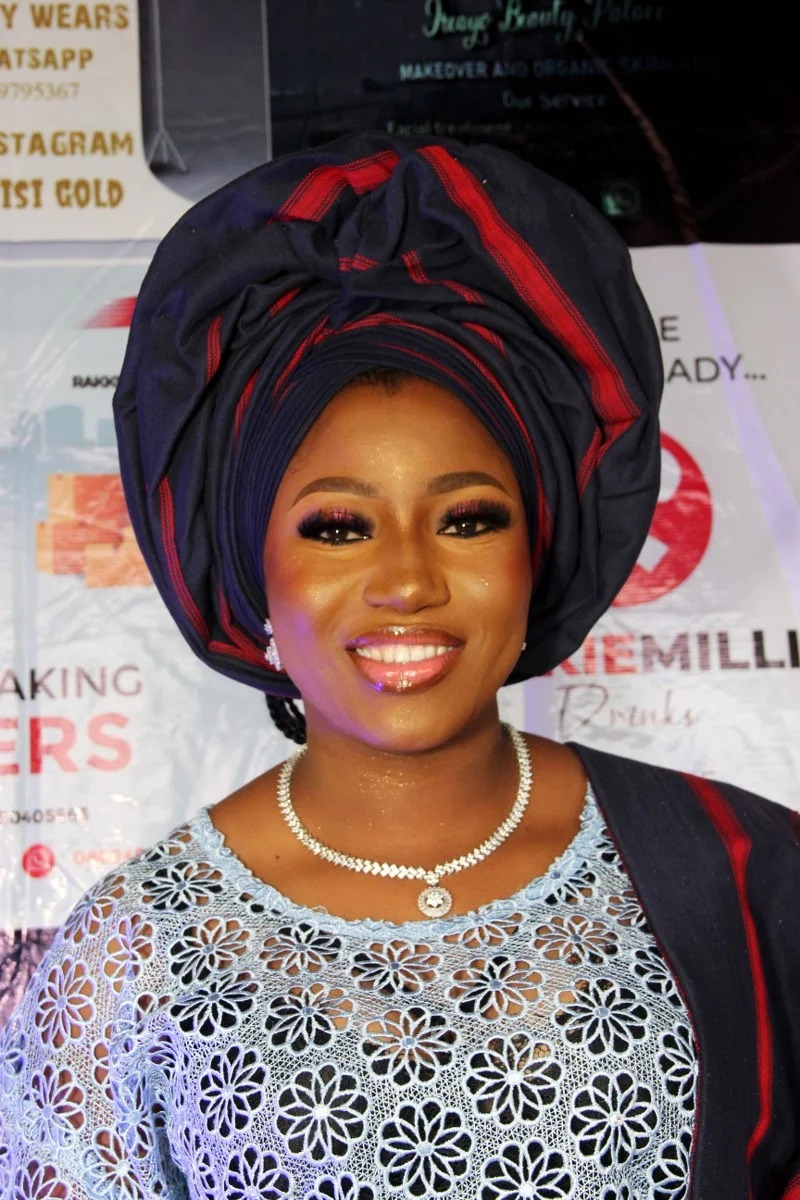
US-Based Society Lady, Fehintola-Brat Extends Eid-El-Kabir Greetings To Muslims
United States based fahionista of class, Chief (Mrs) Ayoola Fehintola-Brat has extended a warm greetings to Muslim faithful all over the world on the occasion of the 2026 Eid-El-Kabir celebration.
Fehintola-Brat who is the Balogun Egbe Obaneye Obinrin Akile Ijebu, and the Yeye Asofin of Idenaland in her message to Journalists urged Muslim to continually uphold the enduring values of sacrifice, obedience, faith, and compassion, which are central to the significance of Eid-El-Kabir festival.
A quiet philantropist whose humanitarian services has won her several laurels urged Muslims to use the spiritual occasion to pray for the peace co-existence of Nigerians regardless of religious, social and political leanings stressing that the oneness of the country should not be underplay.
In a related development, she expressed her felicitations to all sons and daughters of Ijebuland on the forthcoming Ojude Oba 2026 celebration, tasking age-groups otherwise known as Regbregbe to be more proactive in giving back to their immediate communities.
According to her, the beauty of the age-groups in Ijebuland is the need to contribute immensely to the development of the land in no small means. “This we will continue to achieve with God on our side”, she concluded.
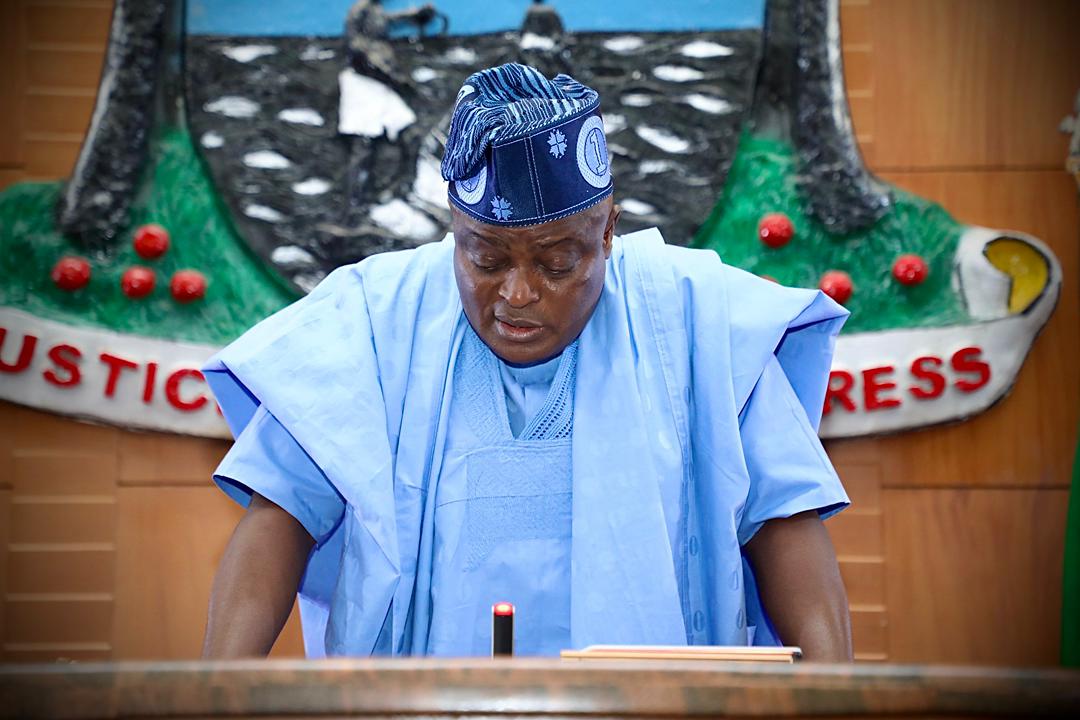
Sallah: Obasa Felicitates Muslim Ummah, Commends Nigerians for APC Primaries Turnout
The Speaker of the Lagos State House of Assembly, Rt. Hon. Mudashiru Obasa has extended warm felicitations to Muslims in Lagos State and across Nigeria on the occasion of Eid al-Adha.
In a statement released by his Chief Press Secretary, Mr. Dave Agboola, Obasa described the festival as a season of sacrifice, reflection, and gratitude, urging the faithful to continue to uphold the values of peace, unity, and love that strengthen the nation.
He noted that the celebration of Eid al-Adha is not only a spiritual milestone but also a reminder of the importance of togetherness and collective responsibility in building a stronger society.
He, likewise, emphasized that the festival provides an opportunity for Nigerians to renew their commitment to national progress and to support leadership that prioritizes development and prosperity.
Obasa, however, commended Nigerians, particularly members of the All Progressives Congress (APC), for their massive turnout during the recently concluded party primaries. He described the participation as a clear demonstration of the people’s confidence in the government of President Bola Ahmed Tinubu and their belief in the administration’s vision for a greater Nigeria.
“The APC primaries have shown the resilience of our democracy and the confidence Nigerians have in the leadership of President Bola Ahmed Tinubu and the Renewed Hope Agenda. This is a strong message that our people are ready to continue supporting policies that will drive growth and prosperity,” Obasa stated.
The Speaker further encouraged Muslims to celebrate responsibly, stressing that the joy of Eid should be accompanied by prayers for the continued peace and progress of Lagos State and Nigeria.
“As you celebrate with family and loved ones, may this season bring joy, peace, and prosperity to your homes. Let us remain united in our resolve to build a stronger nation,” he added.
On behalf of the Lagos State House of Assembly, Obasa wished all Muslims a happy and fulfilling Eid al-Adha celebration.
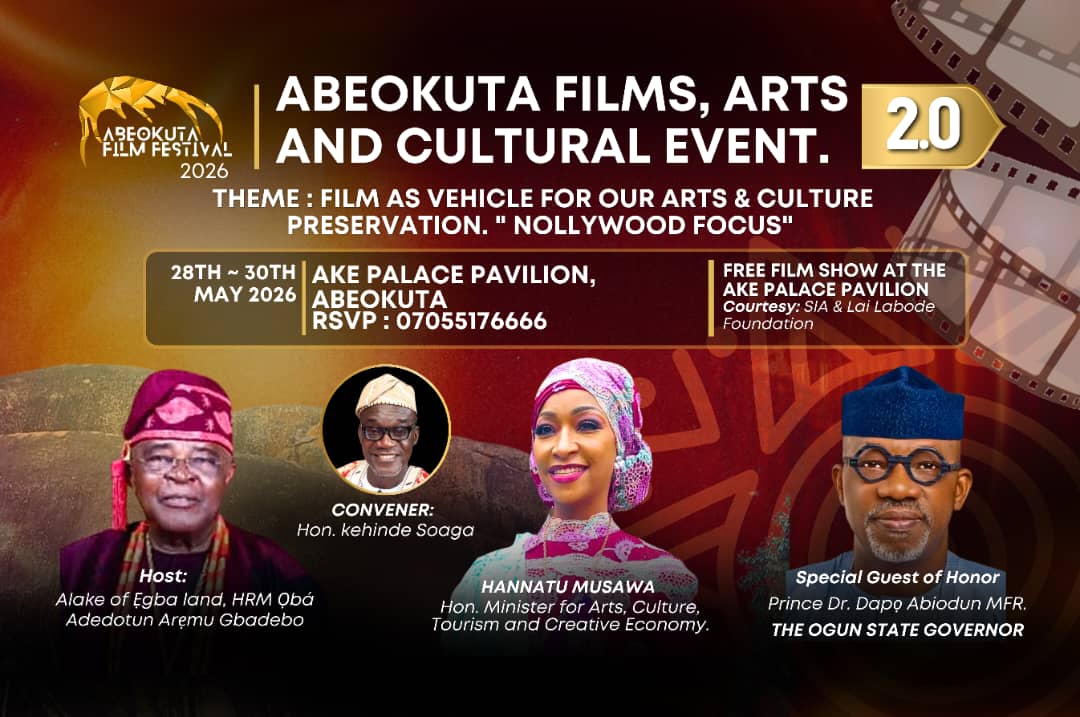
ABEOKUTA FILM FESTIVAL AT ILEYA
Kayshow Multimedia a filmmaking and Media organization this year 2026 holds its annual Abeokuta film festival at the Ake Palace in Abeokuta.
Alake of Egba land, Ọba Michael Adedotun Arẹmu Gbadebo has graciously endorsed the Free Training of Egba Youths on Film and Arts and the Entertainment of the the People with a FREE FILM SHOW at the AKE PAVILION. as part of the ABEOKUTA FILM FESTIVAL 2.0.
The Convener of the Film Festival Honorable Kehinde Soaga says this year’s event promises to be more exciting as distinguished personalities are sure to attend.
This includes the honorable Minister for Art Culture and Creative Economy in Nigeria, Barr. Hannatu Musa Musawa, Ààrẹ Lai Labode, Sen. Ibikunle Amosun and other special guests.
The event will feature Film, Cultural Dance Cultural foods and Award Ceremony.
The general public is hereby invited to the Free film show at the Abeokuta film festival at the Alake Palace Pavilion on Thursday 28th of May 2026 by 4:00 p.m.
Only well dressed is the Entry. The Abeokuta Film Festival is an annual event taking place in the capital city of Ogun State state.


- Qrent says delaying Information Technology (IT) refresh cycles may be increasing operational risk for businesses in Africa May 27, 2026
- Dentons’ Iyunola Adekanye Appointed to African Mining Week (AMW) Advisory Board May 27, 2026
- United Nations (UN) Women Liberia and Partners Convene for Spotlight Initiative 2.0 Women’s Economic Empowerment Inception Meeting May 27, 2026
- African Mining Week (AMW) to Host Central Bank Governors Roundtable as Monetary Authorities Deepen Role in Mining Sector Growth May 27, 2026
- Eritrea: Diaspora Nationals Celebrate Independence Day Anniversary May 27, 2026
- Africa Unveils Landmark Humanitarian Coordination Platform to Strengthen aligned Response to Humanitarian Crises May 27, 2026
- Seychelles: President Herminie Engages with Police and Fire Services on Praslin May 27, 2026
- Issue 3 of Mining Review Africa now available for free download May 27, 2026
- NOV Joins African Energy Week (AEW) 2026 as Gold Sponsor Amid Africa’s Offshore Expansion Push May 26, 2026
- African Union of Broadcasting (AUB) and United Nations University Institute for Water, Environment and Health (UNU-INWEH) Launch Landmark Webinar Series on Africa’s Water Crisis, Starting June 2, 2026 May 26, 2026
- Qrent says delaying Information Technology (IT) refresh cycles may be increasing operational risk for businesses in Africa May 27, 2026
- Dentons’ Iyunola Adekanye Appointed to African Mining Week (AMW) Advisory Board May 27, 2026
- United Nations (UN) Women Liberia and Partners Convene for Spotlight Initiative 2.0 Women’s Economic Empowerment Inception Meeting May 27, 2026
- African Mining Week (AMW) to Host Central Bank Governors Roundtable as Monetary Authorities Deepen Role in Mining Sector Growth May 27, 2026
- Eritrea: Diaspora Nationals Celebrate Independence Day Anniversary May 27, 2026
- Africa Unveils Landmark Humanitarian Coordination Platform to Strengthen aligned Response to Humanitarian Crises May 27, 2026
- Seychelles: President Herminie Engages with Police and Fire Services on Praslin May 27, 2026
-

 news5 months ago
WHO REALLY OWNS MONIEPOINT? The $290 Million Deal That Sold Nigeria’s Top Fintech to Foreign Interests
-

 society3 weeks ago
SOCIAL MEDIA IS NOT A BATTLEFIELD COMMAND – WHY THE NIGERIAN ARMY’S ACTION AGAINST JUSTICE CRACK IS A NATIONAL SECURITY IMPERATIVE
-

 celebrity radar - gossips4 months ago
Dr. Chris Okafor Returns with Power and Fire of the Spirit -Mounts Grace Nation Altar with Fresh Anointing and Restoration Grace on February 1, 2026
-

 celebrity radar - gossips6 months ago
Prophet Kingsley Aitafo Releases 2026 Prophecy: ‘Nigeria Will Rise, but the World Must Prepare for Turbulence’