
society
Justice or Political Optics? EFCC, Yahaya Bello, and the Dangerous Illusion of Innocence

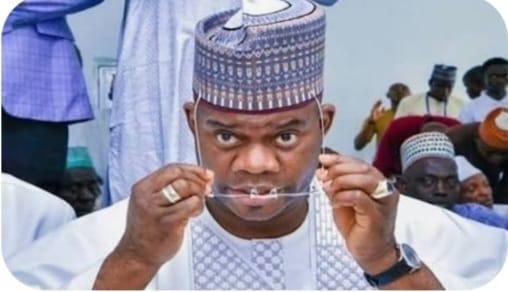
Justice or Political Optics? EFCC, Yahaya Bello, and the Dangerous Illusion of Innocence.
By George Omagbemi Sylvester | Published by saharaweeklyng.com
“How the Rule of Law Is Being Tested by Power, Party Loyalty, and Public Distrust.”
The declaration by the Economic and Financial Crimes Commission (EFCC) that former Kogi State Governor, Yahaya Adoza Bello, remains “innocent until proven guilty by a court of competent jurisdiction” has reignited a fierce national debate and one that goes far beyond legal technicalities and strikes at the heart of Nigeria’s credibility in the fight against corruption.

On paper, the EFCC’s position is constitutionally sound. Section 36(5) of the 1999 Constitution of the Federal Republic of Nigeria (as amended) clearly states that every person charged with a criminal offence shall be presumed innocent until proven guilty. No democrat, no matter how critical of government, can legitimately dispute this principle.
Yet, in practice, Nigeria’s problem has never been the absence of laws, but it has always been the selective application of those laws.
The Charges and the Legal Process.
Yahaya Bello, who served as governor of Kogi State from 2016 to 2024, is standing trial over serious allegations of financial impropriety, including money laundering and misappropriation of public funds running into tens of billions of naira. The EFCC alleges that state funds were siphoned through proxies and shell arrangements, with properties acquired in high-value locations within and outside Nigeria.
The Commission maintains that it has followed due process, filing charges before a competent court and presenting witnesses and documentary evidence. The defence, on the other hand, argues that Bello’s name does not appear directly as a beneficiary in some transactions and that withdrawals cited were part of routine government operations.
This legal contestation is now before the judiciary, where evidence, cross-examination and judicial reasoning (not media narratives) will determine the final outcome.
EFCC spokespersons have reiterated that the agency does not convict; courts do. As one official succinctly put it, “It is not the EFCC that will declare anyone guilty. That responsibility lies squarely with the court.”
Presumption of Innocence vs. Public Reality.
While the law insists on presumption of innocence, public opinion tells a very different story.
Across Nigeria, from civil society spaces to academic circles and online platforms, a dominant perception has crystallized: many Nigerians believe Yahaya Bello is guilty, and that the system is merely buying time, managing outrage, and shielding power.
This belief is not born of sentiment alone. It is shaped by patterns Nigerians have observed repeatedly, where politically exposed persons aligned with the ruling party enjoy prolonged legal sympathy, procedural caution and rhetorical softness that rarely extend to opposition figures or politically expendable actors.
Political economist Dr. Pat Utomi once observed that “corruption in Nigeria thrives not because it is hidden, but because it is protected.” To many Nigerians, the Bello case fits squarely into this troubling pattern.
The APC Factor and Allegations of Selective Justice.
A central question continues to haunt public discourse:
Would this case be unfolding the same way if Yahaya Bello were not associated with the ruling All Progressives Congress (APC)?
This is where the EFCC’s moral burden becomes heavier. Critics argue that party affiliation has become an unofficial shield, blurring the line between legal prudence and political protection.

Human rights lawyer Inibehe Effiong has warned that “when justice appears partisan, it ceases to be justice and becomes performance.” That warning resonates powerfully here. Nigerians are not necessarily rejecting the rule of law; they are questioning why the rule of law seems elastic for the powerful and unforgiving for the powerless.
Former President Olusegun Obasanjo captured this national frustration bluntly when he stated:
“Nigeria does not lack laws; it lacks political will.”
For many observers, the Bello prosecution exposes precisely this deficit of will.
EFCC, Credibility, and the Burden of Trust.
The EFCC occupies a delicate space in Nigeria’s democracy. It is both a symbol of hope and a subject of suspicion. Its success depends not only on convictions, but on public trust.
When the Commission vigorously pursues certain individuals while appearing cautious or conciliatory toward others of equal or greater alleged culpability, it fuels the narrative of double standards. This perception (whether the EFCC accepts it or not) undermines its institutional authority.
Legal scholar Professor Adegoke Adelabu notes that:
“Anti-corruption agencies lose legitimacy not when cases fail, but when citizens believe outcomes are predetermined by politics rather than evidence.”
In the Bello case, even as the EFCC insists on legal propriety, the optics suggest hesitation, and that an impression that the agency is walking on eggshells because of political power dynamics.
Judiciary as the Final Arbiter.
Ultimately, the courts remain the last line of defense against injustice, both against wrongful conviction and against elite impunity. Nigerian judges are constitutionally empowered to weigh evidence, dismiss weak cases and convict where guilt is proven beyond reasonable doubt.
However, the judiciary does not operate in a vacuum. Delays, adjournments, and procedural battles, though sometimes legally justified, often reinforce public cynicism, especially in high-profile corruption cases involving political heavyweights.
As respected jurist Justice Chukwudifu Oputa once warned:
“Justice delayed may be justice denied—not only to the accused, but to society.”
A Nation Tired of Legal Semantics.
For millions of Nigerians battling poverty, insecurity, and collapsing public services, this case is no longer just about Yahaya Bello. It is about whether accountability in Nigeria is real or selective.
To them, repeated reminders of “innocent until proven guilty” sound hollow when everyday Nigerians are punished swiftly and harshly for far lesser offences. The anger is not against the Constitution; it is against a system that appears to weaponize legality to protect the elite.
In the court of public opinion, many Nigerians have already reached their conclusion, not because they hate due process, but because experience has taught them how power behaves in Nigeria.
Final Reflection: Law, Power, and the Future of Accountability.
The EFCC is correct in law: only a court can pronounce guilt. But the Nigerian people are also correct in sentiment: justice must be seen to be fair, fearless, and consistent.
If Yahaya Bello is eventually acquitted based on evidence, the nation must accept it. But if the process collapses under political pressure, procedural manipulation, or endless delay, it will confirm the darkest fears of a people who already believe that APC membership comes with legal insurance.
As the late legal icon Chief Gani Fawehinmi (SAN) once declared:
“A society that abandons equal justice invites chaos disguised as order.”
Nigeria stands at that crossroads today. The Bello case is not just a trial, it is a test of conscience, for the EFCC, the judiciary, and the political class. History will remember not the press statements, but whether justice was truly done.






US-Based Society Lady, Fehintola-Brat Extends Eid-El-Kabir Greetings To Muslims
United States based fahionista of class, Chief (Mrs) Ayoola Fehintola-Brat has extended a warm greetings to Muslim faithful all over the world on the occasion of the 2026 Eid-El-Kabir celebration.
Fehintola-Brat who is the Balogun Egbe Obaneye Obinrin Akile Ijebu, and the Yeye Asofin of Idenaland in her message to Journalists urged Muslim to continually uphold the enduring values of sacrifice, obedience, faith, and compassion, which are central to the significance of Eid-El-Kabir festival.
A quiet philantropist whose humanitarian services has won her several laurels urged Muslims to use the spiritual occasion to pray for the peace co-existence of Nigerians regardless of religious, social and political leanings stressing that the oneness of the country should not be underplay.
In a related development, she expressed her felicitations to all sons and daughters of Ijebuland on the forthcoming Ojude Oba 2026 celebration, tasking age-groups otherwise known as Regbregbe to be more proactive in giving back to their immediate communities.
According to her, the beauty of the age-groups in Ijebuland is the need to contribute immensely to the development of the land in no small means. “This we will continue to achieve with God on our side”, she concluded.
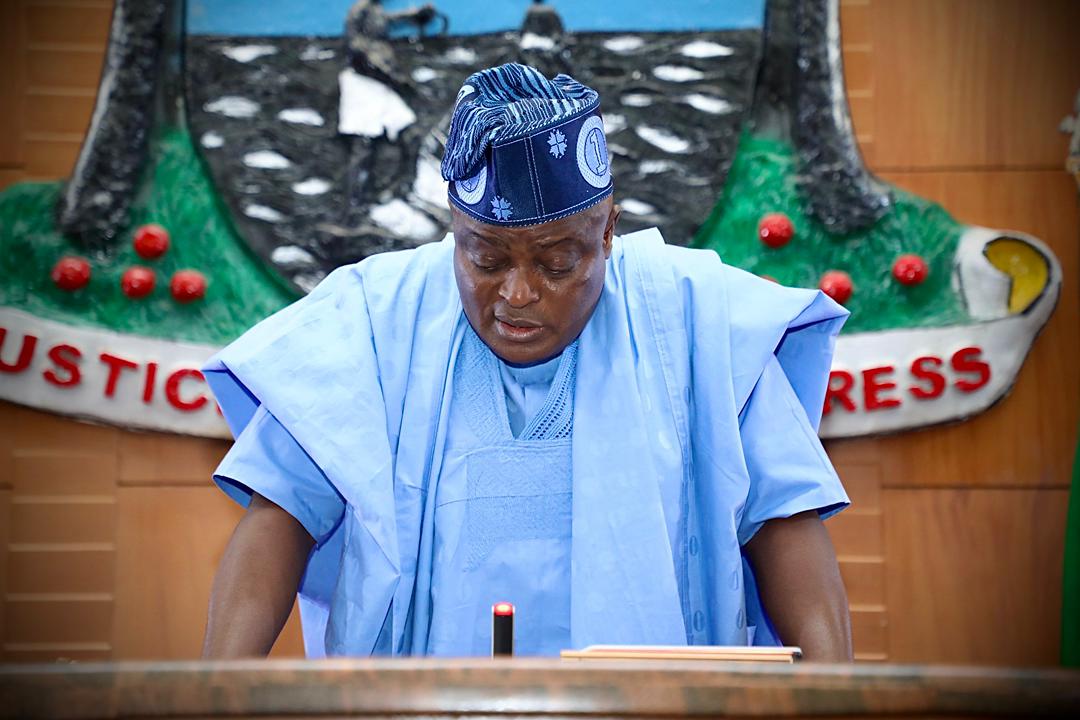
Sallah: Obasa Felicitates Muslim Ummah, Commends Nigerians for APC Primaries Turnout
The Speaker of the Lagos State House of Assembly, Rt. Hon. Mudashiru Obasa has extended warm felicitations to Muslims in Lagos State and across Nigeria on the occasion of Eid al-Adha.
In a statement released by his Chief Press Secretary, Mr. Dave Agboola, Obasa described the festival as a season of sacrifice, reflection, and gratitude, urging the faithful to continue to uphold the values of peace, unity, and love that strengthen the nation.
He noted that the celebration of Eid al-Adha is not only a spiritual milestone but also a reminder of the importance of togetherness and collective responsibility in building a stronger society.
He, likewise, emphasized that the festival provides an opportunity for Nigerians to renew their commitment to national progress and to support leadership that prioritizes development and prosperity.
Obasa, however, commended Nigerians, particularly members of the All Progressives Congress (APC), for their massive turnout during the recently concluded party primaries. He described the participation as a clear demonstration of the people’s confidence in the government of President Bola Ahmed Tinubu and their belief in the administration’s vision for a greater Nigeria.
“The APC primaries have shown the resilience of our democracy and the confidence Nigerians have in the leadership of President Bola Ahmed Tinubu and the Renewed Hope Agenda. This is a strong message that our people are ready to continue supporting policies that will drive growth and prosperity,” Obasa stated.
The Speaker further encouraged Muslims to celebrate responsibly, stressing that the joy of Eid should be accompanied by prayers for the continued peace and progress of Lagos State and Nigeria.
“As you celebrate with family and loved ones, may this season bring joy, peace, and prosperity to your homes. Let us remain united in our resolve to build a stronger nation,” he added.
On behalf of the Lagos State House of Assembly, Obasa wished all Muslims a happy and fulfilling Eid al-Adha celebration.

ABEOKUTA FILM FESTIVAL AT ILEYA
Kayshow Multimedia a filmmaking and Media organization this year 2026 holds its annual Abeokuta film festival at the Ake Palace in Abeokuta.
Alake of Egba land, Ọba Michael Adedotun Arẹmu Gbadebo has graciously endorsed the Free Training of Egba Youths on Film and Arts and the Entertainment of the the People with a FREE FILM SHOW at the AKE PAVILION. as part of the ABEOKUTA FILM FESTIVAL 2.0.
The Convener of the Film Festival Honorable Kehinde Soaga says this year’s event promises to be more exciting as distinguished personalities are sure to attend.
This includes the honorable Minister for Art Culture and Creative Economy in Nigeria, Barr. Hannatu Musa Musawa, Ààrẹ Lai Labode, Sen. Ibikunle Amosun and other special guests.
The event will feature Film, Cultural Dance Cultural foods and Award Ceremony.
The general public is hereby invited to the Free film show at the Abeokuta film festival at the Alake Palace Pavilion on Thursday 28th of May 2026 by 4:00 p.m.
Only well dressed is the Entry. The Abeokuta Film Festival is an annual event taking place in the capital city of Ogun State state.


- Qrent says delaying Information Technology (IT) refresh cycles may be increasing operational risk for businesses in Africa May 27, 2026
- Dentons’ Iyunola Adekanye Appointed to African Mining Week (AMW) Advisory Board May 27, 2026
- United Nations (UN) Women Liberia and Partners Convene for Spotlight Initiative 2.0 Women’s Economic Empowerment Inception Meeting May 27, 2026
- African Mining Week (AMW) to Host Central Bank Governors Roundtable as Monetary Authorities Deepen Role in Mining Sector Growth May 27, 2026
- Eritrea: Diaspora Nationals Celebrate Independence Day Anniversary May 27, 2026
- Africa Unveils Landmark Humanitarian Coordination Platform to Strengthen aligned Response to Humanitarian Crises May 27, 2026
- Seychelles: President Herminie Engages with Police and Fire Services on Praslin May 27, 2026
- Issue 3 of Mining Review Africa now available for free download May 27, 2026
- NOV Joins African Energy Week (AEW) 2026 as Gold Sponsor Amid Africa’s Offshore Expansion Push May 26, 2026
- African Union of Broadcasting (AUB) and United Nations University Institute for Water, Environment and Health (UNU-INWEH) Launch Landmark Webinar Series on Africa’s Water Crisis, Starting June 2, 2026 May 26, 2026
- Qrent says delaying Information Technology (IT) refresh cycles may be increasing operational risk for businesses in Africa May 27, 2026
- Dentons’ Iyunola Adekanye Appointed to African Mining Week (AMW) Advisory Board May 27, 2026
- United Nations (UN) Women Liberia and Partners Convene for Spotlight Initiative 2.0 Women’s Economic Empowerment Inception Meeting May 27, 2026
- African Mining Week (AMW) to Host Central Bank Governors Roundtable as Monetary Authorities Deepen Role in Mining Sector Growth May 27, 2026
- Eritrea: Diaspora Nationals Celebrate Independence Day Anniversary May 27, 2026
- Africa Unveils Landmark Humanitarian Coordination Platform to Strengthen aligned Response to Humanitarian Crises May 27, 2026
- Seychelles: President Herminie Engages with Police and Fire Services on Praslin May 27, 2026
-

 news5 months ago
WHO REALLY OWNS MONIEPOINT? The $290 Million Deal That Sold Nigeria’s Top Fintech to Foreign Interests
-

 society3 weeks ago
SOCIAL MEDIA IS NOT A BATTLEFIELD COMMAND – WHY THE NIGERIAN ARMY’S ACTION AGAINST JUSTICE CRACK IS A NATIONAL SECURITY IMPERATIVE
-

 celebrity radar - gossips4 months ago
Dr. Chris Okafor Returns with Power and Fire of the Spirit -Mounts Grace Nation Altar with Fresh Anointing and Restoration Grace on February 1, 2026
-

 celebrity radar - gossips6 months ago
Prophet Kingsley Aitafo Releases 2026 Prophecy: ‘Nigeria Will Rise, but the World Must Prepare for Turbulence’