
society
KAYODE AJULO: A LIVING TESTIMONY IN MENTORSHIP AND LEADERSHIP

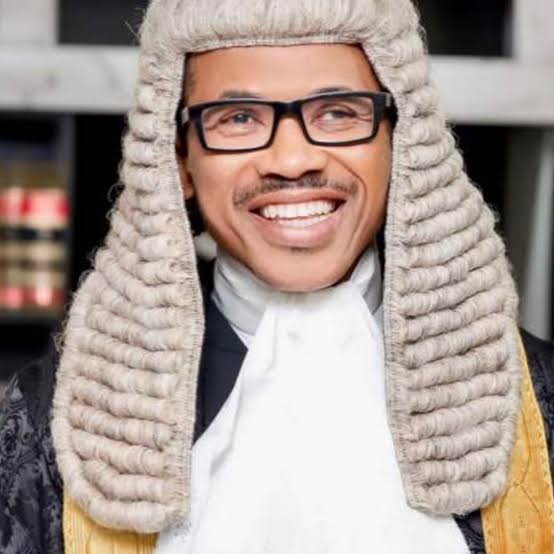
KAYODE AJULO: A LIVING TESTIMONY IN MENTORSHIP AND LEADERSHIP
– Reveals mentors who shaped his life
– How he set up the first online law firm
– His encounter with FRA Williams
By: Al Humphrey Onyanabo
As the pioneering Chairman of the newly created NBA Mentorship Committee, Dr. Olukayode Ajulo, Officer of the Order of the Niger, OON, Senior Advocate of Nigeria, SAN, Fellow of the prestigious Chartered Institute of Arbitrators in the United Kingdom, and the current Honourable Attorney General of Ondo State, is driven by a profound passion to impart the lessons he’s learned throughout his illustrious career.

With unwavering dedication, he aims, along with other distinguished members of the Mentorship Committee, to teach young lawyers the art of mentorship and leadership, filling a critical gap in their legal education.
“Law school has made them lawyers; our extant commission is to make them leaders and successful in the noble profession,” Dr. Ajulo declared, his voice tinged with a deep sense of purpose.
In a rare moment of introspection, Dr. Ajulo reveals a humility that belies his impressive accomplishments. “I don’t think I’m a spirit or anything special,” he says, his eyes shining with sincerity. “What I’ve accomplished, any other lawyer could do even better.” This conviction is rooted in his journey, which was shaped by the transformative power of mentorship and hard work.
As a young law student at the University of Jos, his network of friends, primarily socialites, impacted his early career goals. He pictured himself becoming an entertainment lawyer for the enjoyment of it. However, the guidance of mentors and his tireless efforts carved a different path for him.
“Having received so much from mentors, what more could one want than to mentor young lawyers and assist them in achieving success in life?”
Dr. Ajulo’s eyes light up as he recalls the impact mentorship has had on his enviable career. He recalled the influence of Chief FRA Williams, a legal luminary who inspired him as a student at the University of Jos. Without ever meeting him in person, he devoured every law report and article about the legal giant. Mesmerised by Chief Williams’ accomplishments, Dr. Ajulo would attend court sessions to watch him in action, observing and learning from the Grand Master.
When your mind is fixed on a purpose in faith, providence aligns the path. So it was for Dr. Ajulo, then a young State Counsel at the Federal Ministry of Justice, who found himself appearing alongside “Timi the Law” at the Supreme Court in Abuja. When he introduced himself as a long-time admirer, the renowned lawyer was taken aback, yet impressed, by Dr. Ajulo’s boldness and admiration. That chance encounter became the beginning of a mentorship that would shape his legal journey.
Dr. Ajulo’s mantra, “If you faithfully and sincerely follow seven successful lawyers, you will become the eighth successful lawyer,” speaks to the profound impact of mentorship on his life. He has been fortunate to have had an array of brilliant mentors.
Men like Chief Frederick Rotimi Alade Williams, SAN, the trailblazing first Nigerian Senior Advocate and one of the founding fathers of the Nigerian legal profession; the late, highly respected Chief James Ajibola Ige, SAN, former Attorney General of the Federation and Minister of Justice; the revered Aare Afe Babalola, OFR, CON, SAN, an exceptional legal icon and founder of the prestigious Afe Babalola University; the unassailable Chief Wole Olanipekun, CFR, SAN, a former President of the Nigerian Bar Association and distinguished constitutional lawyer; Chief Adegboyega Awomolo, SAN, a respected figure in legal advocacy and public interest litigation; the ever-brilliant Dr. Tunji Abayomi, a renowned constitutional lawyer and principled human rights advocate; others include Chief G O.K Ajayi SAN, Gani Fawehinmi SAN, Kanu Agabi SAN, Prince Lateef Fagbemi SAN, J.K. Gadzama SAN, Femi Falana SAN, Ahmed Raji SAN, Adekola Mistapha SAN, and even Mazi Afam Osigwe, SAN, the current President of the Nigerian Bar Association, who providentially was a member of NYSC serving at Chike Chigbue (SAN) & Co. where he did his law school externship.
Another of his mentors he loves to talk about was Hon. Justice Prafullachandra Natwarlal Bhagwati, Chief Justice of India, born in the same year as his father in 1921, and who died in 2017. The elderly jurist taught him deep meditation techniques and yoga.
Each of these direct and indirect mentoring relationships has played a vital role in his development, instilling values of hard work, resilience, and a steadfast commitment to excellence. Dr. Ajulo believes that one can always learn unique qualities from any lawyer—not just through close interaction, but by observing with intention and passion. He refers to this approach as the shadow mentor technique.
Today, he is a powerful testament to the influence of mentorship, having become one of the most prominent and respected lawyers in the country. He has represented a remarkable range of notable clients, including nearly all contemporary heads of government, federal and state legislators, political, traditional, and religious leaders, blue-chip companies, government agencies, international organizations, and individuals from all walks of life.
He draws inspiration from the phrase prominently featured on all his company’s stationery: “Seest thou a man diligent in his business? He shall stand before kings; he shall not stand before mean men.” This quote from Proverbs 22:29 in the King James Version of the Bible highlights the value of diligence and skill, implying that such individuals are likely to achieve prominence and recognition.
This Oxford-raised arbitrator has garnered numerous accolades, awards, and recognitions from around the globe, all testament to his unwavering dedication and excellence. He currently serves as the Attorney General and Commissioner of Justice for Ondo State, which positions him as a member of various statutory and ad-hoc bodies, including the distinguished Body of Benchers, Council of Legal Education, and the Judicial Service Commission. Additionally, he is also the Chairman of the newly created Ondo State Anti-Land Grabbing Task Force and serves as the State Security Adviser on World Bank operations. Before these roles, he held the position of National Secretary for Nigeria’s third-largest political party, the Labour Party.
As a devoted mentee who has applied every lesson in thought and practice, one of his notable achievements is pioneering innovations that reflect a visionary approach to both law and mentorship.
Before 2016, when online services were still in their infancy, Dr. Ajulo embarked on a revolutionary journey by launching Nigeria’s first online law firm, Kayode Ajulo & Castle of Law. This bold initiative stemmed from a visionary goal: to create a global network of lawyers capable of providing swift, efficient legal representation anywhere in the world. By harnessing technology and collaboration, Dr. Ajulo sought to bridge geographical barriers and redefine the legal landscape.
Today, Dr. Ajulo’s innovative spirit continues to deliver impressive results. His law firm now boasts hundreds of in-house lawyers, supported by a vast network of thousands of online legal professionals. This remarkable scale stands as a testament to his forward-thinking vision and commitment to expanding the boundaries of legal practice.
At his law firm, The Castle of Law, he cultivated a culture of nurturing and support, encouraging lawyers to maintain ties with the firm even after they chose to move on. In a remarkable display of generosity and trust, Dr. Ajulo allowed departing lawyers to leverage the reputation and resources of Castle of Law, providing them with financial support and autonomy to establish their chambers.
The Castle of Law, now under the management of a Professor of Law and former Dean of the Faculty of Law, Redeemer’s University, Prof Bukola Akinola, as Head of Chambers and Senior Partner, has expanded to multiple offices in Abuja and other parts of the world, a feat unmatched by any other law firm in Nigeria. Dr. Ajulo also envisions franchising his law firm brand, creating opportunities for aspiring lawyers to benefit from his expertise and reputation. He is resolute that this visionary approach will not only democratize access to legal services but also empower a new generation of legal professionals to thrive.
When he was appointed Attorney General and Commissioner of Justice in Ondo State, he caused a stir when he appointed, in one day, 273 Honourary Legal Advisers and Assistants. What the world did not know was that all of those appointed are either his mentors or his mentees who work pro bono for Ondo State, while the majority of them are associates of his Castle of Law. Today, their impact is felt in the outstanding quality of transformative work the State Ministry of Justice is doing.
In keeping faith with their commission, Dr Ajulo and the Mentorship Committee will parades the best of the Nigerian lawyers on an inaugural mentorship seminar which will be a renaissance to forging nation builders, global advocates, and custodians of justice and before the year runs out, the initiative will be beyond our borders, starting with Canada, where we are already in discussions with the government to institutionalise international mentorship exchanges.
He adds,
“Mentorship is the bridge between knowledge and wisdom, between theory and practice, between ambition and actualisation. It is the guiding light that prevents missteps and accelerates progress. In the legal profession, where tradition, ethics, and precision shape our identity, mentorship is not a luxury, it is a necessity. It helps young lawyers find clarity amidst complexity, courage in the face of challenges, and character amid the clamour. It is the sacred responsibility of the experienced to guide the aspiring. Without mentorship, talent may drift; with it, potential finds purpose and promise turns into legacy.”
As Dr. Ajulo reflects on his journey, he remains adamant that there is no excuse for failure. With the right mentorship, guidance, and dedication, anyone can achieve greatness. His story stands as a totem of hope, encouraging a new generation of lawyers and professionals to seek out mentors, learn from their experiences and wisdom, and pursue excellence with purpose.
With every fibre of his being, Dr. Ajulo is devoted to nurturing the next generation of legal leaders. His selfless endeavour is a shining example of the profound impact one person can have on the lives of others. As he pours his heart and soul into the NBA Mentorship Committee, his legacy will undoubtedly continue to inspire and transform the lives of countless young lawyers.
As we conclude Dr. Ajulo’s inspiring journey, we’re left with a profound reflection on the transformative power of mentorship. With humility and gratitude, Dr. Ajulo describes himself as a “dwarf who stood on the shoulders of giants and became one.” This poignant metaphor encapsulates the essence of his remarkable journey.
The idea that mentorship allows us to stand on the shoulders of giants, seeing farther and achieving more than we ever thought possible, is a timeless principle that has shaped Dr. Ajulo’s life. It is a testament to the boundless potential that lies within each of us, waiting to be unleashed through guidance, support, and empowerment.
Dr. Olukayode Ajulo’s journey serves to inspire generations to come. It reminds us that success is not solely a product of individual effort, but also the culmination of the wisdom, experience, and encouragement we receive from others. He is a shining example of the impact one person can make by harnessing the power of mentorship.
This is why, for this accomplished lawyer, mentorship knows no bounds, not even physical distance. It also explains why, despite his impressive achievements, he remains humbly committed to giving back to the legal profession, determined to empower young lawyers and ensure they benefit from the lessons he has learned throughout his remarkable career.
Dr. Ajulo says every lawyer has the potential to become a giant, standing on the shoulders of those who have come before them and lifting others to achieve greatness. So touching.





Police Day 2026: IGP Disu Leads Nationwide Walkathon To Strengthen Community Trust
The Inspector-General of Police, Olatunji Disu, on Tuesday led the management team, alongside officers and personnel of the Nigeria Police Force, in a nationwide walkathon to commemorate the 2026 National Police Day.
The event, held across state capitals and the Federal Capital Territory, formed part of activities marking Day Two of the annual celebration, themed “Community Partnership: Building Trust.”
The symbolic exercise, which drew participation from both police personnel and members of the public, was aimed at showcasing unity, discipline, and a renewed commitment to community policing and public safety.
According to the Force leadership, the walkathon underscores the Nigeria Police Force’s resolve to strengthen public trust, deepen engagement with citizens, and enhance collaboration in tackling security challenges across the country.
Participants described the initiative as a practical step toward bridging the gap between law enforcement and the communities they serve, while also promoting physical fitness and mental well-being among officers and civilians alike.
With the theme reflecting a shared responsibility for safety, the Police reiterated that sustainable security can only be achieved through active partnership with the public.
The event concluded with a renewed call for collective action under the banner: “Together We Walk, Together We Secure,” emphasizing unity of purpose in building a safer and more secure society for all Nigerians.


society
Dr. Chris Okafor invokes divine retribution upon individuals blackmailing the Grace Nation church

Dr. Chris Okafor invokes divine retribution upon individuals blackmailing the Grace Nation church
… Affirming God’s omnipotence to unveil malicious schemes.
To be frank, the ability of Doris Ogala and her associates to withstand the arduous challenges set by Senior Pastor Dr. Chris Okafor of Grace Nation Global at the culmination of the Harvest of Babies 2026 conference, the church’s flagship event, continues to elude me.
It’s advisable not to offend a powerful spiritual leader like Prophet Chris Okafor to avoid potential consequences, as seen in the situation with Doris Ogala, who was rebuked by the prophet; can she rectify the situation through confession?
Insiders close to the man of God claim that despite relentless online bullying and blackmailing, the Generational Prophet remains resolute, stating that God’s power has been evident throughout the commission’s existence. The reason for this wonderful statement is found in the scriptures, “Upon this rock I shall build my Church, and the gates of hell shall not prevail.” The more falsehoods are spread about the church and its leader, the more God elevates the church and propels him to greater heights, he asserted. He emphasized that blessings and fruitfulness are antidotes to curses, noting that God continues to bestow blessings upon the church, including miracles and the gift of children, which is one reason for the grand finale of the annual family liberation program, The Harvest of Babies.
However, the man of God issued a curse on each person speaking ill of the church, blackmailing, and uttering all sorts of falsehoods against the church, declaring that if they refused to repent within a few days, the earth would swallow them and their family members, stating that they would be of no use to themselves, their families, or society at large.
The spiritual leader cautions his followers to beware of such individuals including Doris Ogala who may taint their faith, and urges them to treat these persons as emissaries of the devil, avoiding them altogether.
Recall that the 2026 harvest of babies concluded with a remarkable birth of a miracle baby boy to a woman on the third day of the conference, accompanied by the dedication of several other miracle babies, all to the glory of God.
Christopher Sunday David writes from
Austria
“Together We Walk, Together We Secure”: Police Launch 2026 Walkathon In Abuja
The Nigeria Police Force has announced plans to host a walkathon in commemoration of the 2026 National Police Day, aimed at promoting unity, peace, and stronger community partnership.
The event is scheduled to take place on Tuesday, March 31, 2026, with participants expected to converge at the Force Headquarters Abuja by 6:00 a.m., where the walk will commence.
According to the organisers, the walkathon is designed to bring together members of the public, stakeholders, and security personnel in a show of solidarity and shared commitment to national security.
With the theme, “Together we walk, together we secure,” the initiative underscores the importance of collaboration between the police and citizens in maintaining peace and safety across the country.
Members of the public have been encouraged to participate in the exercise, which forms part of activities lined up to mark this year’s National Police Day celebration.
It is believed that the walkathon would not only foster closer ties between the police and the communities but also serve as a platform to promote awareness on collective responsibility in ensuring a safer society.


-

 society6 months ago
Religion: Africa’s Oldest Weapon of Enslavement and the Forgotten Truth
-

 news4 months ago
WHO REALLY OWNS MONIEPOINT? The $290 Million Deal That Sold Nigeria’s Top Fintech to Foreign Interests
-

 society6 months ago
“You Are Never Without Help” – Pastor Gebhardt Berndt Inspires Hope Through Empower Church (Video)
-

 celebrity radar - gossips2 months ago
Dr. Chris Okafor Returns with Power and Fire of the Spirit -Mounts Grace Nation Altar with Fresh Anointing and Restoration Grace on February 1, 2026