
celebrity radar - gossips
Keyamo: Appraising the exploits of a giant achiever By Kunle Olalekan


Keyamo: Appraising the exploits of a giant achiever
By Kunle Olalekan
Personality is a multifaceted concept unfolding through observable behaviours, traits, and interactions. These indicators include character, physical presence, verbal communication, nonverbal cues, interpersonal relationships, distinctive habits and traits, and environmental interactions.
Research reveals a strong link between conscientiousness, achievement, and personality. Conscientiousness encompasses orderliness, rule adherence, dutifulness, focus, goal-oriented behaviour, and impulse control. Achievement, meanwhile, involves completing tasks with requisite effort, skill, or courage. Notably, conscientious achievement is driven more by consistent effort than sheer willpower.
This interplay of internal and external characteristics forms a comprehensive picture of an individual’s identity, influencing their values, beliefs, and actions – publicly and privately. This concept is exemplified in the remarkable life and career of Chief Barrister Festus Egwarewa Keyamo, SAN, CON, FCIArb UK, Honourable Minister of Aviation and Aerospace Development.
Chief Festus Keyamo, born January 21, 1970, in Ughelli, Delta State, has a remarkable life story. His childhood experiences shaped his personality, conscientiousness, and future achievements. As a lawyer, activist, and columnist, Keyamo faced criticism and attacks for his convictions and opposition to unjust policies.
He courageously defied military rule and poor governance, risking personal freedom and safety. In 2015, Keyamo rallied Nigerians to vote out President Goodluck Jonathan’s administration, citing insecurity, corruption, and economic concerns. He also boldly spoke out on high-profile cases, such as Chief Bola Ige’s murder, advising the nation to seek truth and justice.
Keyamo is a highly respected figure in Nigeria, known for his wise counsel, unwavering stance, and strong voice, which have become a beacon of hope for a nation in need of reform. His thoughts, wise counsel, doggedness, uncompromising stands, and voice have not only become the voice of reawakening and consciousness to a sleeping nation but also reformative, timely, and directional as it invokes hindsight.
He spoke against the abdication of state duties and engagement in petty politics, bickering, and divisiveness by officials of successive administrations. As a forceful voice in national development and patriotism, economy, social order, politics, religion, and statesmanship, he elicited reactions and reforms in various shades of national life and governance.
Chief Keyamo’s early life, discipline, and strong personality are positive attributes. Even as a young man, he recalled being disciplined by his father for inviting girls to their house. As the Minister of Aviation and Aerospace Development, Chief Festus Keyamo has no escape route; he is aware that he must work the talk. His positive public criticism must bear on the observance of official duties as proof of integrity, character, personality, and conscientiousness.
Upon assuming duty as the helmsman of the Ministry, he initiated strong actions and revolutionary transformation aimed at repositioning the nation’s aviation and aerospace sector for sustainable growth. Chief Keyamo’s formative agenda is to secure the improvement and development of infrastructure for passengers’ convenience, optimize revenue generation, and reform the sector to meet market dynamics and global uncertainties.
A man with zero tolerance for incompetence, Chief Festus, within a year, reviewed several international travel protocols in Nigeria. Upon touring the nation’s major airports, he immediately directed relocation from the old terminal of the Murtala Mohammed International Airport to the new one, insisting that with 60 check-in counters underutilized in the new terminal, there was no reason to continue using the old terminal.
As a fervent nationalist, Chief Keyamo reversed the National Flag Carrier deal of President Mohammed Buhari’s administration, deeming it not beneficial to Nigeria, driven by the conviction that no local airline should be designated as a national flag carrier. To foster healthy relationships with major partners in the Aviation and Aerospace sector for Nigerians’ ultimate benefit, he carried out major interventions.
Considering Nigeria’s huge investment and interest in the United Arab Emirates, Chief Festus Keyamo initiated diplomatic moves to enhance competition, reduce high fares, and establish a dynamic flight arrangement. This led to the amicable settlement of conflicts, reversal of visa restrictions, and improved flight arrangements.
Convinced that aviation demands professionalism, good conduct, and friendly disposition, Chief Keyamo trained and retrained Federal Aviation Authority of Nigeria staff. To boost revenue generation, stop leakages, and reduce VIP privileges abuse, he enforced Access Gate Fees at all airports using technology. As a transformative leader, Chief Keyamo undertook meetings to resolve labour conflicts, protect staff from VIP and military molestation, and promote dialogue and the rule of law. He demonstrated humility by correcting mistakes and releasing corrigenda to show capacity and extend goodwill.
Notably, Nigeria’s aviation global rating significantly improved, as rated by the Aviation Working Group. This rating brings comfort to financiers and lessors, and increased administration of rules will further comply with the Convention, boosting global stakeholder confidence. Chief Keyamo ensured the preparation and signing of the Practice Direction for the CTO, reflecting the world’s vote of confidence in Nigeria’s Aviation and Aerospace Sector.
Keyamo spearheaded the renovation and expansion of the Murtala Mohammed International Airport’s old terminal facilities to enhance its infrastructure and accommodate growing passenger traffic and incoming airlines. He facilitated national and bilateral meetings with key stakeholders, including the FCT Minister and diplomatic communities, resulting in compensation payments for the airport’s expansion, the signing of the BACA Agreement with Brazil for direct flights to Nigeria, and a partnership with the IICRC for infrastructural development ¹[2).
To boost airport viability, Keyamo established an 8-man Ministerial Task Force Committee to curb illegal private chartered operators’ activities. He also inaugurated the United Kingdom National Executive Safety Committee (NESC) and a task team to implement the Presidential Initiative and Ministerial Alternative. Keyamo’s achievements are notable, but there’s still room for growth. To further support the aviation sector, he should consider guaranteeing major operators access to financing facilities at single-digit interest rates for 7-15 years.
Chief Keyamo should encourage existing maintenance, Repairs, and Overhaul Organizations to expand their space and equipment, enabling them to accommodate more aircraft. Several MROs are already certified by the NCAA and provide Category A to C maintenance for Nigerian airlines’ aircraft.
To enhance airspace efficiency, Keyamo should ensure the proper functioning and verification of the Total Radar Coverage of Nigeria (TRACON). Additionally, aligning the Nigerian College of Aviation Technology’s curriculum with operators’ manpower needs is crucial.
Key performance indicators (KPIs) should include monitoring, inspecting, maintaining, and upgrading facilities. Chief Keyamo’s efforts in air safety through effective regulations, navigational infrastructure, and airline operating efficiency have led to the upgrade of Nigerian Airspace Management Agency’s (NAMA) facilities and equipment, facilitated by an agreement with Thales of France ensuring effective TRACON maintenance.
The completion of the Aerospace Information Service (AIS) and training of Air Traffic Controllers demonstrate Keyamo’s commitment to national development and social justice, paving the way for significant achievements.
In conclusion, Chief Barrister Festus Egwarewa Keyamo’s remarkable life and career serve as a shining example of conscientious achievement, driven by his commitment to justice, equality, and national development As the Honourable Minister of Aviation and Aerospace Development, he has spearheaded transformative reforms, prioritizing infrastructure development, revenue optimization, and sectoral reform.
His leadership has yielded significant improvements in Nigeria’s aviation global rating, boosted stakeholder confidence, and demonstrated his dedication to social justice. As Keyamo continues to drive progress in Nigeria’s aviation sector, his legacy as a champion of justice, human rights, and national development remains steadfast. His inspiring story serves as a beacon, illuminating the path for future generations of leaders and change-makers.
Olalekan, an aviation analyst, wrote this piece from Ikeja, Lagos




celebrity radar - gossips
Adron Homes Celebrates Visionary Chairman, Aare Adetola Emmanuel King, at 51
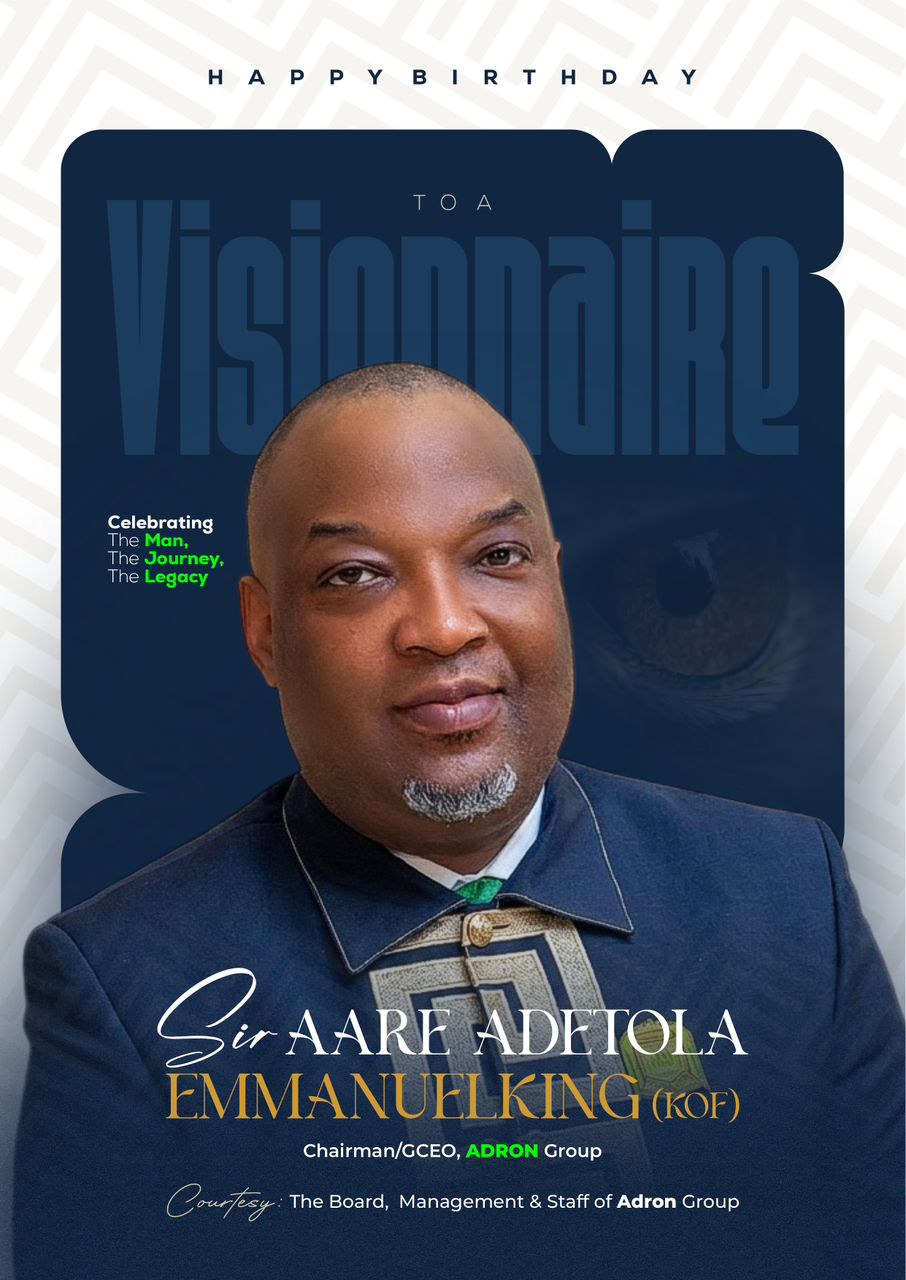
Adron Homes Celebrates Visionary Chairman, Aare Adetola Emmanuel King, at 51
The management and staff of Adron Homes and Properties Limited have joined family, friends, associates, and well-wishers across the globe to celebrate their Chairman and Chief Executive Officer, Aare Adetola EmmanuelKing, as he marks his 51st birthday.

In a statement released by the company, the milestone was described as a celebration of an exceptional leader whose vision, resilience, and entrepreneurial brilliance have not only transformed Adron Homes into a household name in Nigeria’s real estate sector but have also redefined affordable housing across the country.
Under his dynamic leadership, Adron Homes has continued to expand its footprint, delivering value-driven residential solutions while empowering thousands of Nigerians with opportunities for home ownership. His commitment to excellence, innovation, and customer satisfaction has remained the driving force behind the company’s sustained growth and industry leadership.
The statement further highlighted Aare EmmanuelKing’s passion for nation-building and community development, noting his significant contributions to job creation, youth empowerment, and the promotion of socio-economic development through real estate investments.
“As a leader, mentor, and visionary, Aare Adetola EmmanuelKing has consistently inspired a culture of excellence, integrity, and dedication within the organization. His ability to turn bold ideas into reality continues to position Adron Homes as a trailblazer in the industry,” the statement read.
The company expressed profound gratitude for his steadfast leadership and prayed for continued wisdom, strength, and sound health as he embarks on another year of impactful achievements.
As he celebrates his 51st birthday, the entire Adron Homes family proudly honours a man whose legacy continues to shape the future of real estate in Nigeria.
Happy 51st Birthday, Aare Adetola EmmanuelKing!
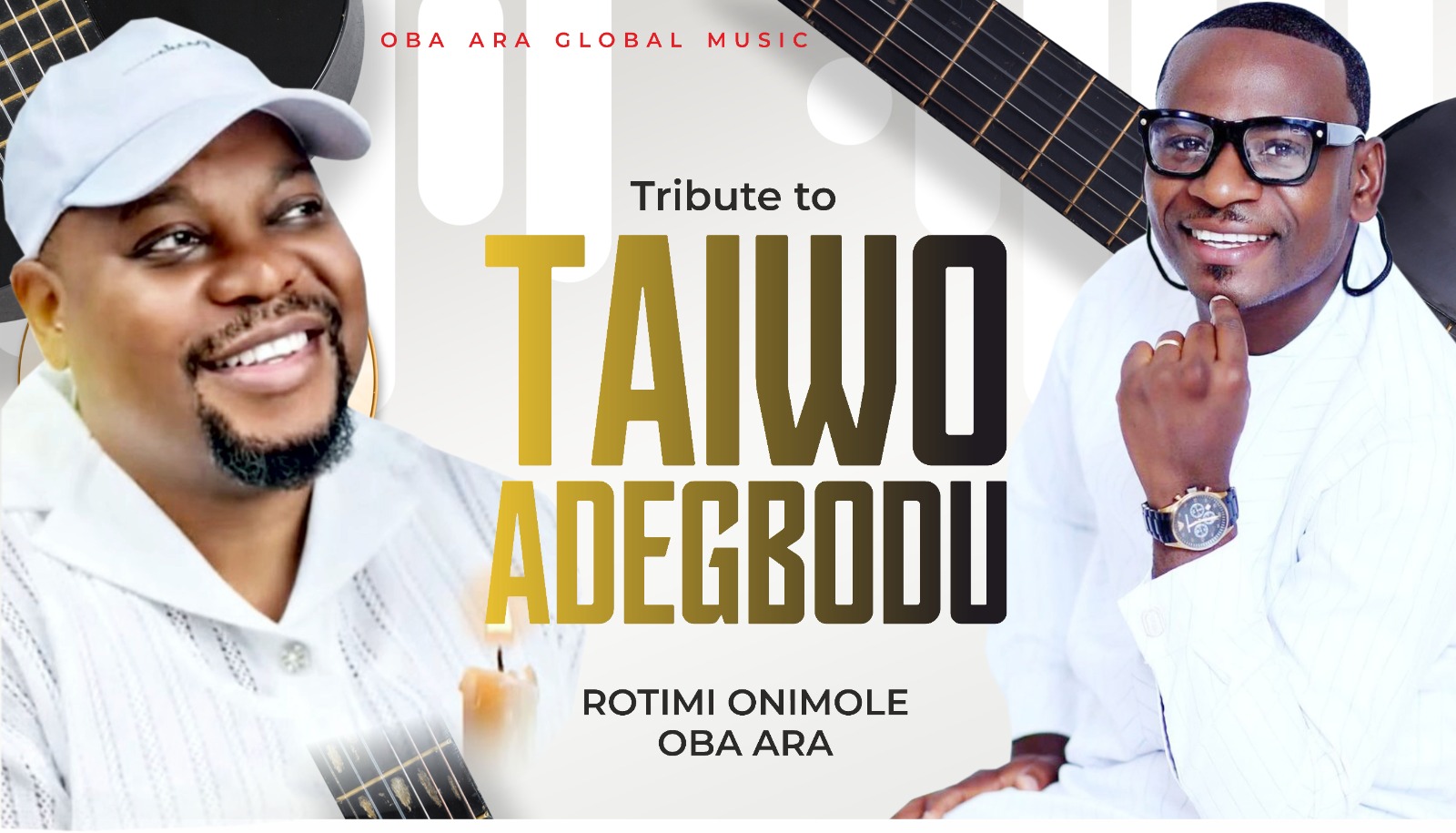
Oba Ara Releases Emotional Tribute to Late Taiwo Adegbodu
Taofik Afolabi
The gospel music community continues to grieve the painful loss of Taiwo Adegbodu, a beloved figure whose sudden departure left a deep void among fans, colleagues, and loved ones. In response to this loss, renowned gospel minister Rotimi Onimole, popularly known as Oba Ara, has released a moving tribute song that captures both the sorrow of the moment and the enduring legacy of the late singer.
Oba Ara, a proud son of Isale Eko, channels raw emotion throughout the song, using heartfelt lyrics and soul-stirring melodies to reflect on his personal connection with Taiwo Adegbodu. In the tribute, he openly expresses how deeply the news of Adegbodu’s passing shook him, describing it as a painful and unexpected loss that is difficult to come to terms with.
The song goes beyond mourning, it celebrates the life, ministry, and impact of Taiwo Adegbodu. Oba Ara highlights the late artist’s dedication to spreading the gospel through music, his inspiring voice, and the spiritual influence he had on many within and beyond Nigeria. Through powerful verses, he paints a picture of a man who lived for God and touched countless lives through his ministry.
Listeners have described the tribute as both comforting and deeply emotional, as it resonates with the collective grief of the gospel music community. It serves as a reminder that although Taiwo Adegbodu is no longer physically present, his music, message, and legacy will continue to live on.
In honoring his late colleague, Oba Ara not only pays his respects but also offers a source of healing for fans and fellow ministers, using music as a tool to process grief and celebrate a life well lived.
celebrity radar - gossips
Buratai, Fagbemi , Shagaya, Olofa, Others Eulogise Olowu Kuta’s Olori On 60th Birthday, Foundation Launch

Buratai, Fagbemi , Shagaya, Olofa, Others Eulogise Olowu Kuta’s Olori On 60th Birthday, Foundation Launch
Eminent personalities across the Nigeria stormed the TFK Event Centre, Bala Mohammed Way, Guzape, Abuja, to celebrate the 60th birthday of Olowu Kuta’s Olori, Queen Jumai Amoke and her Foundation Launch on Saturday 28, March 2026.

From former Chief of Army Staff, Lt Gen TY Buratai rtd, to the Minister of Justice and Attorney-General of the Federation, Prince Lateef Fagbemi; Olofa of Offa, HRM Oba Mufutau Gbadamosi. Even top businesswoman and socialite, Chief (Mrs) Bola Shagaya, was in attendance.


Other dignitaries were newly promoted Deputy Inspector-General of Police and former AIG Zone 2 , Lagos , Adegoke Fayoade, Major General Abdumalik, Major General Samuel Adebayo rtd (Fmr CDI);
Major General Anthony Omozoje rtd (Fmr Copp);
Alhaji Tajudeen Owoyemi (Asiwaju of Offa and CEO Radisson Hotel Nigeria;
Dr Waheed Olagunju, former managing director of Bank of Industry, Oniba of Iba, Lagos State, HRM Oba Dr Suleiman Raji ;
Justice Falola, Olu of Ile-Ogbo , Oba Adetoyese amongst many traditional rulers and captains of industry too numerous to mention.
Speaking at the occasion, the Chief Host, Olowu of Kuta, HRM Oba Dr Adekunle Oyelude Makama, CON , Tegbosun iii, who is also the husband of the celebrant commended Queen Jumai for ‘ her slender arms full of kindness’ to establish such humanitarian Foundation, ‘Amoke Children and mother in Need Foundation’ at a time Nigerians are going through economic crisis occassioned by the global meltdown.
Olowu also commended her steadfastness and love for the less privileged and downtrodden.
The monarch refrenced the task before his wife’s humanitarian gesture said her best is yet to come.
” Olori Amoke Jumai, I celebrate you. You will celebrate 70, 80, 90 and continue to shine as you continue to put a smile on people’s faces. I love you, “Olowu Kuta added.
To Lt Gen Buratai, a former army chief and former Nigerian Ambassador to Benin Republic, the reward of hard work is more work.
Buratai, who also doubles as Balogun Agba of Owu Kuta, a chieftaincy title reserved for a generalismo congratulated Queen Jumai for attaining the age of 60 in good health.
The retired army General said he’s not surprised by the turn out of eminent personalities across the country to celebrate the Olowu Kuta’s Olori because she merited it through her hospitality to all, adding that Allah the most merciful, most beneficial would accept all her act of ibadah.
The minister of Justice, Prince Fagbemi, was full of praises for Queen Jumai for deeming it fit to have a place in her heart to accommodate the needy and less privileged in ‘our society.’
Prince Fagbemi urged the guests to contribute generously to support the Foundation in order to continue to alleviate poverty and put a smile on the faces of the people.
” I congratulate you on your 60th birthday and Foundation Launch. I wish you many happy returns of the day and many more fruitful services to the country and motherland”, Prince Fagbemi added.
The celebrant, Queen Jumai who was grining from ear to ear thankfully said she was excited by the turn out and the response of the people to her foundation.
Queen Jumai, however, promised to continue to use her resources and donations received for the good of the needy and less privileged in the society.
” I want to appreciate my own Kabiesi Olofa of Offa , for his presence and im I’m using him as a point of contact to all other Kabiesis present here, the minister of justice and Attorney-General, you’re welcome, sir; Mrs Bola Shagaya, I salute your enterprise, Lt Gen Buratai, I’m grateful, sir; DIG Fayoade, Justice Falola and other dignitaries too numerous to mention, I thank you, all. To my darling husband, Kabiesi Olowu , I thank you immensely for your support. And to my family and friends, I thank you , all. E se pupo!”, she said.


-

 society7 months ago
Religion: Africa’s Oldest Weapon of Enslavement and the Forgotten Truth
-

 news4 months ago
WHO REALLY OWNS MONIEPOINT? The $290 Million Deal That Sold Nigeria’s Top Fintech to Foreign Interests
-

 society6 months ago
“You Are Never Without Help” – Pastor Gebhardt Berndt Inspires Hope Through Empower Church (Video)
-

 celebrity radar - gossips2 months ago
Dr. Chris Okafor Returns with Power and Fire of the Spirit -Mounts Grace Nation Altar with Fresh Anointing and Restoration Grace on February 1, 2026