
society
KIDNAPPED, NEGOTIATED, OR RESCUED?

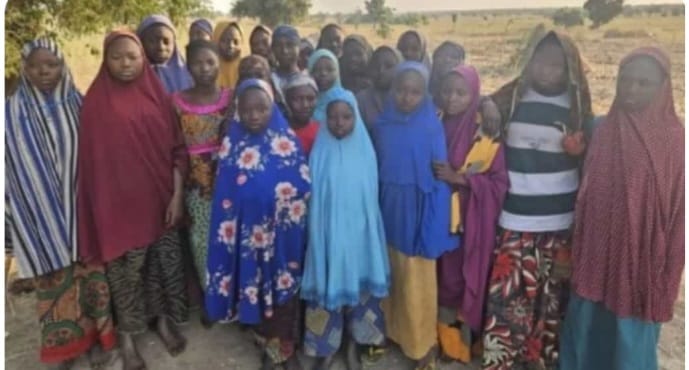
KIDNAPPED, NEGOTIATED, OR RESCUED?
By George Omagbemi Sylvester | Published by saharaweeklyng.com
“The messy politics behind the release of Kebbi’s schoolgirls and why Nigeria’s silence fuels banditry.”
On November 17, gunmen brazenly stormed the Government Girls Comprehensive Senior Secondary School (GGCSS), Maga, in Danko-Wasagu Local Government Area of Kebbi State, killed a school official and whisked away 25 female students. For a week the country waited and then on November 25–26 the girls were reported freed. What should have been a straightforward moment of national relief instead exposed Nigeria’s deepest vulnerabilities: conflicting official narratives, a combustible mix of secrecy and rumor and the unmistakable risk that negotiation as policy will continue to fatten criminal cartels.

The federal government and state authorities insist the girls were rescued through a coordinated security operation. President Bola Tinubu spoke of a successful rescue; Kebbi’s governor, Nasir Idris, declared no ransom was paid and lauded the military, the Department of State Services (DSS) and other agencies for bringing the girls home unharmed. Those are the accounts the state has chosen to burn into the public record.
As almost immediately a competing story re-emerged: circulating video footage and statements attributed to the abductors claim otherwise. In the clips and in commentary that followed, armed men who held the girls are heard saying the students were released because a NEGOTIATED UNDERSTANDING (not a military raid) CONCLUDED the MATTER. One bandit in the footage reportedly mocked government claims of a forceful rescue and told the girls they were being returned “based on peace deals.” If authentic, that footage tells a familiar story: the state insisting on a clean, kinetic narrative while shadow deals with criminal actors are quietly sewn up.
This contradiction matters. It is not a mere semantic skirmish between the rhetoric of rescue and the fact of negotiation. Negotiations and ransom payments change incentives. They transform violent entrepreneurs into providers of “security” and convert abduction into a profitable, repeatable enterprise. Academic and policy studies have documented how ad hoc settlements and clandestine payments enable bandit networks to consolidate territorial footholds and expand targeting strategies. A 2025 DIIS (Danish Institute for International Studies) analysis and other field studies warn that repeated, opaque deals with armed gangs institutionalize impunity and hollow out state authority.
Voices across Nigeria have responded with fury and alarm. Some parliamentarians now openly demand sanctions for officials who negotiate with bandits. Deputy Speaker Benjamin Kalu has proposed criminal penalties for government officials who engage in ransom negotiations or unstructured amnesty deals through an effort to place legal guardrails around what many believe has become an unofficial marketplace for peace. If adopted, such a law would be an admission that informal bargaining has become frequent enough to warrant formal prohibition.
Civil society and security experts make the same blunt point: paying or tacitly allowing negotiations may save lives in the short term, but it also invites more abductions. Hannatu Pamela Ishaya of the Hannis Foundation memorably warned that ransom payments “empower” kidnappers and encourage repetition — a paradox of mercy that ends up imperilling more children. That observation is not rhetorical; it is borne out by the steady tempo of school kidnappings across the northwest and middle belt — regions where criminal gangs treat abduction as a core revenue stream.

Two immediate consequences flow from the government’s mixed messaging. First, credibility is eroded. When the public receives one version from the presidency and another from footage and eyewitnesses, trust in official institutions suffers. Trust is the fragile currency of state legitimacy; once spent, it is difficult to restore. Second, ambiguity undermines accountability. If deals are cut in shadow, neither legislatures nor oversight bodies can properly scrutinize who authorised payments or why soldiers were allegedly withdrawn from vulnerable outposts shortly before attacks; a charge Kebbi’s governor has demanded the military investigate, till date we’ve not heard any report come back. Nigeria is business as usual.
We must also confront the operational reality: in many rural theatres the security architecture is simply inadequate. Intelligence gaps, poor logistics and shallow troop deployment create conditions in which negotiating becomes a tactical default. That does not excuse covert deals; rather, it underscores the need for a coherent national strategy that combines prevention, prosecution and protection. Researchers who have mapped bandit networks across northwest Nigeria show that without integrated community intelligence, economic alternatives, and credible prosecution, tactical rescues or transactions will not stop the cycle.
So what should Nigeria do now is beyond expressions of relief? First, transparency. If negotiations occurred, the public is entitled to a full accounting: who negotiated, under what authority and what concessions (if any) were made. A blank wall of silence invites speculation, corrodes trust and allows destructive bargains to be normalized. If no ransom was paid and military action achieved the rescue, the security agencies must present verifiable evidence (timing, assets deployed, chain of command) to restore confidence. Either way, concealment is not a policy.

Second, law. The House’s proposal to penalise officials who negotiate with bandits is blunt but necessary if implemented judiciously. The state must remove perverse incentives. Where local governments or individuals have previously paid ransoms, the federal government must step in with legal clarity and victim support, not punishment alone. Criminal prosecutions should target the kingpins and the corrupt enablers who profit from prolonging insecurity.
Third, prevention. Military and policing responses must be married to community resilience: better roads and surveillance, reliable communications in rural areas, community policing that integrates local trackers and credible witnesses, education investments that harden boarding facilities, and economic programmes that shrink the recruitment pool for bandit groups. As scholars note, an exclusively kinetic response is necessary but insufficient. Lasting security requires reducing the economic and social conditions that produce banditry.
Finally, moral clarity. Nigerian leaders must decide whether they will accept a trade in which safety is bought one incident at a time. The alternative is uncomfortable: deny payment, risk lives in the short run and reckon with the political cost; or concede payment and let the market for lives expand. Neither choice is painless. Though continued secrecy and equivocation will only worsen the calculus for future victims.
The return of the Kebbi girls must be celebrated and their welfare prioritised such as medical checks, counselling and swift family reunification are imperative; but the celebration must not mute inquiry. Every rescued child carries the story of how she was taken and how she came back. If those narratives are shaped by statements of both state rescue and bandit negotiation, Nigerians deserve the truth in full. The nation cannot both claim strength and tolerate shadow commerce in human freedom.
If Nigeria hopes to end the steady procession of school abductions, it must start by refusing the convenience of half-truths. RESCUE without ACCOUNTABILITY is a REPRIEVE, not a SOLUTION. Negotiation without oversight is a subsidy to crime. And silence in the face of conflicting accounts is the state’s most expensive currency. The girls are home but let that not be the last chapter. Let it be the moment when POLICY, LAW and COURAGE converge to make sure no more classrooms fall silent.





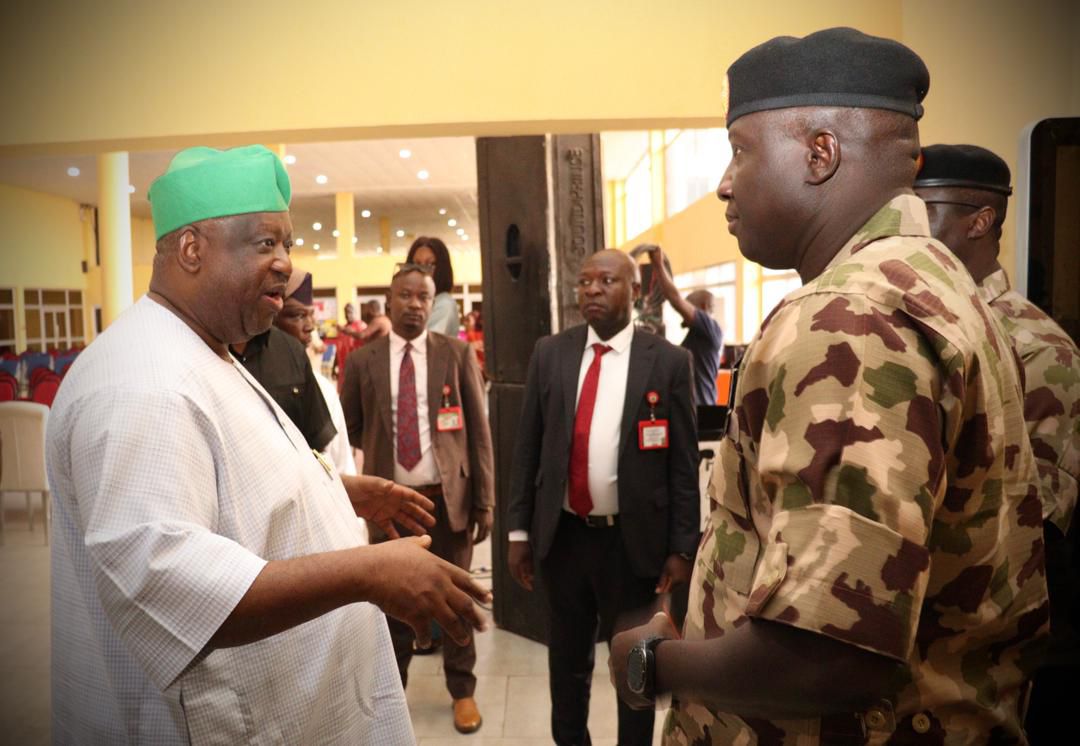
COAS Launches Nationwide Security Renewal Mission in Plateau
The Chief of Army Staff, Lieutenant General Waidi Shaibu, on Thursday led a high-level delegation of security chiefs to Plateau State, flagging off a nationwide security renewal mission aimed at strengthening civil-military cooperation and restoring lasting peace across the country.
The visit to Jos, the Plateau State capital, marks the first phase of a coordinated national effort to address persistent security challenges through joint operations, community engagement, and proactive intelligence gathering.

Governor Caleb Muftwang received the delegation, describing the initiative as a critical step toward stabilizing affected communities and reinforcing public confidence in security institutions.
Civil-Military Synergy Takes Centre Stage
At the heart of the mission is a renewed emphasis on collaboration between the military, civil authorities, and local communities. Speaking during the visit, Lt. Gen. Shaibu stressed that national security must be treated as a collective responsibility.
He urged citizens to support security agencies by remaining vigilant, sharing credible information, and complying with lawful directives, noting that effective security cannot be achieved in isolation.
Community Engagement as Confidence-Building Tool
In a departure from purely operational engagements, the Army Chief held direct consultations with community leaders and residents in Jos, reinforcing the importance of trust and dialogue in conflict resolution.
Lawmakers, including Dachung Bagos and Ladi Dangyok, commended the initiative, stating that visible engagement by top military leadership helps rebuild confidence among citizens and fosters cooperation.

Proactive Security Operations Underway
Operational updates were provided by Major General Folusho Oyinlola, who disclosed that troops under Operation Enduring Peace have intensified surveillance, intelligence-led patrols, and coordinated actions with other security agencies.
According to the Army, the approach is designed to prevent escalation of threats, safeguard lives and property, and stabilize vulnerable communities before crises emerge.
A Shift Toward Sustainable Peace
Military authorities emphasized that the Plateau visit is part of a broader, long-term strategy to transition from reactive responses to sustainable peacebuilding nationwide. The framework includes strengthening local resilience, ensuring justice, and maintaining continuous engagement with stakeholders.
Analysts view the initiative as a significant policy shift, reflecting a more inclusive security architecture that integrates community participation with military operations.
Call for National Unity
The Army leadership concluded with an appeal to Nigerians to reject divisive narratives and support ongoing efforts to promote unity and peace.
“The success of this mission depends not only on the armed forces but on the cooperation of every citizen,” the COAS stated.
The nationwide security renewal campaign is expected to extend to other regions in the coming weeks as authorities seek to consolidate gains and build a safer, more unified Nigeria.


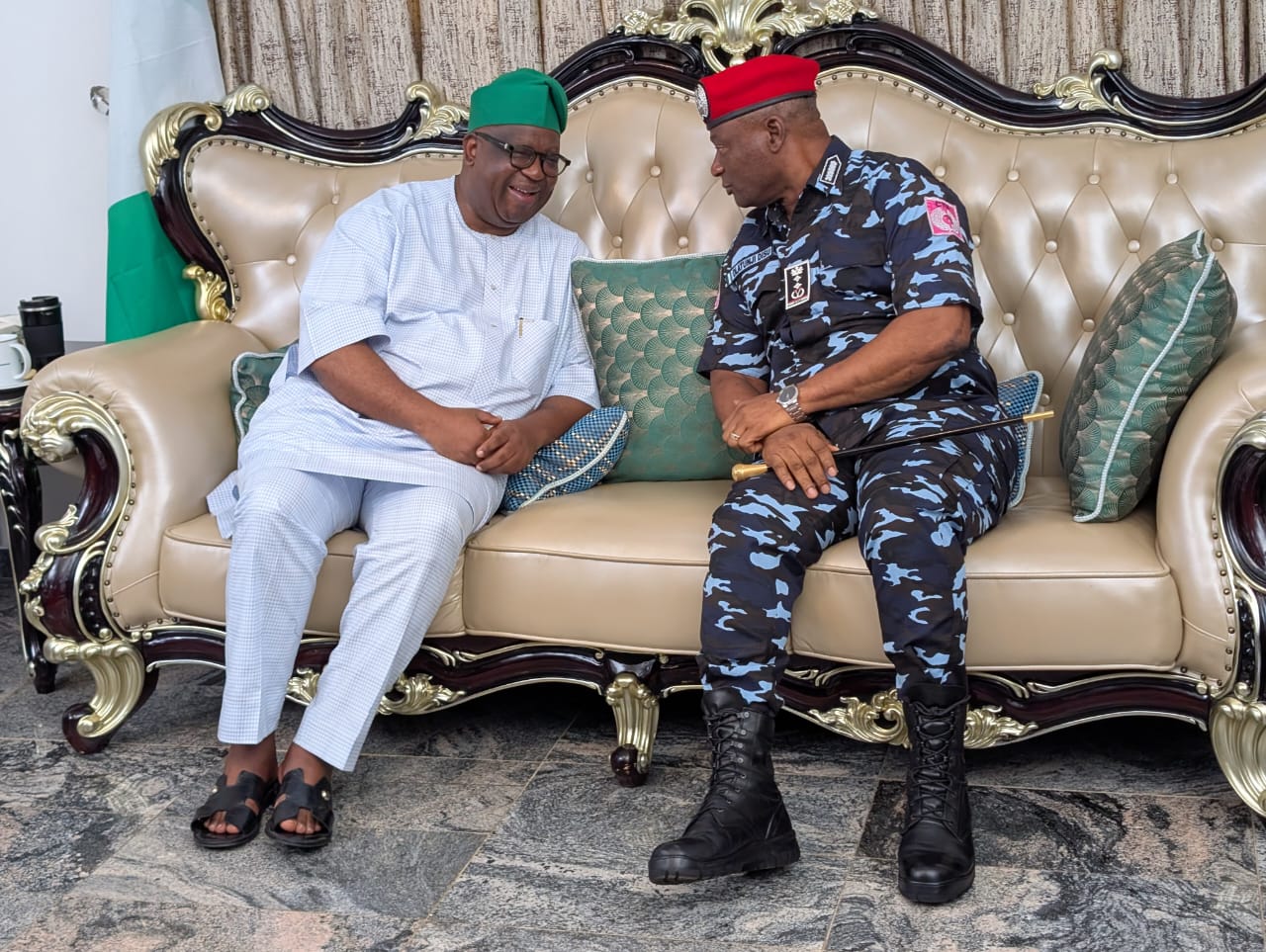
IGP Disu Visits Plateau, Orders Tactical Deployment To Reinforce Security
The Inspector General of Police, Olatunji Disu, on Thursday paid a working visit to Plateau State following recent unrest, holding strategic talks with Governor Caleb Muftwang on measures to strengthen security and prevent further disturbances.
As part of immediate steps to stabilise the situation, the police chief authorised the deployment of specialised tactical units to support officers already on ground across affected areas.
Governor Muftwang commended the swift intervention of the police leadership, praising the dedication and professionalism of security personnel working to restore calm. He also acknowledged the efforts of mobile police officers and lauded the leadership of the state’s Commissioner of Police, Bassey Ewah.
Both the Nigeria Police Force and the Plateau State Government reaffirmed their commitment to safeguarding lives and property, stressing that enhanced collaboration remains key to restoring lasting peace in Plateau State, popularly known as the Home of Peace and Tourism.


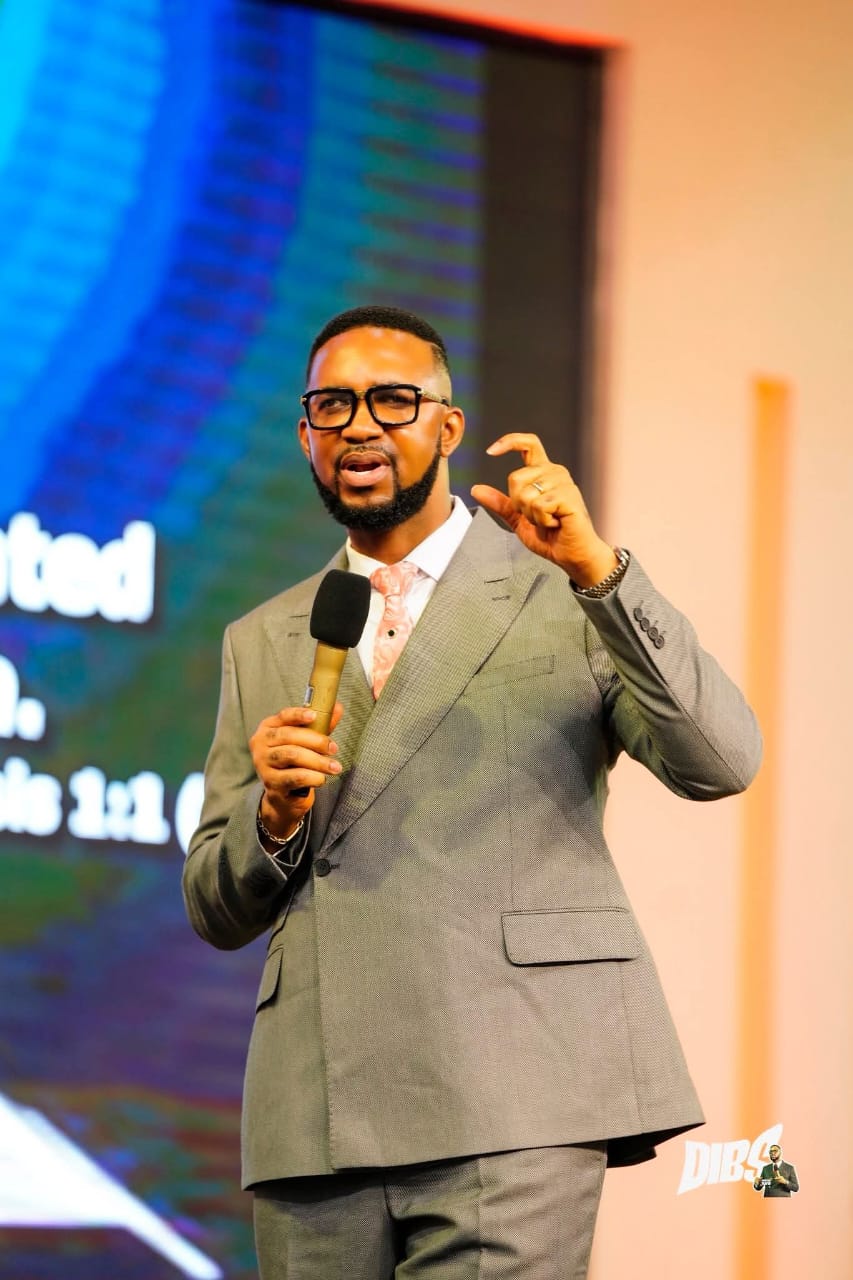
Grace Nation Worldwide: A Living Reality – Dr. Chris Okafor
……“Miracles, Healing, and Deliverance Overflow at Grace Nation Services”
The Grace Nation midweek Prophetic Healing, Deliverance, and Solutions (PHDS) Service on 2nd April 2026 at the international headquarters in Ojodu Berger, Lagos, was a spectacular display of God’s power, marked by miracles, healing, and deliverance.
The God of Grace Nation continues to demonstrate His authority, breaking strongholds, healing the sick, restoring lost glory, and providing solutions to every problem presented at His altar.
Testimonies of God’s Power
One woman, previously diagnosed with a terminal condition and slated for a ₦4.5 million surgery due to inability to excrete, was prayed for by the Generational Prophet, Christopher Okafor, just a week after visiting the church. Declaring healing within 24 hours, she returned to testify to God’s miraculous intervention.
Another pregnant woman, whose baby was bridged and at risk, was located and prayed for. She returned to service with confirmation that her child is now well-positioned for delivery. Similarly, a woman booked for a C-section due to an overdue and poorly positioned pregnancy testified during the service that her baby is now properly positioned, ready for birth.
These testimonies underscore the truth: what God cannot do does not exist. Grace Nation has entered a new level of spiritual authority, and with faith, believers are witnessing the impossible become reality.
God Works by Principle, Not Gossip
In his sermon, Dr. Okafor emphasized that God does not operate on superstition, gossip, or social media pressures. His work is grounded in His Word, and it is through adherence to His principles that Grace Nation continues to flourish.
The Generational Prophet stressed that to enjoy divine blessings and fruitfulness, believers must remain connected to God’s Word, faithfully serve Him, and ignore distractions or side-talks. Focused commitment to God’s service guarantees alignment with His miraculous power.
Join the Movement
Grace Nation Worldwide is open for all who desire a life transformed by divine intervention. Weekly services include:
Sunday Service: 7:00 AM
Grace Nation Island Service (Ogombo): Wednesday, 5:00 PM
Midweek PHDS Service: Thursday, 7:00 AM
Attending these services under the ministry of the Generational Prophet ensures encounters with God’s supernatural power, life-changing miracles, and lasting breakthroughs.
Grace Nation Worldwide is not just a church—it is a reality where faith meets the supernatural.
By Sunday Adeyemi


-

 society6 months ago
Religion: Africa’s Oldest Weapon of Enslavement and the Forgotten Truth
-

 news4 months ago
WHO REALLY OWNS MONIEPOINT? The $290 Million Deal That Sold Nigeria’s Top Fintech to Foreign Interests
-

 society6 months ago
“You Are Never Without Help” – Pastor Gebhardt Berndt Inspires Hope Through Empower Church (Video)
-

 celebrity radar - gossips2 months ago
Dr. Chris Okafor Returns with Power and Fire of the Spirit -Mounts Grace Nation Altar with Fresh Anointing and Restoration Grace on February 1, 2026