
celebrity radar - gossips
Lagos Tasks Force: The Brigandry Of A Police State By Bolaji O. Akinyemi.

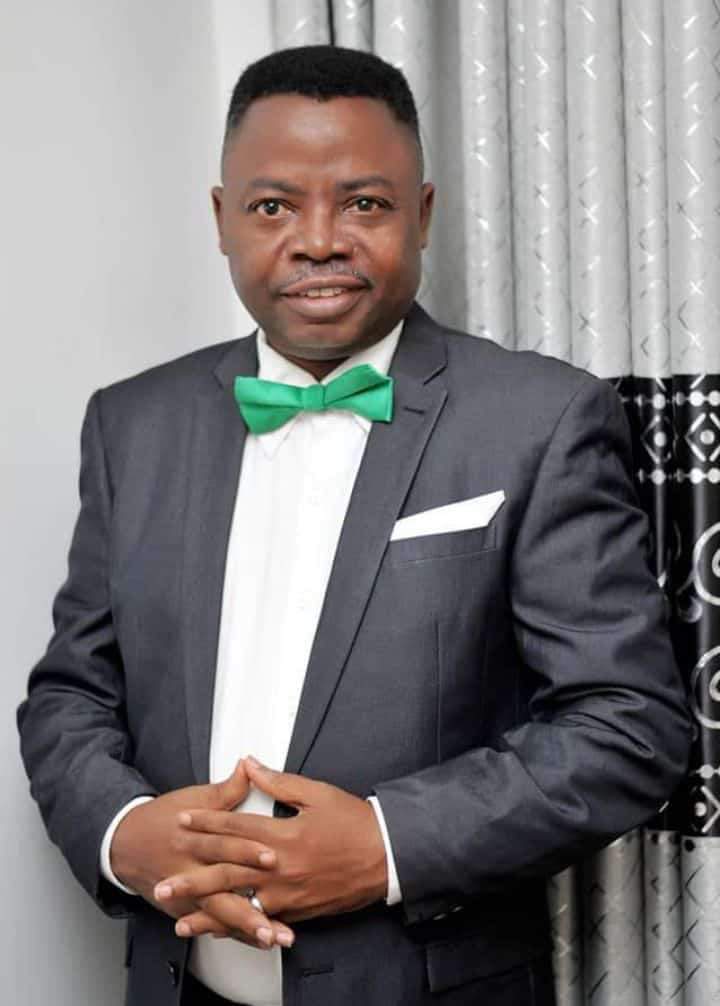
Lagos Tasks Force: The Brigandry Of A Police State By Bolaji O. Akinyemi.
A democratic society should rely purely on the rule of law and its processes at achieving peaceful co-existence among its component parties!
Nigeria is of course a country in practice of Constitutional Democracy on paper!
Our reality speaks to the contrary!
Recently, in order to redeem the integrity of the police force, the new IGP Mr Kayode Egbetokun took the decision to withdraw all mobile police-men attached to VIPs!

The police before now, had been so abused that some have become mere bag carriers for our oga madams as we call them!
Others are family errands men, in some cases these attached officers serve as bullies for their paymasters!
Lagos is the worst hit of all the states, where in a bid to fast-track enforcement, task forces are set up!
This however has proven to be counterproductive, a country that is under-policed is forced to pull out of the limited number of its officers to serve the special needs of the state on tasks considered special!
Truth be told, most task force operations have easy access to money and officers will do anything to head or be selected to be on the task force!
The existence of tasks force has made accountability of the Force on its men and officers difficult!
Officers attached to the Tasks force, in some cases, are ready and available tools of harassment for those who can afford to pay for such illegalities! As they are not easily traceable to a Police station, area, or command of the police where such nefarious activities are carried out.
There is the BRT track monitoring task force operating in manners that suggest that they are given a certain amount to deliver on a daily basis. “Offenders” are at the mercy of these contractors. Against the practice in the civilized state of a computerized camera system.
The task force is the only way for Governors to have loyalty and control of police officers who by the infraction of our constitution are compelled to be loyal to the IGP and consequently the President.
Akinwunmi Ambode as Governor of Lagos State, gave attention to the issue of land grabbers and set up a task force to that effect.
One would have thought that its existence would curb the menace of Land grabbing, but a new twist is the brigandry of “Federal Police” disarming “State police” over land disputes!
I use the words Federal and State in the context of the drama at 37A Ajisafe Street, Ikeja GRA, where a police team claiming to be acting on the order of the IGP came to disarm officers of Nigerian police on security duty!
A complaint written by FESTUS IGHAGBON & CO. Dated 2nd of August, 2023, a firm of Barristers, Solicitors, and Corporate & Property Consultants, haplessly addressed to
The Director,
Department of State Services,
Ikoyi,31, Kingsway Road.
Titled
COMPLAINT AGAINST AL-TRADE AGENCIES LIMITED, MESSRS JULIUS ESHIET, YEMI BALOGUN, AND SOME OTHERS YET UNKNOWN FOR FORGERY AND INTIMIDATION according to them became necessary as a result of the confusion occasioned by police against police in their unfortunate frustrations!
The complaint reads:
“We refer to the above-mentioned matter as we write as Solicitors to Viagem Property and Investment Limited ‘our client.’ We are aware that our client is the bona fide owner of a landed property situated and lying at No. 37A Ajisafe Street, Ikeja G.R.A. Lagos State.
The said property was purchased from Western Metal Productions Company Limited under the supervision of Access Bank Plc to which it was hitherto mortgaged as collateral.
The history of the property and ownership dates back to 1962 when it was first assigned to Nigerian Enamel-ware Company Plc by the defunct Western Region Government.
So, the property was assigned to Nigerian Enamel-ware Company Plc who in turn assigned the same to Western Metal Productions Company Limited (Wemco). Wemco eventually assigned it to our client. All the parties mentioned have been in possession and are still in possession till date!
The property is purely under Lagos State Government which duly granted consent to the parties up to our client in the year 2019!
The various documents of title are herein enclosed and marked as documents 1, 2, and 3.
Our client’s own is registered as 76/76/2625 and dated July 2019, being the latest!
Sometimes in the year 2021, the above-named persons i.e. Al-trade Agencies Limited, Julius Eshiet, Yemi Balogun, and some other unknown persons started to parade the vicinity of the property and made several attempts to invade the property with the aid of some fierce-looking men to take forceful possession of the property.
Their attempts were warded off and this made them resort to the Lágos State Task Force under the chairmanship of Shola Jeje Oloye!
The said chairman invited the parties to his office with their relevant documents of title. He dismissed them when he noticed that they were fraudsters. They procured the possession of the same. They were warded off. Next, they complained to the Commandant of MOPOL 20, Oduduwa Street, Ikeja, who, having gone through their forged documents, dismissed them. They went back to the site and attempted to abduct the security men thereon but failed. Still, in the bid to achieve their nefarious purpose, they complained to the Lagos State Task Force on Land Grabbers and later abandoned the case.
Sometime in July 2023, our client commissioned some workers to clear the site and demolish the dilapidated buildings thereon, they attempted to abduct the workers but were frustrated by them. They therefore went to lodge false complaints to lkeja Police Division who came to the site and arrested the workers and occupants found thereon. They were subsequently released on bail.
As the investigation was ongoing, they abandoned the case and lodged further false complaints to the A.I.G. Office, Alagbon under the Escort Unit!
The officers came to the site and arrested everybody found thereon numbering about 15 persons. In the midst of the confusion that ensued, some fierce-looking men suspected to be thugs, but claimed to be members of the dreaded O.P.C., invaded the property and attempted to take possession and cause mayhem but were promptly arrested and taken to Ikeja Police Station. They were there and then released on the orders of officers from A.l.G. Alagbon’s office.
As at the time of this petition, the suspects and their faceless men are still lurking around the property waiting for the slightest opportunity to cause havoc!
All the relevant documents supporting the allegations are herewith enclosed including a copy of the Lagos State Government permit to demolish the property which is marked Document 4!
Since the Federal Government does not have landed property within the vicinity of the property in question, we highly suspect that the C of O registered as No. 17/17/263 Federal Lands Registry dated 16th October 2021, which they are parading about, is fake and forged and the persons behind it should be unraveled!
The address used for the company is NO. 6, Adele Street, Apapa, Lagos while the phone number of Yemi Balogun is 08033891073. This is because we don’t have their fixed address.
We, therefore, appeal to the good offices of the Director of the DSS to use their offices to track down the suspects and their cohorts before they commit mayhem!
If they have an actionable case, they ought to know where to go rather than using force and intimidation!
Thank yóu.
Yours faithfully”
The petition was signed by Festus p. lghagbon, Esq.
Fort and on behalf of Festus lghagbon & Co.”
The Assistant Director, Department of State Services, was also copied.
The drama of police against police, I hope is not now being upgraded to DSS against Nigerian police by a frustrated Lagosian in his desperation to keep possession of his property! Will you blame him?
When land grabbers opt for a quick-fix approach and the civility of referring them to the judiciary process is intercepted by some police officers in the hope of gain, then we are heading for a state of anarchy!
A call to the number of Yemi Balogun for his side of the story was picked, I introduced myself but once I mentioned the address of the property, an uncomfortable tone intercepted me and claimed he is not interested in my enquiry and cut the call rudely.
Even at the risk of system failure, it is important that failure is properly defined and apportioned so we know where to lay the blame and which system to up to serve the greater good of Nigeria!
The parties involved in this drama should know that the reasonable thing to do is go to court!
The attention of His Excellency, the Governor of Lagos should be called to this, same for that of the IGP and the Director of Department State Services, Mr Yusuf Magaji Bichi.
Mr Nuhu Ribadu, Special Adviser to the President on National Security, needs to help us notify Mr President that the DSS is being pitched against Nigerian Police in his backyard in Lagos!
He may need to act fast to restore confidence in the Judiciary System and refrain security agencies from meddling in cases where they lack constitutional jurisdiction before the peaceful serenity of GRA, Ikeja is turned into a needless battleground!
Dr Bolaji O. Akinyemi is an Apostle and Nation Builder, Convener Apostolic Round Table, ART. Also the BOT Chairman Project Victory Call Initiative, AKA, PVC-Naija.
[email protected]
08033041236.




celebrity radar - gossips
Adron Homes Celebrates Visionary Chairman, Aare Adetola Emmanuel King, at 51
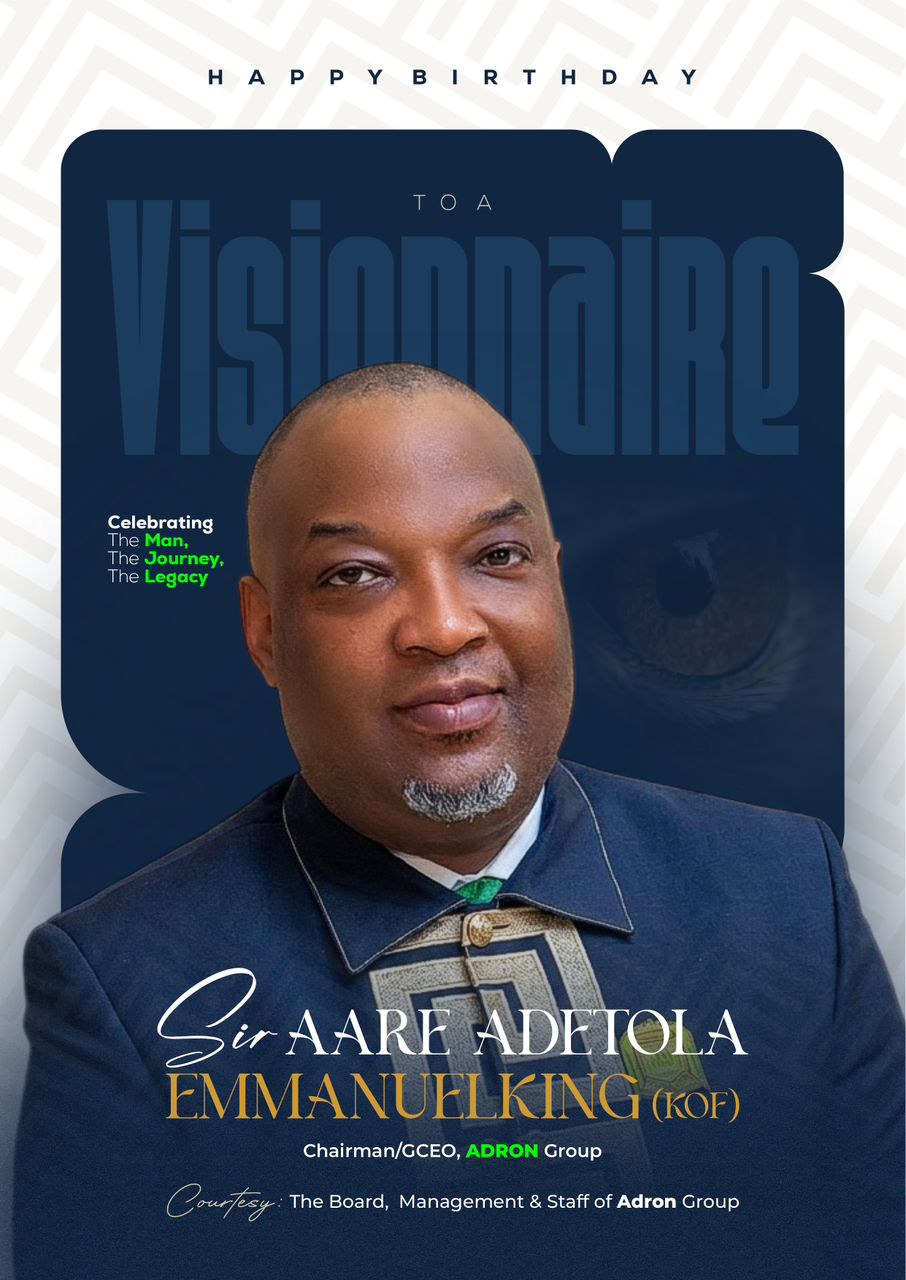
Adron Homes Celebrates Visionary Chairman, Aare Adetola Emmanuel King, at 51
The management and staff of Adron Homes and Properties Limited have joined family, friends, associates, and well-wishers across the globe to celebrate their Chairman and Chief Executive Officer, Aare Adetola EmmanuelKing, as he marks his 51st birthday.

In a statement released by the company, the milestone was described as a celebration of an exceptional leader whose vision, resilience, and entrepreneurial brilliance have not only transformed Adron Homes into a household name in Nigeria’s real estate sector but have also redefined affordable housing across the country.
Under his dynamic leadership, Adron Homes has continued to expand its footprint, delivering value-driven residential solutions while empowering thousands of Nigerians with opportunities for home ownership. His commitment to excellence, innovation, and customer satisfaction has remained the driving force behind the company’s sustained growth and industry leadership.
The statement further highlighted Aare EmmanuelKing’s passion for nation-building and community development, noting his significant contributions to job creation, youth empowerment, and the promotion of socio-economic development through real estate investments.
“As a leader, mentor, and visionary, Aare Adetola EmmanuelKing has consistently inspired a culture of excellence, integrity, and dedication within the organization. His ability to turn bold ideas into reality continues to position Adron Homes as a trailblazer in the industry,” the statement read.
The company expressed profound gratitude for his steadfast leadership and prayed for continued wisdom, strength, and sound health as he embarks on another year of impactful achievements.
As he celebrates his 51st birthday, the entire Adron Homes family proudly honours a man whose legacy continues to shape the future of real estate in Nigeria.
Happy 51st Birthday, Aare Adetola EmmanuelKing!
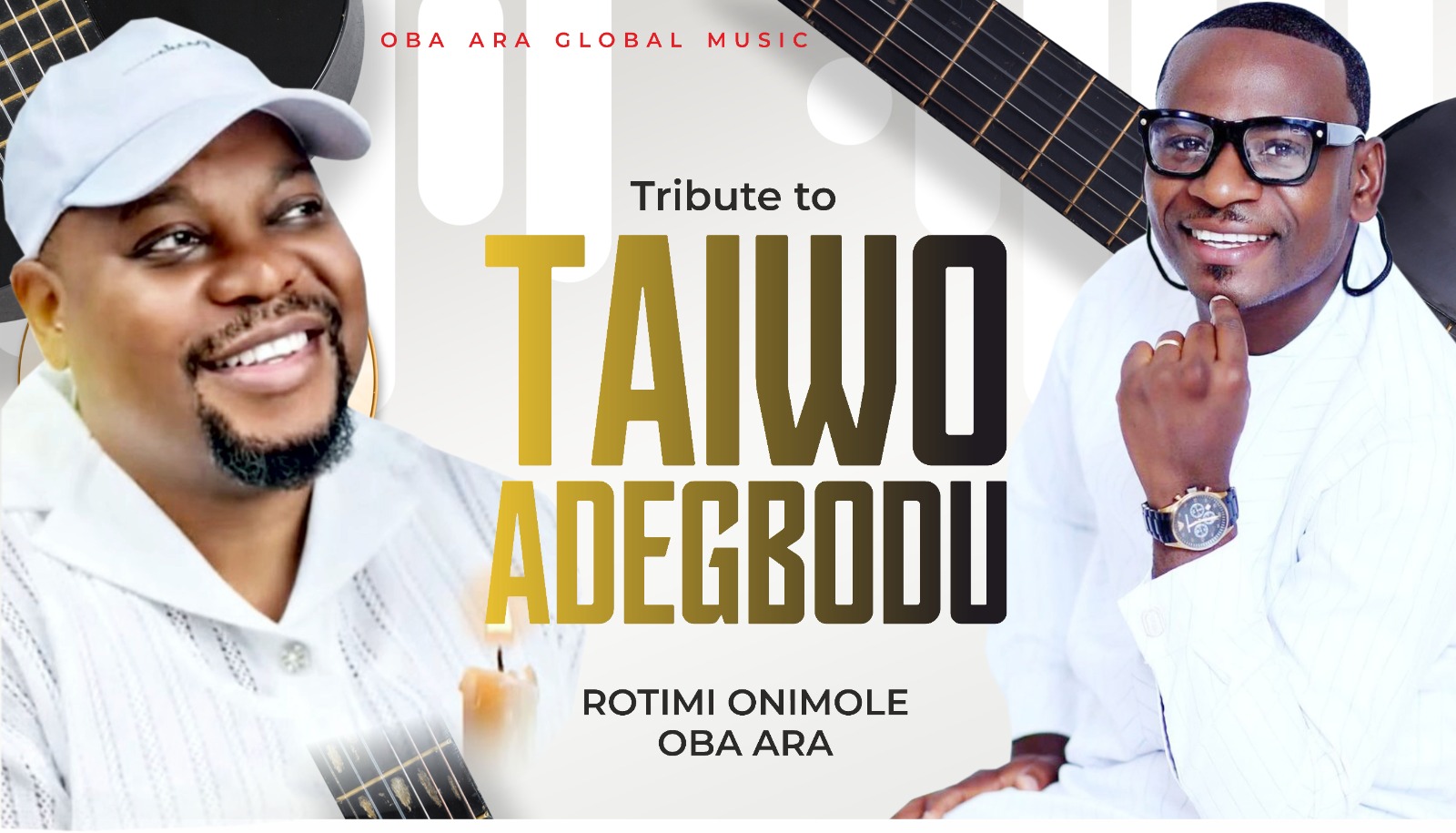
Oba Ara Releases Emotional Tribute to Late Taiwo Adegbodu
Taofik Afolabi
The gospel music community continues to grieve the painful loss of Taiwo Adegbodu, a beloved figure whose sudden departure left a deep void among fans, colleagues, and loved ones. In response to this loss, renowned gospel minister Rotimi Onimole, popularly known as Oba Ara, has released a moving tribute song that captures both the sorrow of the moment and the enduring legacy of the late singer.
Oba Ara, a proud son of Isale Eko, channels raw emotion throughout the song, using heartfelt lyrics and soul-stirring melodies to reflect on his personal connection with Taiwo Adegbodu. In the tribute, he openly expresses how deeply the news of Adegbodu’s passing shook him, describing it as a painful and unexpected loss that is difficult to come to terms with.
The song goes beyond mourning, it celebrates the life, ministry, and impact of Taiwo Adegbodu. Oba Ara highlights the late artist’s dedication to spreading the gospel through music, his inspiring voice, and the spiritual influence he had on many within and beyond Nigeria. Through powerful verses, he paints a picture of a man who lived for God and touched countless lives through his ministry.
Listeners have described the tribute as both comforting and deeply emotional, as it resonates with the collective grief of the gospel music community. It serves as a reminder that although Taiwo Adegbodu is no longer physically present, his music, message, and legacy will continue to live on.
In honoring his late colleague, Oba Ara not only pays his respects but also offers a source of healing for fans and fellow ministers, using music as a tool to process grief and celebrate a life well lived.
celebrity radar - gossips
Buratai, Fagbemi , Shagaya, Olofa, Others Eulogise Olowu Kuta’s Olori On 60th Birthday, Foundation Launch
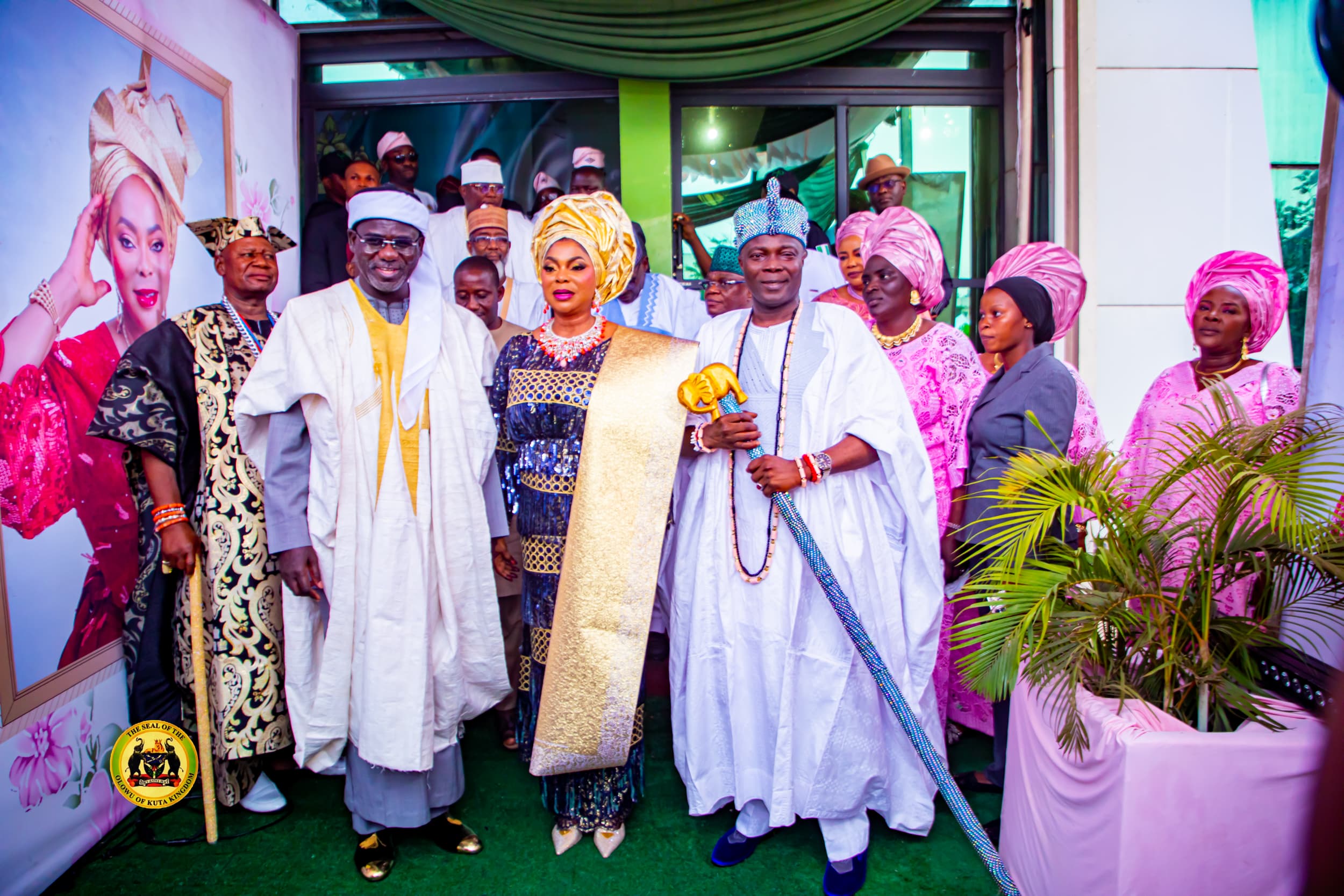
Buratai, Fagbemi , Shagaya, Olofa, Others Eulogise Olowu Kuta’s Olori On 60th Birthday, Foundation Launch
Eminent personalities across the Nigeria stormed the TFK Event Centre, Bala Mohammed Way, Guzape, Abuja, to celebrate the 60th birthday of Olowu Kuta’s Olori, Queen Jumai Amoke and her Foundation Launch on Saturday 28, March 2026.

From former Chief of Army Staff, Lt Gen TY Buratai rtd, to the Minister of Justice and Attorney-General of the Federation, Prince Lateef Fagbemi; Olofa of Offa, HRM Oba Mufutau Gbadamosi. Even top businesswoman and socialite, Chief (Mrs) Bola Shagaya, was in attendance.


Other dignitaries were newly promoted Deputy Inspector-General of Police and former AIG Zone 2 , Lagos , Adegoke Fayoade, Major General Abdumalik, Major General Samuel Adebayo rtd (Fmr CDI);
Major General Anthony Omozoje rtd (Fmr Copp);
Alhaji Tajudeen Owoyemi (Asiwaju of Offa and CEO Radisson Hotel Nigeria;
Dr Waheed Olagunju, former managing director of Bank of Industry, Oniba of Iba, Lagos State, HRM Oba Dr Suleiman Raji ;
Justice Falola, Olu of Ile-Ogbo , Oba Adetoyese amongst many traditional rulers and captains of industry too numerous to mention.
Speaking at the occasion, the Chief Host, Olowu of Kuta, HRM Oba Dr Adekunle Oyelude Makama, CON , Tegbosun iii, who is also the husband of the celebrant commended Queen Jumai for ‘ her slender arms full of kindness’ to establish such humanitarian Foundation, ‘Amoke Children and mother in Need Foundation’ at a time Nigerians are going through economic crisis occassioned by the global meltdown.
Olowu also commended her steadfastness and love for the less privileged and downtrodden.
The monarch refrenced the task before his wife’s humanitarian gesture said her best is yet to come.
” Olori Amoke Jumai, I celebrate you. You will celebrate 70, 80, 90 and continue to shine as you continue to put a smile on people’s faces. I love you, “Olowu Kuta added.
To Lt Gen Buratai, a former army chief and former Nigerian Ambassador to Benin Republic, the reward of hard work is more work.
Buratai, who also doubles as Balogun Agba of Owu Kuta, a chieftaincy title reserved for a generalismo congratulated Queen Jumai for attaining the age of 60 in good health.
The retired army General said he’s not surprised by the turn out of eminent personalities across the country to celebrate the Olowu Kuta’s Olori because she merited it through her hospitality to all, adding that Allah the most merciful, most beneficial would accept all her act of ibadah.
The minister of Justice, Prince Fagbemi, was full of praises for Queen Jumai for deeming it fit to have a place in her heart to accommodate the needy and less privileged in ‘our society.’
Prince Fagbemi urged the guests to contribute generously to support the Foundation in order to continue to alleviate poverty and put a smile on the faces of the people.
” I congratulate you on your 60th birthday and Foundation Launch. I wish you many happy returns of the day and many more fruitful services to the country and motherland”, Prince Fagbemi added.
The celebrant, Queen Jumai who was grining from ear to ear thankfully said she was excited by the turn out and the response of the people to her foundation.
Queen Jumai, however, promised to continue to use her resources and donations received for the good of the needy and less privileged in the society.
” I want to appreciate my own Kabiesi Olofa of Offa , for his presence and im I’m using him as a point of contact to all other Kabiesis present here, the minister of justice and Attorney-General, you’re welcome, sir; Mrs Bola Shagaya, I salute your enterprise, Lt Gen Buratai, I’m grateful, sir; DIG Fayoade, Justice Falola and other dignitaries too numerous to mention, I thank you, all. To my darling husband, Kabiesi Olowu , I thank you immensely for your support. And to my family and friends, I thank you , all. E se pupo!”, she said.


-

 society6 months ago
Religion: Africa’s Oldest Weapon of Enslavement and the Forgotten Truth
-

 news4 months ago
WHO REALLY OWNS MONIEPOINT? The $290 Million Deal That Sold Nigeria’s Top Fintech to Foreign Interests
-

 society6 months ago
“You Are Never Without Help” – Pastor Gebhardt Berndt Inspires Hope Through Empower Church (Video)
-

 celebrity radar - gossips2 months ago
Dr. Chris Okafor Returns with Power and Fire of the Spirit -Mounts Grace Nation Altar with Fresh Anointing and Restoration Grace on February 1, 2026