
society
Leadership Without Accountability Is Nigeria’s Greatest Scam

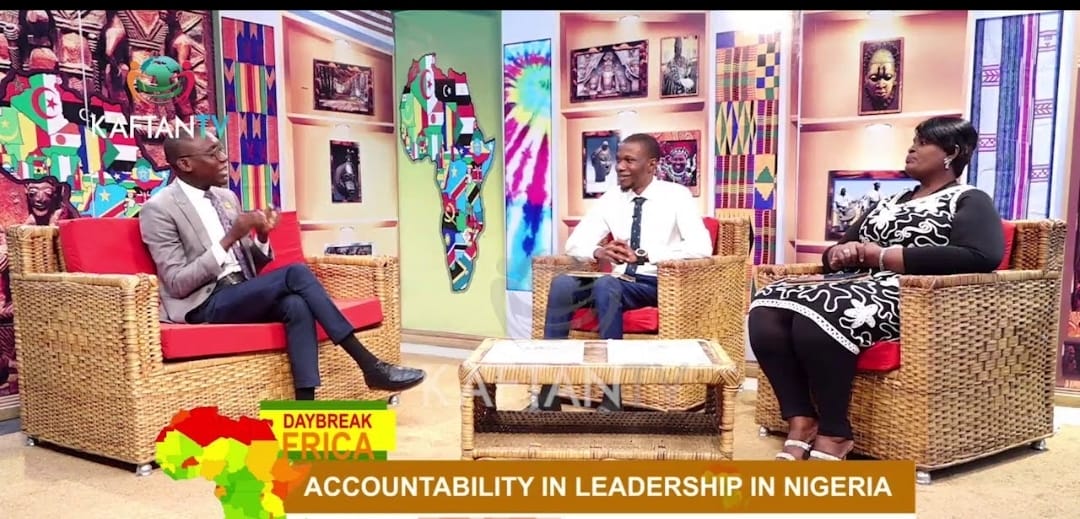
Leadership Without Accountability Is Nigeria’s Greatest Scam.
By George Omagbemi Sylvester | Published by SaharaWeeklyNG.com
Nigeria must reject failed politicians and demand true accountability.
Nigeria’s politics is haunted by a PECULIAR HYPOCRISY: men and women who abandon the problems in their own backyards (moral failings, patronage, broken promises, dodged responsibilities) suddenly reappear on the national stage with grand plans to “SAVE THE NATION.” The truth is blunt and unforgiving: leadership does not teleport. It is forged in character, measured in responsibility and tested in the small, daily arenas of family, community and local institutions. If you cannot solve the crises closest to you, you have no business asking for the keys to a complex, fractious, 200-MILLION-PEOPLE state.
This is not SENTIMENTALISM. It is POLITICAL REALISM. Nations do not transform because someone declares themselves a savior; they change when leaders demonstrate competence, integrity and a habit of accountability; virtues first practiced at home. Scholars have long warned that social trust and civic virtue are preconditions for prosperity and stable government. As Francis Fukuyama reminds us, societies that cultivate trust avoid the heavy “TRANSACTION COSTS” of coercive enforcement; trust is not mystical; it is a measurable advantage.
Look at Nigeria today: we are economically vital (Africa’s largest economy in many respects) yet our public life is rent by weak institutions, corruption and chronic impunity. Transparency International’s 2024 Corruption Perceptions Index ranks Nigeria 140 out of 180 countries, a stark metric that should alarm every voter who still believes slogans are substitutes for governance.
To be clear: we are not arguing that no one from a difficult background can rise to national leadership; rather, we insist on consistency. If you were a local council boss who could not balance budgets or discipline cronies; if you ran away from accountability in your constituency; if you always pointed fingers but never fixed the leaking roof at the community clinic, why should we trust you with a federal budget, a foreign policy portfolio or the security of millions?
Those who recycle themselves into power without institutional reforms are asking us to gamble our future on a personality rather than a plan. That gamble has consequences. For every headline about GDP growth or loan approvals, there are countless stories of public resources diverted, services unprovided and citizens betrayed. Consider that, even amid reports of macroeconomic recovery, corruption remains acute enough that law enforcement agencies still devote huge resources to recover stolen assets and sometimes win notable recoveries, but only after years of loss. The Economic and Financial Crimes Commission (EFCC) reported recovering nearly $500 million in one year; a welcome figure, but also a reminder that immense sums had to be chased down.
International partners continue to bankroll crucial projects precisely because our institutions struggle to marshal domestic resources reliably. In 2024 the World Bank approved a $1.57 billion financing package for Nigeria to strengthen health, education and power; funds that underscore both opportunity and dependency: opportunity because development remains possible; dependency because we still need massive external support to plug gaps created by domestic governance failures.
And yes, even where macro stats look better, the lived reality for many Nigerians remains grim. The World Bank noted strong headline growth in late 2024, but that same report stressed high inflation and the incomplete transmission of reforms to ordinary citizens. Growth without equitable distribution is a hollow victory.
So what must we do in 2027? First: reject recycled politicians who treat office as a family heirloom and accountability as optional. Look for candidates with three non-negotiable traits:
Demonstrated local competence. Have they shown the ability to manage resources, oversee projects to completion and accept blame when things go wrong? Small-scale success (fixing a primary school, ensuring transparent procurement in a local council or holding party officials to account) is a meaningful predictor of larger performance.
A record of public accountability. Leaders fit for national office have histories of EXPLANATION not EVASION. They invite audits, answer tough questions at town halls and accept judicial processes rather than subverting them.
Moral consistency. This is not moralizing, it is practical: a leader who tolerates corruption at home will tolerate it at scale. As Ngozi Okonjo-Iweala once said, “No one can fight corruption for Nigerians except Nigerians. Everyone has to be committed from the top to the bottom to fight it.” Commitment must begin at home and radiate outward.
We must also hold institutions to higher standards. Free speech, an independent judiciary, a transparent electoral commission and robust civil society are not luxuries; they are the scaffolding that prevents power from calcifying into privilege. Professor Attahiru Jega, who supervised two of Nigeria’s most scrutinized elections, has long emphasized the indispensable role of electoral integrity in making leadership legitimate. When elections are credible, politicians who fail locally have fewer ways to cloak their incompetence in national rhetoric.
Let us not ignore culture. Comedians, satirists and public intellectuals have an outsized role in puncturing the pretensions of recycled politicians. When Gordons lampoons politicians for their double standards or I Go Dye calls leaders “bad actors” their ridicule is not mere entertainment; it is popular truth-telling that keeps elites honest. Those truth bombs have the moral power to move conversations and mobilize voters.
Finally, citizens must translate outrage into disciplined choices. Voting is not a moment of theatrical loyalty; it is a transaction in which we exchange our future for competence and integrity. Use primaries, run local watchdog groups, support investigative journalism, demand transparent manifestos with measurable targets and (crucially) refuse to normalize failure. A candidate who cannot explain how they fixed a broken streetlight in their neighborhood should not be allowed to explain how they will fix national electricity.
This is not petty gatekeeping. It is survival. Nigeria’s potential remains immense, youthful workforce, diverse resources and entrepreneurial energy. But potential without structure is raw material; structure requires leadership that starts small and scales honestly.
So to every politician who insists Nigeria needs them while they have left their own political home in ruins: repair your house first. Attend the town halls. Answer the audits. Fight corruption in your backyard. If you cannot do that, stop asking for a larger stage. Nigeria deserves leaders who pride themselves on the mundane courage of responsibility, the courage to do the unglamorous work of fixing what is nearest.
2027 offers us a choice: RE-ELECT the THEATRICAL or choose the ACCOUNTABLE. We must be wise. We must be ruthless (against hypocrisy, not people) and demand that leadership begin where it always should: at HOME.
~ George Omagbemi Sylvester





society
From Broadcast to Spiritual Renaissance: The Journey of Alọba A. Orisabimbola Ifatomi, Creator of ÒRÌṢÀTV
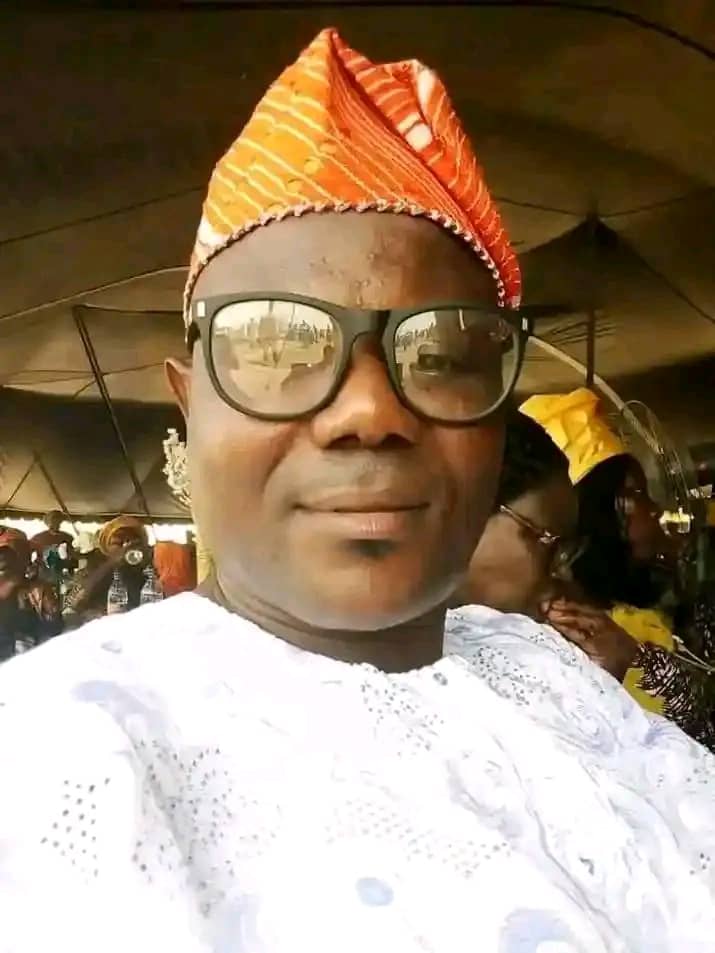
From Broadcast to Spiritual Renaissance:
The Journey of Alọba A. Orisabimbola Ifatomi, Creator of ÒRÌṢÀTV
In a time when African stories are often misrepresented or diluted, a seasoned voice in Nigeria’s media and creative industry is stepping forward with a bold vision to reclaim, preserve and project the depth of African spirituality through a new wave of cinematic storytelling powered by technology.
Alọba Adewunmi, a respected broadcaster, journalist and creative professional, is the mind behind ÒRÌṢÀTV a groundbreaking platform using Artificial Intelligence (AI) cinematic production to tell authentic Yoruba stories rooted in cosmology, spirituality and cultural heritage.
ÒRÌṢÀTV is not just a channel it is a destination to experience “The Beginning”, a Yoruba cosmology-based AI cinematic series that explores the origin of life and existence through an African lens.
A Career Built on Media Excellence
With years of experience across broadcast and print media, Alọba Adewunmi has established himself as a dynamic storyteller and cultural voice.
He has worked with several notable platforms including OSBC, Orisun FM, Yotomi Cable, Okin FM, Midland FM, Delta Cable, Akede Oodua Publications and Akede Africa.
His professional journey includes:
– Reporter at Alariya Oodua
– Editor at Gbajumo Online Magazine
– General Editor at Akede Africa ( a bilingual news magazine)
Through these roles, he has contributed significantly to journalism, cultural reporting, politics, crime and entertainment.
A Multifaceted Creative Force
Beyond journalism, Alọba Adewunmi’s creative footprint extends deeply into film and storytelling.
He is not just a performer, but a creative architect behind the scenes, serving as:
– A Continuity Director
– Continuity Director of the home video “Tobi (Forgiveness)”, produced by Kola Adeyemo
– A Story Writer and Dialogue Director
– A Scriptwriter
He has also contributed to several home video productions from the late 1990s through the early 2000s, reflecting a long-standing presence in Yoruba film storytelling.
A Spiritual Path and Cultural Mission
Beyond media and film, his journey is rooted in a deeper spiritual calling.
Alọba Adewunmi is a traditional priest, teacher and herbal medicine practitioner, dedicated to the preservation and practice of Yoruba spirituality.
His temple, Obàtálá Alábãlàse Temple of Purity, stands as a sacred center for purity, healing and spiritual guidance.
The Vision Behind ÒRÌṢÀTV
ÒRÌṢÀTV is more than a content platform, it is a cultural revival movement powered by AI-driven cinematic storytelling.
Through this innovative approach, the platform explores:
– The origin of existence
– The roles of divinities
– The structure of human destiny
– The spiritual laws governing life
The debut episode, “The Birth of Ilẹ̀ Àwọn Alààyè”,( Command of Creation ) marks the beginning of the series “The Beginning”.
Blending mythology, spirituality and AI-powered visuals, ÒRÌṢÀTV offers a unique experience that is both educational and deeply immersive.
A Mission Beyond Entertainment
For Alọba Adewunmi, this project goes far beyond entertainment.
It is a mission to preserve indigenous knowledge, educate future generations, correct misconceptions about African spirituality and restore pride in African identity.
The Man Behind the Vision
Despite his wide experience and creative influence, Alọba Adewunmi remains a naturally private and introverted individual.
He is known more for his work than for public appearances moving quietly between his professional responsibilities and personal space.
Rather than seeking the spotlight, he has consistently chosen to let his talent, creativity and impact speak for him.
Those who encounter his work or collaborate with him understand the depth he brings a reminder that true substance is not always loud and presence is not always public.
Looking Ahead
With Episode 1 now released, anticipation continues to build as “THE BEGINNING” prepares to explore deeper aspects of creation, human destiny and spiritual alignment.
This is not just a project it is a legacy unfolding through culture, spirituality, and innovation.
Watch Now
THE BEGINNING


Episode 1
The Birth of Ilẹ̀ Àwọn” Command of Creation)
Available on YouTube.
Media & Contact
For interviews, features and collaborations:
08125883088
© 2026 ÒRÌṢÀTV
All Rights Reserved
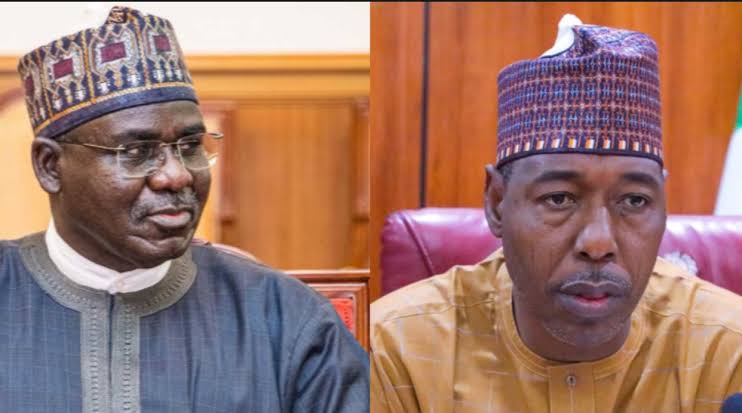
TY BURATAI HUMANITY CARE FOUNDATION COMMENDS GOVERNOR ZULUM FOR HELPING MILITARY FAMILIES
The TY Buratai Humanity Care Foundation has commended Borno State Governor Babagana Umara Zulum for his generous donation of ₦150 million to the families of three military officers who were tragically killed in recent attacks. Each family received ₦50 million as part of the state’s continued commitment to supporting fallen heroes and wounded personnel involved in counter-insurgency operations.
The commendation was contained in a statement signed by the foundation’s chairman, Ibrahim Dahiru Danfulani Sadaukin Garkuwan Keffi/Betara Biu, and made available to the press.
The foundation expressed gratitude for the governor’s compassionate gesture, which included personal visits to the families of the late Lieutenant Colonels Umar Farouq, Salihu Iliyasu, and Aliyu Saidu Paiko in Abuja, Niger, and Kano States. During the visits, Governor Zulum offered his condolences and praised the service, sacrifice, and patriotism of the fallen officers.
The foundation’s Grand Patron, His Excellency, Lieutenant General Tukur Yusufu Buratai, CFR (Rtd), personally commended the governor’s dedication to improving the lives of Borno State residents. He also extended his condolences to the families of the officers and soldiers who made the ultimate sacrifice in service to the nation.
During his visits, Governor Zulum reaffirmed his administration’s commitment to supporting bereaved families, which includes offering scholarships to the orphaned children of fallen personnel. He pledged to extend similar visits to other affected families, underscoring a compassionate approach to addressing the needs of those who have suffered in the line of duty.
society
Queen Amb Dr. Nwamaka Cordelia Anyatonwu Appointed Minister of Humanitarian, Culture, and Kingdom Affairs, United Kingdom of Atlantis
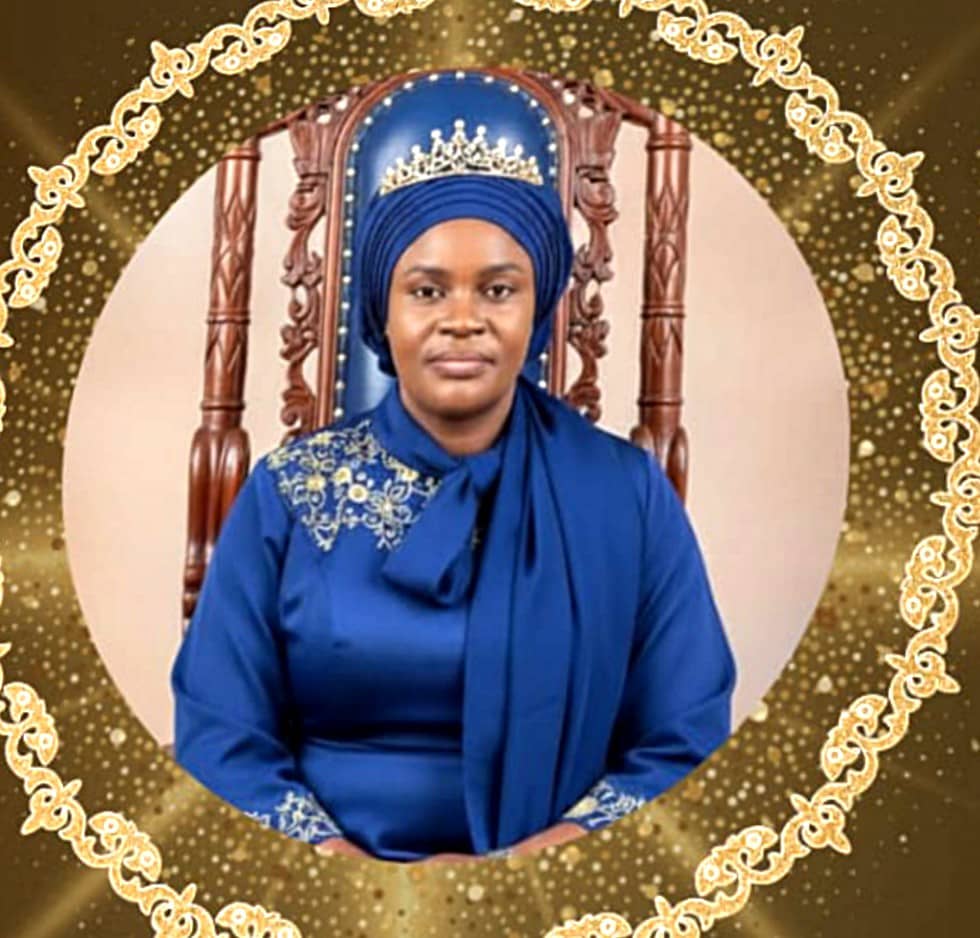
*Queen Amb Dr. Nwamaka Cordelia Anyatonwu Appointed Minister of Humanitarian, Culture, and Kingdom Affairs, United Kingdom of Atlantis
Her Majesty Queen Amb Dr. Nwamaka Cordelia Anyatonwu, Queen of the Aches Empire under the jurisdiction of the United Kingdom of Atlantis (UKA), has been appointed as the Minister of Humanitarian, Culture, and Kingdom Affairs, effective immediately.
This appointment comes as the UKA takes decisive steps to strengthen its humanitarian efforts and protect its citizens from unauthorized activities. In light of recent developments, the UKA has issued an official public disclaimer cautioning citizens, followers, and the general public about the activities of individuals promoting and operating a coin or platform not officially recognized by the Atlantian Gold Coin (ATC). This follows the hijacking of the 5 billion humanitarian project, a move that has been met with concern and condemnation from the international community.
As the newly appointed Minister, Queen Amb Dr. Anyatonwu has announced that all matters pertaining to the 5 billion humanitarian project in UKA should be directed to her office. This includes the newly captured NGOs, which are now required to report to the Office of Humanitarian Affairs, ensuring transparency and accountability in the management of humanitarian resources.
“We are committed to transparency and accountability in our humanitarian efforts,” said Queen Amb Dr. Anyatonwu. “We urge all stakeholders to work with us to ensure the success of our initiatives and protect our citizens from unauthorized activities. We will not tolerate any form of exploitation or mismanagement of humanitarian funds, and we will take all necessary measures to ensure that those responsible are held accountable.”
The UKA has assured its citizens and the international community that it is taking all necessary measures to recover the hijacked funds and bring the perpetrators to justice. The appointment of Queen Amb Dr. Anyatonwu is seen as a significant step towards achieving this goal and ensuring that humanitarian efforts are aligned with the UKA’s values and principles.
For more information. Please contact the Office of the Minister of Humanitarian, Culture and Kingdom Affairs.
*About the United Kingdom of Atlantis*
The United Kingdom of Atlantis is a sovereign nation committed to promoting peace, prosperity, and humanitarian values. The UKA is dedicated to working with international partners to address global challenges and improve the lives of its citizens and people around the world.


-

 society6 months ago
Religion: Africa’s Oldest Weapon of Enslavement and the Forgotten Truth
-

 news4 months ago
WHO REALLY OWNS MONIEPOINT? The $290 Million Deal That Sold Nigeria’s Top Fintech to Foreign Interests
-

 society6 months ago
“You Are Never Without Help” – Pastor Gebhardt Berndt Inspires Hope Through Empower Church (Video)
-

 celebrity radar - gossips2 months ago
Dr. Chris Okafor Returns with Power and Fire of the Spirit -Mounts Grace Nation Altar with Fresh Anointing and Restoration Grace on February 1, 2026