celebrity radar - gossips
LT GEN (DR) FARUK YAHAYA (RTD) FILES N1.5BN DEFAMATION SUIT AGAINST ALI-KEFFI, ARISE NEWS AND SAHARA REPORTERS
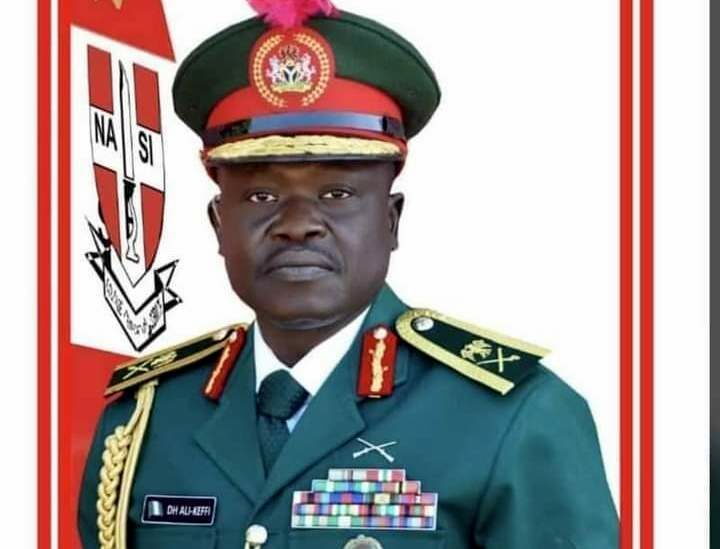
Lieutenant General (Dr) Faruk Yahaya (rtd) CFR, Zarumman Sokoto and former Chief of Army Staff, Nigerian Army, has on Wednesday, 14 January 2026, instituted a defamation suit at the Federal Capital Territory High Court, Abuja, against Major General Danjuma Hamisu Ali-Keffi (rtd), Arise Broadcasting Limited and Sahara Reporters Media Group Inc. following the expiration of a demand notice.
In the suit, Lt Gen Yahaya is seeking, among other reliefs, formal retractions and public apologies from the defendants over alleged defamatory publications, as well as monetary damages of N1.5 billion and N600 million respectively.
The action arises from publications and broadcasts which the claimant contends were false, malicious and injurious to his reputation, character and integrity, linking him to allegations of terrorism financing, illegal mining and banditry.
Court processes show that the matter has been duly filed before the High Court of the Federal Capital Territory, Abuja, and the defendants have been served to enter appearance in accordance with the rules of court.
Brigadier General Sani Kukasheka Usman (rtd) mni fnipr
For and on behalf of
Lt Gen (Dr) Faruk Yahaya (rtd) CFR
Zarumman Sokoto
Abuja
15 January 2026
celebrity radar - gossips
AFCRD 2026: FG Recognises Buratai’s Reforms, Sacrifice and National Service
The Federal Government has placed former Chief of Army Staff, Lieutenant General Tukur Yusuf Buratai (rtd), at the heart of the 2026 Armed Forces Celebration and Remembrance Day (AFCRD) honours, recognising his enduring legacy of service, sacrifice and institutional reforms within the Nigerian Army.
Buratai was conferred with the Legacy (Service and Sacrifice) Award at the AFCRD Gala Night held on Tuesday, 13 January 2026, at the Banquet Hall of the State House, Abuja. The award acknowledges his far-reaching reforms between 2015 and 2021, which expanded the Army’s operational capacity, strengthened counter-insurgency architecture, and repositioned the force for modern asymmetric warfare. It also recognises his post-service contribution as Nigeria’s Ambassador to the Republic of Benin.
Alongside Buratai, the Chief of Army Staff, Lieutenant General Waidi Shaibu, received the Service and Sacrifice Award for decisive leadership and selfless service in counter-insurgency and internal security operations across multiple theatres.
Other recipients in the same category include Major General Abdulsalami Enesi Abubakar, Theatre Commander, Operation HADIN KAI, and Major General Faruk Mijinyawa, former General Officer Commanding, 81 Division, Lagos, for exceptional operational leadership and commitment to duty.
The Gallantry Award was presented to Brigadier General Misa Uba for leading troops from the front during counter-insurgency operations in Borno State. Brigadier General Usman Ahmad received the Mission Success Award for repelling repeated terrorist attacks and sustaining operational effectiveness under intense pressure.
In the area of innovation, Colonel Ibrahim Mohammed Gero was honoured with the Innovation Award for designing and deploying a redesigned ballistic gunboat that significantly enhanced operations under Operation DELTA SAFE.
The late Colonel B. Umaru was posthumously awarded the Intelligence, Surveillance and Reconnaissance (ISR) Excellence Award for outstanding intelligence leadership during Operation HADIN KAI. The late Lieutenant Colonel Thomas Ebisingha Alari received the Fallen Heroes Award for gallantry and pivotal roles in major counter-terrorism operations in the North-East
.
Beyond Buratai, several retired senior officers were honoured for sustained national contributions. Brigadier General Sani Kukasheka Usman (rtd) received the Sentinel of Freedom Award for strategic military communication, peacekeeping and advocacy for veterans’ welfare and national security.
Major General Mohammed Sadiq Aliyu (rtd) was presented with the Phoenix Award for resilience and continued service despite being wounded in action during counter-insurgency operations.
Colonel Olubunmi Oyekola (rtd) received the Entrepreneurial Spirit Award for successfully transitioning military discipline into a thriving hospitality enterprise, while Colonel Bartholomew Chukwuemeka Ogbonna (rtd) was honoured with the Community Champion Award for grassroots development, healthcare support and youth mobilisation.
Master Warrant Officer Manu Garba was awarded the Distinguished Citizen Service Medal for 35 years of meritorious service and sustained post-retirement community development initiatives.
Remembering Sacrifice, Celebrating Legacy
The Armed Forces Celebration and Remembrance Day remains Nigeria’s annual platform for honouring fallen heroes, celebrating serving personnel and recognising veterans whose courage and professionalism continue to safeguard the nation’s sovereignty, with Buratai’s recognition standing as a defining symbol of long-term military leadership and national service.
celebrity radar - gossips
When Power Plays Collide with Process: Lessons from Lagos’ Speakership Saga of 2025
By Dave Agboola
Lagos politics has never been short of spectacle, but the drama that unfolded on January 13, 2025, transcended mere headlines. It became a profound stress test for democratic norms and institutional discipline in Nigeria’s most influential state.
On that day, while Rt. Hon. Mudashiru Ajayi Obasa, Speaker of the Lagos State House of Assembly, was reportedly returning from the United States, the Assembly triggered a political earthquake: his removal as Speaker after nearly a decade in office. The allegations were sweeping—financial impropriety, abuse of office, and autocratic leadership. In his absence, the House installed Deputy Speaker Mojisola Lasbat Meranda, making history as the first female Speaker of the Lagos Assembly. Yet, history, it soon became clear, was not prepared to be rewritten so abruptly.
The impeachment was hailed by its architects as a triumph of accountability. However, the manner of its execution raised unsettling questions. Reports of a “fake mace,” combined with heavy police presence within the Assembly complex, gave the episode the unsettling air of a coup rather than a constitutionally grounded legislative action. Obasa would later allege that the chamber was forcibly accessed and that his loyalists were intimidated. Beneath the surface, murmurs of deep-seated party intrigue grew louder. His rumored gubernatorial ambitions for 2027 had reportedly unsettled power blocs within the ruling All Progressives Congress (APC), casting the impeachment as a pre-emptive move in a broader succession chess game.
For weeks, Lagos politics hovered dangerously close to paralysis. Meranda’s speakership lasted just 49 days before she resigned, citing the need to restore peace and unity within the House. Her exit cleared the path for Obasa’s return, but the decisive intervention came from the judiciary. On April 16, 2025, the Lagos High Court declared the January 13 proceedings unconstitutional, null, and void. Justice Yetunde Pinheiro’s ruling was unambiguous: the Assembly had violated its own Standing Orders and the Constitution. Crucially, the court did not adjudicate on the substance of the allegations; it focused squarely on procedure. In a constitutional democracy, the means are as consequential as the ends.
Obasa’s reinstatement was therefore more than a personal vindication—it was an institutional reaffirmation. It underscored the judiciary’s role as a vital check on legislative excess and reinforced the principle that numerical strength cannot override procedural legality. The episode also highlighted the stabilising power of political mediation, as party elders intervened to prevent a prolonged institutional crisis, reminding all stakeholders that dialogue remains indispensable even amid constitutional confrontation.
Perhaps the most striking element of this saga is Obasa’s resilience. Few political figures could endure removal in absentia, relentless public scrutiny, and a barrage of allegations without resorting to inflammatory rhetoric or extra-institutional tactics. Obasa did neither. Instead, he chose the courts over chaos, patience over provocation. That decision alone speaks volumes about his mental strength and strategic discipline.
Beyond legal vindication, his ability to reclaim leadership after such a bruising episode reflects uncommon psychological stamina. For nearly three months, he operated under intense pressure, with his reputation and political future hanging in the balance. Many would have buckled under such weight. Obasa did not. He absorbed the pressure, trusted the system, and ultimately emerged strengthened—sending a powerful message that resilience, not reaction, is the true currency of political survival.
Whatever one’s view of Obasa, his endurance through this storm is undeniable. To be removed in absentia, navigate a fractured legislature, and emerge vindicated by the courts requires not only political capital but composure and faith in democratic institutions. Lagos, in the end, learned a lesson that should resonate far beyond its borders: power is transient, but process is permanent. When the gavel falls, it must fall within the bounds of law—because that is the only assurance that democracy will outlive its actors.
Agboola is the Chief Press Secretary to the Speaker, Lagos State House of Assembly.
celebrity radar - gossips
Legacy Is Not a Meme: Why Comparing Wizkid to Fela Kuti Is a Cultural Disservice
Legacy Is Not a Meme: Why Comparing Wizkid to Fela Kuti Is a Cultural Disservice.
By George Omagbemi Sylvester | For saharaweeklyng.com
“Seun Kuti’s Fiery Rebuttal and What It Reveals About Nigerian Music, History and Respect for Cultural Icons.”
In a moment that ignited fervent debate across social media, Grammy-nominated musician Seun Kuti delivered a blunt and unapologetic rebuke to fans who have taken to comparing contemporary Afrobeats star Wizkid to his father, legendary Afrobeat pioneer Fela Anikulapo-Kuti. In a viral Instagram livestream, Seun Kuti described the comparison not merely as inaccurate, but as “DISRESPECTFUL”, rooted in “IGNORANCE,” and symptomatic of a cultural trend that conflates popularity with historical relevance, a trend that risks trivialising one of Nigeria’s most revolutionary artistic legacies.
Seun’s remarks, passionate and raw, were not a simple defence of family honour. They were a clarion call to cultural literacy, a demand that Nigerians, especially music lovers and artists, distinguish between sound and substance; fame and legacy.
Roots of the Controversy.
The debate stems from persistent online claims (largely emanating from segments of Wizkid’s fanbase (“Wizkid FC”) that the singer represents a modern incarnation of Fela Kuti, or even that he has “SURPASSED” the Afrobeat legend in global influence. Seun Kuti responded emphatically:
“Wizkid FC, keep Fela’s name out of your mouths. You try to claim that your fake artiste is the new Fela, It’s an insult to Fela to call Wizkid the new Fela.”
These words, incendiary as they are, underscore a deeper debate: What does it mean to carry a legacy? And can commercial success ever be equated with revolutionary cultural impact?
Fela Kuti: More Than Music — A Movement.
To understand why Seun’s outburst resonates with many cultural historians and music scholars, we must revisit the magnitude of Fela Anikulapo-Kuti’s contributions.
Fela was not just a musician; he was the founder of Afrobeat, a genre combining jazz, funk, highlife, traditional Yoruba rhythms, and potent political commentary. His compositions were long, hypnotic, socially charged, and unapologetically defiant — songs like Zombie, Expensive Shit, and Water No Get Enemy were soundtracks of resistance against military dictatorship, corruption, and social injustice in Nigeria.
More than that, Fela’s music became a social movement; inspiring consciousness, unity, and defiance. The late scholar and critic Robert Farris Thompson once noted that Afrobeat was “a creative revolution that fused music with social transformation,” something few genres in world history have achieved with such potency. This was not merely performance art and it was performance protest.
His life was a campaign against oppression, resulting in repeated arrests, the notorious military attack on his Kalakuta Republic commune, and relentless persecution and yet he persisted, turning every struggle into artistic fuel. This context is crucial: Fela’s legacy is not measured by chart positions; it is inscribed in the political memory of a nation.
Wizkid: A Global Star, But in a Different Arena.
There is no denying Wizkid’s achievements. Emerging from Ojuelegba to global prominence, Wizkid has performed on legendary stages, collaborated with international icons, and brought Nigerian music to unprecedented commercial heights. He is a brand, a cultural ambassador, and a global export of Nigerian artistry.
Yet, there is a critical distinction: Wizkid’s influence is predominantly commercial and cultural, not overtly political or revolutionary in the mould of Fela Kuti’s mission.
Many of Wizkid’s songs (energetic, melodic, and deeply appealing) serve celebration more than revolution. They resonate with love, lifestyle, and Afrocentric swagger, but do not directly confront the systemic failings or power structures that shaped Fela’s oeuvre. This is not a diminishment of Wizkid’s craft, but a categorical difference, not hierarchy.
Wizkid himself acknowledged this nuance years ago, stating in an interview that “You cannot compare me with Fela, Fela is an inspiration.” He emphasised respect for Fela’s influence without equating their artistic identities.
Why the Comparison Is Misguided; And Harmful.
Seun Kuti’s criticism points to several key issues:
1. Ignorance of Historical Context
Seun labelled the ongoing comparisons as stemming from a lack of understanding of Fela’s historical struggle. Fela’s work was deeply embedded in political activism — something modern pop stardom rarely demands of artists today.
2. Erasure of Cultural Complexity
Reducing Fela to a brand name for hype disregards the layers of resistance and African identity he championed. As cultural theorist Paul Gilroy once said: “The politics of music cannot be separated from the politics of power.” By flattening Fela into a buzzword, we lose that textured insight.
3. Fueling Toxic Fan Culture
Seun also pointed to how fan rivalries (particularly online) can stifle genuine artistic collaboration. He cautioned that comparing one artist to another in combative terms leads to division rather than celebration of diverse musical contributions.
4. Conflating Commercial Success with Revolutionary Impact
This is perhaps the most salient point: global streaming numbers and sold-out shows are not the same as challenging oppressive systems. Fela’s legacy is measured not just in acclaim, but in societal change. Online popularity cannot mirror that.
Voices from Scholars and Cultural Critics.
Renowned ethnomusicologist Dr. E. Taylor Atkins once argued that “Afrobeat was fundamentally an intellectual and political project before it was a musical genre.” It was a language of dissent. In contrast, modern Afrobeats (while sonically rich) thrives within global pop structures and commercial ecosystems, rather than outside them.
Similarly, music historian Ingrid Monson has observed that “legends are not born from applause alone; they are forged in resistance and resonance with the people’s struggles.” In this light, Fela becomes a figure not easily paralleled.
A Cultural Reckoning : Honour Without Diminishment.
The debate ignited by Seun Kuti is more than a social media sensation. It is a cultural reckoning and a reminder that Nigerian music history is rich, layered, and deserves nuanced appreciation.
This is not to say that Wizkid’s achievements are irrelevant. They are monumental in their own right. But to elevate a contemporary pop star into the lineage of a revolutionary icon without context is, as Seun Kuti correctly pointed out, a disservice to history, to artistry, and to cultural memory.
In the words of acclaimed philosopher Kwame Anthony Appiah: “A culture that forgets its foundations forfeits its future.” Let us celebrate Wizkid for what he has achieved, and honour Fela Kuti for what he fought for, without conflating the two into a false equivalence.
For genuine cultural growth, Nigerian music must embrace its past, honour its icons, and encourage artistic excellence across all fronts; commercial, cultural, and political.
-
celebrity radar - gossips5 months agoWhy Babangida’s Hilltop Home Became Nigeria’s Political “Mecca”
-
society5 months agoPower is a Loan, Not a Possession: The Sacred Duty of Planting People
-
Business5 months agoBatsumi Travel CEO Lisa Sebogodi Wins Prestigious Africa Travel 100 Women Award
-
society7 months agoCP LAWAL ADEBOWALE ASSUMES DUTY AS 46TH COMMISSIONER OF POLICE, ONDO STATE COMMAND