
society
Lt. General Olufemi Oluyede: The Vanguard of a United and Secure Nigeria

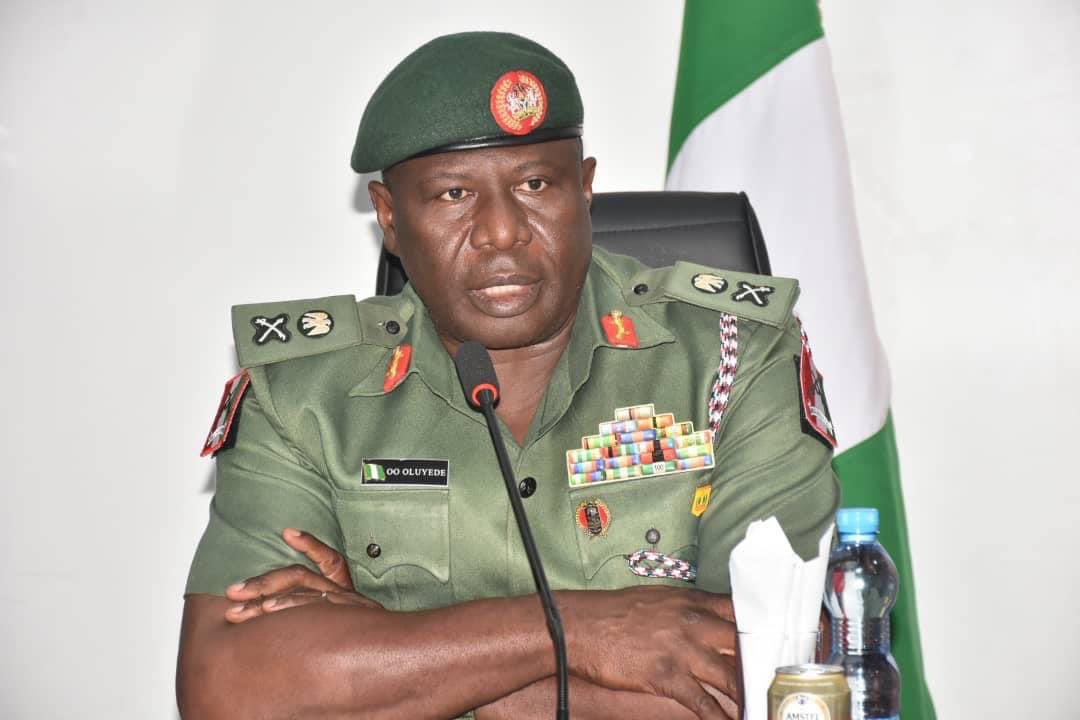
Lt. General Olufemi Oluyede: The Vanguard of a United and Secure Nigeria.
(A Tribute to Visionary Leadership in the Nigerian Army) by Comrade Oladimeji Odeyemi.
In the tapestry of Nigeria’s national story, few figures emerge as beacons of courage, transformation, and unwavering service. Among them stands Lt General Olufemi Oluyede, the Chief of Army Staff, Nigerian Army whose tenure has come to symbolize a *renaissance of purpose* and *renewed faith* in the Nigerian Army’s mission to protect, unite, and uplift our nation.
From the moment he assumed command of the Nigerian Army, Lt General Oluyede made it clear that leadership is not about titles but about service. His vision for a *professional, people-centered, and technologically driven army* has reshaped not only the institution but also the nation’s perception of its defenders.
*> “The strength of an army lies not just in its weapons, but in the spirit of its soldiers and the vision of its leader.”*
Under his stewardship, the Nigerian Army has taken *giant strides* in combating insurgency and terrorism. His strategic reforms in intelligence, logistics, and inter-agency collaboration have fortified national security and rekindled hope across conflict-prone regions. Through relentless operations and innovation, Lt. General Oluyede has ensured that the Nigerian flag continues to fly high in unity and resilience.
Beyond the battlefield, his leadership emphasizes *discipline, welfare, and integrity.* He has championed modernization in military infrastructure, improved welfare packages for troops, and strengthened civil-military relations — building bridges of trust between the Army and the people it serves.
*> “Peace is not merely the absence of war; it is the presence of justice, discipline, and compassion.”*
Lt. General Oluyede’s commitment to the unity of Nigeria stands as an unshakable pillar of his service. At a time when the nation faces complex security challenges, his call for *One Nigeria, One Army, One Purpose* has inspired a renewed sense of patriotism. His leadership reminds us that the Nigerian spirit — though tested — remains unbroken.
In every stride, in every operation, and in every reform, Lt. General Oluyede has written his name in gold in the annals of Nigeria’s history. His legacy is not just in victories won, but in hearts inspired, soldiers empowered, and a nation strengthened.
Today, as Nigeria marches forward toward greater peace and unity, we salute a leader who has turned challenges into triumphs and vision into reality.
Lt. General Olufemi Oluyede — a symbol of courage, vision, and commitment to a safer, stronger, and united Nigeria.






*PDP CHIEFTAIN, ONIRETI RESIGNS FROM PARTY, CITES PERSONAL REFLECTION
A former House of Representatives candidate, Olufemi Onireti, has formally resigned his membership of the Peoples Democratic Party (PDP) in Oyo State.
His resignation was conveyed in a letter addressed to the Chairman of PDP Osupa Ward 9, Ogbomoso North Local Government, on Thursday.
Onireti described the decision as a difficult but necessary step after what he termed a period of “deep personal reflection.”
“I hereby formally resign my membership of the Peoples Democratic Party (PDP), effective immediately,” he wrote.
He acknowledged his years of active involvement in the party, including contesting for the House of Representatives in the last general election, noting that the PDP had offered him a platform for political participation, service, and growth.
Despite his exit, Onireti expressed appreciation to party leaders and members for the support he enjoyed over the years.
“I remain grateful for the opportunity to serve and for the relationships and experiences I gained during my time in the party.
I wish the party well in its future endeavours,” he added.
The development is expected to generate discussions within the Ogbomoso North political circle, as observers await his next political move.
society
Harmony Garden Boss, Mr Ibile Celebrates Mogaji Wole Arisekola, Hails Legacy of Leadership and Excellence

Harmony Garden Boss, Mr Ibile Celebrates Mogaji Wole Arisekola, Hails Legacy of Leadership and Excellence
Renowned real estate entrepreneur and Chief Executive Officer of Harmony Garden & Estate Development Limited, Hon. Dr. Saheed Audullahi Mosadoluwa aka Mr Ibile, has paid glowing tribute to elder statesman, Mogaji Wole Arisekola, in a heartfelt birthday message that has drawn admiration across social circles.
In a message shared on his official platform, Dr. Saheed described the celebrant as “a remarkable man, a pillar of strength, wisdom, and legacy,” highlighting his enduring influence on family, community, and leadership circles. The tribute, written on behalf of himself and his children, praised Arisekola’s life as one that continues to inspire greatness and unwavering commitment to service.
“Iba Eni for Agba Imole,” he wrote, emphasizing deep respect and reverence for the celebrant’s impactful life. According to him, Arisekola’s voice remains respected, while his legacy is firmly rooted in honor and excellence, qualities that have defined his journey over the years.
Offering prayers for continued good health, long life, and greater accomplishments, Mosadoluwa concluded by wishing the elder statesman a peaceful and joyful new year, filled with divine blessings. The message has since resonated with admirers, further reinforcing the strong bond between the two figures and celebrating a legacy of influence and integrity.
celebrity radar - gossips
Accolades to Empress Genevieve Wining as she Celebrate birthday in Grand style

Accolades to Empress Genevieve Wining as she Celebrate birthday in Grand style
Emmanuel Clement
Vilnius, Lithuania – The Grand Hotel Vilnius will host a grand birthday celebration in honor of Her Majesty The Empress Genevieve Wining of the United Kingdom of Atlantis (UKA) on April 4th, 2026.
The four-day event promises to be an extravagant affair, marking the special birthday of Empress Genevieve Wining. The celebration will take place at the prestigious Grand Hotel Vilnius, Lithuania, renowned for its luxurious ambiance and exceptional service.

According to the event flyer, the birthday celebration will be a spectacular occasion, fitting for an empress. Guests can expect an elegant setting adorned with golden accents, sparkling champagne, and festive decorations, creating a regal atmosphere befitting the occasion.
The Empress Genevieve Wining of UKA is expected to grace the event, which will include various festivities and celebrations in her honor. The occasion aims to bring together dignitaries, followers, and guests to commemorate the empress’s birthday with grandeur and joy.
For media inquiries, accreditation, or further information about the birthday celebration of The Empress Genevieve Wining of UKA, please contact the event organizers.
Courtesy of His Excellency Emperor Prof. Solomon Wining. UKA


-

 society7 months ago
Religion: Africa’s Oldest Weapon of Enslavement and the Forgotten Truth
-

 news4 months ago
WHO REALLY OWNS MONIEPOINT? The $290 Million Deal That Sold Nigeria’s Top Fintech to Foreign Interests
-

 society6 months ago
“You Are Never Without Help” – Pastor Gebhardt Berndt Inspires Hope Through Empower Church (Video)
-

 celebrity radar - gossips2 months ago
Dr. Chris Okafor Returns with Power and Fire of the Spirit -Mounts Grace Nation Altar with Fresh Anointing and Restoration Grace on February 1, 2026